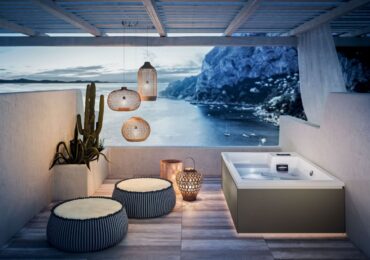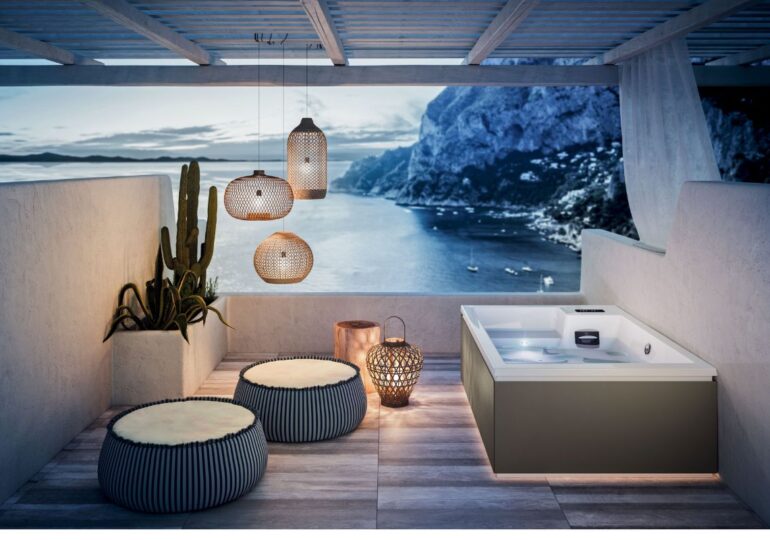
There is a new way of imagining outdoor space, and it no longer revolves only around furniture, swimming pools or dining areas. More and more often, the contemporary garden is becoming a place dedicated to private wellbeing, quality time and a quieter, more intimate idea of luxury. In this scenario, luxury garden mini spas are emerging as one of the most interesting outdoor trends of the moment: not simply outdoor hot tubs, but true design elements capable of redefining the relationship between architecture, landscape and comfort.
What makes them increasingly central to the conversation around outdoor design, home wellness and new ways of living is their ability to bring together several needs in one design gesture: wellbeing, because they introduce a daily ritual of relaxation and regeneration; privacy, because they turn the garden into a protected and intimate retreat; and design, because today these solutions are more refined than ever in terms of shape, materials, finishes and integration with the surrounding space. It is no coincidence that this topic is attracting both end users and architects, interior designers and outdoor design professionals.
To talk today about luxury outdoor mini spas means looking at a fast-evolving segment where technology, aesthetics and design culture meet. From Italian brands that speak the language of product design to international companies specialising in premium wellness, the market now offers different solutions in terms of dimensions, style, performance and positioning.
Luxury mini spa brands to know today
Looking closely at this trend in contemporary outdoor spaces, we selected some of the most interesting brands in the world of luxury mini spas and designer mini pools: solutions that turn the outdoors into a private space of comfort, wellbeing and refined design quality.
Below is a selection of companies producing designer mini pools and outdoor spa solutions that interpret this evolution of outdoor living with consistency and vision.
Gruppo Treesse
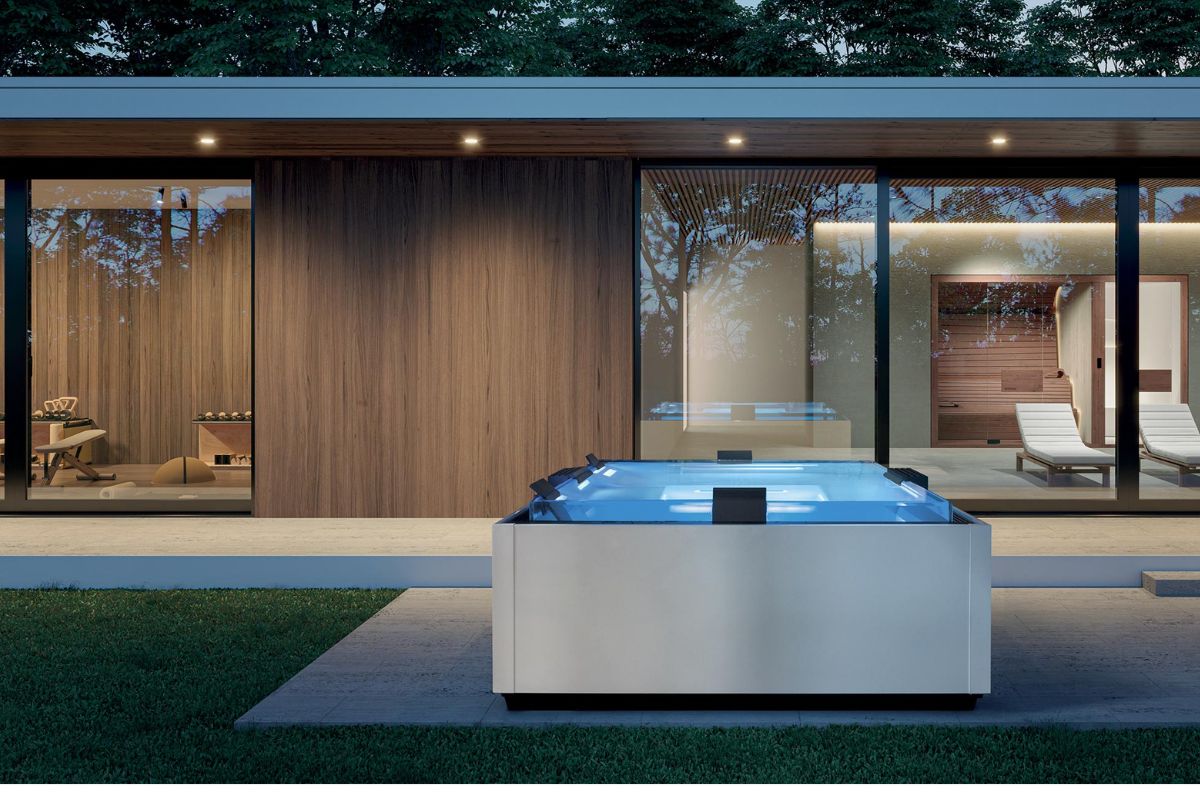
Gruppo Treesse is an Italian company with more than 40 years of history, based in Nepi, Lazio, and specialised in mini pools, spas, whirlpool tubs, saunas and systems for both residential and contract wellness projects. Its name has become particularly relevant in the luxury garden mini spa segment thanks to research that combines technology with formal clarity. The brand’s most recognisable feature is the Ghost system and its evolution, Ghost Plus, developed with Marc Sadler: the hydromassage system is concealed within a thin perimeter slit, minimising the visual impact of jets and technical components and creating a tub that feels more essential, elegant and aligned with the language of contemporary design. Treesse also develops products for private homes, hotels and hospitality projects, and among the best-known models in its range are Shadow, Phantom, Maya GP, Muse GP, ICE and Breeze.
Glass 1989
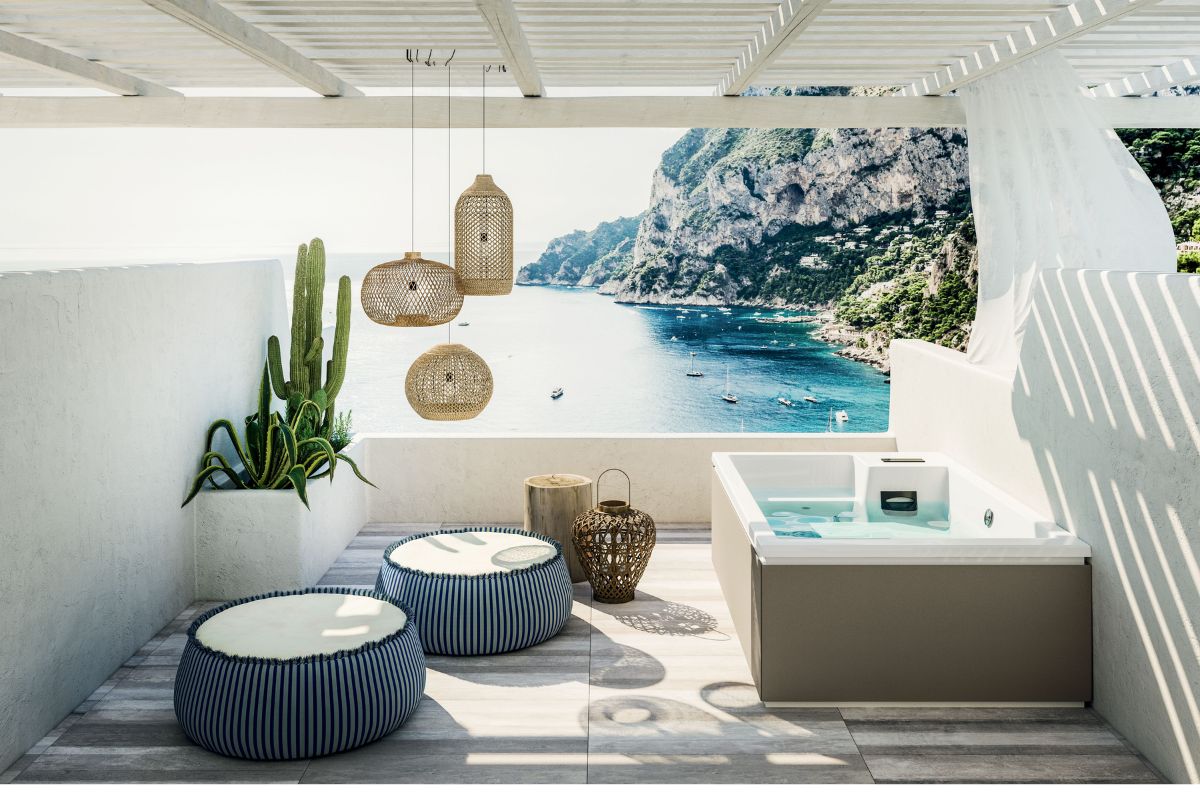
Glass 1989 is an Italian company founded in 1989 and based in Oderzo, in the Veneto region, specialising in wellness solutions for bathrooms and spas: tubs, hammams, saunas, multifunction showers and mini pools. Its distinctive strength lies in its ability to bring the world of wellbeing into a product system that is highly legible to architects and interior designers, with a well-structured technical range and a strong focus on collaboration with designers and specifiers. On the design front, Glass 1989 has worked with names such as Meneghello Paolelli Associati, Doshi Levien, Luca Nichetto, LucidiPevere and Enzo Berti, while its references include hospitality projects such as Nilaya Anthology – Mumbai, Hotel CastelBrando and Le Saint Remy. Among the most interesting models for an article on luxury outdoor mini spas are Infinity 220, a portable overflow spa with an integrated system beneath the tub perimeter, Infinity 260/240 and MySpa 195_E, which clearly express the brand’s dual nature: more architectural on one side, more compact and versatile on the other.
Zucchetti. KOS
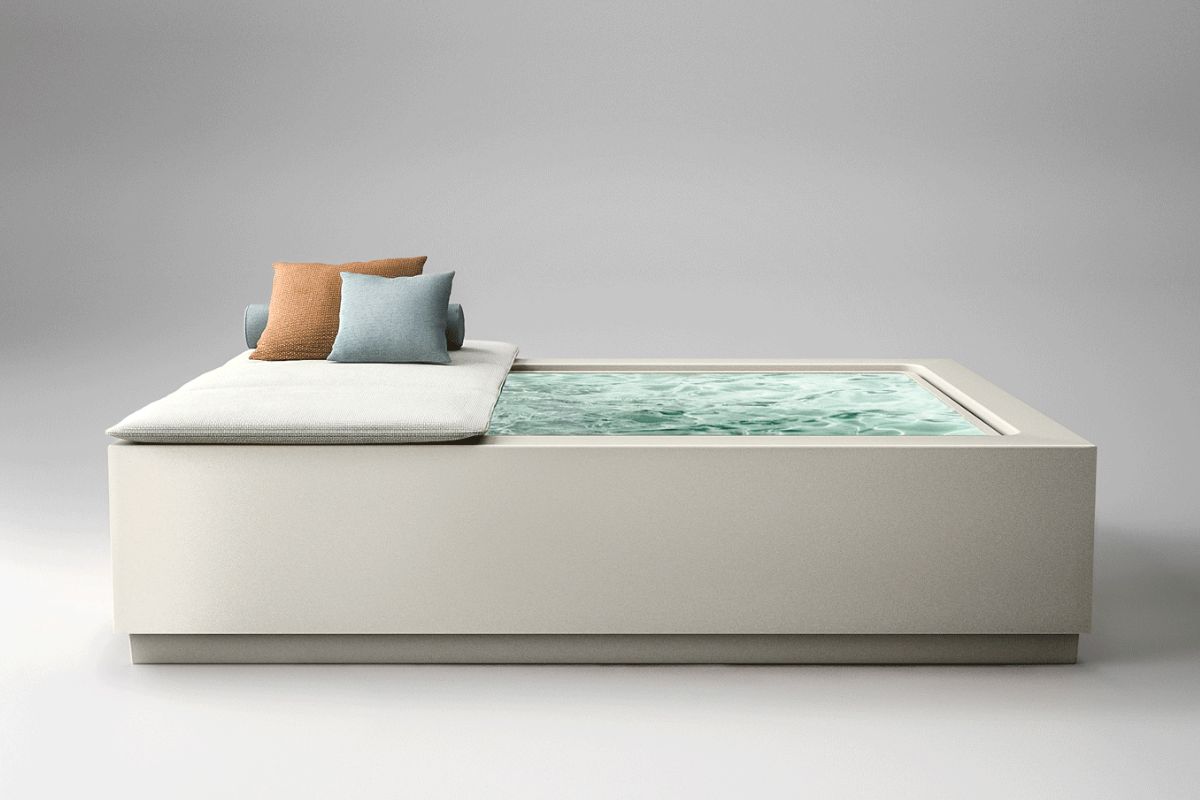
KOS is an Italian brand active since 1998 in the world of wellness and bathroom design, joining the Zucchetti group in 2007 and now connected to its base in Gozzano, in the province of Novara. It specialises in tubs, mini pools, basins and high-design bathroom solutions, with an approach much closer to product design than to purely technical wellness. KOS products stand out for their measured, minimalist and highly controlled language, as well as for the long-standing collaboration with Ludovica Serafini + Roberto Palomba, which has deeply shaped the brand’s identity. In the field of outdoor mini spas, the most representative models are Outdoor Minipool Incasso and Quadrat Pool, two solutions that avoid easy spectacle in favour of a quieter, more integrated and architectural presence. Rather than filling the garden, these products tend to build a more refined relationship with decks, terraces and the domestic landscape.
Jacuzzi
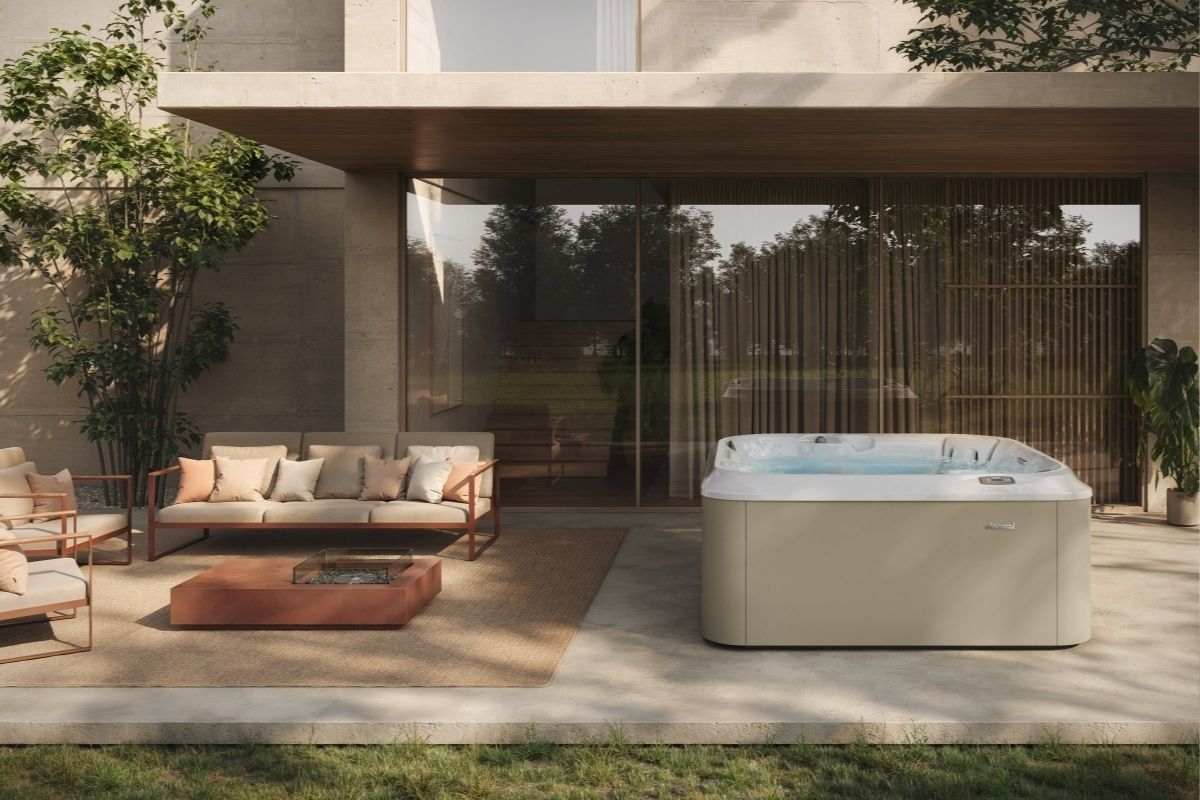
Jacuzzi is the brand that, more than any other, has helped shape the contemporary imagination around hydromassage. Its story began with the Jacuzzi family’s intuition in the field of hydrotherapy and, according to the brand, more than 70 years of innovation now flow into its wellness products. Although the name has become almost synonymous with the category itself, Jacuzzi continues to develop spas with a stronger design dimension, as shown by its Italian Design line. Its products stand out for the integration of ergonomics, PowerPro jets, intuitive controls and a more refined form than the traditional image of the purely technical hot tub. Among the most interesting models to mention are Omnia, with six seats and one lounge seat, J-332, with double ergonomic lounge seating, Profile, which introduces the overflow concept into a spa, and Virtus, explicitly presented as a solution suitable for hospitality as well.
Aquavia Spa
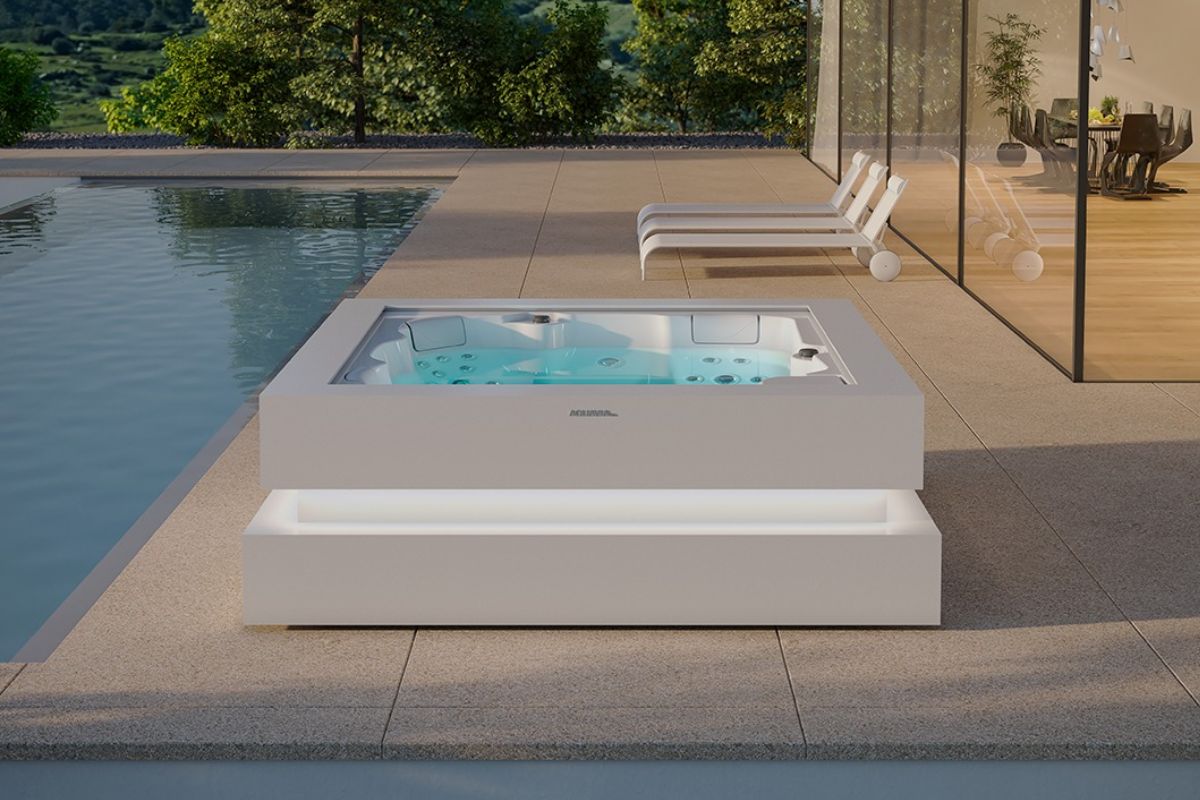
Aquavia Spa is a European company founded in 1988 in the province of Barcelona, specialising in the production of hot tubs and swim spas for private and professional use. The brand works clearly around three themes: European design, energy efficiency and intensive use. This is why it is relevant not only for high-end residential projects but also for hotels, boutique hospitality and wellness centres. Its products stand out for attention to ergonomics, insulation, control technology and finishes, with a range that goes from premium lines to more compact solutions for rooftops, terraces and urban spaces. On the contract side, Aquavia explicitly addresses hotels, architects and interior designers and showcases projects developed for the hospitality sector, along with models such as Hotel Spa, designed for rooms and wellness areas with an automatic filling system, and the Infinity Line, a range of overflow spas for exclusive residences and boutique hotels. Among the projects cited by the brand is Los Hibiscos Hotel in Costa Adeje.
Disenia
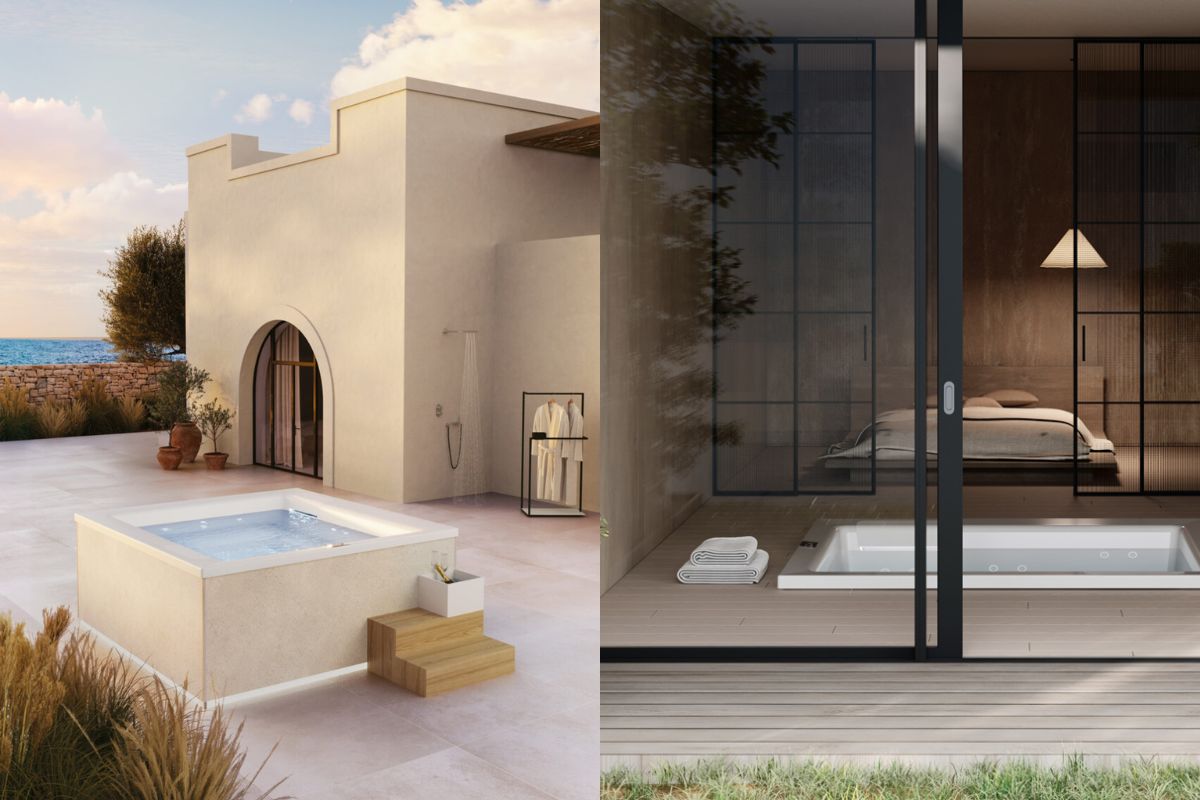
Disenia is an Italian company based in Brugnera, in the province of Pordenone, part of Ideagroup and specialised in contemporary bathroom and wellness solutions. Every project is imagined, designed and made in Italy, with particular attention to the balance between ergonomics, aesthetics and technology. Within its Wellness Collection, the brand offers indoor and outdoor designer mini pools for both residential and contract use, available in freestanding or built-in versions. These products stand out for their clean language, ergonomic seating, integrated LED lighting, touch display and a range of finishes that allow them to fit coherently into different architectural settings. A particularly interesting element from a design perspective is the contribution of Claudio Papa, whose work helps define a mini spa that feels more measured and more aligned with contemporary design than with the traditional technical image of the whirlpool tub. Among the most interesting models are Gilium, Helba 210, Helba 240, Linos and Kyra.
Novellini
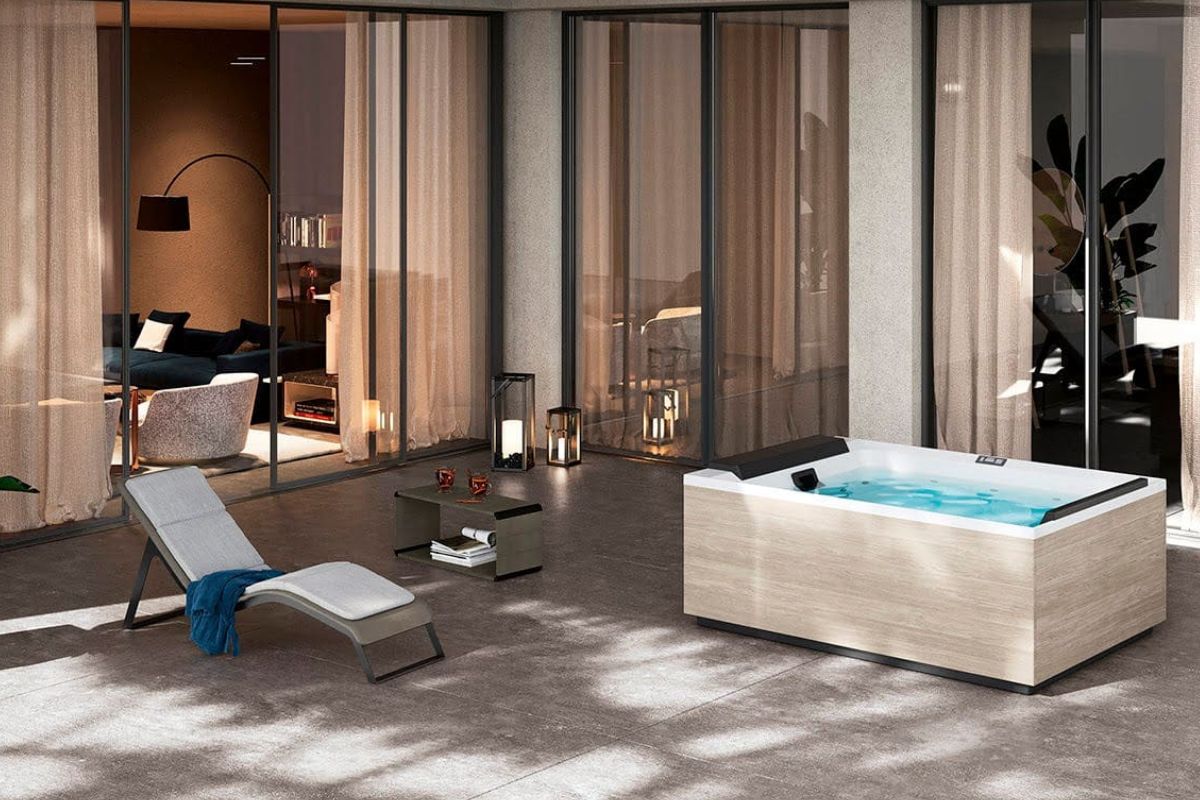
Novellini is an Italian company with more than 60 years of experience, based in Borgo Virgilio, near Mantua, and specialising in bathroom and wellness solutions. The brand brings to the outdoor segment a vision that is closely aligned with Made in Italy, working across design, comfort, sustainability and integrated production quality. In the case of outdoor mini spas, the reference is the Outdoor SPA collection, where the Divina line interprets wellbeing as part of the contemporary domestic project. These products stand out for their clear lines, ergonomic research, weather-resistant textured surfaces, quiet hidden technology and systems such as Bluetooth Audio, Chromolight and Aquaclean with ozone and UV treatment. The collection’s accessories further reinforce this vision, with pieces designed by Marco Pellici and conceived to create an aesthetically coherent environment. Models worth mentioning include Divina M Spa, Divina L Spa, Divina XL Spa and Divina XXL Spa, alongside the Moon and Vita lines, which broaden the narrative of the outdoor spa as a design space rather than a simple exterior tub.
Busco Wellness
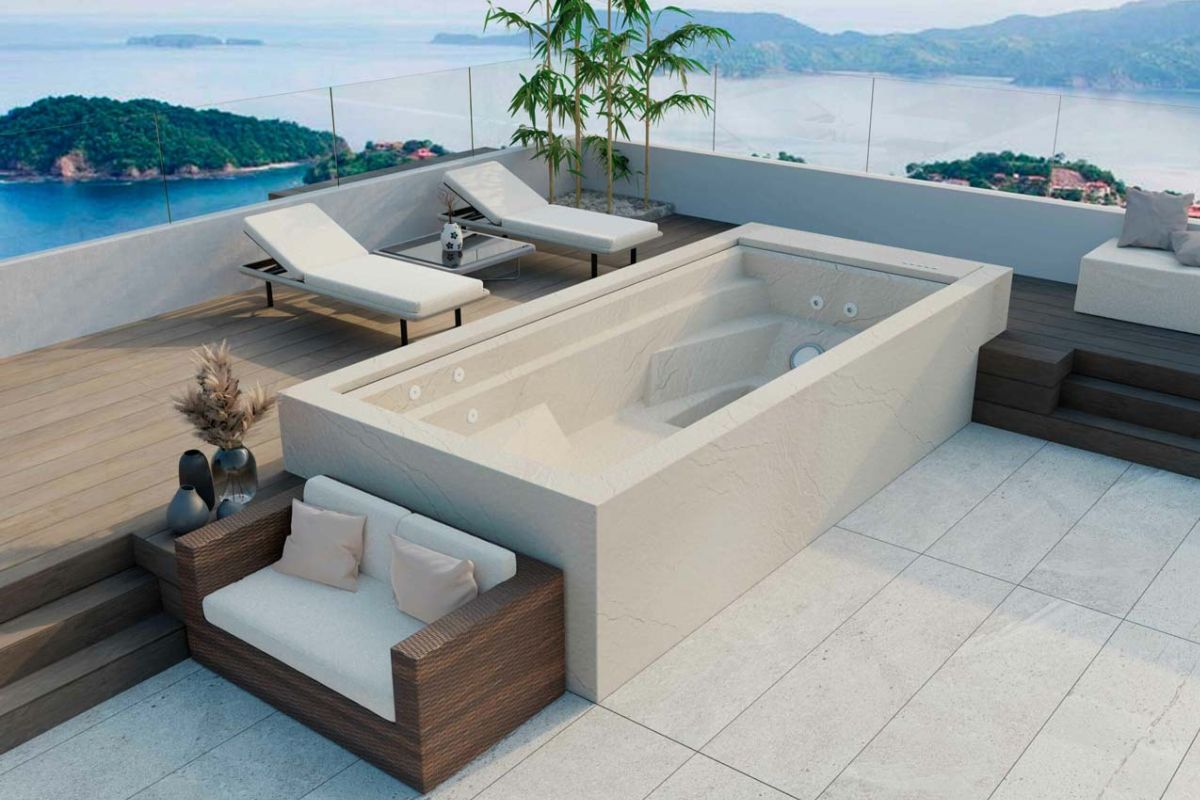
Busco Wellness is an Italian company founded in 1970, with headquarters, production and showroom in Osimo, in the Marche region, specialising in the design and manufacture in Italy of indoor and outdoor spa mini pools, above-ground and in-ground swimming pools, outdoor tubs and counter-current swimming systems. It is an interesting name because it combines strong technical expertise with a high level of customisation, speaking both to residential projects and to more exclusive environments. The brand stands out for mini pools that can be configured in dimensions, finishes and performance, and for lines that work strongly on materiality and visual impact. The most recognisable is probably Stonehenge, also offered in Panoramic View and Basic versions, with stone-effect finishes, a self-supporting structure, a patented Busco system inspectable from the tub edge and the option to integrate hydromassage, airpool, chromotherapy and counter-current swimming. Alongside it, models such as Miami, with rounded corners and overflow, or Pacific, more compact and suitable for built-in or above-ground installation, reveal a broad and flexible range. Another element that gives the brand weight is the fact that it presents itself as an official supplier for MSC Cruises and Ferretti Group, signalling a presence in high-end hospitality and luxury yachting contexts as well.
Villeroy & Boch
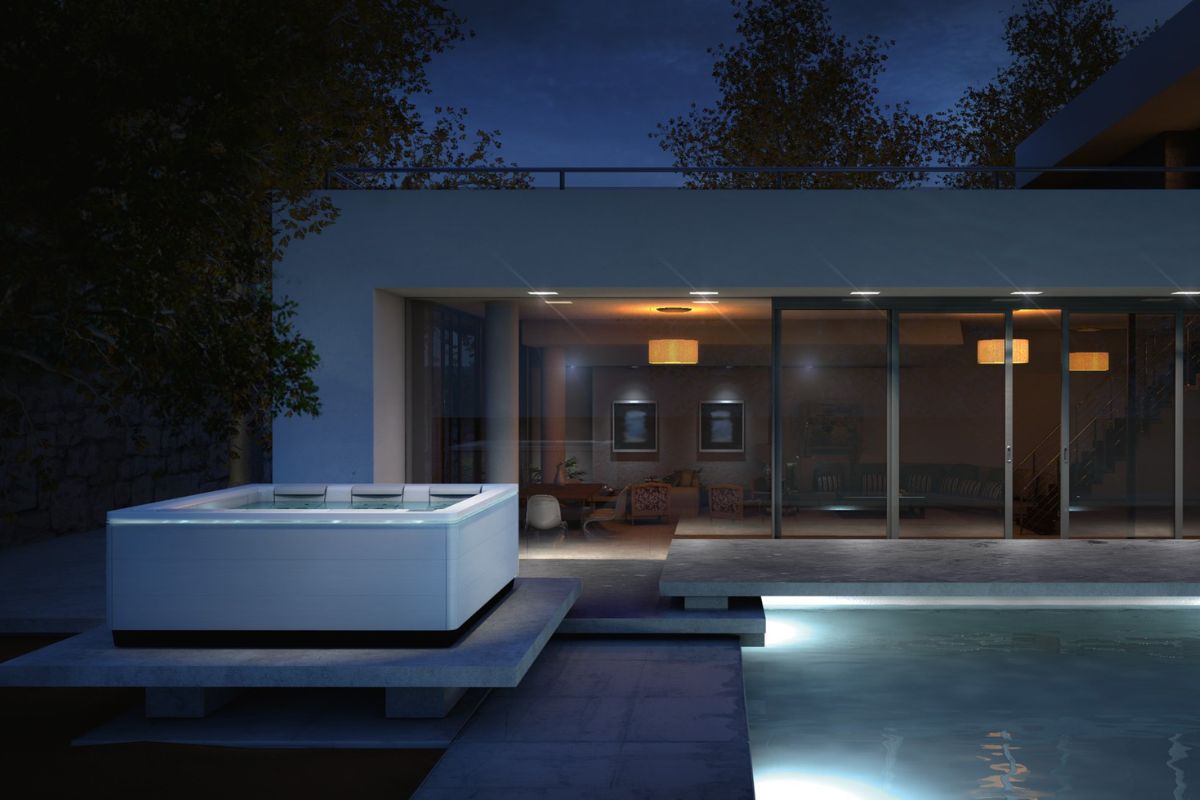
Villeroy & Boch is a historic European brand, founded in 1748 and based in Mettlach, Germany, now active in the Bathroom & Wellness and Dining & Lifestyle sectors. It did not originate as a mini spa specialist in the strict sense, but it is an important name to mention because it shows how the theme of high-end private wellness is now involving brands with a long tradition in bathrooms and the culture of living. Villeroy & Boch products stand out for a premium approach based on design, quality and durability, and the brand’s presence in the Bathroom & Wellness segment makes its inclusion relevant in a broader selection focused on contemporary wellness luxury. In this context, rather than acting as a radical player in the outdoor mini spa segment, Villeroy & Boch enters as a reference for heritage and high-end comfort, useful for understanding how the desire for private spa experiences is expanding from the bathroom to outdoor space.
How to choose a luxury mini spa for the garden
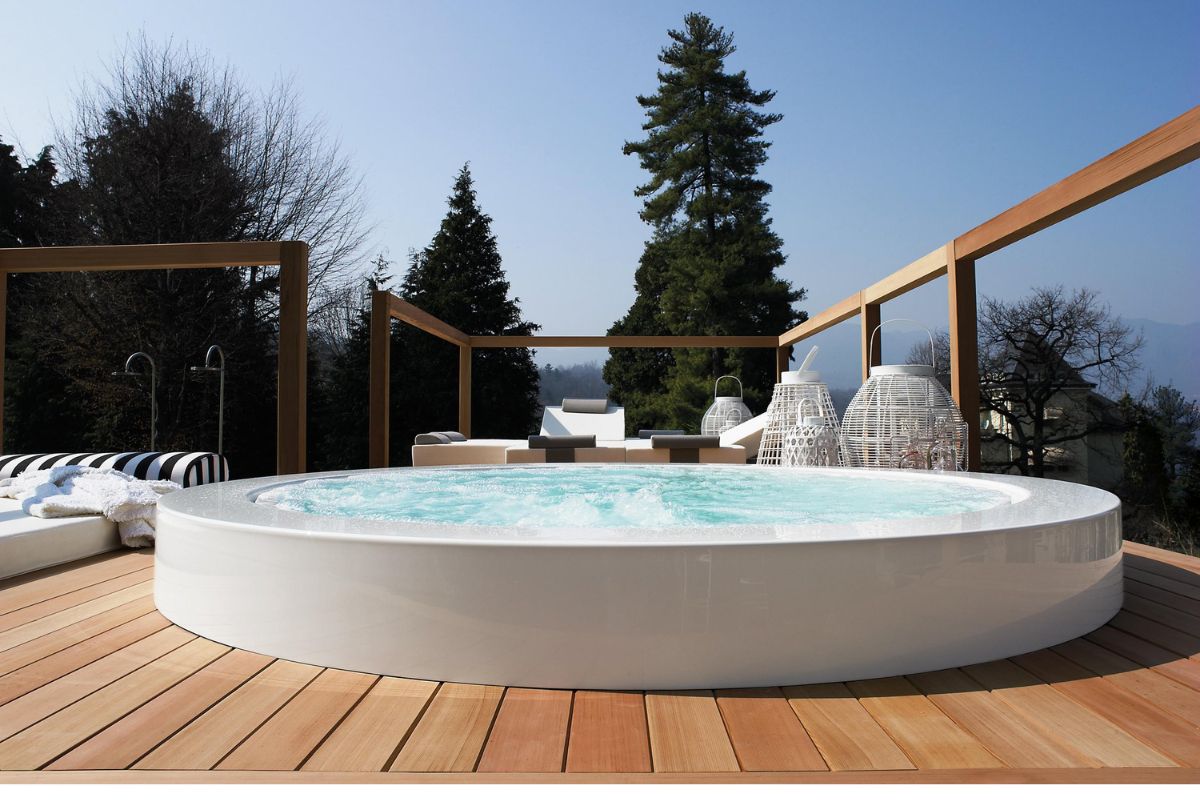
Choosing a luxury mini spa for the garden does not simply mean focusing on aesthetics or the number of jets. What really makes the difference is how it will be used, how it relates to the outdoor space, the type of installation and the quality of long-term management. In other words, an outdoor mini spa should be considered part of the design project: not only as a wellness experience, but as a volume, a weight, a footprint, a maintenance commitment and a visual presence within the domestic landscape. This is also why the most common online questions tend to revolve around the same themes: outdoor mini spa prices, garden mini spa permits, mini spa on a terrace, outdoor mini spa energy consumption and the difference between a simple hot tub and a true luxury hydromassage mini pool.
3-person or 5-person outdoor mini spa?
One of the first decisions concerns the actual size of the product. A 3-person outdoor mini spa can already offer a very comfortable experience in compact settings: product sheets include, for example, models measuring around 200 x 150 cm, with 498 litres of water and a filled weight of around 748 kg. A 5-person outdoor mini spa, on the other hand, moves into a different scale: dimensions can easily reach 220 x 220 cm, capacity may rise to 1,200–1,480 litres, and in some cases manufacturers indicate for terraces and slabs a required load-bearing capacity of 400 to 450 kg/m². This means that choosing between 3 and 5 seats is not only a matter of sociability, but of design, structure and circulation space around the spa.
Built-in outdoor mini pool or freestanding model?
The type of installation also changes the final result significantly. A built-in outdoor mini pool tends to integrate better with the overall design of the garden, deck or terrace and creates a more architectural image. A freestanding model, by contrast, is often easier to install and less invasive from an operational perspective. Some products, such as MySpa 195_E by Glass 1989, allow for both options, clearly showing how the market is moving towards solutions that are more flexible and more open from a design standpoint. The choice, therefore, does not depend only on taste, but on how much you want the spa to assert itself visually or, on the contrary, blend into the built landscape.
What really matters in a luxury hydromassage mini pool
At the higher end of the market, the difference is not made by one extra decorative detail, but by a combination of less visible and far more decisive factors: thermal insulation, filtration, cover quality, ease of drainage, technical accessibility and continuity of use. Premium lines focus precisely on these aspects, speaking about remote control, high-performance filtration and energy efficiency, while technical FAQs also stress the importance of planning a drainage system in the spa area to avoid water build-up around the tub. The point is simple: a luxury hydromassage mini pool is defined less by its initial promise and more by how well it performs over time.
Mini spa on a terrace: first the load, then the design
Product sheets make it very clear that weight and structural load cannot be treated lightly: several models indicate a required load capacity for terraces and slabs between 400 and 450 kg/m², while guides generally remind users that, before installing any tub, it is essential to assess the slab capacity and add together the weight of the structure, the water and the people using it. In practice, design comes second: first technical feasibility must be verified, then the visual effect and comfort can be considered.
How much does an outdoor mini spa cost?
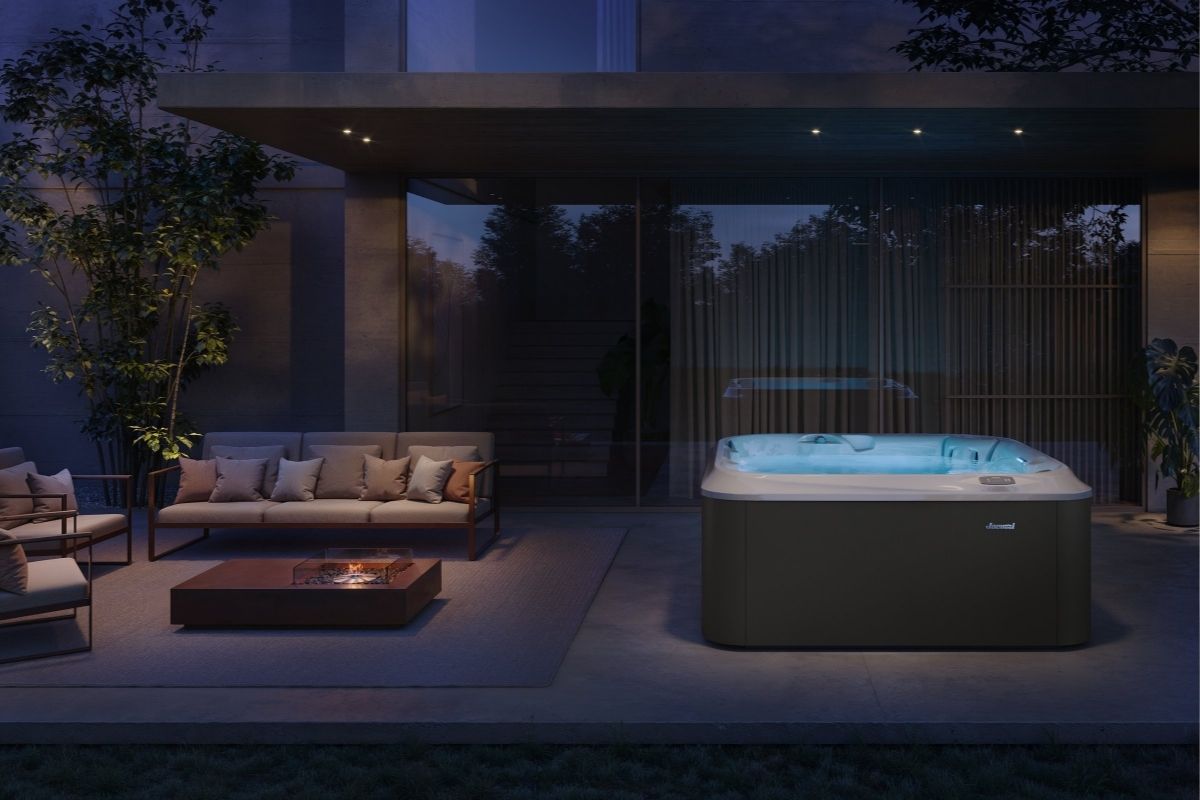
When it comes to outdoor mini spa prices, it is helpful to distinguish immediately between entry level, mid-range and truly premium segments. Looking broadly at the market, the most affordable solutions may start from around €1,779 including VAT, but this is still far from the concept of luxury and much closer to an accessible or temporary purchase. The first more structured rigid mini pools are positioned instead around €4,399 to €4,959, while fuller and larger models can easily rise to €6,459 or €6,900. It is at this point that the mini spa stops being a simple accessory and starts to resemble a real investment for the outdoor space.
The high-end segment, however, often follows a different logic. Among brands more oriented towards design or premium wellness, prices are not always displayed directly: in some cases only a price range is shown, while in others configuration or a quotation is required. This detail already says a lot. Once you truly enter the territory of the luxury outdoor mini spa, the cost depends not only on the product itself, but also on customisation, finishes, installation, accessories, privacy screening, insulation and the design of the surrounding area. That is why the question how much does an outdoor mini spa cost does not have one single answer: the price changes radically depending on whether you are buying a tub to place outdoors or a design element to integrate into a high-end outdoor project.
Useful information about garden mini spas
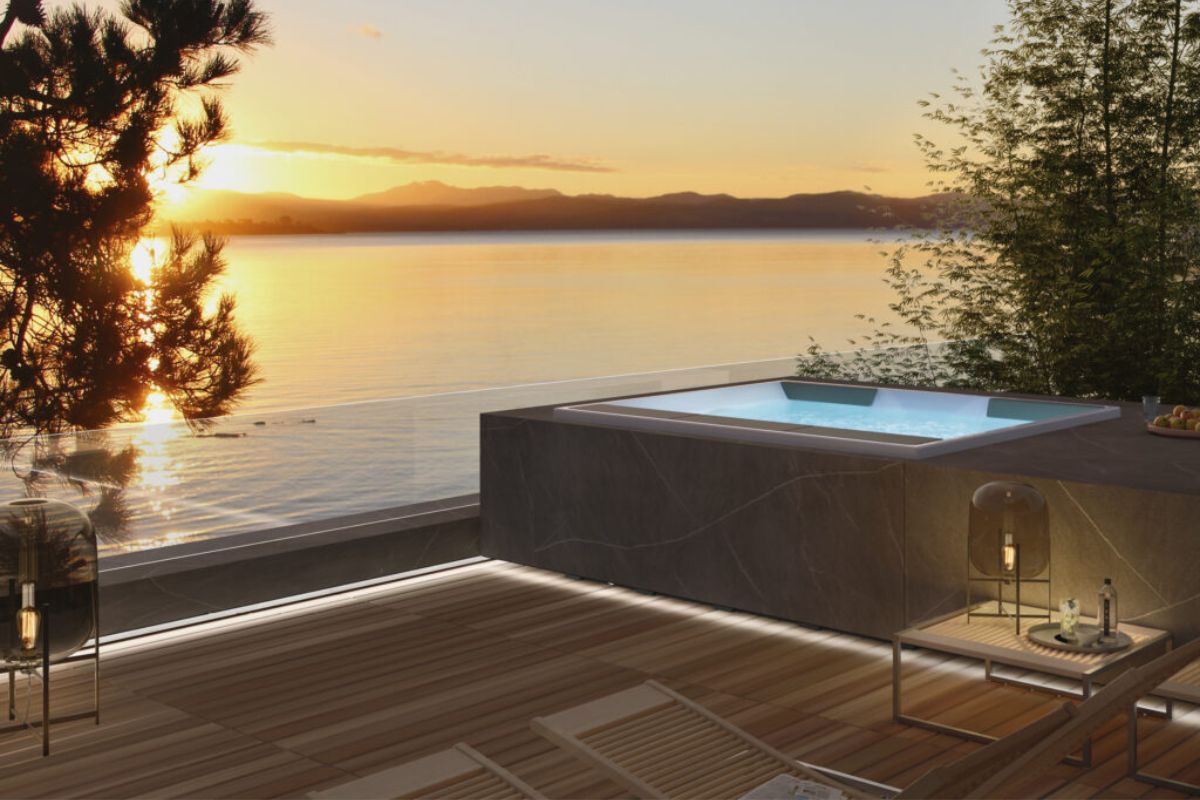
Do you need permits for a mini spa in the garden?
The most accurate answer is that there is no single rule valid for every case. Recent guides point out that above-ground, removable, seasonal structures without building work may more easily fall into situations that do not require specific permits. However, when fixed works, permanent bases, condominium contexts or planning restrictions are involved, the issue changes and must be assessed case by case. In a serious article, it is better to avoid shortcuts here: a mini spa is not automatically “free” from permits simply because it is not an in-ground swimming pool.
Outdoor mini spa energy consumption: how much does it really matter?
The energy consumption of a hydromassage mini pool generally starts at around 3 kW and can go beyond 7 kW in more accessorised models. At the same time, some manufacturers cite examples of well-insulated mini pools claiming 2.3 kW at full regime or about 2.9 kWh per day. The point, therefore, is not to search for one absolute number valid for all products, but to understand that energy consumption, insulation, thermal cover, outdoor temperature and frequency of use must all be read together. An efficient mini spa is not simply one that “consumes less”, but one that is well designed to reduce heat loss and maintain performance over time.
How often does a mini spa need maintenance?
Guides from the best mini pool brands insist on filtration, sanitisation, debris removal, wall cleaning and regular monitoring of water parameters. Others remind users that, in normal use, the mini pool should still be emptied periodically and that it is wise to plan a drainage system in the spa area already at the design stage. Here too, true luxury is measured in management: a mini spa is more successful when it remains easy to maintain, safe and compatible with the rhythm of everyday life.
Is a rigid, semi-rigid or inflatable mini spa better?
The difference between these three categories is far more substantial than it may seem. Aquavia’s guides explain that a rigid spa offers a stronger shell, more stable materials, better comfort, higher efficiency and a lifespan that can exceed ten years. The inflatable version, by contrast, remains a more accessible and temporary choice, interesting for occasional use but less coherent with a high-quality outdoor design project. In an article dedicated to the luxury garden mini spa, this point is decisive: luxury lies not only in shape, but in durability, quality of experience and the product’s ability to remain credible over time.
What is the difference between a mini pool and a hot tub?
Yes, there is a difference, and it mainly concerns the way the product is conceived and experienced. Online buying guides show that the term hot tub is often used broadly, while hydromassage mini pool tends to refer to more structured products, with larger capacity, more stable indoor or outdoor use and installations intended to remain in place. It is not only a matter of wording: in many cases the scale of the project changes, along with the relationship with outdoor space, the system weight and the permanence of the intervention. This is also why, in the language of designers, the mini pool now plays a different role from the occasional spa used purely for leisure.
Leave a comment