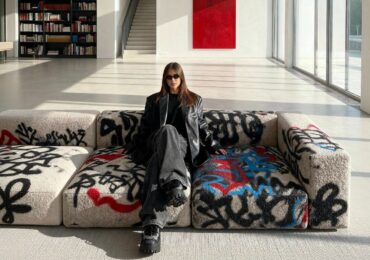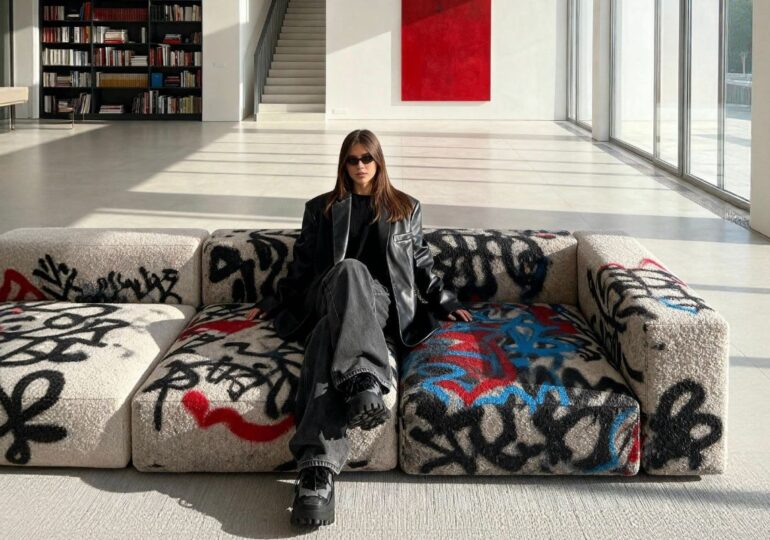
In design, attention often settles on the big names, the historic brands, the companies that have already secured their place in the international imagination. And yet, some of the most compelling stories take shape elsewhere too: in those emerging labels that begin to stand out not because of the noise they make, but because of the clarity of their identity. These are brands that tap into a new need, introduce a bolder aesthetic, or offer a different reading of contemporary living, and for that very reason they deserve to be watched closely. It is with this perspective that today we turn our attention to MARYEEFI, the brand founded by Marina Efimova, which transforms the sofa into a sculptural, modular, and deeply narrative presence, bringing to the living space a vision that looks simultaneously to art, design, and architecture.
What makes MARYEEFI compelling today is not only its instantly recognizable visual component. It is, above all, the way the brand defines a clear position within the landscape of contemporary design: not simply furniture, but sculptural objects for living spaces, conceived not to disappear into an interior but to set its tone, guide perception, and assert a presence. The project moves at the intersection of art, design, and architecture, with particular attention to form, modularity, expressive surfaces, and a made-to-order approach to production.
In this sense, looking at MARYEEFI means recognizing a broader shift within interior design itself: the return of furniture that does not ask for neutrality, but for identity. Furniture that does not merely solve a function, but participates in the emotional and cultural construction of space. This is where Marina Efimova’s artistic modular sofas find their strength: in the ability to move between comfort, composition, and visual language with a coherence that is rare for an emerging brand.
Who is Marina Efimova
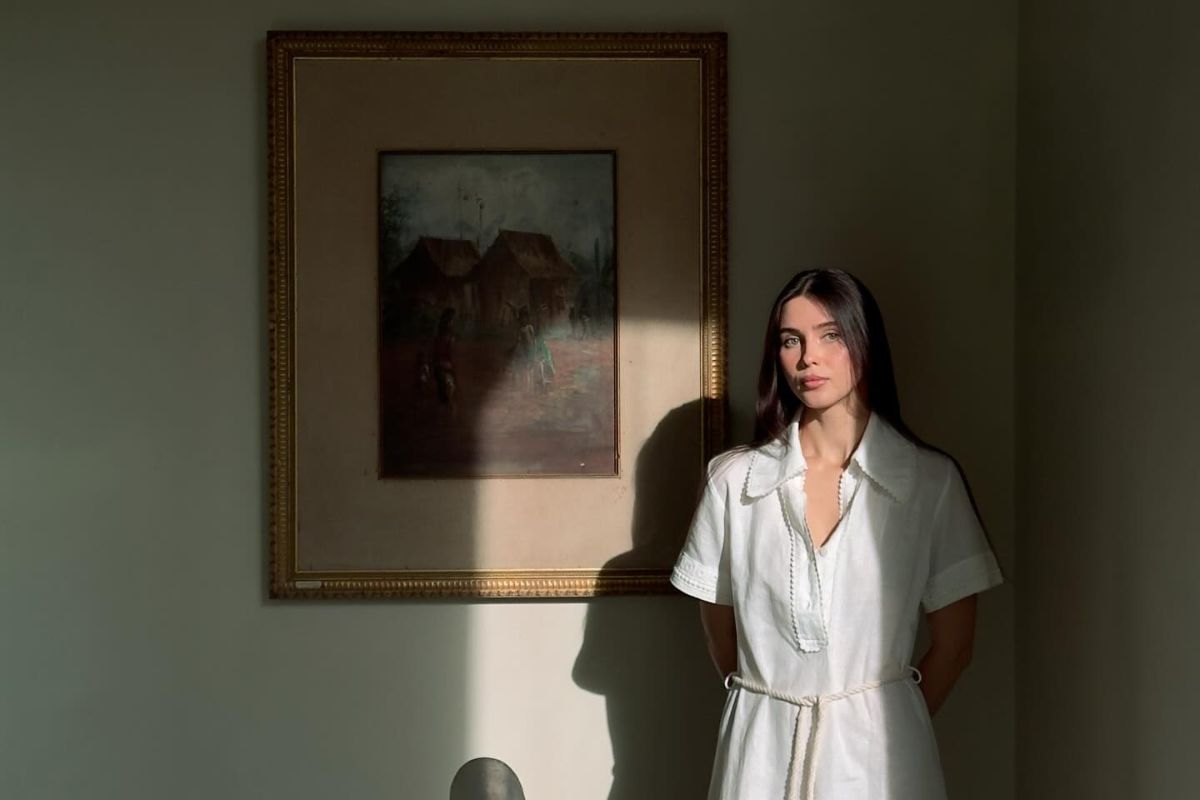
Behind the project is Marina Efimova, the brand’s founder and creative director, a designer who has built a personal and immediately recognizable language out of a deeply contemporary tension between instinct and clarity, between spontaneous impulse and formal control. Her visual research seems to draw on an imaginary made of raw textures, irregular marks, traces, layers, graphic memories, and references to early 2000s culture, within a sensibility suspended between the before and after of the digital revolution. It is precisely in this in-between space, between free gesture and conscious construction, that the DNA of MARYEEFI takes shape.
From this comes one of the brand’s most recognizable characteristics: the ability to bring into the sofa a vocabulary that draws simultaneously from childlike drawing, street culture, graffiti, intuitive composition, and a certain urban energy that is never fully tamed. Not as a mere decorative exercise, however, but as a true construction of identity. The surfaces seem to hold onto a gesture, a memory, a form of immediate expression that gives the sofa a new presence: no longer a silent backdrop within the room, but a narrative surface, an element that directs the gaze and imprints character onto the space. In this sense, the brand inserts itself powerfully into the broader conversation around the best design sofas of 2026, where the themes of modularity and the sofa’s scenographic presence are becoming increasingly central.
This personal matrix does not remain confined to style alone, nor does it end in a visual signature. It becomes a true design method. For Marina Efimova, the sofa turns into an art object when its surface stops being purely decorative and takes on the value of visual presence, emotional tension, and an active role within the room. In this vision, objects should not simply occupy a space, but help define it, make it more expressive, more recognizable, and more personal. It is precisely in this ability to hold together comfort, form, and visual intensity that MARYEEFI builds its most distinctive identity today, in ideal dialogue with the story of the iconic sofas that made design history and with a new generation of contemporary sofa brands.
When the MARYEEFI brand emerged
MARYEEFI emerged on the international scene in 2025 and immediately stood out for a quality that is not so common among young brands: it arrived with a language that was already recognizable, with a precise visual imagination, and with a proposal that did not feel like an experiment still searching for its form, but like a project already fully aware of its own territory. This is exactly what makes it interesting: despite being a recent brand, it already has the strength to enter into dialogue with far more established names, because it does not try to resemble what already exists. Instead, it sets itself apart through a clear identity built around the artistic modular sofa, the narrative surface, the interchangeable cover, and a vision of living that is more expressive, more sculptural, and more deeply tied to identity. In a landscape often crowded with products that are correct yet interchangeable, MARYEEFI stands out for precisely this reason: for its ability to transform the sofa into a visual presence, a design gesture, an auteur element.
The Art Sofa concept and the sofa as a work to be lived
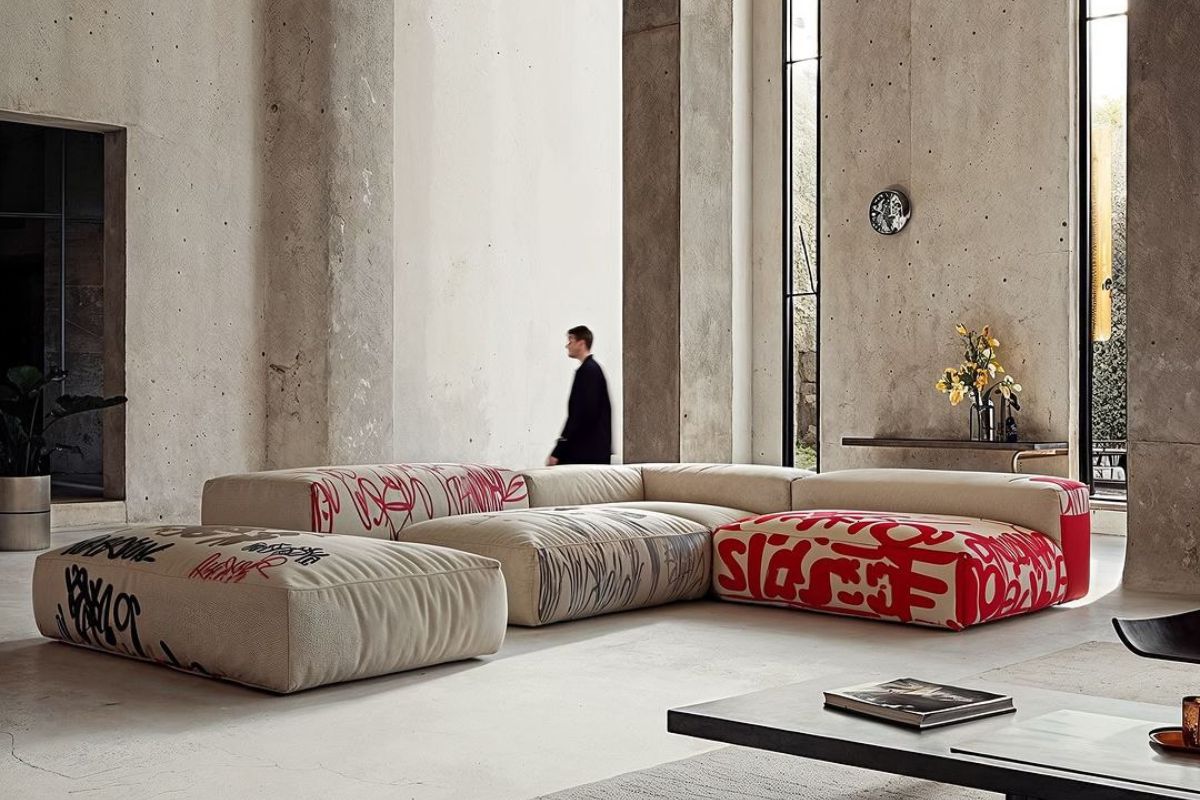
At the core of the MARYEEFI project is the reading of the sofa as an Art Sofa: an object that fully retains its function while acquiring an expressive force capable of bringing it closer to art. The silhouettes are sculptural, the construction of the image is strongly authorial, the textile surfaces become vehicles of language, and modularity is not only technical, but visual as well.
This is where MARYEEFI builds its difference from many other modular design sofa brands. It does not work only on composability, but on a form of visual intensity. The sofa is not treated as a neutral backdrop within the living room, but as the visual center of the living space, an element that guides the gaze, sets an atmosphere, and introduces an immediately perceptible identity into the room.
At a time when interior design is once again drawn to pieces capable of combining personality, comfort, and recognizability, this position appears especially interesting. Because here, the sofa does not simply serve to complete the room: it serves to tell its story.
The MONO system and modularity as a language
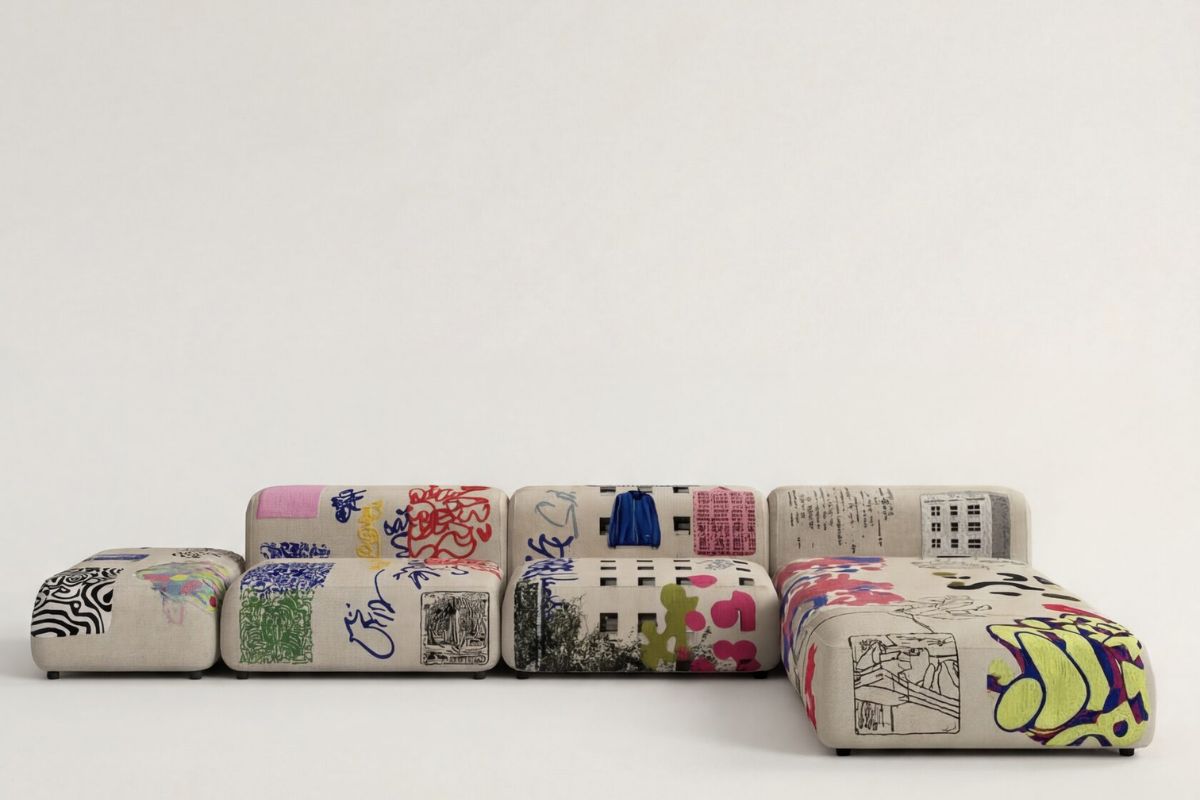
At the heart of the collection is the MONO system, a modular structure designed to generate different configurations starting from a single formal grammar. More than a simple sectional system, MONO appears as an open platform for contemporary living: the modules connect, separate, and recombine, turning the sofa into an object capable of adapting to space without losing presence.
This is the interesting point: in MARYEEFI, modularity is not a cold or purely technical solution. It becomes a compositional language. Today, the living space requires objects that can adapt to fluid domestic or professional contexts without giving up character. MARYEEFI modules seem to respond well to this need: they change configuration, yet always maintain a strong visual imprint.
Each composition thus acquires the value of a true spatial statement. The sofa does not merely occupy a point in the room, but alters its balance, introduces rhythm, and constructs a visual hierarchy. It is a form of modularity that does not simply follow space: to a certain extent, it designs it.
Interchangeable covers: the detail that changes the project
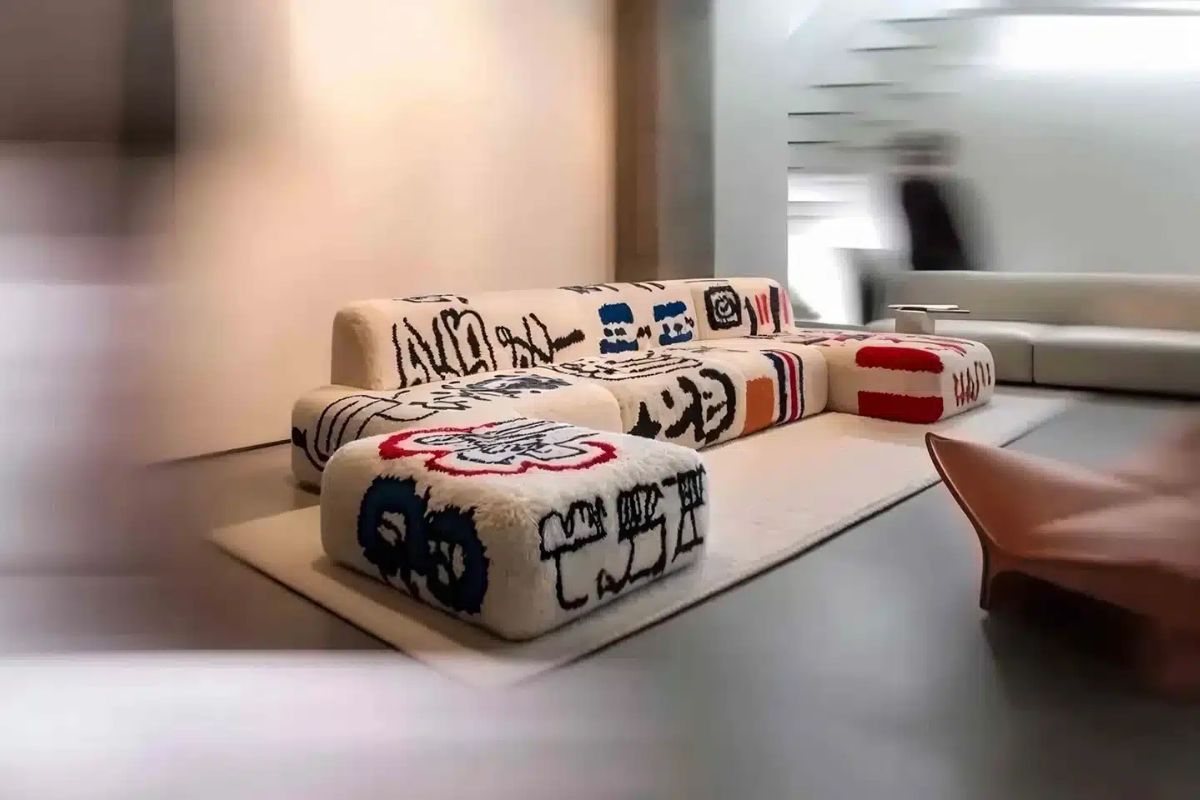
One of the most original aspects of the MARYEEFI proposal is its interchangeable cover system, which transforms the sofa into an object that is stable but never static. The structure remains, while the surface can change over time: removed, replaced, updated, reinterpreted. It is a detail that radically alters the project because it introduces a new idea of continuity.
The point is not merely practical. It is above all aesthetic and cultural. A sofa can maintain its frame, its construction quality, its volumetric presence, and yet renew its image through a new cover. In this way, MARYEEFI creates an object that does not age rigidly, but allows itself to be transformed.
It is a deeply contemporary reflection on the theme of durability as well. Not durability understood as immobility, but as the capacity to evolve. A single object can move through different aesthetic seasons, different spatial configurations, different moments of domestic life. It is precisely this flexibility that makes the system especially relevant today: not a piece of furniture to replace, but one to reinterpret.
Made to order, craftsmanship, and the quality of the object
The brand’s positioning is also reinforced by its decision to work made to order. Every piece is developed with attention to proportions, materials, construction, and execution quality. This places MARYEEFI far from the logic of fast serial production and brings it closer instead to a more controlled, slower, more coherent dimension aligned with the idea of designer furniture.
This is an important point, because it prevents the project from remaining image alone. Even when the visual language appears spontaneous, free, almost impulsive, the structure is still governed by rigor, precision, and intention. A significant part of the brand’s quality lies in this tension between expressive gesture and constructive control.
Why MARYEEFI captures the present moment in living design so well
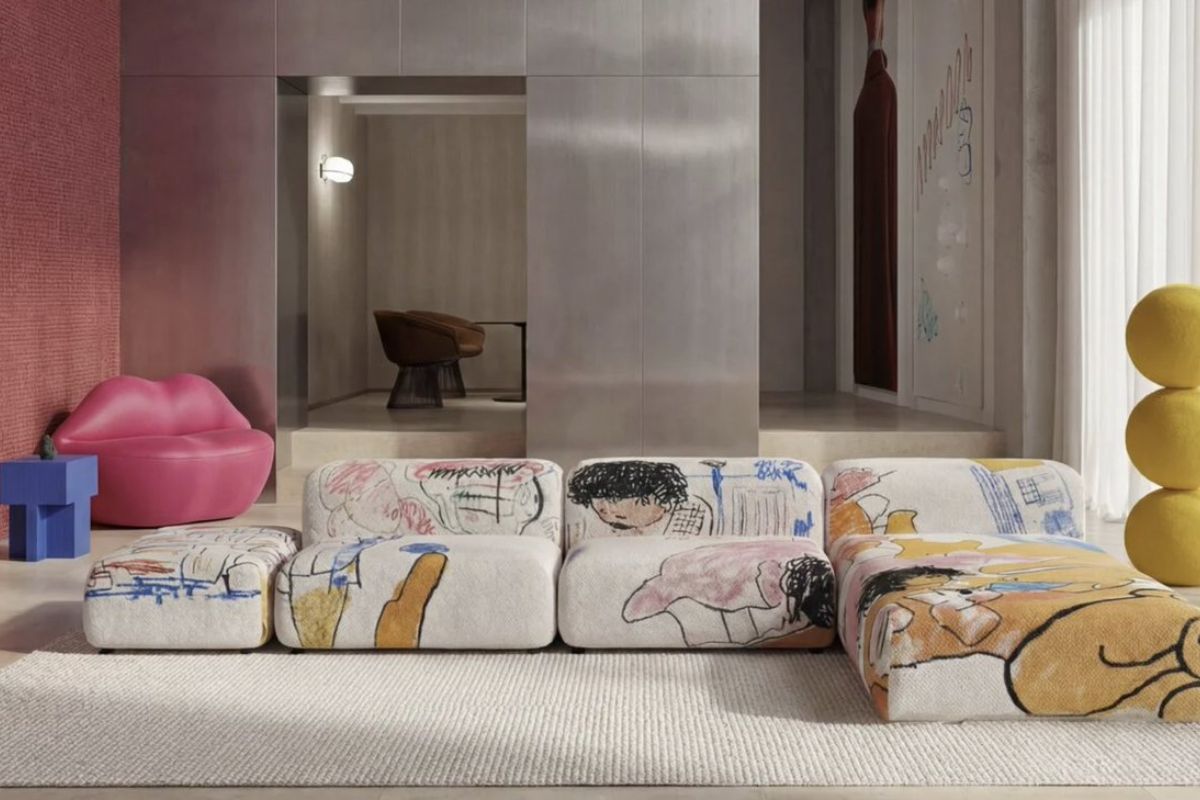
There are brands that arrive at exactly the right time not because they chase a trend, but because they intercept a deeper transformation. MARYEEFI seems to do this well. Today, the living space is not only searching for comfort or composability; it is looking for pieces with a voice, elements capable of giving interiors a sense of individuality.
Within this scenario, Marina Efimova’s work enters with coherence. Her sofa does not want to be universal: it wants to be recognizable. It does not seek neutrality, but a form of emotional minimalism, made of clear volumes and expressive surfaces. It is this balance between formal clarity and visual intensity that makes it interesting to those looking at the boundary between interior design, collectible furniture, and statement pieces.
MARYEEFI and a new idea of auteur furniture
MARYEEFI is one of those names worth watching closely if you want to understand the direction in which contemporary living design is moving. The brand founded by Marina Efimova places three powerful ideas at the center of the project: the sofa as an art object to live with, modularity as a compositional language, and the interchangeable cover as a tool for aesthetic evolution over time.
What emerges is a system that holds together sculptural presence, personalization, made-to-order production, and a visual sensibility capable of fusing childlike gesture, urban culture, and architectural clarity. Above all, it gives rise to an idea of furniture that is less passive, less predictable, and more authorial.
In a market saturated with products that are often correct but interchangeable, MARYEEFI stands out because it does not try to be quiet. It tries, instead, to leave a mark.
Leave a comment