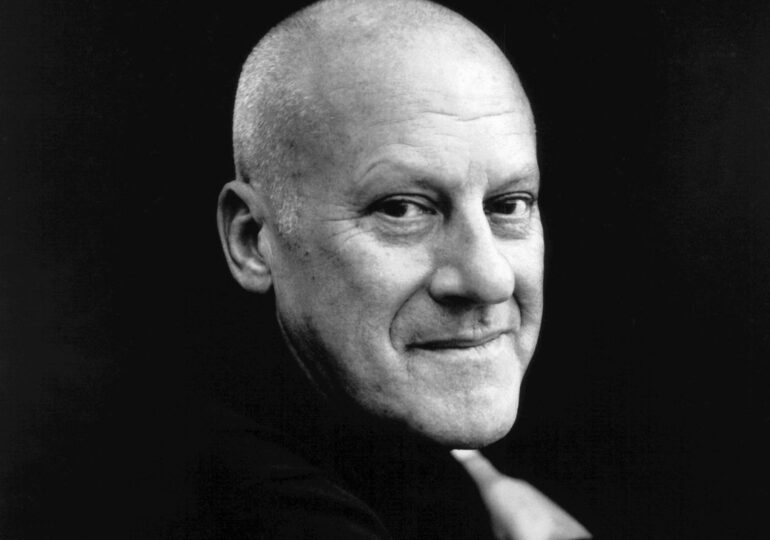
Norman Robert Foster was born in Manchester on 1 June 1935 , in a working-class neighbourhood. He grew up in a modest family, in a city marked by heavy industry and the great urban transformations of the post-war period. This context, made up of factories, railways and working-class neighborhoods, influenced him profoundly: his sensitivity for technology, infrastructures and the social dimension of architecture was already formed in those years.
Foster did not have a comfortable childhood: he worked from a young age, cultivating a passion for technical drawing and architecture as a possibility of redemption. His personal story, more than many other contemporary architects, is also a tale of social ascent , which will lead him to become one of the undisputed masters of the discipline.
Norman Foster’s studies
After completing his military service in the Royal Air Force, Foster attended the Manchester School of Architecture , immediately distinguishing himself for his curiosity towards new construction technologies. With a scholarship he managed to arrive in the United States, where he completed his master’s degree at the prestigious Yale School of Architecture . Here he came into contact with personalities who would mark his career, including Paul Rudolph and above all Richard Buckminster Fuller , the brilliant visionary of geodesic domes.
From Fuller he inherited the belief that architecture must be at the same time light, technological and sustainable : principles that would become the cornerstones of all his production.
What was the initial path of your career?
In the 1960s, Foster returned to the United Kingdom and, together with Richard Rogers (another great interpreter of high-tech), founded the group Team 4 , active from 1963 to 1967. From that experience the studio Foster Associates was born in 1967, which later became Foster + Partners , today one of the most important architecture firms in the world, with offices in different continents and over 1,500 collaborators.
Early works, such as Willis Faber & Dumas Headquarters in Ipswich (1974) and the Sainsbury Center for Visual Arts in Norwich (1978) , already reveal Foster’s stylistic signature: transparency, technical innovation, attention to the well-being of users.
What is Norman Foster’s architectural philosophy?
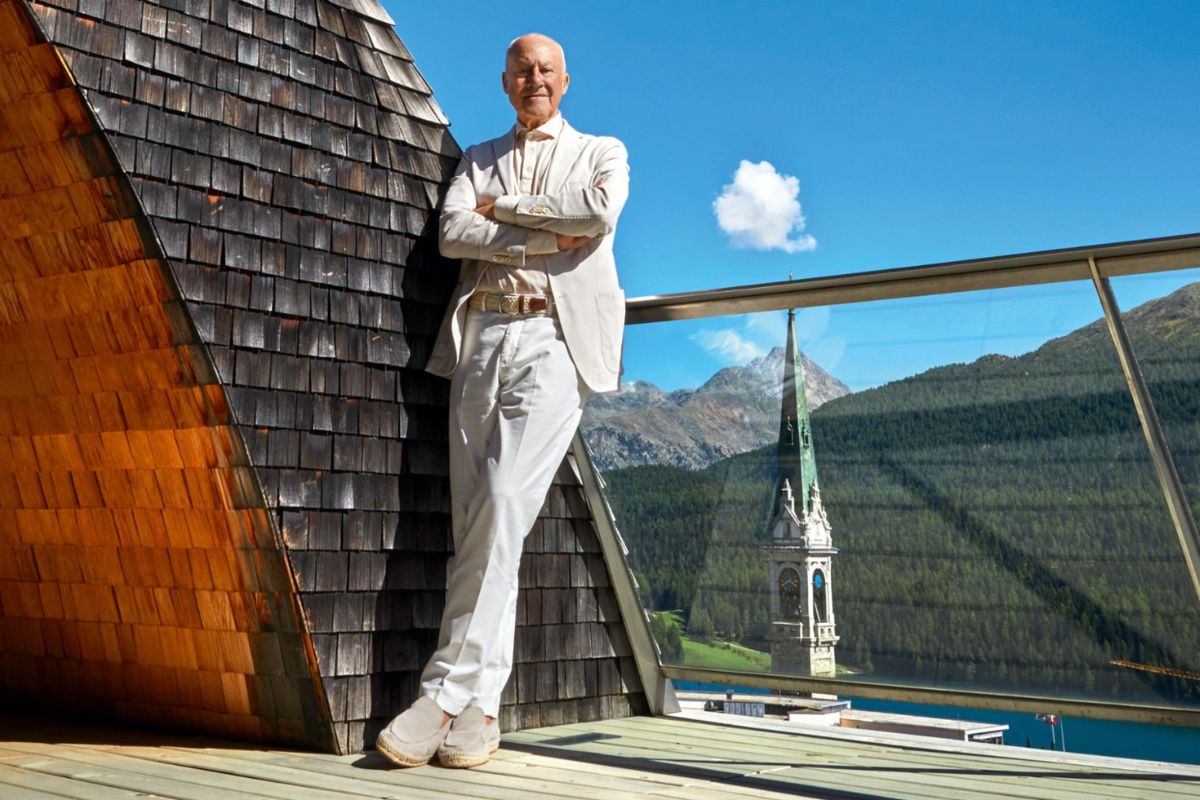
Norman Foster’s philosophy is summed up in a phrase that he himself repeated several times: Architecture is a social process even before an aesthetic one .
For Foster, a building is never an isolated object, but a fragment of the city, a device that influences people’s lives. Hence his attention to:
-
transparency and natural light , democratic tools to make spaces accessible and open;
-
technology as an aesthetic language , not hidden but proudly displayed, as in light steel and glass structures;
-
flexibility and adaptability , because a building must live over time, change with society, not be an immobile monument.
Foster knew how to make an engineerpoetic blackness is his distinctive trait: his projects are perfect machines, but at the same time capable of exciting and inspiring.
What role does sustainability play in your projects?
Long before the word “green” entered the lexicon of contemporary architecture, Foster had already made sustainability a pillar of his practice.
The Commerzbank Tower in Frankfurt (1997) was the first skyscraper to integrate vertical gardens and a natural ventilation system. The Reichstag Dome in Berlin (1999) uses conical mirrors to reflect light and reduce artificial use. Even the Gherkin in London (2004) was designed with an aerodynamic structure that reduces energy consumption.
For Foster, sustainability is not an addition, but an intrinsic principle: every building must dialogue with the environment , reduce consumption and generate well-being. It is no coincidence that his studio has always invested in research, innovative materials and new construction technologies.
What awards and recognitions have you received?
The list is long and prestigious. Norman Foster received the Pritzker Architecture Prize in 1999 , considered the “Nobel” of architecture, and has been awarded numerous international honors, including the Japanese Praemium Imperiale . In 1990 Queen Elizabeth II appointed him Sir Norman Foster , while in 1999 he received the title of Baron Foster of Thames Bank , joining the House of Lords.
These awards are not just personal celebrations: they reflect the global impact of an architect who has been able to transform cities into more intelligent and resilient organisms.
How has it influenced new generations of architects?
Foster’s legacy is not limited to buildings. Entire generations of architects have learned from him to think of architecture as an integrated system , in which aesthetics, technique and sustainability coexist. The Foster + Partners studio, with over 1,500 professionals, has become a widespread school, a laboratory that has trained designers, engineers and urban planners who are now protagonists on the international scene.
His influence can also be seen in his ability to combine futuristic visions with real needs: Foster never stopped designing airports, stations, infrastructures, public spaces, convinced that the true greatness of architecture lies in improving the daily lives of millions of people.
What is Norman Foster’s contribution to the future of architecture?
Looking to the future, Foster remained faithful to his pioneering vocation. Today his studio works on projects related to sustainable cities , to electric and air mobility , to colonization of space (as in the Lunar Habitats project for the European Space Agency).
His contribution is that of an architect who has always been ahead of his time, imagining visionary solutions that later became standard. The greatest legacy is not only the iconic buildings, but the message: architecture and technology can coexist with beauty and responsibility .
The 5 iconic projects
Berlin Reichstag The dome of democracy
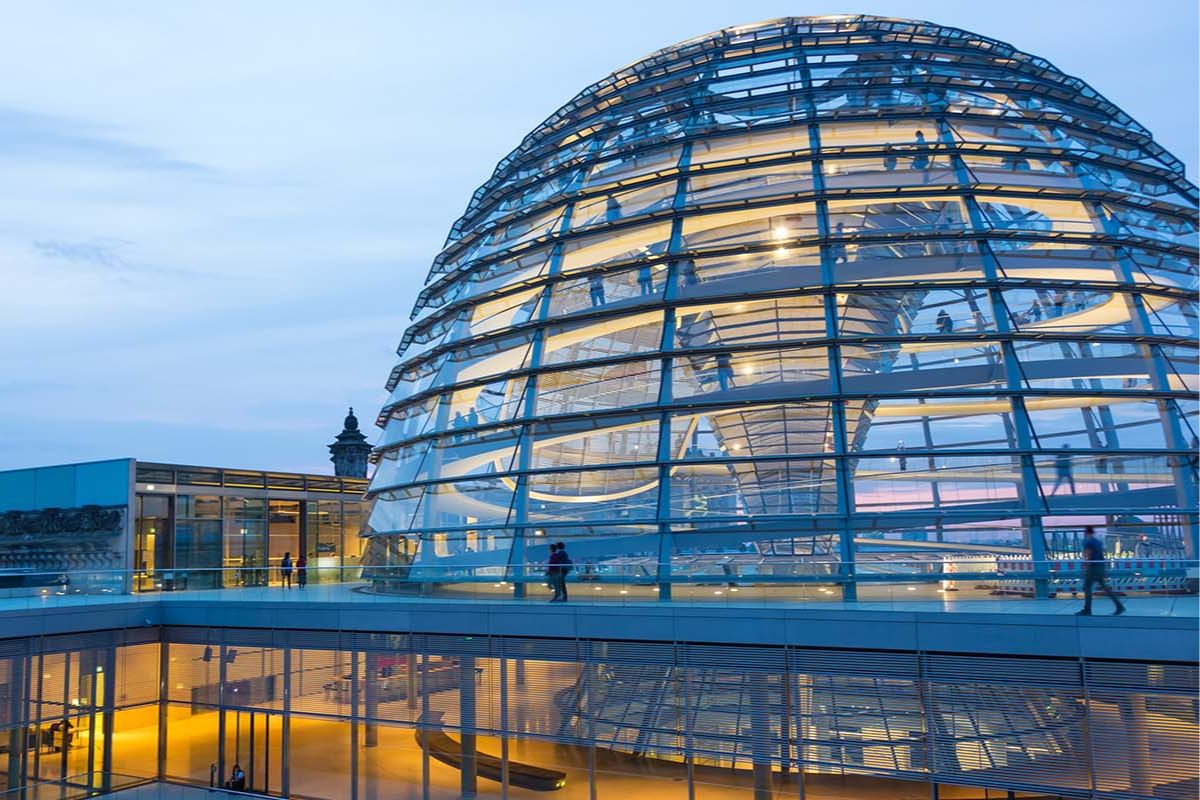
When Norman Foster inaugurated the new dome of the Reichstag in 1999 , Germany had just emerged from the fractures of the Cold War. The choice to transform the German Parliament into a transparent building is not just architecture, but visual politics : the glass and steel dome becomes a symbol of rebirth and democratic openness .
Climbing the helical ramp, citizens can observe the parliamentary chamber from above, in a gesture that overturns the hierarchy: it is not the people who are looked at by power, but the power that is observed by the people. A lesson in civil architecture that remains relevant today.
30 St Mary Ax in London The Gherkin that redesigned the skyline
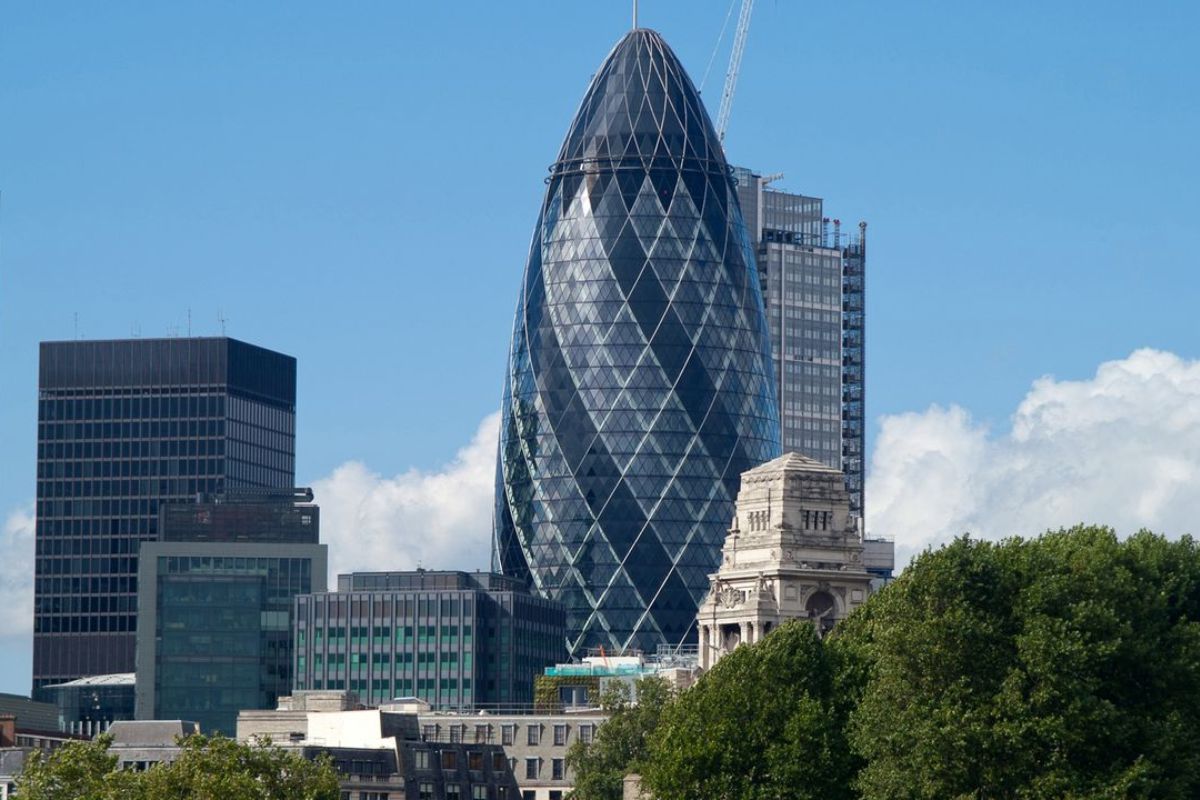
The nickname The Gherkin (the cucumber) does not do justice to the refinement of this building inaugurated in 2004. In London, a city of Gothic and modern architecture, Foster invents an organic skyscraper that seems to breathe like a living organism. Its aerodynamic shape is not just aesthetic: it allows for a 50% reduction in energy consumption compared to a traditional skyscraper.
More than a building, the Gherkin has become a London identity mark , photographed, imitated and recognized throughout the world. Here sustainability is not a constraint, but a form of beauty.
Commerzbank Tower in Frankfurt The first eco-friendly skyscraper
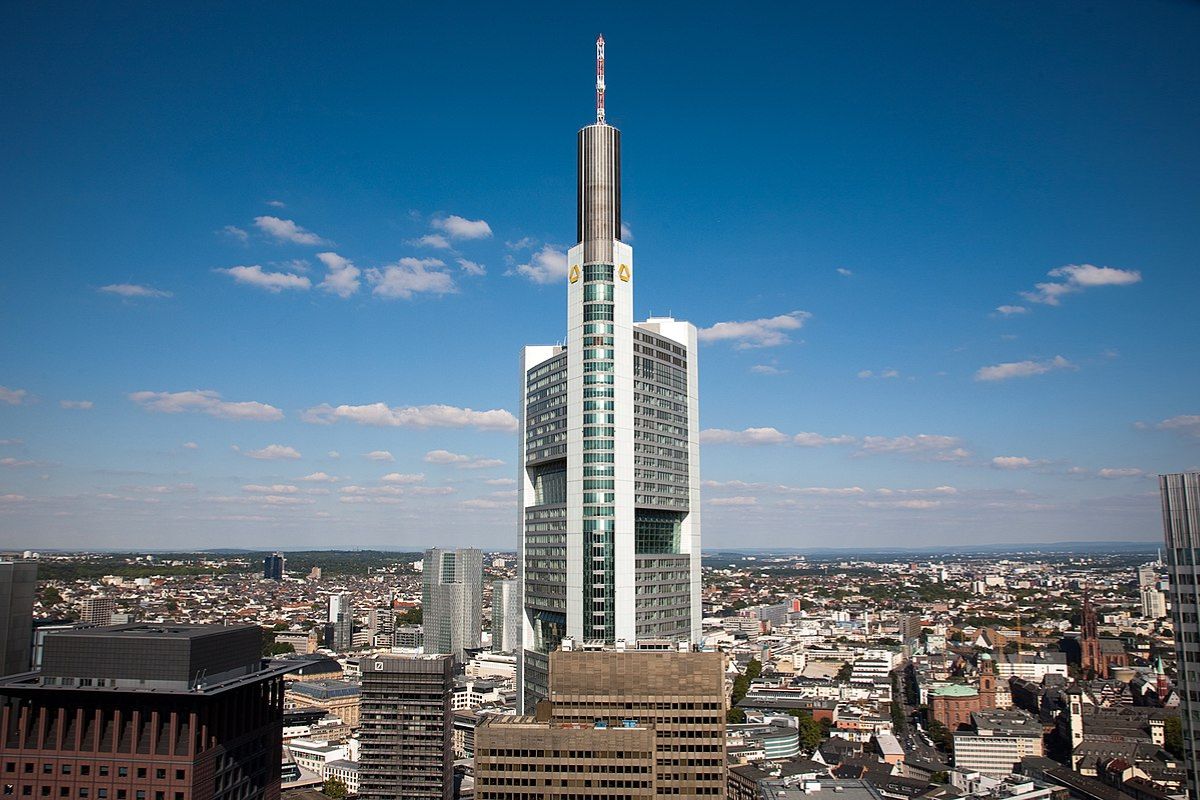
Completed in 1997, the Commerzbank Tower is a skyscraper that anticipates the themes of green architecture by decades. With its internal vertical gardens and a natural ventilation system, it demonstrates that even a 300 meter high building can dialogue with nature.
The result is surprising: bright, green offices, designed for the well-being of workers. A manifesto of how architecture can combine business and quality of life , in one of the financial capitals of Europe.
Chek Lap Kok Airport in Hong Kong The city in motion
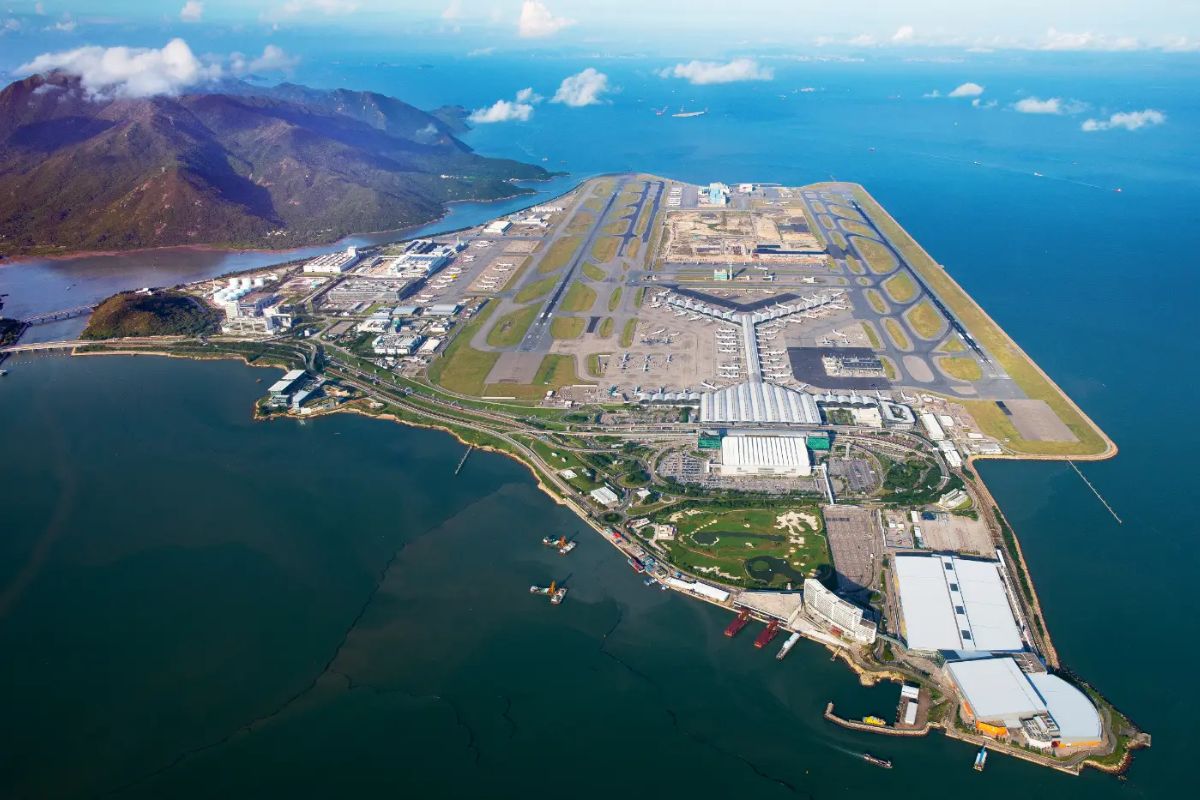
Opened in 1998, Hong Kong Chek Lap Kok International Airport is among the most complex infrastructure ever designed. Here Foster does not just design a terminal, but a metaphor of contemporary travel : undulating roof, natural light filtered through large windows, flows organized with millimetric precision.
It is a place designed to welcome millions of passengers every year without losing lightness. An architecture that celebrates global mobility, maintaining a surprising humanity.
Apple Park in Cupertino Steve Jobs’ spaceship
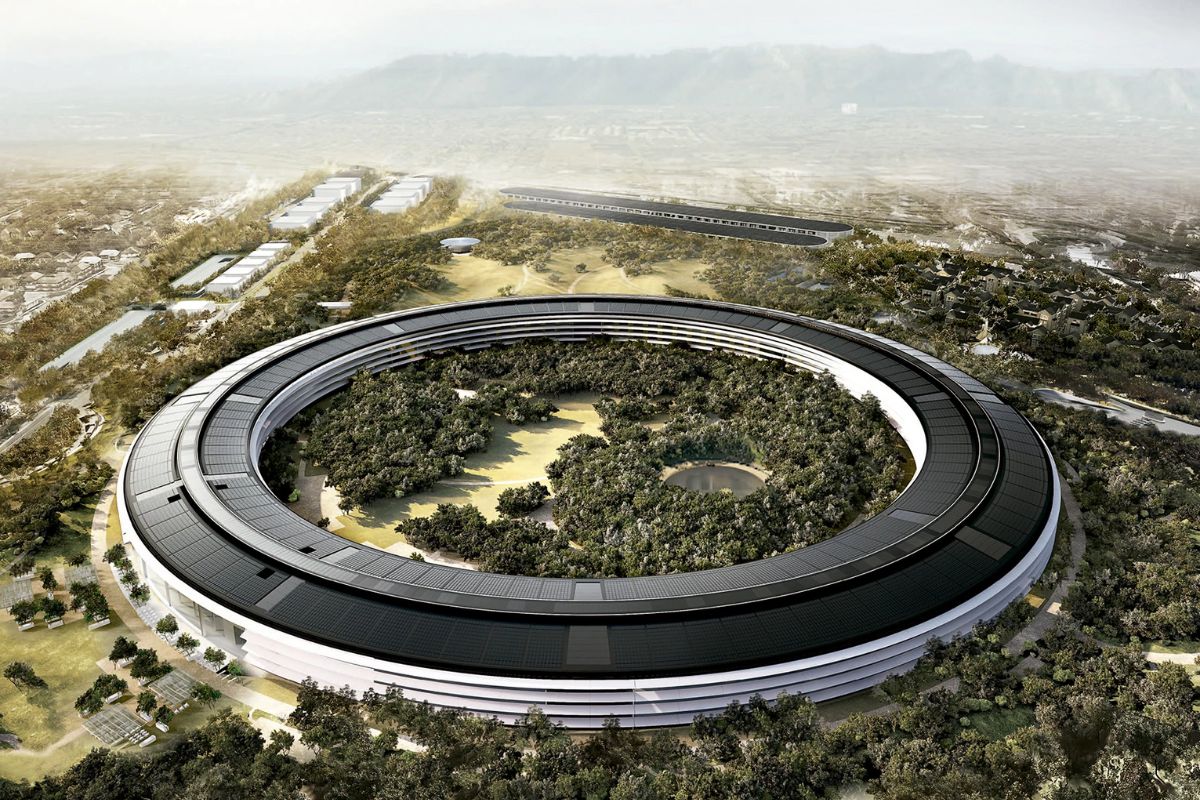
In the heart of Silicon Valley, among the trees of Cupertino, stands the Apple Park , completed in 2017. Designed together with Steve Jobs, it is perhaps the closest project to a futuristic utopia: a ring of glass and steel over a kilometer long, self-sufficient from an energy point of view, immersed in a park with 9,000 trees.
It is not just the headquarters of a company, but a campus designed as an ecosystem , where technology and nature coexist. Jobs called it the house of the future, Foster made it real: an icon that summarizes the culture of Silicon Valley and the idea of ??architecture as a tool for radical innovation.
An architect who writes stories with buildings
Looking at these five projects, it is clear that Foster does not just build, but writes urban stories . Each building is a story: of democracy (Reichstag), of identity (Gherkin), of ecology (Commerzbank), of mobility (Hong Kong), of innovation (Apple Park).
His architecture is never self-referential: it speaks to cities, to people, to the future. This is why, at ninety, Norman Foster remains one of the most influential and visionary architects of our time.
Why Norman Foster remains an absolute reference
Norman Foster is not only a British architect, but a storyteller of cities, a builder of bridges between present and future. From working-class Manchester to the skylines of London, Berlin, New York, Beijing, up to Silicon Valley, his personal and professional trajectory is the story of how architecture can be a driver of progress.
His style, halfway between engineering rationality and poetry of light , continues to inspire not only architects and designers, but anyone who dreams of a world built in balance with nature and people.
Norman Foster today a master still active
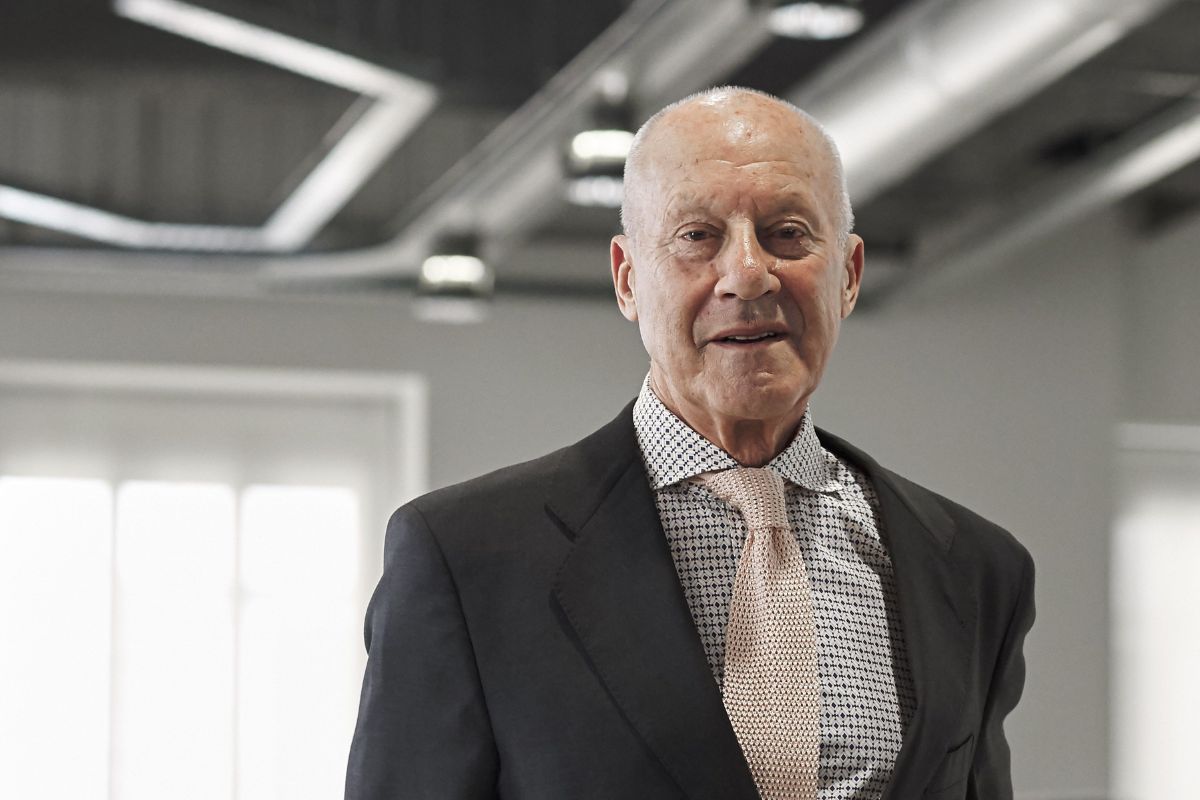
At ninety years old, Norman Foster continues to be one of the most authoritative voices in contemporary architecture. From the London headquarters of Foster + Partners , he still leads an international team working on futuristic projects around the world, from new sustainable infrastructures to cities of the future. In recent years he has been particularly interested in the theme of urban resilience and space colonization , collaborating with scientific agencies and institutions to imagine lunar and Martian habitats. At the same time, he receives global recognition: in 2025 he was awarded at the London Design Festival for his career, confirming an influence that knows no decline.
Today Norman Foster is much more than an architect: he is a living symbol of how vision can transform cities and of how the dialogue between innovation, nature and beauty remains the foundation of 21st century architecture.