Outdoor kitchens now play an increasingly central role in contemporary outdoor projects. It is no longer just about adding a barbecue or a service station to the garden, but about shaping a functional, welcoming space that is consistent with the style of the home. Terraces, porches, and gardens thus become environments to be lived in with greater continuity, where cooking outdoors means combining conviviality, comfort, and design quality.
Alongside the more traditional image of masonry outdoor kitchens, the current landscape offers modular, prefabricated, compact, or highly equipped solutions designed to adapt to very different needs. Some prefer a technical and contemporary steel outdoor kitchen, others choose lighter and more essential aluminum compositions, some desire a system with an integrated barbecue, and others opt for concealed models to reduce visual impact. In this scenario, brands truly make the difference: they influence the quality of materials, durability, compositional freedom, and the overall aesthetic value of the outdoor space.
The best outdoor kitchen brands
1. Boffi
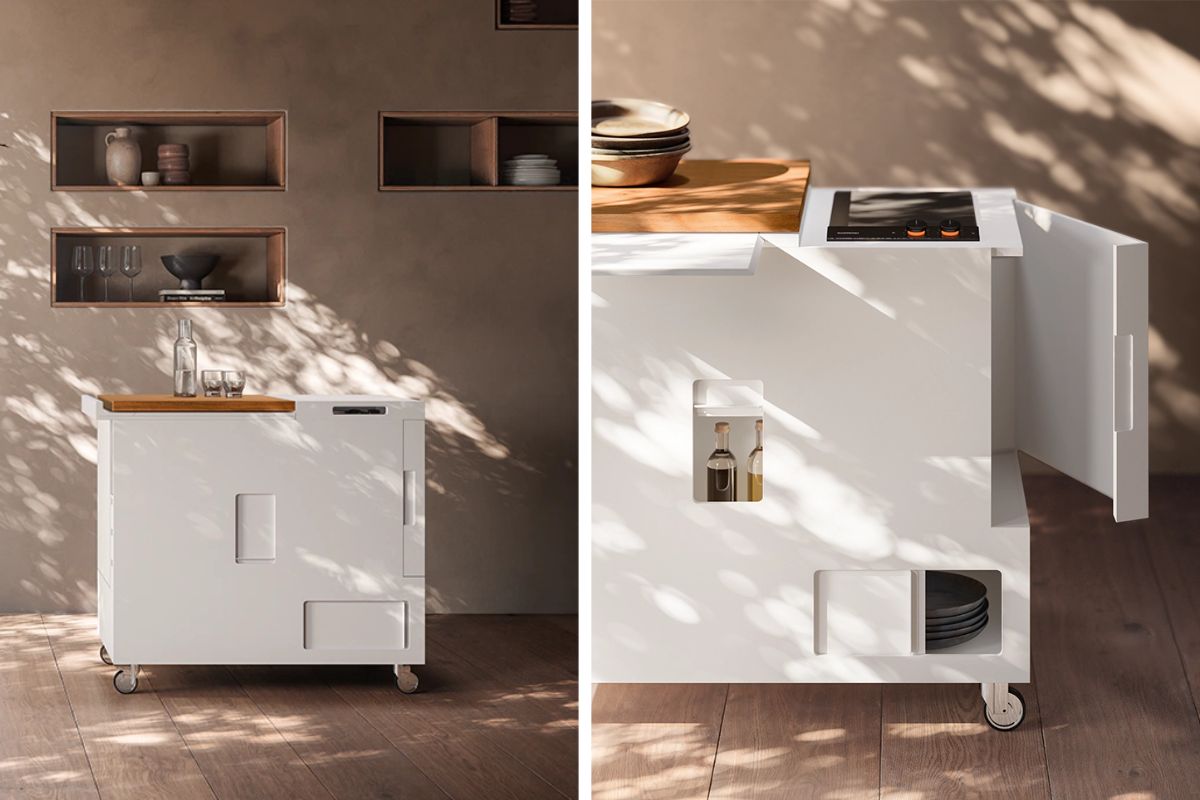
Boffi is rightfully considered one of the best outdoor kitchen brands and brings its essential and architectural language to the outdoors, with kitchens designed to combine formal elegance, functionality, and continuity with the interiors.
Among the most interesting proposals is the Minikitchen Outdoor by Joe Colombo, a re-edition of the iconic 1963 monobloc kitchen reinterpreted for covered outdoor environments. Compact yet complete, it concentrates preparation, cooking, and storage into a single volume, confirming the brand’s ability to transform the outdoor kitchen into a refined and versatile design project.
2. Arclinea
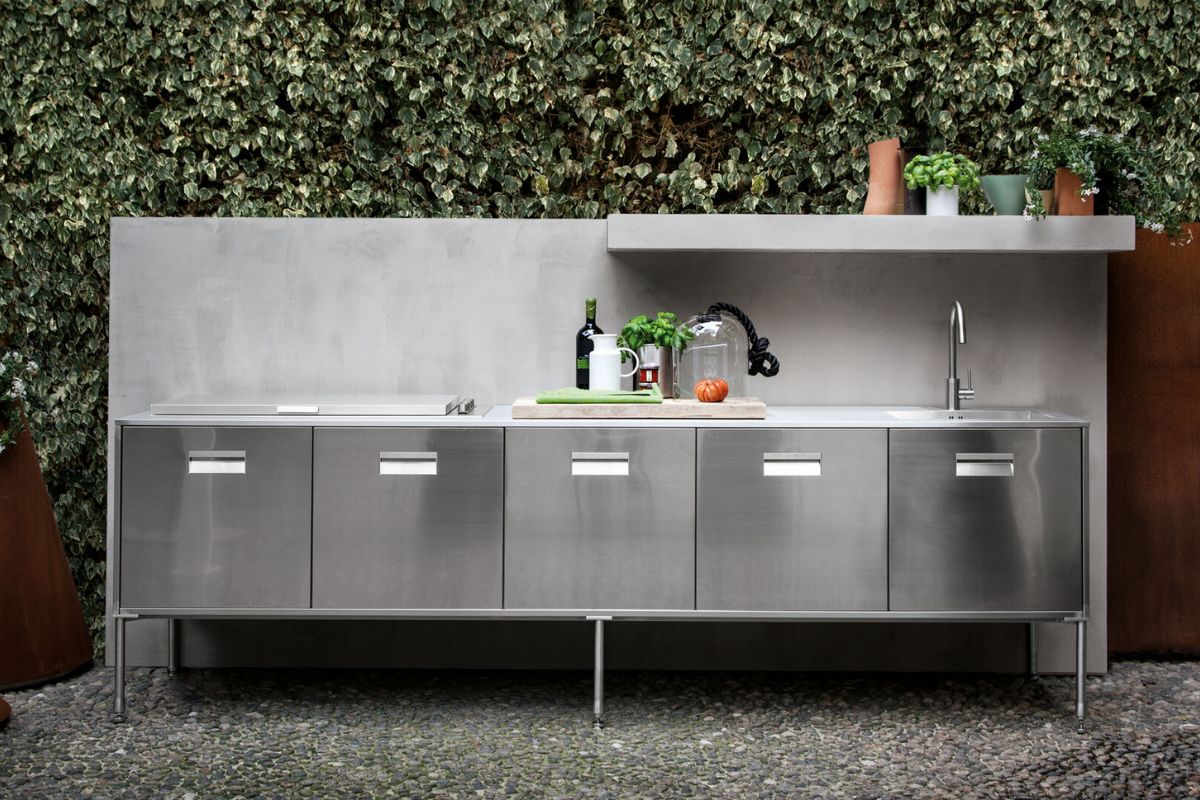
Arclinea confirms its place among the best outdoor kitchen brands thanks to a coherent and constantly evolving design system, where each collection enriches a recognizable vision made of rigor, functionality, and design culture. Even in the outdoors, the brand maintains this identity, translating it into solutions designed to offer high performance, compositional flexibility, and continuity with the home’s architecture. Artusi Outdoor, a project designed by Antonio Citterio, is part of this journey, expressing the brand’s technical and refined approach with particular clarity.
3. MODULNOVA
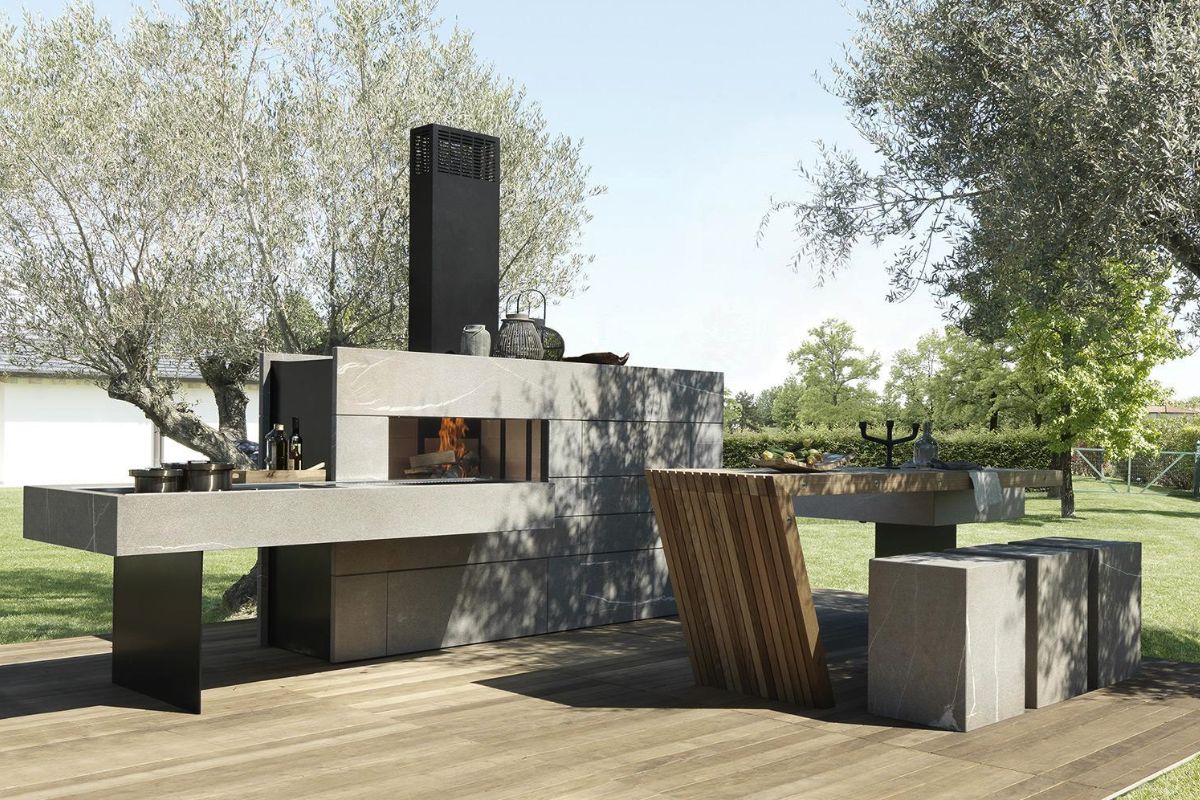
MODULNOVA interprets designer outdoor kitchens with the same formal rigor that distinguishes its indoor collections, bringing essential lines, refined materials, and a high-impact architectural aesthetic to outdoor spaces. The brand stands out for its ability to combine functionality, design rationality, and a strong material identity, transforming the outdoor kitchen into a central element of contemporary living.
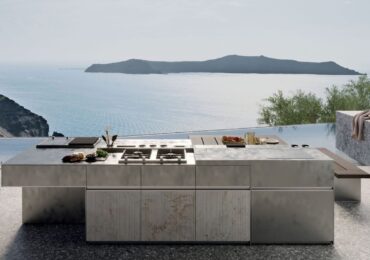
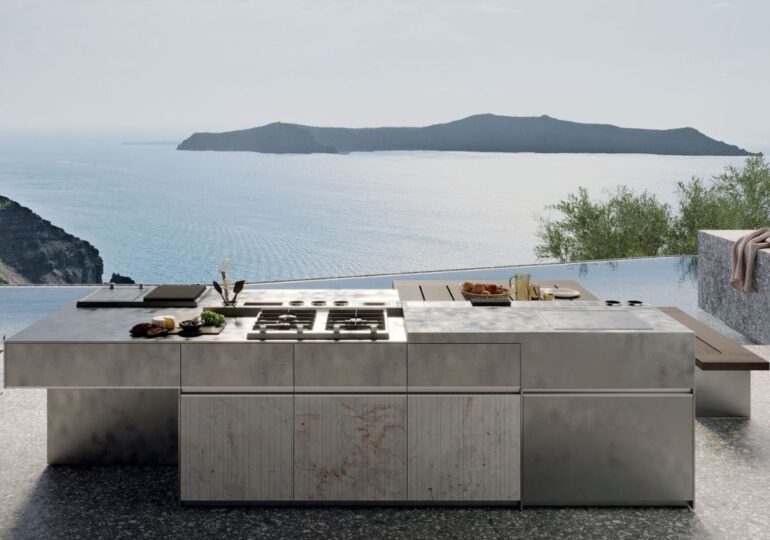
MODULNOVA Outdoor, a project by Andrea Bassanello, fits into this vision, combining painted steel and Piasentina stone in a system designed to resist humidity, weathering, and temperature fluctuations, offering high performance and a sophisticated image.
4. Poliform
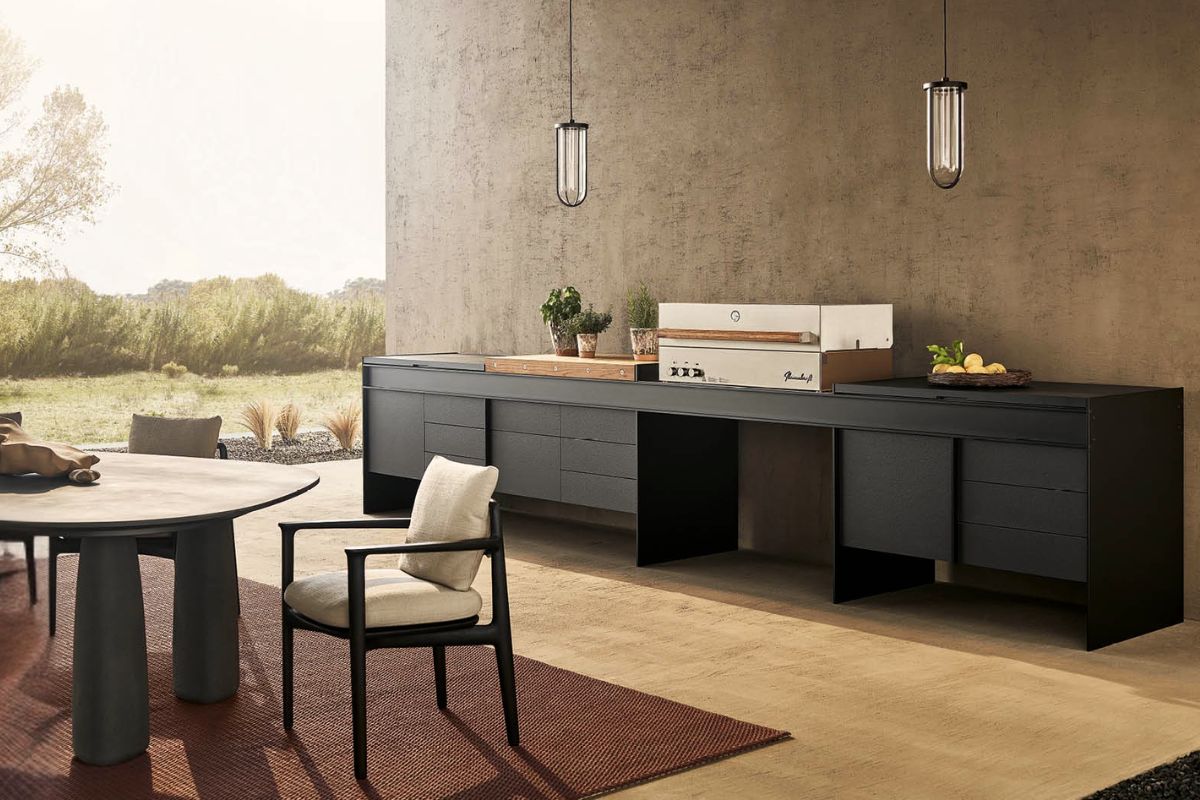
Poliform also brings the expertise gained in the world of kitchen systems to designer outdoor kitchens, with solutions designed to make the outdoors more elegant, functional, and consistent with contemporary living. Its proposal is distinguished by essential lines, materials suitable for outdoor use, and a clean, sophisticated design approach. Emblematic in this sense is the outdoor kitchen developed with CAP., a linear and lightweight system, available in wall-mounted or freestanding versions, which combines aluminum, steel, and technical surfaces in a composition designed for experiencing the outdoor space with maximum freedom.
5. Talenti
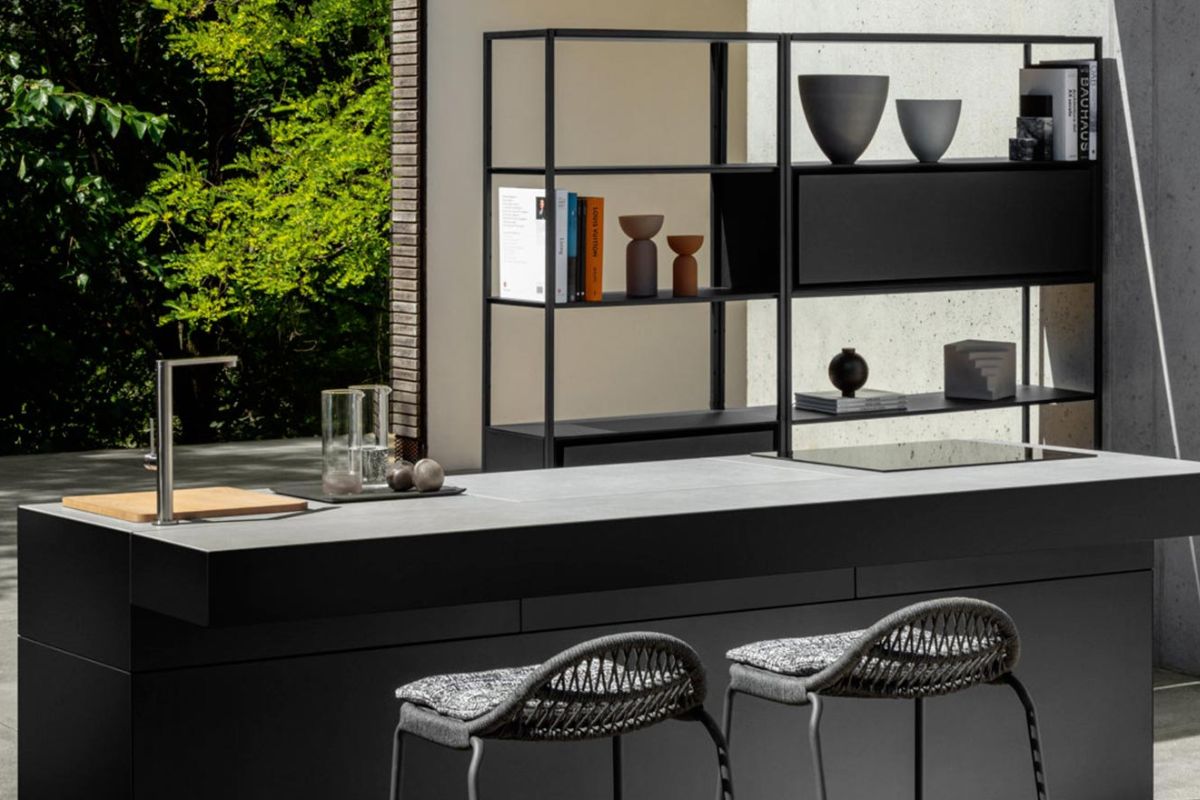
Talenti ranks among the best outdoor kitchen brands with an approach born from experience in designer outdoor furniture, translating into solutions designed to combine comfort, design quality, and aesthetic coherence. The brand stands out for its ability to bridge the traditional boundary between indoor and outdoor, creating elegant, functional environments that are meticulously detailed. Emblematic in this sense is the Tikal collection, a modular system that includes two- or three-module kitchens, corners, peninsulas, snack bars, tall units, shelves, and sideboards, designed to furnish the outdoor space with great compositional freedom.
6. Foster
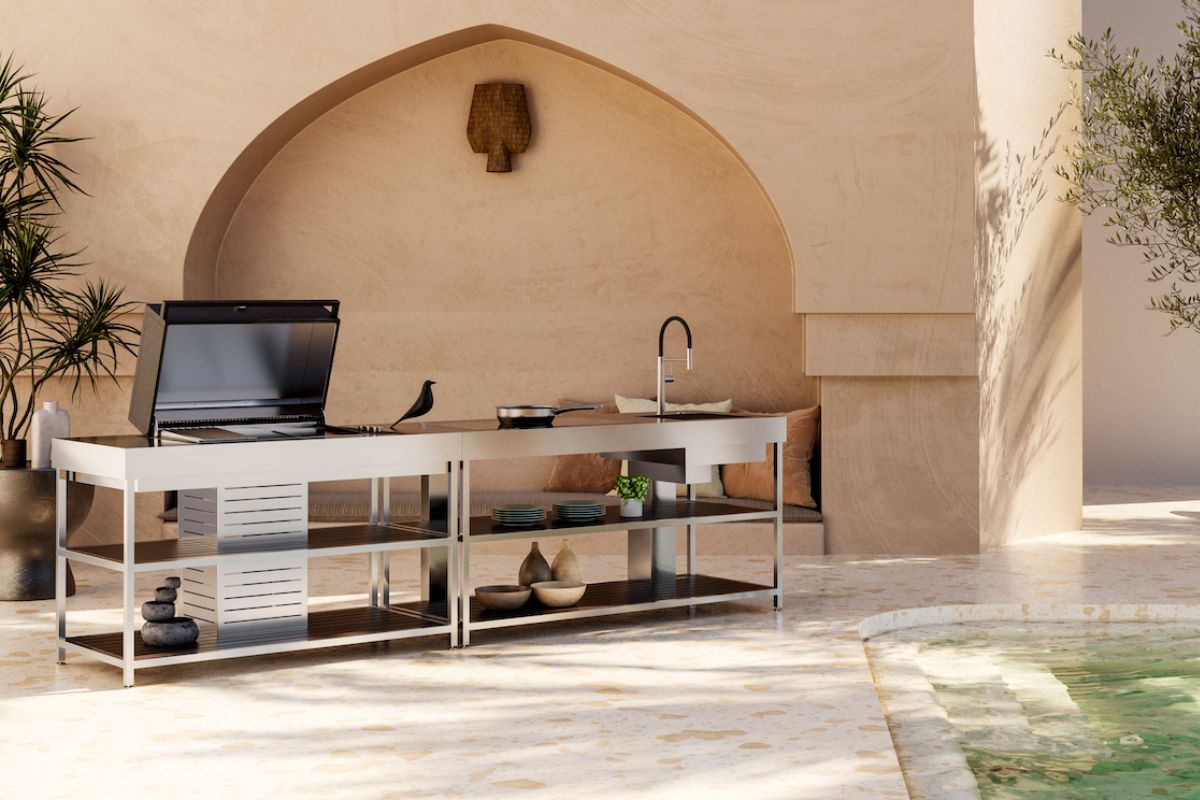
Among the best outdoor kitchen brands, Foster stands out for its deep expertise in stainless steel processing and an approach that combines technology, construction quality, and design flexibility. Building on its experience in the kitchen world, the brand develops freestanding solutions designed for outdoor environments, with systems capable of combining weather resistance, functionality, and craftsmanship. Emblematic in this sense are proposals such as Finalmente, Insieme, QUI, and Ognidove, collections that interpret the outdoor kitchen in a modular, convivial, and contemporary way.
7. Fògher
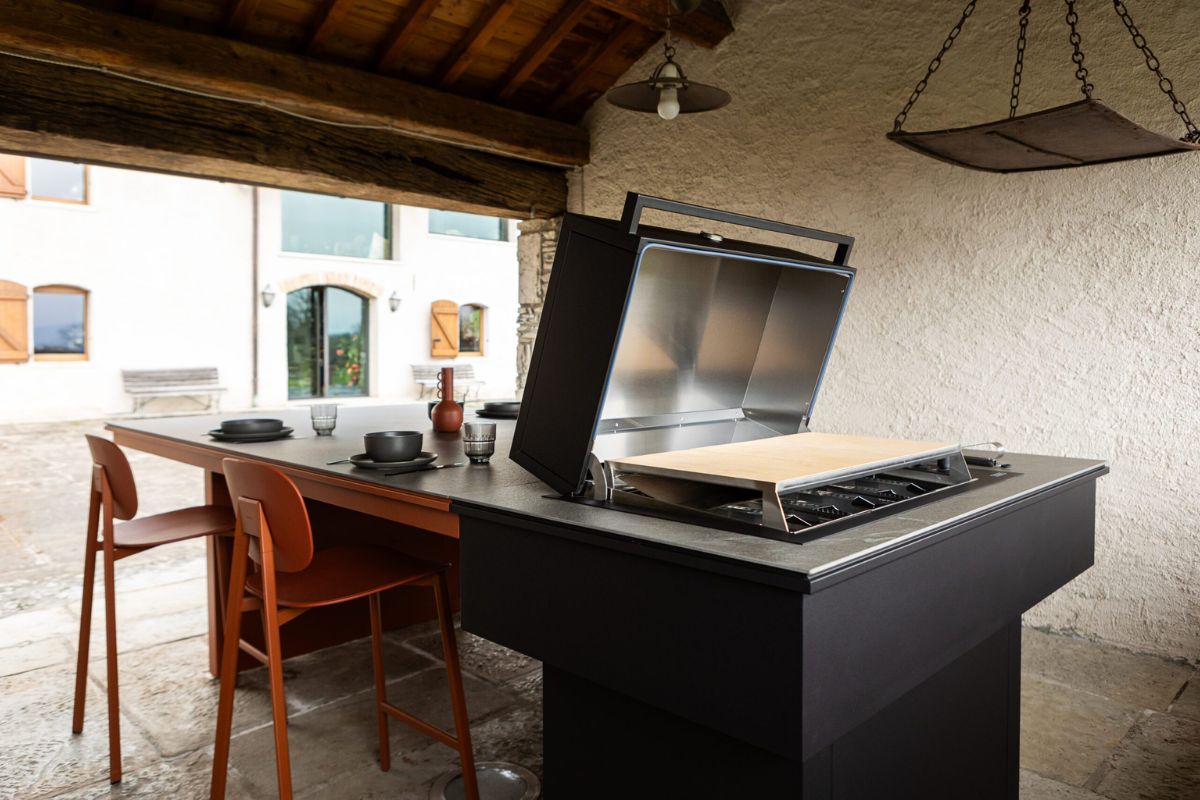
Fògher interprets the outdoors as a complete space to be lived in, where outdoor kitchens, barbecues, smokers, and fireplaces interact in a coherent, contemporary, and highly functional project. The brand stands out for its minimal design, a strong Made in Italy identity, and a modular vision that allows for the creation of elegant and high-performance environments. The Lares and Agher lines clearly illustrate this approach: the former more dynamic and versatile, the latter more compact and monobloc, both designed to transform outdoor cooking into a refined and convivial experience.
8. Alpes Inox
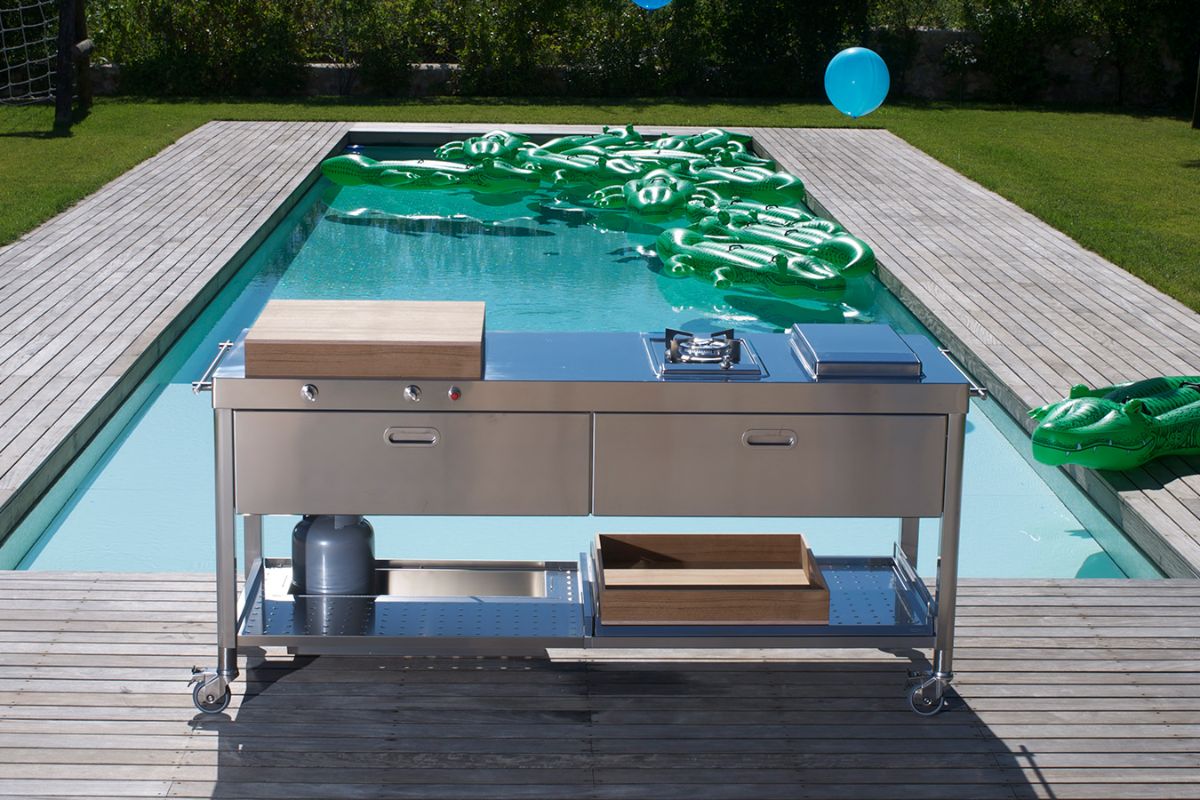
Alpes Inox takes the outdoor kitchen beyond the home walls with a compact, technical, and highly functional approach. The brand interprets the outdoor space through elegant and configurable elements on wheels, designed to bring together all the essential functions for cooking, grilling, and frying outdoors in a single block. The result is a versatile and contemporary outdoor kitchen, ideal for experiencing gardens, terraces, and poolside areas with greater freedom and practicality.
9. Arrital
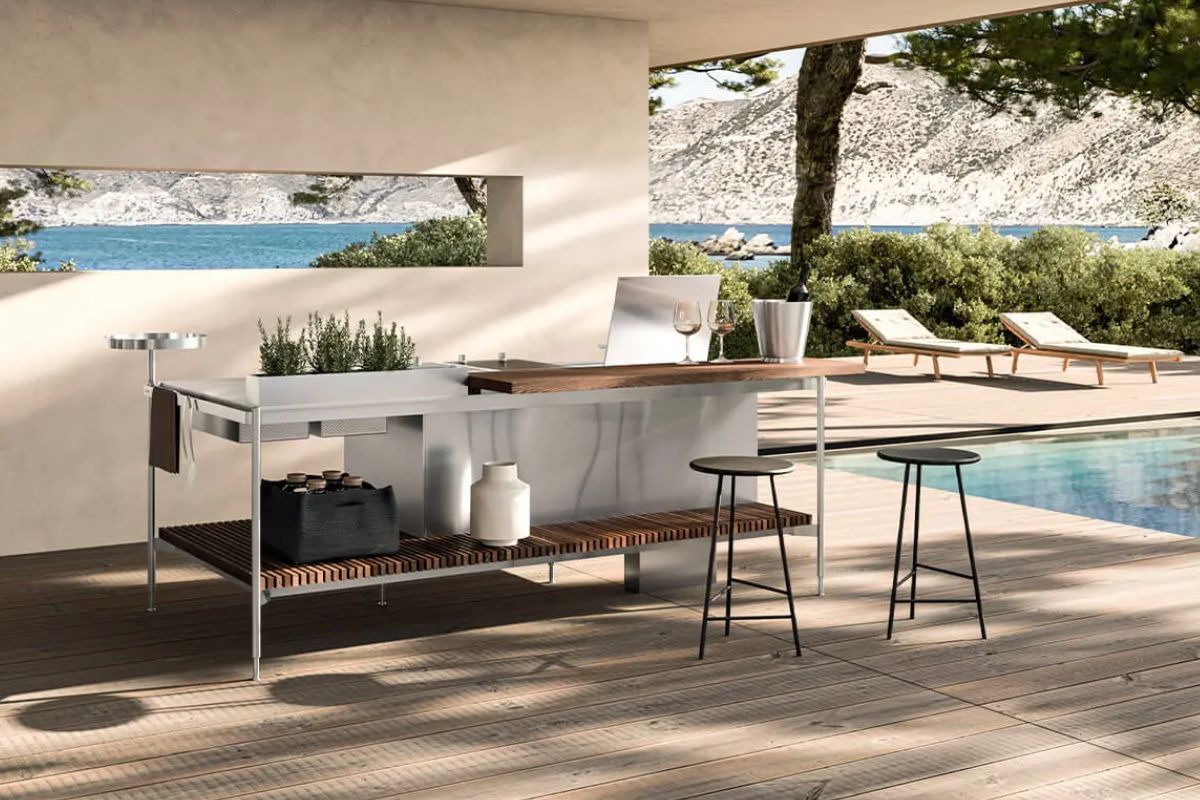
Arrital joins the best outdoor kitchen brands by bringing its idea of the kitchen as an advanced design system to the outdoors, where functional innovation, materials, and Italian design find a precise balance. Solaria, designed by Franco Driusso, is part of this journey—a kitchen specifically designed for outdoor environments and made of AISI 316 steel to ensure resistance, durability, and reliability in all weather conditions. Available in linear or island configurations, Solaria stands out for its modularity, advanced technical details, and high-quality finishes, confirming the brand’s contemporary and innovative approach.
10. Very Simple: Kitchen
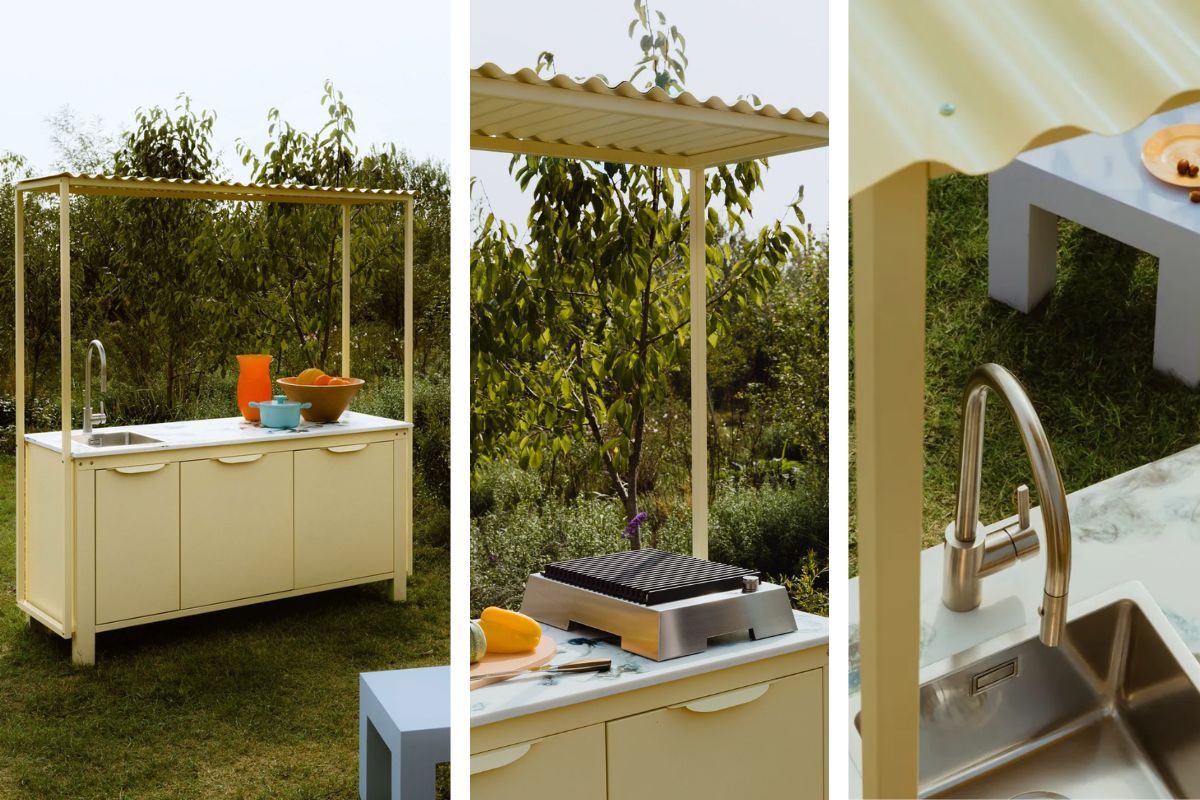
Very Simple: Kitchen interprets designer outdoor kitchens with a modular, flexible, and contemporary approach, designed to adapt naturally to outdoor spaces. The brand focuses on stainless steel structures, extensive customization, and an essential vision that makes the kitchen more free, versatile, and easy to transform over time. The Outdoor Collection expresses this identity well, thanks to lightweight and configurable modules that allow for the creation of custom compositions for terraces, gardens, and contemporary outdoor environments.
Outdoor kitchens: types, materials, and functions to know
In addition to the brands, the type of kitchen, materials, equipment level, and how the outdoor space is actually used also matter greatly. Today, there are numerous possibilities: masonry outdoor kitchens, prefabricated and modular models, steel or aluminum versions, compositions with barbecues, and more compact or concealed proposals designed for those who want a more discreet visual impact. To navigate these options, it is worth understanding the main solutions available and which aspects truly influence the choice.
Masonry, prefabricated, or modular outdoor kitchens
Masonry outdoor kitchens continue to have a particular charm because they convey solidity, architectural integration, and a sense of permanence. They are perfect for those who want a fixed, scenic station well-rooted in the garden or under a porch. However, they require a more demanding project, longer timelines, and careful evaluation of utilities, coverings, and long-term maintenance.
Prefabricated and modular outdoor kitchens, on the other hand, meet a different need: greater flexibility, simpler installation, and more freedom of configuration. These solutions are highly appreciated by those who want to build their outdoor space progressively, adding worktops, storage modules, sinks, barbecues, or griddles over time. In many cases, they also represent the most convincing answer for medium-sized terraces or for those who do not wish to undertake masonry work.
There are also more compact, mobile, or even concealed models, designed for those with limited space or who prefer a more discreet presence. In these cases, the advantage is primarily practical and aesthetic: the kitchen remains available when needed but takes up less visual space when not in use.
Steel, aluminum, and other materials for the outdoors
Material is one of the most important aspects when choosing an outdoor kitchen. Steel outdoor kitchens are among the most popular because they offer durability, ease of cleaning, and a highly recognizable contemporary image. Stainless steel is often associated with technical and professional solutions, but today it is also valued in more refined and architectural projects.
Aluminum outdoor kitchens, on the other hand, are convincing for their lightness, simplicity, and versatility. They are particularly suitable for modern contexts and for those who desire a clean aesthetic that is less technical and more integrated with outdoor furniture. Alongside these materials, stone, technical surfaces, high-performance finishes, and combinations with textured elements that make the environment warmer and more welcoming also find their place.
The choice of material affects not only the image but also the durability, maintenance, and how the kitchen responds to rain, sun, salt, humidity, and temperature fluctuations. For this reason, a well-designed outdoor kitchen must always combine aesthetic performance with long-term reliability.
Gas, electric, and barbecue outdoor kitchens
Another central theme concerns the type of power supply and how one actually cooks outdoors. Outdoor kitchens with barbecues are among the most popular solutions because they interpret the outdoors in a convivial way, perfect for informal lunches and dinners with friends and family. In these cases, the barbecue is not just an accessory but often becomes the very centerpiece of the composition.
Others prefer a more complete kitchen, with traditional burners, a griddle, grill, sink, and work surfaces, to recreate an experience outdoors that is closer to that of an indoor kitchen. Solutions can be gas, electric, or hybrid, and the choice depends on both usage habits and the layout of the outdoor space. Those who cook often and desire greater autonomy tend to favor more equipped configurations; those who use the outdoor kitchen more occasionally may opt for simpler and more compact systems.
Outdoor kitchens: prices and product ranges
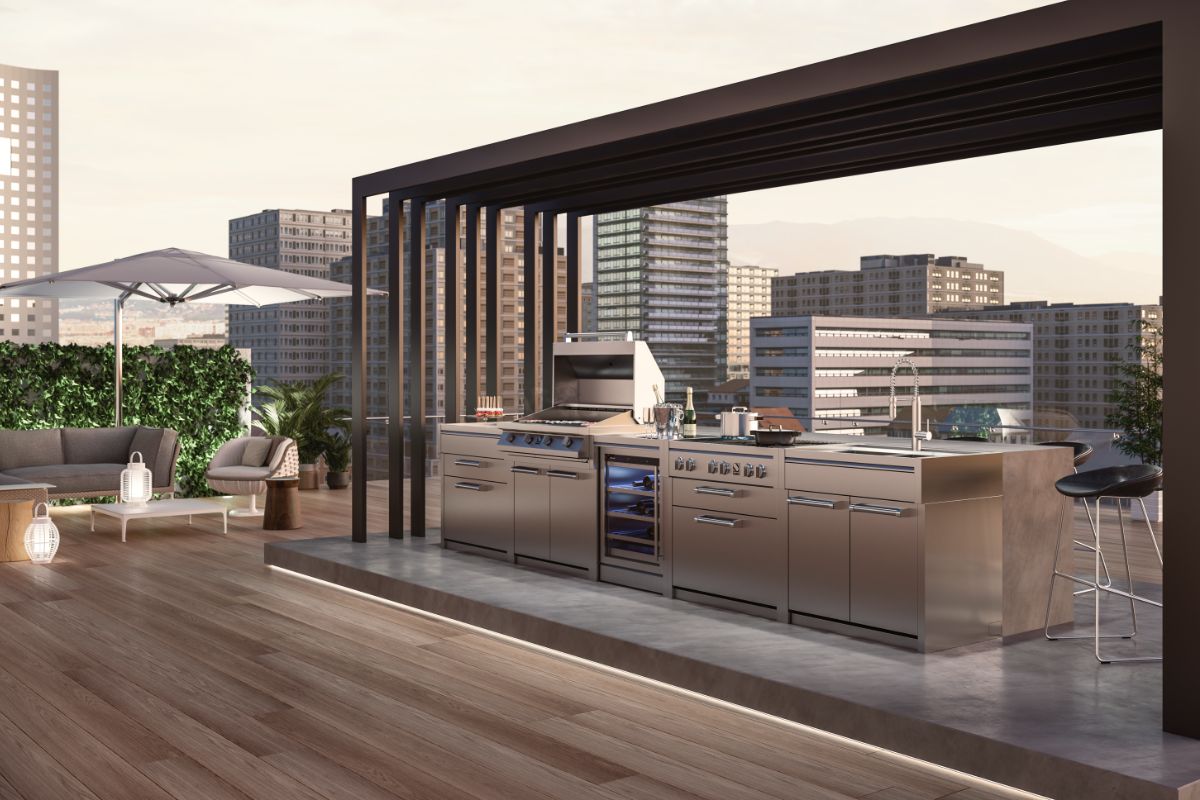
When evaluating an outdoor kitchen, the issue of price inevitably comes into play. However, there is no single threshold valid for all solutions, as the cost can vary significantly based on size, materials, configuration, cooking systems, the presence of a sink, storage modules, accessories, and the level of finish.
A compact and prefabricated composition will naturally have different characteristics and costs compared to a modular designer kitchen or a fixed masonry structure designed as a permanent extension of the home. Therefore, rather than stopping at a generic comparison, it is useful to understand how you want to use the outdoor space and what level of design you want to achieve.
An outdoor kitchen can indeed meet very different needs: it can be essential and practical, designed for occasional use, or transform into a more complete, scenic, and highly equipped environment. In this transition, brands have a concrete impact, as they determine not only the product’s image but also the quality of materials, construction solidity, durability over time, and the overall coherence of the project.
Outdoor atmosphere matters as much as function
In addition to technical and compositional aspects, there is an element that deeply affects the final quality of the project: atmosphere. A well-designed outdoor kitchen must not only be functional, durable, and easy to use, but also fit harmoniously into the context, interacting with the home’s architecture and the character of the outdoor space.
Depending on the materials, finishes, and configuration chosen, an outdoor kitchen can express a minimal and architectural aesthetic, a more technical and professional identity, or a more textured, warm, and convivial feel. It is precisely this balance between performance, durability, and aesthetic quality that distinguishes a simple cooking area from a true designer outdoor kitchen.
Leave a commentIn contemporary outdoor design, it is not just about what a kitchen allows you to do, but also how it contributes to defining the space, the atmosphere, and the pleasure of living in it.