With the arrival of summer, how to set a table in the garden or on the terrace becomes one of the most natural questions for anyone who wants to enjoy outdoor spaces with more care. Lunches under the pergola, sunset dinners, terrace aperitifs, and informal gatherings all deserve a table setting that can create atmosphere, …
With the arrival of summer, how to set a table in the garden or on the terrace becomes one of the most natural questions for anyone who wants to enjoy outdoor spaces with more care. Lunches under the pergola, sunset dinners, terrace aperitifs, and informal gatherings all deserve a table setting that can create atmosphere, enhance the food, and make shared moments more enjoyable.
The goal is not to turn every occasion into a formal setup. A summer outdoor table should remain welcoming, practical, and spontaneous. However, precisely because gardens and terraces are less controlled environments than a dining room, they require more attention: wind, natural light, limited space, different surfaces, and high temperatures can make even an apparently well-planned table uncomfortable.
The solution is to find the right balance between elegance, functionality, and materials suitable for outdoor use. You do not need too many elements, but coherent choices: a well-defined base, quality plates, stable glasses, refined flatware, natural fabrics, a low centerpiece, and warm lighting for the evening.
The most current direction in outdoor living moves toward natural materials, earthy palettes, soft shapes, and welcoming solutions that can transform gardens and terraces into a true extension of the home. The table follows the same logic: it should not look as if it was brought outside at the last minute, but as if it was designed to connect with the space around it.
How to set a summer outdoor table without making it look improvised
The most common risk when preparing a summer outdoor table is a random effect: plates taken from different sets without a clear idea, underwhelming napkins, glasses that are too delicate, or decorations placed in the center without a real connection to the rest of the table. Informality is perfectly fine, but it should feel intentional.
Before choosing plates and glasses, it is useful to start from three elements: the space, the occasion, and the time of day. A table for lunch in the garden calls for a brighter, fresher, and more immediate composition. A dinner on the terrace, on the other hand, needs softer lighting, more intimate details, and a mise en place that remains elegant even after sunset.
The number of guests also changes the perspective. For a small table, it is better to use a few well-chosen elements. For a larger table, instead, you can work with light repetition: coordinated glasses, fabric napkins, small low vases, candles, or carafes distributed along the tabletop.
An elegant summer table is not the richest one, but the one where every detail has a clear function. Plates, glasses, flatware, tablecloth, centerpiece, and lighting should create a harmonious whole without making guests less comfortable.
Garden table or terrace table: how outdoor mise en place changes
 A garden table setting can embrace a more natural and textured language. Greenery, plants, grass, stone, wood, and pergolas already create a spontaneous setting. In this context, linen, cotton, ceramic, porcelain, glass, stainless steel, and woven fibers work very well.
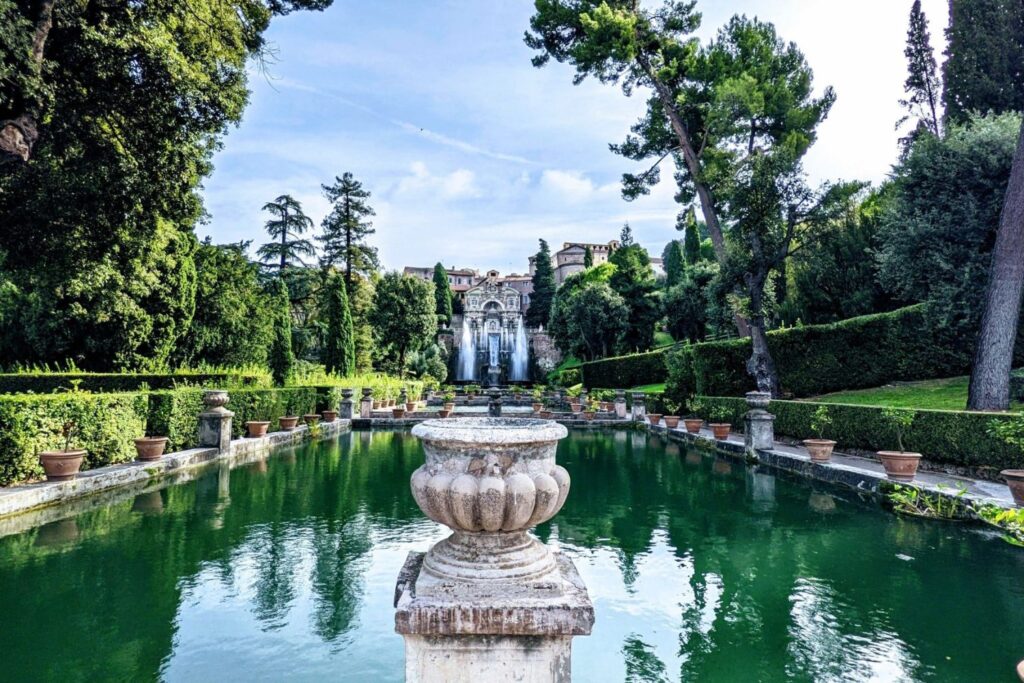
The garden also welcomes a more organic style of decoration: olive branches, rosemary, basil, lavender, mint, lemons, or small vases with seasonal flowers. These are simple details, but they help create a fragrant, summery table that feels connected to the environment.
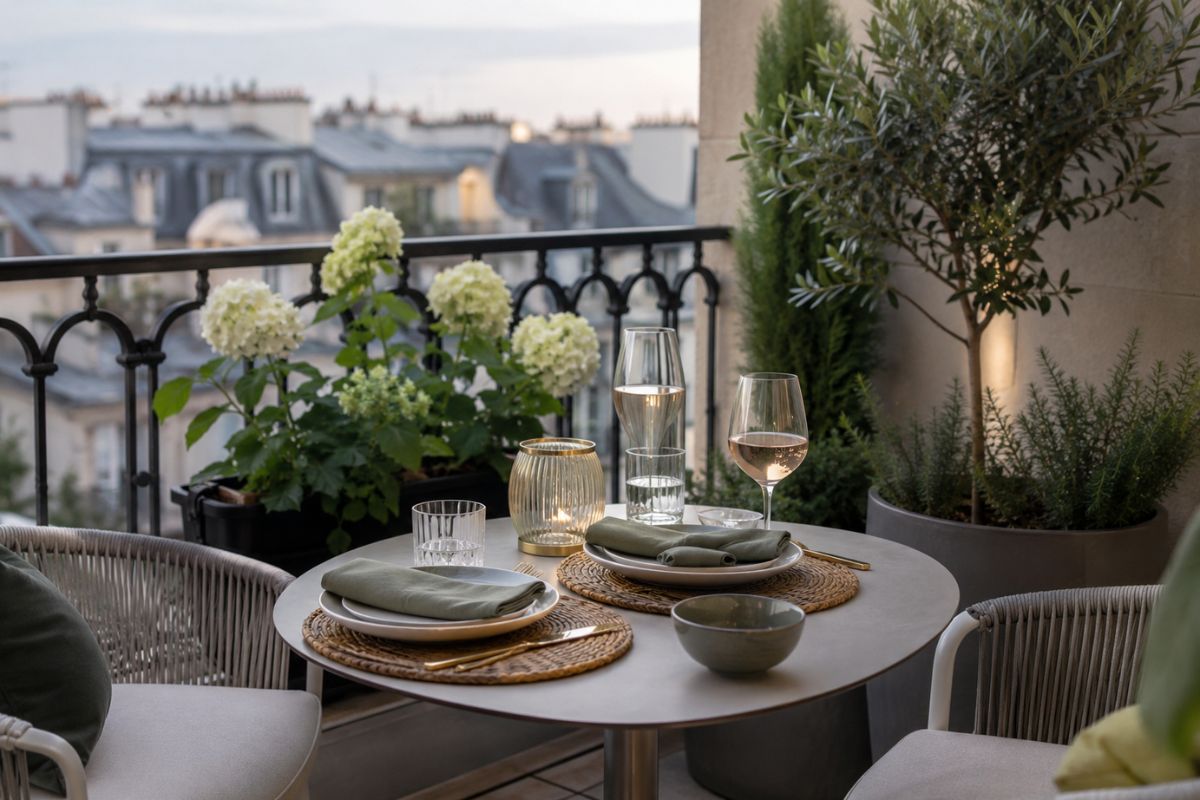
A terrace table setting, on the other hand, requires more control. Especially in urban spaces or small terraces, every element becomes more noticeable. Here, the secret is not to overfill the table. A light palette, a few selected objects, bright glasses, and a minimal centerpiece work better than an overly rich composition.
To set a table on a small terrace, proportions are essential: plates that are not too large, stable glasses, placemats or a runner instead of a long tablecloth, and a low central decoration. A small rechargeable lamp, a statement carafe, or a vase with aromatic herbs may be enough.
On a large terrace, however, you can work more on the visual setting, but always with restraint. A long table can be enhanced with low elements repeated along the center: small vases, candles, colored glasses, or coordinated napkins. The final result should feel natural, not overdesigned.
Tablecloth, runner, or placemats: what to choose for an outdoor table
One of the most common questions is: is it better to use a tablecloth, runner, or placemats when setting a table outdoors? The answer depends on the type of table and the occasion.
A tablecloth remains perfect for a more elegant dinner, especially if it is made of high-quality linen or cotton. It should not be too long, because outdoors, wind and movement can make it impractical. The most versatile colors are warm white, ecru, sand, sage green, and dusty blue.
A runner is ideal when you want a more current and less formal effect. It works well on tables that are beautiful to see, because it leaves the material visible and creates an orderly central line. It is particularly suitable for wood, stone, ceramic, or metal tables.
Placemats are very useful for informal lunches, balconies, small terraces, and round tables. They define each guest’s place without weighing down the table and help maintain a lighter effect.
For an elegant outdoor table, it is better to avoid shiny, synthetic, or overly thin fabrics. Outdoors, material quality is immediately noticeable: washed linen, substantial cotton, or natural fibers make the table look more refined even with just a few elements.
Plates, glasses, and flatware for a designer summer table
 Plates are the visual center of the table. For this reason, when thinking about how to set an elegant table in the garden or on the terrace, they should not be treated as a secondary detail. The choice changes depending on the occasion: for an important dinner, porcelain remains a refined option; for a more informal lunch, it is better to choose durable but well-designed sets.
Brands such as Ginori 1735 are ideal when you want to bring a more decorative, precious, and scenic note to the table. Porcelain, especially when colored or decorated, can become the focal point of the mise en place. In this case, it is better to keep glasses, napkins, and the centerpiece more discreet, so the overall table does not feel too busy.
For a more informal yet still refined table, Alessi is an important reference. Collections designed for outdoor dining make it possible to set the table with functional and recognizable objects, avoiding the temporary feel of disposable solutions. This is a suitable choice for garden lunches, outdoor dinners, and more dynamic settings.
Those who prefer a livelier table can look to Bitossi Home, ideal for introducing color, personality, and a more creative mix of plates and accessories. Guzzini, on the other hand, can be interesting when practical, resistant solutions are needed for everyday use, without sacrificing a polished visual result.
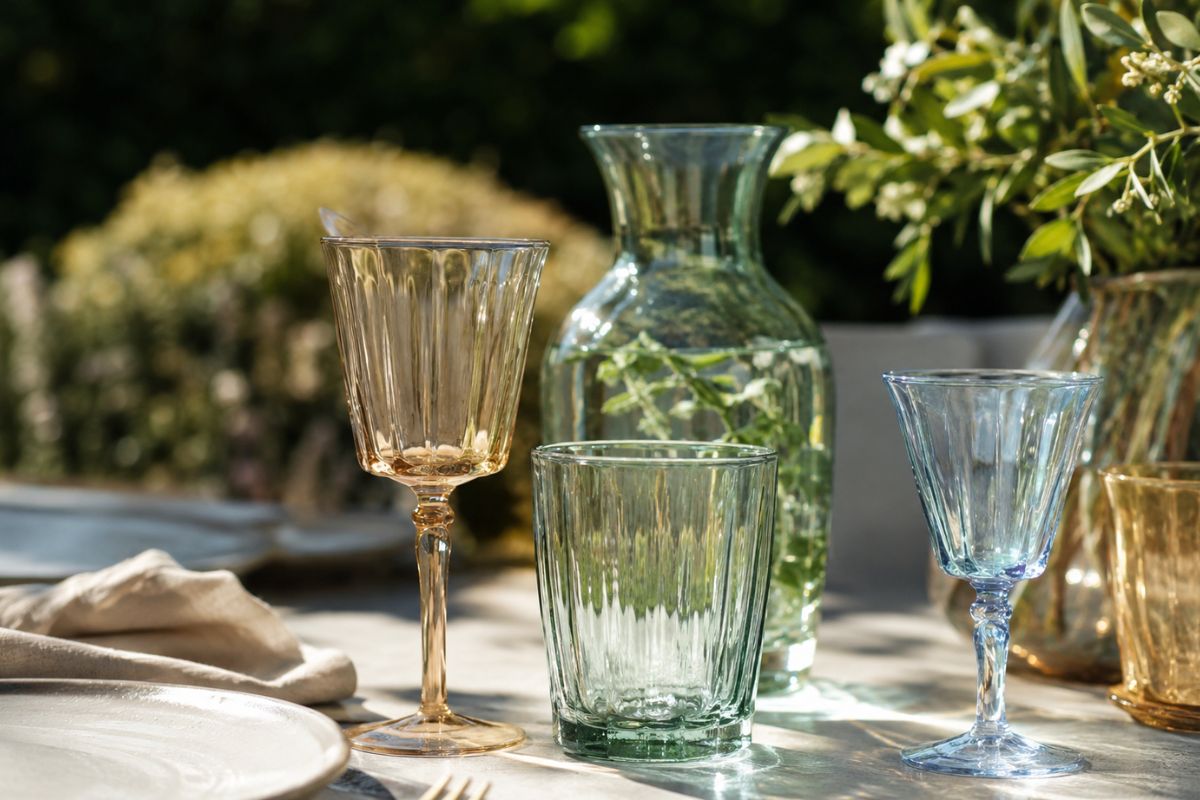
Glasses play an equally important role. Clear glass remains a safe choice because it lightens the table and lets light pass through. However, for an elegant summer table, colored glasses are a very effective detail: amber, aqua green, blue, smoky gray, soft pink, or bottle green can become the chromatic accent of the outdoor table setting.
Ichendorf Milano is perfect for those looking for glasses, pitchers, and carafes with a light and decorative touch. A glass carafe with water infused with lemon, cucumber, mint, or basil makes the table more elegant and reduces the presence of visually inconsistent bottles.
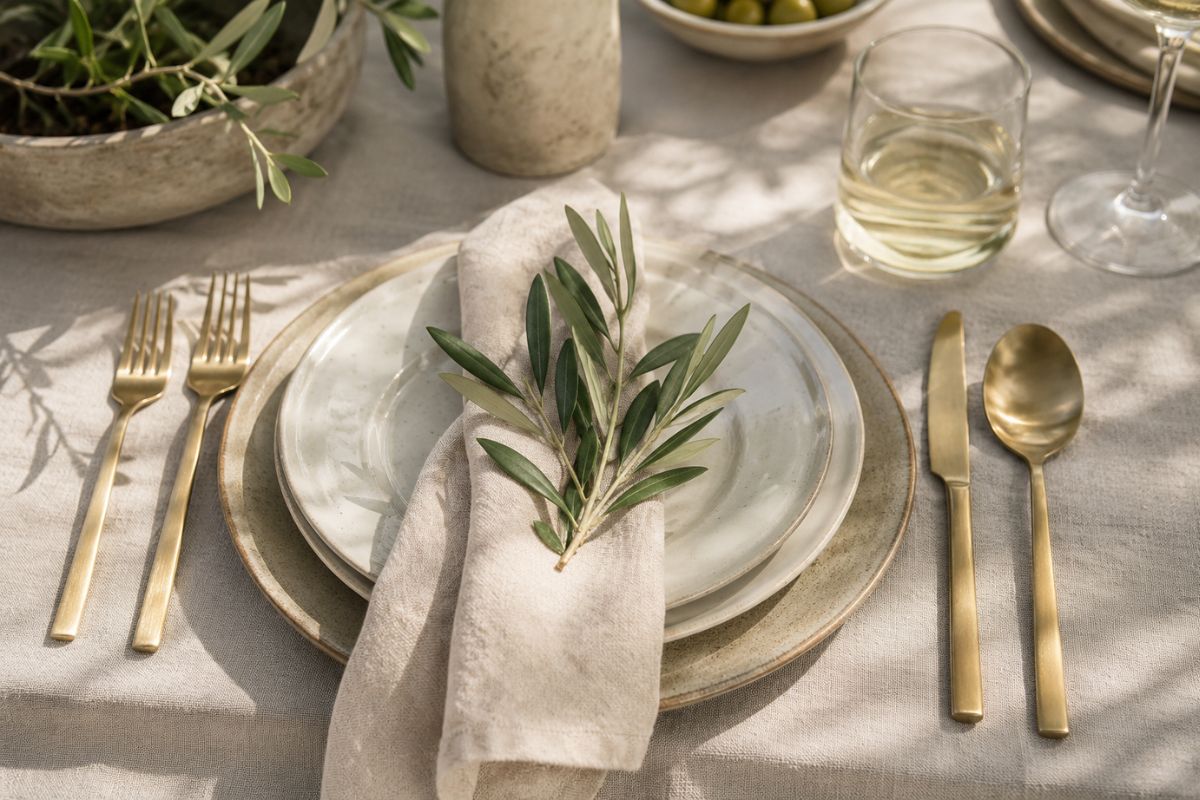
Finally, flatware gives structure. Even when dinner is informal, quality flatware immediately changes the perception of the table. For outdoor use, stainless steel remains the most functional choice: resistant, easy to match, and suitable for both essential tables and more decorative mise en place ideas.
Sambonet and Mepra are two solid references for flatware and stainless-steel accessories. The most versatile finishes are polished and satin stainless steel, while champagne, black, or burnished finishes can work well if the table palette remains more neutral.
Elegant outdoor mise en place: the elements to coordinate
To create an elegant and functional outdoor mise en place, the elements to coordinate are few, but they need to speak to one another:
- a natural base, such as linen, cotton, a runner, or textured placemats;
- durable yet refined plates, in ceramic, porcelain, or materials suitable for outdoor use;
- stable glasses, preferably clear, amber, green, or lightly colored;
- quality stainless-steel flatware, polished, satin, or with more decorative finishes;
- a low, natural, and non-invasive centerpiece;
- warm lights, candles, or rechargeable lamps for the evening.
The difference is not made by the quantity of elements, but by their coherence. A well-set summer table should feel spontaneous, even when every detail has been chosen with care.
Colors and materials for setting a summer outdoor table
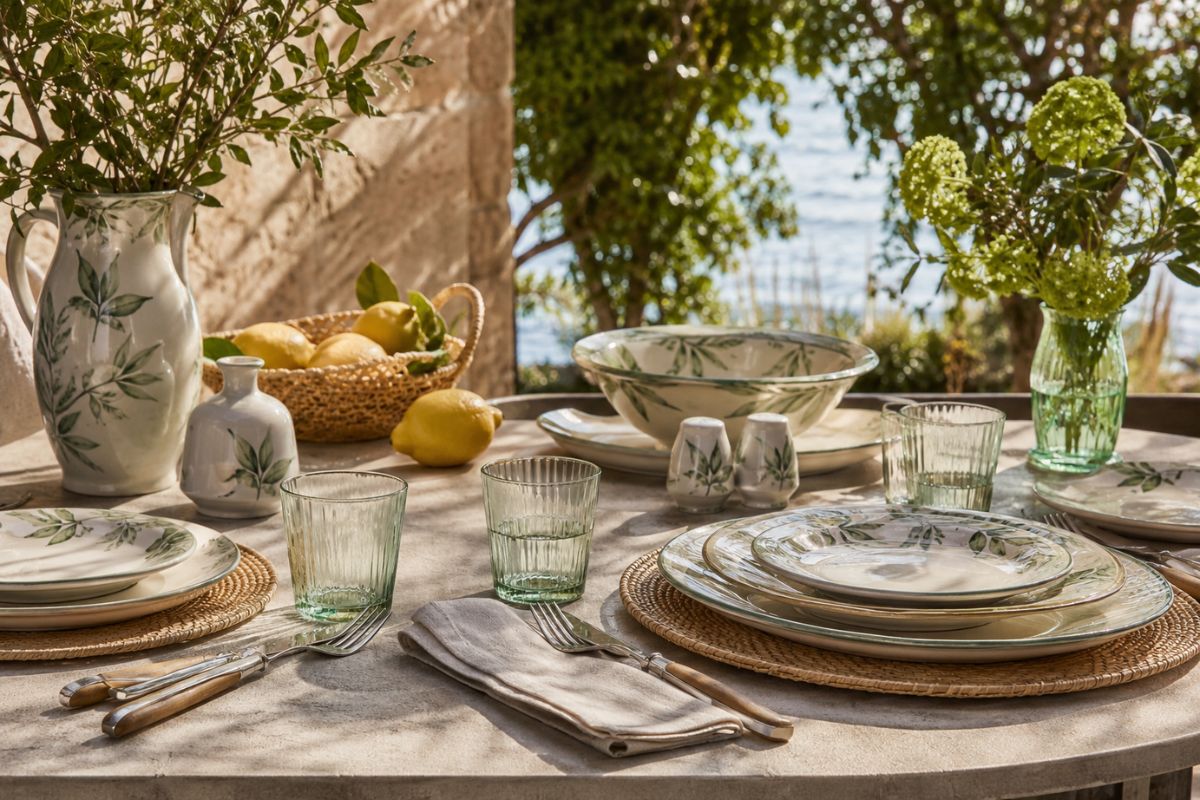 The colors for a summer table should interact with the outdoor space. In the garden, natural and Mediterranean tones work very well: warm white, sand, cream, olive green, terracotta, sea blue, soft yellow, amber, and tomato red. On a terrace, especially if the space is small, it is better to start from a lighter base and add one or two color accents.
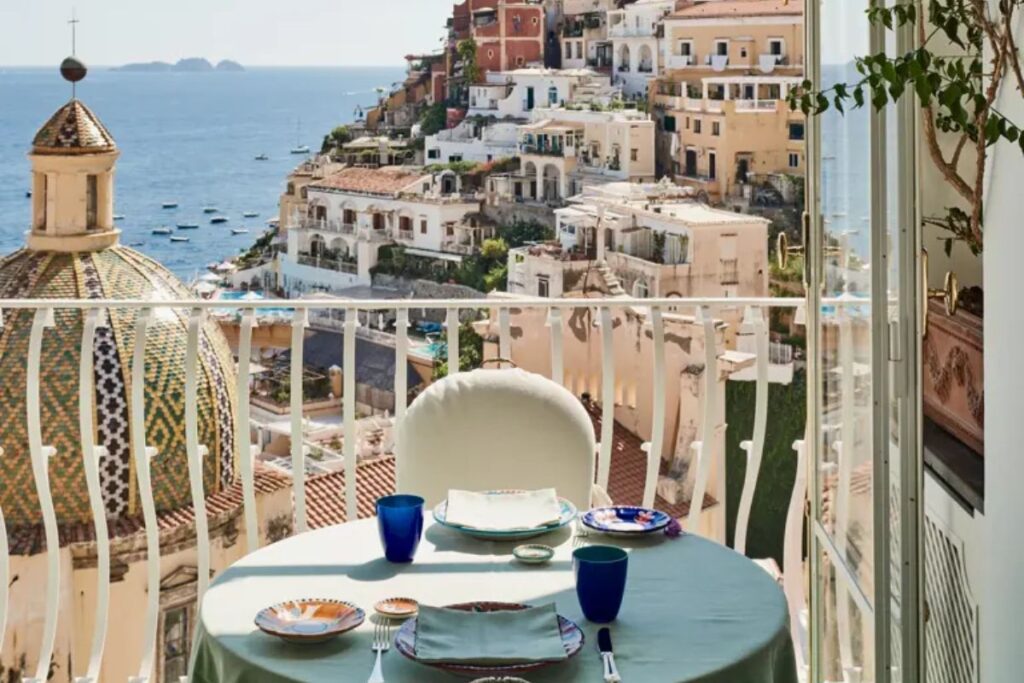
Warm white is a perfect base. It works well with wood, ceramic, colored glass, and stainless steel. Sand and ecru are softer and ideal for a sophisticated table. Sage green and olive green connect beautifully with plants and the garden. Blue immediately recalls a Mediterranean atmosphere, especially when used in the details.
A very elegant table can also come from extremely simple combinations: an ecru tablecloth, white plates, amber glasses, and stainless-steel flatware. Or a sand runner, ivory plates, olive green napkins, and clear glasses. Or again, an exposed table, natural placemats, decorated plates, and light wine glasses.
The important thing is to avoid an overloaded effect. Color should give identity, not confusion. An elegant Mediterranean table does not need too many shades: often, a neutral base, a natural color, and a stronger accent are enough.
Materials should be chosen with the same logic. Linen, cotton, ceramic, porcelain, glass, stainless steel, and natural fibers are perfect because they communicate quality without feeling stiff. Outdoors, the table should remain lively, tactile, and pleasant to use.
Centerpiece ideas for a garden or terrace table: elegant and practical solutions
 A summer table centerpiece should decorate without getting in the way. It is one of the most important elements, but also one of the easiest to get wrong. A centerpiece that is too tall prevents guests from looking at each other. One that is too large takes space away from serving dishes, bread, carafes, and glasses. One that is too artificial can immediately lower the perceived quality of the table.
For a garden table, the best solutions are natural: small low vases, aromatic herbs, lemons, olive branches, seasonal flowers, lavender, rosemary, or basil. For a terrace table, it is better to reduce even further: a small central composition, a statement carafe, or a sequence of low candles may be enough.
An elegant solution is to distribute several small elements along the center of the table instead of using a single dominant decoration. This creates rhythm, follows the length of the table, and leaves space for serving. The result is more natural and more comfortable.
The best centerpiece is the one you notice without it taking over. It should contribute to the atmosphere, but not become the absolute protagonist. The table is first and foremost a place for conviviality, not a display.
Lighting for a garden or terrace dinner: warm lights, lanterns, and rechargeable lamps
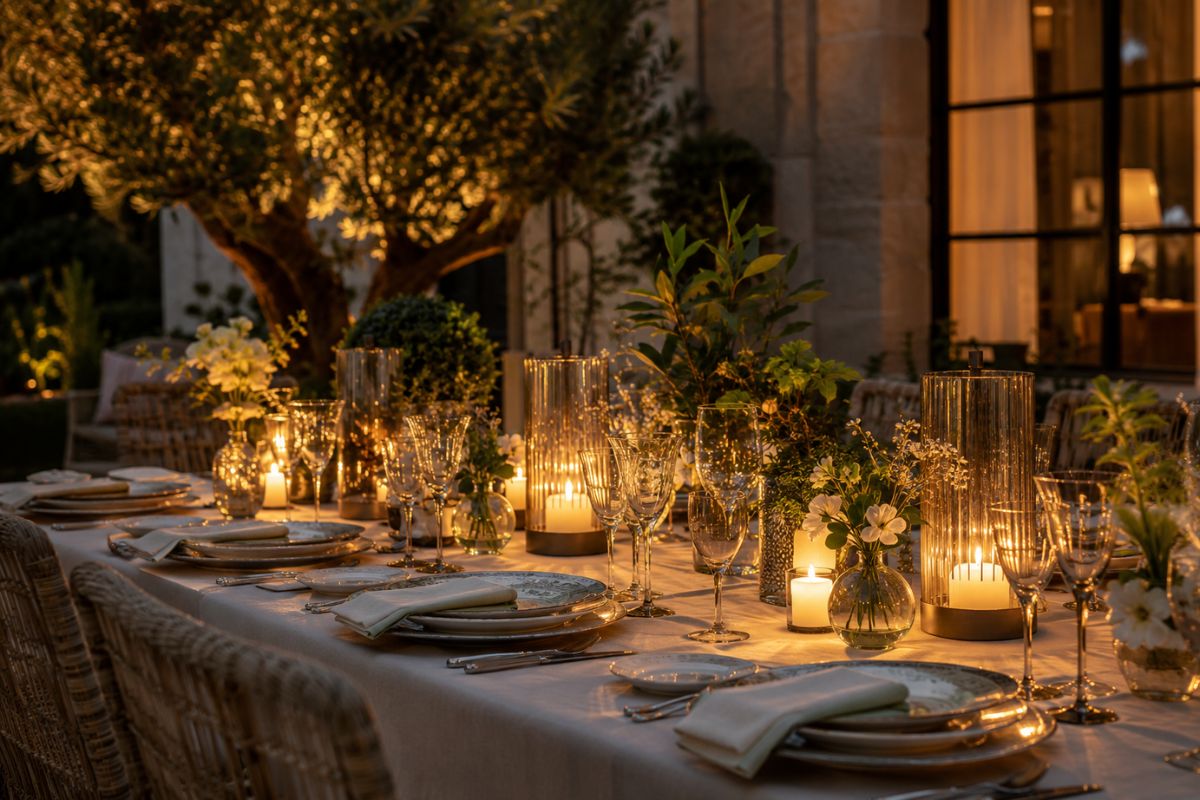 Outdoor table lighting is decisive, especially for summer dinners. A beautifully set table can lose its charm if the light is cold, too intense, or poorly positioned. Light should support conversation, not create glare.
On the table, low and warm lights work well: candles protected from the wind, small lanterns, or rechargeable lamps. Around the table, instead, you can work with light points on plants, walls, planters, pergolas, or green corners. The final effect should be soft and welcoming.
A single central light, especially if strong, flattens the environment. Several lighter light sources, instead, make the space more pleasant and give depth to the scene. This is what turns a simple outdoor dinner into a more intimate and refined moment.
Rechargeable lamps are one of the most practical solutions for gardens and terraces because they allow you to create atmosphere without wires or complex installations. Candles remain beautiful, but they should be used with moderation and protected from the wind. The goal is not to illuminate everything, but to create the right light where it is needed.
How to set a table for lunch or dinner with guests
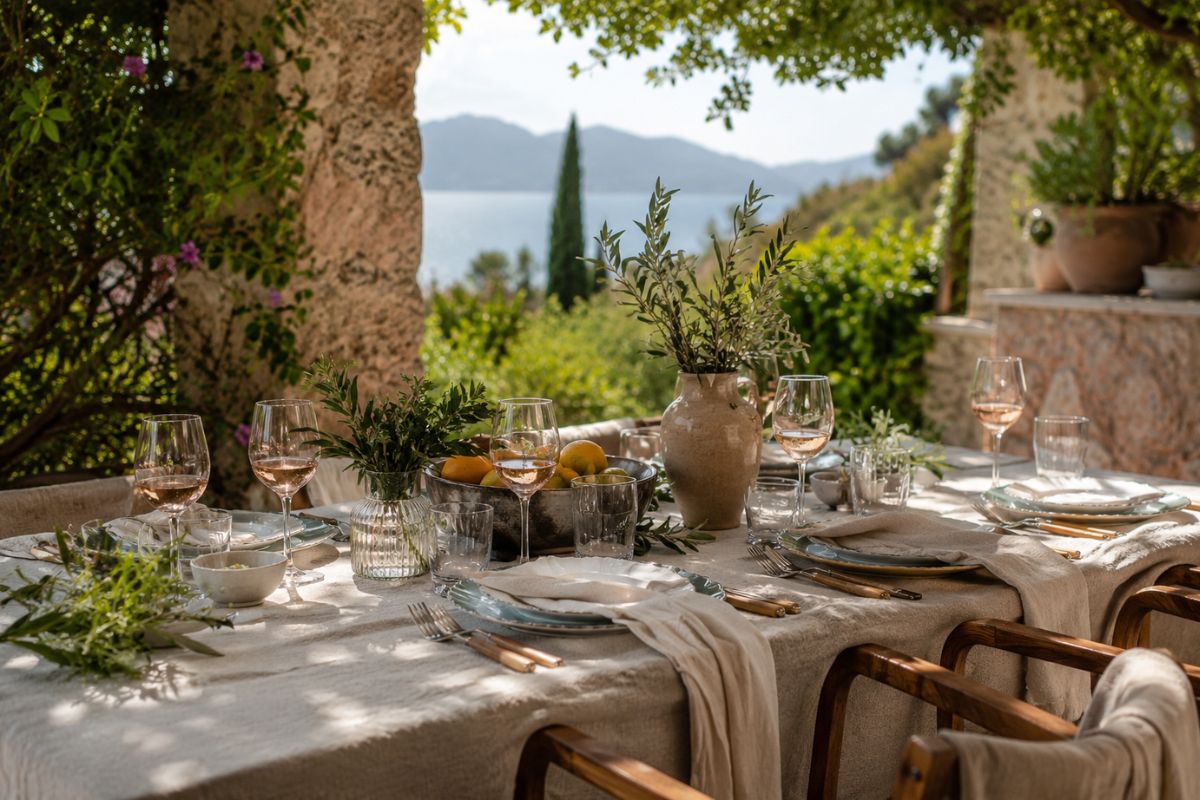 When preparing a table for a summer dinner with guests, you also need to think about the rhythm of the evening. The table should look beautiful when guests arrive, but also remain comfortable during service. If there will be shared dishes, carafes, bread baskets, and bottles, it is important to leave space in the center or provide a side surface.
The arrangement can remain simple: dinner plate, possibly an appetizer plate, fabric napkin, two glasses, and essential flatware. It is not always necessary to set the table with too many elements from the beginning. In summer, especially outdoors, a certain lightness is more pleasant than excessive formality.
For a garden lunch, the table can be brighter, fresher, and more immediate. Natural light is already the protagonist, so the composition does not need to be too rich. Light but good-quality tablecloths, plates in luminous colors, clear glasses, and plant-based details are enough to create a pleasant mise en place.
However, you need to consider the sun. If the table is not fully shaded, it is better to avoid overly delicate flowers, elements that suffer from heat, and glasses that are too unstable. A carafe with infused water, seasonal fruit on display, bread served in a natural basket, and fabric napkins can transform a simple table into a welcoming and refined composition.
For dinner, instead, lighting, candles, and a warmer palette come into play. Colored glasses, stainless-steel flatware, well-proportioned plates, and a low centerpiece allow you to maintain elegance without weighing down the atmosphere.
Mistakes to avoid for an elegant and functional outdoor table
Even an elegant outdoor table can lose harmony when the elements do not communicate with one another. Informality is part of summer’s charm, but it should not become improvisation: plates, glasses, fabrics, and decorations should follow a clear direction, even when the final effect feels natural and spontaneous.
The centerpiece should support the mise en place without dominating it. Flowers that are too tall, bulky candles, or excessive decorations risk interrupting conversation and taking space away from service. It is better to choose low compositions, small botanical elements, or details distributed along the table.
Practicality remains essential. Outdoors, tablecloths that are too light, unstable glasses, uncomfortable seating, or cold lighting can compromise even a visually well-designed table. A summer outdoor table setting should be beautiful, but also easy to live with: it should leave space for carafes, serving dishes, bread, wine, and the natural movements of guests.
Style also needs to be kept under control. Mixing Mediterranean, tropical, rustic, romantic, and minimal inspirations on the same table creates confusion more than personality. A clear direction, a coherent palette, and a few well-chosen materials help create a table that is more elegant, more readable, and more enjoyable to use.
Setting a table in the garden or on the terrace means creating atmosphere
In the end, setting a table in the garden or on the terrace does not simply mean arranging plates, glasses, and flatware correctly. It means creating a moment. A well-designed table welcomes guests, enhances the space, makes food more enjoyable, and transforms the outdoors into a place to truly live.
Summer invites us to choose a more natural, textured, and convivial table, with Mediterranean colors, warm lights, quality tableware, and botanical details. You do not need to overdo it. You need to choose well.
A linen tablecloth, refined plates, luminous glasses, important flatware, a low centerpiece, and a few warm light points can transform even a simple dinner into an elegant experience. Because the true beauty of the summer outdoor table lies exactly here: making an everyday moment feel special, without losing spontaneity.