In the panorama of contemporary Italian architecture, the most vital part does not always coincide with already established names. More often, it emerges from that constellation of designers and studios that are building their own language through projects, competitions, research, and vision. This is where some of the most interesting directions in today’s architecture can …
In the panorama of contemporary Italian architecture, the most vital part does not always coincide with already established names. More often, it emerges from that constellation of designers and studios that are building their own language through projects, competitions, research, and vision. This is where some of the most interesting directions in today’s architecture can be seen: a more conscious attention to landscape, a new sensitivity to material and light, a less conventional relationship with domestic space, and a growing ability to engage with cultural and international contexts.
Talking about young Italian architects and emerging Italian architecture firms therefore means observing not a generic promise, but an active and evolving field. It is a field where profiles are already emerging with the ability to interpret the present with rigor and anticipate some possible forms of tomorrow’s architecture.
Why it makes sense to look at young Italian architects and studios today
Following young Italian architects and young Italian architecture firms today does not mean chasing an age category or compiling a list of emerging names simply for generational effect. It means, instead, observing that part of architectural design where language is still forming, yet already solid enough to express a vision, a method, and a critical position.
It is in this area that some of the most current tensions in contemporary architecture can be read with particular clarity: the relationship between building and landscape, the rediscovery of material as both a narrative and constructive element, the redefinition of domestic space, and the ability to work with context without falling into imitation or gratuitous exception.
There is also another element that makes this observation especially interesting. In a moment when architecture often risks being reduced to a quick image, the most convincing profiles bring the discussion back to more concrete ground: built works, competition wins, research applied to design, and coherence between thought and form.
Looking at these names, then, is not an exercise in trendspotting. It is a way to understand how Italian architecture is really changing, which sensitivities are emerging, and which visions today have the strength to become architecture.
How to recognize the most authoritative names of the new generation
Not all visibility coincides with authority, and not everything that appears new is truly able to leave a mark on the architectural debate. When trying to understand which young architects to know or which emerging Italian studios are most interesting, the point is not to measure media exposure, but the quality of a path. What matters are the works, the relationship between project and context, the ability to move across different scales without losing identity, and the recognition that comes from institutions, competitions, exhibitions, awards, and specialist publications.
This is where a promising name becomes a truly relevant one. The most authoritative profiles are not necessarily the most exposed, but those that show a readable direction over time.
Some work on spatial depth and material precision, others on landscape and territorial scale, while others develop a collective practice that brings together architecture, research, and construction. In every case, what matters is the presence of a language that does not depend on the surface of the image, but on the strength of the project.
Peter Pichler: landscape, material, and a new idea of Alpine architecture
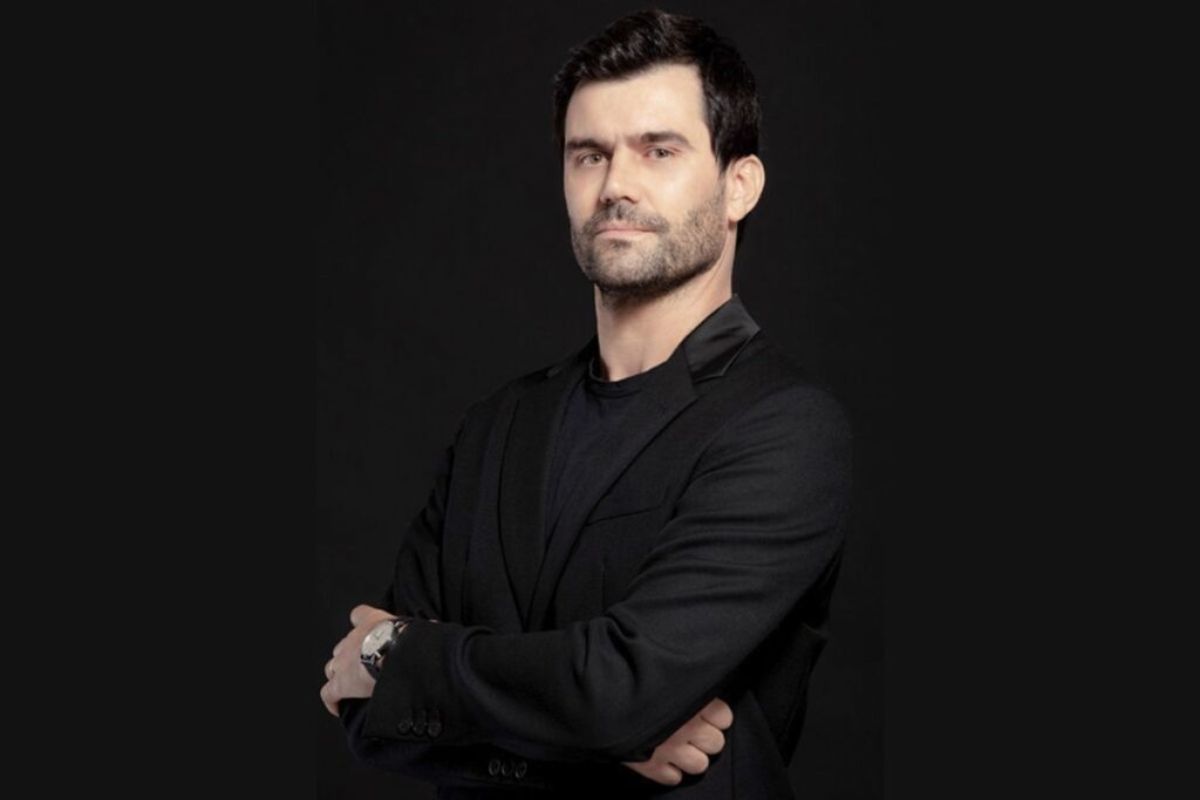
Among the young Italian architects to know, Peter Pichler is one of the names that best interprets the relationship between territorial identity and contemporary language. Born in Bolzano in 1982, he trained at the University of Applied Arts in Vienna in Zaha Hadid’s masterclass, and in his early years also collaborated with Zaha Hadid Architects and OMA / Rem Koolhaas, before founding his own studio, Peter Pichler Architecture, in Milan in 2015.
His architecture is defined by a precise quality: landscape is not left in the background, but enters the very structure of the project. Topography, light, building tradition, and local materials are reworked through a clear, essential language that never becomes folkloric. It is this balance between rootedness and formal clarity that makes Pichler one of the most interesting profiles in the new Italian scene.
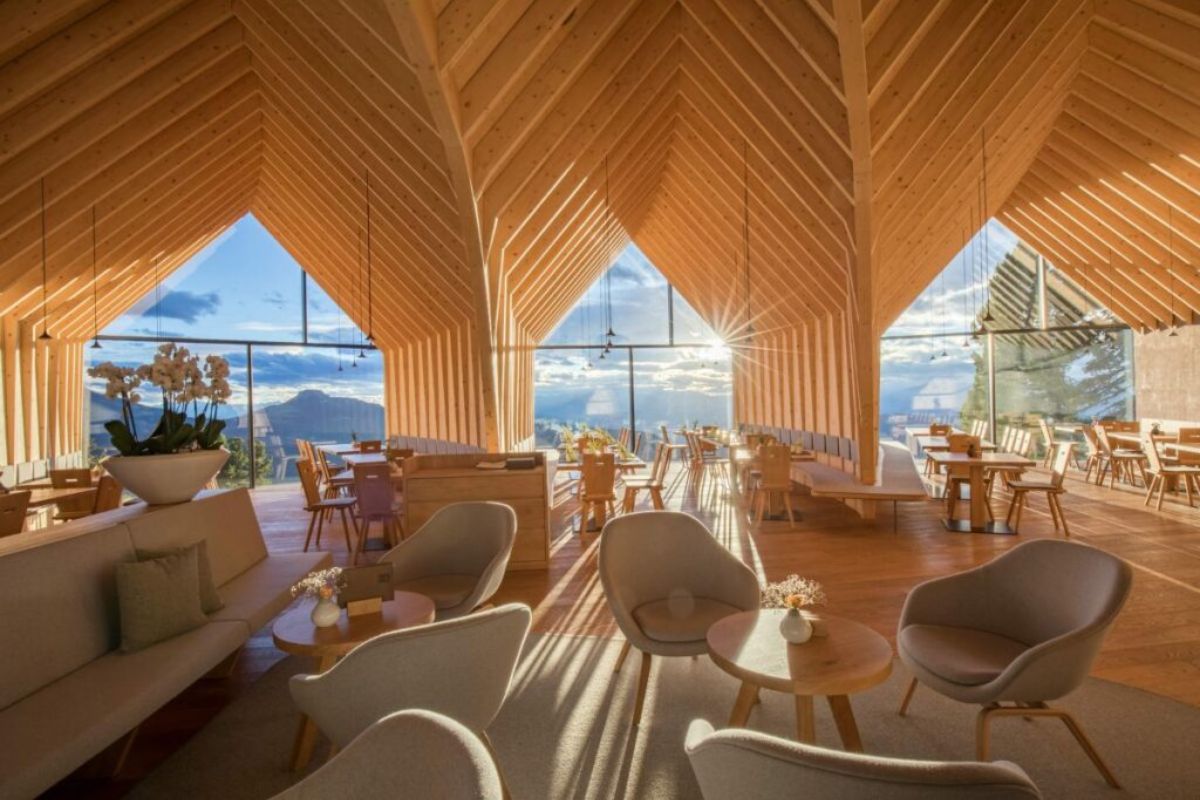
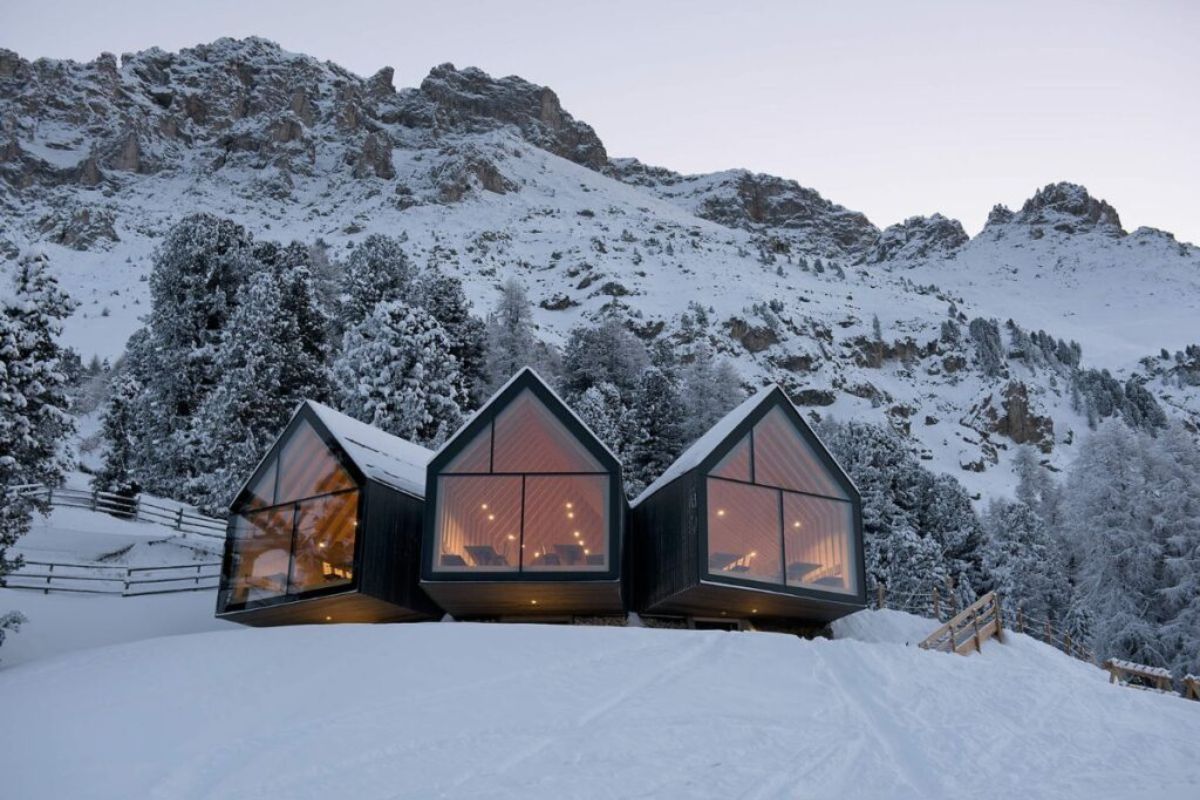
The project that, more than any other, consolidated his international profile is Oberholz Mountain Hut in Obereggen, in the Dolomites. Developed after winning a competition and created in collaboration with Pavol Mikolajcak Architects, the project was completed in 2017. Located at around 2,000 meters above sea level, the mountain hut builds a highly precise dialogue with the alpine landscape through a timber structure that opens toward the surrounding peaks.
Oberholz brings together the central themes of his work: wood as both structural and atmospheric material, form as a response to place, the opening of the volume toward the view, and the ability to create a strongly recognizable building without separating it from the culture of the territory in which it is built.
Important recognition has also grown around this path, including Europe 40under40 2020 and the In/Architettura 2020 – Young Designer award.
Grazzini Tonazzini Colombo: a collective practice that puts place and civic space back at the center
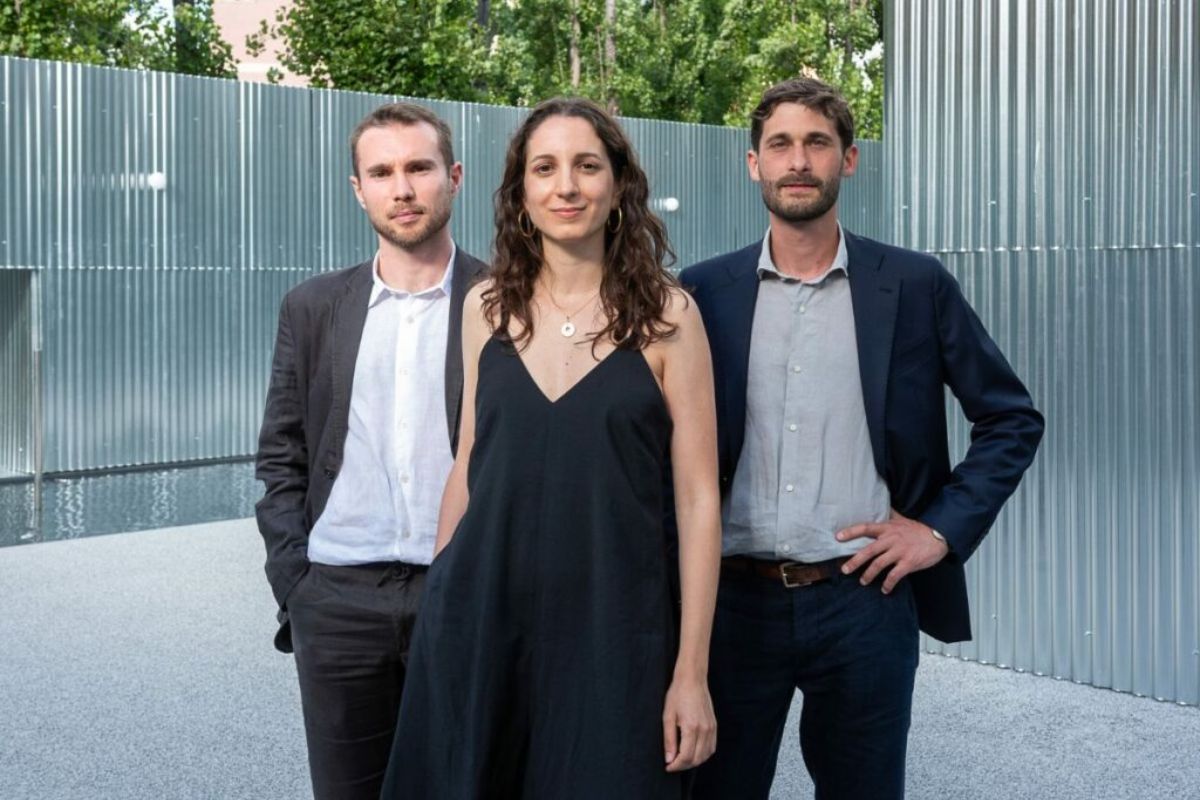
Among the young Italian architecture firms to know, Grazzini Tonazzini Colombo is one of the names that has emerged most clearly in recent years. The studio was born from the work of Michele Grazzini and Andrea Tonazzini, with the collaboration of Giorgia Colombo, and moves between a sensitivity rooted in the landscape of the Apuan Alps and an activity now also developed in Rome. Rather than focusing on an individual signature, their path is based on a shared practice built around the interpretation of places and the public dimension of design.
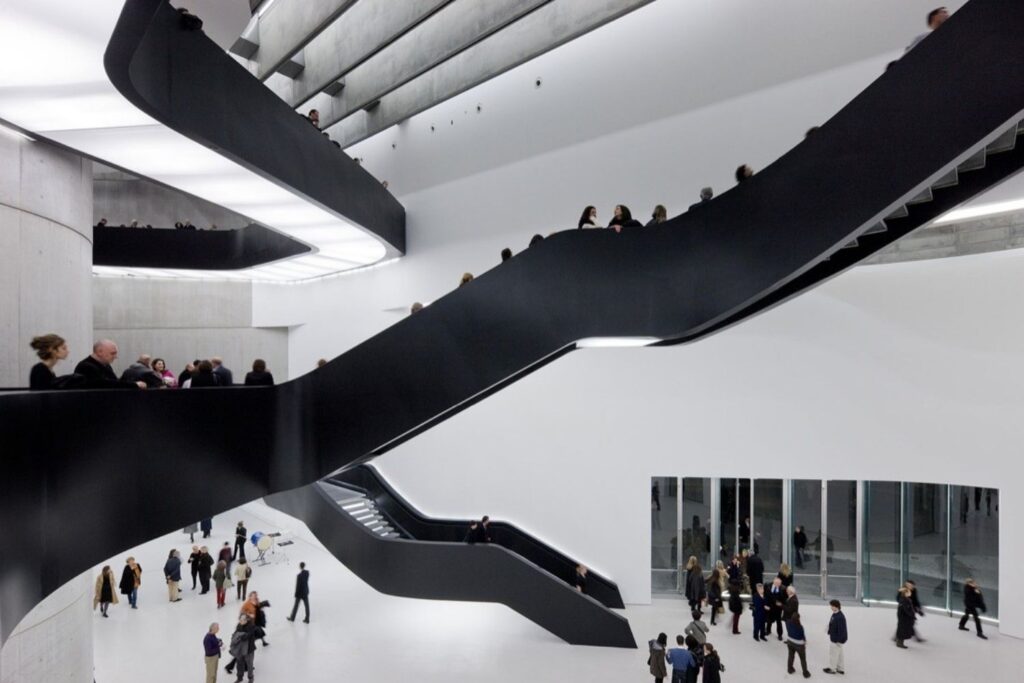
Their work stands out for its attention to civic space, the relationship between architecture and community, and the use of essential forms and materials able to generate presence without relying on emphasis. It is an approach that reads design not as a stylistic exercise, but as a practice of listening, synthesis, and the construction of meaning. The project that brought them most strongly into the Italian architectural debate is Quintessenza, winner of MAXXI NXT 2024, the MAXXI program dedicated to promoting a new generation of architects and enhancing public space.
Installed in the museum square during summer 2024, the project intertwines the idea of a stage backdrop with that of the Aristotelian fifth element, creating a space that is at once walkable, theatrical, and atmospheric.
Their profile was further strengthened by the Premio Italiano di Architettura 2024 – Under 35, which confirmed the studio’s relevance beyond the installation context of MAXXI.
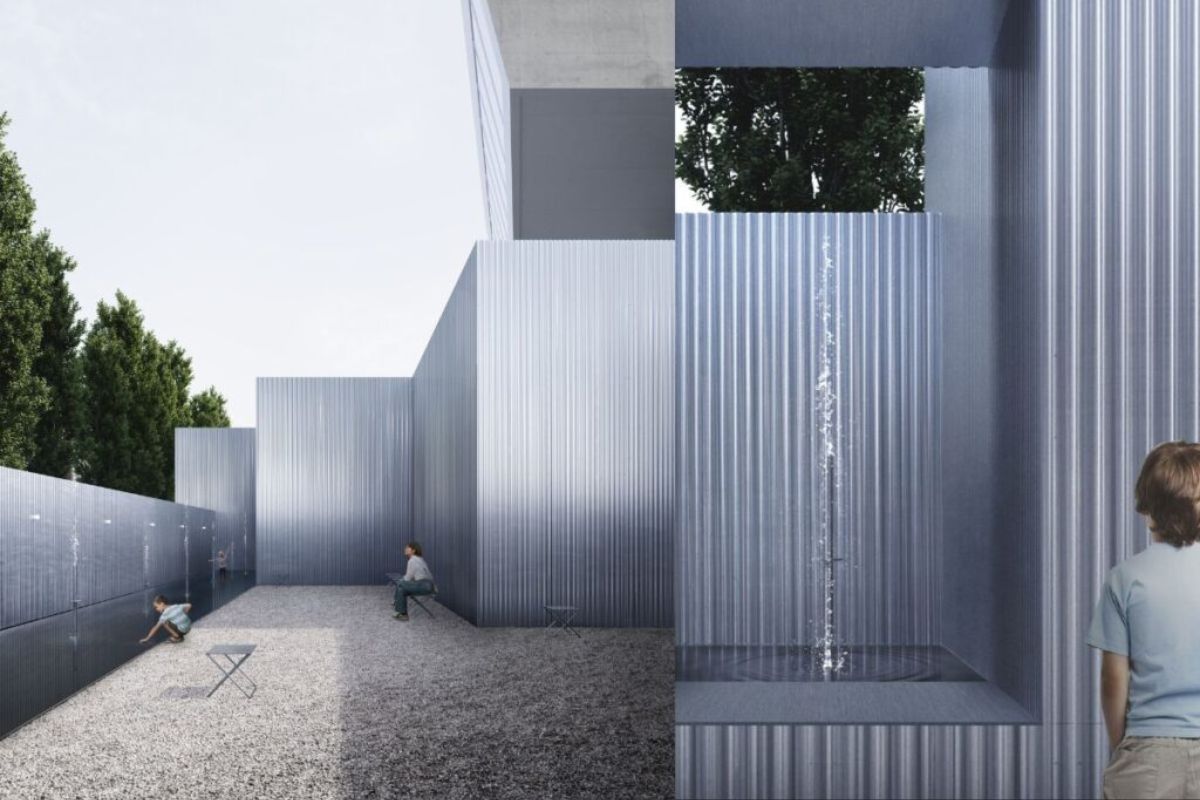
Alongside Quintessenza, works such as Sant’Anna Monument and Piobbico Tower show a coherent research path around the relationship between architecture, memory, landscape, and small public devices. In this sense, Grazzini Tonazzini Colombo represents one of the clearest expressions of a generation that looks less at the icon and more at the relational value of space.
SET Architects: essentiality, proportion, and spatial intensity
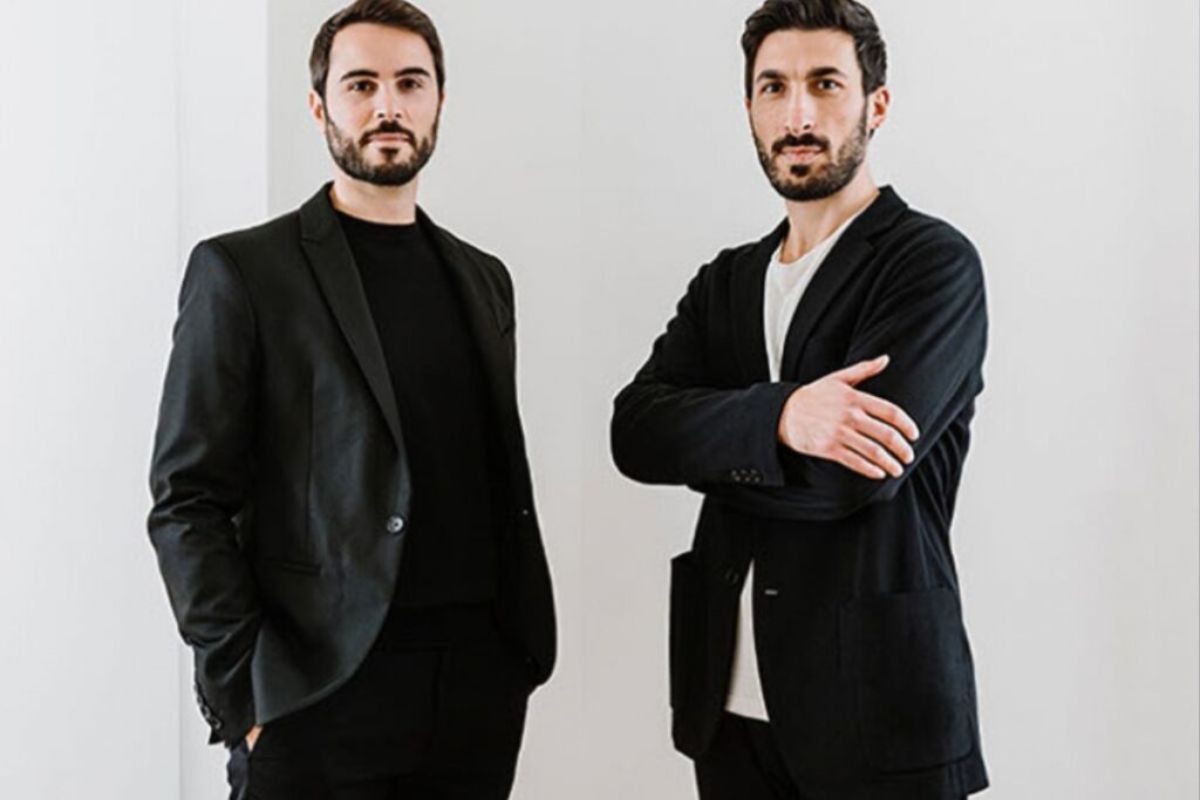
Among the young Italian architecture studios, SET Architects has built its identity with particular clarity. Based in Rome, the studio was founded and is directed by Onorato di Manno and Andrea Tanci, and works across architecture, urban planning, and design.
Their research moves toward an essential idea of architecture, based on synthesis, proportion, and the quality of spatial experience.
What distinguishes SET is not the search for effect, but the control of composition. Their projects often feature a clear architectural gesture, a calibrated relationship between solids and voids, and a desire to create spaces that are readable and intense, even through forms reduced to the essential. It is a position that produces a coherent, measured, and easily recognizable language.
The work that gave the studio wider visibility is the Bologna Shoah Memorial, built in Bologna in 2016 after winning the international competition for the city’s new monument. Two Corten steel volumes, around ten meters high, create a passage that progressively narrows, transforming a simple sign into a spatial experience of strong symbolic intensity.
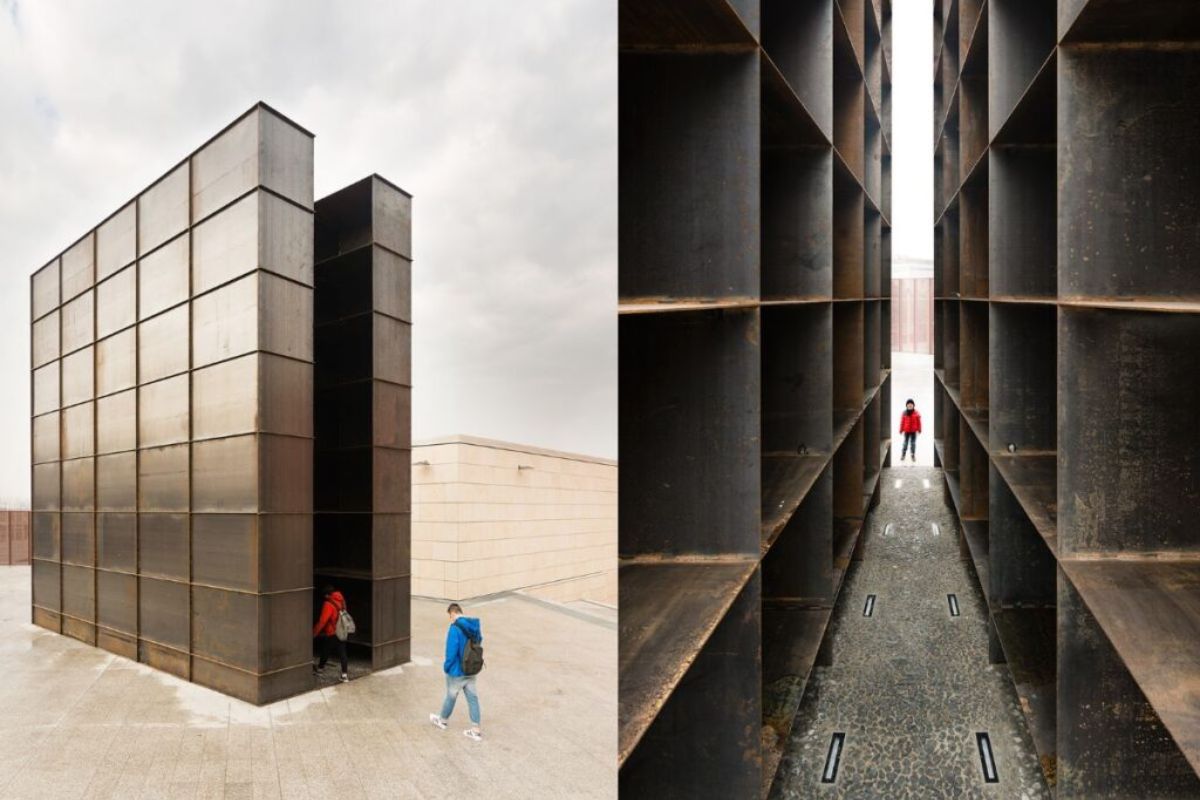
The memorial had the merit of translating the theme of memory into a dry, immediate architectural form, free from monumental rhetoric. Around this project, the studio’s public profile was consolidated and further strengthened by the Dedalo Minosse International Prize.
Alongside the Bologna project, works such as House for a Couple and the New School Complex in Sassa confirm a coherent research path based on architecture as the construction of order, measure, and presence.
AMAA: material, typology, and research that rethinks contemporary living
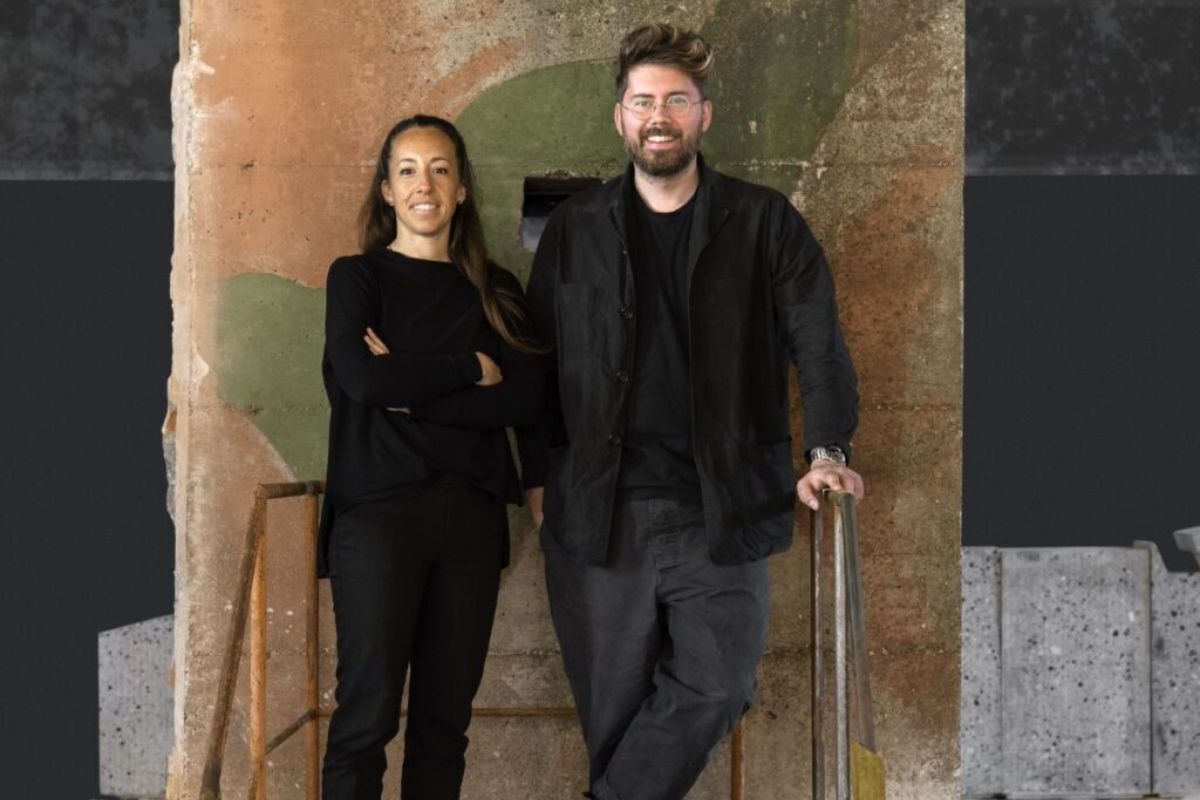
Among the young Italian studios to know, AMAA holds an increasingly important position. Founded in Venice in 2012 by Marcello Galiotto and Alessandra Rampazzo, after a shared education at IUAV and a professional path that crossed figures such as Massimo Carmassi and Sou Fujimoto, the studio has built a practice where design and critical reflection proceed together.
Their work does not seek immediate effect. Instead, it moves on more complex ground, where typology, material, atmosphere, and living become tools to question consolidated forms of contemporary space.
In AMAA’s work, there is a constant tension between control and experimentation. Each project seems to start from a question about how a space is lived, crossed, and perceived.
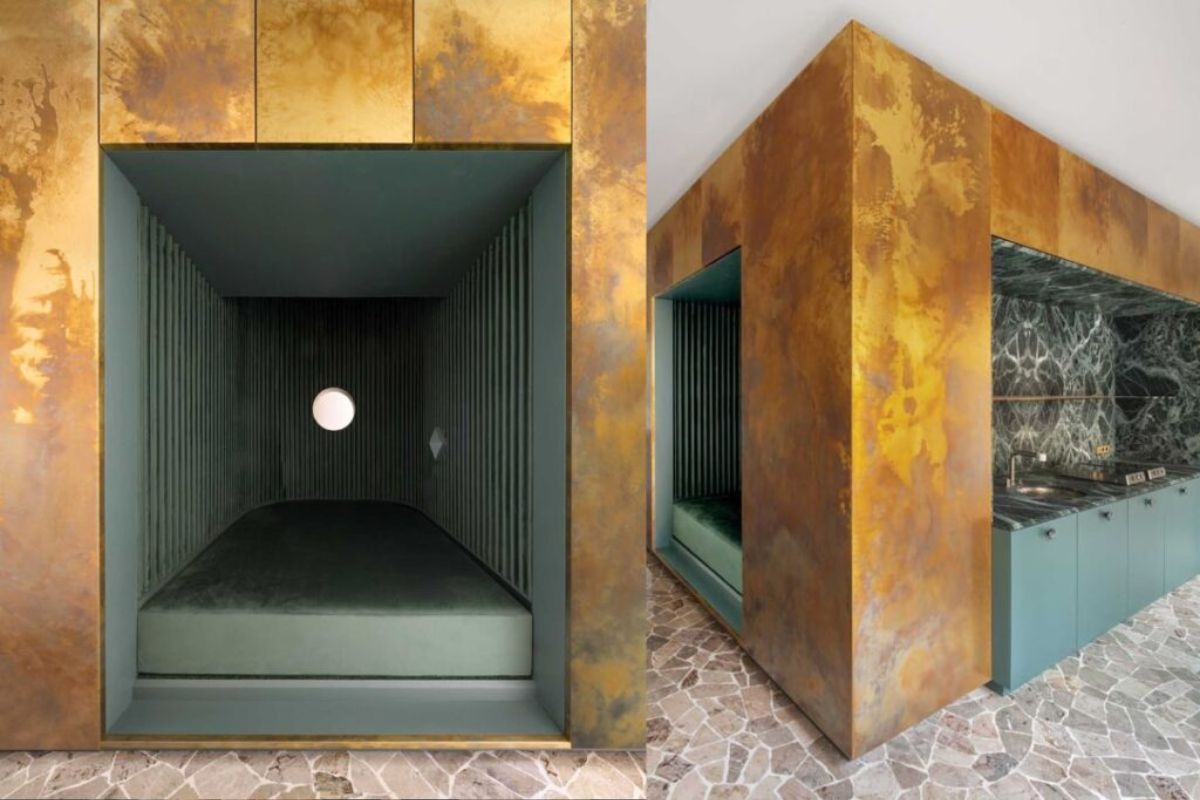
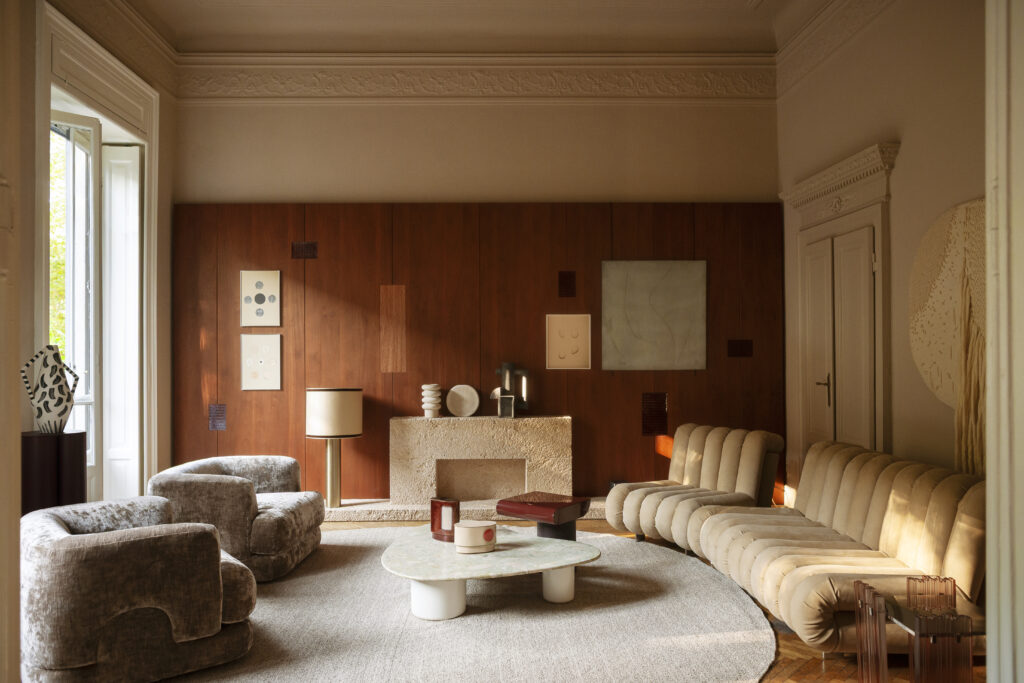
One of the most effective projects for reading this research is Golden Box, completed in Arzignano, in the province of Vicenza, and widely published in 2024. The project inserts an almost cubic volume, clad in brass and verde imperiale marble, inside a small early 20th-century apartment freed from its original partitions. More than a simple renovation, Golden Box appears as an architecture within architecture, radically redefining the idea of domestic interiority.
The studio’s profile was also consolidated by its presence at the Venice Architecture Biennale 2023, inside Dangerous Liaisons, with work dedicated to the reuse of the former NATO base of Monte Calvarina. This is an important step, because it confirms how the work of Galiotto and Rampazzo is now read not only through built projects, but also as a contribution to the contemporary debate on territorial transformation and the meaning of living.
In this balance between research, construction, and material sensitivity, AMAA represents one of the most convincing lines of new Italian architecture.
ellevuelle architetti: recovery, measure, and critical continuity in contemporary design
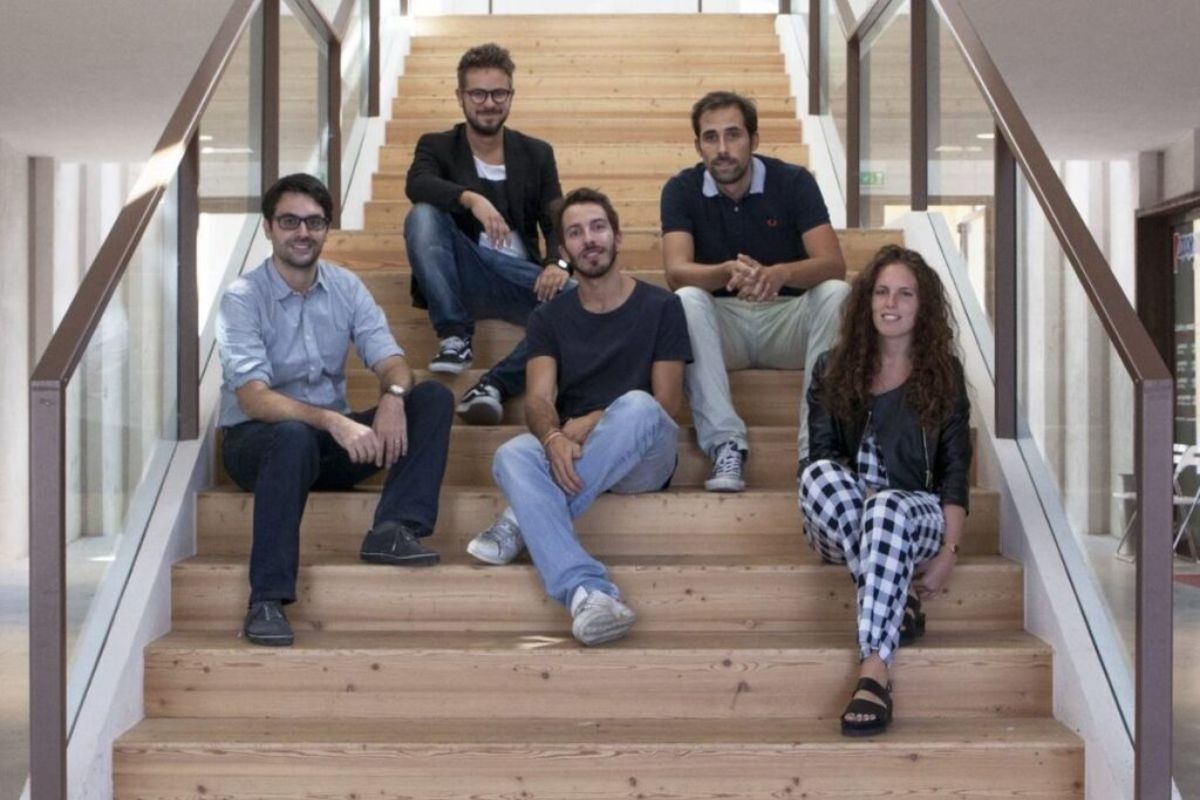
Among the young Italian architecture firms to know, ellevuelle architetti is a name that deserves attention for the coherence with which it has built its path.
The studio is based in Modigliana, in Emilia-Romagna, and is formed by Giorgio Liverani, Luca Landi, Michele Vasumini, and Matteo Cavina. Its practice focuses especially on the recovery of existing buildings, residential spaces, and interventions able to work with precision within layered contexts.
Its presence in the Europe 40under40 program and its mention in Casabella’s selection of young designers under 30 have helped consolidate its profile within the professional circuit.
The project that makes the studio particularly interesting today is Effevu House, published by ArchDaily in 2026.
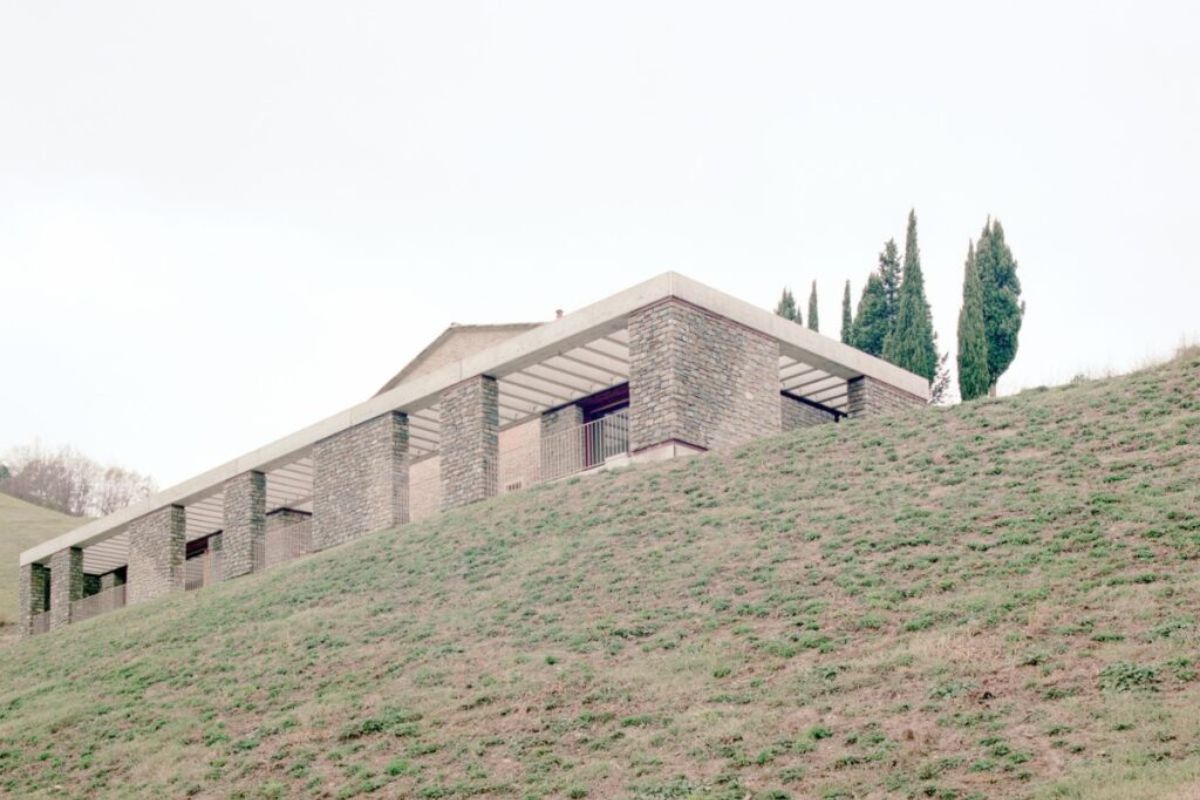
The intervention is set within a rural system made up of a stone house and a former barn. It works not through imitation, but through critical continuity, introducing a new inhabited volume that relates the existing bodies without erasing them. This approach says a great deal about their architecture: attention to constructive memory, measure, and the ability to intervene on the existing fabric without rhetoric.
In an article on the new Italian generation, ellevuelle makes sense precisely for this reason: because it represents a less displayed, but highly solid, line of architectural design.
false mirror office: research, design, and a collective practice crossing contemporary architecture
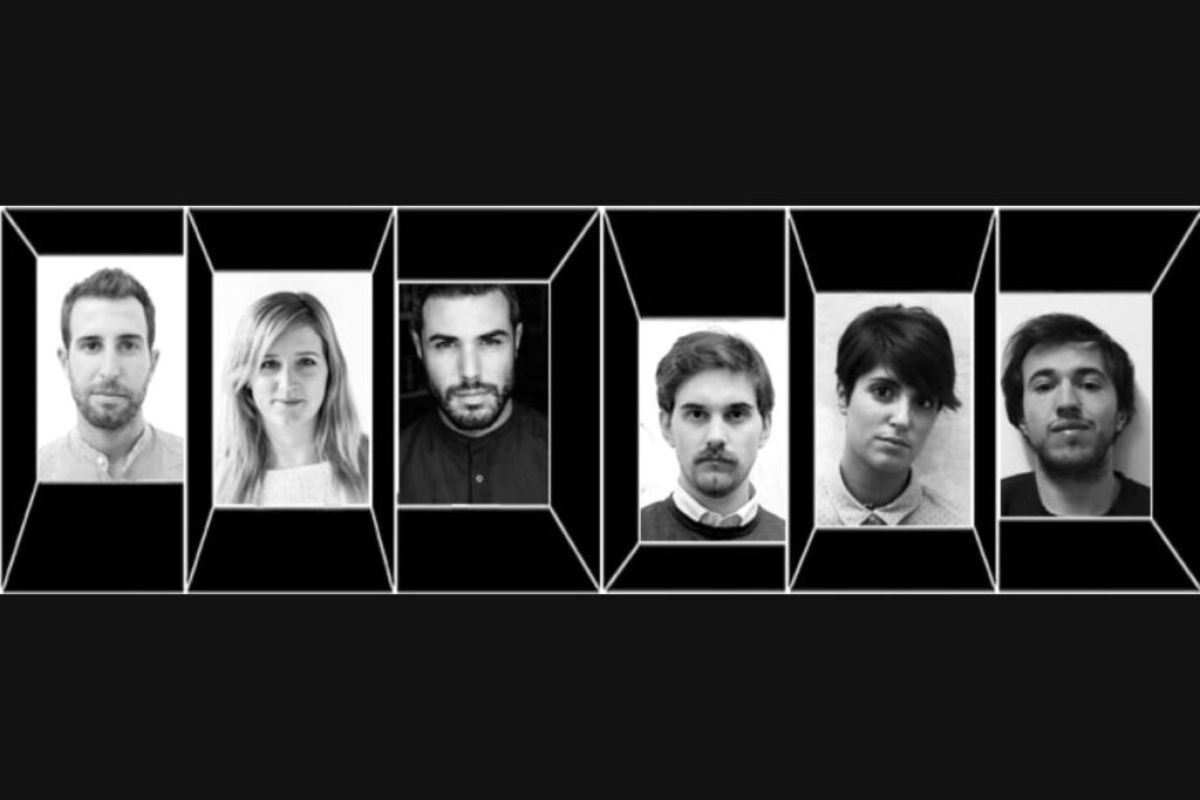
Among the most interesting profiles in the new Italian scene, false mirror office occupies a particular position. The collective, based in Genoa, was born from the meeting of designers trained at the Genoese Polytechnic School and united by experiences also developed in international studios.
The team brings together Giovanni Glorialanza, Andrea Anselmo, Gloria Castellini, Guya Di Bella, Filippo Fanciotti, and Boris Hamzeian. It builds its common ground around a shared reflection on morphology, form, and representation at different scales of design.
Rather than around a single manifesto building, their path develops as a collective trajectory across architecture, research, workshops, and public projects. It is a practice that looks with particular attention at the paradigms of the contemporary city, questioning overly generic readings of concepts such as adaptability, tradition, and sustainability.
In this sense, the competition becomes a true field of critical verification for the collective: a space in which to measure the possibility of specific, contextual, and never standardized responses.
An important step in their path is The False Mirror, the winning project in Trondheim, Norway, within Europan. The work addresses urban adaptability not as a simple sum of flexible devices, but as an opportunity to redefine the relationship between forms of the past and future needs.
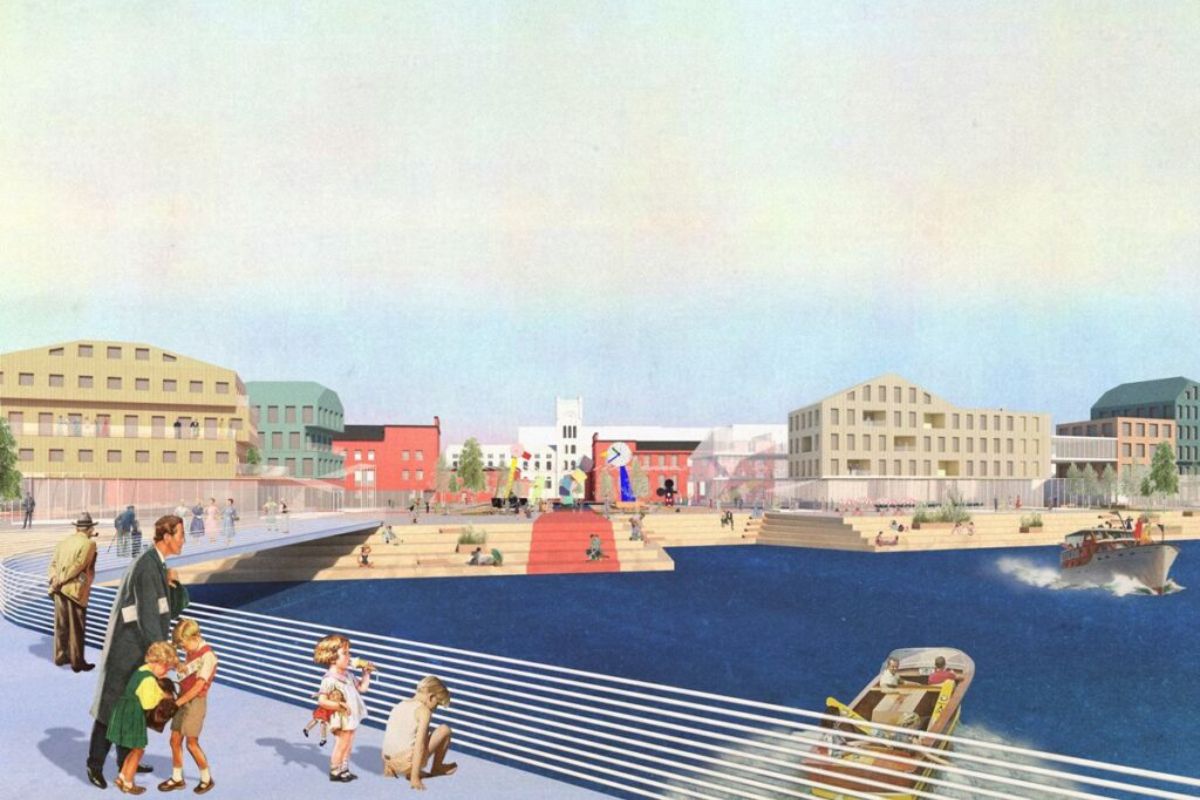
By intervening in the Strandveikaia district, the project rereads archetypes deeply connected to Trondheim’s history — riverside warehouses, the relationship between land and water, and port infrastructures — and builds an urban vision where memory and transformation enter into dialogue without canceling each other.
It is precisely this ability to bring together theoretical thought, urban design, and attention to the permanence of forms that makes false mirror office an interesting name for a selection dedicated to the new generation.
Within a map of the new Italian protagonists, the collective introduces a different sensitivity, less centered on the iconic work and more attentive to the construction of a design thinking able to move between discipline, research, and contemporary architectural culture.
Francesca Perani: interiors, visual identity, and a practice that brings together architecture and culture
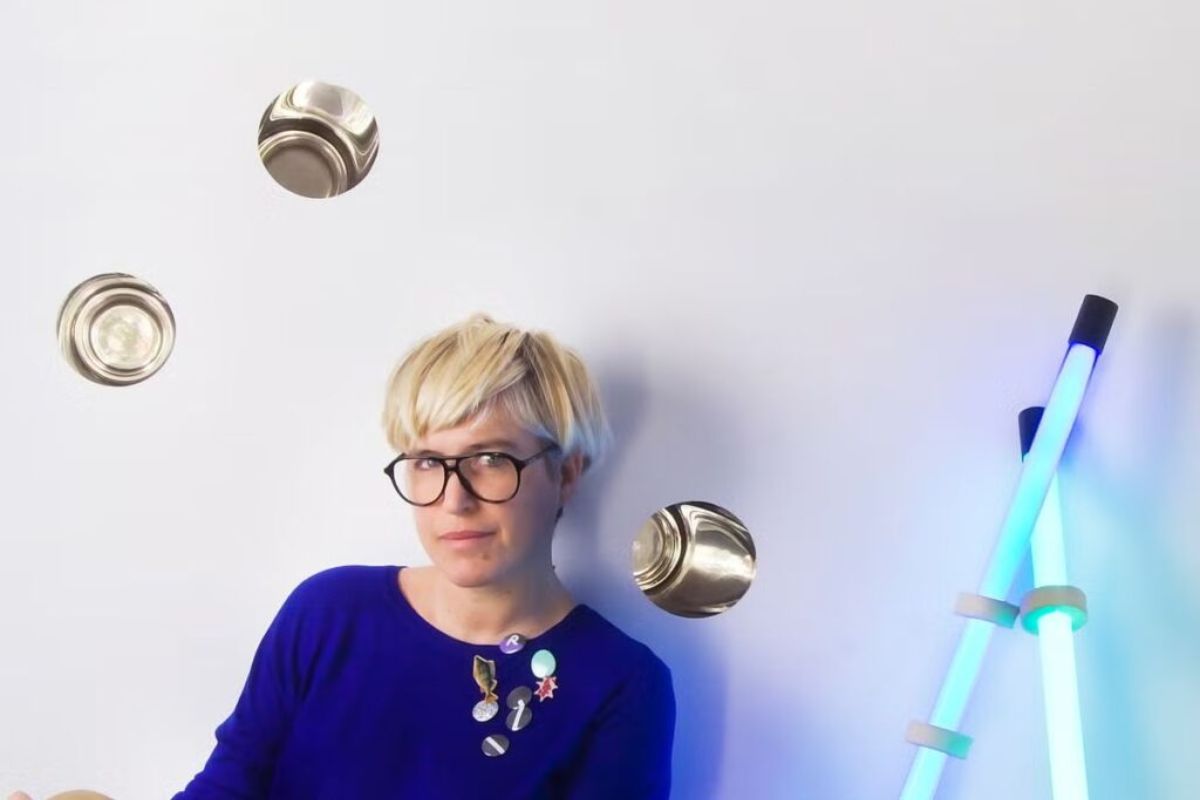
Among the most interesting contemporary Italian architects to observe in order to understand tomorrow’s architecture, Francesca Perani represents a recognizable voice for the way she brings together design, interiors, visual language, and cultural intervention. A graduate of Politecnico di Milano, with educational and professional experiences in Belgium, Australia, and the United Kingdom, she founded her studio, Francesca Perani Enterprise, in Bergamo in 2007.
Official sources describe her as a figure moving across architecture, design, branding, graphics, and exhibition design, with an approach that combines material experimentation, irony, and strong expressive energy. What makes her profile especially interesting is also her cultural work with RebelArchitette, the non-profit association of which she is listed as president and co-founder, created to give greater visibility to women’s work in architecture and to promote a more equal and plural idea of the profession.
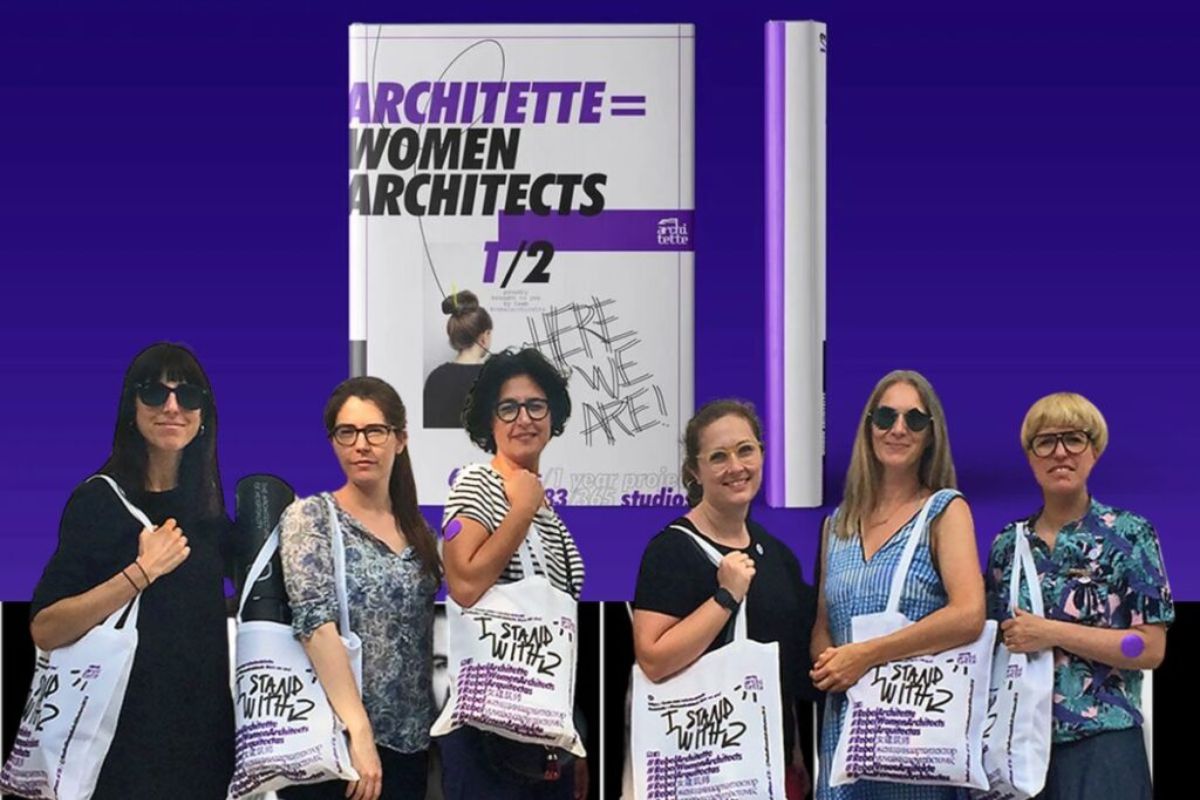
This dimension does not replace the project, but expands its meaning. In Francesca Perani’s case, architecture is not only the construction of space, but also the construction of imaginaries, representations, and cultural tools. It is precisely this dual nature — both design-driven and critical — that makes her a coherent name for an article that aims to describe the liveliest and least predictable profiles in the new Italian scene.