Today, when we talk about Italian design, we often immediately think of something aesthetic, elegant, and expensive. But if that were all, Italian design would already be dead today, replaced by international products that cost less and look similar. If contemporary Italian design is still alive and sought after around the world, it is because …
Today, when we talk about Italian design, we often immediately think of something aesthetic, elegant, and expensive. But if that were all, Italian design would already be dead today, replaced by international products that cost less and look similar.
If contemporary Italian design is still alive and sought after around the world, it is because behind every object there is a story made of people, vision, and courage: a designer with an unexpected idea and a company willing to take the risk of making it real.
Being “Be the Project” today means exactly this: not limiting yourself to drawing a beautiful form, but taking responsibility for changing, even in a small way, the way we live.
Italian identity in design is not a label printed on a package, but a working method. It is the ability to bring together industry, which must produce thousands of pieces, and craftsmanship, which pays attention to every single detail. It is a constant dialogue — and sometimes even a clash — between those who design and those who build.
The irony and simplicity of the Italian masters
To understand what is happening today, we need to look at those who helped invent this profession. The Castiglioni brothers taught us that design begins with observation. Their Arco lamp for Flos was not created to be a luxury object, but to solve a practical problem: lighting a table without having to drill into the ceiling. A simple and brilliant idea at the same time.
The same spirit can be found in Bruno Munari, who argued that “complicating is easy, simplifying is difficult”. His objects were never pretentious, but they always tried to make people smile or teach something.
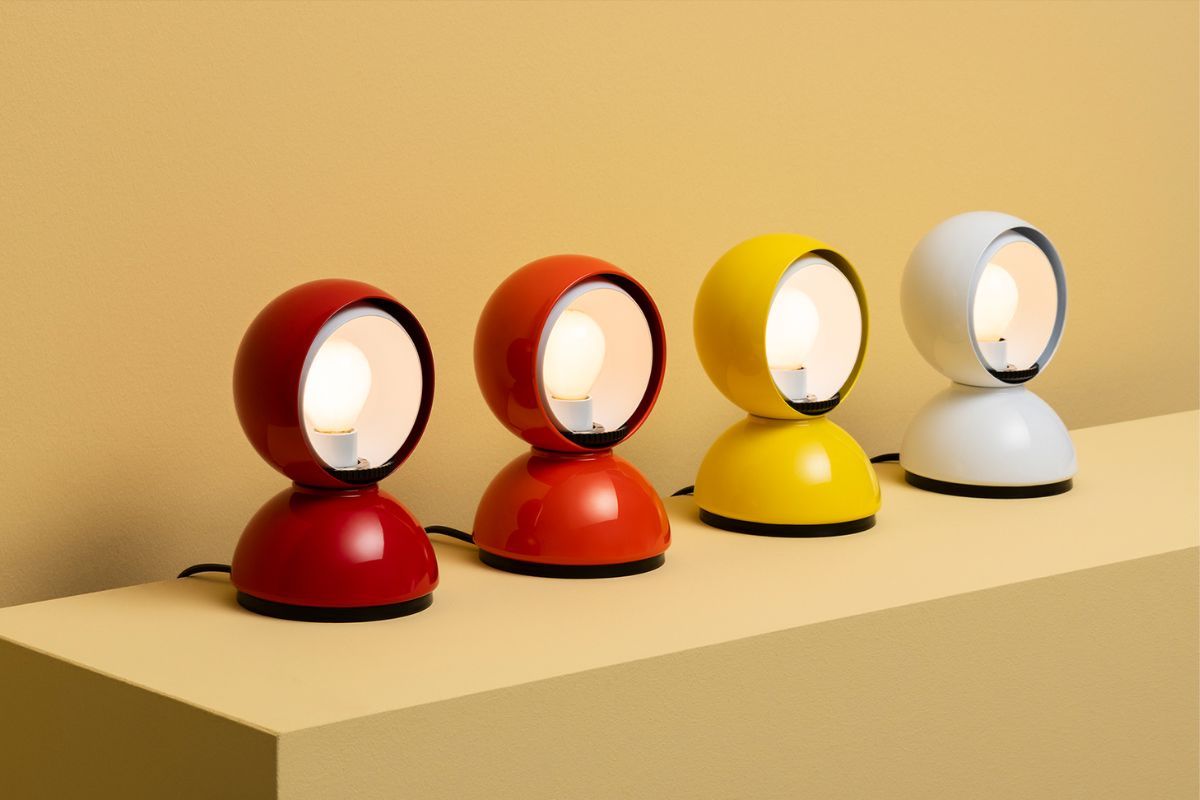
The same applies to Vico Magistretti, who believed that a good project could be explained over the phone. If you can describe an idea clearly, it means that the idea is strong. The Eclisse lamp is a perfect example: one half-sphere rotating inside another, in a simple, intuitive, almost natural gesture.
The thread between past and present
This way of thinking about design has not disappeared. It has evolved. If the masters of the past had to invent objects for the modern home, today’s Italian designers face different challenges, such as technology, sustainability, and changes in everyday behavior. But they do so with the same attitude: observing, experimenting, and giving shape to a recognizable idea.
Fabio Novembre has inherited that expressive freedom that belonged to figures such as Gae Aulenti. While Aulenti used unexpected elements to rethink the object, Novembre uses the form of the human body in the Him & Her chair to turn a seat into a visual story. It is a way of reminding us that design does not have to be only functional: it can also move, provoke, and tell us something about who we are.
Another significant example is Elena Salmistraro. In a landscape where everything risks becoming uniform and grey, she brings colour, decoration, geometry, and imagination back into the project. Through her collaborations with companies such as Alessi and Bosa, she shows that Italian identity also lies in the ability to decorate intelligently, creating objects that almost seem like characters from a fantastic story.
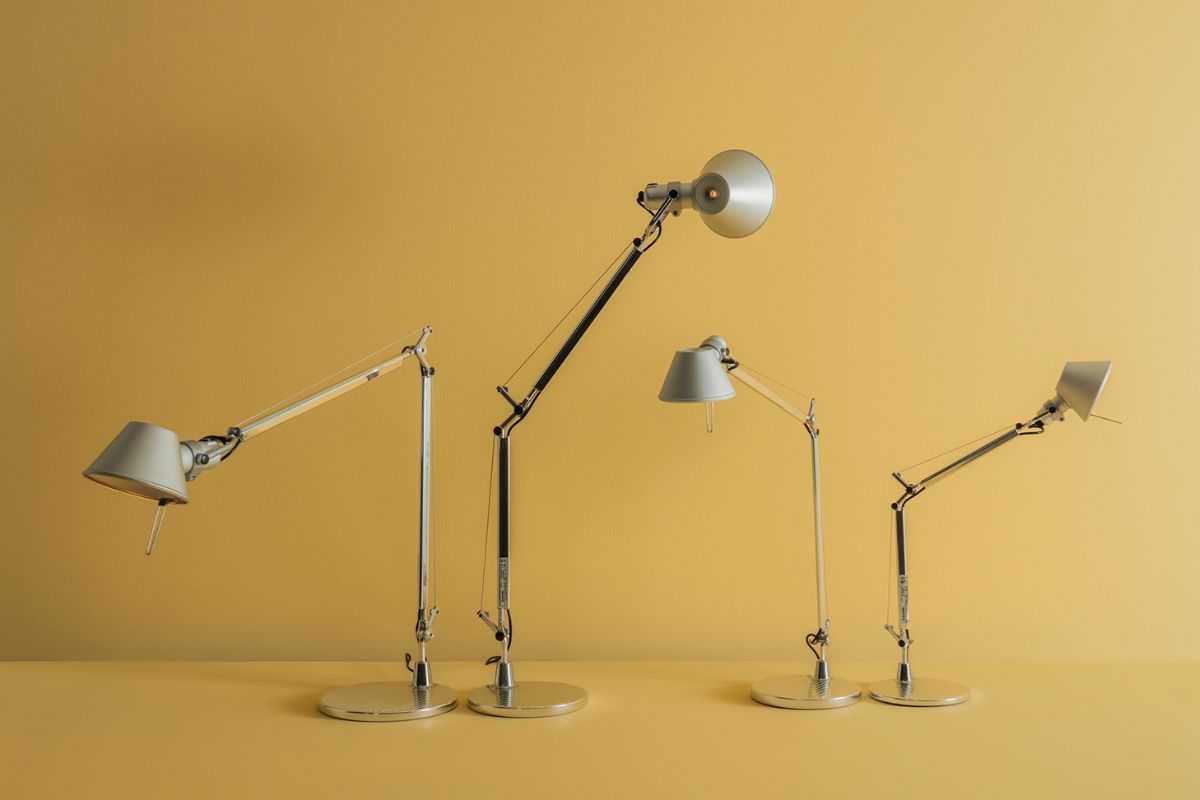
The same attention can be found in Michele De Lucchi, who, together with Giancarlo Fassina, designed the Tolomeo lamp: an object conceived to work impeccably, but also endowed with a discreet, recognizable, and lasting personality. This is precisely the strength of Made in Italy design: bringing together usefulness and character without excess.
Today’s challenges: design, materials, and the environment
Today, however, being a good designer in Italy also means questioning how and where materials come from. Formafantasma represents this new vision in an exemplary way: the studio does not simply design a piece of furniture or an object, but studies the origin of wood, material supply chains, metal recycling, and the impact of production choices.
This is the new sustainable Italian design, able to combine the aesthetic quality of the product with ethical responsibility. In a way, it is a coherent evolution of the values of Giorgetto Giugiaro, who has always designed concrete, accessible, and useful objects, such as the first Panda, but whose approach should now be reread in light of today’s urgencies.
This transformation can also be perceived in the major works of Massimiliano Fuksas: the use of innovative materials, dynamic forms, and the ability to change the face of cities. Italian design does not stand still. It moves from tableware objects to architecture, keeping alive that combination of courage, curiosity, and experimentation that has made it recognizable around the world.
Why Italian design is still relevant
Italian design continues to matter because it is not afraid to make mistakes, experiment, and question itself. It is not born only at a desk in front of a computer, but takes shape in factories, workshops, and studios where people spend hours discussing a curve, a material, a joint, or a proportion.
“Be the Project” means understanding that every time we design something, we are also proposing a way of living. Italian identity is this: not settling for the easiest solution, but looking for the most meaningful one, the one that brings together function, vision, and design culture.
As long as we continue to place passion, intelligence, and research before simple profit, contemporary Italian design will continue to be what everyone wants to imitate, but no one can truly replicate completely.
This contribution was selected among the 5 winners of the “Be the Project” contest, promoted by Archi&Interiors together with Hdemy Group, NAD – Nuova Accademia del Design and Accademia Cappiello.