Cini Boeri played a major role in shaping Italian design culture in the second half of the twentieth century by continually questioning how people inhabit space. In her houses, individual autonomy coexists with shared areas; in her furniture, comfort and flexibility often replace rigid typologies; in her most experimental products, polyurethane and curved glass become …
Cini Boeri played a major role in shaping Italian design culture in the second half of the twentieth century by continually questioning how people inhabit space. In her houses, individual autonomy coexists with shared areas; in her furniture, comfort and flexibility often replace rigid typologies; in her most experimental products, polyurethane and curved glass become opportunities to rethink form and use. From Casa Bunker to the Strips system, from Serpentone to Ghost, designed with Tomu Katayanagi, architecture and industrial design belong to the same field of research: designing around people’s physical and psychological needs without turning the home into a set of prescribed behaviours.
Cini Boeri: biography between architecture and Italian design
Maria Cristina Mariani Dameno, known as Cini Boeri, was born in Milan on 19 June 1924. During the Italian Resistance, she served as a partisan courier; in 1951, she graduated in Architecture from the Politecnico di Milano. After professional experiences with Gio Ponti and, above all, Marco Zanuso, she established her independent practice in 1963, working simultaneously across civil architecture, interiors and industrial design. She died in Milan on 9 September 2020, aged 96.
The continuity between different scales is one of the most interesting aspects of her career. Boeri designed single-family houses, apartments, shops, offices and exhibition spaces, as well as seating, upholstered systems, lighting and components for domestic living. Arflex summarises her research through her attention to spatial functionality, particularly in smaller homes, and to the psychological relationship between people and their surroundings.
From 1981 to 1983, she taught Architectural Design, Industrial Design and Interior Design at the Politecnico di Milano. In 1979, she received the Compasso d’Oro for the Strips family, and in 2011 ADI awarded her the Compasso d’Oro for Lifetime Achievement. Her theoretical work also includes Le dimensioni umane dell’abitazione, originally published in 1980, a book devoted to designing the home around the physical and psychological needs of its inhabitants.
Cini Boeri’s approach to living begins with autonomy
For Boeri, the home is not simply a sequence of correctly organised functions. It is a place where coexistence and autonomy must be able to remain in constant negotiation.
This principle becomes explicit in the Progetto domestico presented at the 17th Milan Triennale in 1986. The project was conceived for a couple and distinguished between shared moments and individual spaces. A statement by Boeri herself, later cited by Interni, clarifies her position: transformations in contemporary relationships should be matched by a home capable of abandoning the idea of compulsory togetherness, giving each inhabitant their own space and making sharing a choice.
This is an important shift because it moves flexibility beyond the purely technical and into the behavioural realm. A movable wall or modular sofa becomes meaningful when it enables different ways of living, rather than because movement has value in itself.
Le dimensioni umane dell’abitazione approaches the subject from the same perspective, linking comfort, changing lifestyles, necessary space and the possibility of developing domestic typologies capable of adapting to evolving family situations.
Casa Bunker: living together without giving up individual space
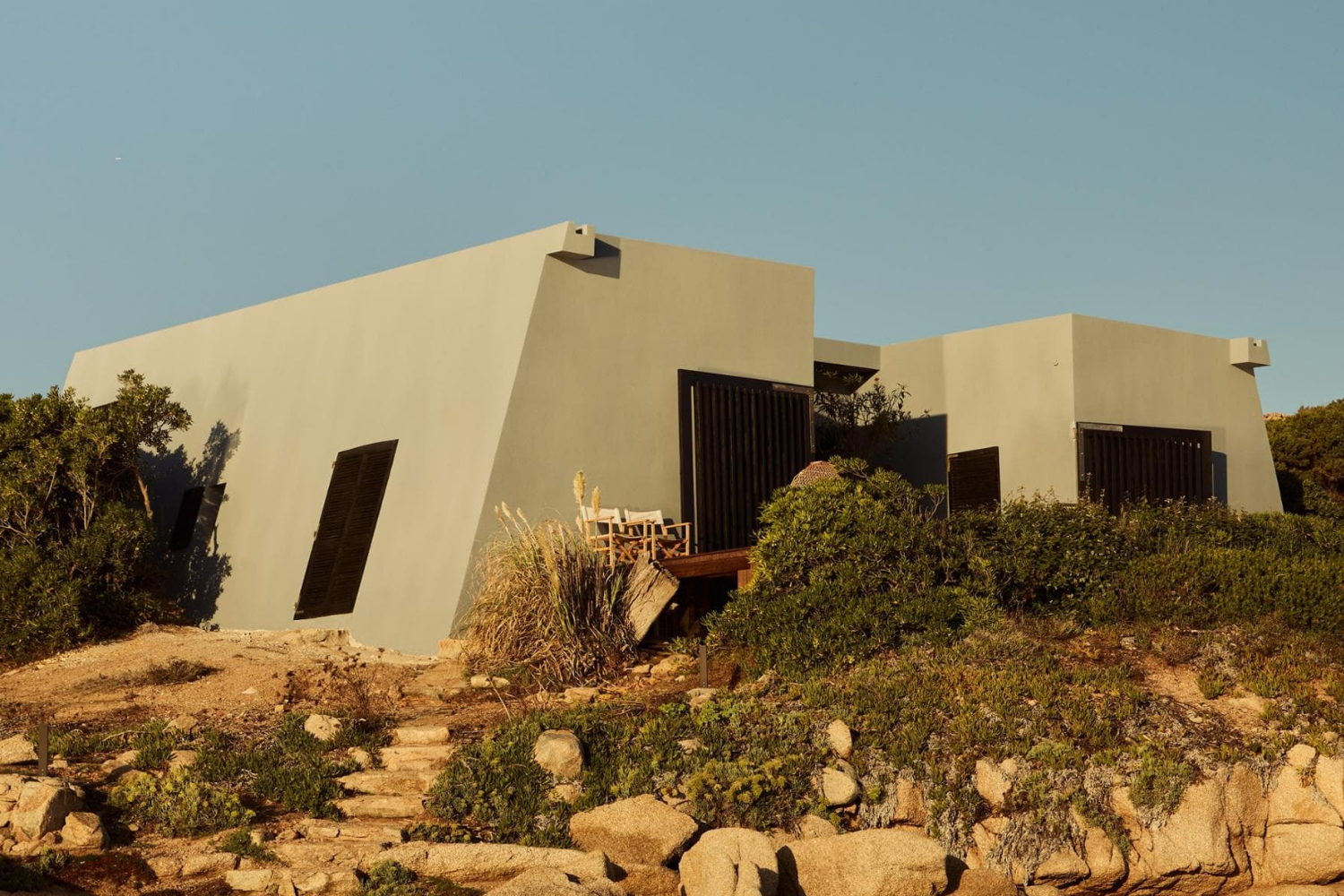
One of the projects that makes this idea particularly clear is Casa Bunker, built in 1967 at Abbatoggia on the island of La Maddalena for Boeri’s own family.
The house rests directly on the irregular rocky terrain without levelling it, so the different rooms occupy levels determined by the morphology of the site. The low, solid external volume protects the house from the exposed conditions of the gulf, while the plan opens towards the sea through a patio.
Its most significant aspect, however, is the organisation of the plan. The central area is dedicated to collective life, while the four bedrooms arranged around it have their own facilities and independent exits to the outside. Boeri’s studio therefore describes a house in which each person can enter, leave and retreat to their own room without necessarily passing through the spaces used by others.
Years later, discussing Casa Bunker, Boeri summarised the concept through the idea of maximum independence combined with individual responsibility. The architecture does not force the family to remain together: it creates the conditions that allow them to choose when to do so.
It is a domestic model strikingly distant both from the traditional bourgeois apartment and from an indiscriminate open-plan layout.
Casa Rotonda and the patio as a mediating space
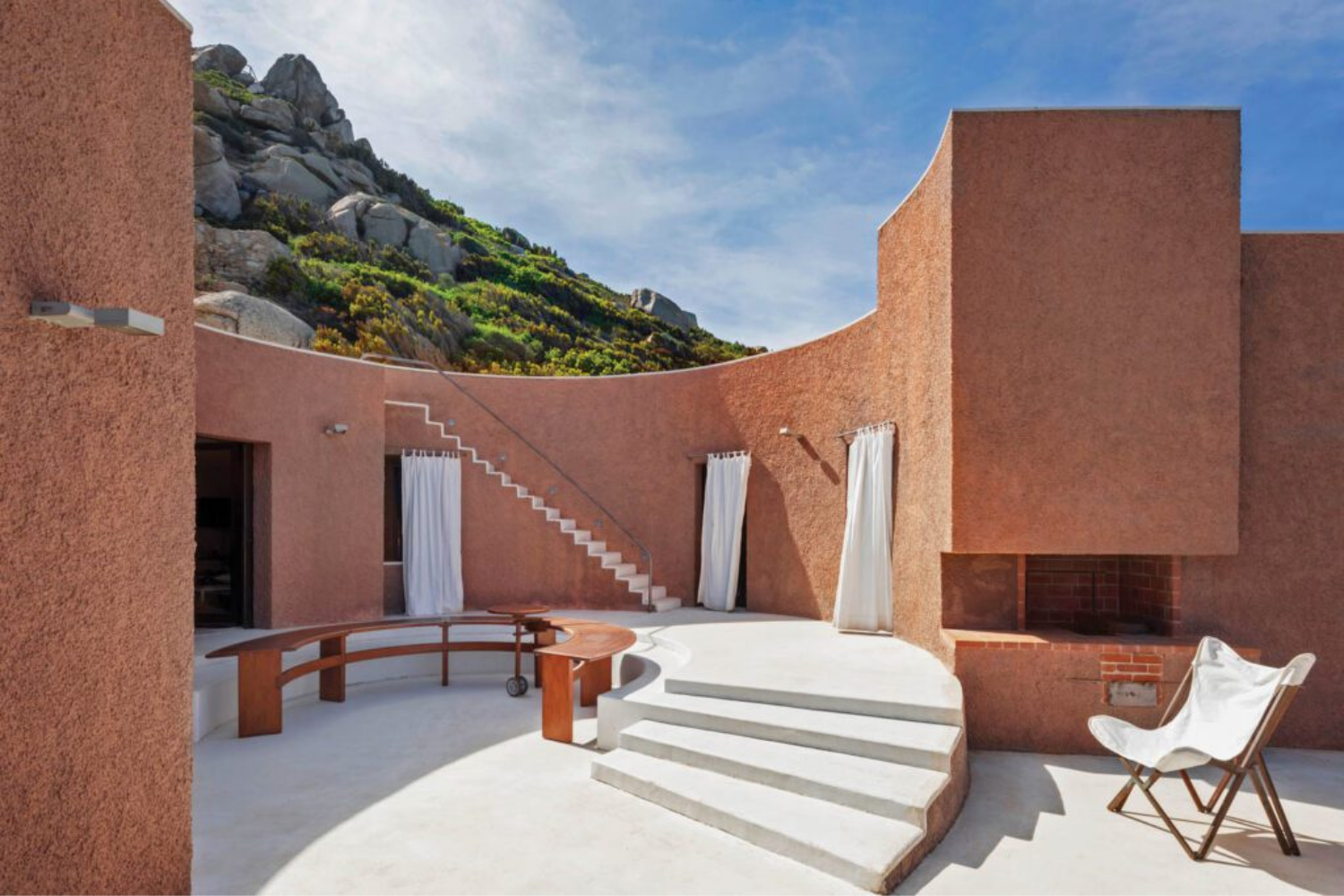
Within the same landscape of La Maddalena, Casa Rotonda, also completed in 1967, approaches the question differently. Domus documents both houses as part of Boeri’s residential research on the island.
The building follows a ring-like layout around a patio sheltered from the wind. The plan separates the area intended for the family from the guest bedrooms, while the central space acts as a mediator between autonomous activities. Here too, the house is organised through different degrees of independence and connection, rather than through a purely representational hierarchy of rooms.
Casa Bunker and Casa Rotonda also demonstrate that a relationship with the landscape does not necessarily require large panoramic windows or visually lightweight forms. Boeri uses mass, courtyards, protection from the wind, changes in level and access routes to establish a physical relationship with the site.
Bobo: when polyurethane eliminates the traditional internal structure
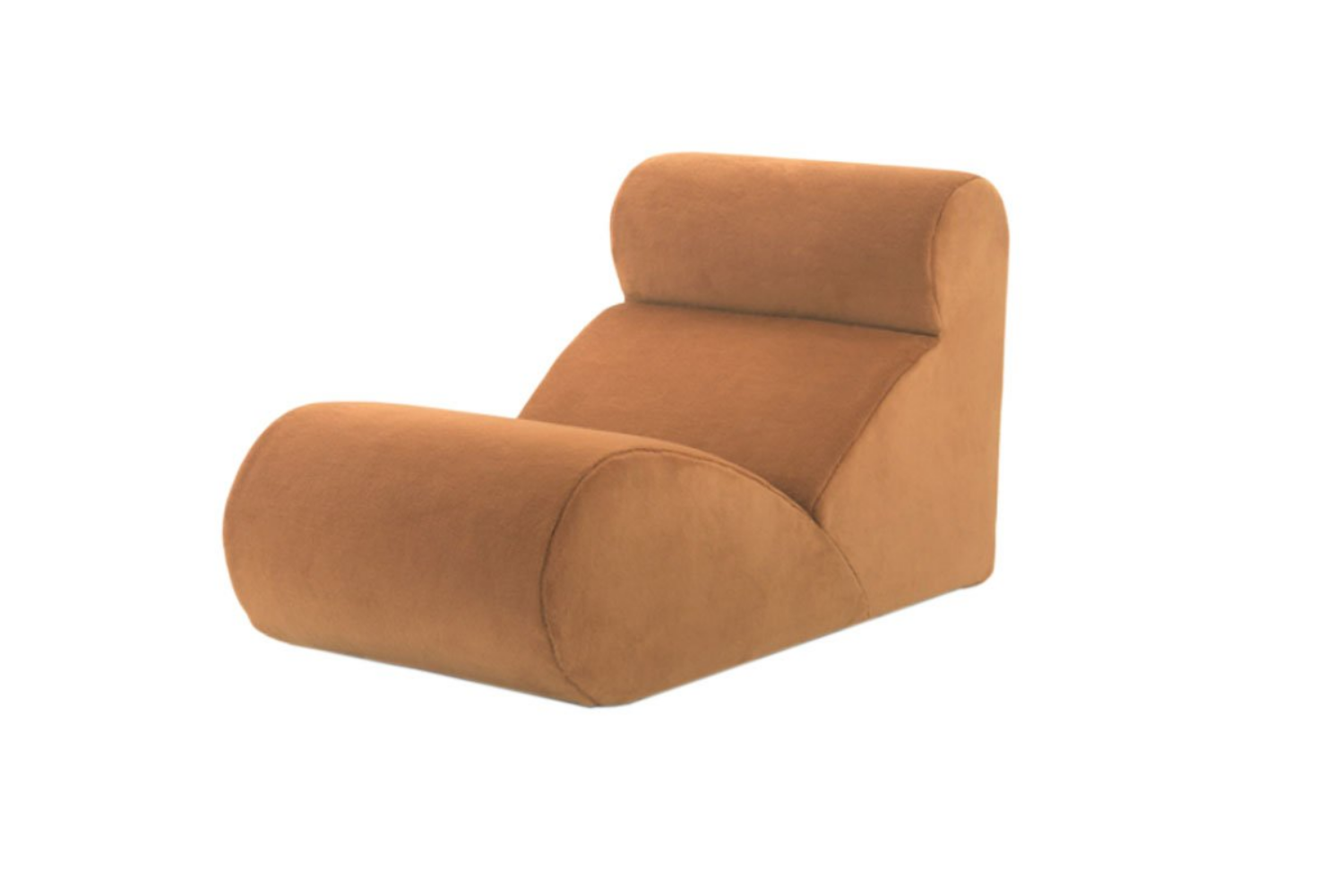
The same ability to rethink a typology through technology also emerges in her furniture design.
With Bobo, designed for Arflex in 1967, Boeri worked directly with the possibilities offered by polyurethane. According to the company’s official history, Bobo was the first monobloc seat in polyurethane foam without an internal supporting structure.
This is significant because the form no longer grows from a rigid skeleton that is subsequently upholstered. The mass of the expanded material itself constructs the seat and determines its behaviour.
The relationship with the body therefore becomes more direct: fewer visible components, less distinction between structure and upholstery, and greater freedom from the traditional image of the armchair.
Serpentone: when the sofa no longer has a predetermined length
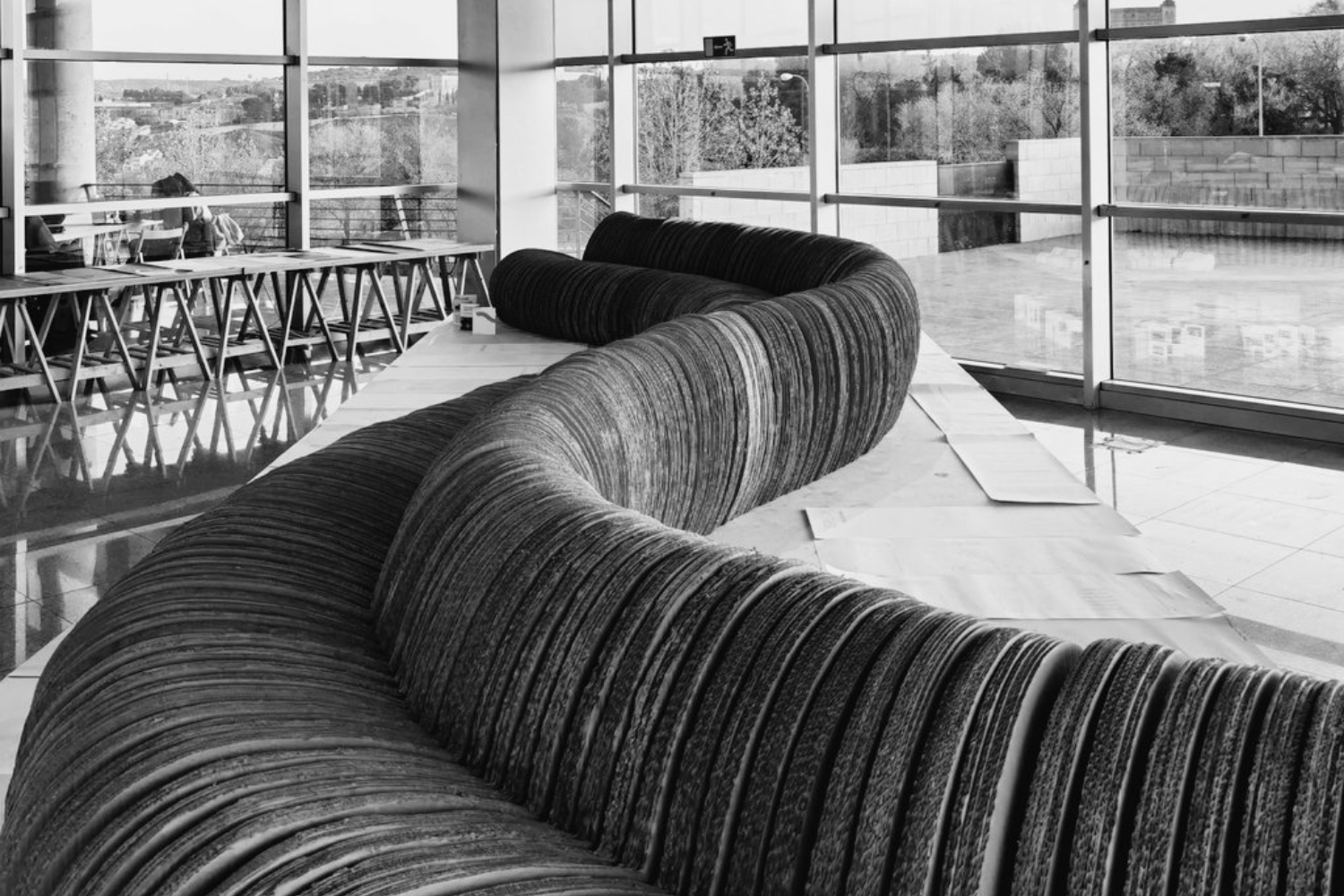
With the 1971 Serpentone, again for Arflex, the design challenges another apparently obvious characteristic: the sofa’s fixed size.
Arflex describes Serpentone as a polyurethane seat capable of forming sinuous configurations over a virtually unlimited length. The principle allows the sofa to be conceived as a continuous element that adapts to the dimensions and geometry of the space, rather than as a closed object with a predetermined number of seats.
Once again, flexibility does not depend on adding a mechanism. It is embedded in the conception of the object itself.
Serpentone clearly expresses Boeri’s desire to reduce the weight of domestic conventions: if the room, the number of people or the way they gather changes, the furniture should also be able to respond differently.
Strips: comfort, modularity and an attribution that requires precision
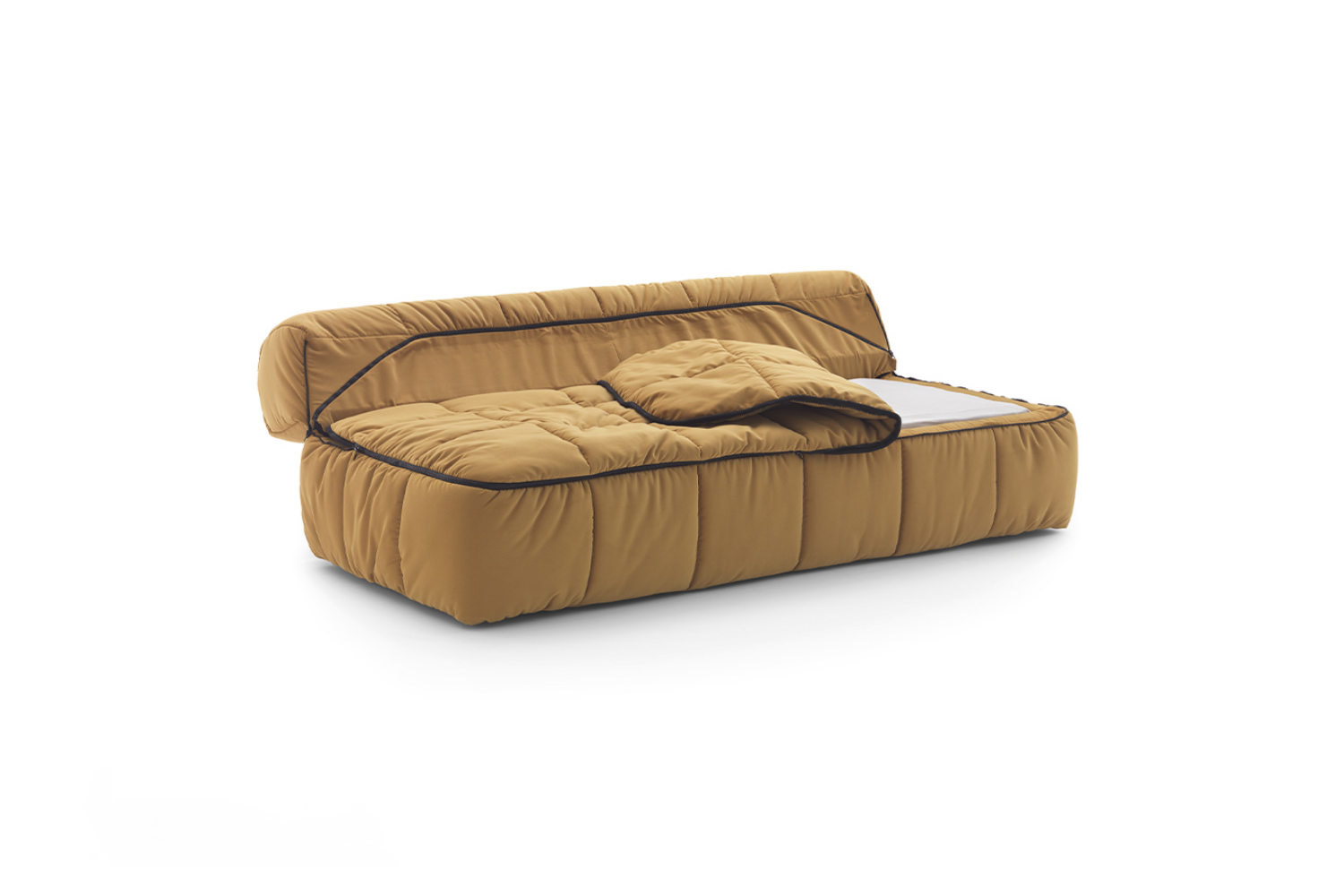
Strips is perhaps the project that most clearly connects comfort, adaptability and Boeri’s idea of living.
Company sources do not use a completely consistent chronology: the Arflex product page dates the system to 1968, while the company’s official history places Strips in 1972. It is therefore more accurate to regard it as research developed between the late 1960s and early 1970s rather than forcing the documentation into a single date not shared by all sources.
The attribution also requires attention. Arflex currently presents Strips as a design by Cini Boeri, while the ADI Design Museum entry for the 1979 Compasso d’Oro attributes “La Famiglia degli Strips” to Cini Boeri and Laura Griziotti. When referring specifically to the award, both designers should therefore be credited.
The system includes upholstered seating and beds and treats the cover almost like something to be worn. Arflex has described Strips through the liberating image of sleeping bags and padded jackets: upholstered furniture intended for informal use, freed from the conventions of the traditional sitting room.
The Compasso d’Oro therefore recognises more than a distinctive form: it rewards a different understanding of comfort, composition and domestic behaviour.
Botolo and the idea of living at different heights
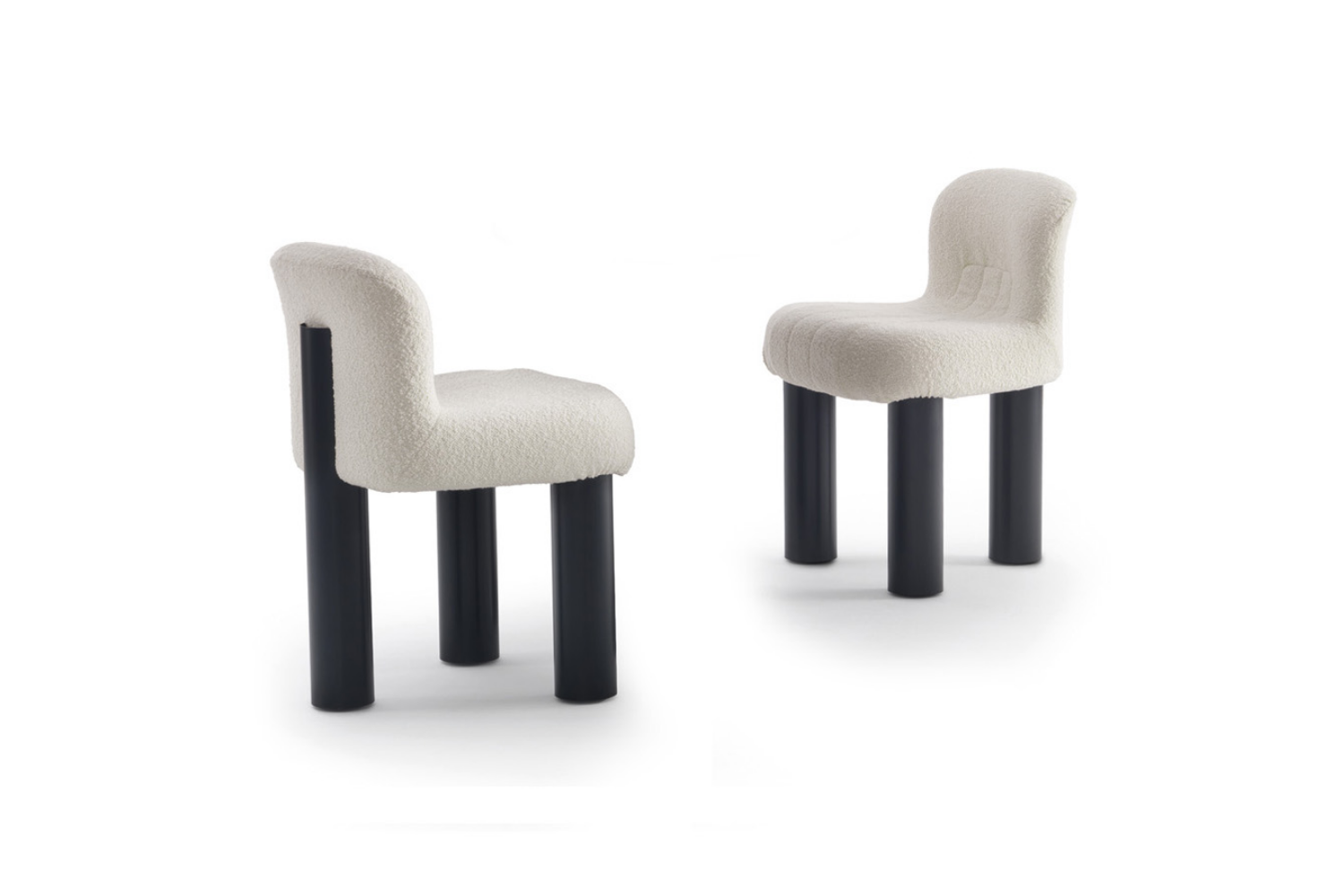
With Botolo, designed for Arflex in 1973, even seating height becomes a matter of choice.
The company documents a high version that can be used as a conventional chair and a lower version associated with what was then described as “low-level living”: a more informal way of occupying space closer to the floor. The legs also incorporate castors that make the chair easier to move.
Botolo is interesting precisely because it does not search for a universally correct domestic posture. It proposes alternatives.
The project remains part of the Arflex catalogue in 2026, and the company has also introduced new versions with chrome-plated legs, demonstrating the product’s continued relevance without changing its original principle.
Ghost: Cini Boeri, Tomu Katayanagi and the challenge of curved glass
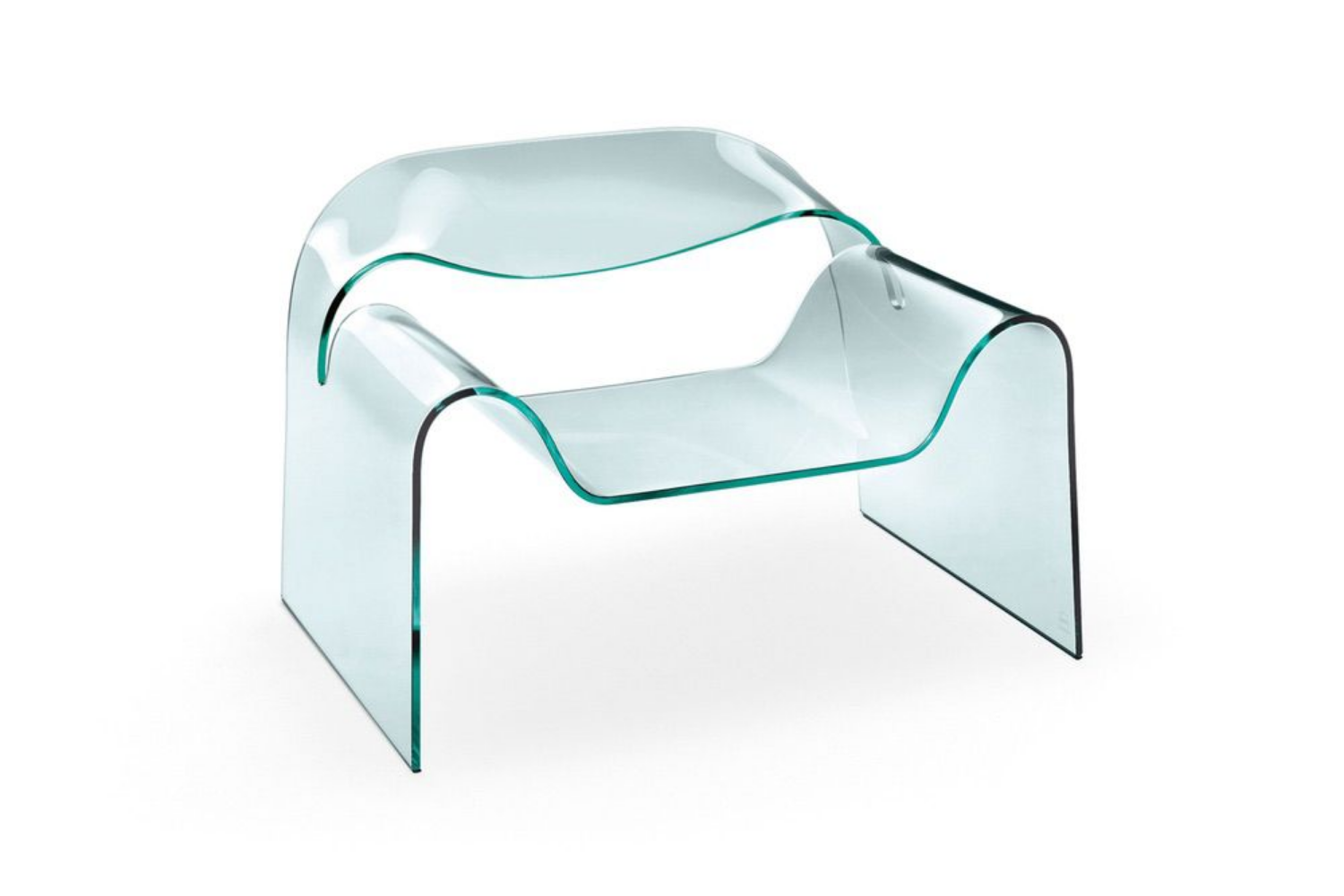
In 1987, Boeri’s experimentation shifted radically in material terms with Ghost, the armchair developed for FIAM Italia.
Here the attribution must be explicit: Ghost was designed by Cini Boeri with Tomu Katayanagi. This is confirmed by both FIAM and the Museum of Modern Art in New York.
The armchair is made as a monolithic element in 12-millimetre curved glass. FIAM describes its development as a genuine production challenge: Boeri herself recalled her initial scepticism about the possibility of creating an armchair entirely from glass, overcome by the desire to test how far the company’s technology could be pushed.
Transparency takes a recurring theme in her work almost to its extreme. The visual structure of the furniture is reduced, while the user’s body acquires greater presence within the space.
Ghost is therefore not a sculptural parenthesis disconnected from Boeri’s earlier research. It uses a material that is the opposite of the softness of Bobo and Strips, yet continues to investigate the relationship between body, technology, perception and function.
In 2022, the project received the Compasso d’Oro Award for Product Career, and in 2026 it remains part of FIAM’s collection.
Architecture and furniture respond to the same question
Taken together, these projects show why separating Cini Boeri the architect from Cini Boeri the designer is of limited use.
Casa Bunker distributes autonomy through independent rooms and access points. Serpentone eliminates fixed length. Strips makes the relationship between furniture and posture less rigid. Botolo allows the user to choose the height at which they inhabit a space. Ghost visually reduces the presence of the object in order to return attention to the body.
Scale, material and technology change completely, but the underlying question remains similar: how much freedom can design offer without sacrificing precision?
It is through this critical autonomy that Boeri’s work moves beyond a simple search for versatility. Flexibility does not mean creating neutral spaces in which anything can happen. On the contrary, it requires a precise understanding of different possible behaviours in order to build specific conditions that make them possible.
Why Cini Boeri remains relevant in 2026
In 2024, marking the centenary of her birth, Triennale Milano and Archivio Cini Boeri launched a programme reassessing her work through archival material, exhibitions and research. Triennale described her projects as a continuous search for functional forms sensitive to individual needs.
The question remains particularly relevant in 2026, but not because Boeri’s furniture has simply returned to fashion. Bobo, Strips, Botolo and Ghost continue to circulate because they address issues that do not depend on a particular style: comfort, autonomy, changes in family structures, the relationship between individual and collective space, and the intelligent use of materials.
The enduring interest in Cini Boeri lies precisely in the possibility of reading furniture and architecture through the same way of thinking. Casa Bunker does not force the family to remain together; Strips does not impose a formal way of sitting; Serpentone does not impose a predetermined size; Botolo even challenges the conventional height at which domestic life takes place.
Her modernity lies less in the appearance of the objects than in the question that continually precedes them: how much space, comfort, privacy and freedom does the person using what we design actually need?
It is a question that appears simple only at first. In Boeri’s work, it becomes the starting point from which to rethink the home, furniture and the relationship between design and everyday life itself.