Spaces that change with the hours, wellbeing with no door, materials that age gracefully and an outside worth as much as the inside: the hospitality trends 2026 read through the exhibitions, installations and awards of InOut in Rimini.
Spaces that change with the hours, wellbeing with no door, materials that age gracefully and an outside worth as much as the inside. Among the exhibitions, installations and awards of InOut in Rimini, the hotel of tomorrow stopped trying to amaze and started to listen.
There was a question in the air across the halls of InOut in Rimini, louder than any novelty: what do we really want from a hotel today? The hospitality trends 2026 tell us that we are no longer looking for first-glance wonder, the kind that lasts as long as a photograph, but for something subtler and harder to design. The feeling, as soon as we cross the threshold, of having arrived in the right place.
The fair, for which Archi&Interiors was media partner, chose a single word for this edition, Exist, and Gloria Armiri of Italian Exhibition Group translated it into an invitation to design experiences that give back time, attention and depth. It is a sentence that could hang at the entrance of every design studio. Because the true luxury of today’s traveller is not having more, but wasting less: less waiting, less noise, fewer spaces designed to be seen rather than lived in.

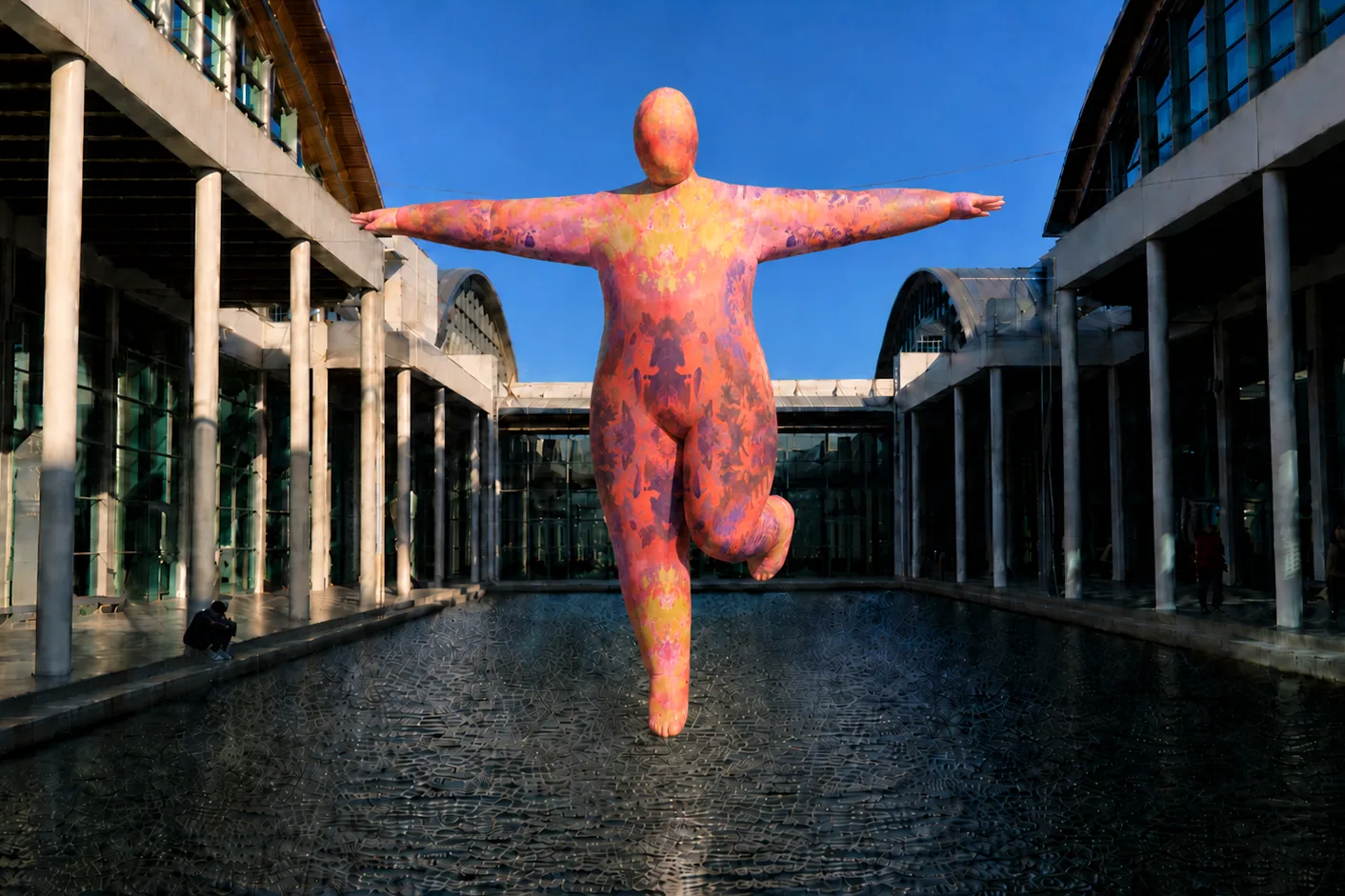
Art said it too, inside the fair: above the pools floated the two giant human figures of I Want to Be, the installation curated by Cinquerosso Arte, the Bologna platform founded by Francesca Fazioli to bring contemporary art into hospitality projects. An image that expressed Exist better than any slogan. Walking through exhibitions, installations and projects, while the Thinking Box format took architects and designers straight into the stands, we tried to read how this idea is changing the hotel. What emerged is the portrait of a place that is more flexible and quieter, more rooted and more open, one that does not ask to be admired but to be inhabited.
One room, many lives
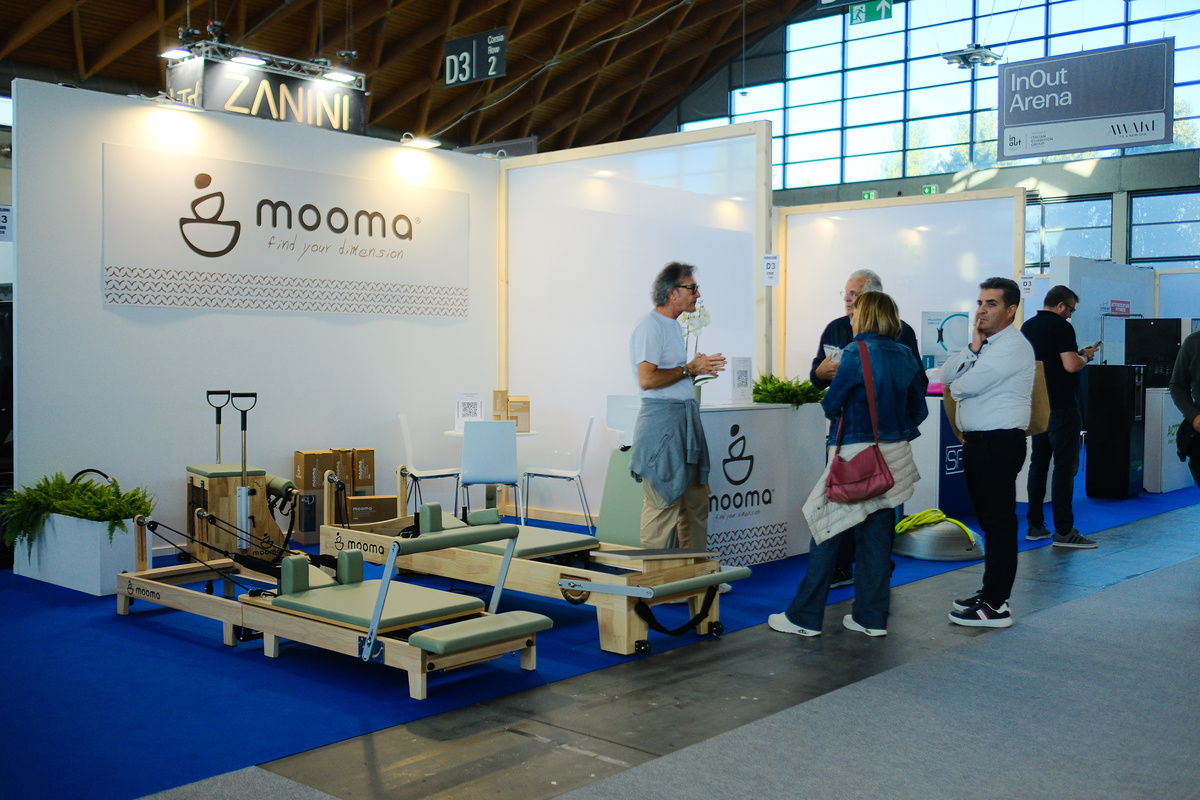
If there is one word we heard everywhere in Rimini, it is modularity. But it would be reductive to treat it as a matter of modular sofas. What is changing is the way a space moves through the day: the lobby that welcomes laptop workers in the morning, becomes a living room in the afternoon and lights up as a bar in the evening, the restaurant that shifts from breakfast to cocktails without losing intimacy. The architects of Wimberly Interiors, the interiors division of WATG, speak of multi-episode venues, perhaps the most precise definition of this new way of inhabiting the hotel.
The challenge lies in the details you cannot see. A room that hosts yoga at dawn and a meeting mid-morning needs light that can change tone, acoustics that do not betray conversations, storage where everything superfluous can disappear in minutes. When these elements are missing, the flexible space becomes an anonymous one, good for everything and memorable for nothing. The best projects change layout, but not character.
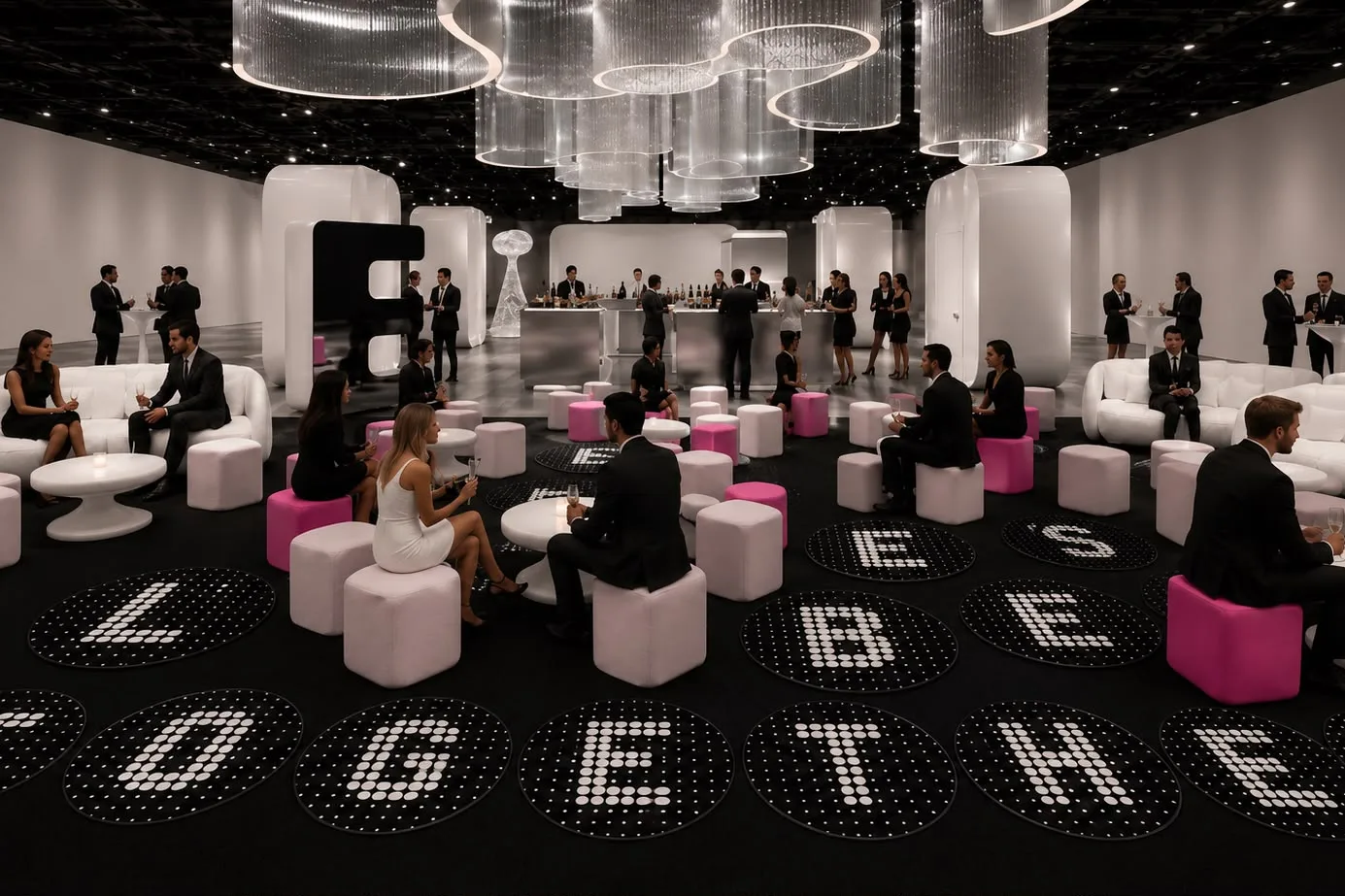
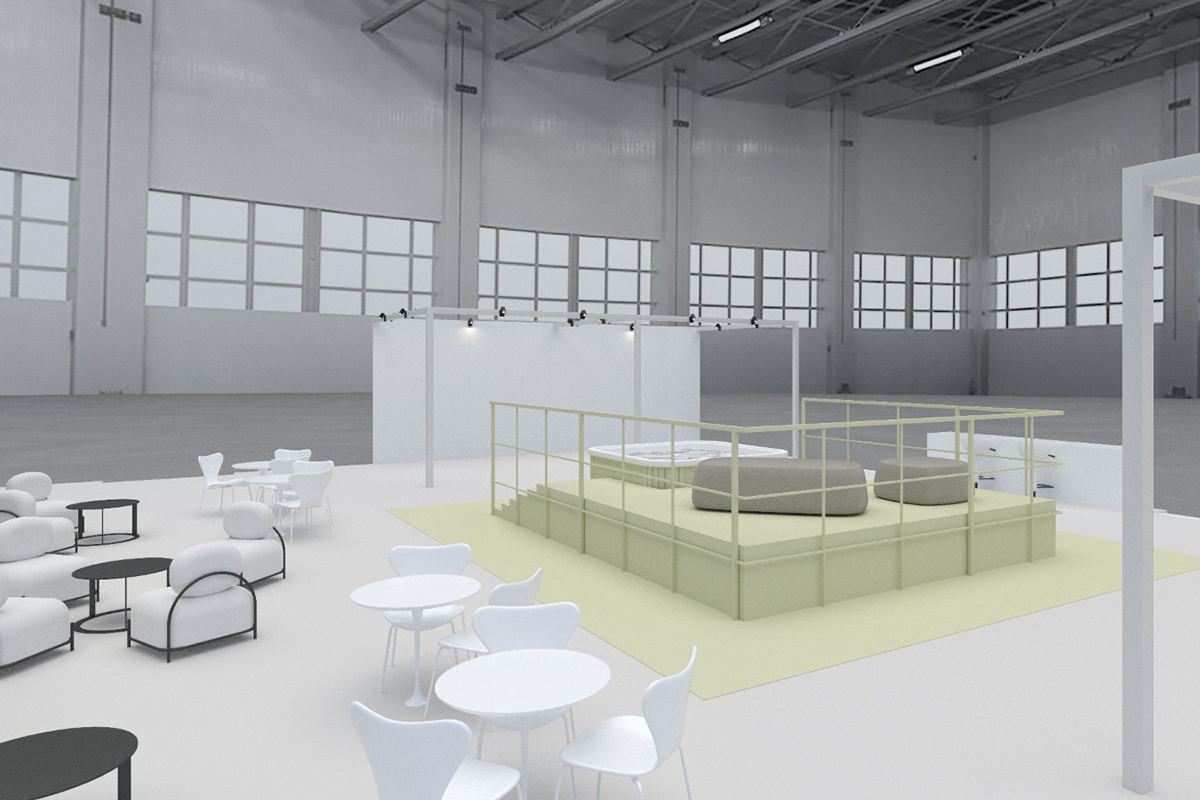
Above all, they change the way we are together. That is the thread of Let’s be too.gether, the experiential platform with which Simone Micheli Architectural Hero, the studio founded by the Tuscan architect who passed away in December 2025 and now led by co-founder Roberta Colla, brought the theme of relationships to InOut. A route built entirely around the same verb: a talk lounge for conversations and encounters, a bar lounge devoted to conviviality, around 180 square metres of seating for relaxing and exchanging ideas, and finally a collective workshop to design the InOut 2027 exhibition layout together. A fitting legacy for someone who, at last year’s edition, had signed the installation THAT’s the POINT | luxury suite here. The common space stops being a place of passage and becomes the heart of the experience: where guests meet the city, other travellers and, a little, themselves.
The same discretion is asked of technology. After years of screens and panels to decipher, the Travel & Hospitality Vision research presented at TTG identifies in new naturalness the desire to balance hyper-technology with a feeling of simplicity. The room that recognises your preferred light, the service booked with a gesture, the check-in that no longer exists: this is technology that gives back time precisely because it lets itself be forgotten.
Wellbeing no longer has a door
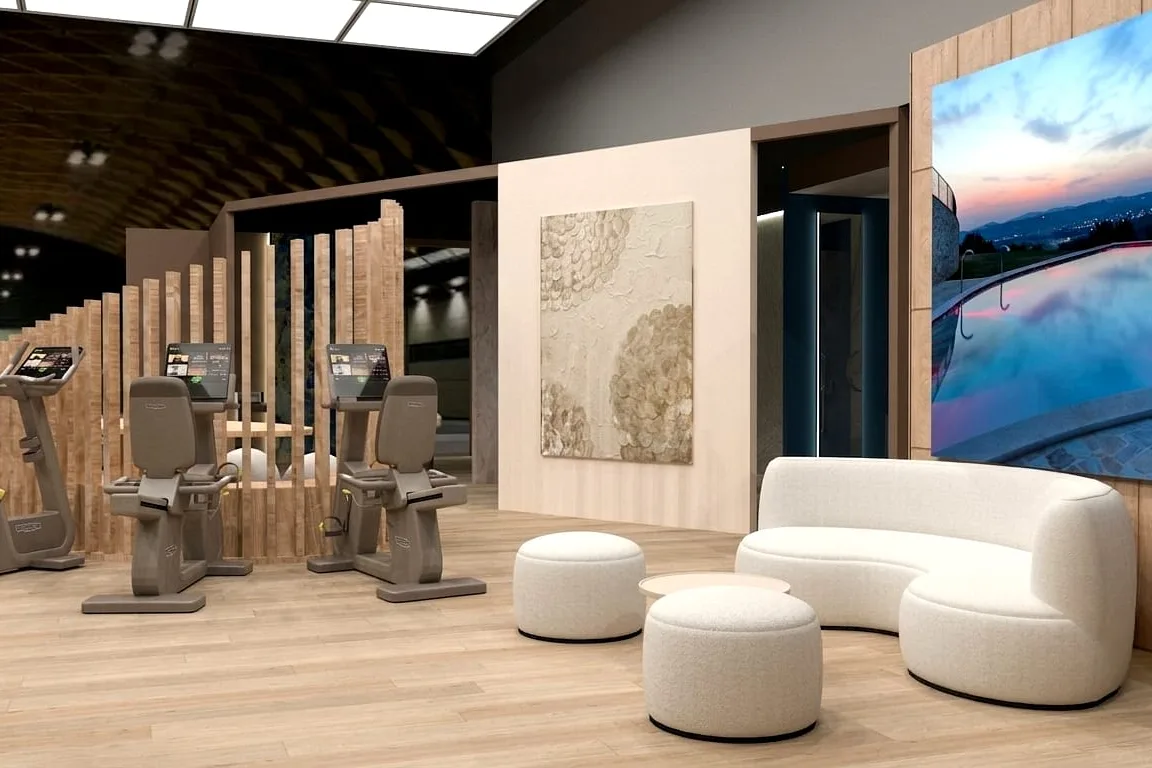
For years, wellbeing in hotels had a precise address: the basement, the spa, opening hours and a price list. Today that door has opened, and in Rimini Hotel in Motion made it clear. In hall D3, architect Anna Palucci, art director of W7.0 Wellnessettepuntozero, created the Wellness Cafè 5.0 concept, which takes wellbeing out of the spa and spreads it across the guest’s whole day, from breakfast to dinner, down to a bar corner dedicated to longevity. It was the most radical idea at the fair, precisely because it is so simple: wellbeing not as a place, but as a rhythm.
Yet the most precious wellbeing is the kind guests never name. It is the night without noise from the corridor, total darkness when the light goes off, a temperature you can adjust without hunting for a switch, a bed that welcomes the body instead of imposing a shape on it. It is no coincidence that in the most thoughtful properties sleep and acoustics have become design criteria for the room as much as aesthetics.
Then there are those who bring the landscape into the ritual. For the Lagen resort in El Nido, in the Philippines, as Deepu Mahboobani, principal at Wimberly Interiors, explains, the project built the wellness experience around the cliffs and rainforest surrounding the property: wellbeing not as an added service, but as the story of a place.
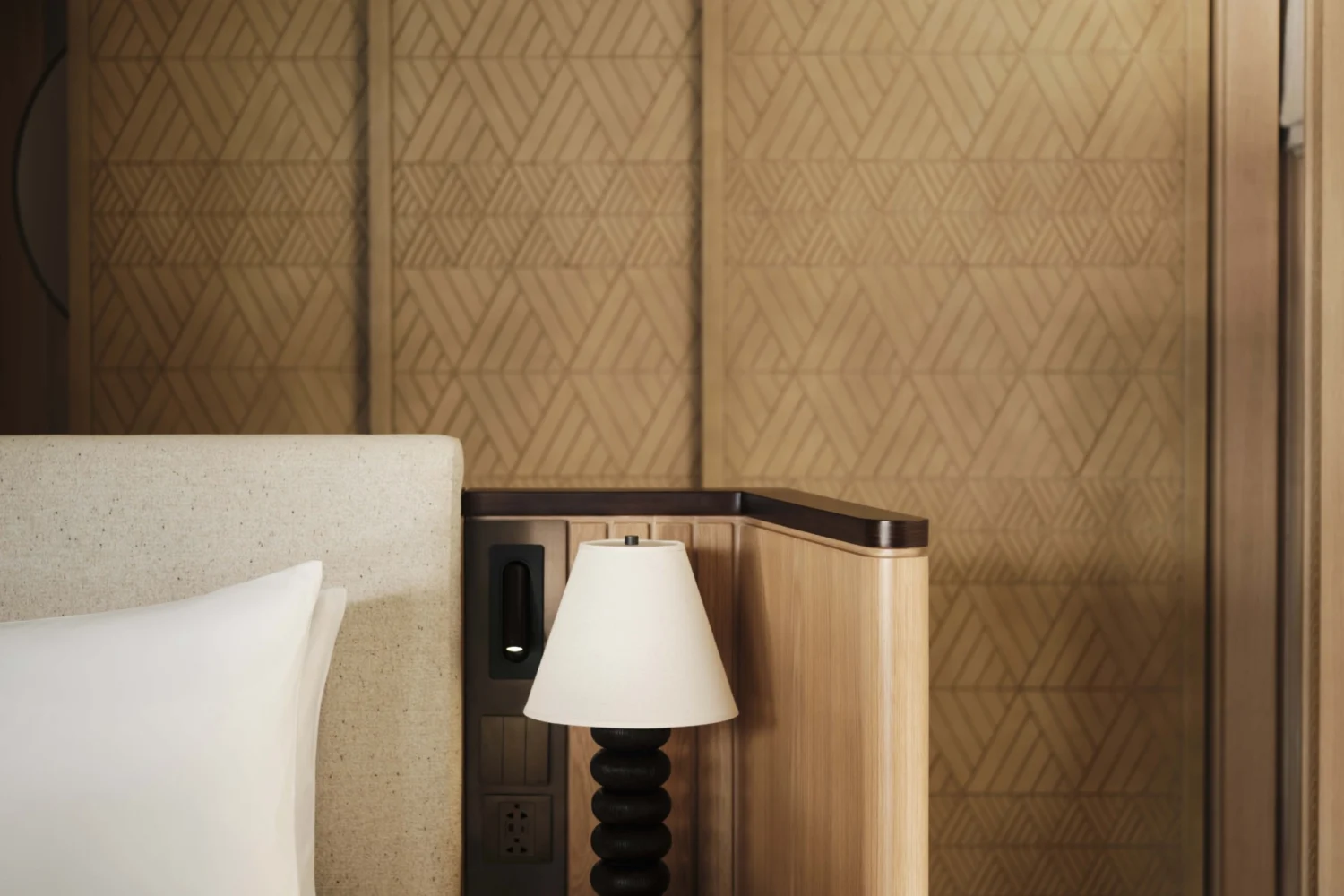
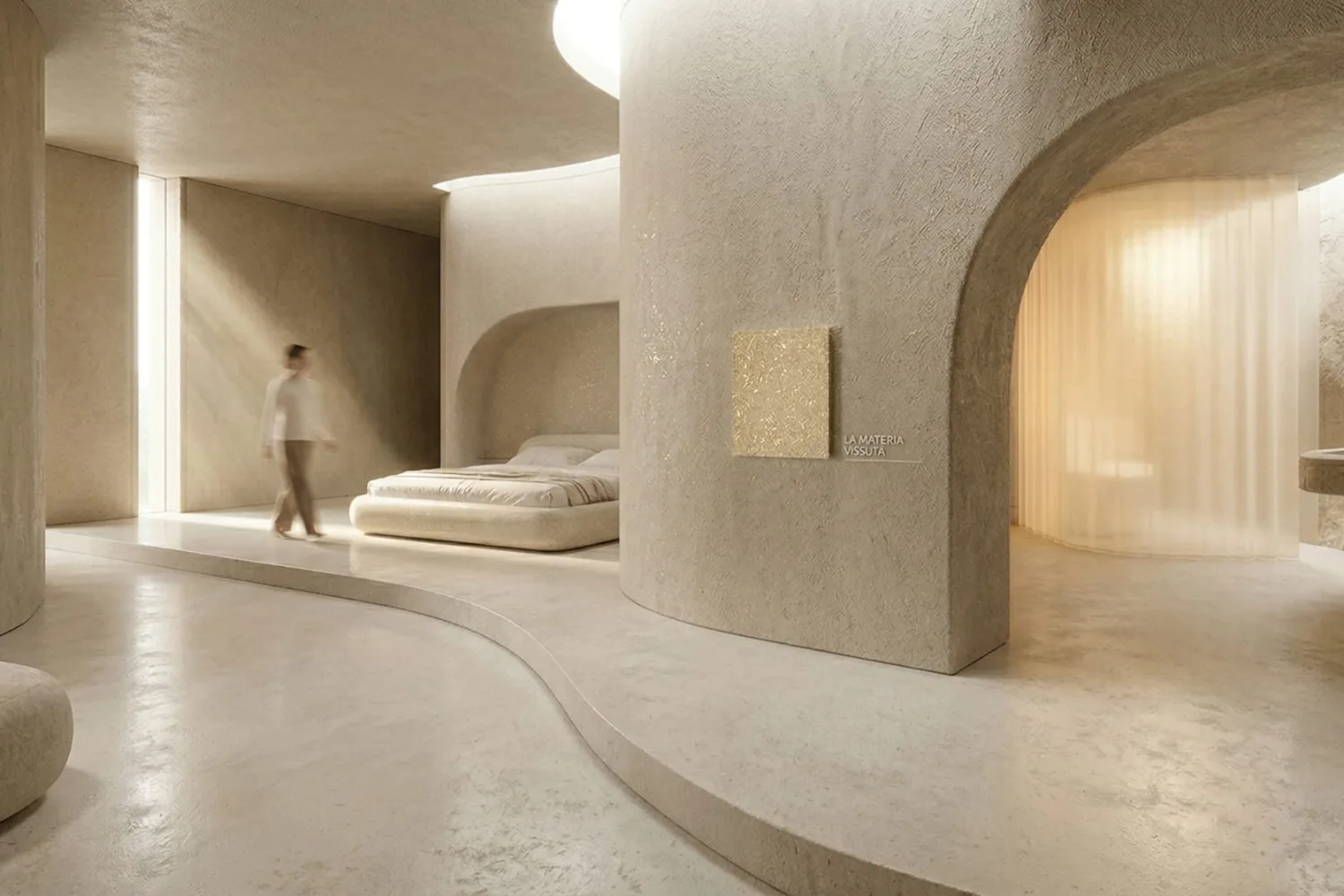
And then there are the senses, long sacrificed to the image. This year the Vision Lab, curated by Sabina Antonini of EN Space network, interpreted the luxury suite as a bodily experience, with projects by Westway Architects and Giuseppe Tortato Architetti, among others, the latter author of the Body Interaction Luxury Suite. Layered light that flatters faces more than furniture, a surface that is pleasant to touch, a scent that becomes the memory of a place: the hotel of 2026 is judged by how it feels to be there, before how it looks in a photograph. After the era of spaces designed for Instagram, this shift feels like a return to essentials.
Back to materials
The hotel that looks the same in Milan as in Dubai has had its day. Travellers want to know where they are even with their eyes closed, through the surfaces they touch: honed local stone, regional wood, handmade ceramics, a fabric that carries a tradition. These materials are chosen not to stay perfect but to age gracefully, like cork, stitched leather or terrazzo with local aggregates, which gain a patina over the years instead of losing value.
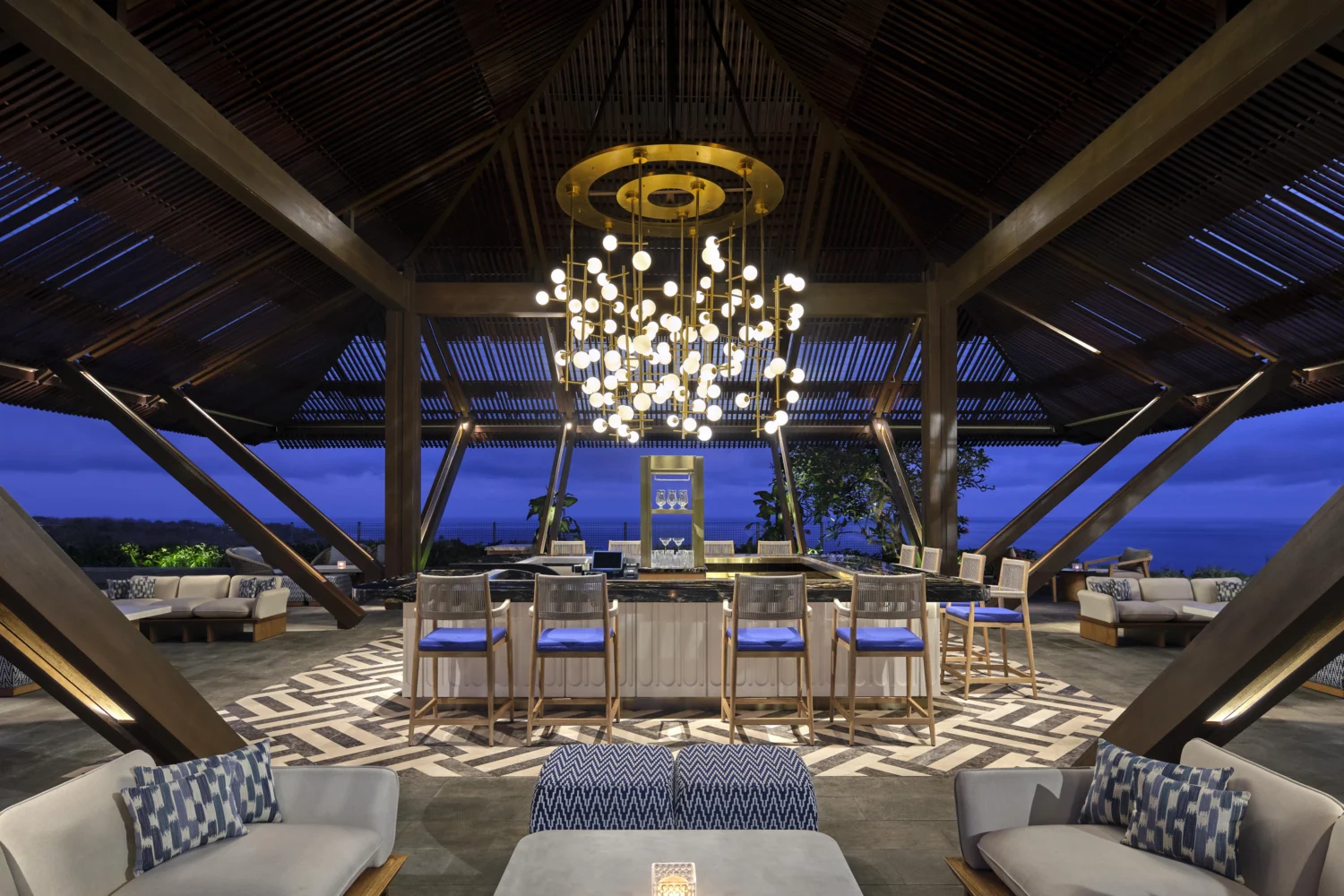
One example is Umana Bali, where the Wimberly Interiors designers worked with local wood species, batik and ikat patterns and island artists, for a hospitality that grows out of Balinese culture rather than being laid over it.
The return of the period piece goes in the same direction. Antiques, reupholstered furniture and found objects are entering contemporary projects to create interiors that feel collected rather than installed, as Liana Hawes Young of Wimberly Interiors observes: a gesture that gives every room a small story and reduces waste. For Italy, with its heritage of palazzi waiting to be converted and a unique craft culture, it is an opportunity even before it is a trend.
Colour follows the same longing for roots. Around the fair we saw deep blues, greens, touches of yellow and an unexpected presence of lilac, especially on fabrics and upholstery. It is a palette confirmed by international forecasts, where mineral greens, teal, lilac and silvery blues sit alongside warm earths and clay tones. Green brings nature indoors, blue recalls water, lilac adds an unexpected note: the sign of a hotel that wants to be remembered for a precise tone, not just any neutral.
Outside, like inside
The fair’s very name, InOut, is already a statement of intent. The terrace, the garden, the beach, the pitch in the woods are no longer the backdrop to the experience but an essential part of it, and they are designed with the same care as a suite. We ask the outside for the comfort of the inside: deep seating, cushions that withstand sun and rain, fabrics pleasant to the touch, finishes that continue the language of the interiors. It is the principle that now guides the design of outdoor spaces for hotels and restaurants.
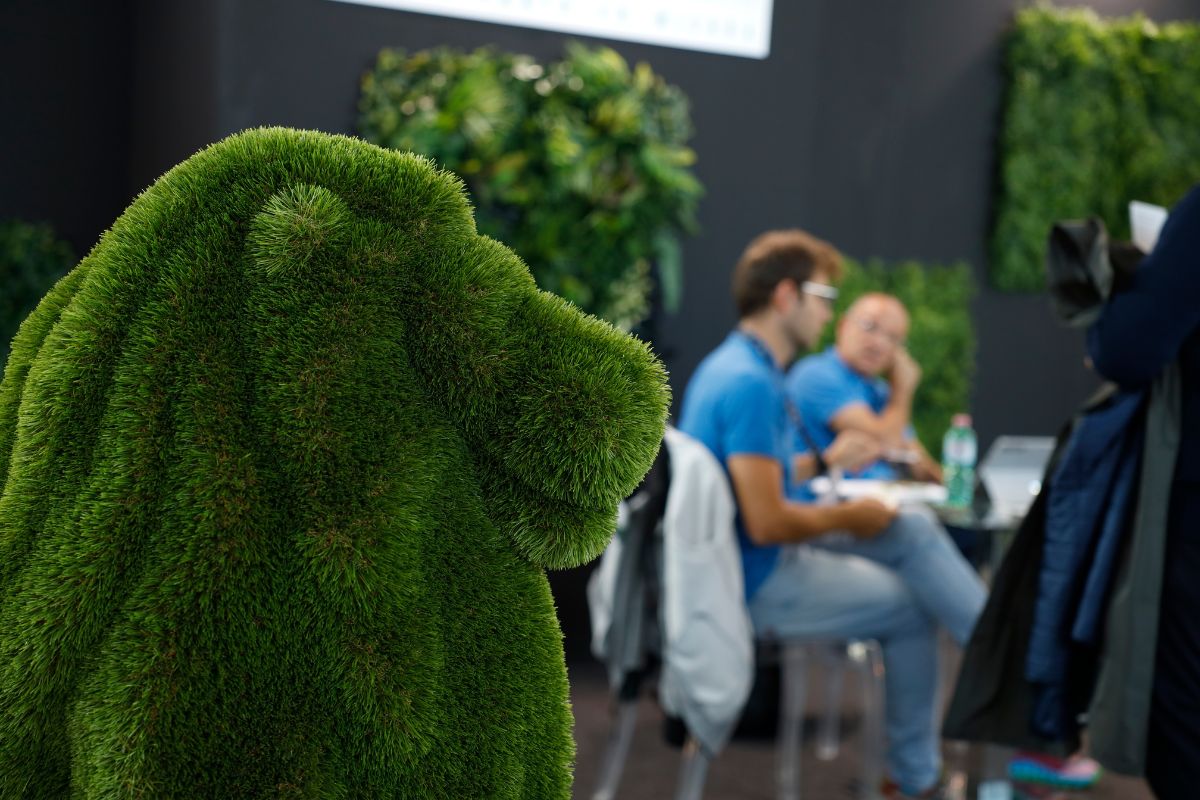
The numbers explain why. According to Faita Federcamping, open-air hospitality in Italy reached 74 million overnight stays in 2025 and is now the second largest form of accommodation after hotels. It is a world moving upmarket, driven by high-end holiday villages, mobile homes and glamping, and in Rimini it found a home in the initiatives devoted to open-air and non-hotel hospitality. Glamping remains its most photographed face, but the real news is something else: the rising standards of all outdoor hospitality.
Opening up to the outside also opens up the idea of who a hotel should welcome. The new exhibition Sustainable & Inclusive Hospitality Design, curated by Wellness Design, imagined wellness experiences accessible to people with different needs, abilities and sensitivities, a reminder that a step-free route or a level-access bathroom is not a concession to a few but a comfort for everyone. The same spirit ran through the TTG awards, where a special prize went to Alex Toselli of Albergo Etico, a hospitality model that has already brought 375 people with disabilities into work placements. When accessibility is designed well, you simply do not notice it.
The verdict of the awards
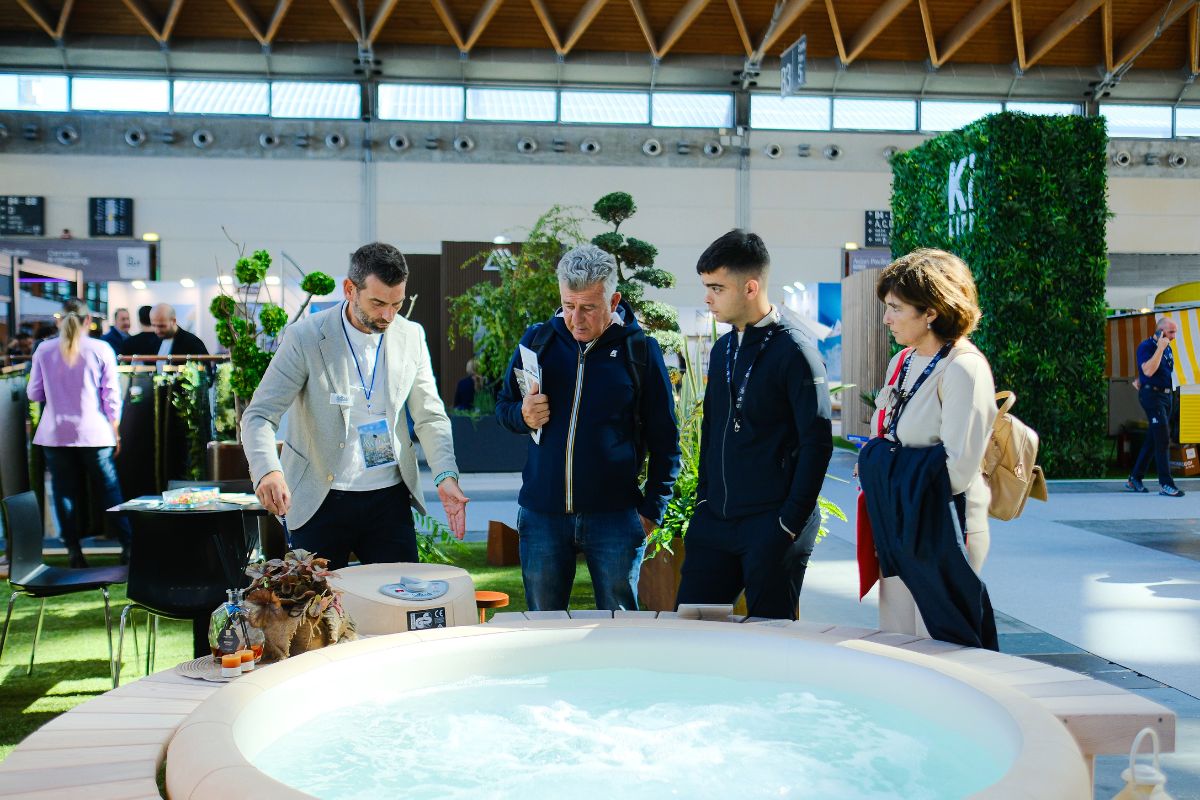
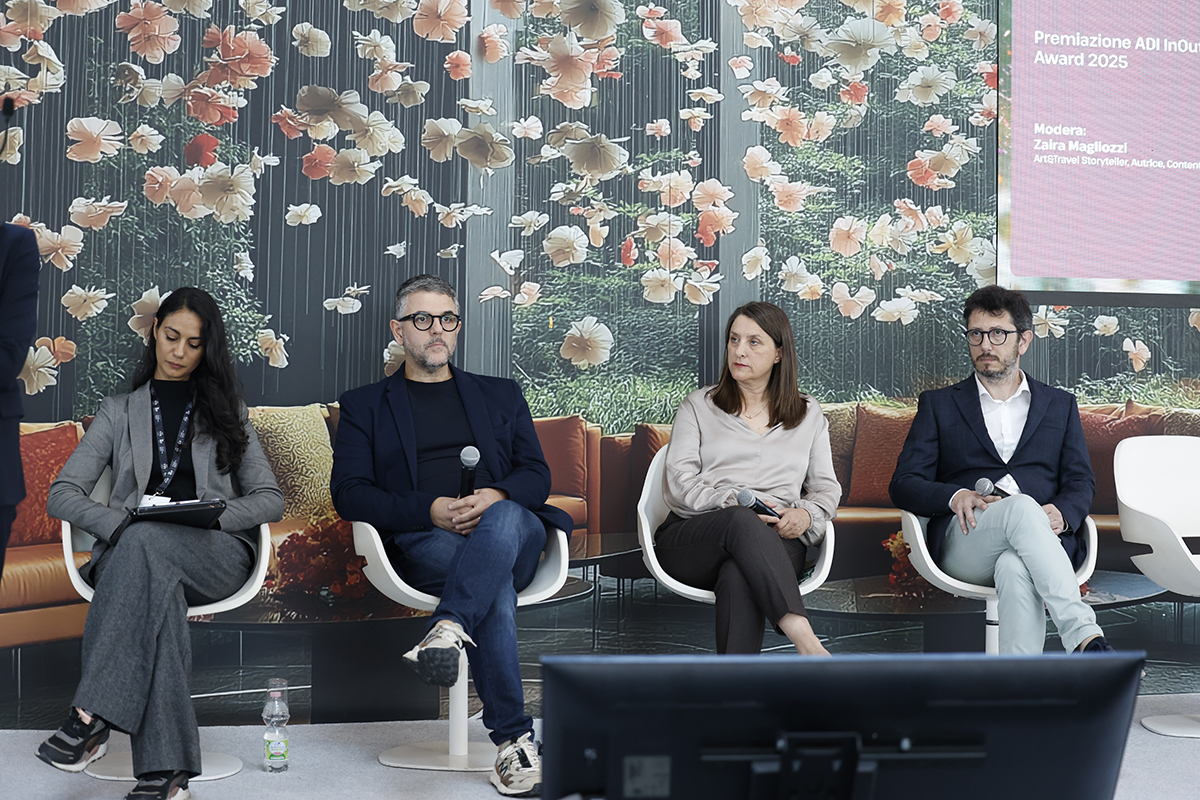
These intuitions were given official form on 15 October by the ADI InOut Hospitality Design Award, in its third edition with ADI and its Emilia-Romagna delegation, across the categories Design, Sustainability, Innovation and Bespoke. The winners were Culligan Italy’s Purity water purification system, NodoItalia’s ZIP 2026 outdoor sofa reinterpreted by fashion designer Antonio Marras and Jacuzzi’s Lodge+ S mini pool, with a special mention for Ponzi’s sliding doors. The winners now go straight to the first selection stage of the ADI Design Index 2027, the gateway to the Compasso d’Oro.
Read as a whole, the list of winners confirms almost point by point what we sensed across the exhibitions. Two of the three awards are about water, and they say that wellbeing really has left the spa: a mini pool, compact by nature, brings the water ritual closer to the most private spaces of a property, while water purification shifts attention to an invisible luxury, the quality of what we drink and use every day. The sofa signed by Marras tells the story of an outside treated like an inside, with the textile and narrative sensibility of an author who comes from fashion. And the sliding doors, awarded a special mention, are perhaps the most honest symbol of modularity: the simple gesture that lets a space change its life.
There is, however, a limit worth stating. The award is reserved for exhibitors and looks at products, not at built hotels: it measures the quality of what is on offer, not of the project. The liveliest design culture of this edition lay elsewhere, in the exhibitions curated by architects and designers, from Anna Palucci to Sabina Antonini and the studio of Simone Micheli. That is where the hotel of tomorrow took shape, even before it reached the catalogues.
The right place
Placed side by side, the images gathered in Rimini form a single portrait. The hotel of tomorrow is not the one that offers more, but the one that knows how to adapt: it changes face with the hours, brings wellbeing into every room, hides its technology, tells the story of its place through materials and treats the outside with the same care as the inside.
Damien Follone, associate principal at Wimberly Interiors, describes the most convincing luxury as the kind that does not need to introduce itself and simply feels right from the moment you arrive. It is the same intuition that InOut summed up in one word, Exist. Because in a world that keeps running, the rarest gift a hotel can offer is not excess, but time.
The new luxury, then, has a simple shape that is extremely hard to build: the feeling of finding the right space, light and rhythm exactly when you need them. Feeling, at last, in the right place.