A map of twentieth-century architectural masters: the Modern Movement, Italian architects, architect-designers, starchitects, iconic houses and furniture.
From Le Corbusier to Zaha Hadid, Gio Ponti to Carlo Scarpa, architects who designed lamps to Pritzker-winning starchitects: Archi&Interiors maps the protagonists of twentieth-century architecture and their buildings through its collection of guides.
A ramp rising through a villa lifted on pilotis at Poissy, a marble-and-steel pavilion in Barcelona, a slender tower in central Milan, a garden of concrete and water in the countryside near Treviso. These works differ in location and language, yet tell a shared story: that of the masters of architecture who changed how people built, furnished and inhabited space during the twentieth century.
This page brings together the portraits, monographs and detailed articles our editorial team has devoted to those protagonists. It is organised into groups: the founders of the international Modern Movement, Italian masters, architects who became furniture and product designers, contemporary figures celebrated as starchitects, and finally the houses and buildings that became icons. Each entry gives essential dates, reasons for its importance and the title of a guide to explore further. The Italian original draws on foundations, museums and encyclopaedias; English links are included only where a published counterpart has been verified.
In the projects we cover, these references recur: Le Corbusier’s free plan in lofts, Aalto’s bentwood in Nordic homes, Scarpa’s light in museum interiors. Understanding the masters also helps us read today’s homes more closely.
Who are the masters of twentieth-century architecture?
The masters of twentieth-century architecture are the architects who defined the century’s design languages. They include Le Corbusier, Ludwig Mies van der Rohe, Frank Lloyd Wright and Alvar Aalto within the Modern Movement, Italian figures such as Gio Ponti and Carlo Scarpa, and later protagonists recognised by the Pritzker Prize. They share an understanding that design concerns every scale, from the city to the everyday object.
There is no official list, and every architectural history offers a different one. Our practical criterion is to include masters to whom our magazine has devoted a guide and show the relationships between them. Our Italian-language feature on the world’s most famous architect compares well-known figures, while the guide to Bauhaus history and furnishing explores the development of modern design through the school Walter Gropius founded in Weimar in 1919, which closed in 1933.
The masters of the international Modern Movement
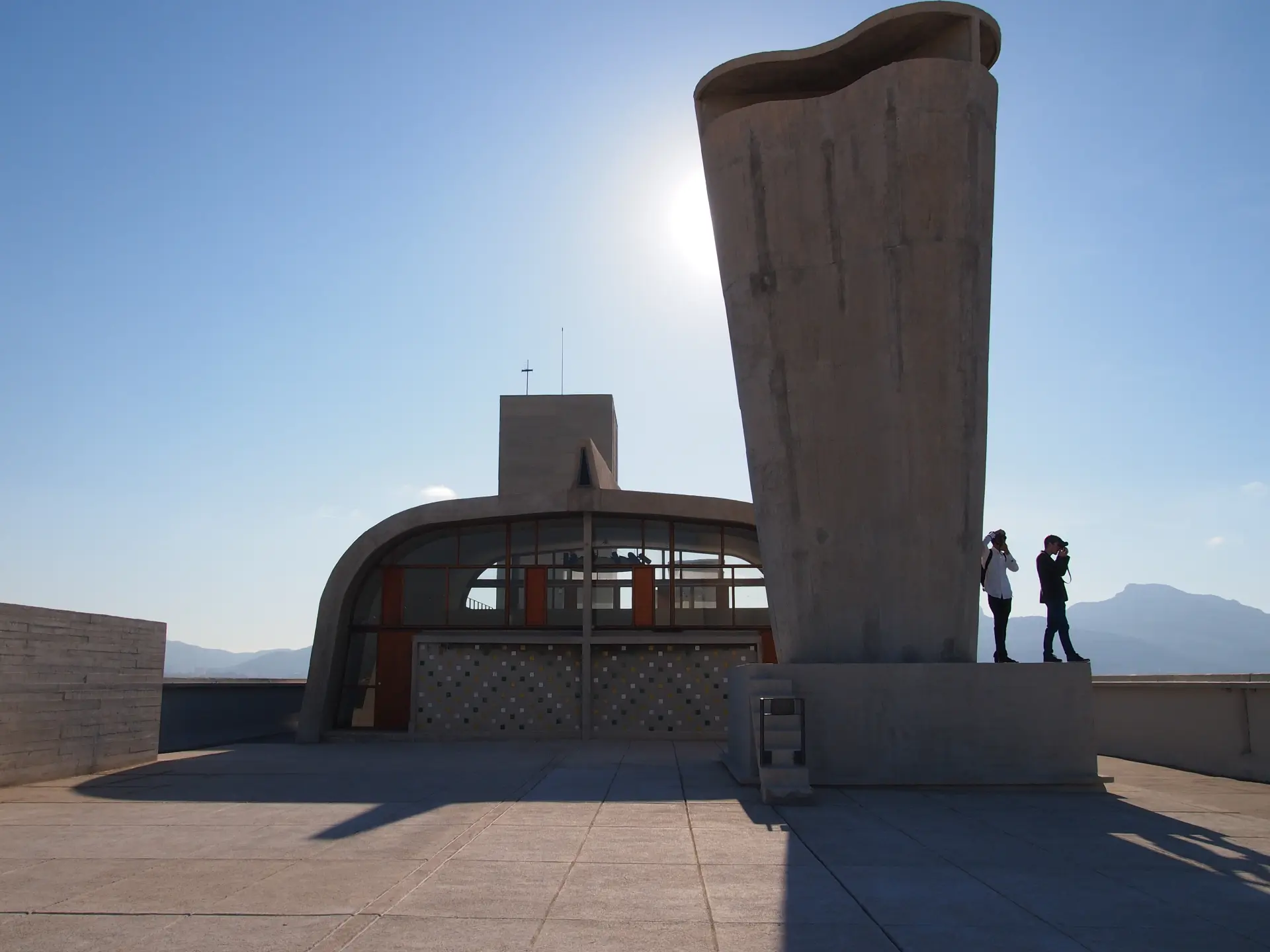
The masters of the Modern Movement transformed architecture between the 1920s and 1960s, prioritising structure, light and function over applied ornament. Important selections of their work now have UNESCO recognition: seventeen Le Corbusier buildings since 2016, grouped in UNESCO serial property 1321; eight Wright buildings since 2019; and thirteen Aalto buildings and ensembles since 2026. The table summarises their contribution and the related guides.
| Architect | Dates | Why they matter | Related guide |
|---|---|---|---|
| Le Corbusier | 1887-1965 | Formulated the five points of modern architecture in 1927; designed furniture still in production with Pierre Jeanneret and Charlotte Perriand; seventeen works have UNESCO recognition since 2016. | Le Corbusier: life, style and buildings; the Modulor and bodily dimensions |
| Ludwig Mies van der Rohe | 1886-1969 | Designed Barcelona’s German Pavilion in 1929 and directed the Bauhaus in its final phase; developed steel-and-glass towers in Chicago and New York. | Mies van der Rohe: buildings and furniture |
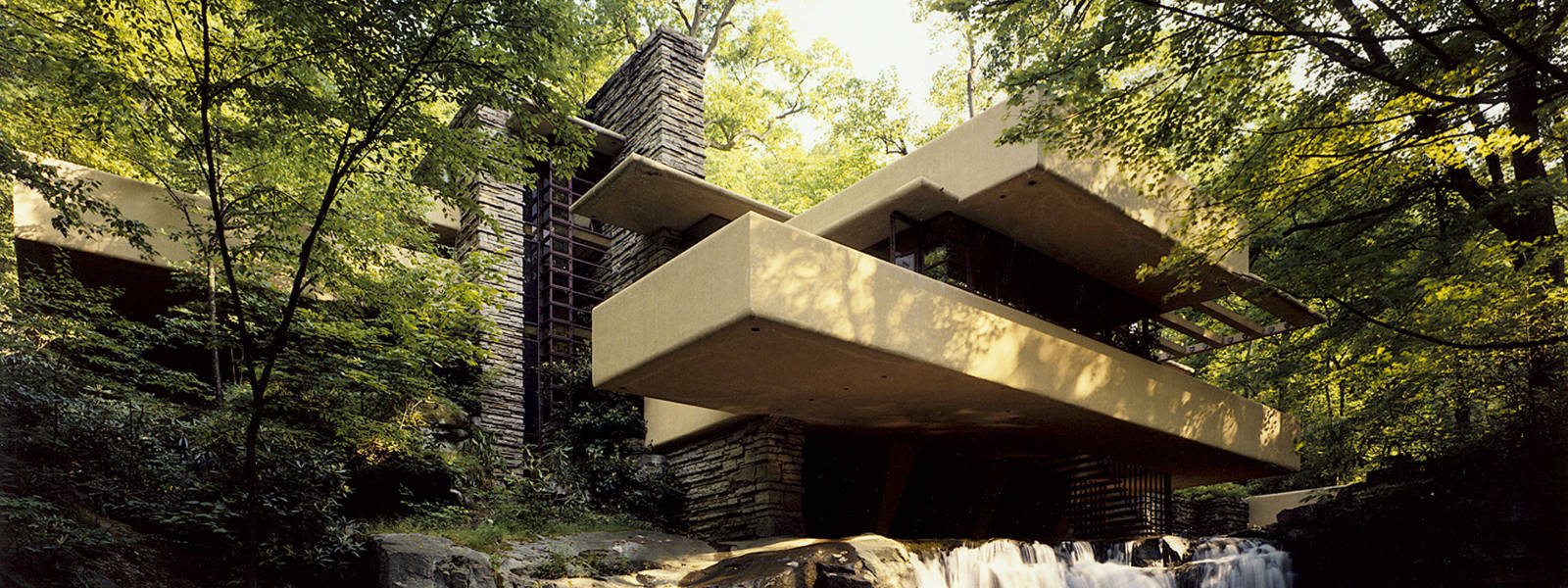
| Frank Lloyd Wright | 1867-1959 | Developed organic architecture, from Prairie Houses to Fallingwater; eight buildings have UNESCO recognition since 2019. | Frank Lloyd Wright: life and buildings |
| Alvar Aalto | 1898-1976 | Humanised functionalism through wood, light and well-being; Paimio Sanatorium and armchair 41 remain reference points; thirteen works inscribed on 26 July 2026. | Alvar Aalto: architecture and design |
The Italian masters of architecture
Italy’s twentieth-century masters translated modernism into a language attentive to history, materials and craftsmanship. From Milan to Venice and Turin to Rome, they built museums, towers, houses and monumental tombs, often designing their furnishings too. Our guides to famous Milan architects of the 1960s and pioneering women architects provide, respectively, an overview of boom-era Milan and the contributions of frequently overlooked women.
| Architect | Dates | Why they matter | Related guide |
|---|---|---|---|
| Gio Ponti | 1891-1979 | Founded Domus in 1928; designed the Pirelli Tower, with Pier Luigi Nervi and Arturo Danusso responsible for structural engineering (127 m, completed in 1960), and the Superleggera chair. | Gio Ponti, architect of modern Italian design |
| Carlo Scarpa | 1906-1978 | A master of detail and light: Castelvecchio Museum in Verona, the Olivetti showroom in Piazza San Marco (1957-1958), Fondazione Querini Stampalia and the Brion memorial (1969-1978). | Carlo Scarpa: works and architecture |
| Carlo Mollino | 1905-1973 | Turin architect, designer and photographer, creator of organically shaped interiors and furniture; his own Via Napione apartment is now Museo Casa Mollino. | Casa Mollino in Turin |
| Aldo Rossi | 1931-1997 | With The Architecture of the City (1966), renewed the relationship between design and urban memory; the first Italian Pritzker laureate, in 1990. | Aldo Rossi: architecture and design |
| Gae Aulenti | 1927-2012 | Designed the interior conversion of the Musée d’Orsay, inaugurated in Paris in 1986, and objects including the Pipistrello lamp. | Gae Aulenti: buildings, interiors and design |
| Angelo Mangiarotti | 1921-2012 | Explored structure as form, from prefabricated systems to stone furniture assembled through interlocking joints. | Angelo Mangiarotti: architecture and design |
Italian architect-designers: from the home to the object
Italian architect-designers are the practitioners, most trained in architecture, who brought their design culture to the furniture and lighting industries after the war. They helped make Italian design internationally recognised through objects that remain in production. Our selection of twenty iconic Italian design objects surveys familiar pieces, while the guide to famous Italian interior designers looks towards contemporary practice.
| Designer | Dates | Why they matter | Related guide |
|---|---|---|---|
| Achille Castiglioni | 1918-2002 | Designed Flos’s Arco lamp with his brother Pier Giacomo in 1962; his approach begins with anonymous objects and everyday actions. | Achille Castiglioni; the history of the Arco lamp |
| Vico Magistretti | 1920-2006 | Milanese architect and designer of seating and lighting in museum collections, including Oluce’s Atollo lamp (1977). | Vico Magistretti: design; the Atollo lamp |
| Marco Zanuso | 1916-2001 | Experimented with materials and technologies, from Arflex’s Lady armchair (1951) to equipment designed with Richard Sapper. | Marco Zanuso: design |
| Ettore Sottsass | 1917-2007 | Designed Olivetti’s Valentine typewriter (1969) and led the Memphis group in the early 1980s, a manifesto of postmodern design. | Ettore Sottsass |
| Gaetano Pesce | 1939-2024 | Brought expanded polyurethane and a political message into furniture with the Up series (1969); worked between New York and Italy until the end of his life. | Gaetano Pesce: design |
| Mario Bellini | Born 1935 | Architect and designer of Olivetti machines and furniture including Cassina’s Cab chair (1977). | Mario Bellini: design and architecture |
| Antonio Citterio | Born 1950 | Born in Meda, at the heart of Brianza’s furniture district, he works across architecture, interiors and design for major furniture companies. | Antonio Citterio: design and architecture |
| Piero Lissoni | Born 1956 | Architect, designer and art director, working from hotel interiors to furniture. | Piero Lissoni: biography and projects |
| Patricia Urquiola | Born 1961 | Born in Oviedo and trained in Milan; Cassina’s art director since 2015. | Patricia Urquiola: biography and style |
Contemporary architects and starchitects
The contemporary architects described as starchitects are designers who, from the 1970s onwards, created internationally recognisable buildings and received major awards, notably the Pritzker Architecture Prize. Italy’s first two laureates were Aldo Rossi in 1990 and Renzo Piano in 1998, as recorded in the official Pritzker laureates list. Our guides to international starchitects, contemporary Italian starchitects and major architecture awards explore the phenomenon and its recognition.
| Architect | Dates | Why they matter | Related guide |
|---|---|---|---|
| Renzo Piano | Born 1937 | Born in Genoa; designed Paris’s Centre Pompidou with Richard Rogers (1971-1977); Pritzker laureate in 1998. | Renzo Piano, the humanist architect |
| Norman Foster | Born 1935 | Manchester-born protagonist of high-tech architecture; Pritzker laureate in 1999. | Norman Foster: life, buildings and projects |
| Frank Gehry | 1929-2025 | Changed ideas of museums and cities with Bilbao’s Guggenheim (1997); Pritzker laureate in 1989. | Frank Gehry: works and architectural language |
| Zaha Hadid | 1950-2016 | The first woman to receive the Pritzker, in 2004; designed Rome’s MAXXI in Italy. | Zaha Hadid: life and buildings |
| Massimiliano Fuksas | Born 1944 | Born in Rome; designed the EUR convention centre known as La Nuvola with Doriana Fuksas, inaugurated in 2016. | Massimiliano Fuksas: biography |
Readers moving from individual names to organisations can consult our surveys of the world’s best-known architecture firms, ten famous practices in Italy, architecture studios across Italy, and young Italian architects and practices.
The iconic houses and buildings of the twentieth century
Iconic twentieth-century houses and buildings are those in which the masters tested their ideas, often for themselves or for enlightened clients. Many can be visited. The following table gathers our guides to individual works and thematic collections.
| Guide | What it covers |
|---|---|
| Le Corbusier’s Villa Savoye | The Poissy villa (1928-1931), a complete expression of the five points, with its plan, ramp, colours and restorations. |
| Carlo Scarpa’s Brion memorial | The funerary complex at San Vito d’Altivole (1969-1978), Scarpa’s last major project. |
| Gio Ponti’s house on Via Dezza | The master’s Milan home, read as a manifesto of his approach to living. |
| Iconic twentieth-century houses | Residences that shaped the century, from European Rationalism to American modernism. |
| Twenty famous architect-designed houses | Twenty residential projects by major architects, with designers and dates. |
| Courtyard houses by famous architects | The courtyard theme in the masters’ houses. |
| Stahl House in Los Angeles | The glass house in the Hollywood Hills that became a symbol of the Case Study Houses. |
| House museums in Italy | Architects’ and designers’ homes open to the public, for a visiting itinerary. |
| Ten iconic Italian architectural projects | Italian buildings that continue to influence contemporary design. |
| Iconic staircases in architecture | Ramps and stairs that became the defining image of a building. |
| Brutalist interiors | The legacy of exposed concrete, from the Marseille Unité to contemporary homes. |
The masters’ furniture: seating, lamps and bookcases
The masters’ furniture offers a direct way to bring their architectural thinking into a home, since many pieces remain in production under licences from heirs and foundations. The best-known example is the LC4 chaise longue by Le Corbusier, Jeanneret and Perriand, designed in 1928, manufactured by Cassina from 1964 with exclusive rights from 1965. Our guide to Cassina and its icons explains how the company made authorised reissues into a method.
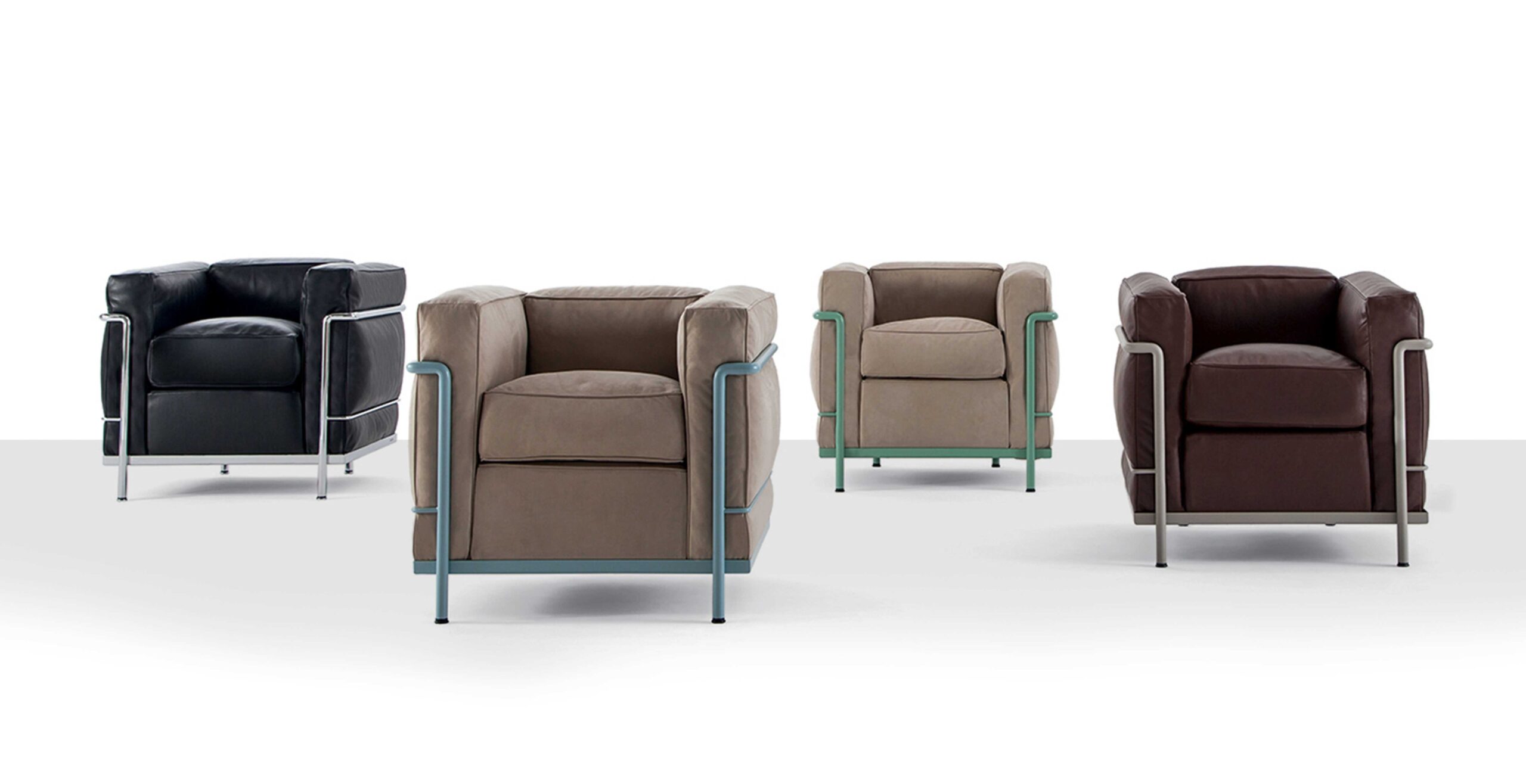
To navigate individual designs, we have built collections by type: iconic armchairs, twenty famous chairs that made design history, famous sofas, iconic lighting, bookcases and authored sideboards. Beyond Italy, the centenary of Danish designer Verner Panton’s birth offers an opportunity to revisit the designer who transformed colour into space.
Frequently asked questions about architectural masters
Who are the four masters of the Modern Movement?
Architectural histories commonly name Le Corbusier, Ludwig Mies van der Rohe, Frank Lloyd Wright and Walter Gropius, who founded the Bauhaus in 1919; many add Alvar Aalto. They share a move away from applied ornament, the use of materials such as reinforced concrete, steel and glass, and the belief that architecture should respond to modern life, from home to city.
Who are the most important Italian architects of the twentieth century?
Prominent Italian masters include Gio Ponti, founder of Domus and designer of the Pirelli Tower; Carlo Scarpa, the Venetian master of detail; Aldo Rossi, Italy’s first Pritzker laureate in 1990; and Renzo Piano, awarded in 1998. They stand alongside Carlo Mollino, Gae Aulenti and Angelo Mangiarotti, as well as Milan’s major architect-designers.
Which Italian architects have won the Pritzker Prize?
The first Italian Pritzker Architecture Prize laureate was Aldo Rossi in 1990, followed by Renzo Piano in 1998. Established in 1979, the prize is regarded as one of architecture’s most prestigious honours. International laureates discussed here include Frank Gehry (1989), Norman Foster (1999) and Zaha Hadid (2004), the first woman to receive it.
Why did so many Italian architects become designers?
A frequently cited reason is historical: after the war, Brianza and Milan had furniture and lighting companies ready for series production. Architects brought the methods learned in architecture schools into furnishings. Castiglioni, Magistretti, Zanuso, Sottsass and Bellini worked with manufacturers for decades, and many of their objects remain in production.
Which works by the masters can be visited?
Many are open to the public. In France, Villa Savoye in Poissy is managed by the Centre des monuments nationaux. In Italy, visitors can explore the Brion memorial at San Vito d’Altivole, Museo Casa Mollino in Turin, Castelvecchio Museum in Verona and several homes discussed in our house-museum guide. Opening times and booking requirements should be checked with the official operators.