An Italy-led selection of five bioethanol fireplace brands, with international options, useful distinctions between burner systems and realistic project costs.
A real flame changes the atmosphere of a living room, even when it occupies only a narrow line in the wall. Bioethanol fireplaces make that possible in projects where a conventional fireplace would be difficult to accommodate. Their design flexibility still depends on the appliance: burner system, room volume, ventilation and nearby materials all belong in the buying decision.
Our selection of bioethanol fireplace brands brings together maisonFire, bioKamino, Biò Fireplace, Planika and EcoSmart Fire. It starts with three Italian businesses and broadens the comparison with two international options. These are five different approaches to fireplace design, rather than a performance ranking based on product testing. Local availability, installation requirements and after-sales support will vary by country.
Which bioethanol fireplace brand suits your project?
The first useful distinction is between manual and automatic burner systems. They differ in how fuel is supplied, the flame is started and operation is controlled. A single brand may offer several technologies, so its name alone does not describe the appliance being quoted.
| Brand | Reason to explore it | Project detail to resolve |
|---|---|---|
| maisonFire | Fireplaces as interior furnishings | Technology of the chosen model |
| bioKamino | Italian bioethanol specialisation | Built-in system and operation |
| Biò Fireplace | Wall, freestanding and built-in options | Burner type and package contents |
| Planika | Automatic systems such as FLA4 | Firebox configuration and integration |
| EcoSmart Fire | Inserts, burners and fire furniture | Intended setting and room requirements |
maisonFire: treating the fireplace as part of the interior
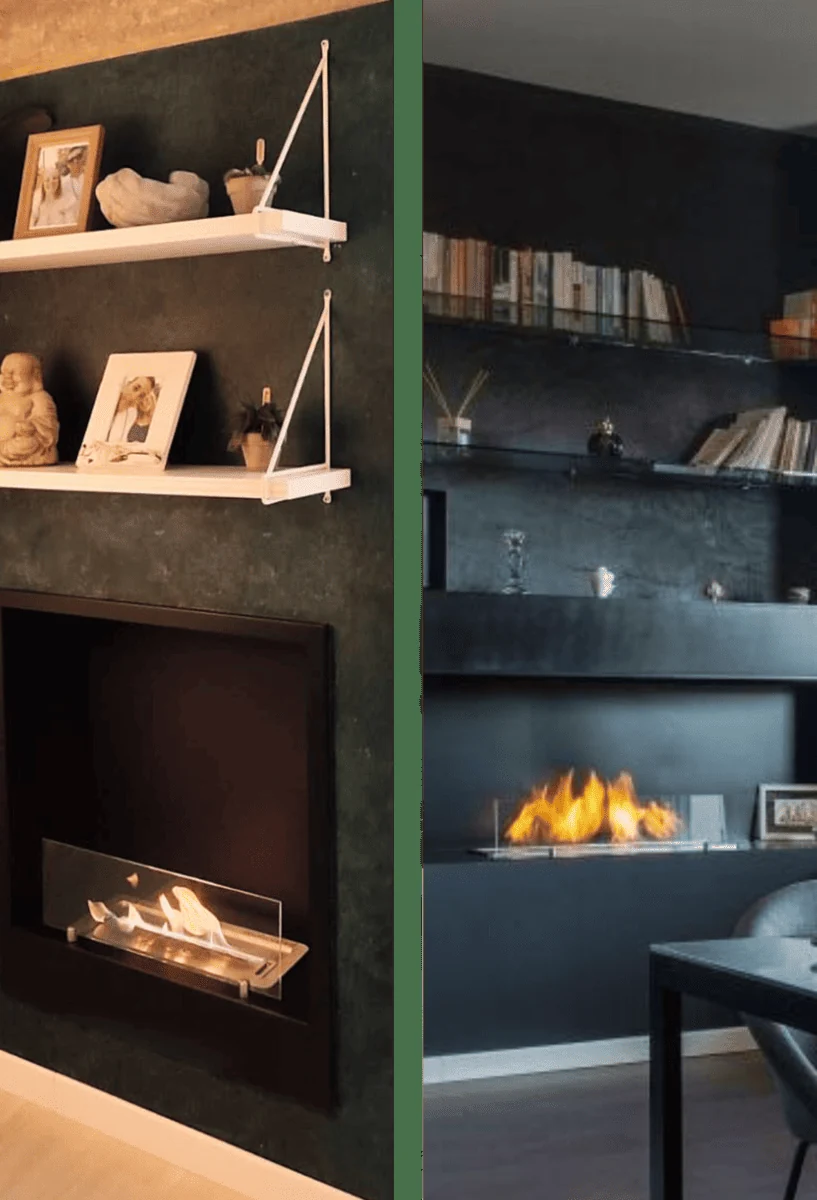
maisonFire is worth exploring when the brief calls for a finished decorative presence rather than a burner on its own. Its bioethanol category encourages a closer look at the relationship between flame, wall and furniture, particularly in a living room where the fireplace needs to join an existing composition.
The wider catalogue also contains other fireplace technologies. The product specification therefore needs to identify the fuel and operating system, as well as dimensions and supplied components. An interior photograph communicates the design; recreating it requires the actual appliance’s clearances and installation conditions.
bioKamino: an Italian specialist in bioethanol fireplaces
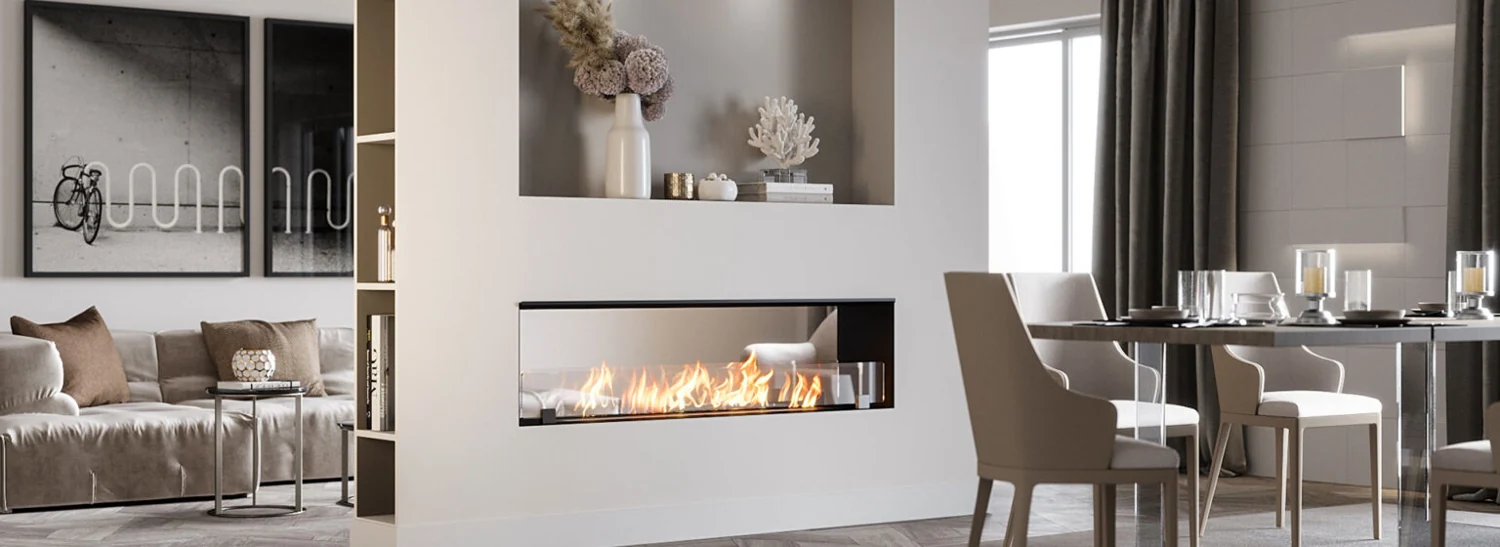
bioKamino states that it designs and manufactures in Italy, with a proposition centred on bioethanol fire. It offers a useful starting point for projects in which a fireplace joins a fitted wall or helps divide living and dining spaces visually.
The construction around the flame matters as much as its appearance. The company’s information on built-in systems helps distinguish a complete appliance arrangement from a slot cut into furniture. Surrounds, insulation and heat management need to follow the manufacturer’s system, particularly beside timber cabinetry, shelving or electronics. That discussion is easier before the furniture has been made.
Biò Fireplace: from freestanding pieces to built-in designs
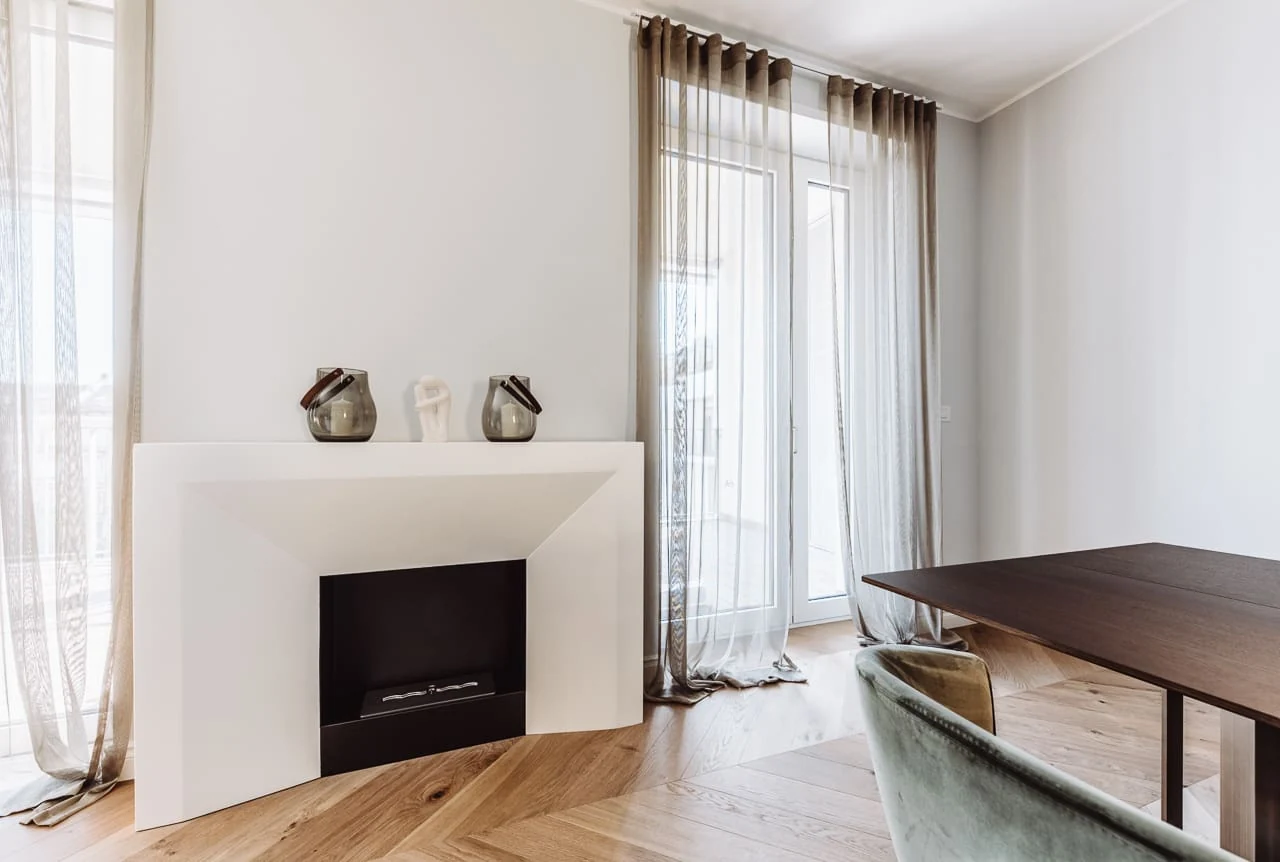
Based in Spoleto, Biò Fireplace offers wall-mounted, freestanding and built-in families, alongside manual and automatic burners. The variety helps frame two quite different purchases: a furnishing that occupies a room and a system intended to become part of its architecture.
A quotation should identify whether it covers a burner, a complete fireplace or a particular accessory package. The catalogue also includes electric water-vapour products, which should not be confused with bioethanol models. Product names and technical documents provide a clearer basis for comparison than an image of a similar-looking flame.
Planika: automatic operation as a design choice
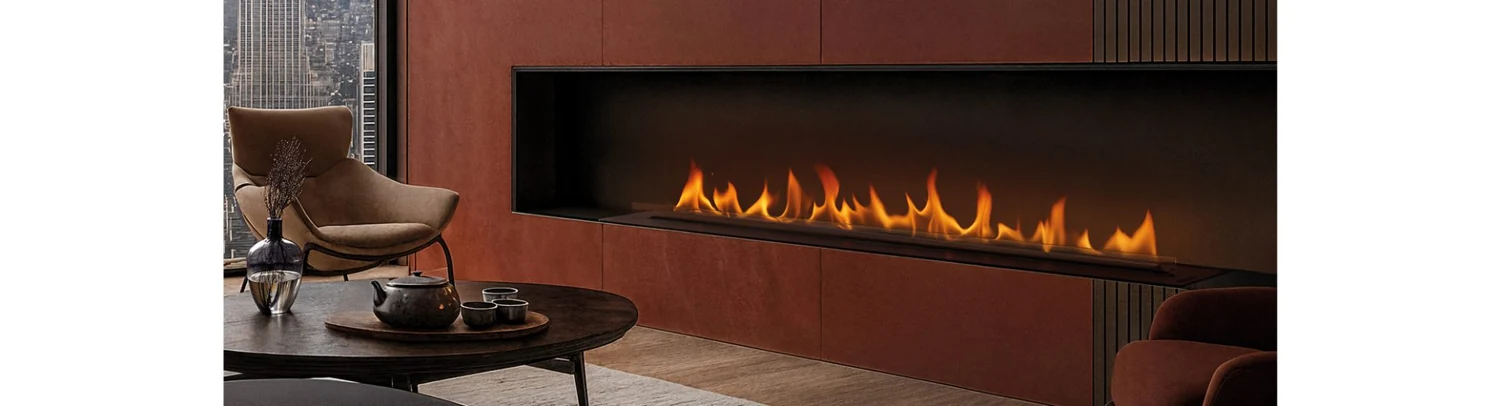
Planika expands the shortlist with an international range in which automatic systems are a significant feature. Its FLA4 uses BEV technology, which burns ethanol vapours, and offers a different operating arrangement from a manually filled burner. For a long, architectural line of fire, that distinction is worth understanding early.
Automation does not remove installation requirements. Firebox configuration, openings, clearances and room conditions remain specific to the product. For a bespoke installation, the architect or installer needs the appliance documentation before walls and joinery are constructed. Dimensions taken from a photograph are no substitute for an approved installation drawing.
EcoSmart Fire: inserts, burners and furniture with fire
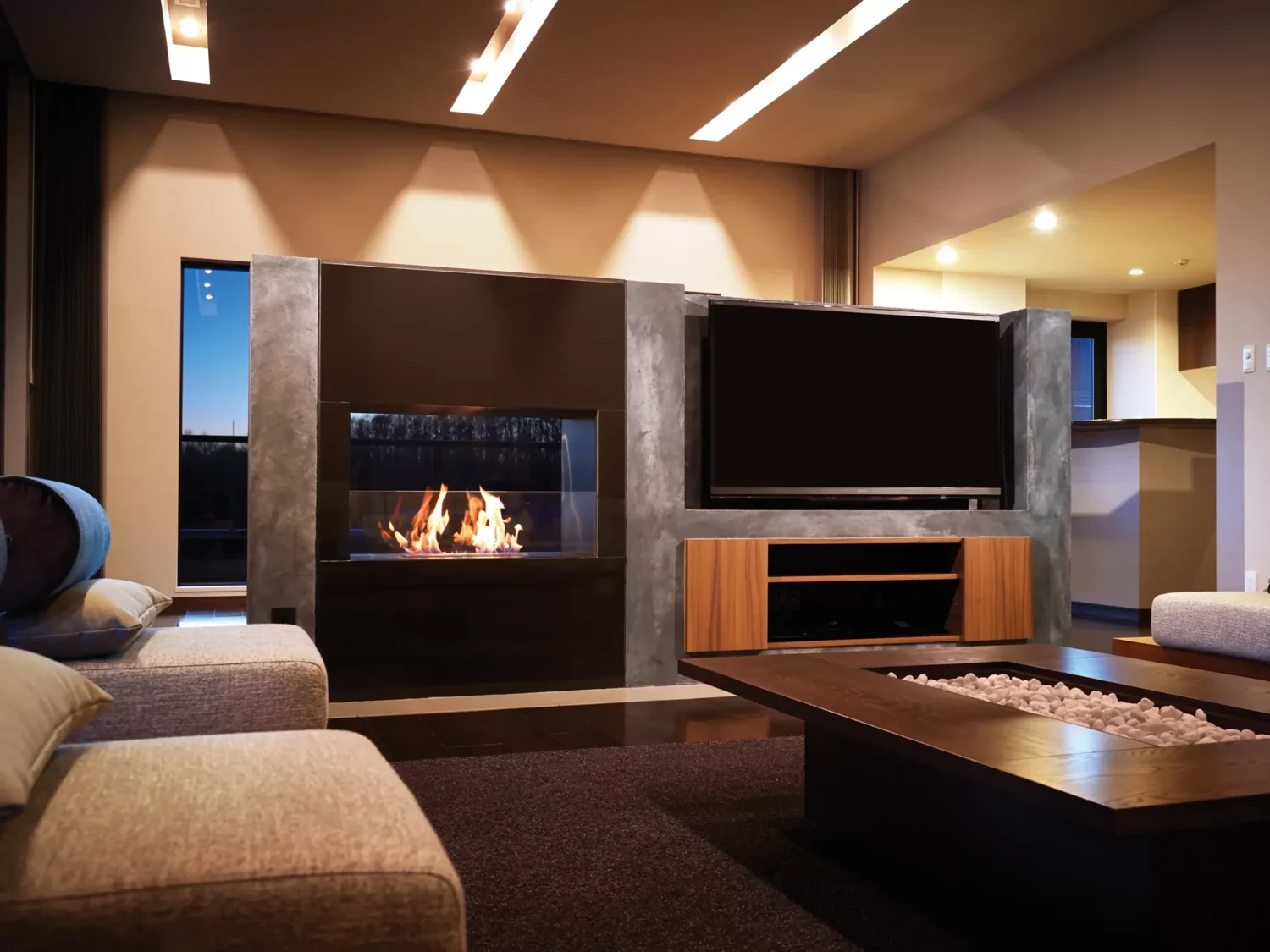
EcoSmart Fire provides another international reference across inserts, burners and furniture incorporating a flame. Its Flex range, for example, offers different viewing arrangements, including double-sided configurations that can connect two areas visually.
The brand’s installation documentation sets out minimum room volumes and clearances to surrounding materials. Those figures belong to specific models and should not be transferred between burners. Outdoor use needs the same care in specification: a terrace setting calls for a product and installation intended for that location, rather than an indoor appliance moved outside.
What does a bioethanol fireplace cost?
A meaningful comparison starts with equivalent packages: appliance, any required firebox, specified glass, accessories, delivery and installation. Joinery and wall construction may sit outside the fireplace supplier’s price. A figure for a burner alone therefore says little about the cost of a completed feature wall.
Fuel provides a more straightforward reference. Biò Fireplace’s Italian shop lists twelve one-litre bottles at €75, equivalent to €6.25 per litre. Tax treatment, delivery charges and the final offer need reconfirming. This is a specific Italian retail example, not a global average or a price available in every country. Running cost then depends on the selected appliance’s stated fuel consumption and flame setting; a universal hourly figure would conceal those differences.
Where to buy, and what a useful quotation includes
Specialist fireplace retailers, interior showrooms and contacts identified by the manufacturer can help coordinate built-in projects. A floor plan, ceiling height, photographs and the proposed wall materials make the discussion more precise. Planning the seating alongside the fireplace also helps establish useful distances; our guide to Italian sofa brands explores another central part of the living-room composition. Online buying is easier to assess when the exact model, supplied components and service arrangements are clearly stated.
For buyers outside Italy, a local supplier also needs to confirm product availability, applicable approvals, fuel supply and support. A fireplace should not automatically be treated as a replacement for the home’s heating system. Its rated output, intended use and suitability for the room matter more than flame length alone.
Do bioethanol fireplaces need a chimney or ventilation?
Many bioethanol fireplaces are designed without a chimney or flue. They still consume oxygen from the room during operation. Minimum room volume, ventilation and distances from combustible materials must follow the chosen model’s instructions and the conditions of the property. A television above a fireplace also needs a technical assessment; a styled interior photograph does not establish compatibility.
For everyday use, Cheshire Fire & Rescue Service’s guidance reinforces an essential point: refuelling takes place only after the flame is extinguished and the appliance has cooled, following the manufacturer’s instructions. Matching the correct fuel, operating method and location at the buying stage makes the fireplace a better-resolved part of the interior.