Discover Villa Palagonia in Bagheria, Sicily: grotesque sculptures, Baroque architecture, a spectacular Hall of Mirrors and the history behind the Villa of Monsters.
In Bagheria, just outside Palermo, an aristocratic residence appears to have abandoned the reassuring conventions of beauty. Along its walls stand improbable creatures, grotesque figures, musicians, animals and hybrid bodies. Villa Palagonia, widely known as Sicily’s Villa of Monsters, is not merely a collection of bizarre sculptures. It is a remarkable chapter in the history of Sicilian Baroque architecture and a study in how design can shape emotion, expectation and even discomfort.
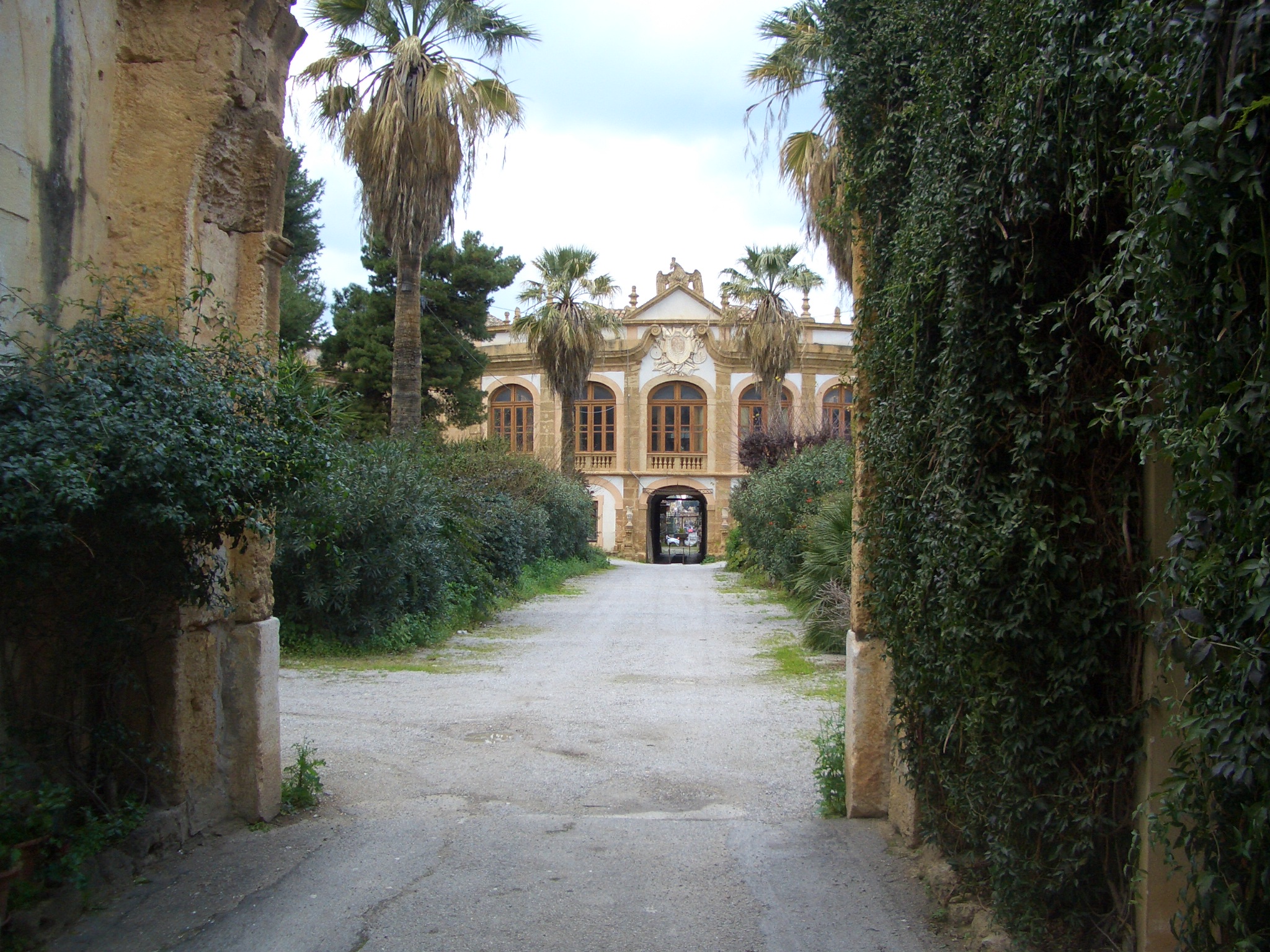
Villa Palagonia in Sicily: the history of the Villa of Monsters
Construction began in 1715 at the request of Ferdinando Francesco Gravina, Prince of Palagonia. The original architectural scheme is attributed to Tommaso Maria Napoli, a Dominican friar and architect, while Agatino Daidone was associated with later phases of the project. At the time, Bagheria was becoming a favoured setting for the country residences of Palermo’s aristocracy. These villas were expressions of status as much as places of leisure, their gardens, entrances and reception rooms orchestrated as carefully as their façades.
Villa Palagonia belongs to that tradition. Its axial composition connects arrival routes, courtyards and residential spaces. The design guides visitors through a controlled sequence of views, demonstrating how Baroque architecture could turn an ordinary approach into a ceremonial experience. Yet the elements that made the house internationally famous came later.
Why was Villa Palagonia filled with monsters?
From the middle of the eighteenth century, Francesco Ferdinando Gravina e Alliata, a descendant of the original patron, introduced the fantastic sculptural programme that gives the villa its nickname. Roughly two hundred figures are believed to have existed originally. Many have since disappeared, but the surviving stone sculptures still transform the perimeter walls into an extraordinary gallery of eccentric characters.
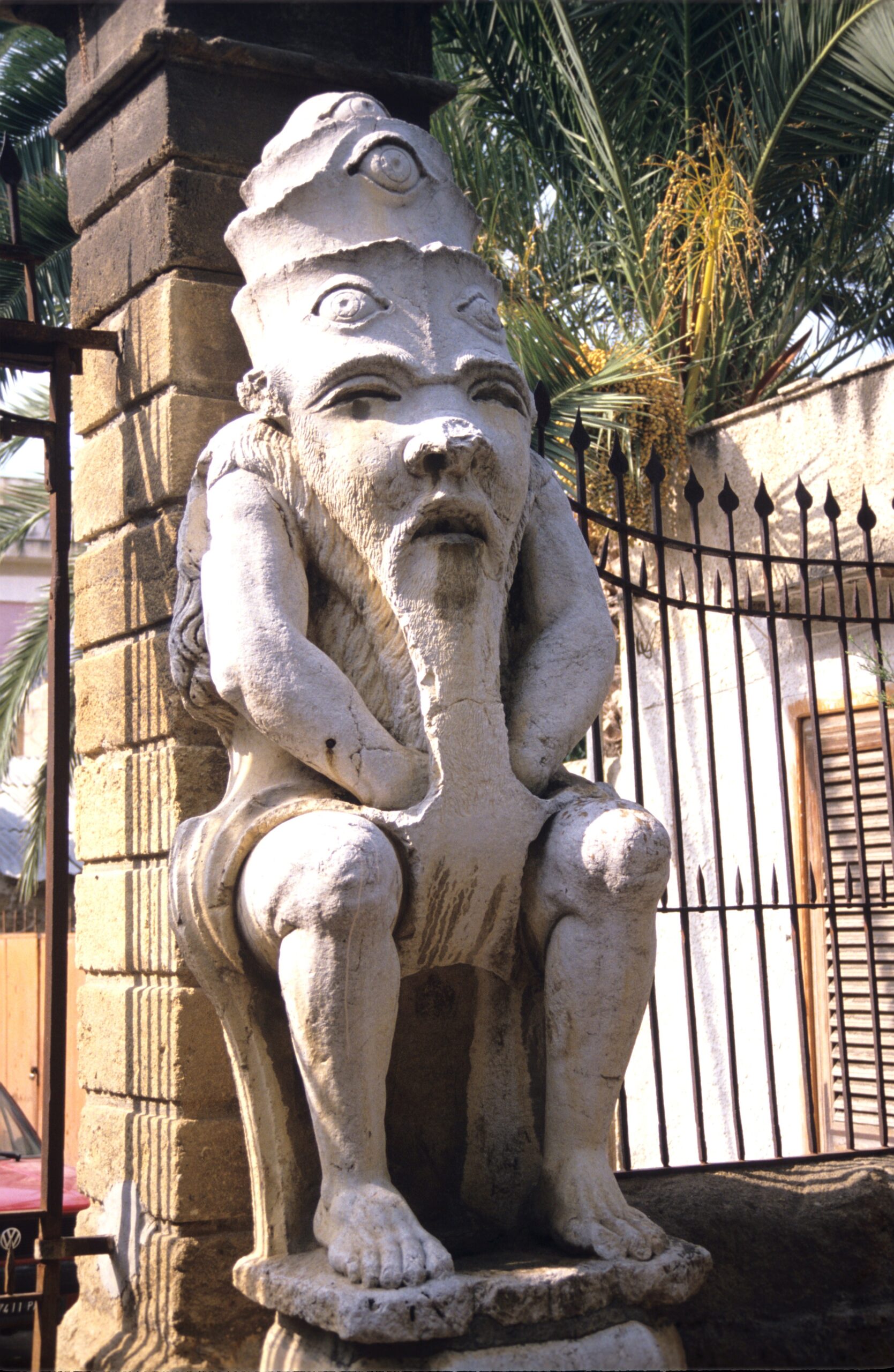
The prince’s motivations have inspired enduring legends. Some suggest that the sculptures were conceived as revenge against people who ridiculed his appearance; others regard them as a deliberate rejection of conventional beauty. Neither explanation should be presented as an established historical fact. The sculptures can also be read within the eighteenth century’s fascination with caricature, theatre, ornament and the grotesque.
Architecturally, their placement matters. Repeated along the walls, they establish a visual rhythm while interrupting the ordered character of the building itself. The effect is not simply decorative. It shifts the visitor’s sense of scale, propriety and anticipation.
Baroque architecture: the monumental staircase and theatrical approach
One of Villa Palagonia’s most memorable architectural features is its double-flight exterior staircase, leading to the principal floor. Such a staircase has a practical function, but it is also a carefully staged transition. Movement becomes spectacle: the ascent changes perspectives and reinforces the hierarchy of spaces within the residence.
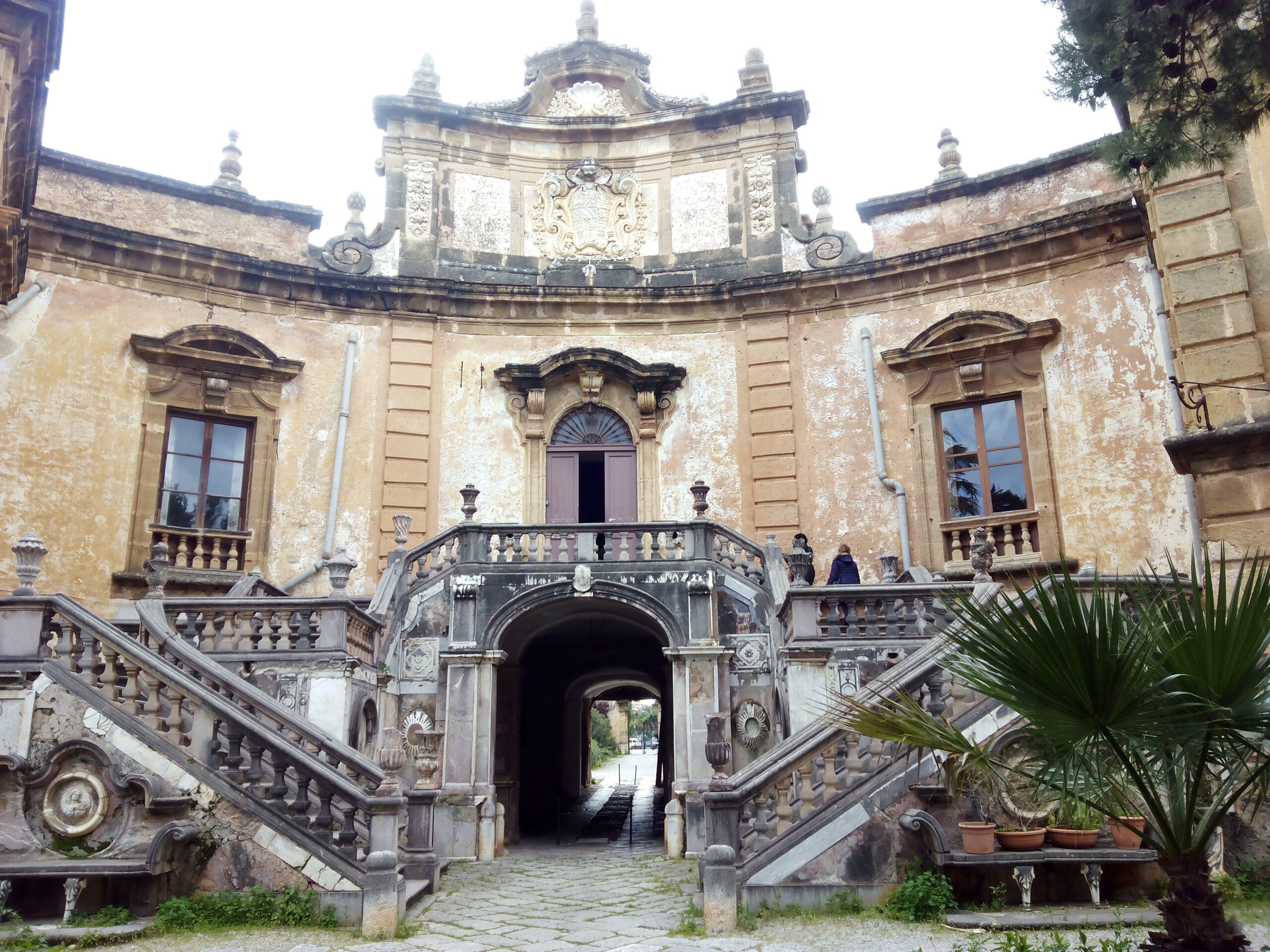
This contrast is essential to understanding the villa. Behind the whimsical figures lies a disciplined Baroque composition. The sculptures do not erase the original architecture; they alter the way it is experienced. Order and disorder inhabit the same project.
The Hall of Mirrors: an eighteenth-century experiment in interior perception
Inside, the celebrated Hall of Mirrors demonstrates a different kind of theatrical ambition. Reflective surfaces, painted glass and images of skies and fantastic birds create an environment in which material boundaries seem less stable than they are. Reflection becomes an instrument of spatial design rather than a purely ornamental flourish.
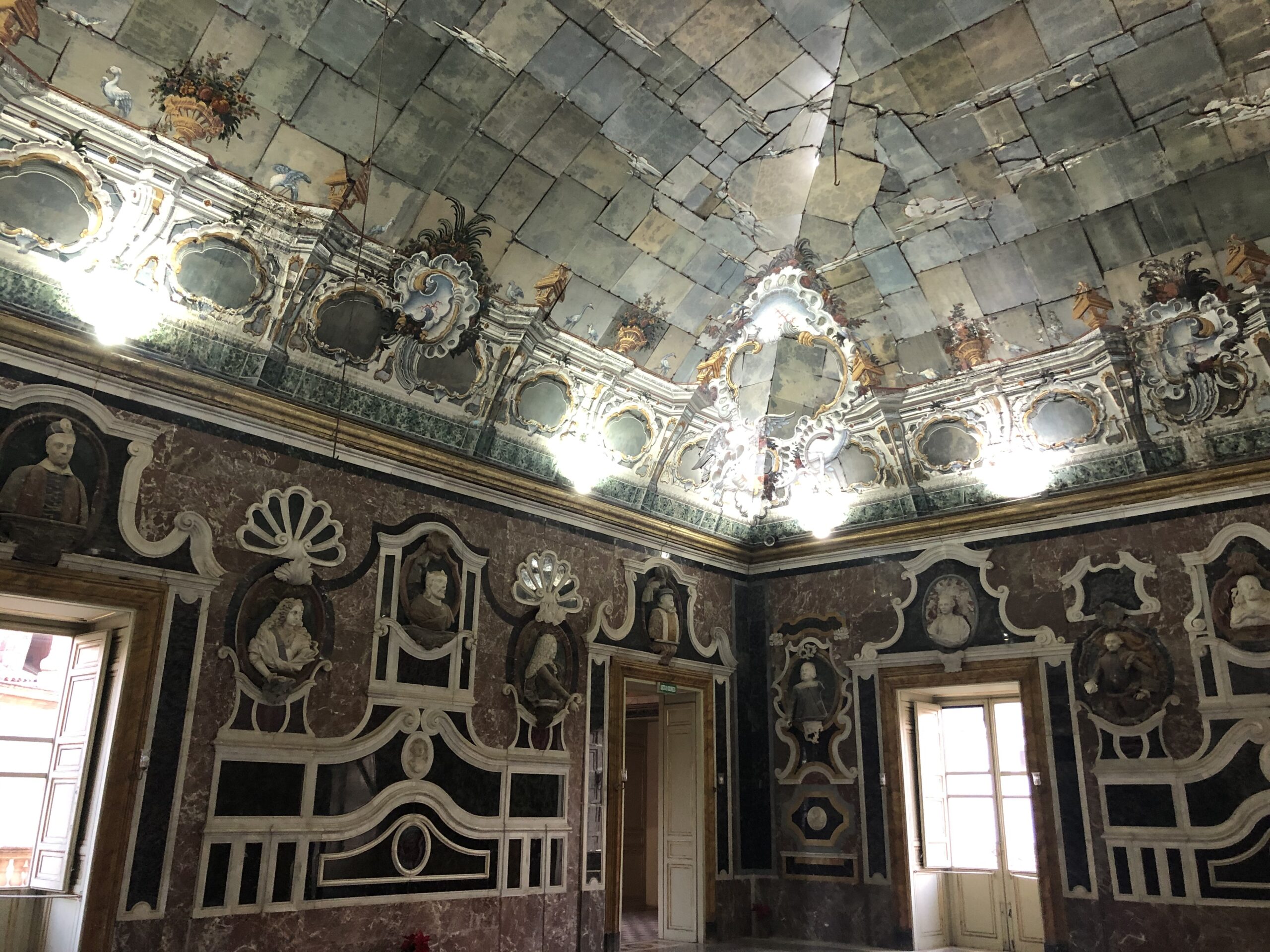
For anyone interested in the history of interior design, this room is arguably as compelling as the sculptures outside. Mirrors do not merely brighten the interior: they disrupt the perception of depth, opening imaginary spaces within a physical room. Long before contemporary immersive installations, eighteenth-century designers were already exploring how surfaces could transform the relationship between an observer and an environment.
Travel accounts also describe unusual furnishings and uncomfortable seating intended to surprise visitors. These anecdotes are part of Villa Palagonia’s mythology and should not automatically be confused with objects that survive today.
Goethe at Villa Palagonia: beauty, excess and the limits of taste
In April 1787, Johann Wolfgang von Goethe visited Villa Palagonia during his Italian journey. His response was famously critical: the grotesque ornament seemed to violate the principles of order and proportion that informed his architectural sensibility. That reaction is now one of the most revealing episodes in the villa’s reception.
What Goethe saw as excess can be understood today as an intentional clash of visual languages. The disciplined framework of the building encounters the unruliness of the figures. It is a confrontation between architectural harmony and the pleasure of surprise, between inherited rules and individual expression.
What Villa Palagonia can teach contemporary design
Villa Palagonia is sometimes described as eccentric, yet the word barely captures its architectural intelligence. Its distinctiveness emerges from the relationship between rigorous planning and unpredictable ornament. Materials, repetition, mirrors and the transition between exterior and interior all contribute to an emotional experience.
The villa also offers a useful counterpoint to contemporary interiors designed primarily for visual harmony. Spaces need not always be soothing, and decoration need not always be polite. Irony, disruption and excess can become meaningful design decisions. This does not turn Villa Palagonia into a modern building: it makes its eighteenth-century character particularly relevant to contemporary debates about originality and taste.
Visiting Villa Palagonia in Bagheria
Villa Palagonia is located at Piazza Garibaldi 3, Bagheria, near Palermo, Sicily. The privately owned complex is partially open to visitors. Its principal attractions include the grotesque sculptures, exterior staircase and Hall of Mirrors. Opening times and admission arrangements may change, so consult the official Villa Palagonia website before travelling.
Frequently asked questions about Villa Palagonia
Why is Villa Palagonia called the Villa of Monsters?
Because its walls display grotesque stone sculptures depicting hybrid creatures, caricatures, animals and fanciful figures, commissioned during the eighteenth century.
Who designed Villa Palagonia?
The original project, begun in 1715, is attributed to architect Tommaso Maria Napoli. Agatino Daidone contributed to later phases.
Who commissioned the monster statues?
The distinctive sculptural programme was introduced under Francesco Ferdinando Gravina e Alliata in the mid-eighteenth century.
Did Goethe visit Villa Palagonia?
Yes. Goethe visited in April 1787 and described his critical reaction in his account of his travels in Italy.
Can you visit Villa Palagonia?
Yes, parts of the historic villa can be visited. Check the official website for current access arrangements.
Sources: Villa Palagonia official website; Associazione Parchi e Giardini d’Italia; Municipality of Bagheria.