From 23 October 2026 to 10 January 2027 Turin becomes an open air gallery of contemporary art: the Luci d’Artista works and their artists, the Christmas markets and the architecture from Guarini to Antonelli.
In Turin, Christmas is not hung from balconies: it is exhibited. For almost thirty years Luci d’Artista has turned streets, squares and domes into an open air gallery of contemporary art, and the Baroque city has become its finest installation.
Luci d’Artista Turin returns from 23 October 2026 to 10 January 2027 for its twenty ninth edition, which adds a new work by Vittoria Caldera to the collection. Decoding Light turns a balcony into a point of contact between private space and the city, spelling out the phrase “light finds us” in an alphabet of flashes inspired by Morse code. Launched in 1998 by the City of Turin and now produced by Fondazione Torino Musei, the event anticipated by many years an idea that has since been copied everywhere: handing the city’s festive lighting to artists rather than decorators.
For anyone who looks at cities with a designer’s eye, that is the difference that matters. Traditional illuminations decorate; the works of Luci d’Artista interpret the space they occupy, read its scale and often recalibrate how we perceive it. Walking from Piazza Carlina to the Po and the Mole Antonelliana in December means following a curated route in which Savoy architecture serves as wall, plinth and backdrop. Turin’s Christmas markets, more understated than their Alpine cousins, complete the picture without stealing the show.
When are the Luci d’Artista lit in Turin in 2026?
The Luci d’Artista are lit from 23 October 2026 to 10 January 2027, so they cover the whole festive season and Epiphany. The works can be seen in the evening, free of charge, and are spread across the city, from the historic centre to the outer neighbourhoods.
| Information | 2026/27 edition |
|---|---|
| Dates | 23 October 2026 to 10 January 2027 (twenty ninth edition) |
| New work | Decoding Light by Vittoria Caldera |
| When to see them | Every evening after dark; free to view |
| Where | Historic centre (Piazza Carlina, Piazza San Carlo, Giardini Reali Bassi, Mole Antonelliana) and neighbourhoods (Piazza Risorgimento, Monte dei Cappuccini, the Italia ’61 lake) |
| Markets | Christmas Village in Piazza Solferino in recent editions; Balon flea market in Borgo Dora every Saturday |
| Getting there | By train to Porta Nuova or Porta Susa; the centre is best explored on foot and by metro |
Where are the works and how should you plan the route?
The works are scattered across the city, but the densest cluster can be walked in a single evening, from the river to the centre. Our advice is to start in Piazza Vittorio Veneto, where Andreas Angelidakis’s VR Man marks the corner with Lungo Po Cadorna, then look up towards the Monte dei Cappuccini, where Rebecca Horn‘s Piccoli spiriti blu dot the hillside like a domestic constellation.
Crossing the Ponte Vittorio Emanuele I you meet Joseph Kosuth‘s Doppio Passaggio (Torino), a work of luminous words that turns the bridge into a sentence to be read as you walk. From here head back to Piazza Carlina, home to Nicola De Maria’s Regno dei fiori: nido cosmico di tutte le anime, and continue to Piazza San Carlo and the Giardini Reali Bassi, where Tracey Emin’s neon Sex and Solitude, donated to the city by Fondazione CRT, has glowed since 2025.
A second evening belongs to the neighbourhoods. In Piazza Risorgimento, Jeppe Hein’s illuminated benches change the way you read a local garden; in Piazza della Repubblica, on the façade of the Tettoia dell’Orologio at Porta Palazzo, Michelangelo Pistoletto‘s Amare le differenze writes the same phrase in many languages above the city’s most multicultural market. At the Italia ’61 lake stands Gilberto Zorio’s Luce Fontana Ruota, and on the roof of the Sant’Anna hospital Renato Leotta’s Io, sono nato quì.
Why is Luci d’Artista unlike any other Christmas lights?
Because it is an art collection, not a seasonal display. Many works return to the same spot every year and some can be seen all year round, so over time the city has built a lasting relationship between each piece and its site. The roster brings together Arte Povera protagonists such as Pistoletto, Zorio and Mario Merz, conceptual artists like Kosuth and international names including Rebecca Horn and Tracey Emin.
The editors suggest looking at them as you would an installation in a museum, asking what each work does to the space around it. Luigi Nervo’s Vento solare, in Piazzetta Mollino next to the Teatro Regio, works on the geometry of a small square; Merz’s luminous numbers climb the Mole and measure its verticality. It is a lesson in lighting design applied to urbanism, and worth the trip even for those who could happily skip the markets.
Which architecture should you see in Turin during Luci d’Artista?
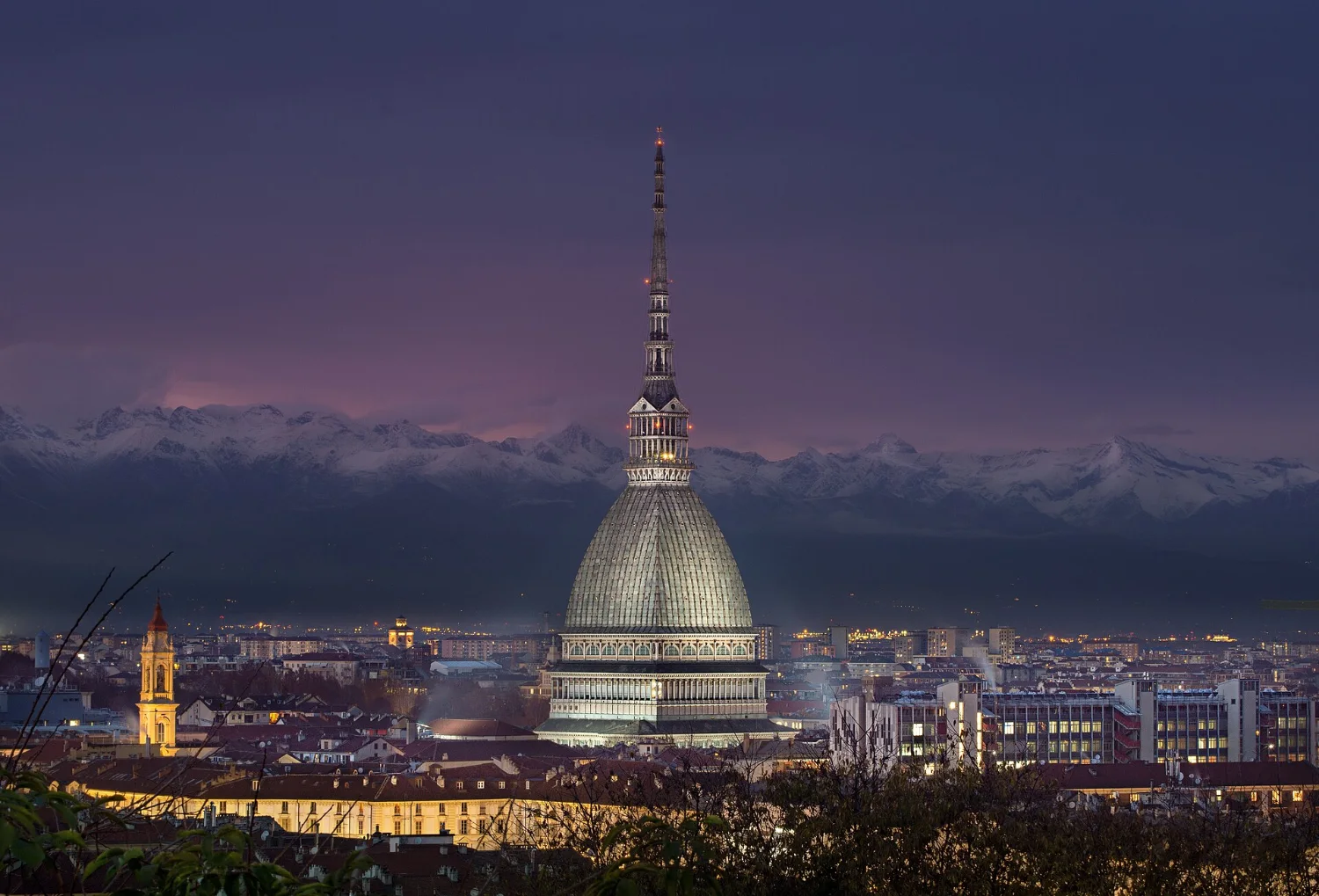
The obvious starting point is the Mole Antonelliana. Designed by Alessandro Antonelli in 1862 as a synagogue for Turin’s Jewish community, it was completed in 1889 after the City acquired it and reached its present height of 167 metres in 1906, at the time the tallest masonry building in Europe. Since the renovation completed in 1999 it has housed the Museo Nazionale del Cinema, and the panoramic lift rises to a terrace 85 metres up from which, at night, you can pick out the lights scattered across the city. Along its dome runs Mario Merz‘s Il volo dei numeri, the Fibonacci sequence in neon that is now part of Turin’s skyline.
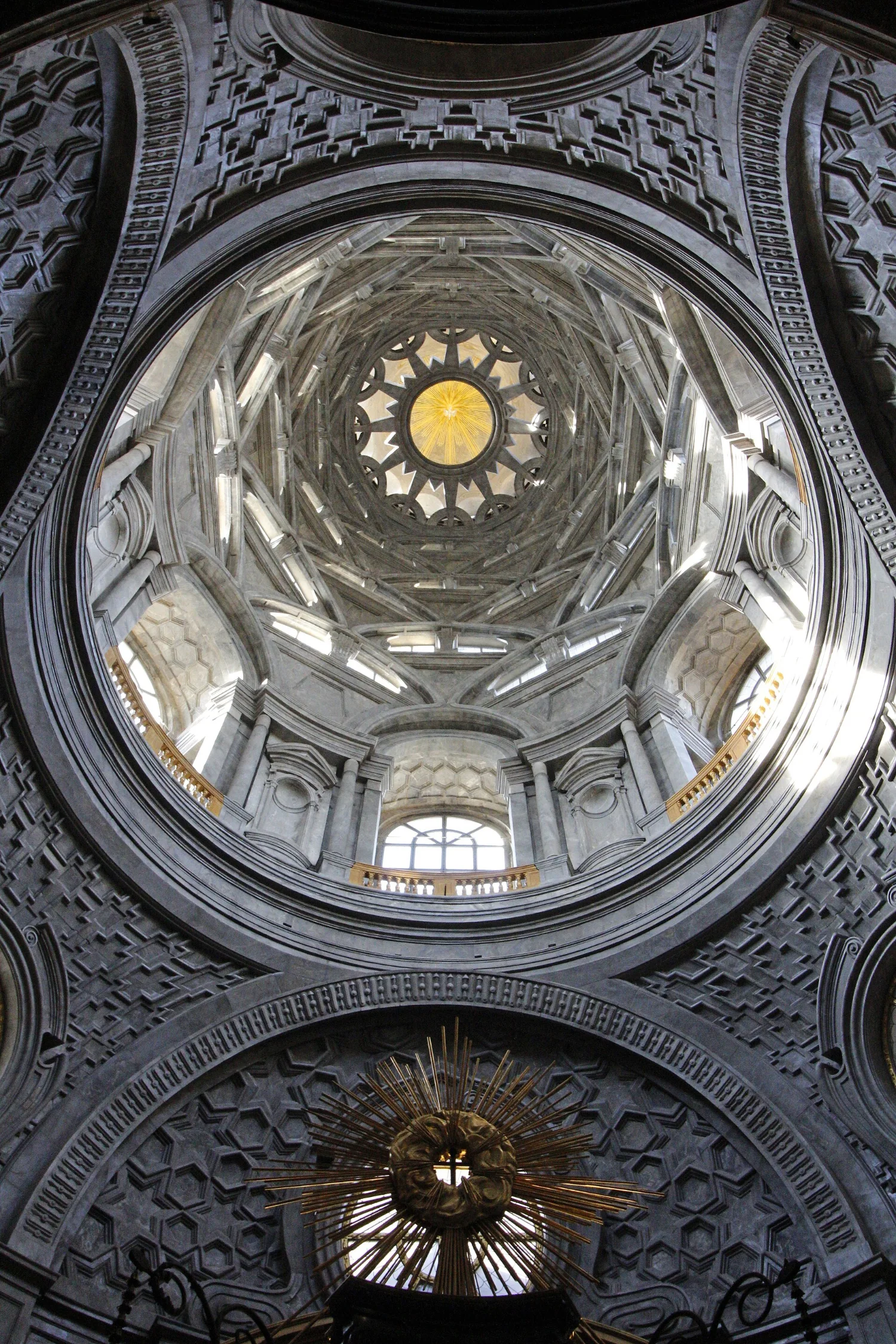
A few minutes away is the Chapel of the Holy Shroud by Guarino Guarini, who was called to Turin in 1666 and directed the works until his death in 1683. Its dome is a tower of overlapping, staggered arches on six levels that close in a star: one of the most radical spatial inventions of European Baroque. Devastated by fire in 1997, it reopened to the public on 27 September 2018 as part of the Musei Reali, and seeing it just before stepping out into the evening lights is an exercise in contrast we warmly recommend.
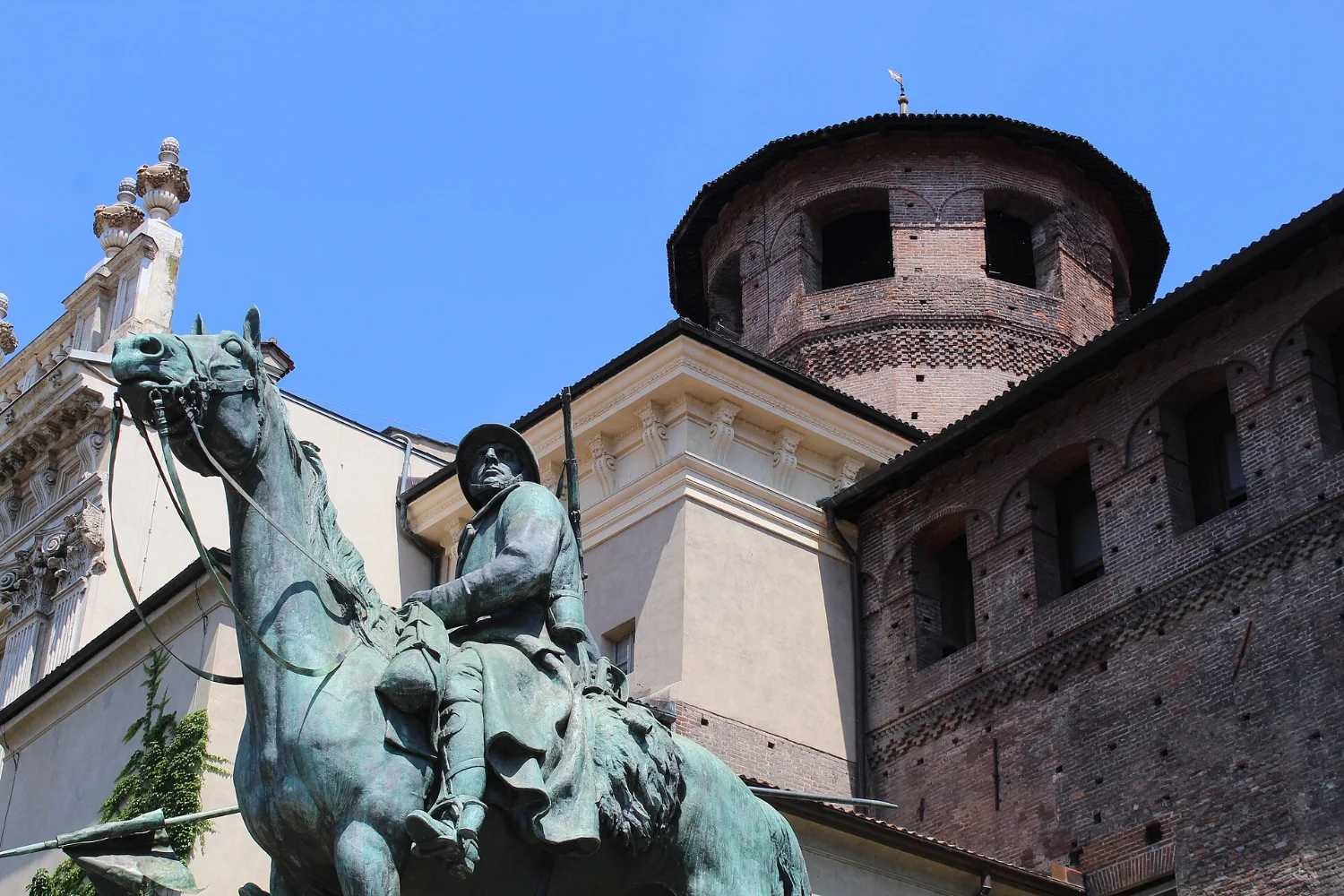
In Piazza Castello, Palazzo Madama shows the façade Filippo Juvarra designed and built between 1718 and 1721 for the second Madama Reale, a theatrical front grafted onto a medieval castle. Lit at night, it explains better than any textbook how Turin’s Baroque turned squares into urban stage sets. To round off the walk, the editors suggest the arcades of Via Po, which link Piazza Castello to the river in one long covered space: infrastructure designed for winter.
Where are the Christmas markets in Turin?
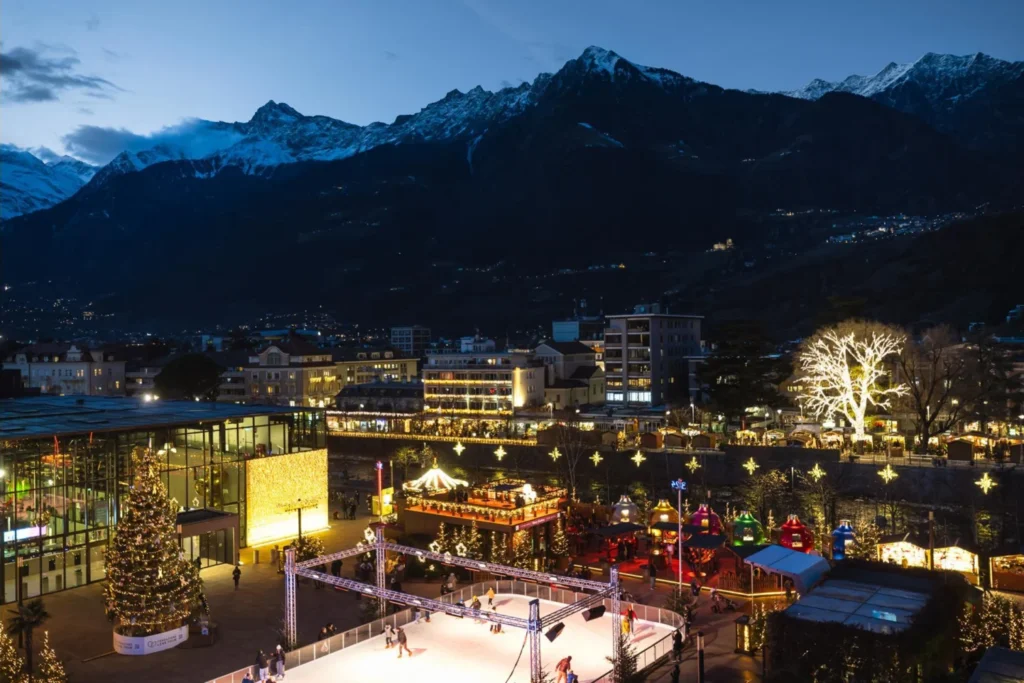
Turin’s Christmas markets are urban rather than Alpine, and they are best chosen with the same criteria as the artworks. In recent editions the Christmas Village has been held in Piazza Solferino, with wooden chalets, Father Christmas’s house and an ice rink; the up to date programme is published on the City of Turin’s events portal.
For design lovers, however, the more rewarding choice is Borgo Dora. The Balon fills the lanes around Piazza della Repubblica every Saturday, while the Gran Balon, on the second Sunday of the month, brings furniture, paintings, prints, textiles and vintage toys onto the street. Hunting for a mid century piece or a 1960s lamp here, beneath Pistoletto’s lights, is the most Turinese way to shop for Christmas.
What should you buy in Turin at Christmas?
Apply the same test you would to any design object: honest materials, legible craftsmanship and a form that still holds up after Epiphany. In Turin that means vintage design and period graphics at the Balon, art books and catalogues in the museum shops, and chocolate and gianduiotti from the historic confectioners of the centre, whose December windows are dressed like miniature stage sets. Avoiding kitsch light up gadgets is easy: the city offers far better.
Where to stay in Turin if you love design?
The address most in tune with the route is the NH Collection Torino Piazza Carlina, at Piazza Carlo Emanuele II 15: a mid seventeenth century building, founded as a Regio Albergo di Virtù to train poor young people for work, where Antonio Gramsci lived from 1913 to 1915. The contemporary renovation is organised around a courtyard and two rooftop terraces, and the square itself is home to Nicola De Maria’s work. If you want to extend the trip, our guide to the most beautiful design spas in Italy has plenty of ideas.
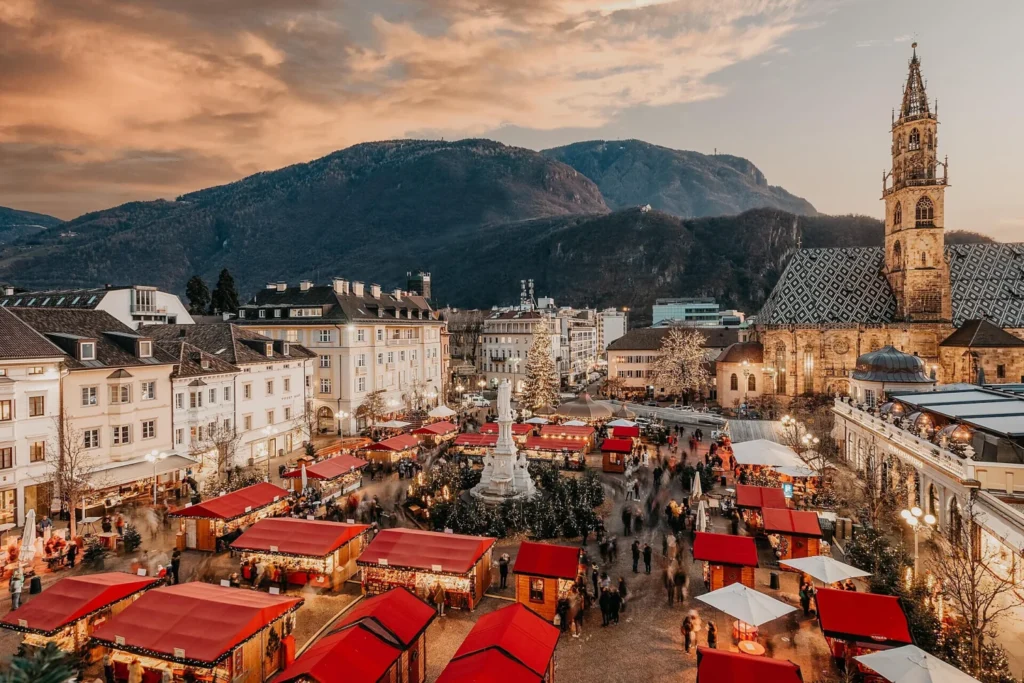
For a comparison with an Alpine Christmas, the editors have covered the Bolzano Christmas market, while an hour away by train you will find the Lombard version in our guide to Milan’s Christmas markets.
Frequently asked questions about Luci d’Artista and Christmas in Turin
When are the Luci d’Artista 2026 lit?
From 23 October 2026 to 10 January 2027. It is the twenty ninth edition of an event that began in 1998.
Is Luci d’Artista free?
Yes. The works are installed in public streets, squares and gardens and can be seen freely in the evening. Only museums and services such as the Mole’s panoramic lift charge admission.
How many evenings do you need to see Luci d’Artista?
Two evenings are ideal: one for the centre and the riverside on foot, one for neighbourhoods such as Porta Palazzo, Piazza Risorgimento and Italia ’61, by metro or public transport.
Where are the Christmas markets in Turin?
In recent editions the Christmas Village has been held in Piazza Solferino. For antiques and vintage design there is the Balon in Borgo Dora every Saturday and the Gran Balon on the second Sunday of the month.
Can you see Luci d’Artista after Christmas?
Yes, the works stay lit until 10 January 2027, so you can see them on New Year’s Eve and over Epiphany too.