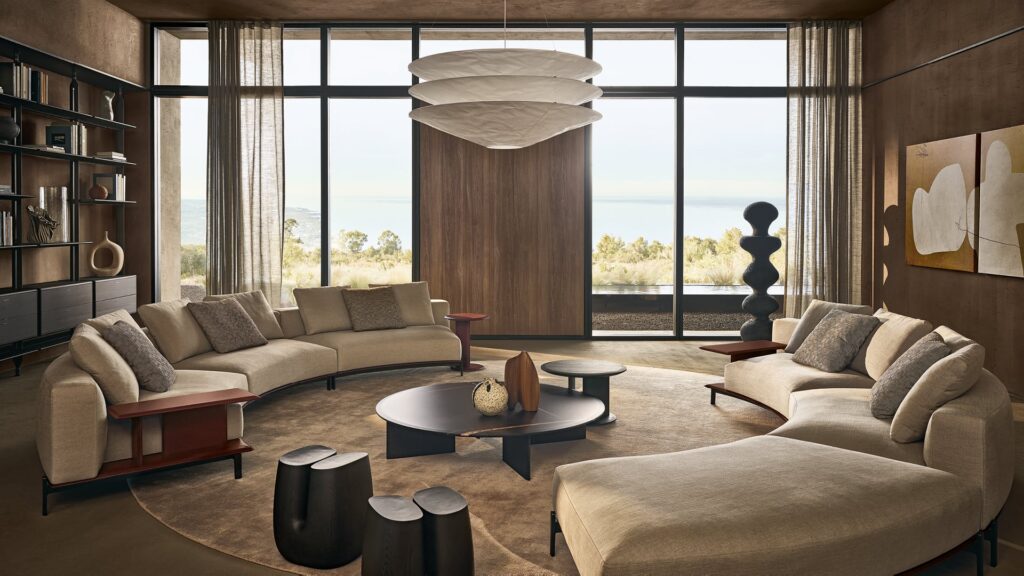
At London Design Festival 2026, MADE x Barbican shows how a piece of architecture becomes a collection: 23 pieces and a deep dive into Miriam Howitt’s historic interiors.
An armchair with a wooden frame, a rug in deep colors, a lamp that reinterprets a detail of the concert hall. The Barbican enters the domestic sphere through objects that invite us to look at the London complex from a different distance: that of someone who sits down, switches on a light, arranges furniture in a room.
This is the theme of MADE x Barbican, the collaboration at the heart of an installation on view from September 12 to 20 at the Barbican Centre’s Level G Hub Space in London, as part of the London Design Festival. The collection of 23 pieces, spanning furniture, lighting, textiles and accessories, has been on sale since August 17. The festival installation stages its origins, exploring the relationship between the objects and the complex’s archive, as described in the Barbican’s official announcement.
Before the furniture, a way of living
The collection was developed by MADE’s in-house design team together with the Barbican. The research brought together drawings, apartment layouts and documents on the estate’s historic interiors. Alongside the building’s geometries, one figure emerged: Miriam Howitt, who was commissioned in 1967 to furnish the complex’s show apartments.
In the story published by the London Design Festival, Beatriz Nuno, head of design at MADE, explains how studying those rooms shaped the collection. A living room with an open dining area became a reference for identifying the spaces the new pieces would be designed for. The use of rugs, which give rooms visual weight and warmth, also played a part in the research.
Howitt brought architecture back to the scale of everyday life. Starting again from her work means asking how a single room can host different activities, how color can define an area without closing it off, and how much one piece of furniture can help make an open-plan space legible. These questions remain immediately useful for interior design today.
How a concert hall becomes a lamp
Some of the translations from building to object are particularly precise. The Curve table lamp takes its cue from the tubular acoustic panels of the Barbican Hall. Its adjustable shade rotates on a chrome base: an architectural reference is translated into a domestic function, that of directing light.
The Brute rug, meanwhile, reworks a pattern from the show apartments. Made in long-pile wool, it keeps the relief and tactile presence of the textile, bringing into the collection a surface that plays off the sharper profiles of the furniture. The origins of the designs and their features are described in the press materials for the collaboration.
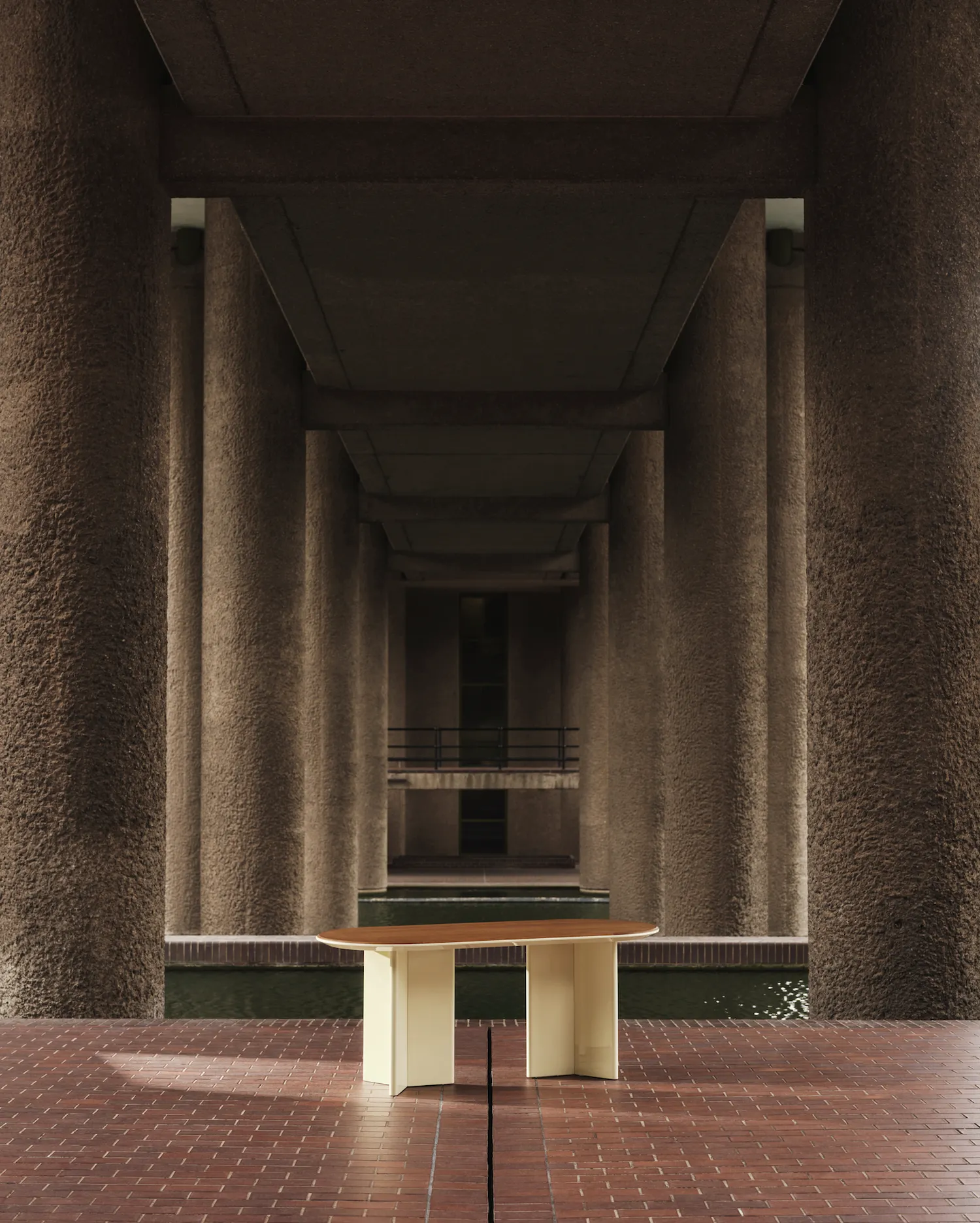
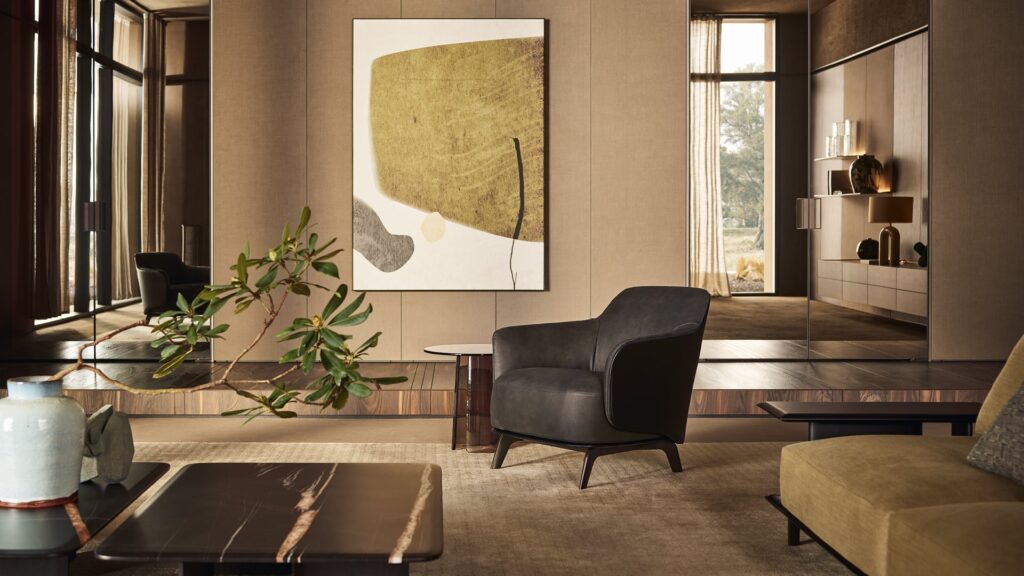
The collection photographs capture this meeting of geometry and comfort. Wood frames the seating, upholstery introduces soft volumes, and the side tables break up the floor plan into distinct shapes. The domestic scene emerges from the relationship between these elements, from the gaps they leave and the different ways they occupy the floor.
The value of an archive is measured in design
The Barbican offers an instantly recognizable visual repertoire. That is precisely why archival work raises an interesting question for furniture companies: how deeply should you dig into a source before turning it into a collection? A curve can be borrowed as a decorative motif, or studied to understand what problem it solved in its original context.
In MADE’s case, the attention paid to the apartments and to Howitt’s work allows the collection to pair form with a reflection on use. The result should be judged at both scales: the coherence of each individual object and its ability to live alongside other furniture, including pieces from outside the collection. That is where the historical reference meets the needs of a real home.
For architects and interior designers, the London installation is therefore a chance to trace the path from document to product. Drawings, photographs and construction details can provide tools for designing the present, as long as the translation leaves room for new functions and new inhabitants.
MADE x Barbican is open free of charge until September 20, 2026, from 8 a.m. to 11 p.m. local time, at the Barbican Centre, Level G Hub Space, Silk Street, London. No ticket is required. Opening times and details are available in the official festival program.
Opening image and in-text photograph: MADE x Barbican collection, © Felix Speller. Source: London Design Festival. The images show the furniture from the collaboration and are not a photo report of the installation.