“Be the Project” is an invitation to see design as a process, not just as an object. Fuorisalone 2026, the city-wide program of events held in Milan during design week, reminds us that a project lives in ideas, in materials, in the hands that transform them and in the stories they can tell. Italian design …
“Be the Project” is an invitation to see design as a process, not just as an object. Fuorisalone 2026, the city-wide program of events held in Milan during design week, reminds us that a project lives in ideas, in materials, in the hands that transform them and in the stories they can tell.
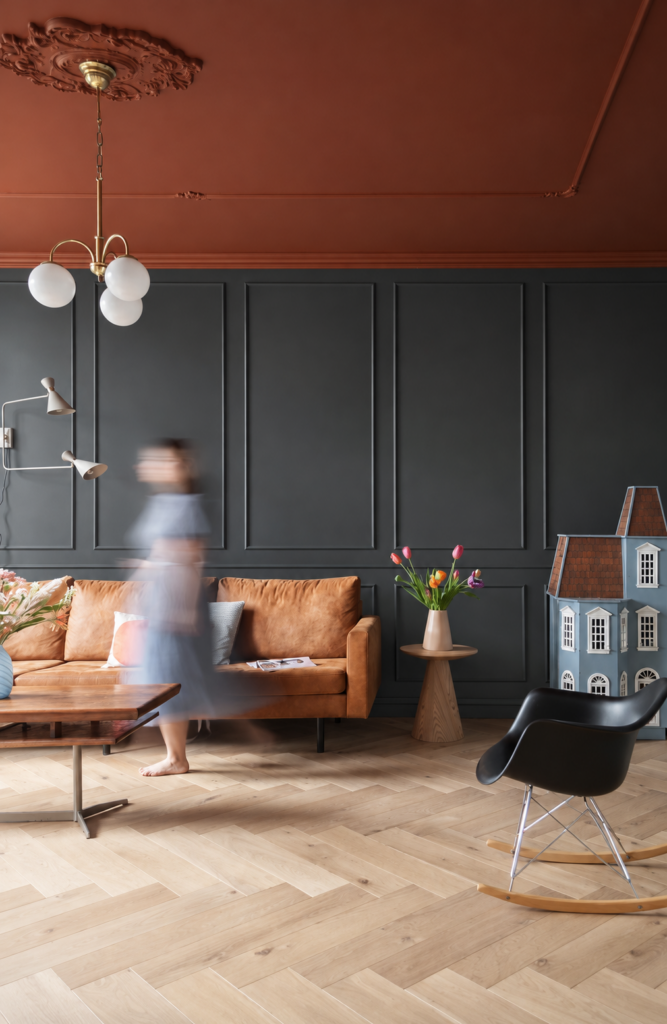
Italian design carries a centuries-old cultural heritage that makes it instantly recognizable and associated with quality, creativity and history. That heritage is rooted in two deep sources: the Renaissance and Arte Povera.
From Renaissance workshops to Made in Italy design
Italian identity benefits from what might be called the “Renaissance Effect.” It was during that historical period that the idea of things that are beautiful and well made took hold. The past has left Italy an artistic heritage so widespread that the country is an open-air museum, ready to inspire the present.
The Renaissance Effect represents the continuity between the craftsmanship of the old artisan workshops and contemporary Made in Italy. Today, Made in Italy design carries forward the same lesson: you do not just create an object, you communicate an idea, a vision, a way of inhabiting the world.
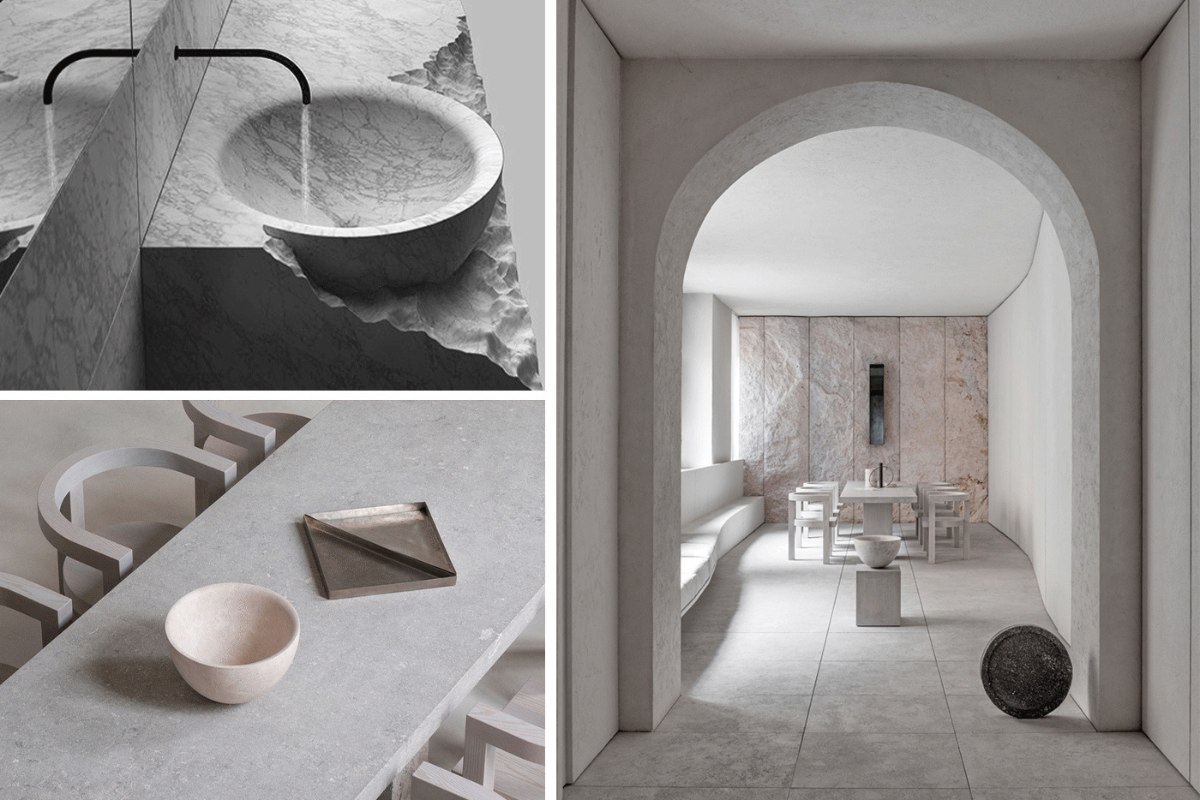
One example is Henry Timi, who has developed the concept of Art-Interior: a space in which furniture, architecture and the artisan’s gesture become one. Materials are pure, forms are reduced, almost subtracted. His approach grows out of a need to escape contemporary clutter and aesthetic overload and return to an essential quality that conveys balance.
Arte Povera: when waste becomes design
The other root of contemporary Italian design is Arte Povera, the Italian art movement that redefined the value of materials by focusing attention on what is simple, everyday and essential. Made in Italy still carries on this practice today, begun in the 1960s by artists such as Michelangelo Pistoletto.
The movement left Italy with an important awareness: even the humblest material can, through creativity, become a meaningful work. This is not recovery for its own sake, but the ability to bring out the memory and potential of materials.
Today this attitude also translates into a precise production choice: treating waste not as residue to be discarded but as a resource to be transformed. It is a mindset shared by many players in Italian sustainable design.
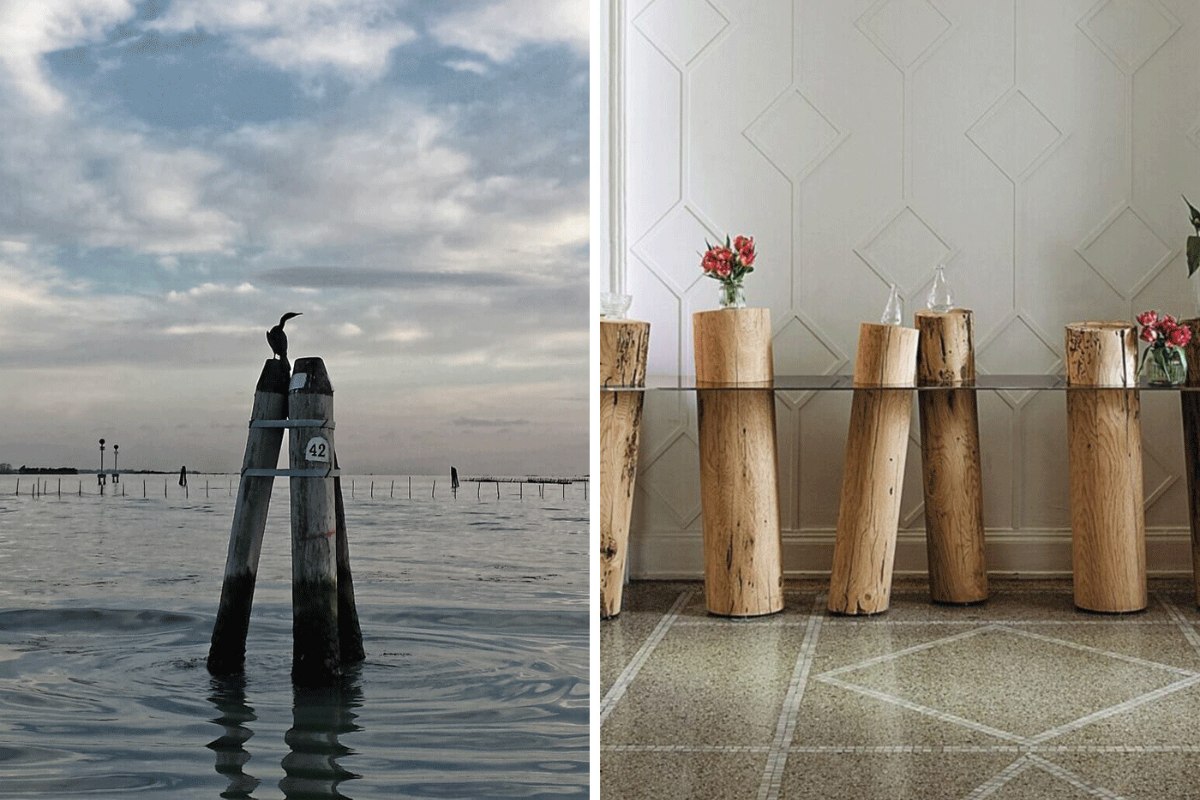
Companies such as Riva1920 put this approach into concrete practice. With the Rewood Collection, they use reclaimed wood to make furniture, reducing waste and broadening accessibility. The company has also created a collection made from salvaged Venetian briccole, the wooden mooring poles of the Venetian lagoon, turning a material steeped in memory into a distinctive, recognizable design language.
This logic of reuse applies not only to materials but also to furniture. Studios such as Draga & Aurel work with second-hand pieces sourced from flea markets and thrift shops and reinterpreted through a careful, cultured process. Each piece is studied in detail and transformed with screen printing, embroidery, painting and resin pours.
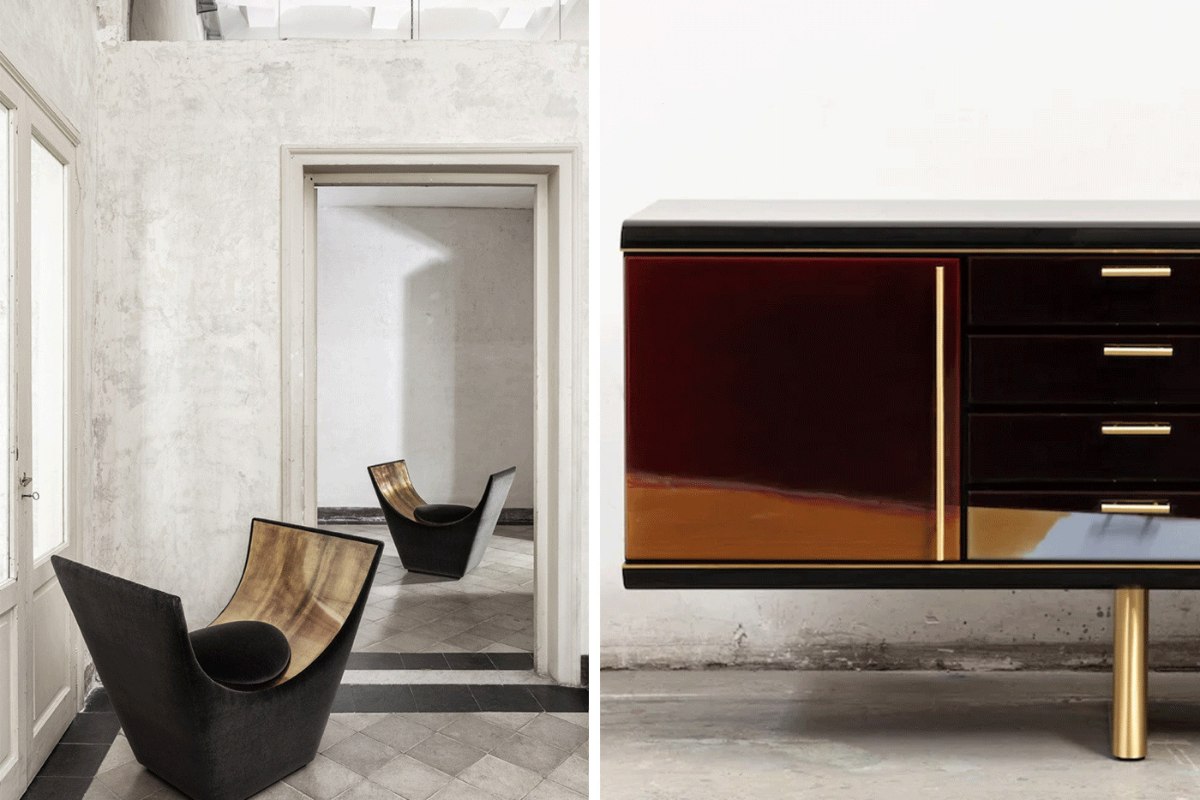
In their Heritage collection, this approach translates into entirely handcrafted work. Each piece is printed, painted and restored by hand in the studio’s atelier in Como, with no standardization. The project thus does more than add aesthetic value: it builds a new identity.
Memory, reuse and design at Milan Design Week 2026
At Design Week 2026 in Milan, the art of reuse shows up in targeted initiatives that turn memory into design. One example is Visionnaire, which this year revived its historical archive by bringing back into the collection the iconic 1970s armchairs of its parent company, IPE, showing how the past can become a current resource again.
Meanwhile, Salone Raritas introduces a new exhibition route that brings together high-end creative craftsmanship with one-off pieces, limited editions and antiques, connecting handmade research with the contemporary market.
The exhibition design reflects the same sensibility: the layout by Formafantasma favors neutral materials, earthy textured colors and reusable solutions, creating an essential, coherent and sustainable space.
Italian design rediscovers nature as a form of wellbeing
Made in Italy is also valued worldwide for a quality that is often invisible but precious: the use of living, healthy materials that genuinely improve quality of life.
A telling example is Made a Mano, the Sicilian atelier that has turned lava stone from Mount Etna into a contemporary design material. The volcanic rock is worked using the age-old ceramic techniques of Caltagirone, creating a striking contrast between the strength of the material and the delicacy of the hand-painted decoration. Their work shows how design can build a deep connection with place and with nature.
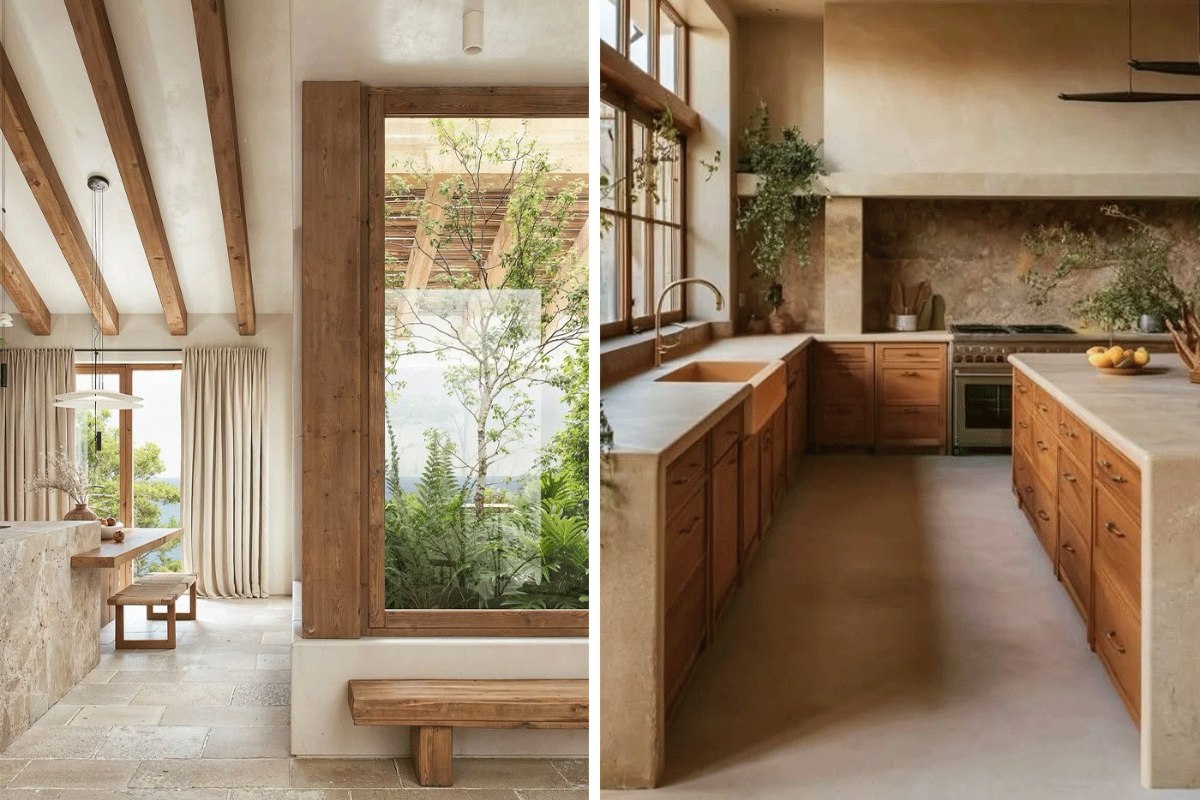
Experts call it biophilia, but for Italians it is almost second nature: bringing nature into the home is a simple gesture that contributes to physical and psychological wellbeing.
This sensibility could be found this year across the halls of EuroCucina, the kitchen exhibition held at the Salone del Mobile.Milano, at a significant moment for Italian food culture, a candidate for UNESCO World Heritage status. The kitchen is no longer just a functional room; it is confirmed as the heart of shared traditions. Designing this space today means giving form to a lifestyle: a balance in which natural materials, healthy surfaces and attention to the quality of ingredients become the ideal setting for safeguarding what we hold most dear.
Imperfection as a signature: why Italian design stays alive
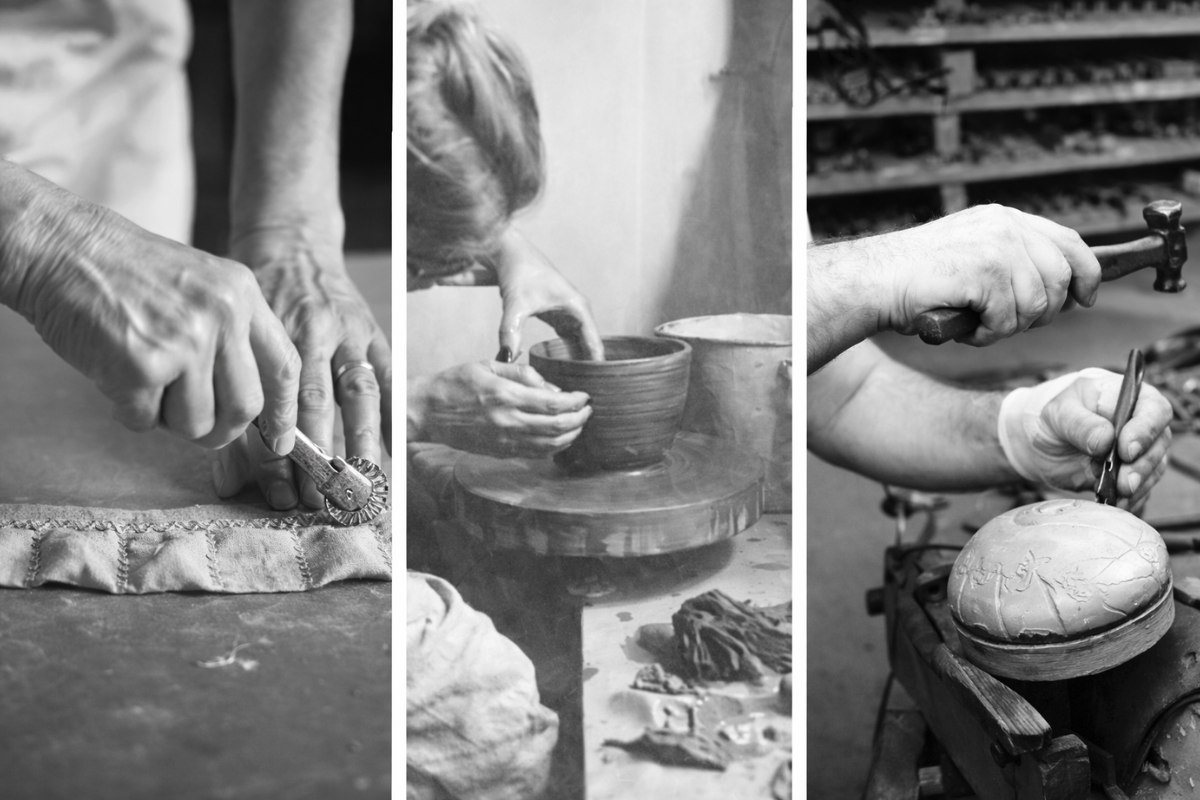
In a world increasingly dominated by standardization, what truly sets Italian design apart is its ability to remain human. Not perfect, not entirely replicable, but alive.
It is this sensibility that still makes Made in Italy design an international benchmark, able to speak to different cultures without losing its uniqueness.
If the Renaissance taught us the balance between form and function, and Arte Povera showed us the hidden potential of materials, today Made in Italy proves that a project is never truly finished: it is an ongoing process between tradition and innovation, between memory and experimentation, between material culture and contemporary vision.
This piece was selected as one of the 5 winners of the “Be the Project” contest, promoted by Archi&Interiors together with Hdemy Group, NAD – Nuova Accademia del Design and Accademia Cappiello.