Foster, Barazza, Elleci, CM, Apell and Smeg: six Italian kitchen sink brands with advice on materials, bowl sizes, worktop compatibility and buying.
The size of a roasting tray, the way vegetables are washed and the space needed to set down a saucepan all influence the choice of a kitchen sink. An attractive bowl that is too small, a tap that splashes over the edge or a waste fitting that consumes the whole cabinet can make a carefully designed kitchen frustrating to use.
Our shortlist of Italian kitchen sink brands brings together Foster, Barazza, Elleci, CM, Apell and Smeg. Their documented ranges offer different approaches to stainless steel, composites, decorative finishes and the organisation of the washing area. This is an editorial selection rather than a ranking based on comparative testing. Product names, available configurations and local support can differ between markets.
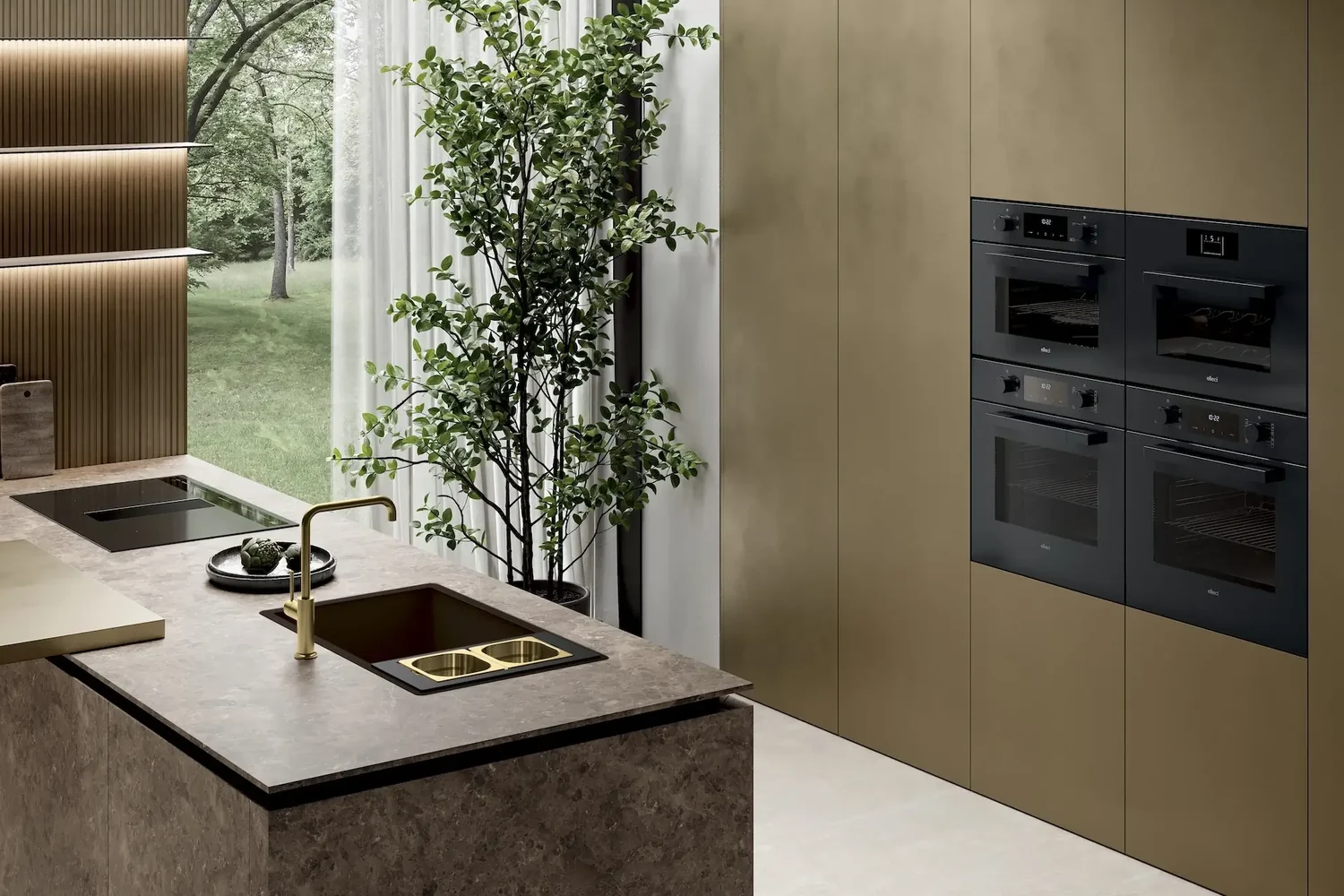
Italian kitchen sink brands at a glance
| Brand | Worth exploring for | What to compare |
|---|---|---|
| Foster | Stainless steel and PVD finishes | Collection, mounting edge and included fittings |
| Barazza | Coordinated and bespoke work areas | Integration with worktop and accessories |
| Elleci | Keratek and Granitek composites | Material, colour and maintenance |
| CM | Stainless steel and Granitgem | The specific range and intended application |
| Apell | Inset and undermount sinks | Installation and worktop compatibility |
| Smeg | Steel, composite and coordinated finishes | Exact product code, dimensions and finish |
Foster: exploring stainless steel through edges and finishes
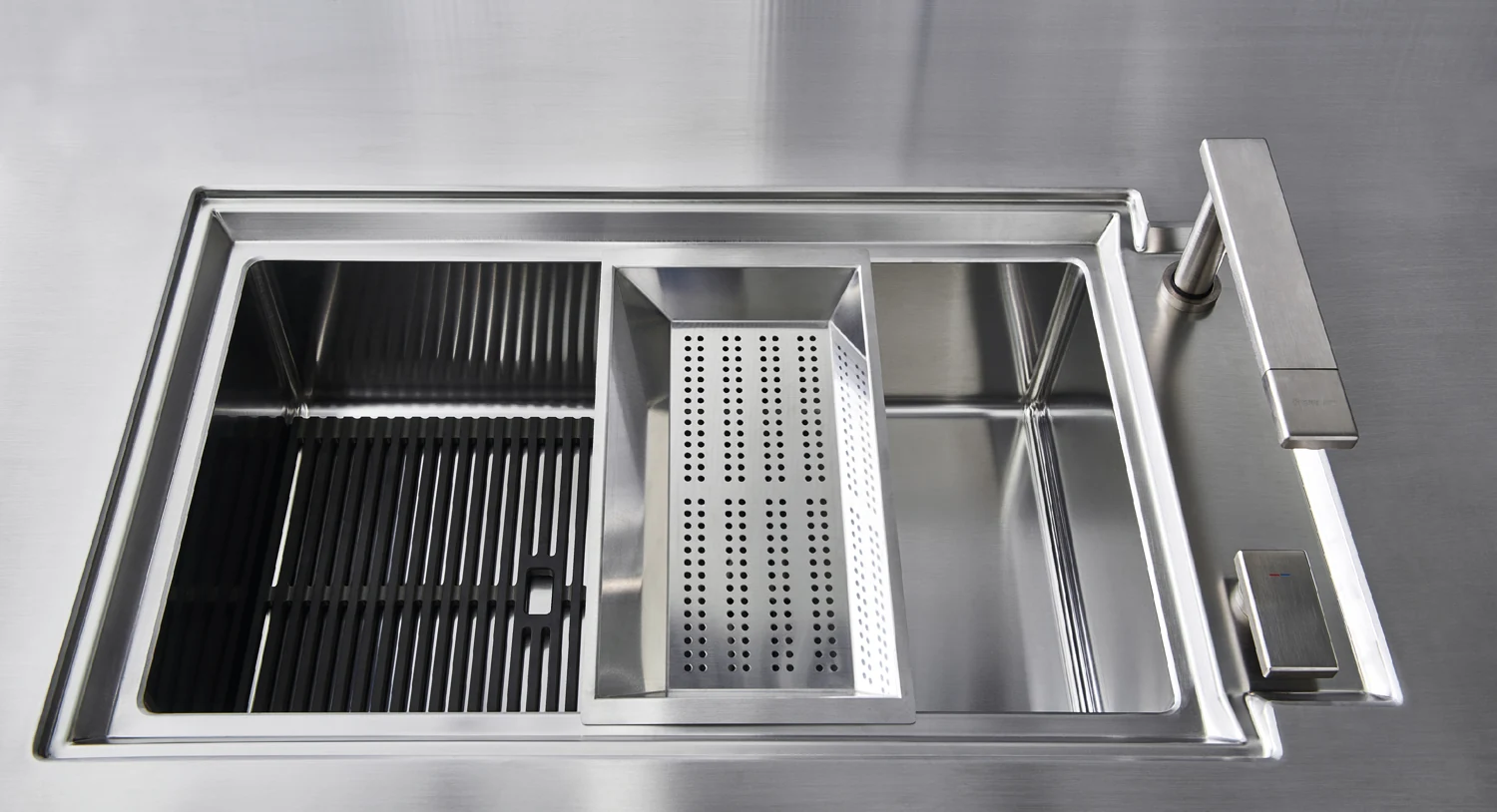
Foster’s collections include Skin, Outline, Happy Hour and Milanello Workstation. Geometry, surface treatment and detailing give stainless steel different identities; selected bowls also offer PVD metallic finishes.
The Skin 400 specification, for example, distinguishes overall dimensions, bowl size and required cabinet width. That distinction is useful for any purchase: a collection name does not reveal whether a large tray will fit. Waste fittings and accessories also need to match the exact version, particularly where the sink incorporates its own drainage detailing.
Barazza: designing a complete washing area
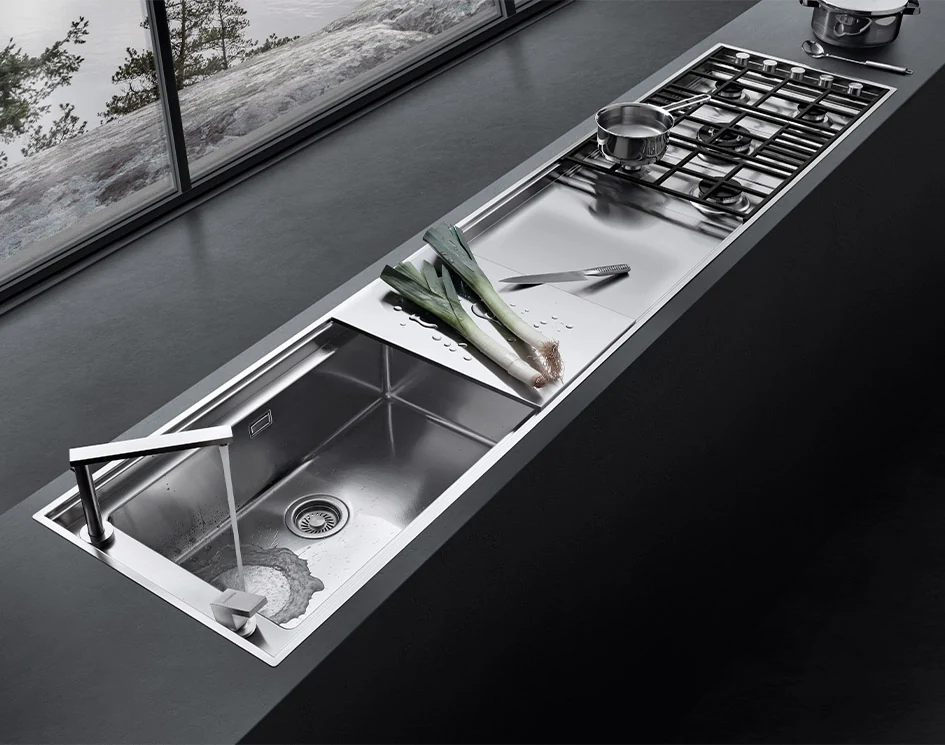
Barazza combines stainless-steel sinks with B_Granite options, equipped channels and customised solutions. Fusion and Fuoriserie bring the washing area into the design of the worktop alongside other kitchen functions.
This approach is worth exploring when a project seeks continuity between bowl, work surface and accessories. Visual integration requires early coordination with the cabinet and worktop suppliers. Cut-outs, joints, levels and manufacturing lead times become part of the product decision.
Elleci: colour and composite materials
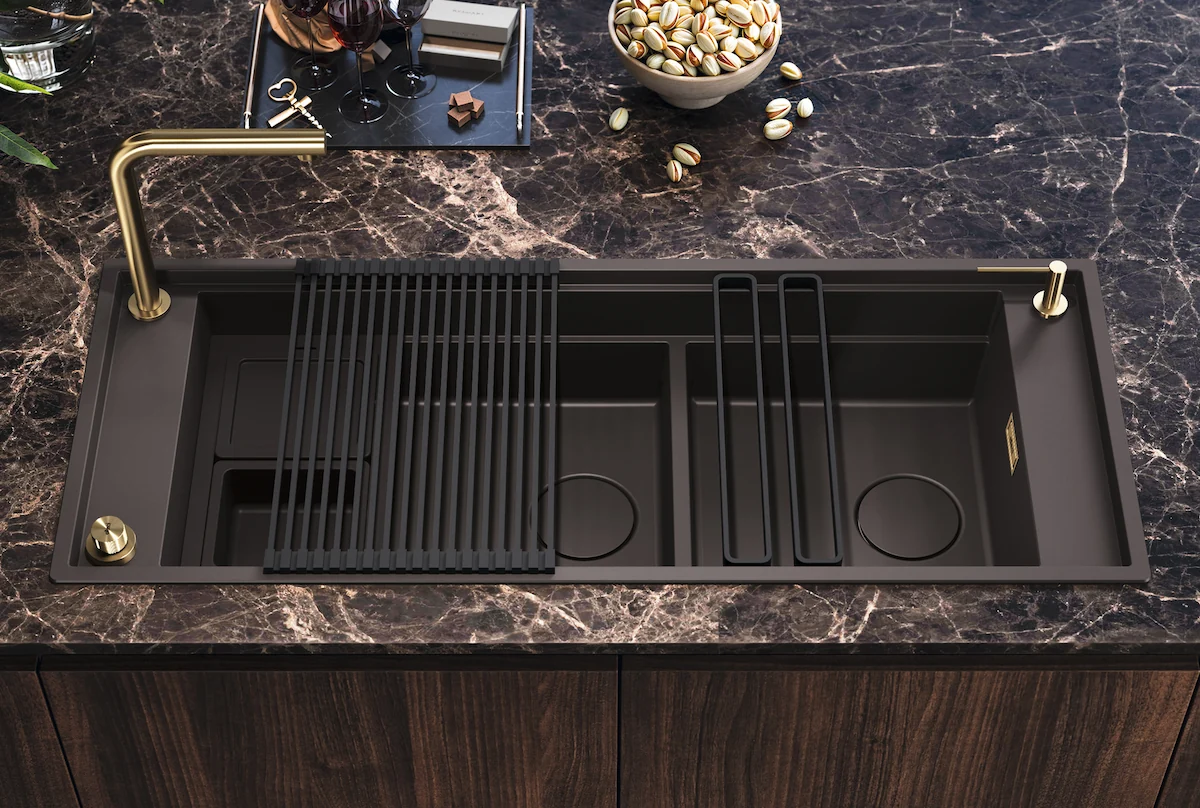
Elleci develops sinks in Keratek and Granitek, materials with different surface identities and finishes. Colour can help the washing area blend with the worktop or establish a deliberate contrast.
It does not remove the need for maintenance. The manufacturer’s guidance includes cleaning, rinsing and drying to reduce limescale deposits. In a hard-water area, the choice between a light and dark bowl deserves consideration in everyday conditions as well as under showroom lighting.
CM: distinguish between the material families
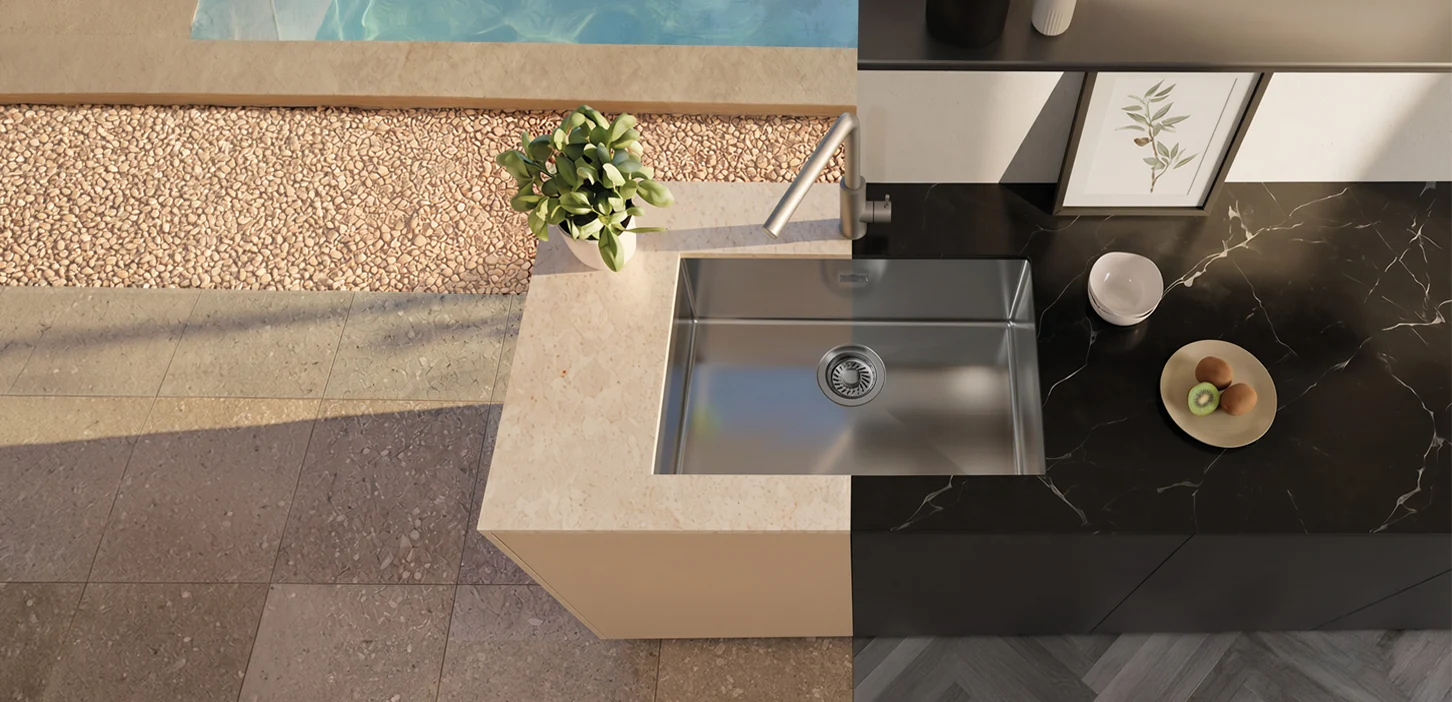
CM presents stainless-steel ranges alongside Granitgem products. Its documented examples include Qubica in grade 316 stainless steel and Eclisse in stainless steel, with other collections offering different shapes and layouts.
The range invites a model-specific comparison. Steel grade, surface finish and care instructions tell the buyer more than a general judgement about the brand. An outdoor installation also requires explicit suitability for the chosen product and exposure; a material name alone is not enough.
Apell: begin with the mounting method
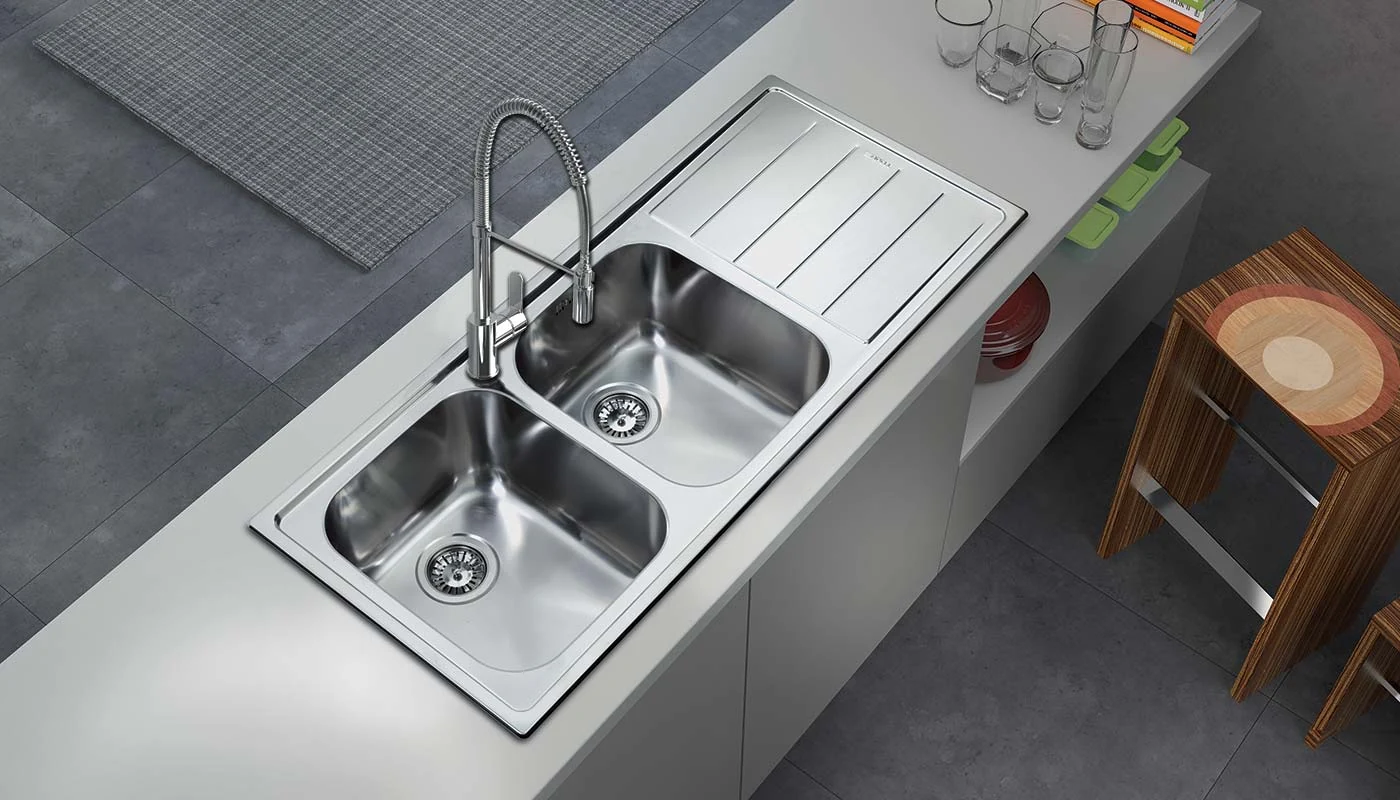
Apell separates inset and undermount sinks within its offering, alongside taps and accessories. This helps clarify a decision that belongs before the worktop is cut.
An undermount bowl exposes the edge of the worktop and allows crumbs to be swept towards the sink. It also needs a suitable worktop material, correct edge treatment and proper support. An inset model cannot simply be fitted underneath because its dimensions look similar.
Smeg: coordinating the sink with the kitchen
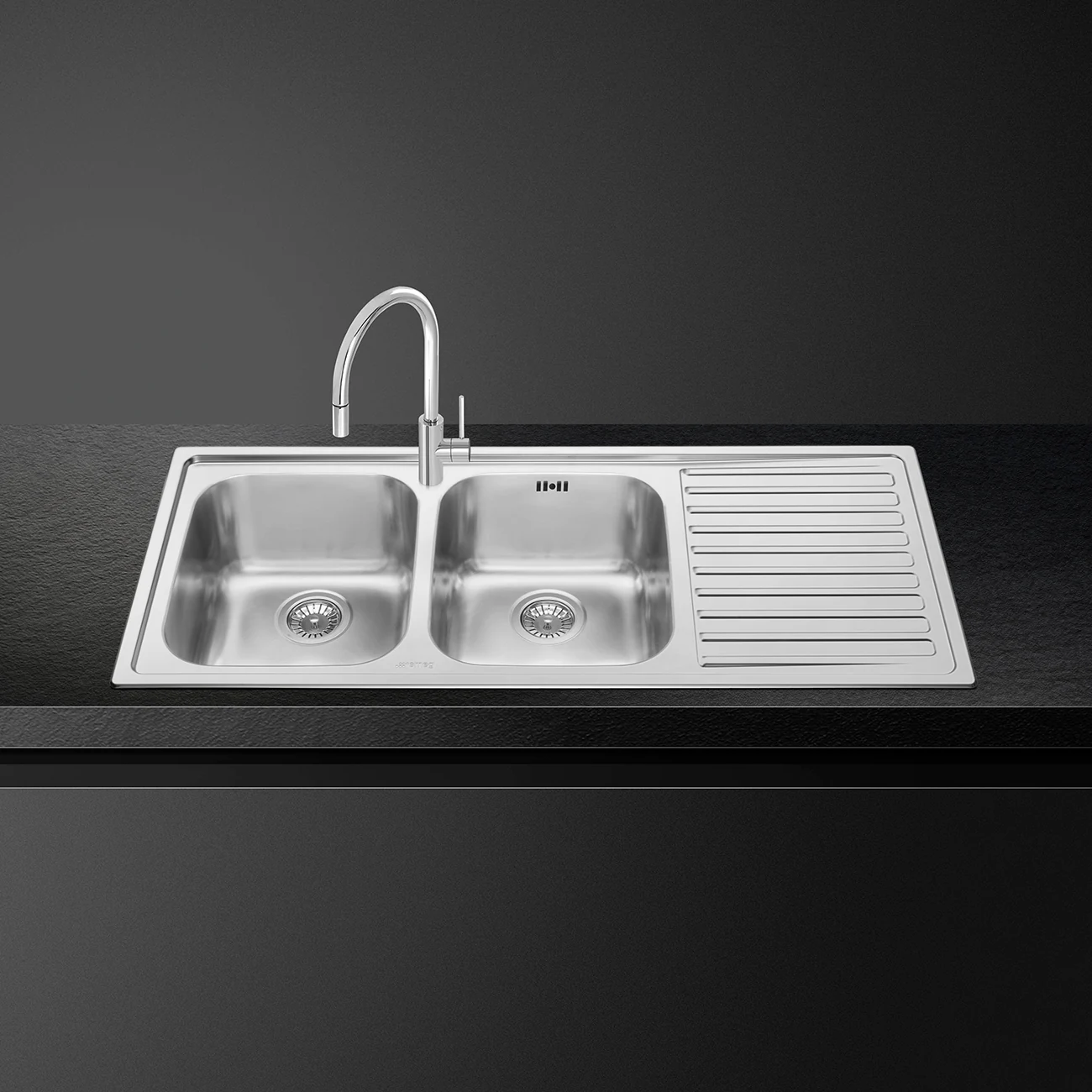
Smeg offers stainless-steel, composite and PVD-finished steel sinks with several installation methods. Decorative finishes provide opportunities to coordinate the washing area with other kitchen appliances.
The precise product code matters. Similar references can describe a different size, finish or mounting method. A decorative PVD bowl is not a reliable price reference for an otherwise similar sink in a conventional stainless-steel finish.
Stainless steel or composite?
Stainless steel works with many surfaces and develops visible signs of use. Composite materials offer different colours and textures, but formulations vary between products. Neither category should be treated as immune to scratches, impact, heat or unsuitable cleaning chemicals.
A sample and the model’s care instructions provide a more practical comparison than broad material claims. Corner radii also affect everyday use: very square forms can look precise, while softer internal corners may be easier to reach during cleaning.
One large bowl or two?
A generous single bowl accommodates cookware without a central divider. Two bowls can separate tasks, but take up space and do not guarantee a sufficiently large main bowl. An integrated drainer, removable accessory and clear section of worktop provide different ways to manage wet items.
The design also extends below the surface: waste fittings, recycling bins, dishwasher connections and tap position need room. A tall spout and shallow bowl may be less comfortable in use than they appear in a photograph.
How much does a kitchen sink cost?
As a concrete Italian-market example, Smeg’s Italian shop listed the VSTR50CUX undermount sink with a copper-coloured PVD finish at €739. This relates to one product and market, rather than an average for Smeg or for the brands in this selection. Availability and prices can change; taxes and delivery terms should be established in the final offer.
A complete washing-area budget also includes the tap, accessories, worktop fabrication, installation and plumbing connections. Waste, overflow and trap fittings may be included or need to be configured. Bespoke worktops require their own quotation. International buyers should obtain local prices and service terms rather than converting an Italian retail figure into a universal budget.
Where to buy and when to finalise dimensions
Kitchen retailers, specialist showrooms and authorised online sellers can suit different purchasing situations. For a new kitchen, a clearly identified coordinator can manage the relationship between cabinet, worktop and installation.
The final technical drawing needs to establish mounting method, cut-out dimensions and minimum cabinet width before fabrication. Our guide to Italian kitchen brands considers the wider project. The right sink is ultimately the one whose layout and fittings support the way the kitchen will be used every day.