Every furniture decision starts with measurements, and the sofa is no exception. Before you fall for a model you have seen online or in a showroom, you need to know exactly how much space you have in your living room. The basic rule of how to choose a sofa is that it should never be …
Every furniture decision starts with measurements, and the sofa is no exception. Before you fall for a model you have seen online or in a showroom, you need to know exactly how much space you have in your living room. The basic rule of how to choose a sofa is that it should never be longer than two-thirds of the wall it sits against. A sofa that is too big for the room will visually overwhelm it, while one that is too small can look lost and impractical.
First Things First: Measure Your Space
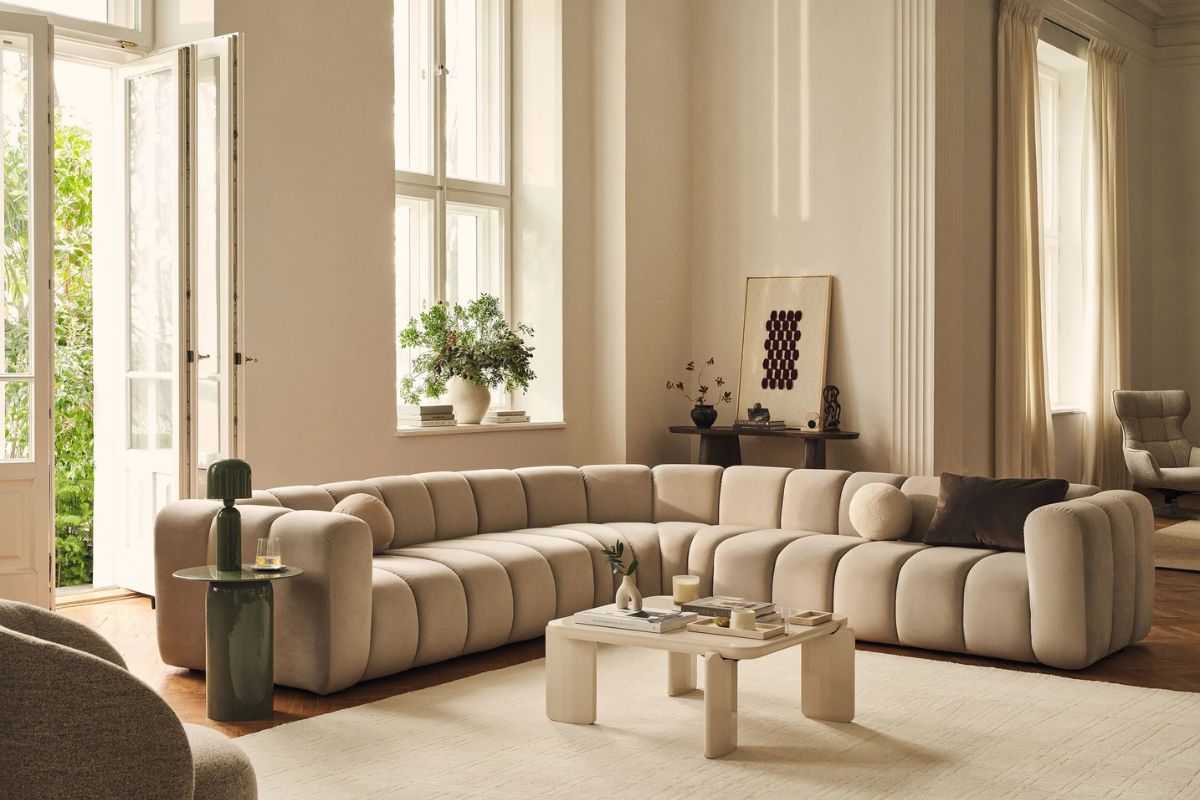
It is just as important to allow for circulation space: you need at least 80–90 cm of clear space in front of the sofa to move around comfortably and walk past without obstacles. If the room is small, consider a loveseat or a compact sofa with a shallower depth rather than insisting on larger configurations that would keep you from using the space naturally. Measure twice, decide once.
The Main Types of Sofa
Two-Seater and Three-Seater Sofas
A two-seater sofa, between 140 and 180 cm wide, is perfect for studio apartments, home offices or compact living rooms where you need to make the most of the space without giving up a comfortable seat. A three-seater sofa, between 180 and 220 cm wide, is the classic choice for a medium-sized living room and offers enough room to seat three people comfortably or to stretch out while watching TV.
Sectional Sofas
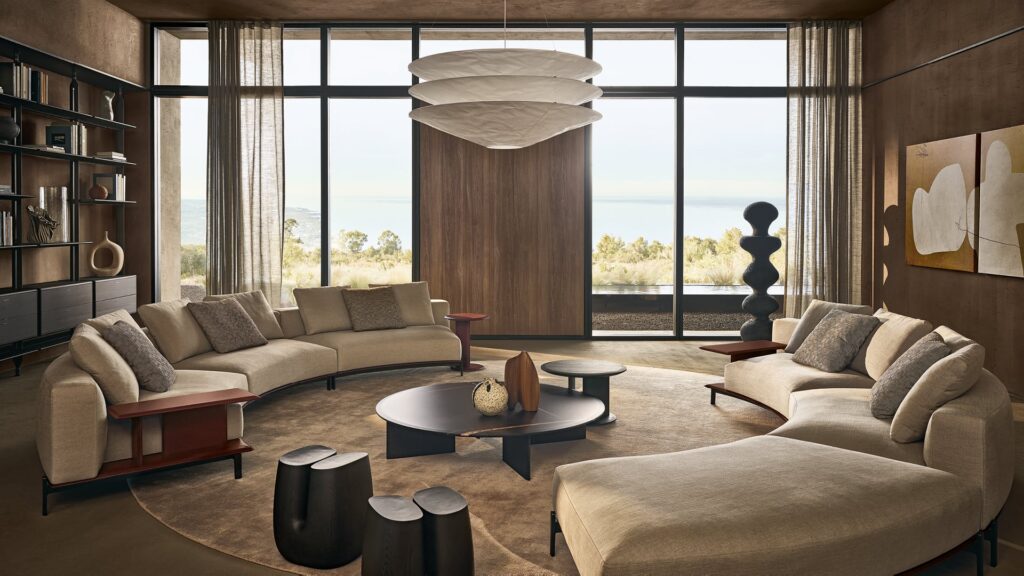
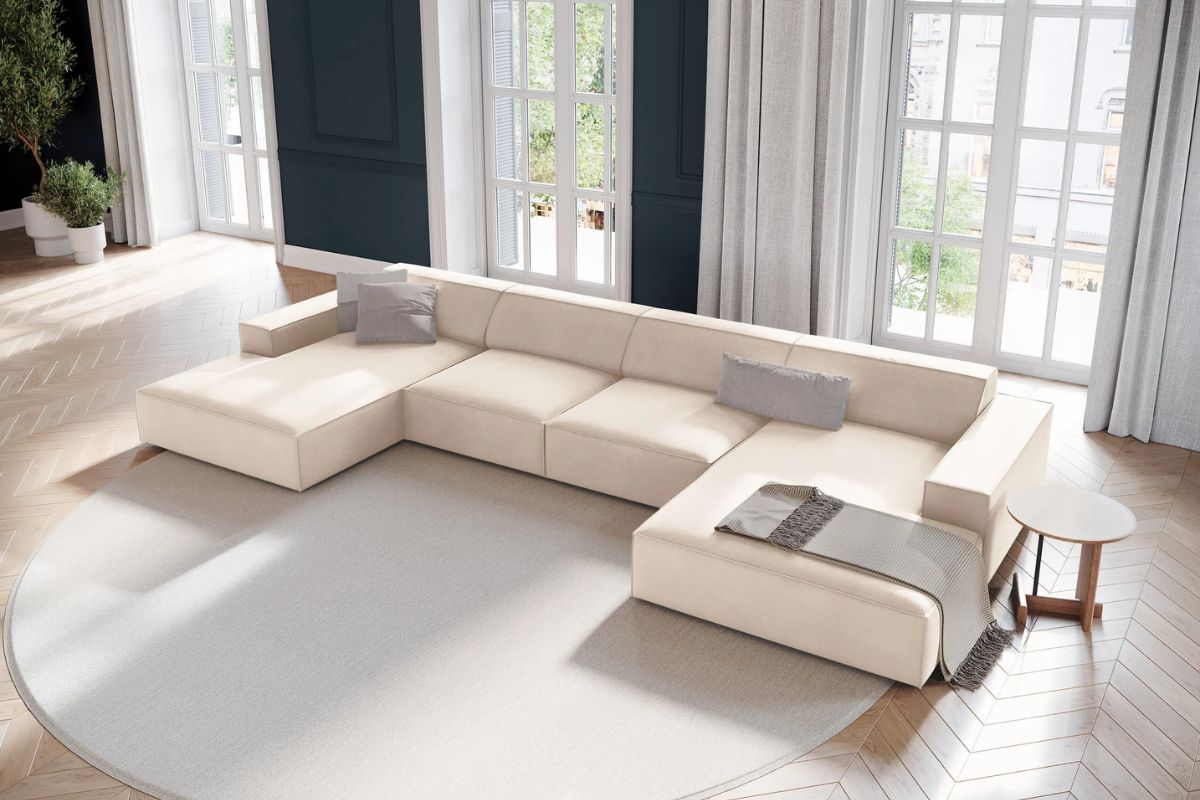
A sectional sofa, available in L-shaped or U-shaped versions, makes use of the corners of the room and creates a cozy conversation area, ideal for larger rooms or open-plan spaces. The L-shaped configuration, also known as a sofa with chaise, is especially popular because it combines generous seating with an extended side for lounging. When choosing a sectional, you need to decide whether to place the chaise on the right or the left based on the room layout and the main entrance.
Modular Sofas
A modular sofa is made up of separate pieces that can be arranged freely. This solution offers maximum flexibility: you can create different configurations depending on your needs, add or remove modules over time, and adapt the sofa to a new room after a move. In Italy, the terms componibile and modulare are used interchangeably, but the concept is the same: the freedom to customize.
Sofa Beds
A sofa bed makes sense mainly for people who live in small spaces or often have overnight guests. It turns the living room into a bedroom when needed, but you should be aware of the trade-off: everyday seating will never be quite the same as on a fixed sofa, and the built-in mattress will never match a real bed. It is best to choose one only if you really need it, opting for models with mattresses at least 12–14 cm thick to ensure a minimum of comfort at night.
How to Choose Sofa Upholstery
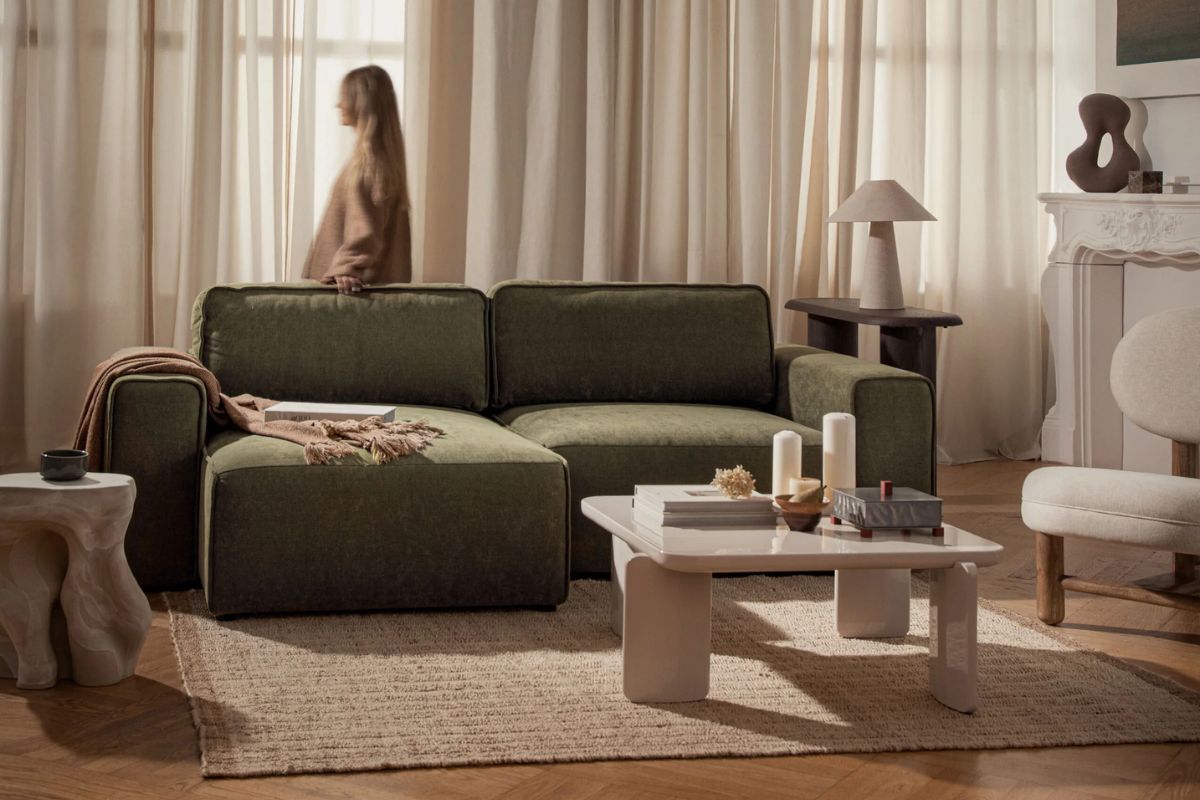
Upholstery is not only a matter of looks, but also of everyday practicality. The most popular fabrics include bouclé, soft and on-trend but in need of care; velvet, elegant but prone to scratches and stains; and blended fabrics or fabrics treated with a stain-resistant finish, which are more durable and suited to homes with children or pets. Leather and faux leather are long-lasting, easy-to-clean alternatives, but they can feel cold in winter and hot in summer, and over time they tend to show wear in the most-used areas.
A key factor is whether the upholstery is removable. Sofas with removable covers let you wash them in the washing machine, a huge advantage if you use your sofa heavily or have pets. Renters who move often may also appreciate being able to keep their sofa looking fresh even after years. Fixed upholstery, by contrast, requires periodic professional cleaning, with higher costs and more hassle.
Frame and Comfort: What to Look for Beyond Appearance

A sofa may look beautiful in photos, but its quality is judged by what is inside. The frame should be made of solid wood or good-quality plywood: cheap materials such as particleboard or thin plywood quickly warp under weight. The suspension system matters too: sinuous (zigzag) springs or interwoven elastic webbing provide lasting support, while entry-level sofas often use more basic solutions that give way within a couple of years. Foam density does the rest: below 25–30 kg/m³, the seat soon turns saggy.
When you try out a sofa in a store, sitting for thirty seconds is not enough. Stay on it for at least ten minutes, change position, lean back, check whether your feet rest on the floor without effort and whether your arms fall naturally onto the backrest or armrests. Very cheap sofas lose their shape quickly precisely because they cut corners on the frame, springs and padding: spending a little more pays off in years of comfortable, sag-free use.
Style and Décor: Finding a Sofa That Fits In
The style of the sofa should work with the rest of the room. In a Scandinavian interior, clean lines, slim light-wood legs and neutral fabrics such as gray, beige or powder blue work well. In a contemporary space, you can be bolder with geometric shapes, strong colors or velvet finishes. Classic Italian interiors suit sofas with rounded arms, generous seats and upholstery in fine fabrics or leather. If you often change your mind about style, choose a modular sofa: it lets you reconfigure your layout without buying everything again from scratch.
If you can’t decide on a color, go for neutral shades such as mid-gray, beige or ivory: they are easy to match and let you add personality with cushions, throws and accessories that you can change over time without spending much. Strong colors or bold patterns risk becoming tiresome or limiting your future choices of curtains, rugs and artwork.
Budget: How Much to Spend on a Good Sofa
The Italian market offers sofas for every budget, but price differences almost always reflect differences in quality. Under 500 euros you will find fast-furniture sofas: lightweight materials, quick assembly and a lifespan limited to a few years. They are suitable for temporary rentals or for people who know they will be moving soon. Between 600 and 1,500 euros is the mid-range, which offers the best value for money: solid frames, decent fabrics and acceptable comfort for everyday use. In the mid-range there are interesting options from brands such as Micadoni Home, which offers a selection of modular and sectional sofas with removable covers.
Above 1,500 euros you enter the premium and artisanal segment, where Italian craftsmanship, top-quality materials and design details count. Here you can feel and see the quality, but you need a budget to match. For most households, investing in the mid-range strikes a sensible balance between upfront cost and longevity, avoiding both the bargain buy you regret straight away and overspending when you have no special requirements.
To move from criteria to specific models, our guide to Italian sofa brands and their collections gathers references verified against official catalogs. The comparison helps you prepare your choice and your visit to the showroom.
Checklist Before You Buy a Sofa
- Room measurements confirmed: wall width, available depth, minimum circulation space
- Type chosen for how you’ll actually use it: two-seater, three-seater, sectional, modular or sofa bed
- Upholstery suited to your lifestyle: removable covers if you have pets or children, durable fabric for heavy use
- Frame checked: solid wood or plywood, sinuous springs or elastic webbing
- Foam density checked: at least 25–30 kg/m³ for a seat that lasts
- Sit test done: at least 10 minutes in the store to test real comfort
- Budget set: mid-range of 600–1,500 euros for good value for money
- Style consistent with your existing décor: a neutral color if you’re undecided, a modular sofa if you often change your mind
Best designer sofa bed brands: an up-to-date guide