A guide to mauve, from its differences with lilac, lavender and dusty rose to three palettes for walls, furniture and textiles.
A mauve wall beside an oak floor shifts through the day. Its violet notes may show in the morning, while the pink comes forward under evening light. That balance makes mauve particularly interesting to work with indoors.
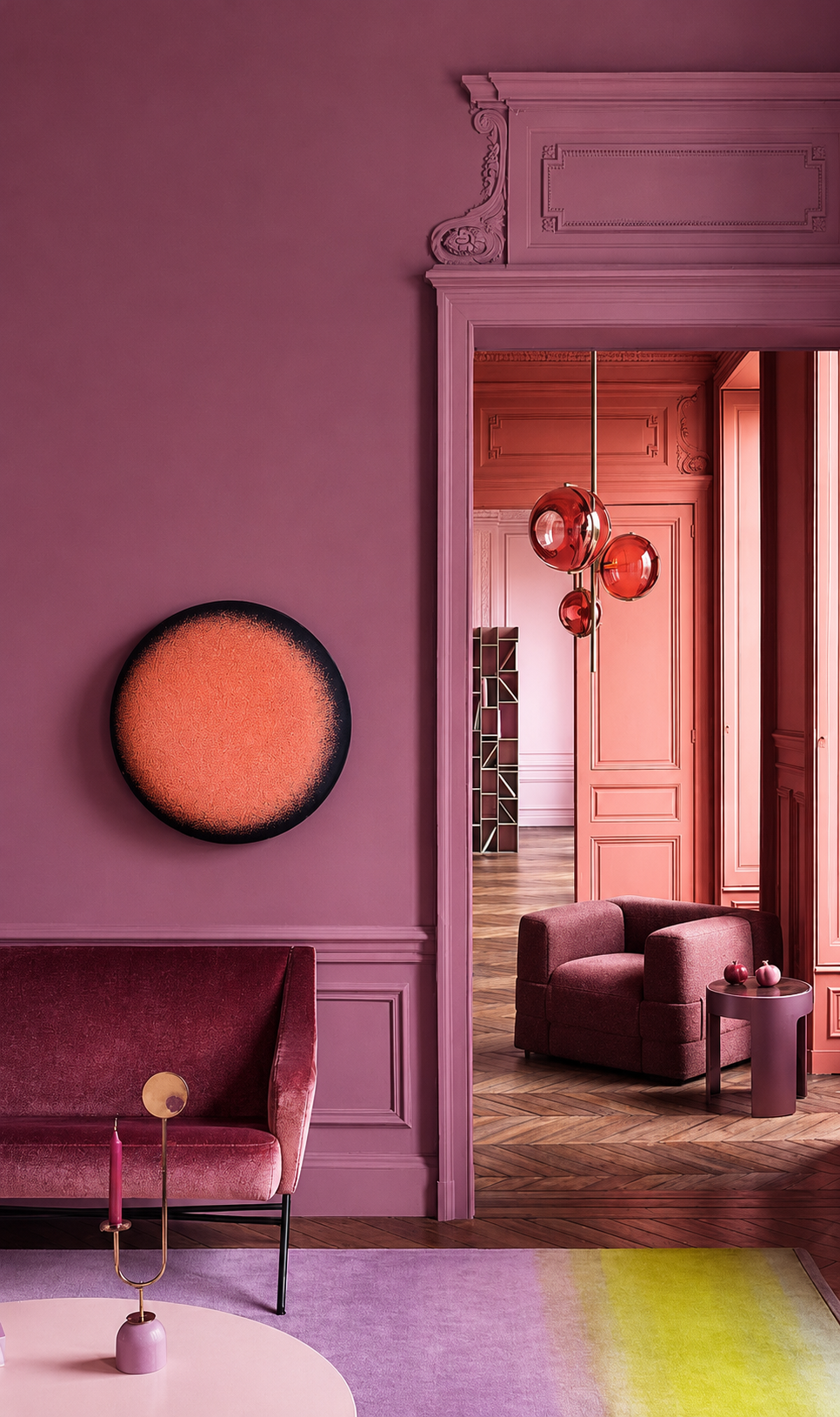
Mauve is a muted pinkish purple, often with a grey undertone. In interiors it ranges from pale, dusty shades close to lilac to deeper tones that approach plum. It pairs well with sand, ivory, olive green and anthracite grey. Sand softens the palette, while anthracite gives mauve a stronger presence. Start with what will stay in the room, from the flooring to the sofa fabric.
What colour is mauve? Mauve vs lilac, lavender and dusty rose
The name comes from the mallow flower. Paint charts use it for a range of shades with different amounts of pink, violet and grey. The four samples below make those differences easier to see. A matt surface and a glossy one can give very different impressions, even when their digital swatches look alike.
| Shade | Illustrative HEX | How it reads |
|---|---|---|
| Dusty mauve | #B395AA | Muted pinkish purple with a grey undertone. |
| Lilac | #C8ADD4 | Lighter and brighter, with a clearer violet note. |
| Lavender | #A9A4C5 | Cooler, with a more noticeable blue note. |
| Dusty rose | #BE9394 | Warmer, with a stronger pink note. |
If you already have ivory curtains or a beige rug, place the mauve sample right beside the fabric. Lilac may read cooler and brighter, while dusty rose brings out the warmer side of the scheme. Dusty mauve sits between them and can help bridge warm timber and grey stone.
What is the HEX code for mauve? Three shades to compare
This guide uses #B395AA (RGB 179, 149, 170) as a starting point. HEX codes are useful for building a digital palette. For paint or cabinetry, ask the supplier for a physical sample in the finish you intend to use.
Light mauve #D1BBCB · Dusty mauve #B395AA · Deep mauve #86677F
Try light mauve next to white doors and skirting boards, where even a faint violet note becomes more visible. Dusty mauve works well on panelling, where light grazing the wall brings out the relief. Deep mauve can give a lacquered cabinet or the back of a bookcase more depth. For an alcove that already falls into shade, look at the sample with the lamp on before settling on the tone.
What colours go with mauve? Three palettes
Mauve, sand and natural oak
Dusty mauve #B395AA · Sand #D8C8AA · Natural oak #B78E63
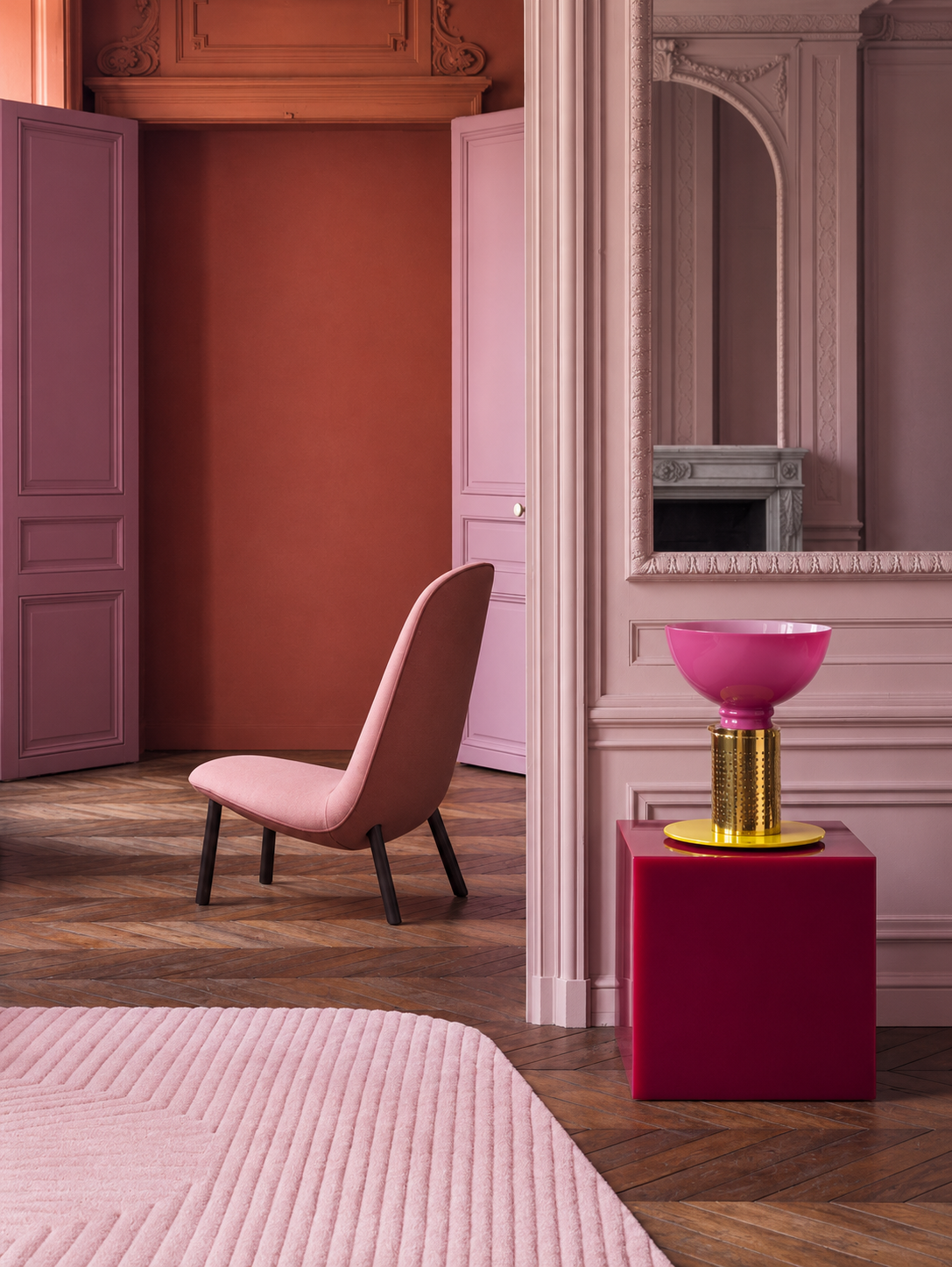
In a living room, let sand colour cover the larger surfaces and introduce mauve behind the sofa or on low wall panelling. Oak adds warmth, especially if the room already has a cool white. If the parquet has a strong golden cast, place the painted sample close to the floor. That is where you can judge whether the pink undertone becomes more pronounced than you want.
Mauve, olive green and walnut
Dusty mauve #B395AA · Olive green #737750 · Walnut #79583F
Olive green can take the form of an upholstered chair or the back of a bookcase, with mauve on the walls and walnut on a desk or sideboard. Side lighting picks out the wood grain. If the room and furnishings are already dark, try a lighter mauve on the walls and reserve olive for a single piece so the colours are still distinct in the evening.
Mauve, ivory and anthracite
Dusty mauve #B395AA · Ivory #F3EDE0 · Anthracite #383E42
Ivory lightens the composition and anthracite grey defines its edges. In a bedroom, pair a mauve wall with ivory linen and a dark lamp. In a bathroom, try ivory ceramic alongside a mirror with an anthracite frame. If the window frames are already dark, a tap or slim shelf is enough to echo the colour.
How to use mauve on walls, furniture and textiles
Mauve walls in the living room
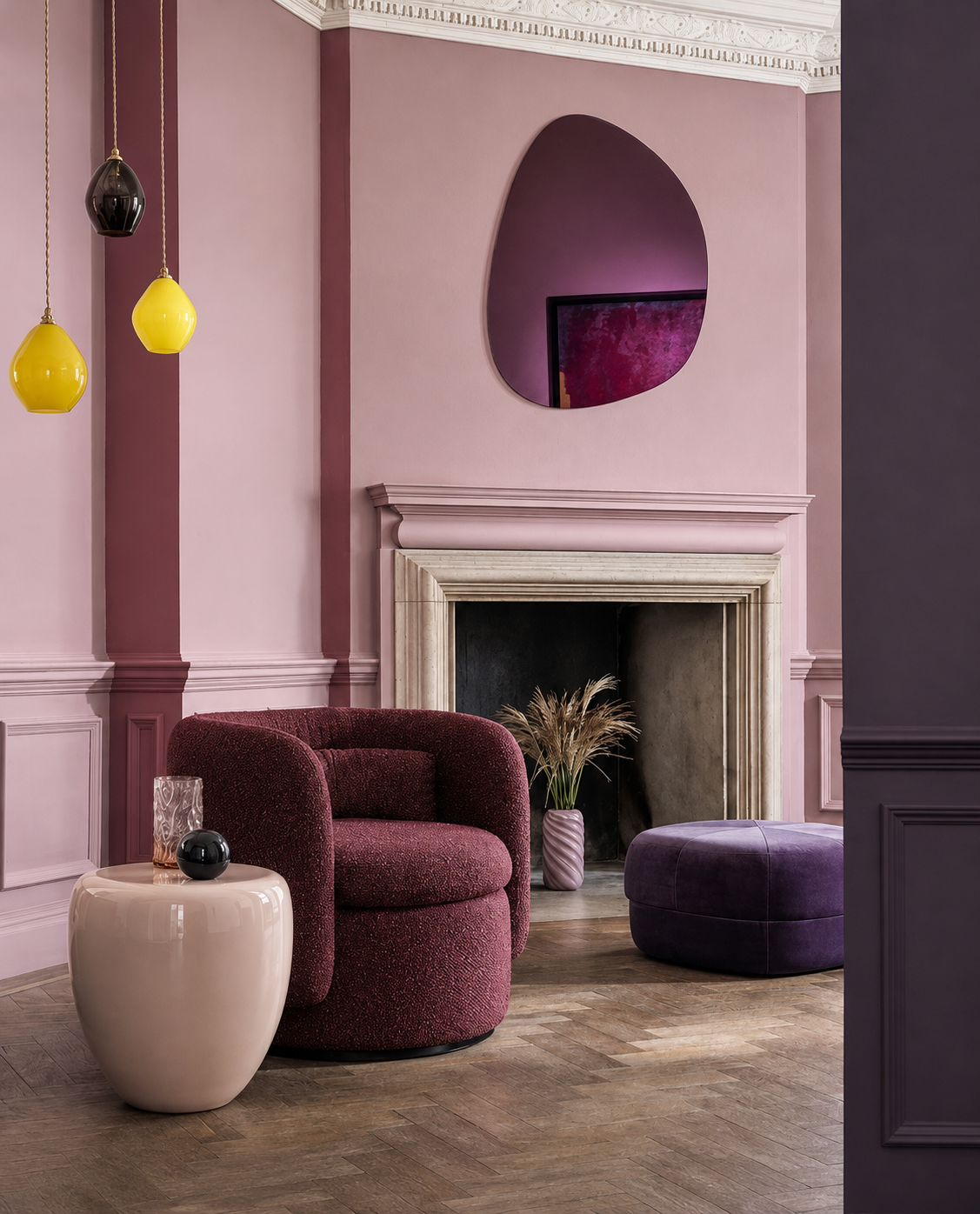
A mauve wall can define a seating area or mark the transition to a dining room. Paint two generous samples, one near the window and one where the wall gets less light. Compare them with the sofa fabric. Next to cool grey upholstery, mauve may feel less soft than it did in the showroom. An ecru curtain or a timber side table can bring warmth back into the scheme.
Mauve bedrooms, from headboards to linen
A mid-tone mauve sets off pale bedding. If the headboard is velvet, compare the fabric and paint in daylight and beneath the bedside lamps. The velvet pile catches light differently as it changes direction, making folds appear darker against painted surfaces. To introduce mauve gradually, start with a bedspread or curtains and look at the fabric draped or hanging as it will be in the room.
Mauve kitchens and bathrooms: lacquer, tiles and grout
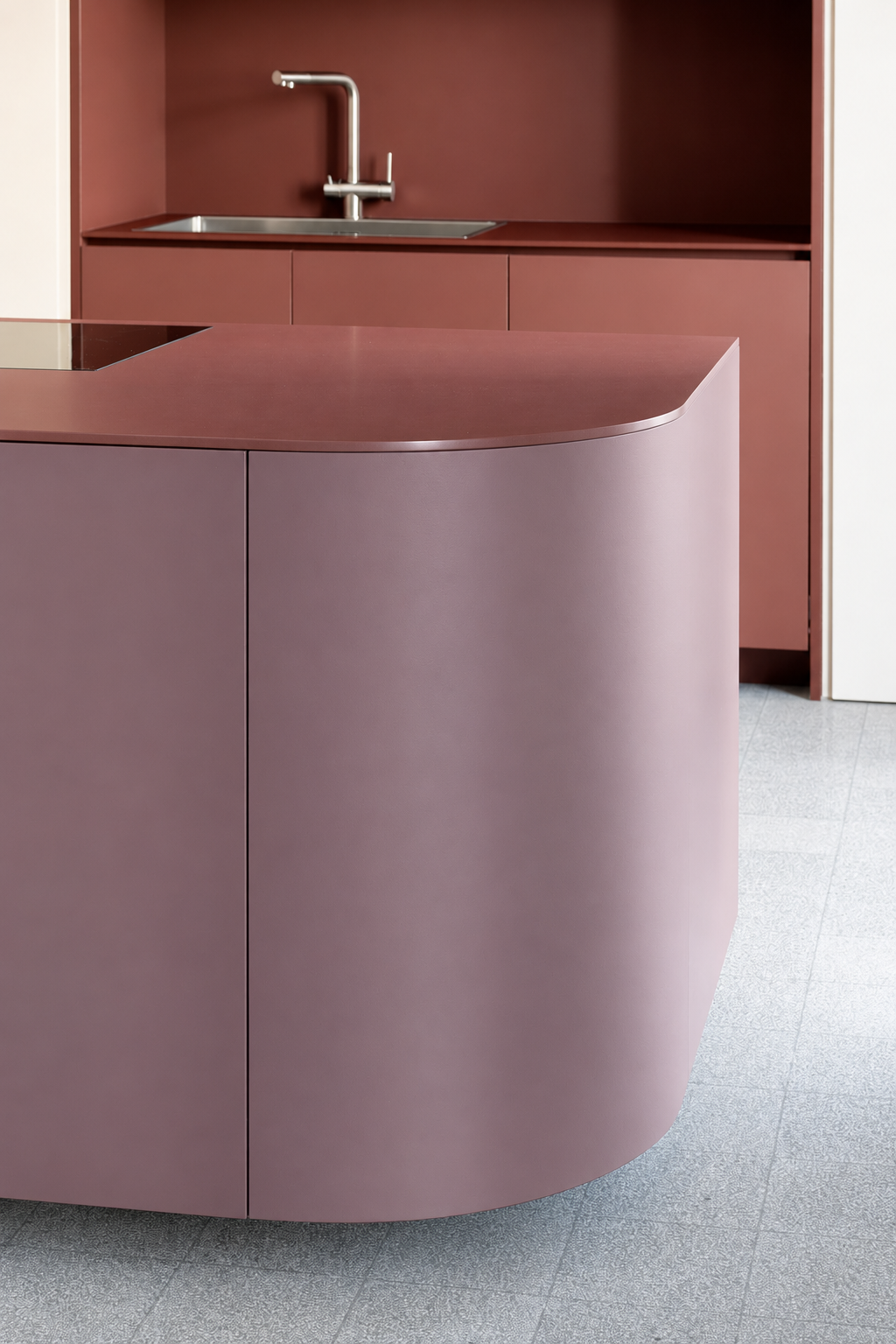
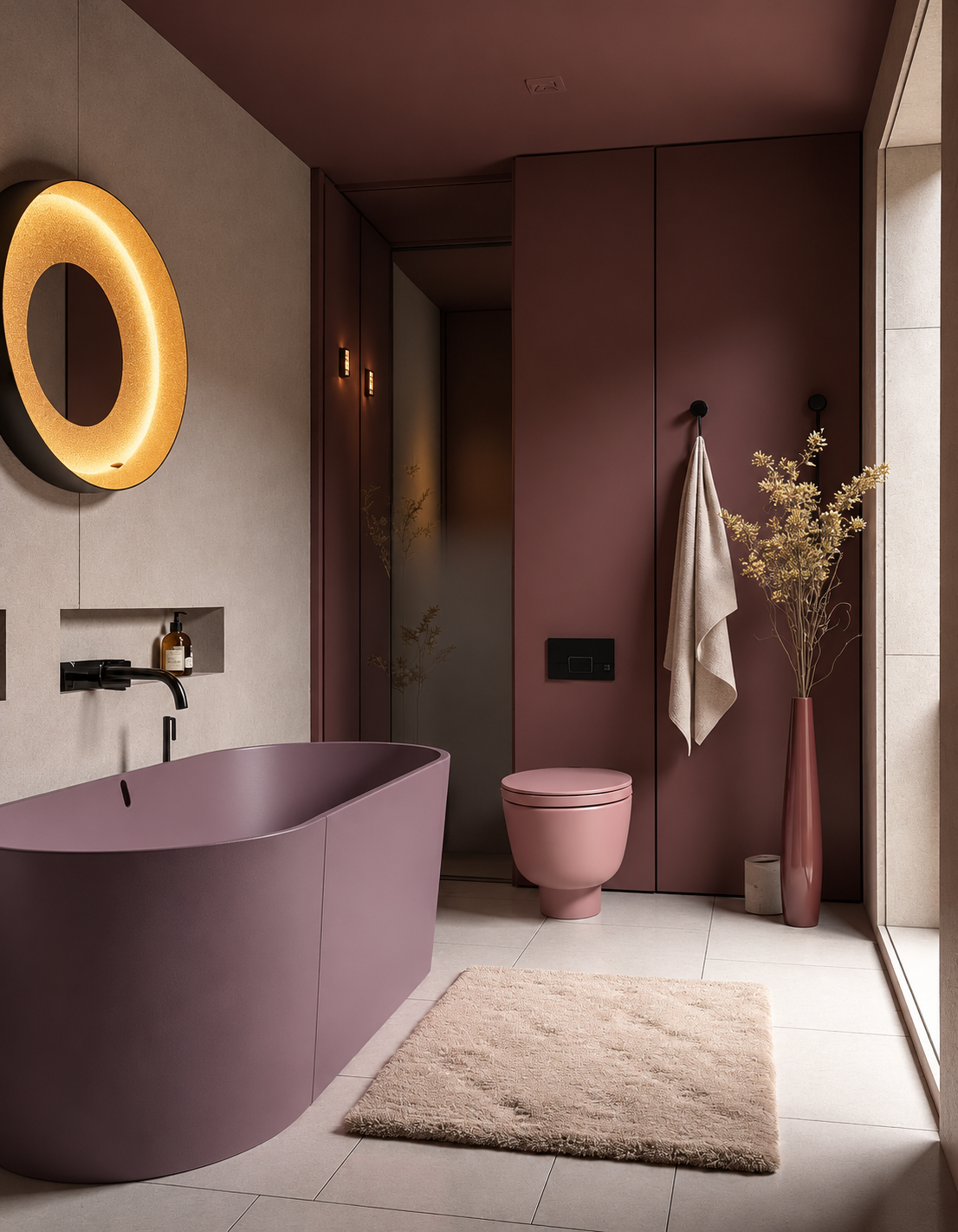
In a kitchen, mauve can be limited to the base of an island or the doors of a sideboard. Compare an upright lacquer sample with the stone worktop under the lighting you cook with. If the stone has pink veining, check how clearly it reads against the cabinetry. In the bathroom, view several tiles together to see how the glaze varies. Matching grout creates a continuous surface. Ivory grout picks out the tile pattern.
Frequently asked questions about mauve
Is mauve a warm or cool colour?
It depends on the shade. A rosier mauve tends to feel warmer, while a stronger violet note can read cooler. Compare the sample with a neutral already in the room, then look at the pairing again with the lamps on.
What is the difference between mauve and lilac?
In the samples above, lilac is lighter and more distinctly violet. Mauve is more muted and has a pink note. Place both on an ivory surface to make the difference easier to see.
What white goes with mauve?
Ivory works well with dusty mauve and warm flooring. A crisper white defines trim and mouldings more sharply. If the doors are already painted, use their white as your reference and test the mauve along the door frame.
This guide is part of the Archi&Interiors interior colour dictionary (in Italian).