Compare six acoustic panel brands, with practical advice on room treatment, installation, costs and the difference between absorption and soundproofing.
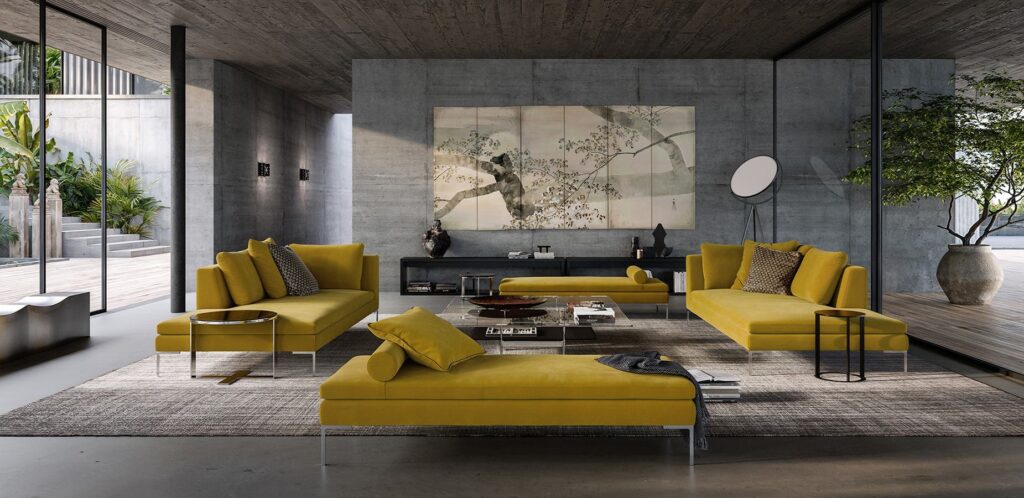
A beautifully furnished room can still be uncomfortable to listen in. Voices overlap, video calls sound indistinct and the television seems to echo across hard surfaces. Acoustic panels can help control these reflections, but the right choice depends on whether you are treating a living room, a home office or a dedicated listening space.

Our shortlist brings together Ecophon, Rockfon, Caimi, Fantoni, WoodUpp and Artnovion: six acoustic panel brands with different approaches to appearance, mounting and room use. This is a selection based on their documented product ranges, rather than a ranking from comparative laboratory testing. It focuses on manufacturers with a European presence; availability, specifications and prices should be checked with a supplier in your country.
Acoustic treatment and soundproofing solve different problems
If conversations sound harsh or linger in the room, reflected sound and reverberation may be the issue. Sound-absorbing panels can help make speech clearer and listening more comfortable. Hearing a neighbour’s television through a wall, or preventing your own music from reaching the next apartment, involves sound transmission between spaces.
A decorative absorber does not replace a sound-insulating wall assembly. That problem requires an assessment of the construction, junctions, doors and flanking paths. Buying adhesive panels in the hope that they will solve both issues can leave you with a different-looking room and the same disturbance. Describe what you hear before choosing a product.
Six acoustic panel brands to compare
| Brand | Range to explore | Key purchase question |
|---|---|---|
| Ecophon | Akusto One wall panels | Size and mounting method |
| Rockfon | Canva Wall Panel | Canvas and maintenance |
| Caimi | Snowsound, including Flap | Layout and brackets |
| Fantoni | 4akustik system | Complete lining build-up |
| WoodUpp | Akupanel slatted panels | Direct fixing or battens |
| Artnovion | Loa Absorber | Frequency range and placement |
Ecophon: defined formats and documented wall systems
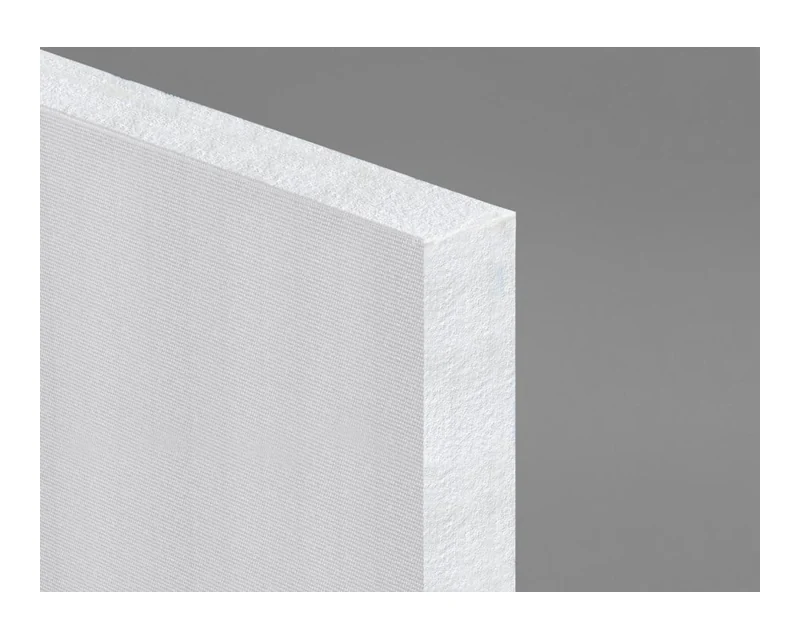
Ecophon is worth considering when you want a system supported by technical documentation and specific installation guidance. Akusto One includes square, rectangular and circular wall absorbers, allowing the treatment to form a composition without necessarily covering an entire wall.
Documented rectangular formats include 592 × 592, 1192 × 292 and 1192 × 592 mm, with a panel thickness of 40 mm. Panel thickness is not automatically the finished installation depth: the mounting arrangement and distance from the wall also matter. Compare the surface finish and installation details for the exact version being quoted.
A useful layout identifies quantities, sizes, finish, fixings and finished depth. In a furnished room, the treatment also has to fit the available surfaces without interfering with doors, shelving or lighting.
Rockfon: Canva for a customisable acoustic wall surface

Rockfon Canva Wall Panel places a textile surface within a frame. The canvas can be removed, washed and replaced in accordance with the manufacturer’s instructions, while customisation allows colour or printed imagery to become part of the interior scheme.
It is an option to explore for a home office or a designed workplace where a conspicuous technical finish would feel out of place. A large textile panel still needs the right dimensions, position and fixings. The printed image does not, on its own, tell you how the complete assembly absorbs sound.
Canvas, frame and accessories should be identifiable in the quotation, along with available sizes. If the artwork may change, replacement procedure, lead time and the cost of a spare canvas belong in the decision.
Caimi: Snowsound as part of the furnishing scheme
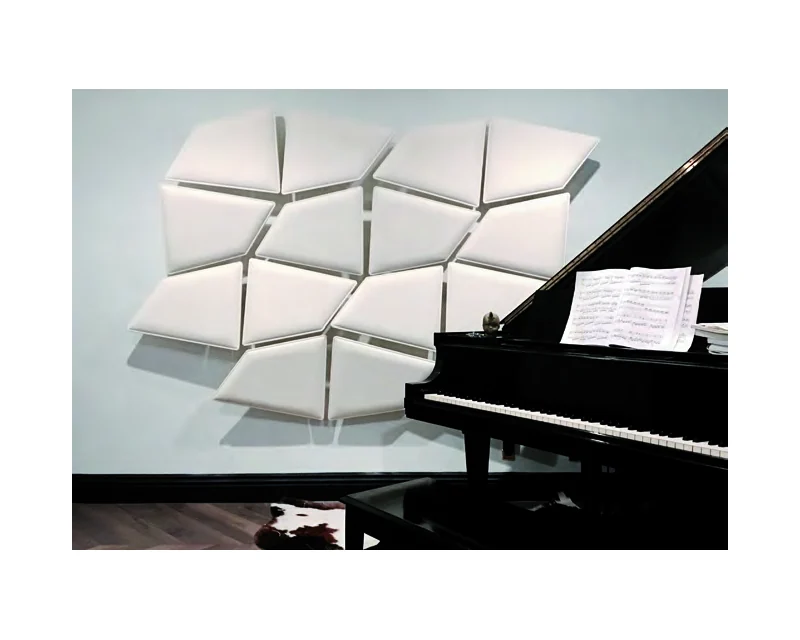
Caimi’s Snowsound collection includes wall-mounted, suspended and divider solutions. Its varied forms make it relevant to rooms where the acoustic treatment should read as an intentional design element rather than a technical afterthought.
Flap, designed by Alberto and Francesco Meda, creates arrangements of angled, faceted elements. In a living room or study, it offers a way to think about a concentrated wall composition instead of assuming that every treatment must become a floor-to-ceiling lining.
Snowsound includes different products whose performance cannot be extended across the collection. Meaningful comparison needs the exact model, dimensions, brackets and documented mounting arrangement. Included supports and the possibility of repositioning elements matter when a room is likely to change.
Fantoni: 4akustik for continuous wall and ceiling linings
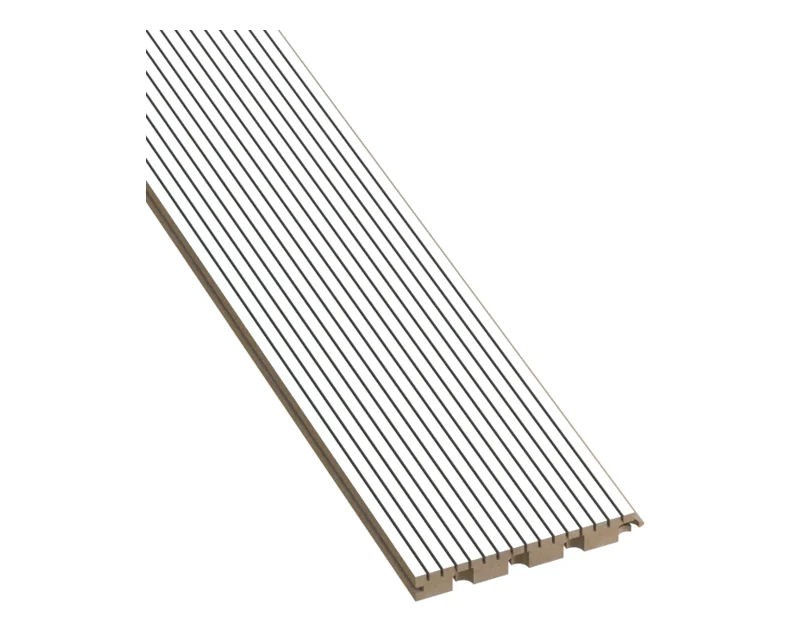
Fantoni 4akustik takes a system approach: the visible surface, its machining and the layers behind it work together. It is a different proposition from buying a single decorative panel, and is particularly relevant when the intention is to give a wall or ceiling a continuous architectural finish.
The range includes slatted and panel solutions with dry installation and dedicated fixing arrangements. Surface pattern and the material behind the facing affect the outcome. Compare complete assemblies rather than choosing solely by the visible finish or the price of an individual slat.
Facing, substructure, backing absorber and installation are separate parts of the supply. Fire-reaction and emission requirements must refer to the ordered variant; classifications do not automatically cover every finish and build-up.
WoodUpp: Akupanel and the appeal of timber slats
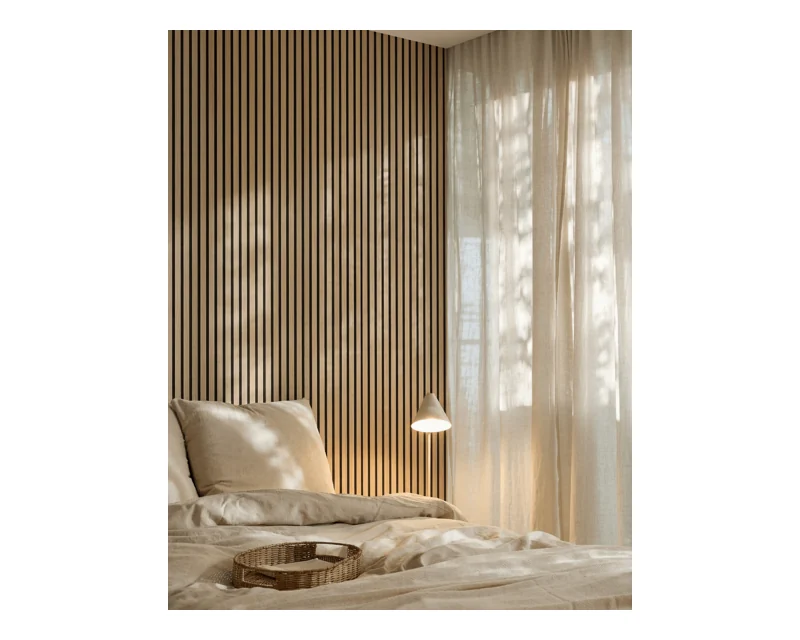
WoodUpp Akupanel combines timber-look slats with felt backing. The vertical rhythm can work behind a bed, sofa or desk, making it appealing when the treatment also needs to provide a strong decorative surface. Appearance and acoustic performance nevertheless need to be assessed separately.
The mounting method is decisive. In the manufacturer’s installation guidance, the arrangement for absorption class A uses a batten substructure, with a recommended batten depth of 45 mm, and mineral wool between the battens. That classification should not automatically be attributed to a panel fixed directly to a wall.
consider the depth you can accommodate, electrical outlets and edge details. A physical sample is useful when the finish needs to sit beside flooring, furniture or another timber tone. Screen images are a poor substitute for checking those combinations in the room.
Artnovion: Loa for listening and media rooms
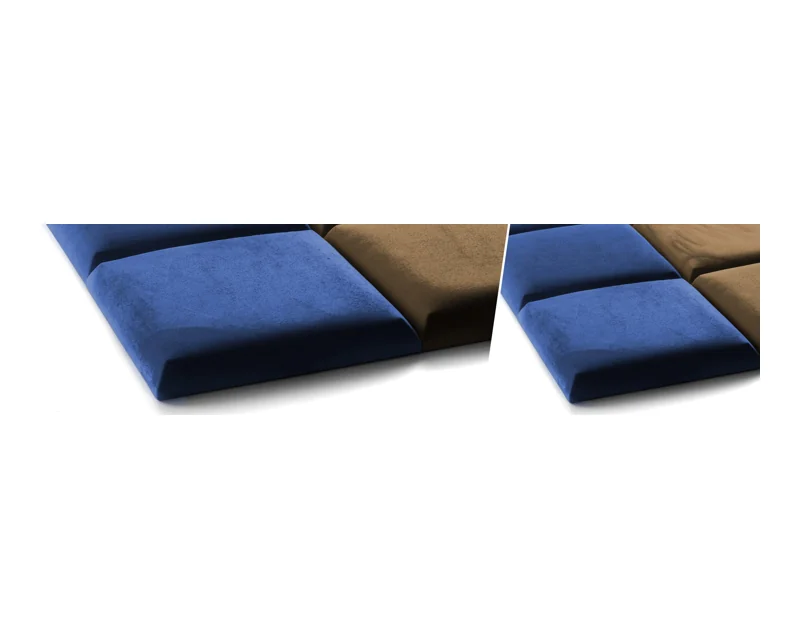
Artnovion is worth exploring when the purchase is driven by listening requirements: a hi-fi system, a media room or a space also used for voice recording. Loa Absorber is a fabric-covered panel offered in square and rectangular formats.
For Loa, the manufacturer identifies a mid-to-high-frequency absorption range of 315–5000 Hz and declares αw 0.80, class B. This does not mean the panel blocks 80% of all noise, or that it will solve a room’s low-frequency problems by itself. The figures need to be read alongside the product documentation and intended mounting arrangement.
show the supplier the positions of the speakers, screen, desk and listening seat. Choosing the right treatment locations can matter more than simply buying extra panels. For a demanding listening room, seek an acoustic assessment rather than filling a basket based only on floor area.
How much do acoustic panels cost?
Slatted panels, sculptural designs and specified linings involve different components and labour. As an indicative Italian example, WoodUpp listed a 240 × 60 cm Classic Oak Akupanel with black felt at €125 including Italian VAT, excluding delivery. The price needs reconfirming when ordering and does not represent the whole shortlist.
That panel has a nominal area of 1.44 m², equivalent to approximately €86.81/m² for the panel alone. Three panels cost €375 and provide 4.32 m² before cutting and wastage. This is not an installed-wall price: battens, backing material, fixings, finishing and labour may be additional. It is an Italian product-price example, not a worldwide market average; local taxes, delivery and distribution will change the figure.
Quotation-based systems are comparable when supply, transport, accessories, fitting and finishing cover the same scope. A cheaper total can simply leave out part of the work.
Where to buy and what to bring to the supplier
Depending on the system, the appropriate channel may be an acoustic-material specialist, an interior-finishes distributor, a furniture or contract showroom, a hi-fi specialist, or direct online sales where offered. For a continuous lining or ceiling installation, involve the installer before placing the materials order.
A measured plan, ceiling height, photographs and window positions help describe the room. Flooring, rugs, curtains, furniture and ceiling finishes matter too. “Voices linger during video calls” tells a supplier more than a general request for soundproofing; floor area alone cannot determine panel quantities.
The quotation should identify the product code, treatment area, fixing method, finished depth and supporting performance documentation. Suspended systems also need an appropriate structural support and access arrangements for services. For public interiors, check the required characteristics against the complete specified assembly and local project requirements.
Questions worth asking before choosing
Will acoustic panels stop neighbour noise?
Ordinary room absorbers are generally not the solution to noise travelling through walls and floors. They control reflections within the room. Noise arriving from another space first requires an assessment of its transmission path.
Are αw and NRC interchangeable?
These summary absorption indices use different methods. They are neither interchangeable measurements nor percentages of sound insulation. The absorption curve and test mounting give a fuller picture, particularly where certain frequencies cause the problem.
Is treating the wall behind the sofa enough?
It may be a useful surface, but there is no universal answer. Room volume, furnishings and available treatment locations affect the sound. A thoughtfully positioned composition can be more appropriate than a large lining chosen without considering the room.
The best acoustic panel brand for a project is the one offering a documented, suitable solution to the actual listening problem, with a mounting arrangement that works in the space. Choose a finish you want to live with, and make sure the construction behind it has a clear purpose.