Seven Italian designer door handle brands, with practical comparisons of finishes, roses, lock compatibility, set contents and buying costs.
A door handle is one of the few interior details both seen and touched every day. A curve changes the grip, a slim rose alters the door’s proportions and a finish can either blend with timber or become a small metallic accent. Our selection of Italian designer door handle brands includes Olivari, Dnd, Colombo Design, Mandelli 1953, Salice Paolo, Manital and Forme. Their different approaches are worth comparing through appearance, operation and compatibility.
Seven Italian door handle brands compared
The shortlist connects contemporary collections, established designs and decorative ranges. It focuses on door handles. Cabinet fittings, window handles and large entrance pulls have their own technical requirements, even where they share the same design language.
| Brand | Design direction | Key comparison |
|---|---|---|
| Olivari | Established designs and contemporary collaborations | Grip, rose and finish |
| Dnd | Handles and coordinated closing systems | Relationship with locks and fittings |
| Colombo Design | Collections including Mood and Antologhia | Colour and the character of the door |
| Mandelli 1953 | Brass and design research | Form, manufacture and specification |
| Salice Paolo | Classic and Timeless | Coordinated accessories |
| Manital | Contemporary shapes and designer ranges | Model and technical version |
| Forme | Contemporary, Classic and Easy | Rose design and overall proportions |
Olivari: a small object with a strong design culture
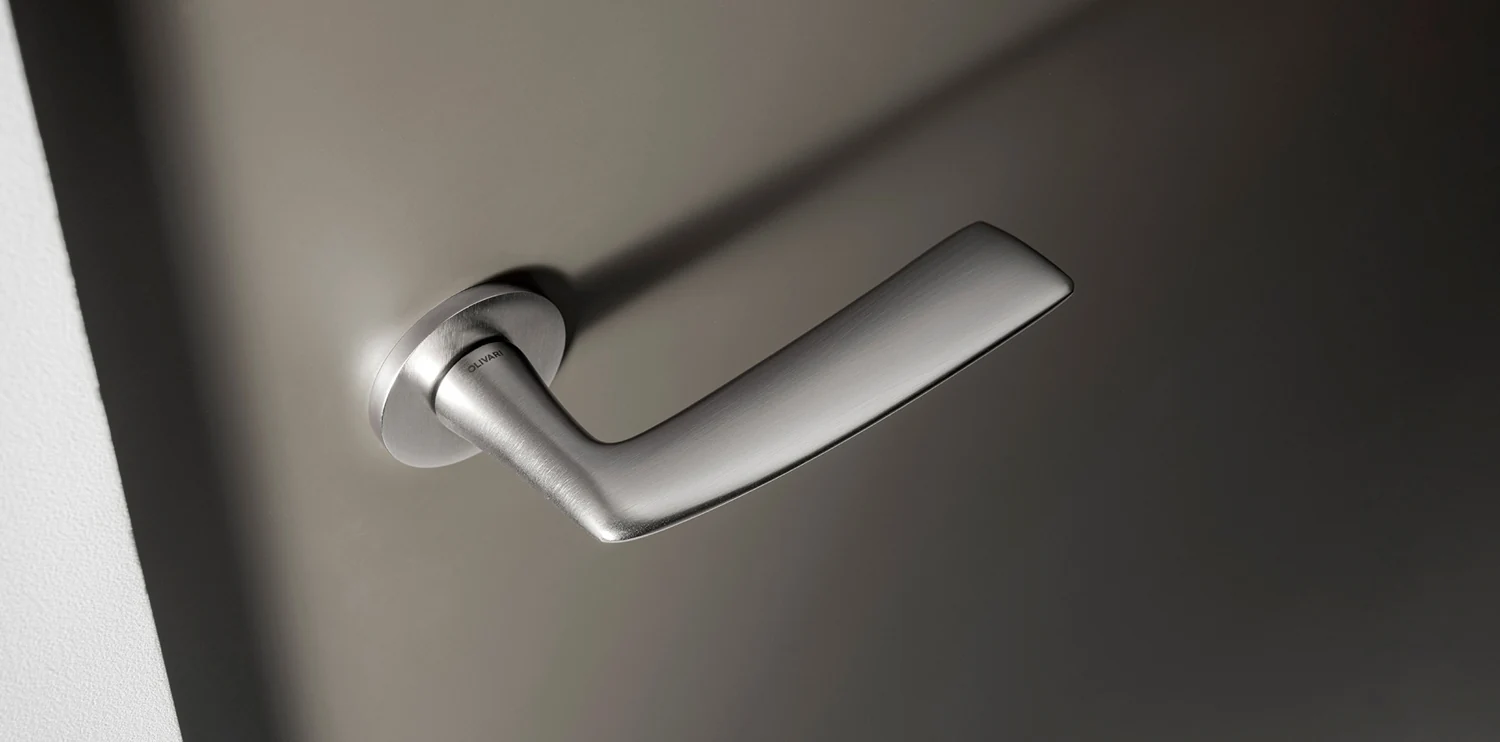
Olivari combines established designs such as Gio Ponti’s Lama with contemporary work by architects and designers. Its range allows comparisons between slender levers, fuller grips and different geometries, alongside roses and finishes.
A physical sample reveals qualities that a photograph cannot. A visually precise lever may have softened edges, while a sculptural form may appear more prominent on the door than expected. The ordered finish needs a product code rather than an assumption based on an image.
Dnd: coordinating the handle with the closing system

Dnd develops door and window handles through different designer collaborations and coordinated closing systems. Its Total Look approach connects handle and lock; natural finishes and available treatments offer further options that need to be assessed for the selected product.
This is relevant on doors where every fitting remains visible. Lever, key escutcheon and privacy control should be considered together. Components that appear similar can still differ noticeably in tone or proportion when installed side by side.
Colombo Design: colour and established forms
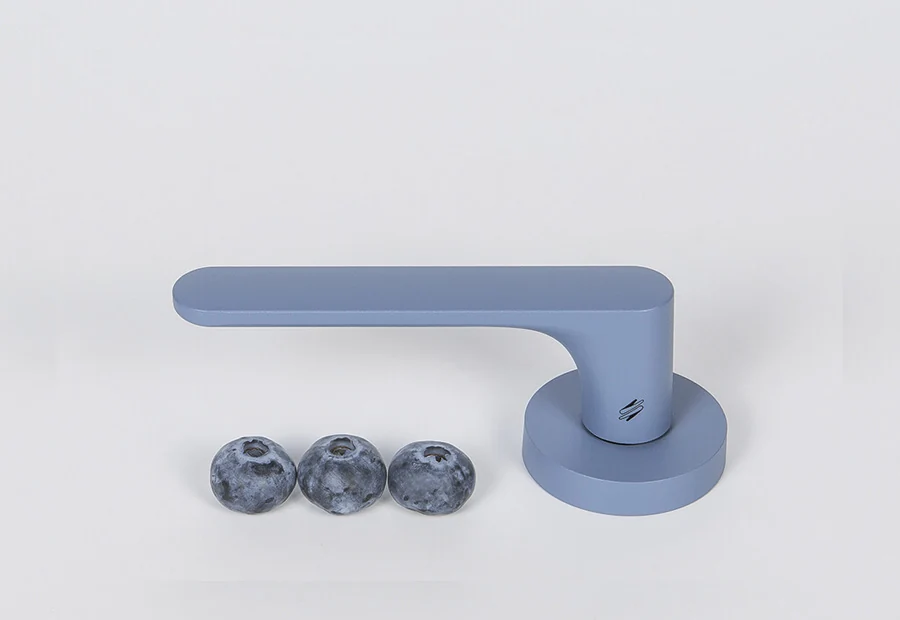
Colombo Design offers collections including Mood, which brings colour to the handle, and Antologhia, with a more historically informed language. These provide different ways of connecting hardware with the door, from subtle colour coordination to a decorative accent.
A coloured handle can pick up a wall tone or stand out against a neutral leaf. Samples are most useful beside the actual door finish under the room’s lighting. Matching roses, escutcheons and accessories need to be available in the required combination.
Mandelli 1953: exploring brass
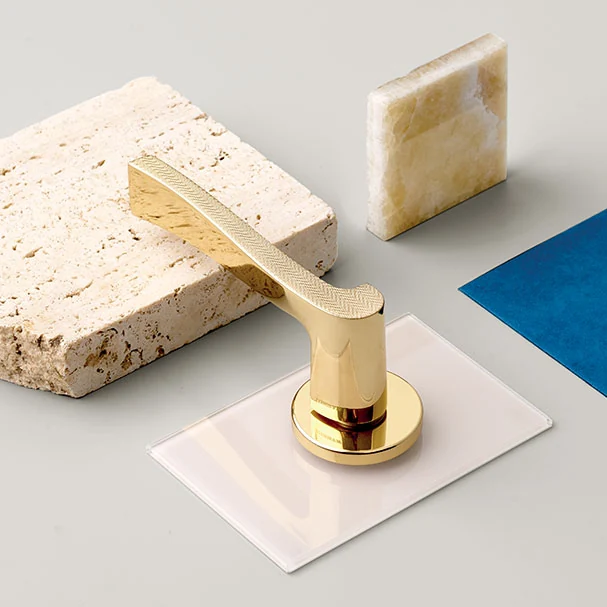
Mandelli 1953 develops brass handles made in Italy, combining contemporary ranges, collaborations and archive research. The material supports different formal approaches, from flowing curves to more sharply defined details.
Perceived weight alone does not establish how well a handle will work. It needs to operate with the lock, return correctly and provide a comfortable grip. Across a home with several doors, coordinated technical versions and accessories can be as valuable as one individual design.
Salice Paolo: consistency across the fittings
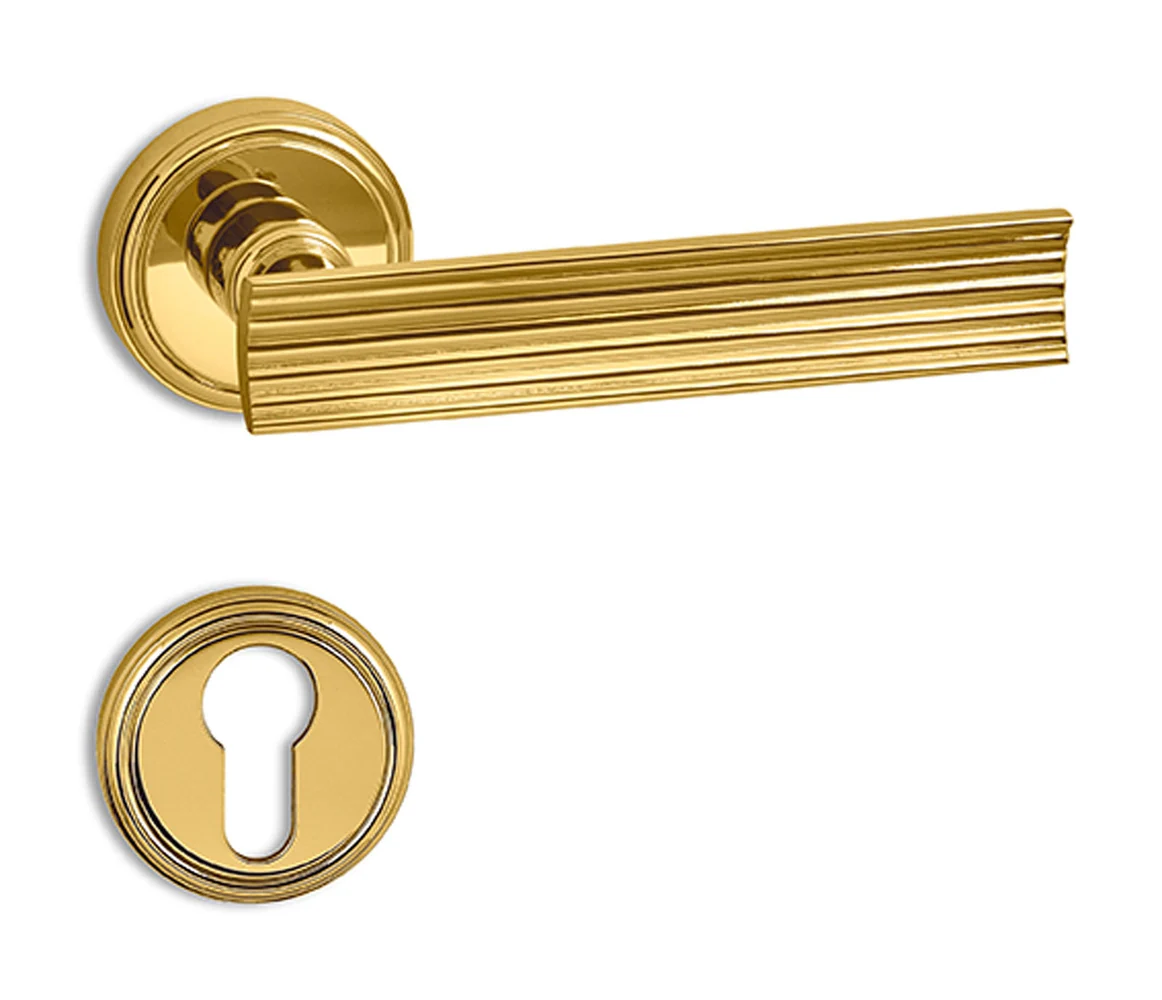
Salice Paolo organises its offering into Classic and Timeless families, with handles and accessories intended to coordinate. The ranges allow more decorative details or forms that connect classical references with restrained geometries.
Consistency extends beyond the lever. Escutcheons, privacy turns, knobs and entrance pulls have different dimensions and functions. When replacing existing hardware, the new rose or backplate also needs to cover or accommodate the holes and marks left by the previous fittings.
Manital: comparing versions within a family
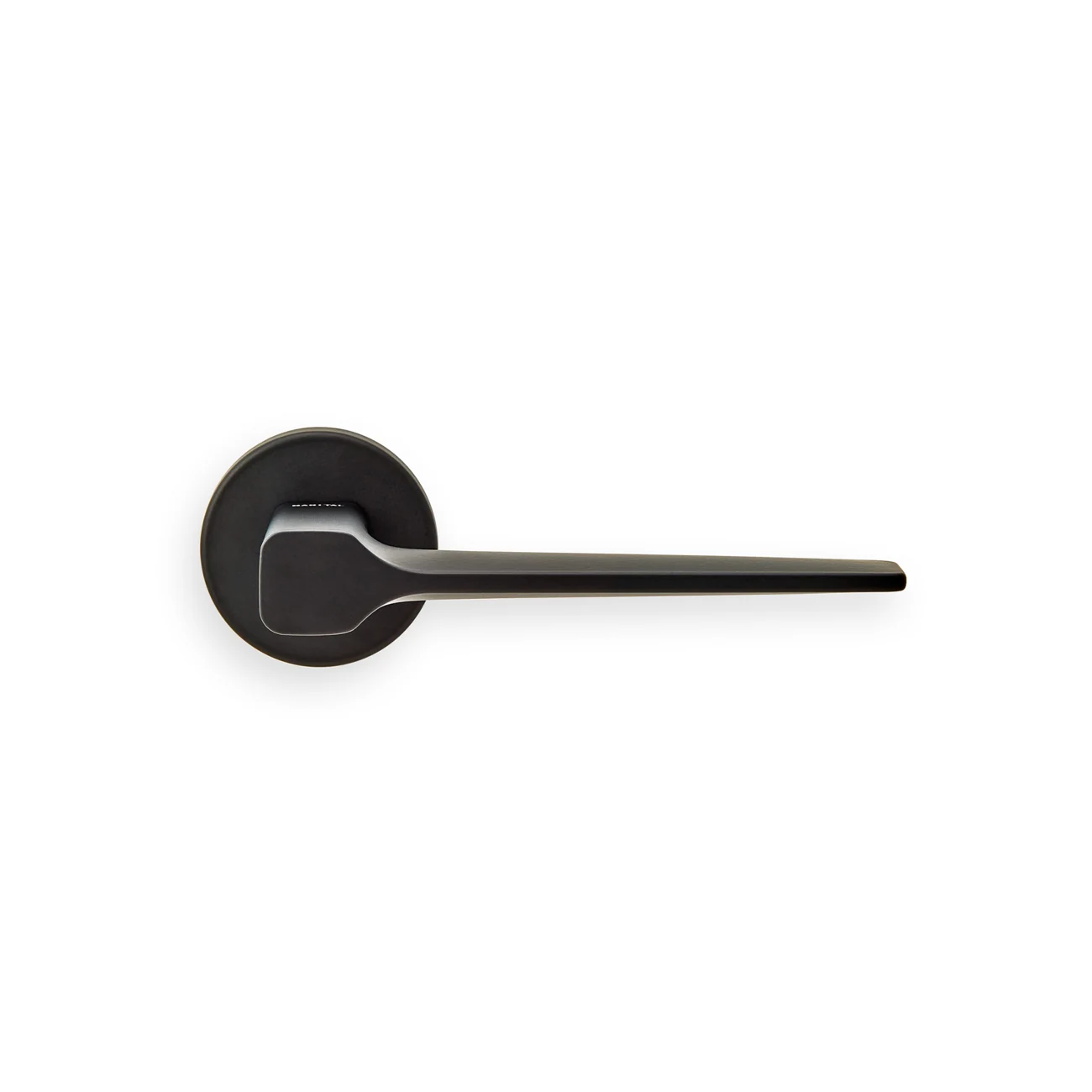
Manital offers designer handles and collections with variations in shape, material and finish. Its catalogue distinguishes door and window products, allowing visual coordination while retaining their separate technical functions.
A window handle cannot replace a door lever, and the same grip on a round rose may not have the same specification as its square-rose version. The order drawing should show the complete arrangement, especially where hinged and sliding doors appear within the same interior.
Forme: the rose changes the appearance of the door
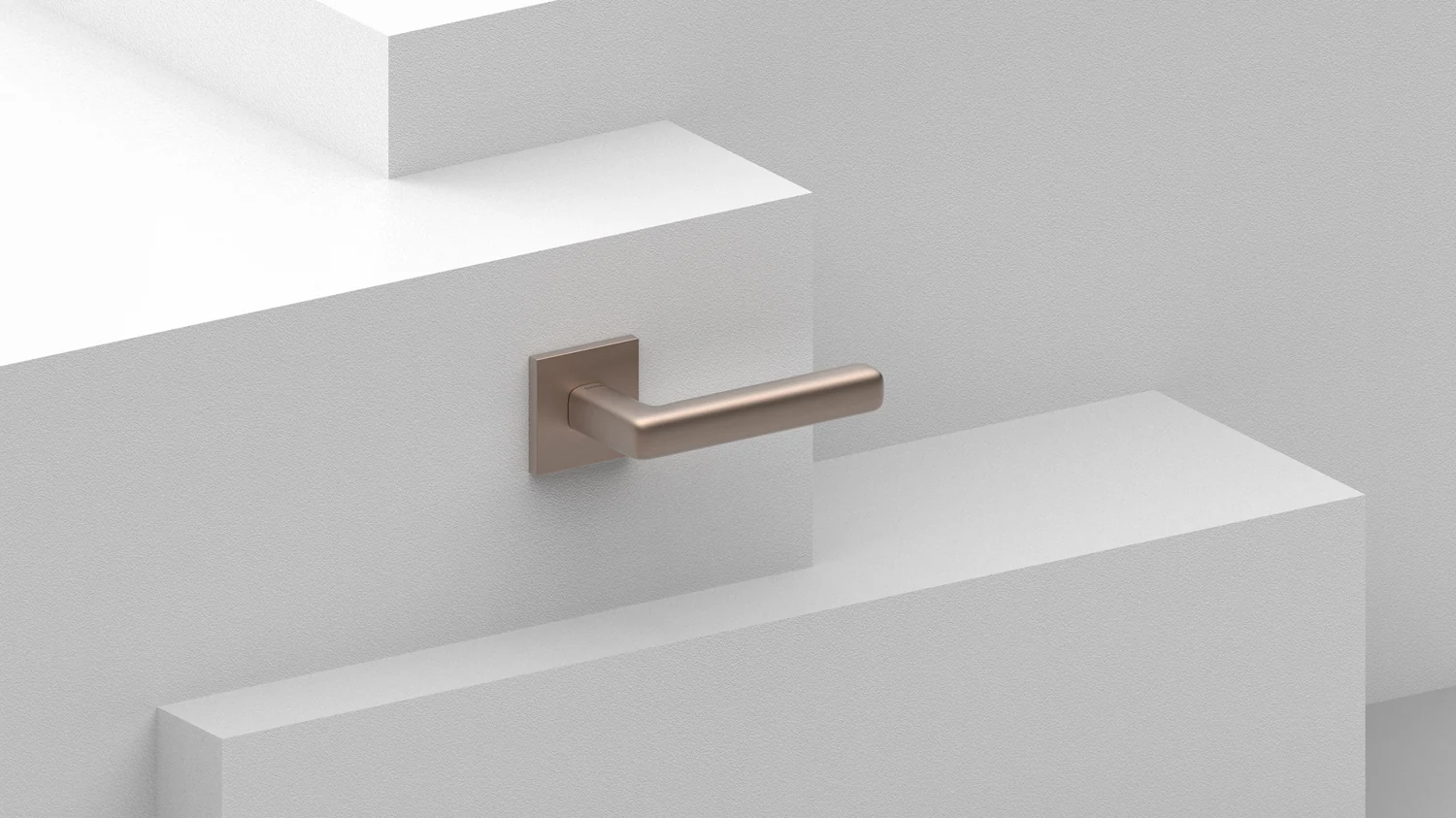
Forme, a Frosio Bortolo brand, distinguishes Contemporary, Classic and Easy lines. Products such as Newnormal and the development of its Minimal Plus rose show how the relationship between grip and base can alter the whole fitting.
A visually reduced rose works best when coordinated with the door’s preparation. During replacement, its dimensions need to be compared with the existing fitting: a smaller base may leave holes or changes in the door surface exposed.
Dimensions and compatibility before ordering
Door thickness, spindle, lock type and hole positions need to suit the selected set. Handles on backplates also require the correct centres between lever and keyhole. Bathroom privacy fittings need to match the lock and its emergency release arrangement. Key escutcheons and cylinder escutcheons are different items.
Handing can matter for some designs or configurations. Technical drawings identify lever length, projection and rose dimensions. International buyers should compare those drawings with local locks and door preparation rather than assuming an Italian set fits every market.
Base material and finish are separate choices
Brass, stainless steel and zinc alloys describe different base materials. Chrome, satin, painted and PVD finishes concern surface processing or treatment. A gold-coloured appearance does not by itself identify the metal beneath it.
Care should follow the manufacturer’s instructions. Aggressive cleaners and abrasives can damage a treatment, while fingerprints and signs of use appear differently according to colour, gloss and lighting. Exterior use needs a suitable specification rather than an assumption that an internal door handle can be transferred to an exposed entrance.
How much do designer door handles cost?
One verified Italian example is the Olivari Lama M107RB8 ZL pair, with an Italian patent-key escutcheon and SuperOro lucido finish, offered at €139.80 including Italian VAT, approximately €140. The quoted unit is a pair, not an individual lever. This is one version and offer: finish, escutcheons and package contents affect the comparison, and current terms need reconfirmation.
At that unit price, six identical pairs would total €838.80 in products before any delivery, fitting or additional components. This is an arithmetic illustration rather than a whole-house quotation. Locks, privacy turns, sliding-door hardware and window fittings need their own quantities and specification. Local taxes and distribution also affect prices outside Italy.
Where to buy and how to coordinate the doors
Specialist ironmongers, door showrooms and online dealers can help compare product codes and set contents. An order needs the model, finish, lock function and package details; the phrase “complete handle” can leave important components undefined.
Our guide to interior doors considers the wider relationship between leaf, frame and fittings. The right handle supports that design while remaining pleasant to use whenever a door opens.