In outdoor spaces, shade is an essential part of the design. It determines the way a garden, terrace, poolside area, or outdoor dining space is experienced throughout the day. It protects from the sun, creates well-being, makes seating areas more comfortable, and allows outdoor furniture to fully express its function: welcoming, accompanying, and creating moments …
In outdoor spaces, shade is an essential part of the design. It determines the way a garden, terrace, poolside area, or outdoor dining space is experienced throughout the day. It protects from the sun, creates well-being, makes seating areas more comfortable, and allows outdoor furniture to fully express its function: welcoming, accompanying, and creating moments of pause and conviviality.
Designing the outdoor environment therefore also means thinking about the quality of shade. It means understanding where to place it, how wide it should be, and how it should dialogue with the landscape, the architecture of the home, the materials, the colors, and the chosen furniture. In this sense, a parasol is not an element to add at the end, but a presence that contributes to the overall balance of the space.
For this reason, its design must be coherent with the project. The structure, canopy, base, proportions, materials, and finishes all participate in the perception of the outdoor environment. A well-chosen parasol enhances a dining area, defines an open-air living space, makes a poolside area more elegant, gives identity to an outdoor hospitality space, and turns shade into a true comfort experience.
It is within this idea of carefully designed outdoor living that the Danieli Ombrelloni collection finds its strength. The solutions proposed for gardens, terraces, pools, hotels, restaurants, and professional spaces show how a parasol can become an element of balance between comfort, aesthetics, and personalization, contributing to the overall quality of the outdoor space.
Shade as part of outdoor well-being
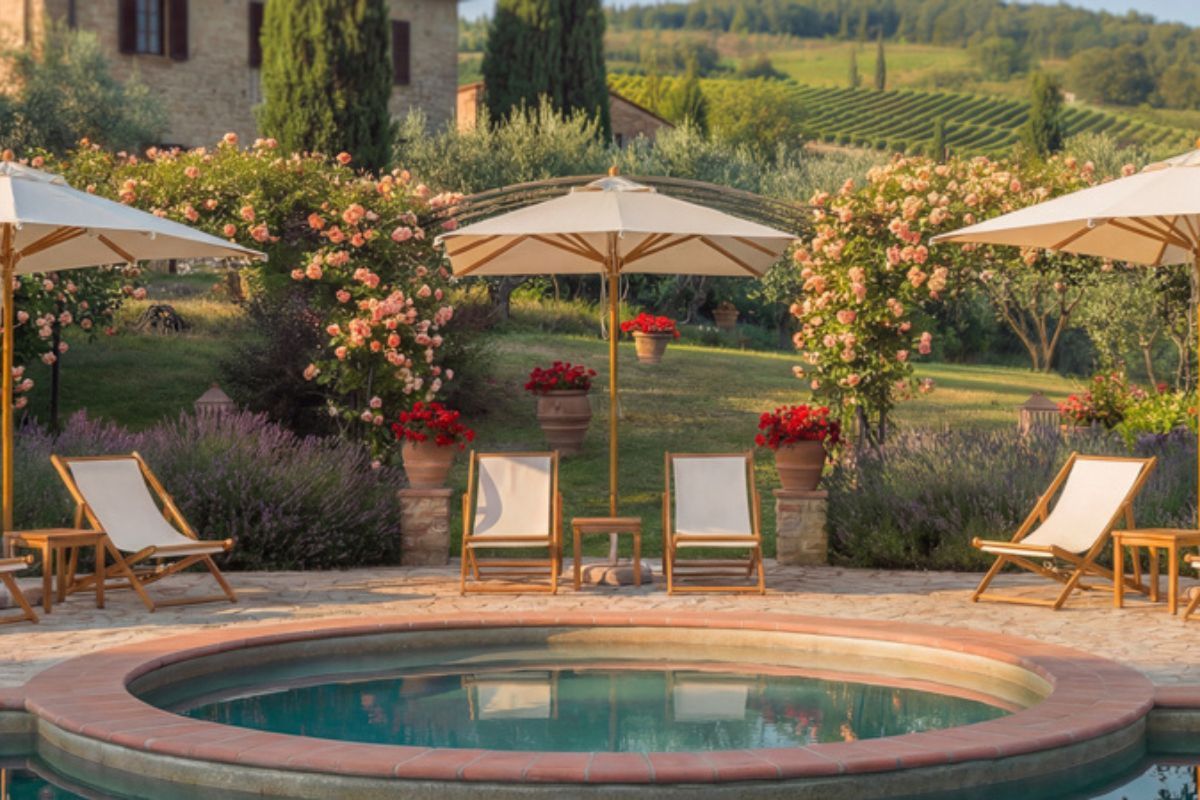
An outdoor space can be beautiful, carefully furnished, open to the landscape, and designed in detail. But to be truly lived in, it needs comfort. Shade enters precisely into this dimension: it allows a terrace to be used during the brightest hours, makes outdoor dining more pleasant, protects a relaxation area, and accompanies slow time by the pool.
Outdoor well-being comes from a combination of elements: perceived temperature, light, materials, seating, greenery, privacy, protection, and freedom of movement. The parasol works within this balance. It can create a more intimate area, give rhythm to a large garden, mark the point where people pause, or make a professional space feel more welcoming.
In a private home, shade can transform a terrace into an outdoor room. In a hotel or restaurant, it can influence the quality of the guest experience. In an outdoor dining area, it can contribute to the identity of the venue. In every context, its function is connected to the livability of the space.
Garden parasols: a design choice
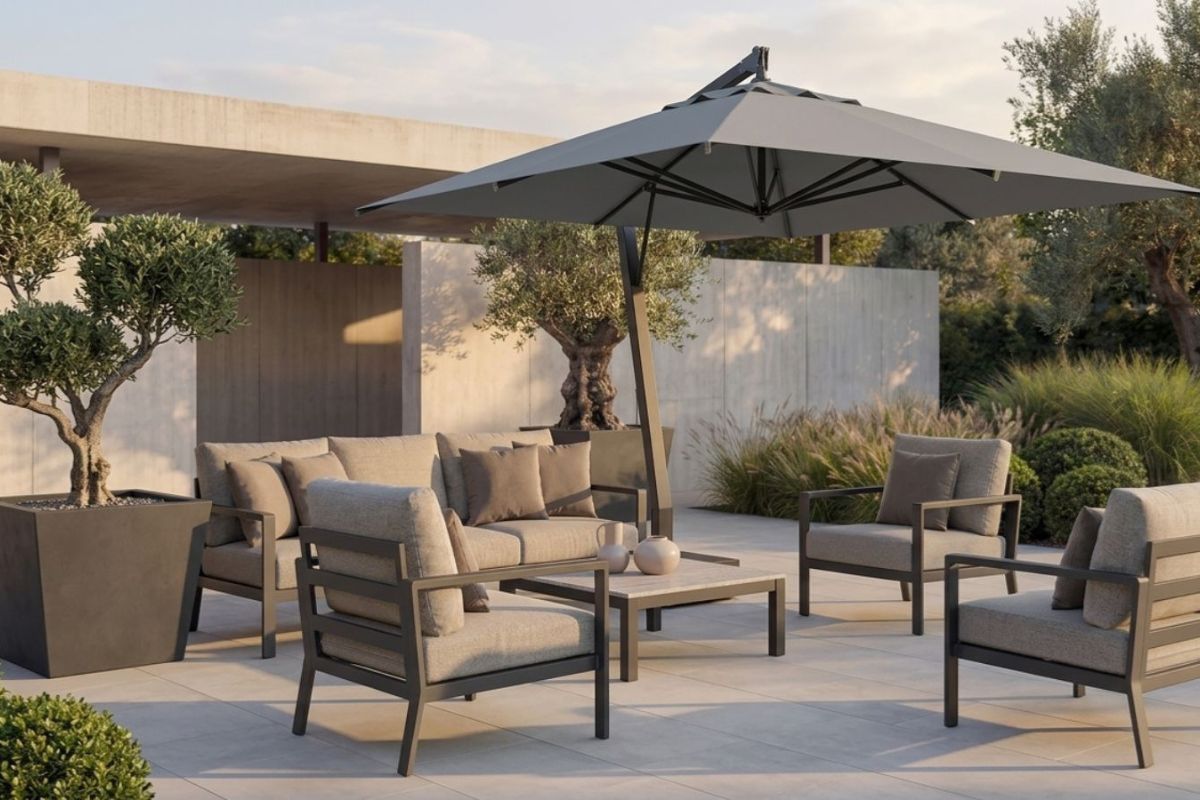
Garden parasols respond to very different needs: protecting a dining area, creating shade by the pool, furnishing a terrace, completing an outdoor lounge, organizing an outdoor hospitality area, or accompanying a relaxation zone.
The choice depends on the shape of the space, sun exposure, existing furniture, and the type of atmosphere one wants to create. A large garden can accommodate important parasols, including cantilever or multi-arm models. A terrace, on the other hand, requires a more precise reading of dimensions. A poolside area needs solutions that protect without weighing down the view. A contract space requires solidity, ease of management, and visual coherence.
The quality of the project can be recognized precisely in this ability to harmonize function and aesthetics. The parasol must respond to a concrete need, but it must also dialogue with the environment. The canopy, color, structure, and base enter the composition of the space just as much as an outdoor sofa, a table, a flooring surface, or a green backdrop.
Central pole, cantilever, and multi-arm structures
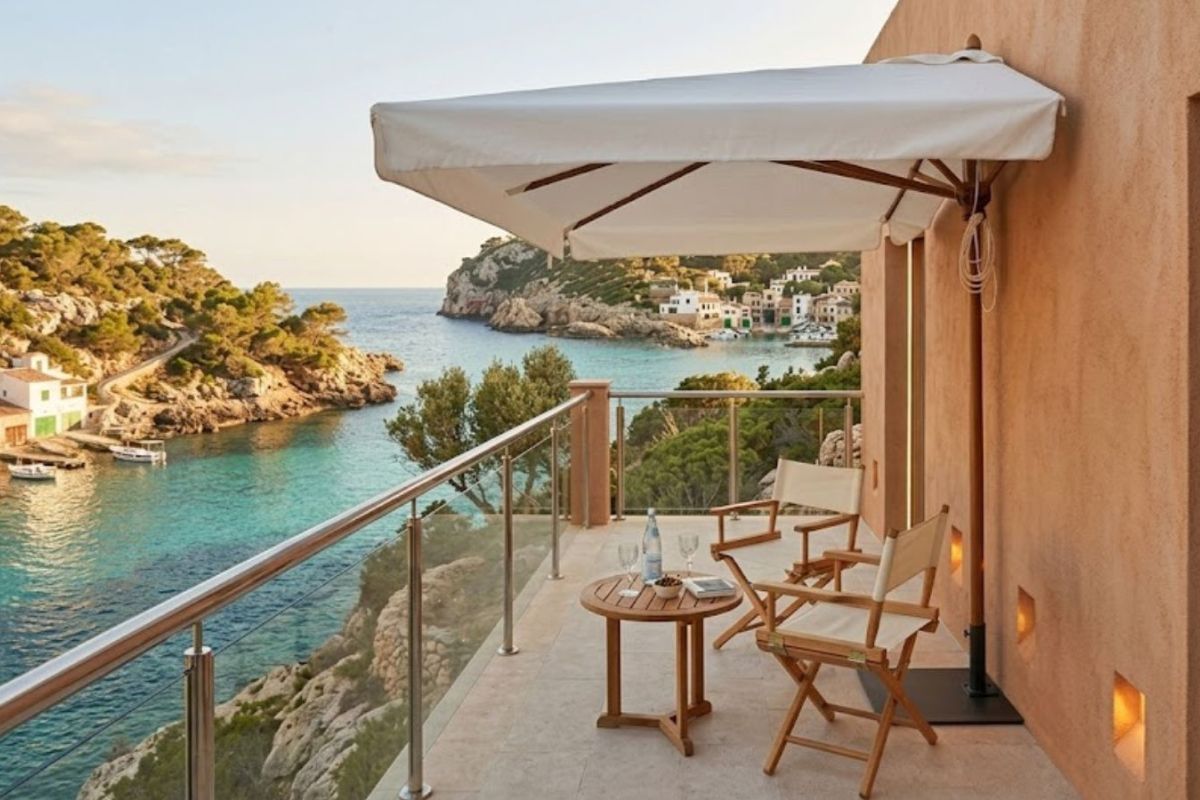
The structure of the parasol directly affects the use of space. Central pole parasols have an orderly and symmetrical presence. They are particularly suitable for dining areas, classic gardens, and spaces where the central point of the canopy can coincide with the table or with a regular composition.
Cantilever parasols offer greater freedom in the arrangement of furniture. The side pole frees the area underneath and makes it possible to protect outdoor lounges, sun loungers, tables, and relaxation areas without interrupting the use of the space. They are especially interesting for terraces, poolside areas, and projects where a more fluid reading of the environment is desired.
Double-arm or multi-arm parasols respond to broader needs. They make it possible to cover large surfaces and are especially suited to hospitality, restaurants, bars, outdoor dining areas, and contract spaces. In these cases, the parasol becomes a shading system capable of organizing real welcoming areas.
Each structure carries a different idea of outdoor living. The choice should start from use, but also from the overall image one wants to create.
Materials and finishes: when technique meets style
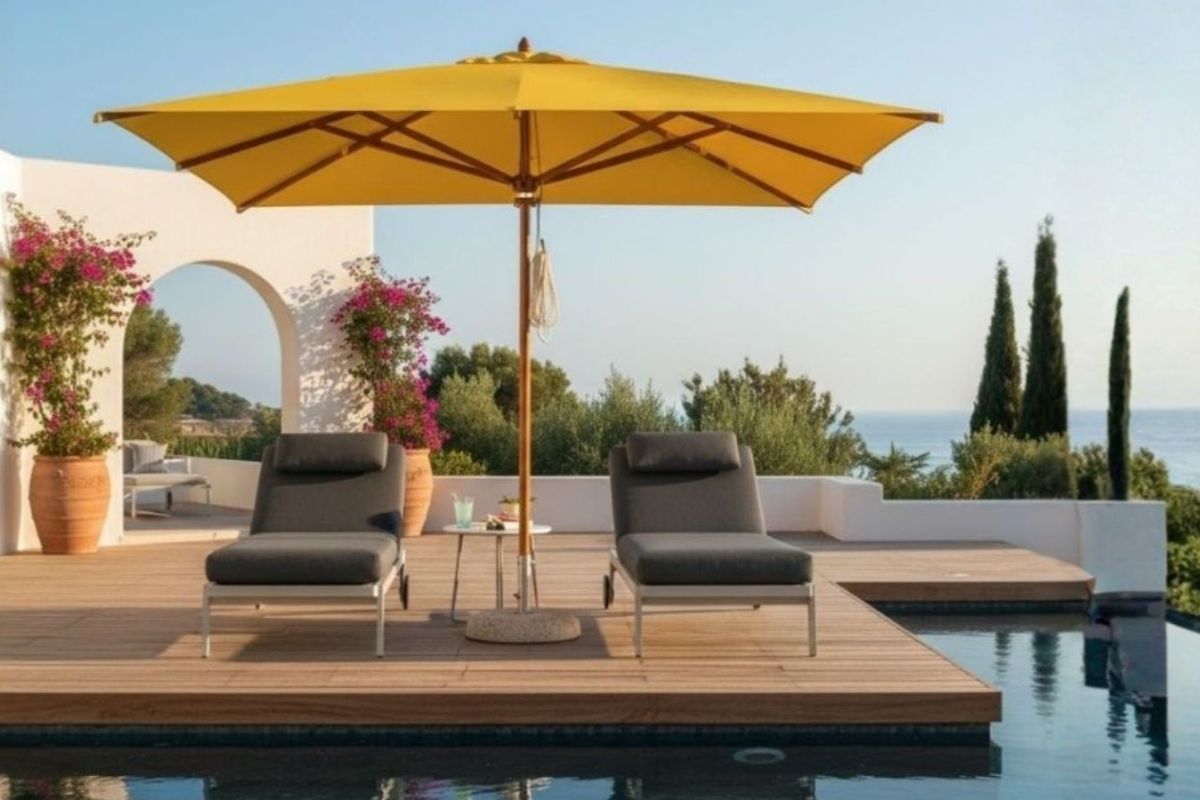
The material of the structure defines the character of the parasol. Wood introduces a warm and natural presence, very suitable for gardens, villas, pools, and environments where the outdoor space dialogues with the landscape. It is a choice that recalls a more material, welcoming, Mediterranean dimension.
Aluminium, instead, interprets a more contemporary language. It has a clean line, practical management, and a more technical visual result. It fits well into urban terraces, modern spaces, essential outdoor dining areas, and outdoor environments with a more architectural character.
Painted or galvanized metal is often used in more important structures, where stability, resistance, and durability become central. In professional contexts, these aspects carry significant weight because the parasol must withstand frequent and continuous use.
Finishes also contribute to the final result. Light tones, dark structures, wood-effect details, technical profiles, or more intense colors can completely change the perception of the space. For this reason, the choice should be made together with the overall outdoor project, taking into account furniture, flooring, facades, and greenery.
The canopy: color, light, and atmosphere
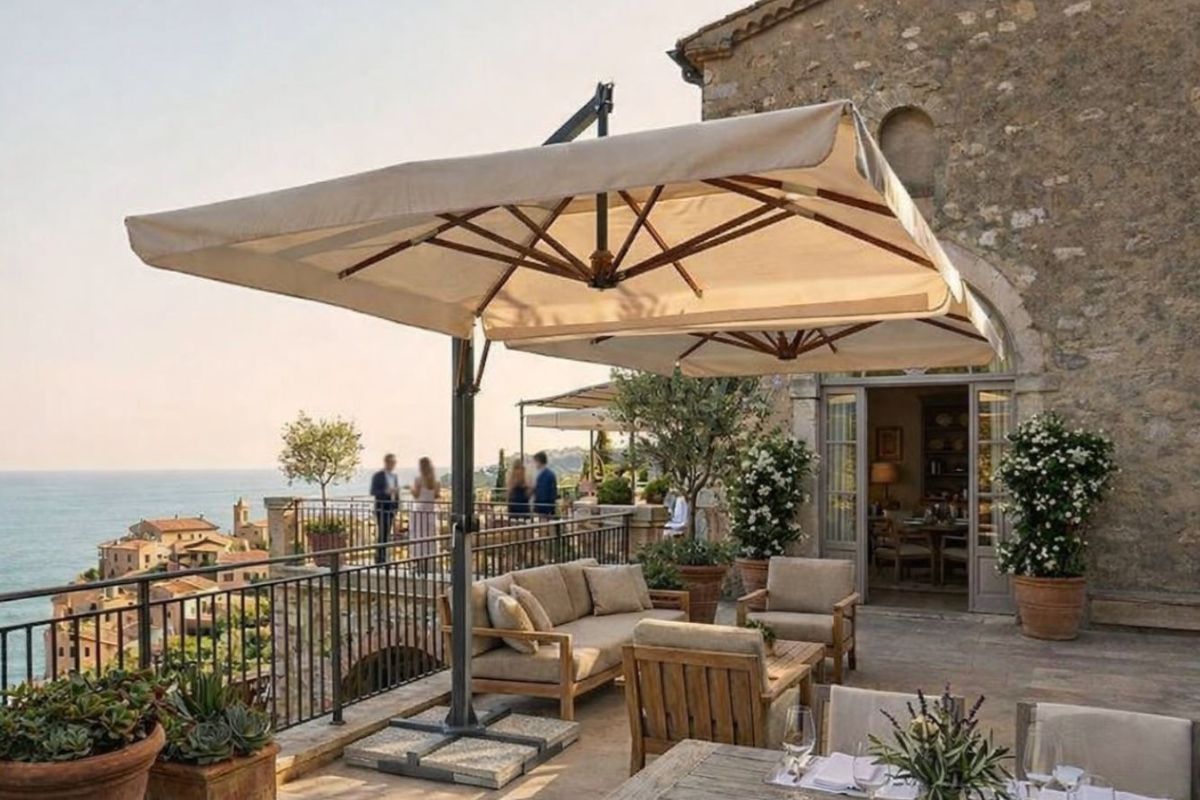
The canopy is the surface that, more than any other, builds atmosphere. It filters light, determines the quality of shade, and affects the overall image of the space. Light tones, such as white, cream, ecru, sand, and dove grey, create brightness and lightness. They are ideal for panoramic terraces, Mediterranean gardens, pools, and environments where a soft continuity with the landscape is desired.
More intense shades, instead, can become a distinctive sign. A green, yellow, dark, or customized canopy can characterize an outdoor dining area, recall the visual identity of a venue, or add personality to an outdoor space.
The choice of fabric also concerns performance. Materials such as acrylic, resin-coated acrylic, and polyester respond to different needs in terms of resistance, protection, breathability, waterproofing, and maintenance. In an outdoor space, the canopy must preserve beauty and functionality over time, especially when exposed to sun, humidity, wind, and daily use.
Terraces, pools, and gardens: designing places to live in
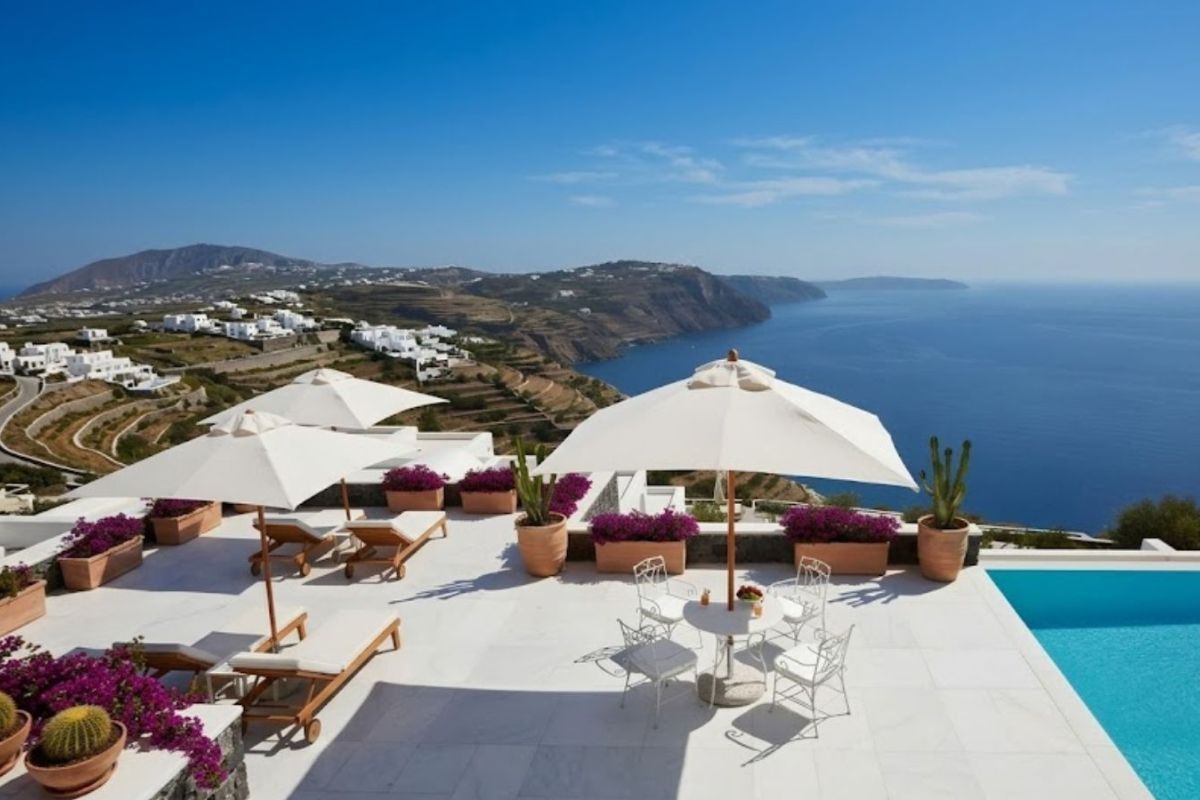
Every outdoor environment requires a different type of shade. A panoramic terrace calls for lightness, proportion, and attention to the view. The parasol must protect without interrupting the relationship with the landscape. In these cases, solutions that fit discreetly work well, enhancing the space without weighing it down.
The poolside area requires comfort and order. The parasol creates points of pause, protects loungers and seats, and accompanies the transition between sun and shelter. Its presence helps build a more harmonious sequence between water, flooring, furniture, and vegetation.
The garden offers greater compositional freedom. Here, the parasol can become the center of a convivial area, the shelter of an outdoor lounge, a light sign beside a path, or the point of balance between home and landscape.
In all these cases, the goal is to create outdoor spaces that are truly livable. Shade makes the outdoor environment more welcoming, more elegant, and closer to the everyday needs of those who experience it.
Contract and hospitality: shade as experience
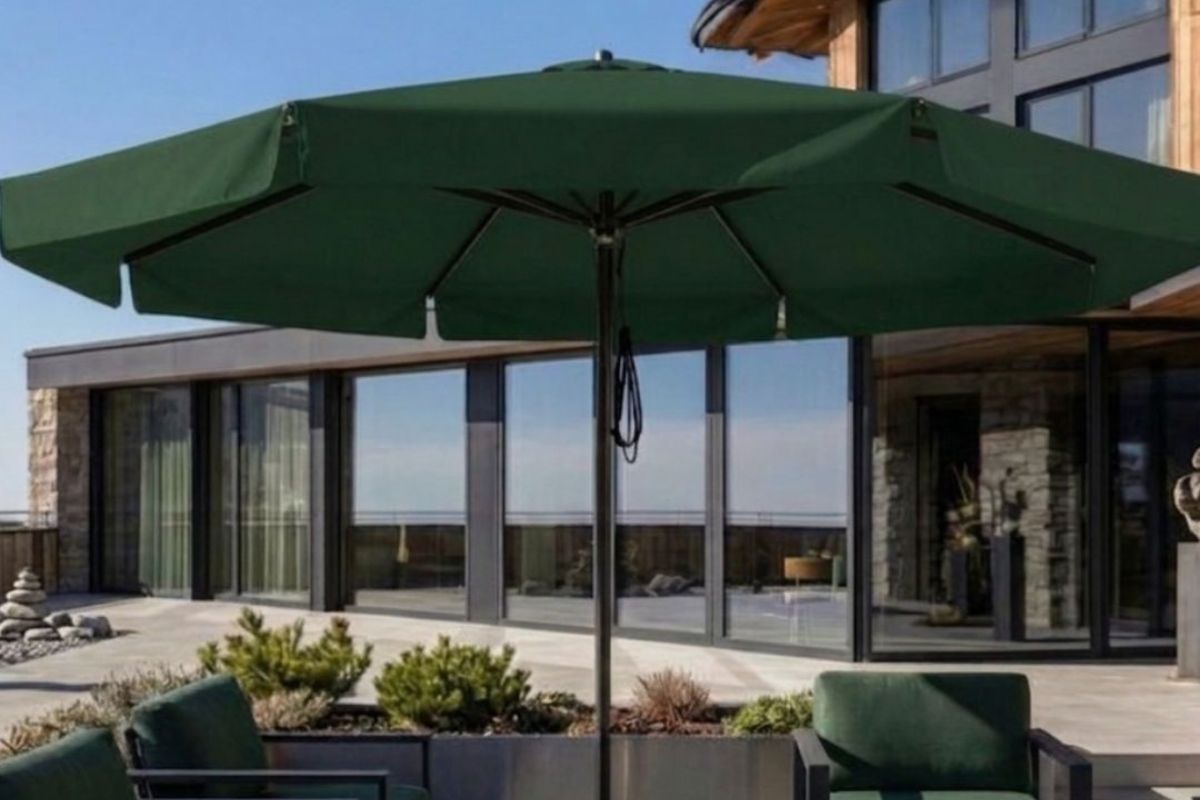
In the contract world, the parasol takes on an even more strategic role. Hotels, restaurants, bars, beach clubs, and hospitality facilities need solutions able to combine image, comfort, resistance, and everyday management.
A well-designed outdoor dining area must welcome, protect, and remain orderly. Tables must be arranged functionally, circulation must remain clear, bases must guarantee safety, and canopies must withstand frequent use. The parasol directly participates in the quality of the experience: it makes an outdoor breakfast, a summer lunch, a sunset aperitif, or a pause on the terrace more pleasant.
The possibility to customize colors, canopies, logos, and details also makes it possible to align the shade system with the identity of the place. For the hospitality world, this visual coherence is an important value. The outdoor space becomes part of the story of the brand, the venue, and the experience offered to guests.
Personalization, repair, and durability
One of the most interesting aspects of the Danieli Ombrelloni proposal concerns the services connected to the product. Personalization makes it possible to adapt the parasol to the project: colors, canopies, valances, logos, graphics, and details can be studied according to the context.
Repair adds significant value in terms of durability. Canopies, components, ribs, and parts subject to wear can be replaced or restored, avoiding the need to change the entire product. This is a particularly useful approach for hotels, restaurants, and professional operators, but also for those who want to invest in an outdoor space designed to last.
Designing well also means thinking about time. A quality parasol must be beautiful at the moment of installation, but also manageable over the years, maintainable, repairable, and coherent with the evolution of the space.
Danieli Ombrelloni and a new culture of outdoor living
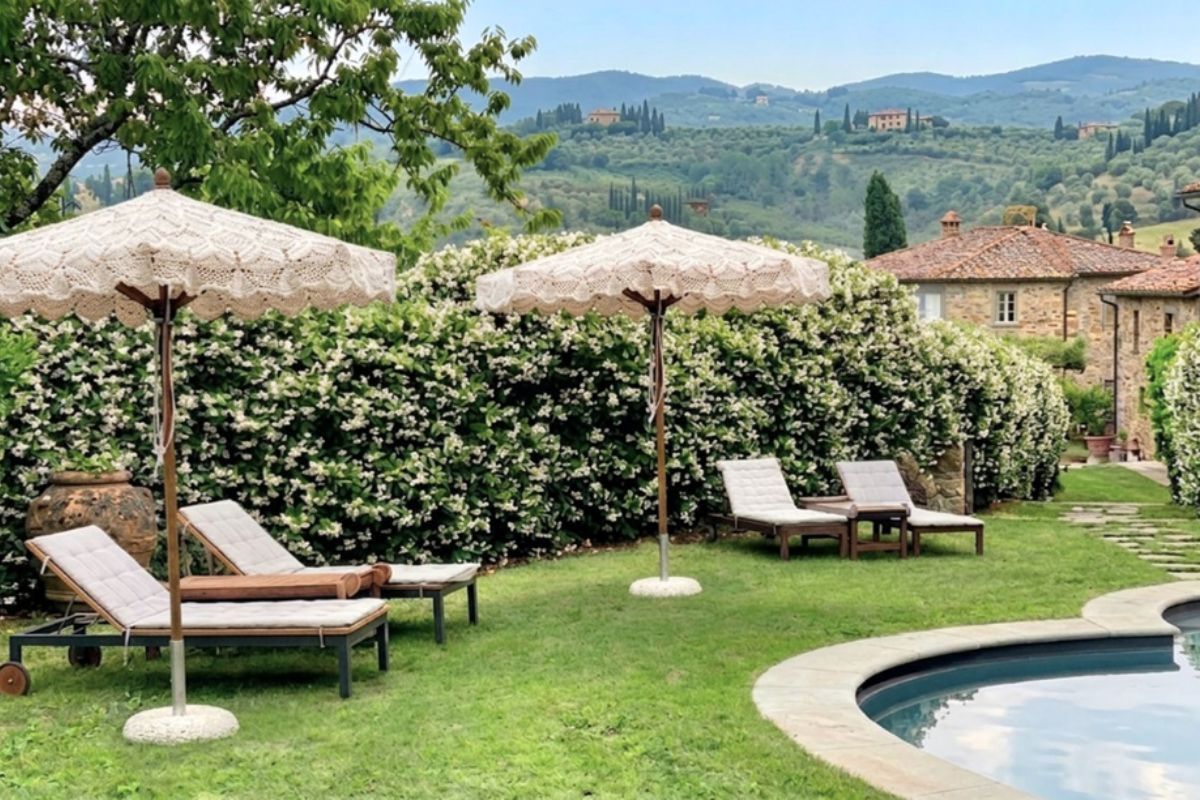
The Danieli Ombrelloni collection expresses a vision of outdoor living in which shade becomes part of the project. The solutions for gardens, terraces, pools, and contract spaces show how a parasol can contribute to the identity of an outdoor environment, enhancing furniture, surfaces, architecture, and landscape.
The most interesting point is exactly this: the parasol is not treated as an isolated element, but as a presence capable of bringing balance to the space. Its function is technical, but its impact is also aesthetic and atmospheric.
At a time when outdoor spaces are increasingly central to the design of living and hospitality, choosing shade means choosing the way that space will be experienced. It means creating comfort, continuity, beauty, and protection.
And when the parasol succeeds in dialoguing with everything else, the outdoor space finds its most natural measure: that of a place designed to be inhabited, looked at, shared, and remembered.
Also read: Danieli Ombrelloni at Fuorisalone 2026 with Blu Ortensia