Double bed sizes explained: compare mattress and frame dimensions, storage access and bedside clearances before planning your bedroom.
Double bed sizes must be checked at two levels: the mattress dimensions and the overall bed-frame footprint. The same mattress can sit inside a compact frame or a much wider upholstered design. Names such as double, queen and king vary between markets, so order by measurements.
A bed sets the horizontal scale of the bedroom. A low frame can emphasise the wall behind it; an upholstered headboard introduces softness and a larger visual presence. The right choice starts with the route around the bed and the furniture that remains.
Double bed sizes are not universal names
In Italian ranges, 160 by 190 or 200 centimetres is a commonly encountered double mattress format, while 180 by 200 centimetres offers more width. Other sizes are available. UK and US names do not map automatically onto these dimensions.
Confirm width, length and units for the exact mattress, base and frame. Never translate a size label into another market without checking the specification. Bedding also needs to match mattress depth and length.
| Measurement | What it describes | Why it matters |
|---|---|---|
| Mattress width and length | The sleeping surface | Fit with the base and bedding |
| Overall frame footprint | The complete external dimensions | Circulation around the bed |
| Headboard width and height | The wall-facing element | Sockets, windows and bedside furniture |
| Finished sleeping height | Base plus mattress and accessories | Everyday sitting and standing |
Measure the whole frame, including upholstery
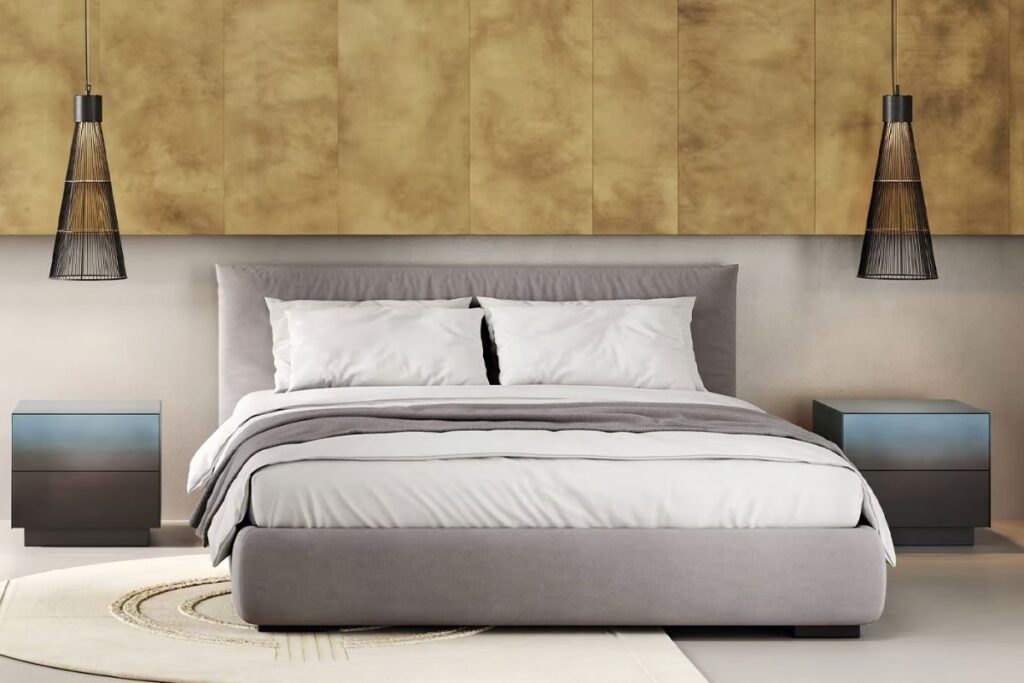
A padded edge, projecting headboard or storage structure can extend beyond the mattress considerably. Ask for a dimensioned drawing. Mark the complete footprint on the floor and include bedside tables in the test.
Check access to windows, wardrobe doors and the entrance. A photograph makes it difficult to judge the real clearance. The bedroom should remain usable when drawers or doors are open, not only when everything is closed.
Choose mattress length for the people using it
Sleeping surface is a personal requirement. Consider height, preferred position and whether the bed is shared. A wider mattress may be attractive, but should not make the room uncomfortable to cross.
Try the bed and mattress as a system where possible. The frame does not determine mattress comfort; the support and selected mattress need to be compatible. Confirm ventilation and loading requirements with the relevant manufacturers.
Storage beds: capacity is only half the decision
Lift-up storage can help where cupboards are limited. Check the opening mechanism, mattress-weight compatibility and whether the compartment is easy to reach. Leave space to operate it without moving nearby furniture.
A drawer bed needs lateral opening clearance. Compare usable internal volume rather than the external size of the base. Keep the compartment ventilated and follow the product maintenance guidance.
Headboard, bedside tables and light
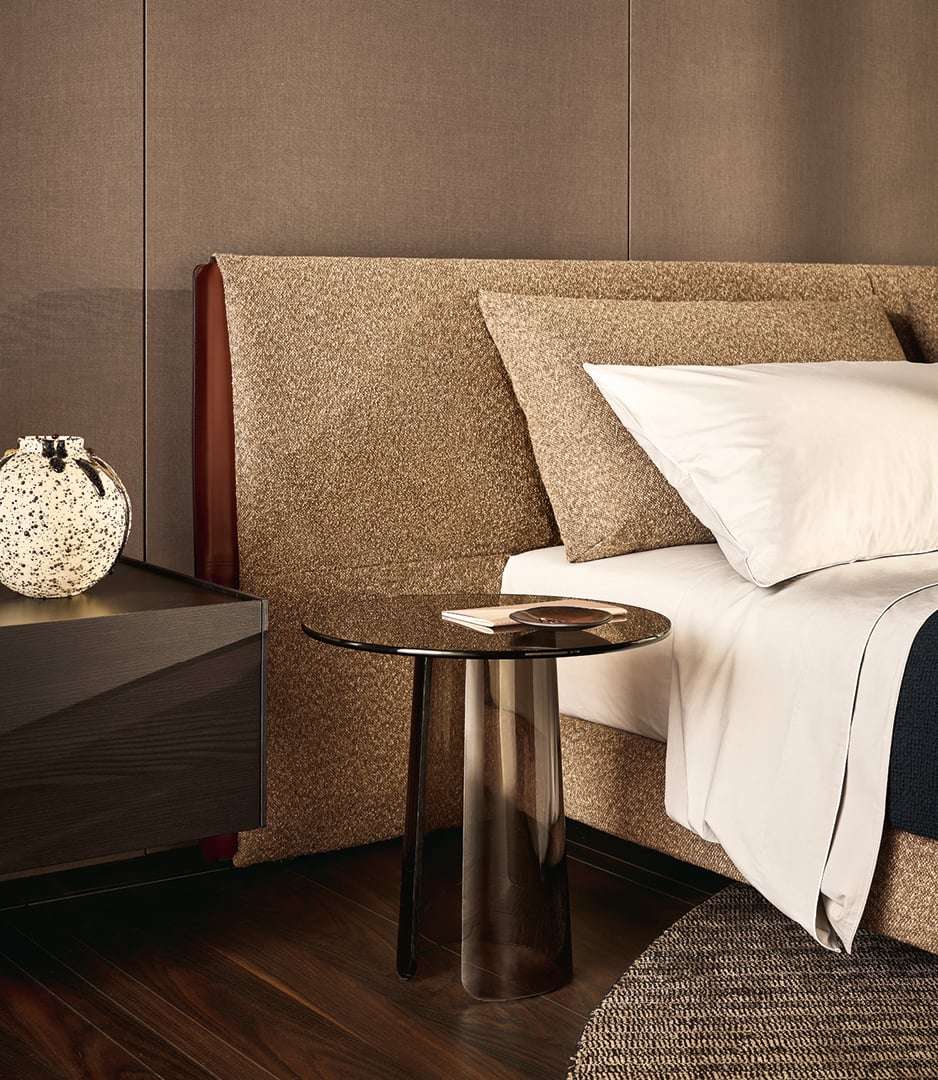
Set bedside-table heights in relation to the finished mattress height. A tall mattress can conceal more of the headboard than expected. Put sockets and switches where they can be reached rather than hidden behind upholstery.
Wall lights release bedside surface, while table lamps add a distinct object. Their positions should serve reading and movement. For the wall palette, our guide to bedroom colours offers a useful starting point.
Before ordering: check delivery access
Measure doorways, stairs, lifts and tight turns. Find out which components arrive assembled and which can be separated. A frame that fits the bedroom plan may still be difficult to deliver.
Bring the floor, textiles and headboard finish into one sample grouping. The broader approach in our modern Mediterranean interiors guide shows how a few materials can give a room character without crowding it.
Frequently asked questions
Is a 160-centimetre mattress the same as a queen?
Not reliably. Size names vary by country and manufacturer; compare the exact width and length.
How much space should be left around a bed?
Enough for the people using it and for adjacent doors and furniture to operate comfortably. Accessibility needs require a specific assessment.
Does a storage bed need a special mattress?
Compatibility depends on the base and lifting mechanism, including weight. Follow the specifications for both products.
Opening image: Poliform.