Compare five cement brands for Italian and European projects. Understand cement types, strength classes, bag prices and the documents to check before buying.
A grey bag at a builders’ merchant, an exposed concrete surface in a contemporary home and a white garden object involve very different material choices. Choosing the best cement brands starts with identifying the job. Cement is a binder; it is not another name for every ready-mixed mortar, concrete product or cement-look finish.

Heidelberg Materials, Buzzi Unicem, Colacem, Cementirossi and Aalborg White form a useful shortlist for projects involving the Italian and European market. It includes cement producers supplying Italy and a specialist white-cement brand. This is not an exhaustive worldwide ranking or a comparison based on our own laboratory tests. Local specifications, distribution and the exact product matter more than a familiar name.
Cement, concrete and mortar: what are you buying?
Cement is a hydraulic binder that reacts with water and is used to formulate mixes. Concrete also contains appropriately graded aggregates, while mortar is formulated for purposes such as masonry, plastering or repair according to its composition.
A 25 kg bag of cement is therefore different from 25 kg of bagged concrete mix. In a formulated concrete mix, the binder is already one component of a product with a declared application and yield. A screed or repair mortar may also contain cement without being replaceable by the binder alone.
For a small repair, the supplier may recommend a dedicated pre-blended product. Structural work instead follows the designer’s specification and mix design. A brand guide helps make sense of the purchase, without determining the proportions for a structural pour.
Five cement brands to compare
| Brand | Consider for | Example |
|---|---|---|
| Heidelberg Materials | Grey cement and different application ranges | Tecnocem CEM II/B-LL 32.5 R |
| Buzzi Unicem | Different cement compositions and classes | CEM II/A-LL 42.5 R |
| Colacem | Portland-limestone and other cement families | FORTE / ECO FORTE CEM II/B-LL 32.5 R |
| Cementirossi | Cement ranges and supply documentation | Portland, composite and blast-furnace cements |
| Aalborg White | White cement for specified mixes and objects | Danish-made CEM I 52.5 R |
Heidelberg Materials: recognise the former Italcementi name
In Italy, Italcementi still appears in some retail descriptions, while the company now operates as Heidelberg Materials. Check the producer and exact reference rather than automatically treating the two names as separate competing brands.
Tecnocem CEM II/B-LL 32.5 R is a documented Portland-limestone cement with high early strength. The wider range includes other cements and hydraulic binders for different purposes. For a buyer, the useful point is the availability of an identifiable technical sheet: “Tecnocem” without the full type and class does not describe every variant.
Buzzi Unicem: compare composition and strength class
Buzzi Unicem’s Italian range includes type II, III and IV cements with different compositions and strength classes. CEM II/A-LL 42.5 R is one Portland-limestone example characterised by rapid development of early strength.
The documentation also distinguishes bagged and bulk supply and the relevant production locations. A technically specified product must be available in the required format and within the site programme. Do not read “R” as a promise of instant setting: it concerns early strength development, rather than identifying a rapid-setting fixing compound.
Colacem: read FORTE and ECO FORTE alongside the technical designation
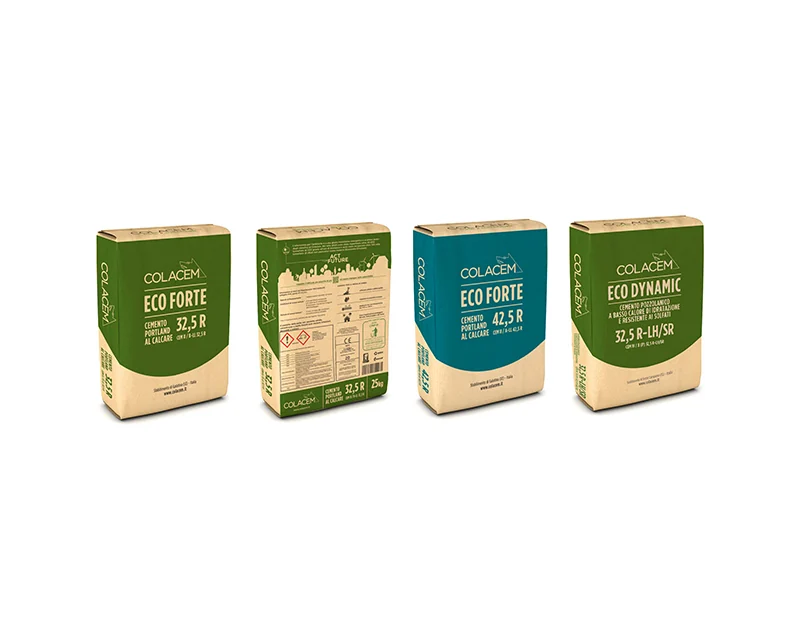
Colacem offers CEM II/B-LL 32.5 R among its cement families; the company’s pages and publications use the FORTE and ECO FORTE names. Documented applications include concrete, pre-blended products, manufactured objects and masonry mortar, subject to the appropriate formulation and specification.
Declarations are also organised by production plant or depot and need to match the actual supply. An environmentally themed trade name is not a substitute for the EPD: comparison depends on compatible declared units, scope and assessment boundaries.
Cementirossi: assess the specific supply being offered
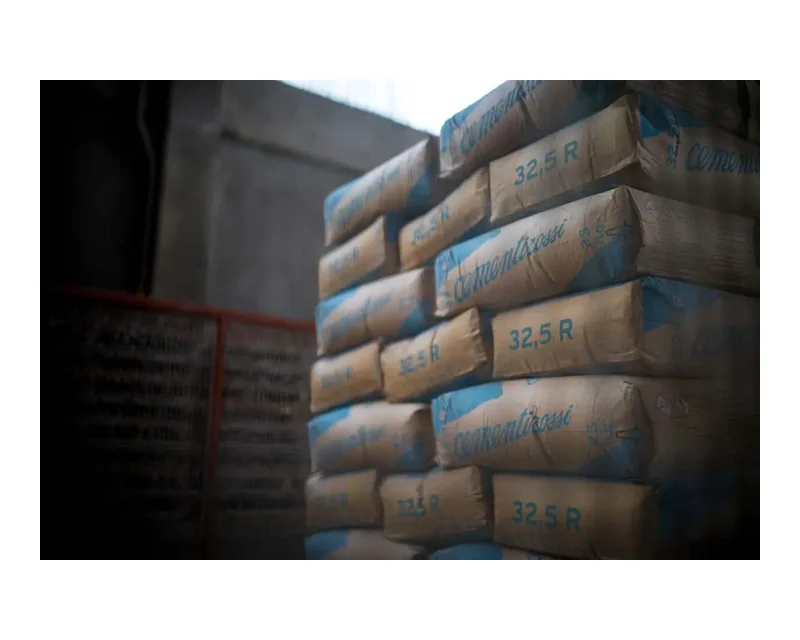
Cementirossi presents Portland, pozzolanic, blast-furnace and composite cement families, alongside hydraulic binders and specialist products. It is worth including where the distribution network and available references suit the project.
The breadth of the range means “Cementirossi cement” is not a single formulation. The full designation, class, production location and technical sheet make quotations comparable while keeping the designer’s specification as the reference.
Aalborg White: when white cement is required
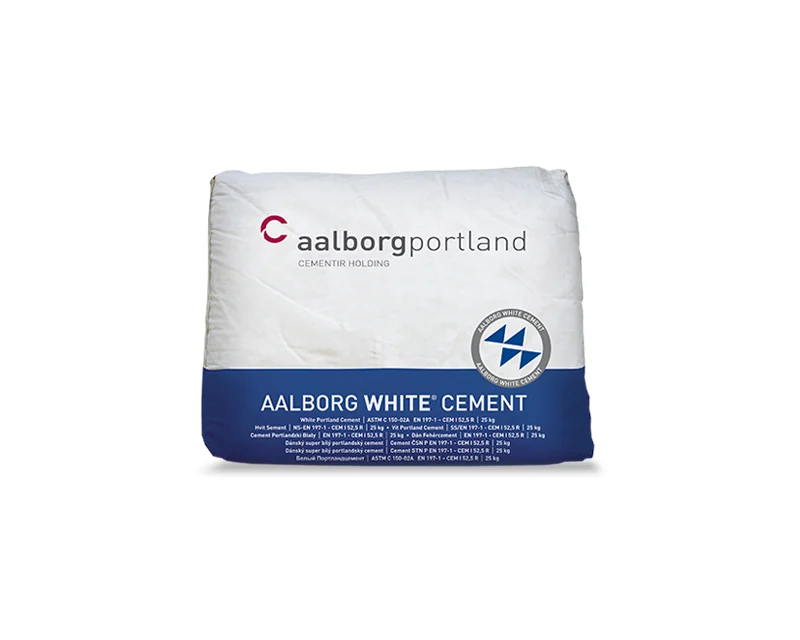
Aalborg White, within Cementir’s business, specialises in white cement. The documented European CEM I 52.5 R made in Denmark is offered in formats including 25 kg bags; confirm packaging and distribution in the country of purchase.
White cement can matter to the appearance of mixes and manufactured objects, but the final colour also depends on aggregates, pigments, water, processing and curing. Replacing grey cement with white cement does not create a ready-to-apply decorative flooring system. Continuous floors and wall finishes need their own formulated products and application sequence.
Understanding 32.5, 42.5, N and R
The European 32.5 and 42.5 classes concern normalised cement strength established by the relevant test method. They do not state the guaranteed strength of a column, foundation or hand-mixed batch. Finished concrete performance also depends on mix design, water-cement ratio, aggregates, placement and curing.
N and R distinguish ordinary and high early strength in the classifications discussed here. R is not another term for rapid-setting cement. The preceding designation, such as CEM II/B-LL, describes a cement family and composition. Two products sharing a strength-class number can therefore still differ.
Buying the highest number is not automatically the right decision. Follow the material specified for the work and exposure. Where a contractor proposes a substitution, assess its technical suitability before accepting it solely because the bag appears to promise greater strength. In markets using ASTM or other specifications, check the local requirements rather than assuming European classes translate directly.
Which cement should you choose for a home renovation?
Masonry, plastering, repairs, screeds and concrete pours involve different materials. Our guide to plaster, render and dry-mix mortar brands explains the distinction between formulated products and a bagged binder.
For small repairs, a dedicated pre-blended product offers a defined purpose, yield and water dosage. Structural concrete follows the design and its documentation; exposed finishes also need agreement on a sample, texture and colour before production.
Also separate cement as a technical ingredient from the cement look as a design choice. Porcelain tiles, resins and decorative coating systems can create related visual effects through different construction methods. A bag of ordinary cement is not a direct substitute for those finishes.
How much does a bag of cement cost?
Two Italian offers showed €5.10 for 25 kg of Tecnocem 32.5 and €5.45 for 25 kg of Tecnocem 42.5, including Italian VAT and excluding delivery. These are indicative retail examples to reconfirm when ordering, rather than averages or a reason to favour one class. Other countries have different ranges, pack weights and delivered costs.
The equivalent prices are approximately €0.204 and €0.218 per kilogram. Ten 25 kg bags provide 250 kg of cement; at the first price, that is €51 for the binder alone. It is not 250 kg of finished concrete and does not, on its own, establish the floor area that can be completed.
The project budget brings together task, volume or area, thickness, mix, aggregates, transport and installation. Logistics also differ between single bags, pallets and bulk supply. White cement and specialist references need quotations for the exact product available locally.
Where to buy and which documents to check
For modest quantities, start with builders’ merchants or renovation-material retailers. Contractors and distributors can organise pallets or bulk deliveries for larger supplies. Evaluate online offers by delivered cost: inexpensive bags can become poor value after freight.
The complete designation, type, class, weight and batch identify the supply, alongside performance documentation and the safety data sheet. Packaging and delivery documents also state storage instructions and periods. Bags need to remain intact and dry; moisture-exposed material cannot be treated as equivalent to correctly stored cement.
Follow the protection requirements in the safety data sheet when handling powder and wet cement mixes, including measures for skin, eyes and respiratory exposure. These are practical instructions for the material purchased and should be read before opening the bag.
Frequently asked questions about cement brands
Which is the best cement brand?
There is no single best brand for every job. Heidelberg Materials, Buzzi Unicem, Colacem, Cementirossi and Aalborg White offer products for different requirements. A reference meeting the design specification, with appropriate documentation and delivery, matters more than a generic ranking.
Are Italcementi and Heidelberg Materials separate choices?
Italcementi became Heidelberg Materials in Italy. The former name may remain in retail descriptions. Check the precise product rather than counting the two names as independent options.
Is 42.5 cement always better than 32.5?
No. These are normalised cement strength classes. Suitability depends on the application and specification; a higher class alone does not guarantee a better finished structure.
Does R mean rapid-setting cement?
No. In these classes, it means high early strength. Rapid-setting fixing or repair products have their own formulations and specified uses.
Can a bag of cement be used directly as mortar?
Cement is one ingredient of a mix. An appropriate formulation and other specified materials are needed. For many small jobs, a dedicated pre-blended mortar may be more practical.