Novellini, Duka, Vismaravetro, Megius, Samo and Arblu: an Italian shower enclosure shortlist with practical advice on layouts, specifications and purchasing.
A shower enclosure is often chosen from a photograph. Living with it brings other questions into focus: whether the door clears the basin, whether spray stays inside the shower and whether the glass can be cleaned without reaching into awkward corners. These details reveal more about a collection than the colour of its frame alone.
Our selection of Italian shower enclosure brands to consider brings together Novellini, Duka, Vismaravetro, Megius, Samo and Arblu. The six companies offer different approaches to standard sizes, bespoke configurations and coordinated bathroom design. We assessed their documented ranges and services; this is an editorial shortlist, rather than a ranking based on comparative product testing. Collections, specifications and dealer support vary by country.
Italian shower enclosure brands at a glance
| Brand | Worth exploring for | Key buying consideration |
|---|---|---|
| Novellini | Broad ranges and official spare parts | The complete specification of the chosen configuration |
| Duka | Made-to-measure enclosures | Survey accuracy and available customisation |
| Vismaravetro | Architectural glass shower spaces | Glass, fittings and room proportions |
| Megius | Restrained profiles and varied openings | Adjustment allowance and clear entry width |
| Samo | Recessed, corner and walk-in layouts | Space needed to operate the door |
| Arblu | Coordinated shower and bathroom materials | Compatibility between enclosure and tray |
Novellini: compare the configuration, not just the collection
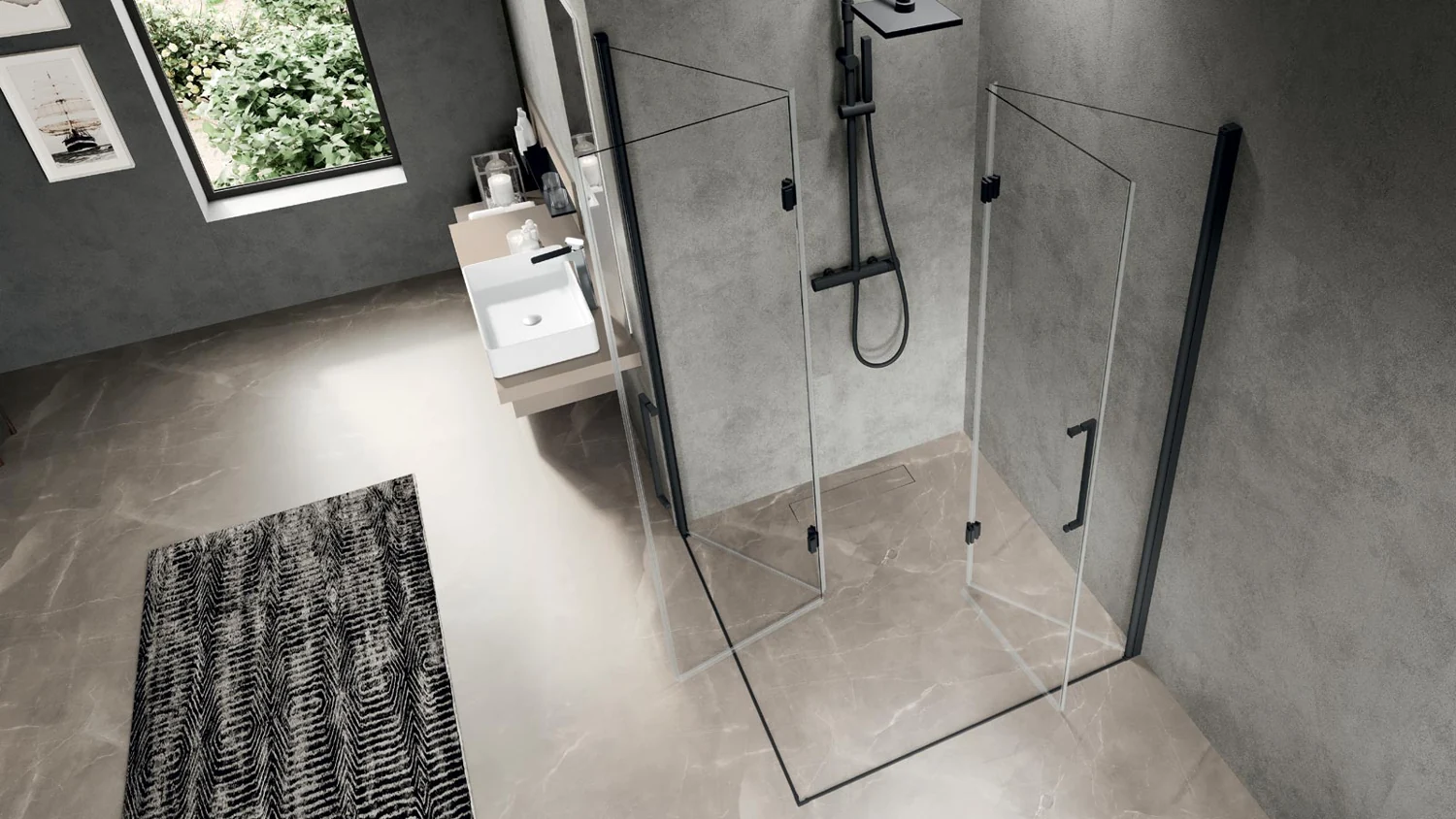
Novellini’s enclosure range includes Young, Opera, Kuadra 2.0 and Lunes 2.0 alongside newer families. The breadth of the catalogue makes it possible to begin with the room layout and then find a suitable collection, rather than organising the bathroom around an attractive product image.
The configurator and official spare-parts shop are useful consumer resources. One clarifies available combinations; the other underlines the importance of retaining the exact product code. Glass specifications, opening mechanisms and adjustment allowances differ within the brand, so meaningful comparisons require equivalent configurations.
Duka: a closer look at made-to-measure options
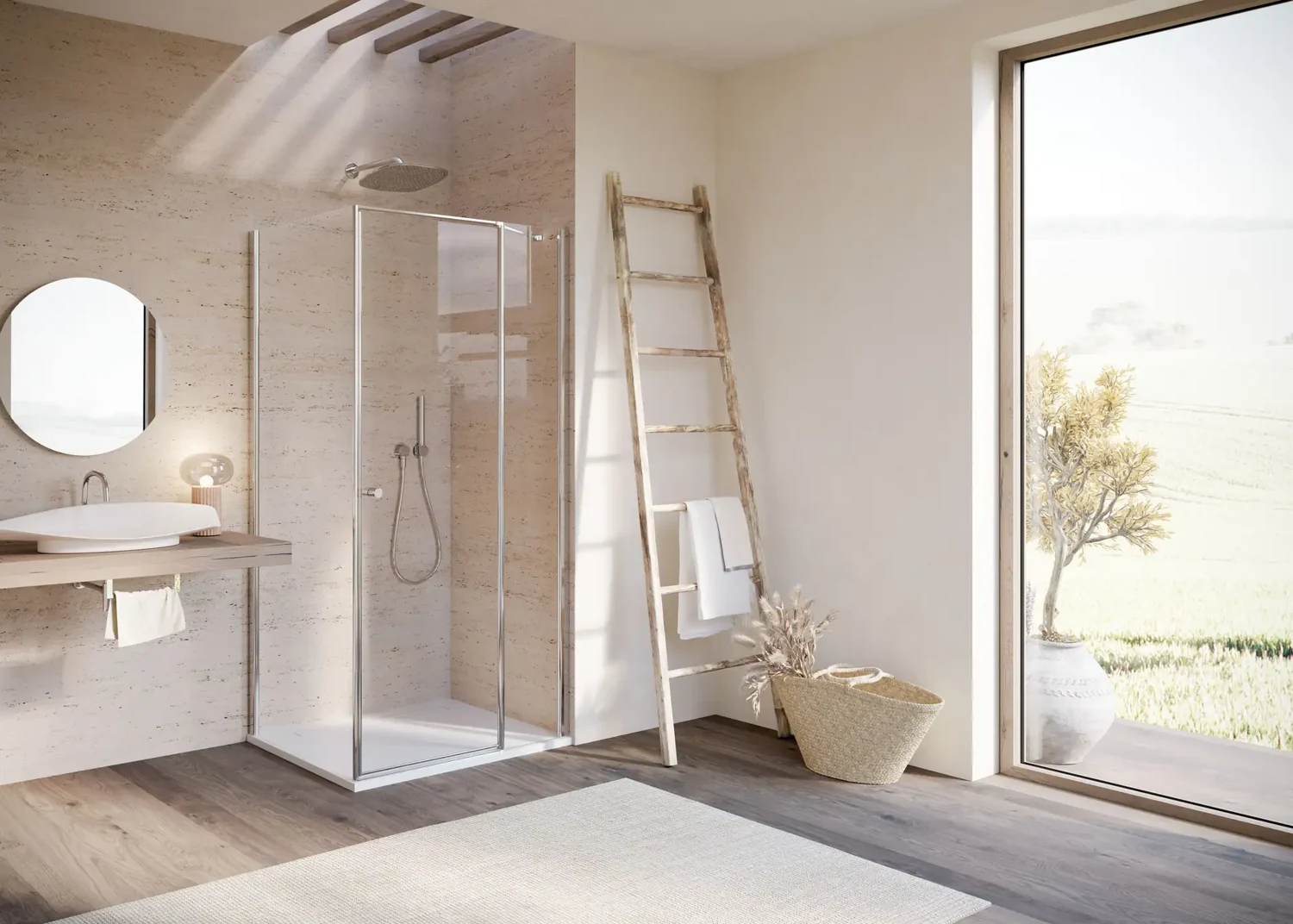
Based in Bressanone in northern Italy, Duka places particular emphasis on customised shower enclosures. Its families include acqua 5000, pura 5000 and multi-S 4000, offering different relationships between framing, glass and moving components.
The brand is worth exploring when the room or shower layout falls outside a straightforward standard-size installation. Bespoke work begins with an accurate survey: sloping walls, out-of-square corners and finished surfaces need to be assessed for the specific configuration. Ordering before the final dimensions are known can undermine the whole purpose of a tailored solution.
Vismaravetro: treating shower glass as architecture
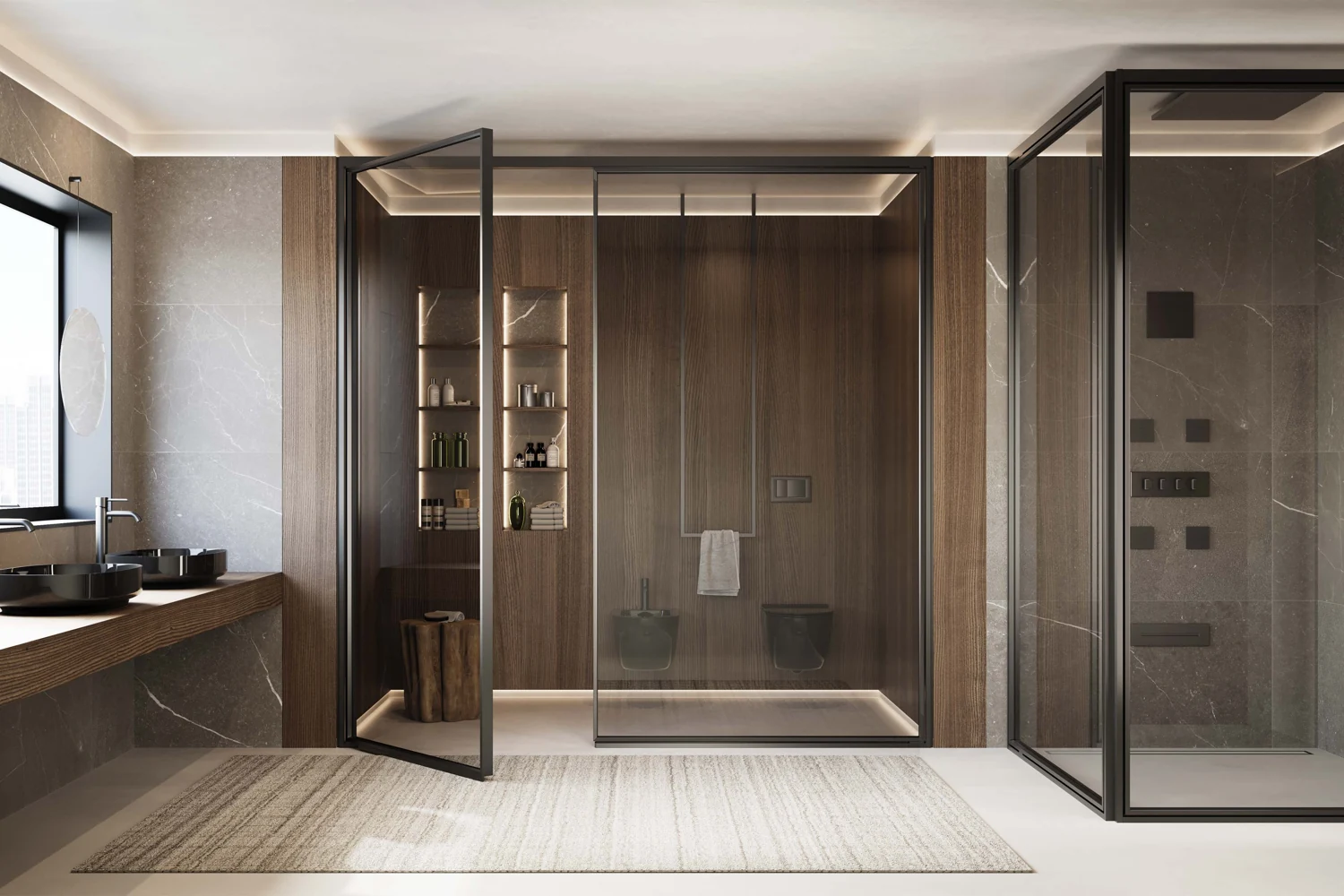
Vismaravetro approaches the enclosure as part of the interior rather than an isolated fitting. Its range deserves consideration when transparency, proportions and hardware need to work closely with the surrounding room, particularly where the shower has a strong visual presence.
A generous glass panel can preserve a sense of space, while different finishes change privacy and cleaning requirements. Even a visually frameless design has fixings, seals and installation conditions. Those details deserve the same attention as the finished appearance.
Megius: slim profiles and different ways into the shower
Megius offers sliding, hinged, folding and walk-in solutions. Zen illustrates its interest in restrained profiles; the official Zen hinged product sheet specifies 6 mm glass and a height of 200 cm. These figures belong to that particular series and should not be assumed to apply across the catalogue.
The company also provides spare-parts and service-centre searches. For a renovation, the useful comparison is between the door’s operating space, clear entry width and adjustment allowance. A discreet wall profile still needs to accommodate the actual condition of the wall.
Samo: begin with the position of the enclosure
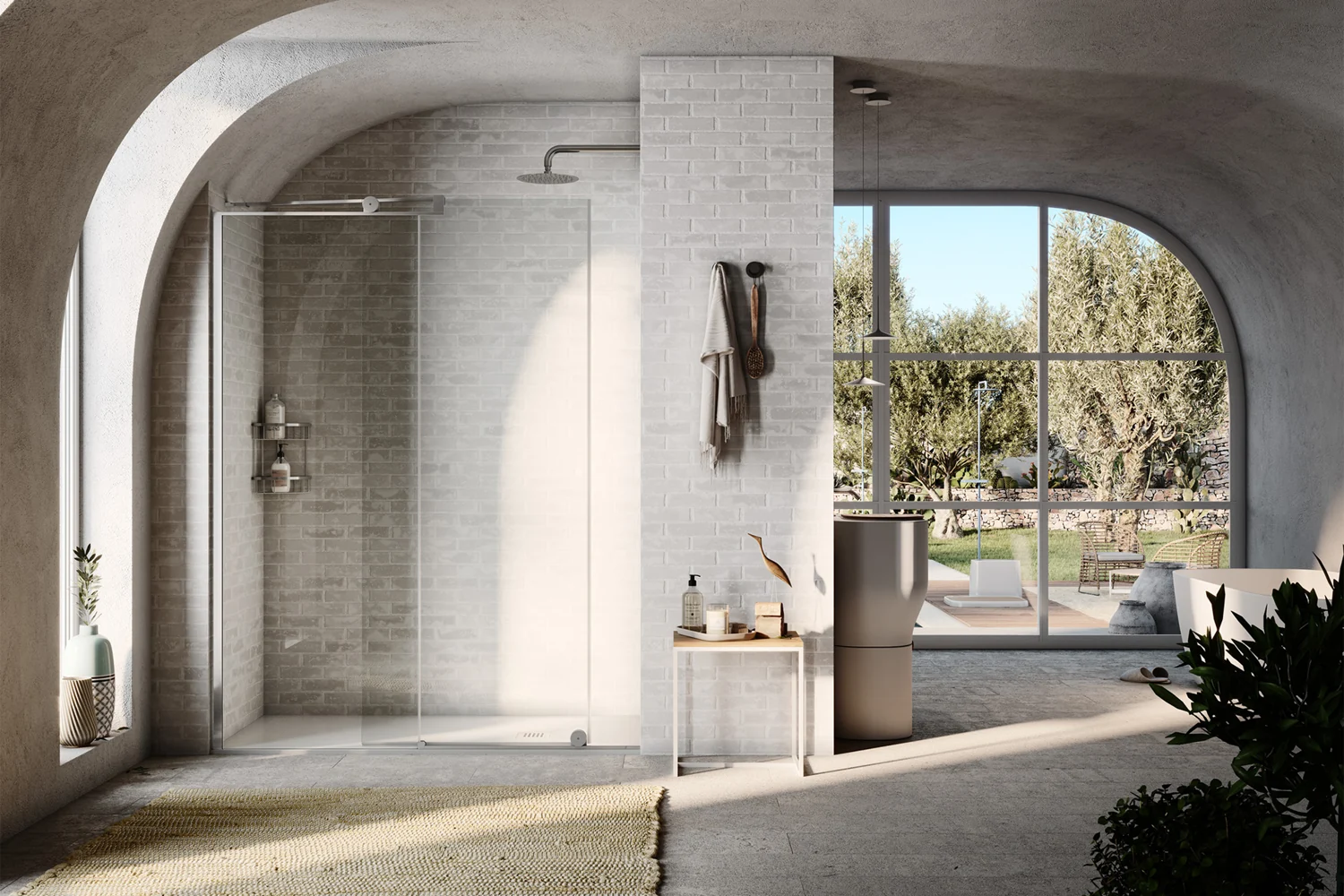
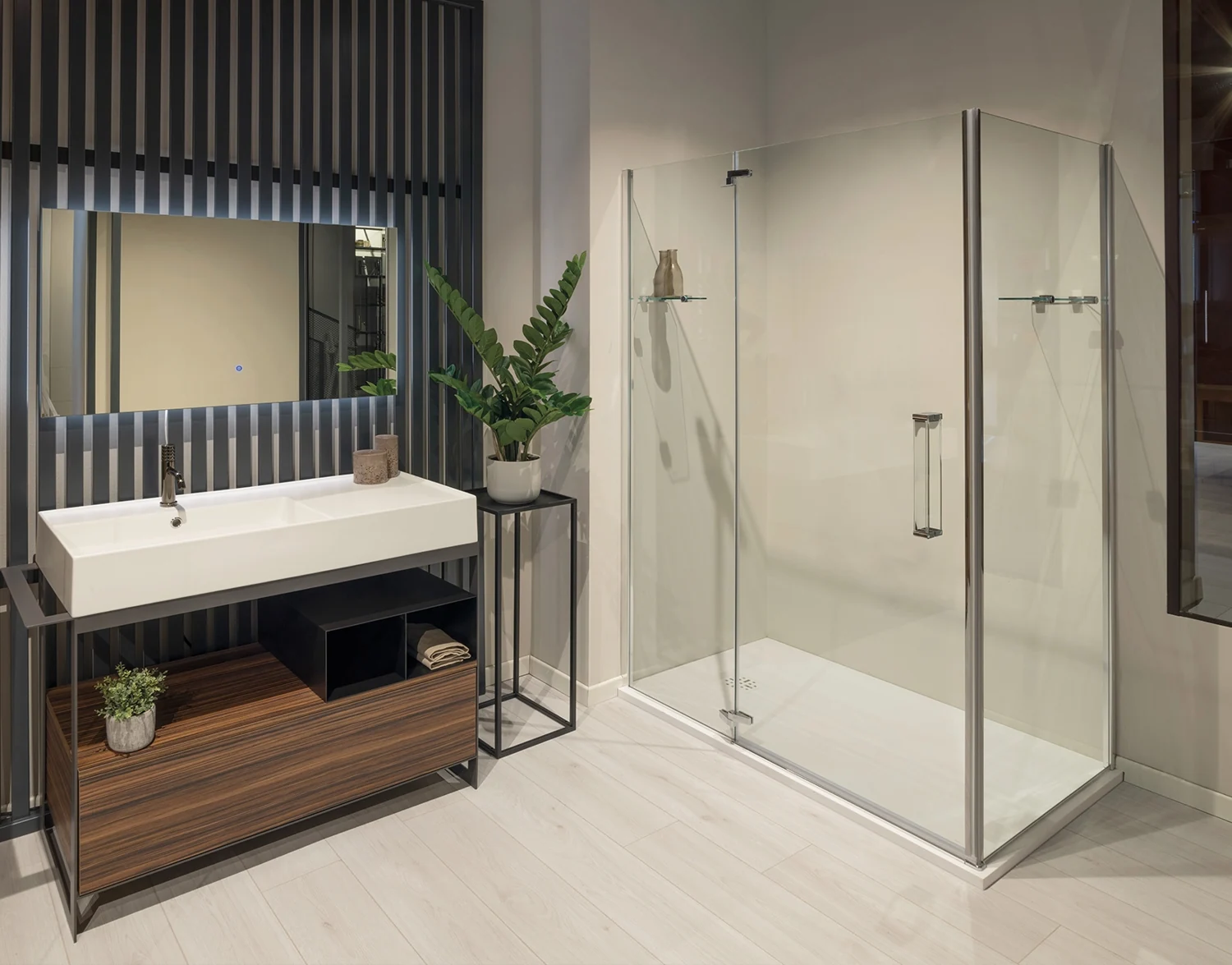
Samo organises its catalogue around installation types including recess, corner, peninsula, bath screens and walk-in showers. This provides a practical starting point: the relationship between enclosure and room comes before metal finishes or handle shapes.
In a narrow bathroom, choosing between a sliding and hinged door changes how someone enters and moves around the space. Operating a display model while considering the position of the basin, WC and towels is often more revealing than comparing collection names.
Arblu: connecting the enclosure with the rest of the bathroom
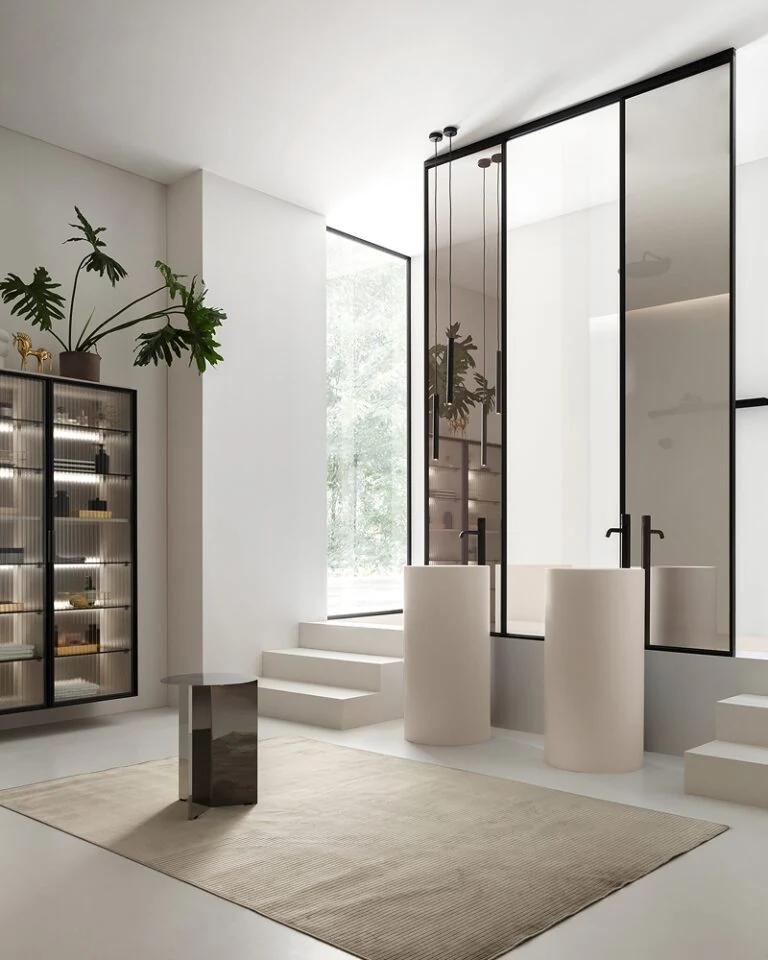
Arblu combines shower enclosures with trays, wall panels and bathroom furniture. Its hinged, sliding, folding and walk-in options are worth investigating where the design calls for a coordinated relationship between the wet area and surrounding materials.
The company documents testing associated with EN 14428 for its shower enclosures. The chosen model’s specification and compatibility with its tray remain essential. A textured surface and a carefully chosen metal finish can create a convincing composition, provided drainage, joints and cleaning access receive equal attention.
Sliding, hinged or walk-in: which suits the room?
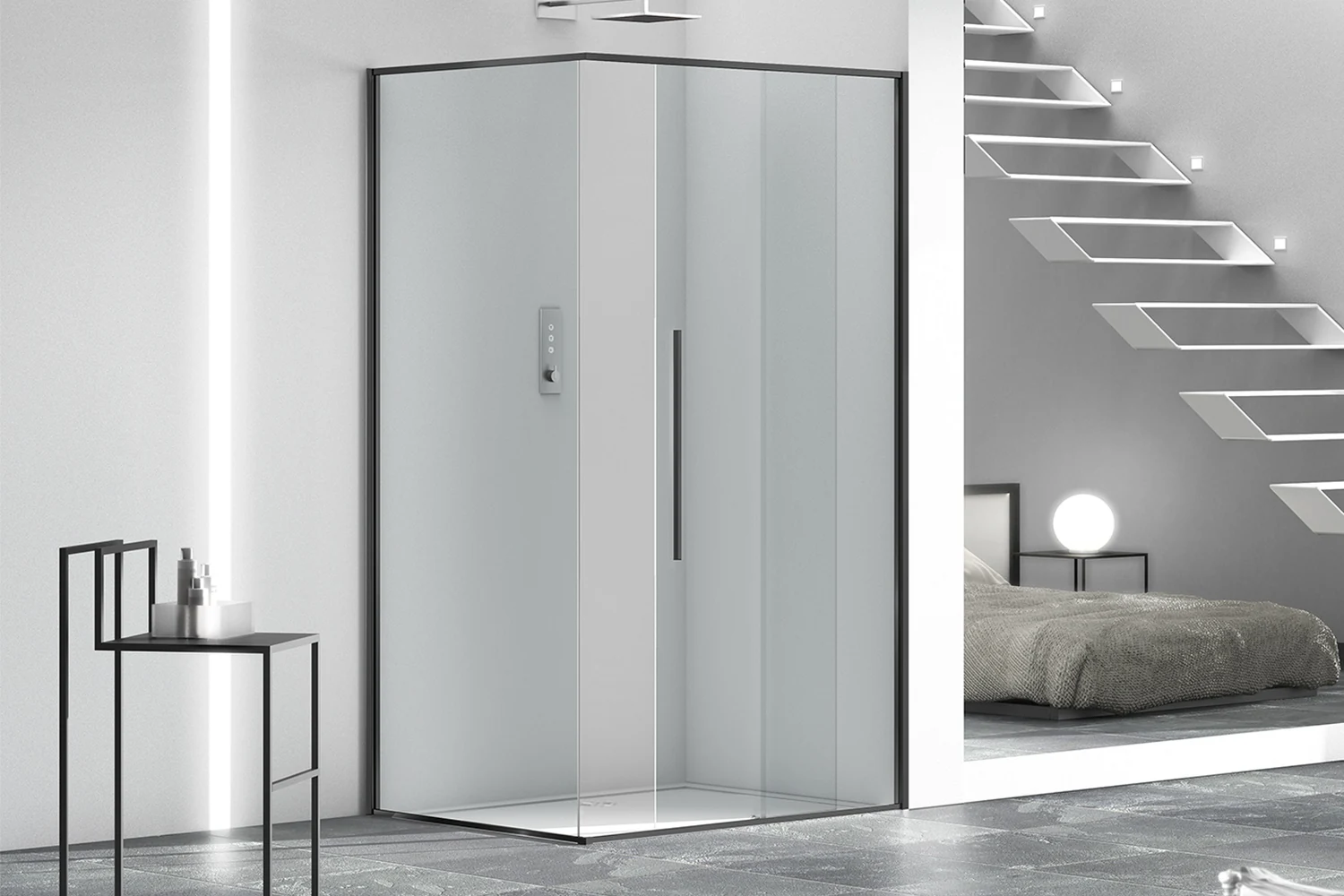
Sliding doors reduce the space needed outside the enclosure, but tracks and overlapping glass affect cleaning access. Hinged doors can provide a generous opening and a visually simple glass surface; they need a clear operating area. Folding doors can help in compact layouts, with additional joints and moving parts to consider.
A walk-in screen removes the door, but it does not remove the need to plan for spray. The size of the wet area, showerhead position and direction of water must work together. A short open screen selected simply to make a small bathroom look larger may leave the surrounding floor wet.
What does a shower enclosure cost?
A specific example is more useful than a universal price band. An Italian retail listing reviewed for this guide offered a Novellini Young 2.0 G+F inline corner enclosure measuring 120 × 80 cm for approximately €994. This is an Italian-market example for one configuration and offer, rather than a brand-wide or international average. The final quotation needs to clarify tax, delivery and installation; finishes, dimensions and commercial terms may change the price.
Comparable quotations should cover the same number of glass panels, opening type and fittings. A single fixed screen is not equivalent to a complete corner enclosure. Surveying, a tray, waste fittings, removal of the old enclosure, disposal and installation may all sit outside the advertised product price. Overseas buyers also need local pricing and after-sales arrangements rather than a currency conversion of an Italian offer.
Where to buy and what should be settled before ordering?
Specialist bathroom showrooms allow buyers to inspect the fittings, finishes and movement of a door. Online purchasing can work well when the product code and dimensions are established; bespoke installations and irregular walls require more coordination. Responsibility for surveying and fitting should be explicit.
The tray’s nominal size is not necessarily the enclosure’s ordering dimension. Measurements should be taken against finished surfaces, accounting for the model’s adjustment range, handing and clear opening. Easy-clean glass treatments still require maintenance according to the manufacturer’s instructions.
Our Megius brand profile explores its wider approach to shower and wellness design. A successful choice balances the enclosure with the rest of the bathroom while preserving everyday comfort. The most persuasive design is one that remains straightforward to use, maintain and repair.