What Neo Deco is, how it differs from Art Deco and how to bring it home: palettes, materials and room-by-room ideas, with a chapter on the bathroom.
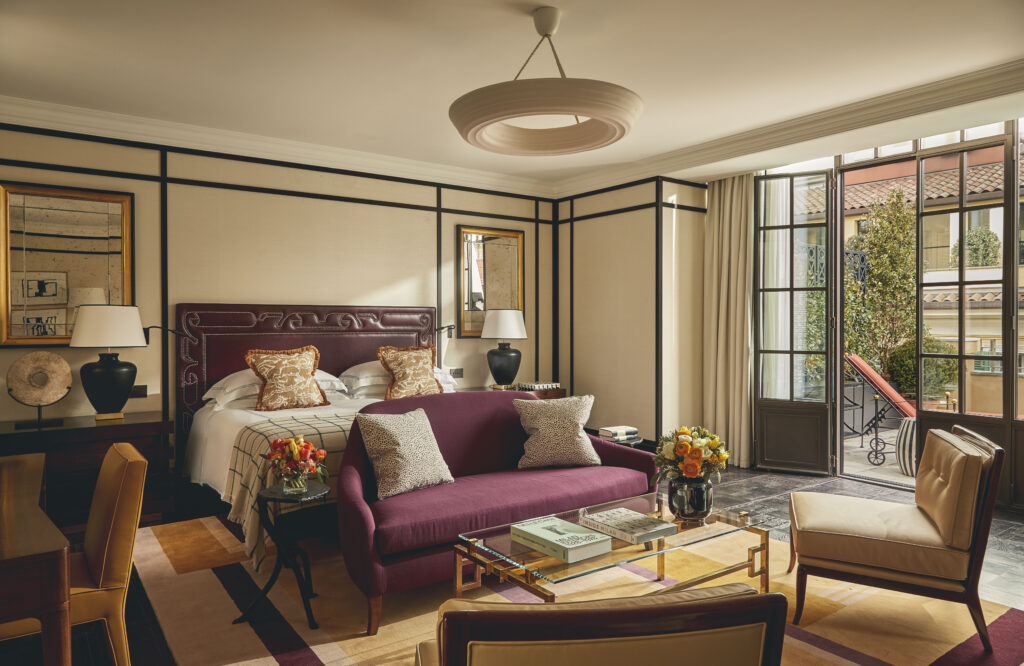
In 1925 Paris opened an exhibition of decorative arts that would give a whole style its name. A century later, its vocabulary of fan arches, chevrons, lacquers and brass has returned to homes, without any ambition to rebuild the 1920s. It is called Neo Deco, and it rereads that language with a lighter hand.
From historic Deco, Neo Deco keeps the geometry, the taste for surfaces that catch the light and the idea that a room has a director. It leaves aside decoration that covers every centimetre. The result is an interior that is more constructed and calmer, where an arched mirror or a sculptural pendant is enough to change how a space reads.
The push comes from several directions. Pinterest included Neo Deco among the interior trends in Pinterest Predicts 2026, Elle Decor Italia covered its projects in the February 2026 issue, and at the Salone del Mobile in April the trade press read a return of polished brass, chevrons and velvets in jewel tones. After years of light oak and neutral palettes, designers and clients are asking for contrast, material and symmetry.
This guide defines the style, separates it from the historical movement and moves through colours, materials and rooms, from the living room to the bathroom, down to the most common mistakes. The goal is practical: to understand how to bring Neo Deco into a real home, one that people live in every day.
What Neo Deco is and why people are talking about it
Neo Deco, also written Neo Déco or NeoDeco, is the contemporary reinterpretation of Art Deco in interior design. It keeps the geometry, symmetry, warm metals and glossy surfaces of the Deco of the 1920s and 1930s, and brings them into homes designed for daily use: comfortable seating, dimmable light, less decoration on the surface. Yanko Design describes it as a Deco that keeps the glamour and adapts it to interiors where comfort, simplicity and sculptural forms matter.
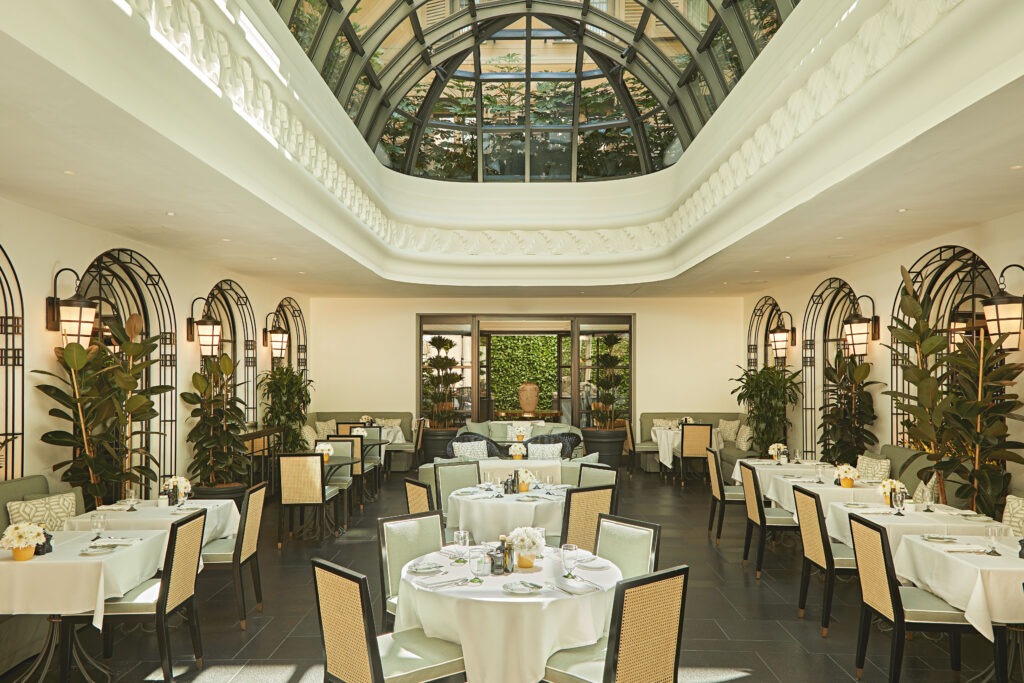
The name is not new. In December 2017 a 1stDibs article already used “Neo Deco” to describe designers who revisited Deco with more curves, made-to-measure work and precious materials. Pinterest brought it back to the centre of attention: in the Pinterest Predicts 2026 report, published on 9 December 2025, Neo Deco appears among the home trends as an updated Art Deco, with zigzags, fan arches and chrome or brass finishes, driven by Gen X and Millennials.
The report’s figures concern searches on the platform: “red marble bathroom” +80%, “antique bar cart” +100%, “pendant lamp” +40%, “brass aesthetic” and “leather banquette” +35%. In the public text of the report these percentages are not tied to Italy or to a specific period, so they should be read as an international signal about taste, with no value as a measure of sales or renovations in Italy.
The Italian signal comes from publishing and trade fairs. The February 2026 issue of Elle Decor Italia, devoted to the dialogue between past and future, covers among other things the flourishing of Neo Déco-inspired projects. At the Salone del Mobile (21-26 April 2026) Yanko Design recognised Deco details in the collections, with chevrons, polished brass, chrome and fan arches, citing Armani Casa, Promemoria and Tacchini among others.
There is more than one reason for the return. Vogue Adria, in January 2026, reads it as a reaction to Scandinavian minimalism, with a desire for inherited pieces rich in history and for intense colours. Around the same time the centenary of the 1925 Exposition revived attention to Deco: in 2025 Palazzo Reale in Milan devoted a major exhibition to it.
From 1920s Art Deco to contemporary Neo Deco
Paris 1925 and Italian Deco
The style takes its name from the Exposition internationale des arts décoratifs et industriels modernes, held in Paris in 1925. Deco had been born earlier in the French capital, around the 1910s according to several accounts. The Exposition put it on display and fixed it as the language of modernity: precious materials, sharp geometries, craft and industry on the same level. At the time people spoke of “Style 1925”. The label “Art Déco” became common usage later, in the 1960s.
Italy took part with its own pavilion. The porcelain that Gio Ponti designed for Richard-Ginori, with classical forms and motifs filtered through a modern sensibility, won a Grand Prix. Milan marked the centenary with the exhibition “Art Déco. Il trionfo della modernità” (The Triumph of Modernity), held at Palazzo Reale from 27 February to 29 June 2025 and curated by Valerio Terraroli. It brought together about 250 works and a closer look at the Royal Pavilion at Milan’s Central Station. The style ran through the 1920s and 1930s and faded around 1939, returning to fashion in the 1970s.
What changes in Neo Deco
In historic Deco, decoration was a statement: inlays, repeated motifs, lacquers, marquetry, series of similar pieces. Neo Deco shifts attention to proportion, rhythm and the design of the space, and treats ornament as a graphic sign. Use changes too: today a Deco living room has to hold a deep sofa, a screen, dimmable light and a family. In 2017 the Italian designer Gio Tirotto, cited by 1stDibs, criticised the excessive repetition and thin design thinking of original Deco and read in Neo Deco a return to craftsmanship.
The table summarises the most useful differences for anyone designing.
| Aspect | Historic Art Deco (1920s-1930s) | Contemporary Neo Deco |
|---|---|---|
| Context | Post-war years, Paris Exposition of 1925, faith in modernity | Return to character after years of neutral palettes |
| Ornament | Abundant and layered: inlays, marquetry, repeated motifs | Selective: a few graphic signs, often one gesture per room |
| Shapes | Rigid symmetry, chevrons, fan arches, squared volumes | Controlled symmetry, sculptural curves alternating with straight lines |
| Materials | Exotic woods, lacquers, marble, polished brass, chrome, glass | Marble and marble-effect porcelain stoneware, satin brass, chrome, smoked glass, velvet, dark woods in touches |
| Colours | Sharp contrasts, such as black and gold or green and brass | Deep tones (burgundy, bottle green, midnight blue) over ivory, sand and warm grey bases |
| Furniture | Formal and representative | Soft seating, curved sofas, vintage or bespoke pieces made for everyday use |
| Lighting | Crystal or alabaster chandeliers, decorative wall lights | Sculptural pendants, wall lights, layered lighting, backlit niches |
| Settings | Mansions, hotels, cinemas, venues | Homes, hospitality, retail |
| Goal | To represent modernity and prestige | To create personal, liveable rooms with a focal point |
The characteristics of Neo Deco style
No element belongs to Neo Deco alone: brass lives in neoclassical interiors too, and symmetry in classical furnishing. The style comes from combining four ingredients, dosed with judgement.
Geometry, symmetry and sculptural forms
Chevrons, fan arches, sunbursts and wall panelling in regular modules remain the basic vocabulary. The dosage changes: a fluted wall, an arched mirror or an octagonal coffee table is enough to state the intention. Straight lines live alongside curves, and the result shows in sofas with rounded volumes, barrel chairs and tables with sculptural bases. Symmetry remains and concentrates on a focal point, such as the sofa wall or the axis between entrance and console, leaving the rest of the room free. In living rooms under 20 square metres it is best to limit it to the main wall.
Decoration and glossy surfaces
Ornament becomes a graphic sign: a brass inlay line in marble, a fluted panel, a repeated motif on a single surface. Gloss (lacquer, smoked glass, mirrors, polished marble, chrome) works by contrast with what absorbs light: wool, bouclé, plaster, matt wood. Without that counterpoint the room turns hard and reflective.
Lighting as architecture
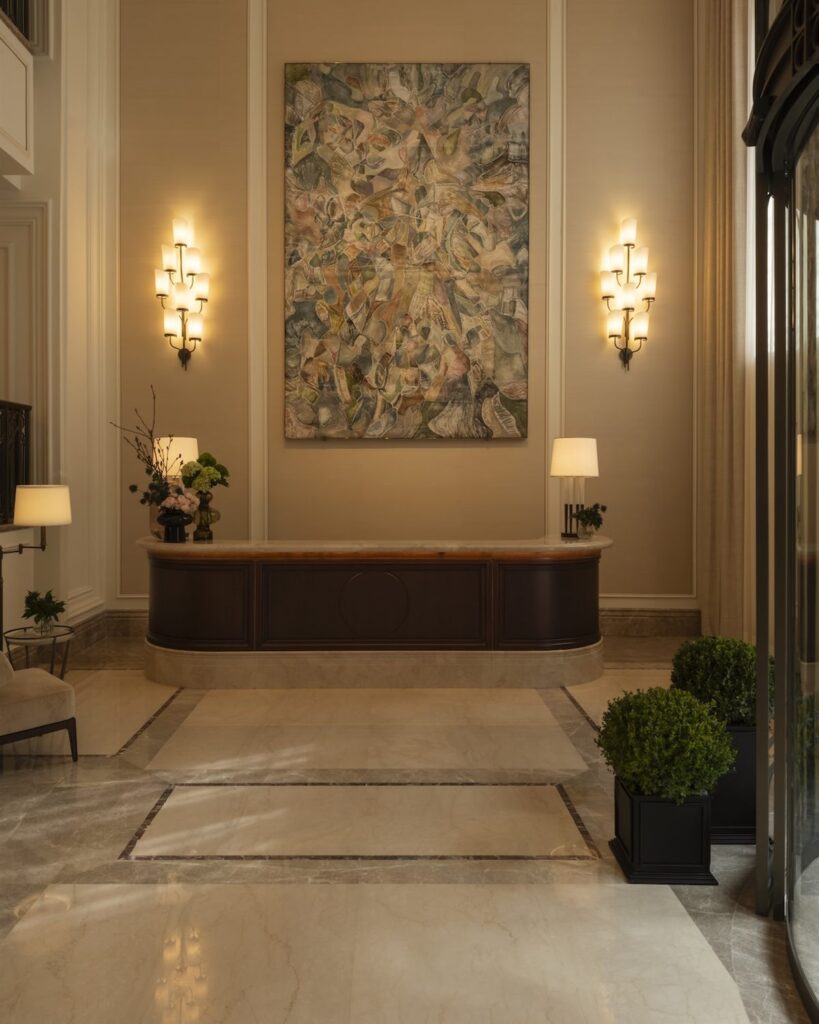
Light is the main tool. Sculptural pendants, opal glass wall lights and onyx or marble table lamps build atmosphere as much as the materials do, and are best planned in layers. In technical terms this means separate circuits, with accents on the walls, a central pendant and light points for horizontal surfaces, all in warm light, around 2700-3000 kelvin.
Luxury and function
Neo Deco lasts when every showpiece also has a job: the arched mirror doubles the light in a narrow hallway, the bar cart becomes a side surface, the leather banquette is an extra seat. The list of rising searches in the Pinterest report goes in the same direction, where pendant lamp, bar cart and leather banquette are objects for use. Materials are chosen for maintenance too: marble-effect porcelain stoneware brings the veining where real marble would need constant care.
Neo Deco colours: palettes and pairings
Vogue Adria describes a warm, muted palette, with emerald, burgundy, petrol blue and amber alongside wood and leather. The proposals that follow are editorial and pair deep tones with bases of ivory, sand and warm grey. The practical rule is one: one or two dominant hues, one metal, and the rest of the room calm. More pairings are in our guide to 2027 colour combinations.
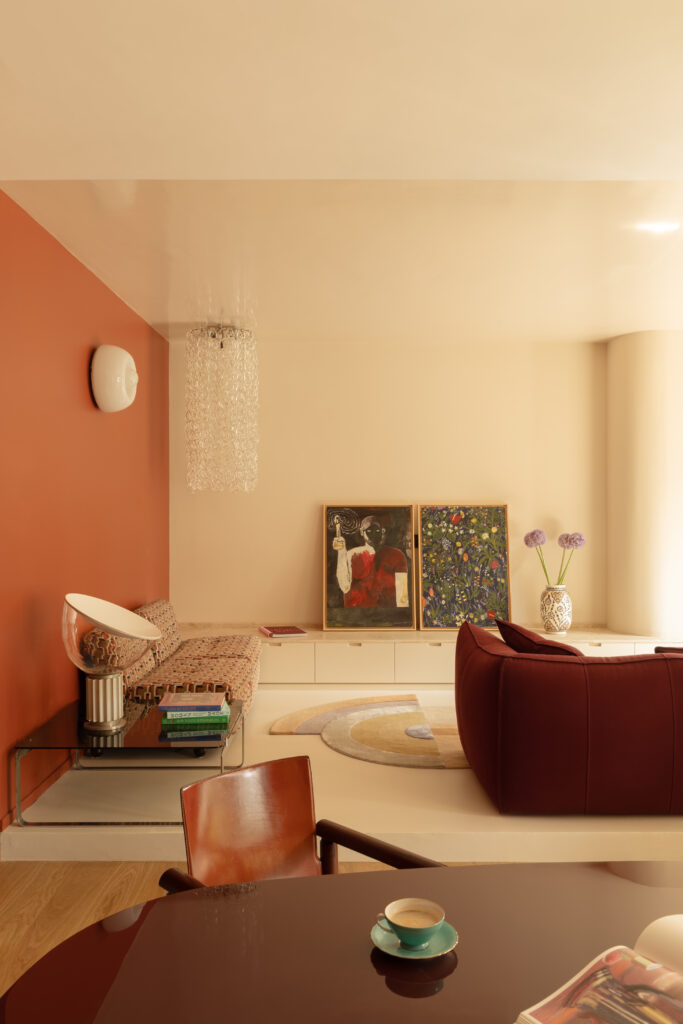
Burgundy and gold. The most theatrical combination. It works if the burgundy takes up a single large element, such as a velvet sofa or a wall, and the gold stays on trims, feet and lamps.
Emerald green and brass. Suits bathrooms, entrances and studies. The dark green gives depth, and satin brass warms without shining.
Cream and black. The most graphic pair and the easiest to introduce into a modern home: a light marble top with dark veining, a black lacquer, an ivory fabric.
Midnight blue and champagne. Suited to bedrooms and dining rooms, where evening light is warm. The blue absorbs, the champagne gives back.
Terracotta and marble. The earthiest palette. Dark terracotta next to a light marble gives a contrast less cold than black, suited to kitchens and entrances.
Powder pink and warm metals. The softest. Powder pink works with bronze and burnished brass, in bedrooms and guest bathrooms, and stops looking sweet if a dark tone appears too.
| Palette | Indicative HEX | Coordinated materials | Suitable rooms |
|---|---|---|---|
| Burgundy and gold | #5E1224 burgundy, #B8923F antique gold, #EFE6D6 ivory | Velvet, satin brass, red marble, dark wood | Living room, dining room, bedroom |
| Emerald green and brass | #0F4D3A emerald, #B08D57 brass, #E9E2D0 cream | Green marble, satin brass, walnut, smoked glass | Bathroom, entrance, study |
| Cream and black | #EFE6D2 cream, #151515 black, #8C8577 warm grey | White marble with dark veining, black lacquer, glass, bouclé | Kitchen, living room, entrance |
| Midnight blue and champagne | #14213D midnight blue, #D9C7A3 champagne, #F1ECE2 ivory | Velvet, lacquer, champagne metal, dark-stained oak | Bedroom, dining room, living room |
| Terracotta and marble | #A5533A terracotta, #E6DED3 light marble, #3B2A22 dark brown | Light marble, cotto or plaster, burnished brass, dark wood | Kitchen, entrance, bathroom |
| Powder pink and warm metals | #D9B8AE powder pink, #A9783F bronze, #3A2F2C warm graphite | Velvet, bronze, pink-toned marble, mirror | Bedroom, guest bathroom, entrance |
The HEX codes are editorial proposals by Archi&Interiors to guide the choice and are not official codes of the style. Each tone should be checked on a sample, in the real light of the room.
Materials and finishes
Neo Deco is recognised by touch before sight. Each room alternates a surface that reflects with one that absorbs.
Marble and stone. Bold veining works as decoration: Calacatta, Nero Marquina, Rosso Levanto, Verde Alpi. Marble fears acids and stains, so in kitchens and heavily used worktops a marble-effect porcelain stoneware or a protective finish is the better choice.
Metals. Satin or brushed brass holds up better over time than polished brass, which shows every fingerprint. Chrome and dark nickel bring a cooler tone and work next to black and midnight blue. It is best to choose only one per room.
Glass, mirror, lacquer. Smoked glass and bronzed mirror add depth to niches, doors and headboards. Matt or semi-gloss lacquer replaces the mirror-polish lacquering of historic Deco and cleans easily.
Fabrics and leather. Velvet, bouclé and boiled wool absorb light and soften the metals. Leather appears in banquettes and dining seating, in line with the rising searches on Pinterest.
Wood. Walnut, dark-stained oak and veneers with strong grain recall the Macassar ebony and rosewood of historic Deco, now replaced by more readily available species.
Neo Deco living room
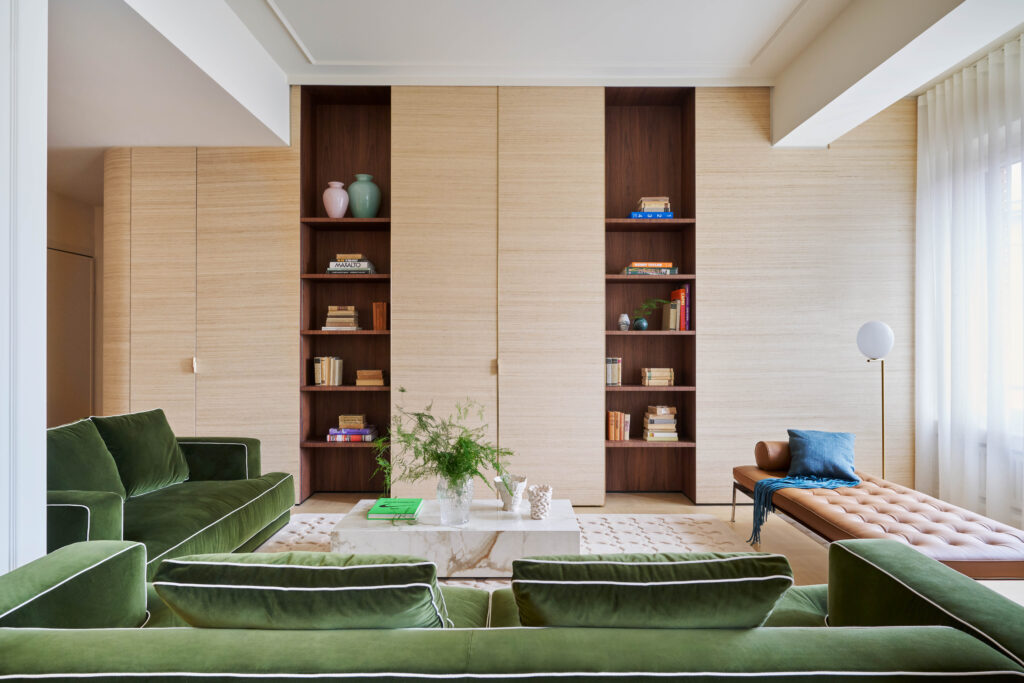
The living room hosts the piece that declares the style, and it is best to choose only one. A sofa with sculptural volumes in burgundy or bottle-green velvet, a fluted wall behind the bookcase, a marble coffee table with a brass base: each can hold the room alone.
The rest stays calm. Ivory or warm grey walls, a plain wool rug and heavy curtains in the same tone let the main element stand out. An arched mirror above the console doubles the light from the windows and widens the depth of the room.
Light works on three levels: a sculptural pendant above the coffee table, wall lights on the sofa wall, a table lamp on a low surface. With warm, dimmable light, brass and velvet change tone from day to evening. A vintage or period-style bar cart completes the conversation corner and follows the rising searches on Pinterest. To plan the light layer by layer, see the guide to living-room lighting.
Neo Deco bathroom: marble, geometry and light
The bathroom gathers everything Neo Deco loves: polished surfaces, metals, mirrors and controlled light. Pinterest searches for “red marble bathroom” grew by 80% in the data of the 2026 report, an international signal about taste, with no value as a measure for the Italian market. For more project ideas, see dream bathrooms and the 2025-2026 trends.
Red and green marble
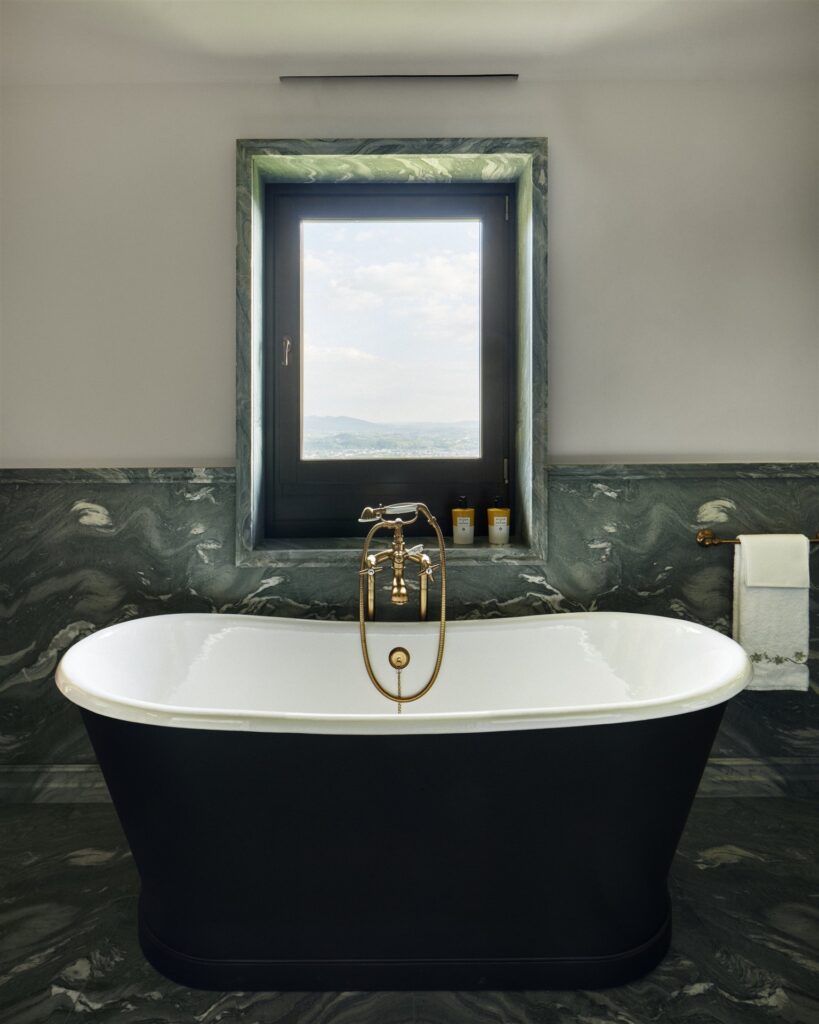
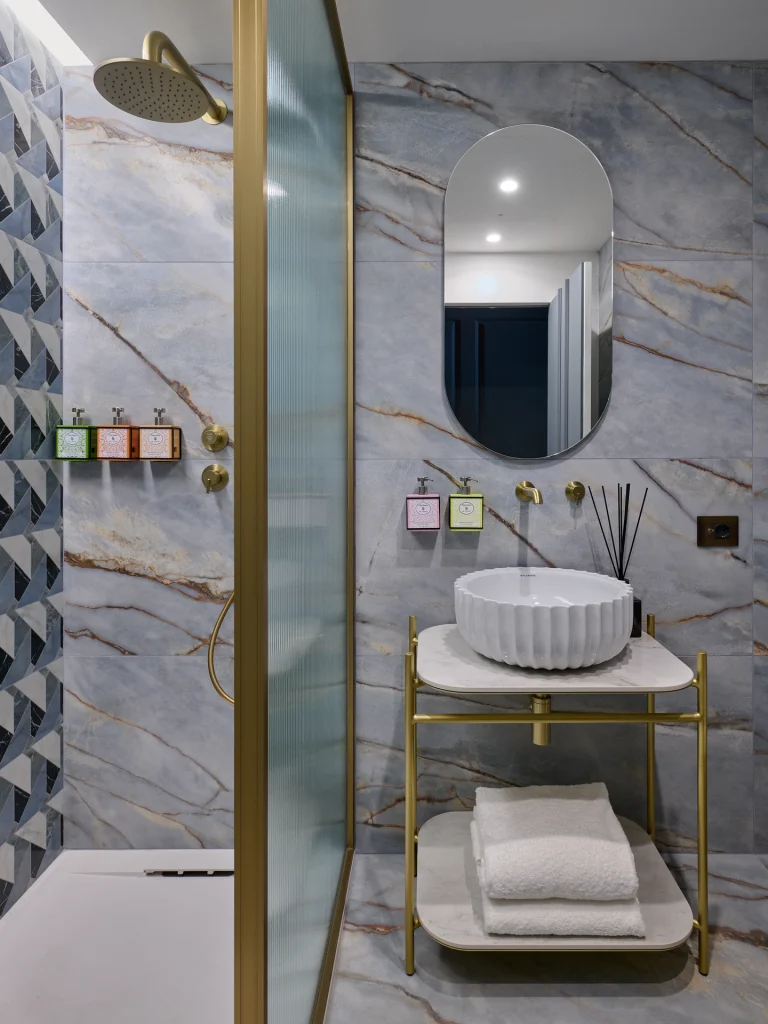
Red marble (Rosso Levanto, Rosso Francia) and dark green marble (Verde Alpi, Verde Guatemala) give the bathroom a depth that white cannot offer. They work well on a single surface: the wall behind the basin, the vanity top or the shower cladding. Red marble pairs with a warm brass, green with satin brass and dark wood. On surfaces heavily exposed to water, marble-effect porcelain stoneware reduces maintenance.
Geometric tiles and floors
Hexagons, rhombuses, scales and contrasting Greek keys take up the Deco design. The motif works for a wall or for the floor, as long as the other surface stays plain. On the floor, satin or anti-slip finishes are needed, because polished marble becomes slippery with water. Grout in a dark tone makes the pattern stand out.
Sanitaryware, taps, mirrors and light
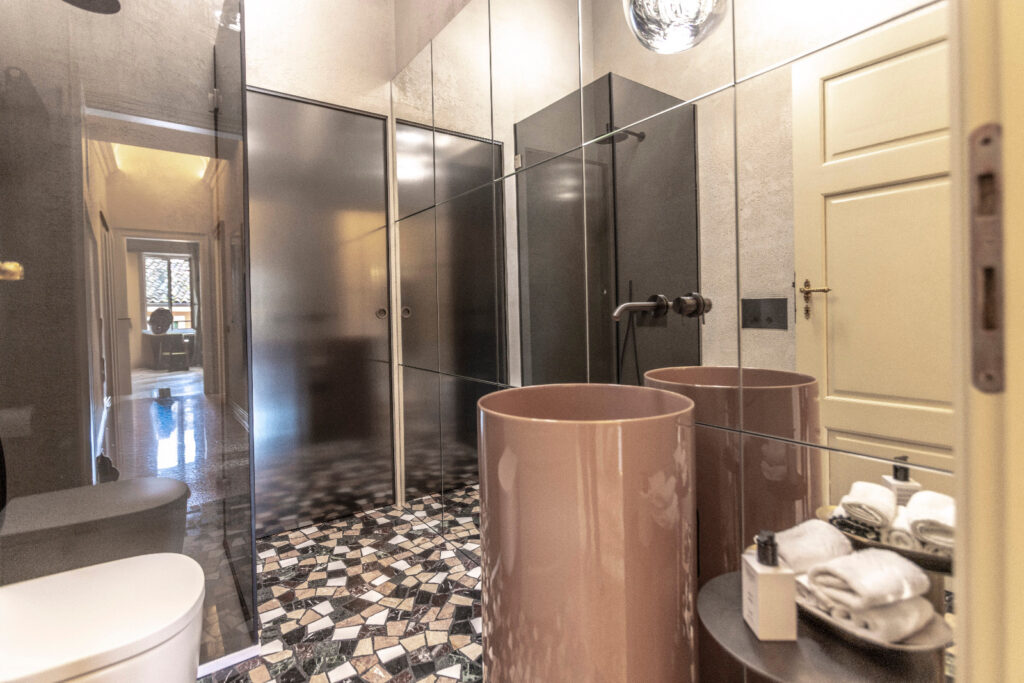
Wall-hung sanitaryware and oval baths with soft lines balance the geometry of the wall and floor coverings. Taps in satin brass or matt black, with levers or cross handles, replace polished chrome. In humid rooms PVD-treated finishes resist cleaning products better, and it is worth asking the manufacturer for the technical data sheet.
The arched or octagonal mirror, with a thin frame, becomes the centre of the wall. The light comes from the sides, at face height, with warm wall lights between 2700 and 3000 kelvin and a spotlight over the shower. The vanity unit in walnut, dark lacquer or fluted fronts carries a thin-edged marble top.
The small bathroom
Under 4 square metres two decisions are enough: one important surface (the basin wall) and a single metal. Walls stay light, the mirror rises to the ceiling and warm light replaces the central ceiling fitting.
An Art Deco bathroom without renovating
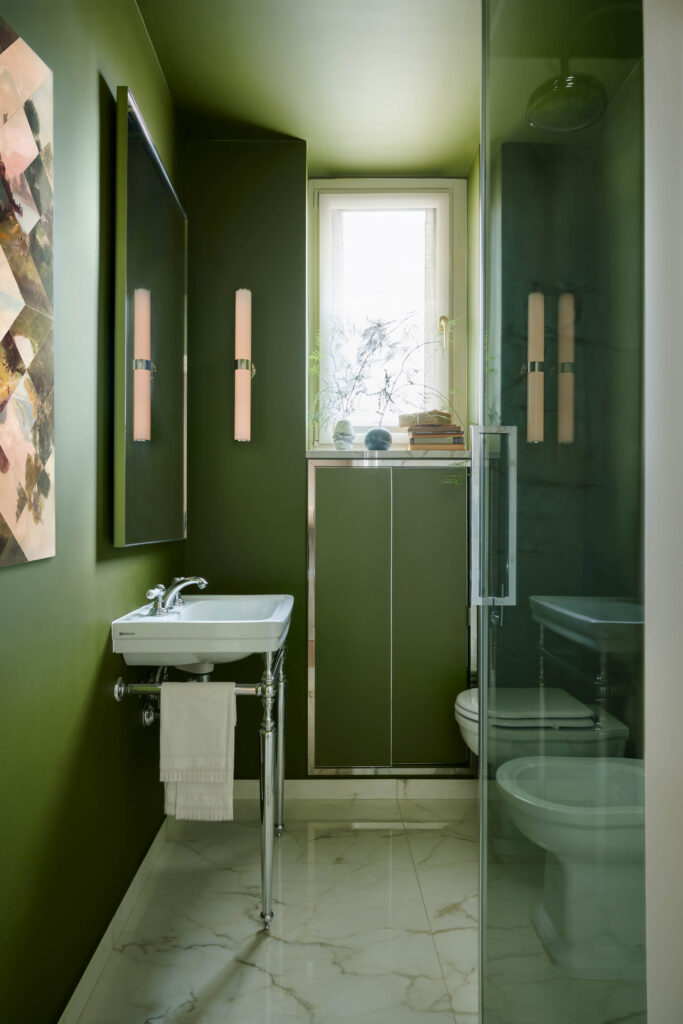
Without touching the tiles you can change the taps, the mirror, the wall lights, the shower enclosure (with a dark metal profile) and the textiles. A vanity unit with fluted fronts and a new marble or porcelain top renews the room with a small building site. Grout can be redone in a darker tone, and the wall near the mirror takes a washable paint in green or burgundy.
How to avoid the stage-set effect
The Neo Deco bathroom lasts with two dominant materials, one metal and a single graphic motif. When marble, patterned tiles, mirrors and gilding all appear together, the room looks like a hotel and loses the scale of a home. The advice for anyone starting from scratch: choose the light and the marble first, then add the rest sparingly.
Neo Deco in other rooms
Bedroom
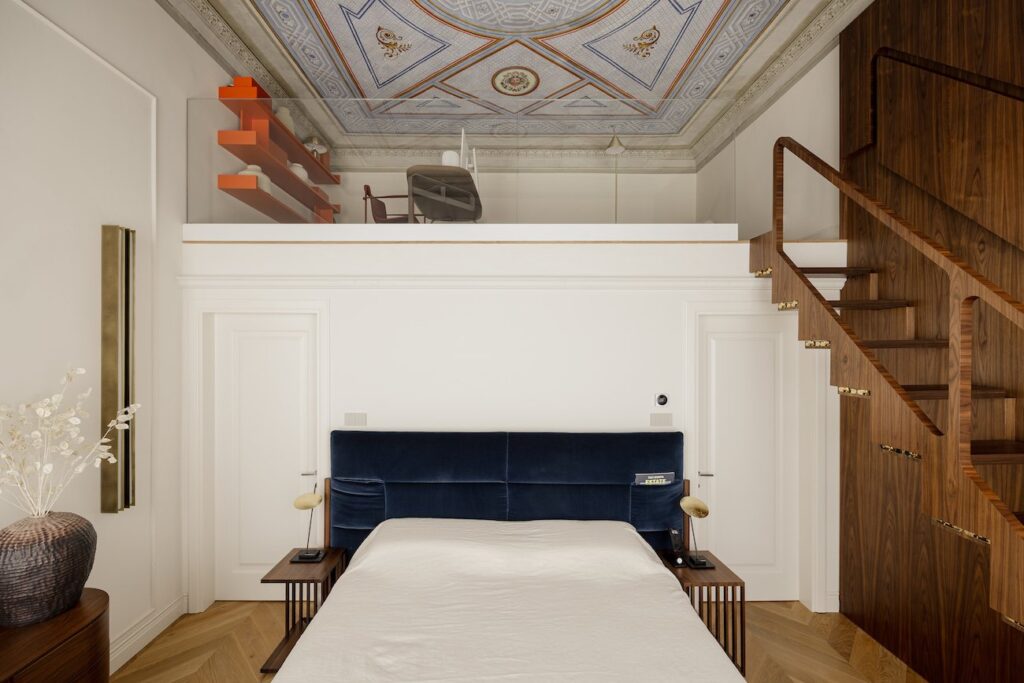
The headboard is the focal point: a padded panel in segments, fluted or in midnight blue velvet takes up the wall and holds the whole room. At the sides two wall lights or onyx lamps, wool and linen textiles, a short-pile rug. Deep tones work if the evening light is warm and dimmable, while the mirror stays away from the bed, to avoid reflections at night.
Kitchen
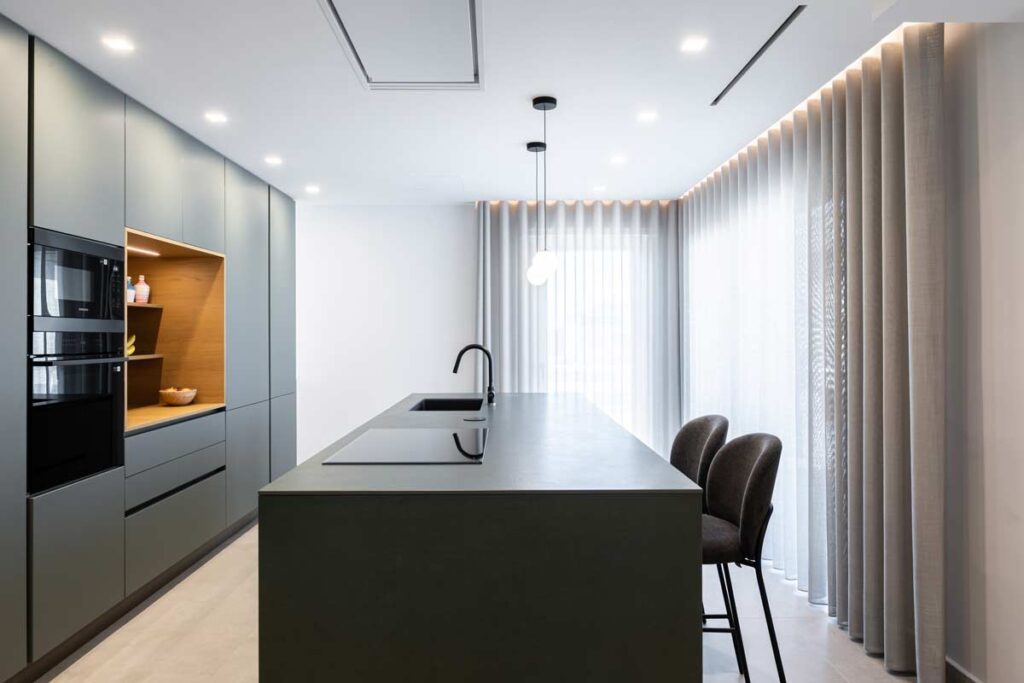
In the kitchen Neo Deco comes through well-chosen details: a marble or marble-effect porcelain top with dark veining, doors lacquered in bottle green or matt black, brass handles, a niche with smoked glass for tableware. Sculptural pendants above the island or the table concentrate attention. The worktop stays functional, with easy-to-clean surfaces.
Dining room
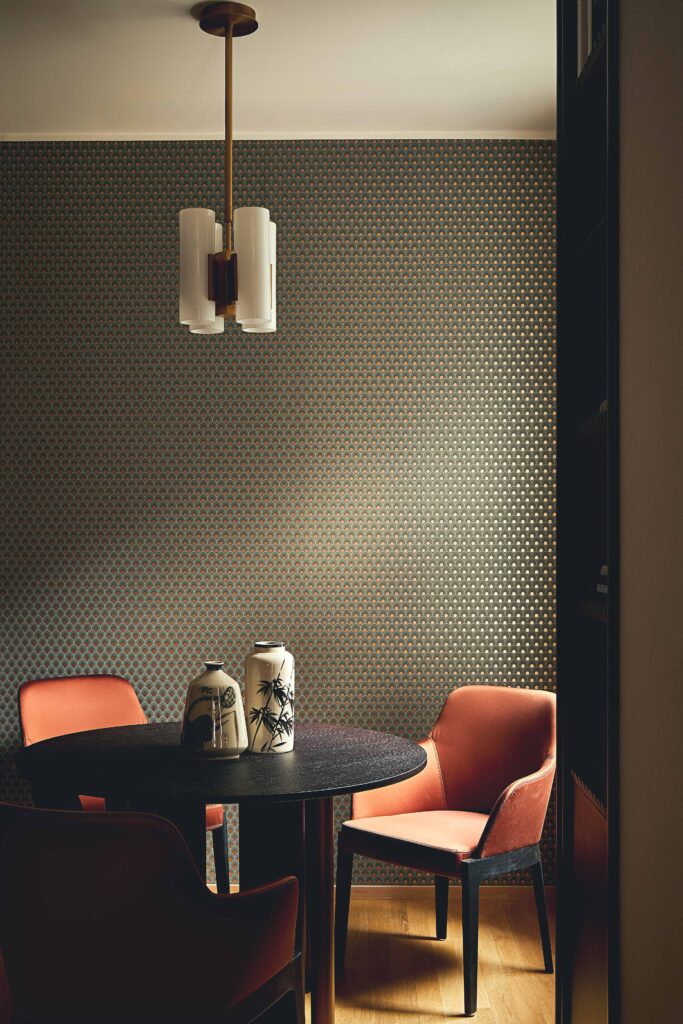
Here the style concentrates on the table. Sculptural bases, marble or dark wood tops and leather or velvet seating go with a pendant hung on the table’s axis. A sideboard with fluted fronts and a bar cart complete the room. Midnight blue with champagne and burgundy with gold sound better in evening light.
Entrance and corridor
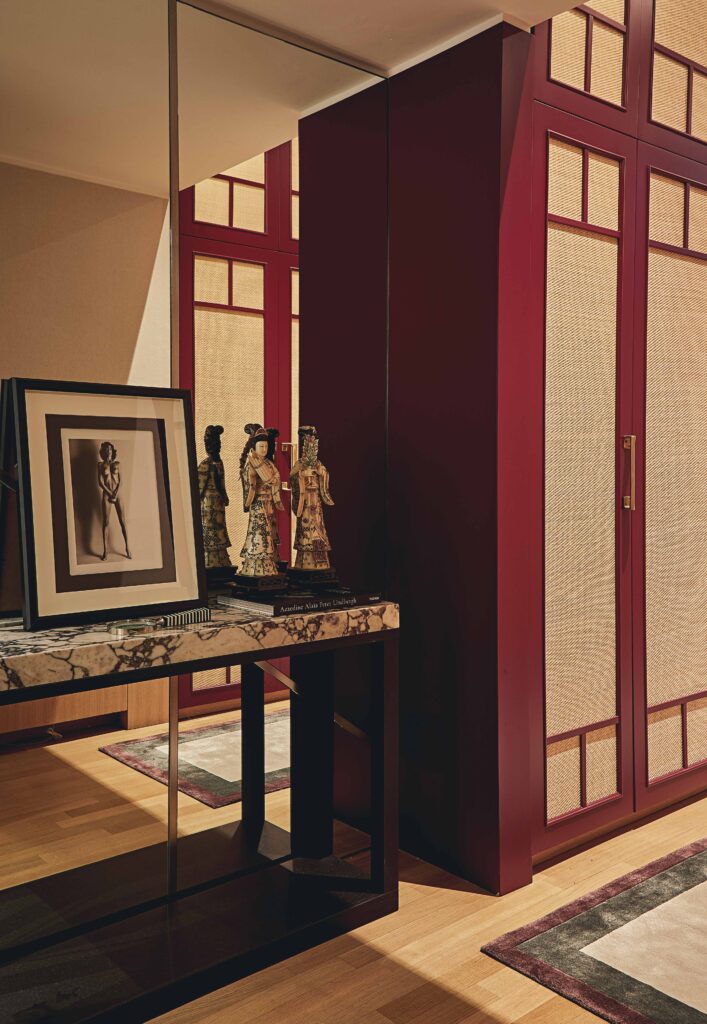
The entrance is the room where a bold wall costs little and shows immediately. A console with a marble top, an arched mirror, geometric wallpaper or an emerald green wall are enough. In the corridor a series of wall lights spaced rhythmically at equal distances marks the passage and gives the eye a direction.
How to bring Neo Deco into a modern home
A contemporary home takes in Neo Deco step by step. Order matters: light and focal points first, then surfaces.
Small interventions
An arched mirror, a brass or onyx table lamp, velvet cushions in a deep tone, a metal tray and a bar cart are enough to change how a neutral living room reads. Every object picks the same metal and the same colour family. For lamps, our guide to sculptural lighting explains how to choose lighting that becomes the focal point of a space.
Medium interventions
A sculptural velvet sofa or armchair, a green or burgundy wall, a geometric rug in a controlled palette, new wall lights and replacement taps create a coherent room without building work.
Structural interventions
Fluted panelling, marble or marble-effect porcelain cladding, geometric floors, backlit niches and a full bathroom require a project. It is best to define the lighting plan and the choice of materials first with an architect or interior designer, because panels, systems and finishes depend on one another.
Mistakes to avoid
- Repeating the motif everywhere. Chevrons, fans and Greek keys work when they appear once or twice per room.
- Mixing several metals. Brass, chrome and matt black in the same room compete for the scene. Choose one dominant metal and a second in support.
- Gloss on gloss. Polished marble, mirrors, lacquer and glass without a soft fabric produce a cold, noisy room.
- Dark tones without light. Burgundy and midnight blue need natural light or a well-distributed warm light. Otherwise the room closes in.
- Copying historic Deco. A room rebuilt on the 1920s risks looking like a set. A few pieces with a history, vintage or bespoke, give character.
- Ignoring everyday use. Porous marble in the kitchen, polished floors in the bathroom and glossy brass on handles ask for maintenance. Assess cleaning before buying.
Neo Deco and 2027 trends
What 2026 documents
The verifiable facts are few and precise. Pinterest Predicts 2026 lists Neo Deco among home trends, with rising searches for red marble, antique bar carts, pendant lamps, brass and leather banquettes, measured on the platform. Elle Decor Italia gave space to Neo Déco-inspired projects in its February issue. At the Salone del Mobile 2026 Yanko Design read Deco details in the collections, while Wallpaper* summed up the fair in four strands (lacquered textiles, sculptural tables, tubular chairs, maximalist cladding) without mentioning Art Deco.
Forecasts for 2027
The 2027 forecasts we consulted, such as those published by Homes & Gardens on 2 October 2026, do not name Neo Deco. They point instead to layered tonal schemes, pale greens as the new neutral, seating with curved forms, furniture with a story and old-world details such as fringes and tassels.
Archi&Interiors hypothesis
This is an editorial reading, with no value as data. Neo Deco may remain as a selective vocabulary: arches, curves, lacquers and sculptural tables inside more personal interiors, with vintage pieces and tone-on-tone colours in place of rooms rebuilt on the 1920s. The direction will depend on how long designers and companies keep working on material and character after the years of neutral tones.
Conclusion
Neo Deco works when a home decides where to look: a sofa, a wall, a mirror, a light. The rest stays quiet, and the chosen objects have a story or a task. Anyone who starts with a small intervention, for example a brass wall light or an arched mirror, will know within a few weeks whether the language suits them.
Frequently asked questions about Neo Deco
What is Neo Deco?
It is the contemporary rereading of Art Deco: geometry, symmetry, warm metals and glossy surfaces in spaces designed for life today, with less ornament and more comfort.
What is the difference between Art Deco and Neo Deco?
Art Deco is the historical movement of the 1920s and 1930s, with abundant decoration. Neo Deco takes up its vocabulary in selective form: a few graphic signs, soft seating, dimmable light.
Which colours are used in Neo Deco?
Burgundy, emerald or bottle green, midnight blue and terracotta, balanced by ivory, sand and warm grey, with one metal (brass, gold, bronze) as an accent.
Does Neo Deco suit a small home?
Yes, as long as interventions stay limited: one focal point per room, a single metal, light walls and an arched mirror to extend the light.
How can I bring Neo Deco into the bathroom without renovating?
Change the taps, mirror, wall lights and shower enclosure, redo the grout in a dark tone and add a vanity unit with fluted fronts.
Which materials should I choose for a Neo Deco interior?
Marble or marble-effect porcelain stoneware, satin brass, smoked glass, velvet, bouclé, matt lacquers and dark woods. The balance lies in alternating glossy and matt surfaces.
Can Neo Deco and minimalism coexist?
Yes. An essential layout with one sculptural piece and well-planned warm light welcomes Neo Deco without saturating the space.