Tivoli from 13 November 2026 to 3 January 2027, Nytorv from 6 November, Højbro Plads and Nyhavn: our guide to Christmas in Copenhagen through the eyes of Danish design.
Copenhagen does not have the biggest Christmas markets, but it is the city where Christmas becomes an idea of design: warm light, honest materials and the domestic quality the Danes call hygge.
The Copenhagen Christmas markets open in stages in 2026. The Hans Christian Andersen market on Nytorv starts on Friday 6 November, Tivoli switches on its Christmas season on 13 November and stays open until 3 January 2027, and Højbro Plads hosts its stalls from 14 November to 20 December 2026. In December the canalside market at Nyhavn joins in.
For our editors, Copenhagen is the perfect counterpoint to the capitals of Central Europe. Christmas here is about restraint rather than splendour: candles in the windows, pendant lamps lit by mid afternoon, pale wood and wool. It is the same grammar that made Danish design a global reference, and the best way to understand it is to see it applied to the city in its darkest month.
When do the Copenhagen Christmas markets open in 2026?
The H.C. Andersen market on Nytorv is first, on 6 November 2026, open from 11am to 9pm. Tivoli opens its Christmas season on Friday 13 November at 11am and closes it on 3 January 2027. Højbro Plads runs from 14 November to 20 December 2026, while Nyhavn comes alive during December.
| Information | 2026/27 season |
|---|---|
| Tivoli | 13 November 2026 to 3 January 2027; opens on 13 November at 11am |
| Nytorv and Gammeltorv | H.C. Andersen market from 6 November 2026, 11am to 9pm |
| Højbro Plads | 14 November to 20 December 2026 |
| Nyhavn | Canalside market during December |
| Hours and closures | Tivoli’s daily hours and holiday openings on the official tivoli.dk website |
| Getting there | By air to Copenhagen Airport, linked to the centre by metro and train; by rail from Italy and Central Europe via Germany |
From Italy the quickest option is to fly: Copenhagen Airport at Kastrup is linked to the centre by metro and train within minutes. The train is possible with changes in Germany and makes for a long journey, best planned as part of the experience. Once in town, walking, cycling and the metro are all you need: Tivoli sits next to Central Station, and Nyhavn and Kongens Nytorv are a single stop away.
Where are the markets and how are they organised?
The heart of Christmas in Copenhagen is Tivoli, the pleasure garden founded by Georg Carstensen and opened on 15 August 1843. At Christmas the ticketed entrance leads into a landscape of snow covered stalls, open rides and illuminations: Tivoli speaks of more than seventy thousand Christmas ornaments, and Visit Copenhagen notes that 99 per cent of the lights are LED, powered by renewable energy. The Moorish style Nimb palace, now a hotel and restaurant, provides an Orientalist backdrop.
Outside Tivoli the markets are free and follow the spine of Strøget, the long pedestrian street. Nytorv and Gammeltorv host the market named after Andersen, while at Højbro Plads the stalls face the canal and Christiansborg Palace. On Kongens Nytorv a circular ice rink of about 1,300 square metres wraps around the equestrian statue of Christian V, with a small market at the southern end, between the Royal Theatre and Charlottenborg Palace.
Why is Christmas in Copenhagen different?
Because here light matters more than objects. In December the sun sets early and the city answers with domestic lighting: lamps glowing behind curtainless windows, candles on the sills, interiors that become part of the streetscape. Our advice is to walk along the canals after 4pm and look inside the houses: it is the best free lesson in interior lighting you will ever get.
Nyhavn sums all this up. The canal was dug between 1670 and 1675 at the order of Christian V, and its brightly coloured seventeenth and early eighteenth century townhouses are the city’s most famous postcard. Hans Christian Andersen lived at number 67 from 1845 to 1864 and at number 18 from 1871 to 1875. In December the market fills the cobbled quayside with stalls and lights, with historic boats moored alongside.
Which architecture should you see in Copenhagen during the markets?
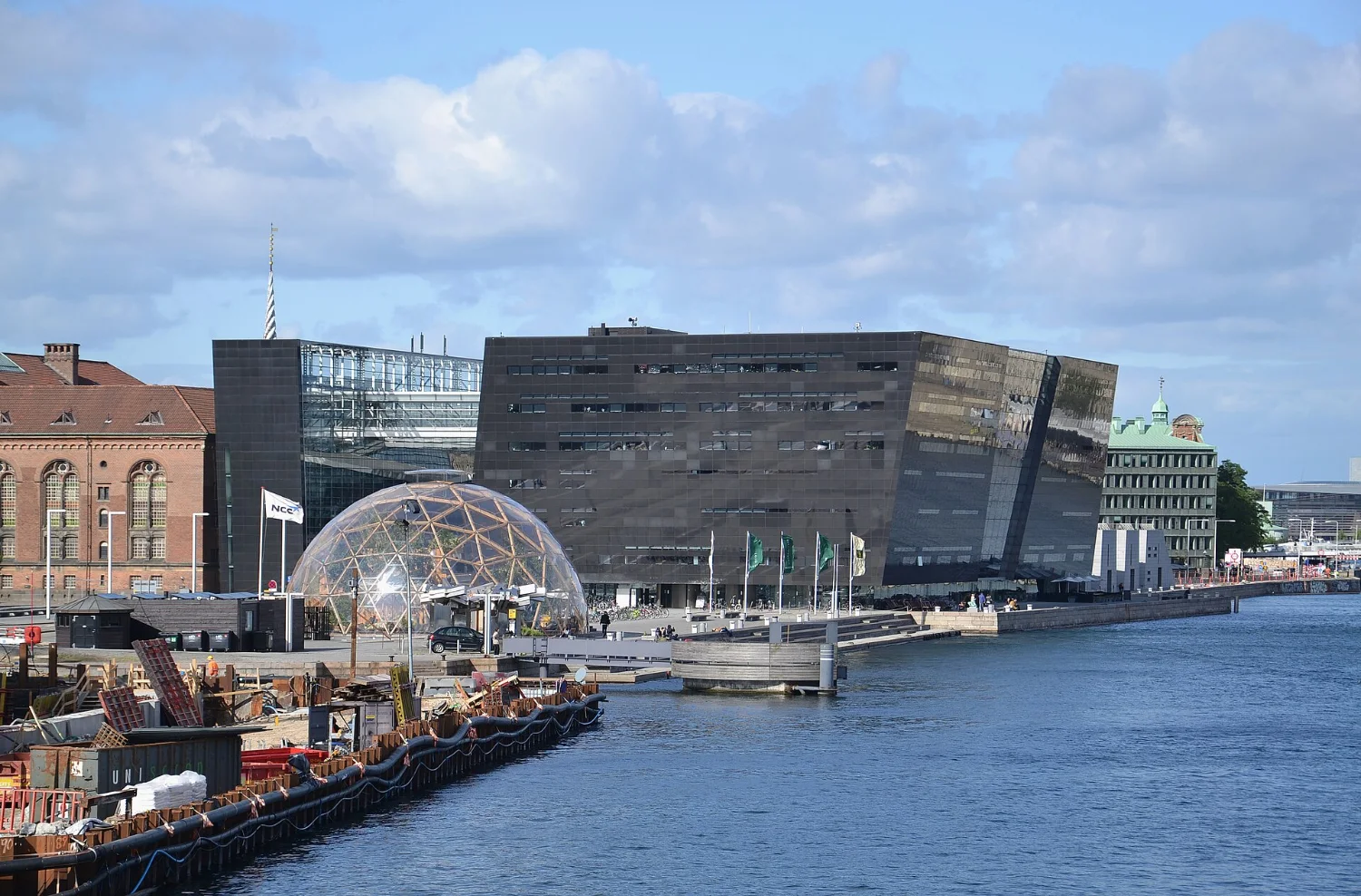
Start with the Black Diamond, the Royal Library extension on Slotsholmen designed by Schmidt Hammer Lassen and completed in 1999. Its leaning volume is clad in Absolute Black granite quarried in Zimbabwe and cut and polished in Italy: on grey December days it mirrors the harbour and changes colour by the hour. The glazed atrium, open to the public, is one of the great civic interiors of the city.
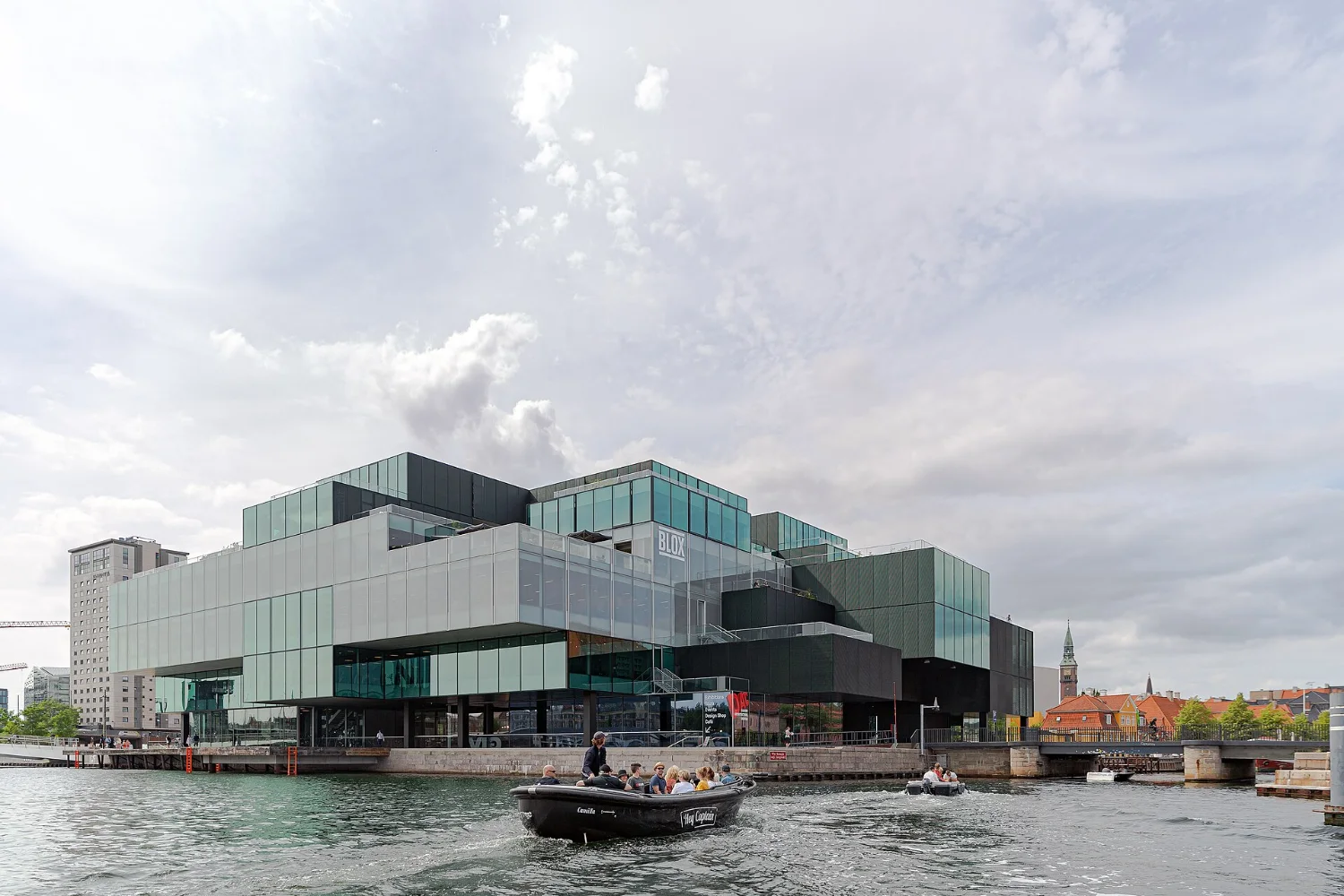
A few steps away stands BLOX, the OMA building completed in 2018 on Bryghuspladsen and home to the Danish Architecture Center. It is a stack of glass volumes straddling a road, with exhibitions on architecture and design: essential for anyone who wants to see how the city is rethinking its harbour. Programmes and exhibitions are on the Danish Architecture Center website.
For historic design, head to Designmuseum Danmark on Bredgade, in the former Frederiks Hospital, built between 1752 and 1757 and turned into a museum in the 1920s by Kaare Klint with Ivar Bentsen. The collections include work by Arne Jacobsen, Jacob Jensen and Klint himself, as well as the Danish Design Archive. Opening times are on the Designmuseum Danmark website.
Along Strøget, between one market and the next, you will also find Illums Bolighus at Amagertorv 10. Founded in 1925 as BO, it took its present name in 1941 and occupies a building designed in 1961 by Kay Kørbing: a department store devoted to furniture and the home, which in December becomes the most complete showcase of Nordic design.
What should you buy at the Copenhagen Christmas markets?
Our rule is that of Danish design itself: few objects, well made, built to last. The markets sell paper and wooden decorations, candles, ceramics and woollen textiles; the local mulled wine is called gløgg and comes with æbleskiver, the round festive pancakes. Skip the kitsch souvenirs and choose craft with a clean line.
For a serious present, our advice is to leave the stalls behind and step into the design shops on Strøget and Bredgade, where twentieth century Danish icons, from lamps to chairs, sit alongside the work of contemporary designers. Visit Copenhagen also recommends the city’s vintage and second hand shops, ideal for period pieces at gentler prices.
Where to stay in Copenhagen if you love design?
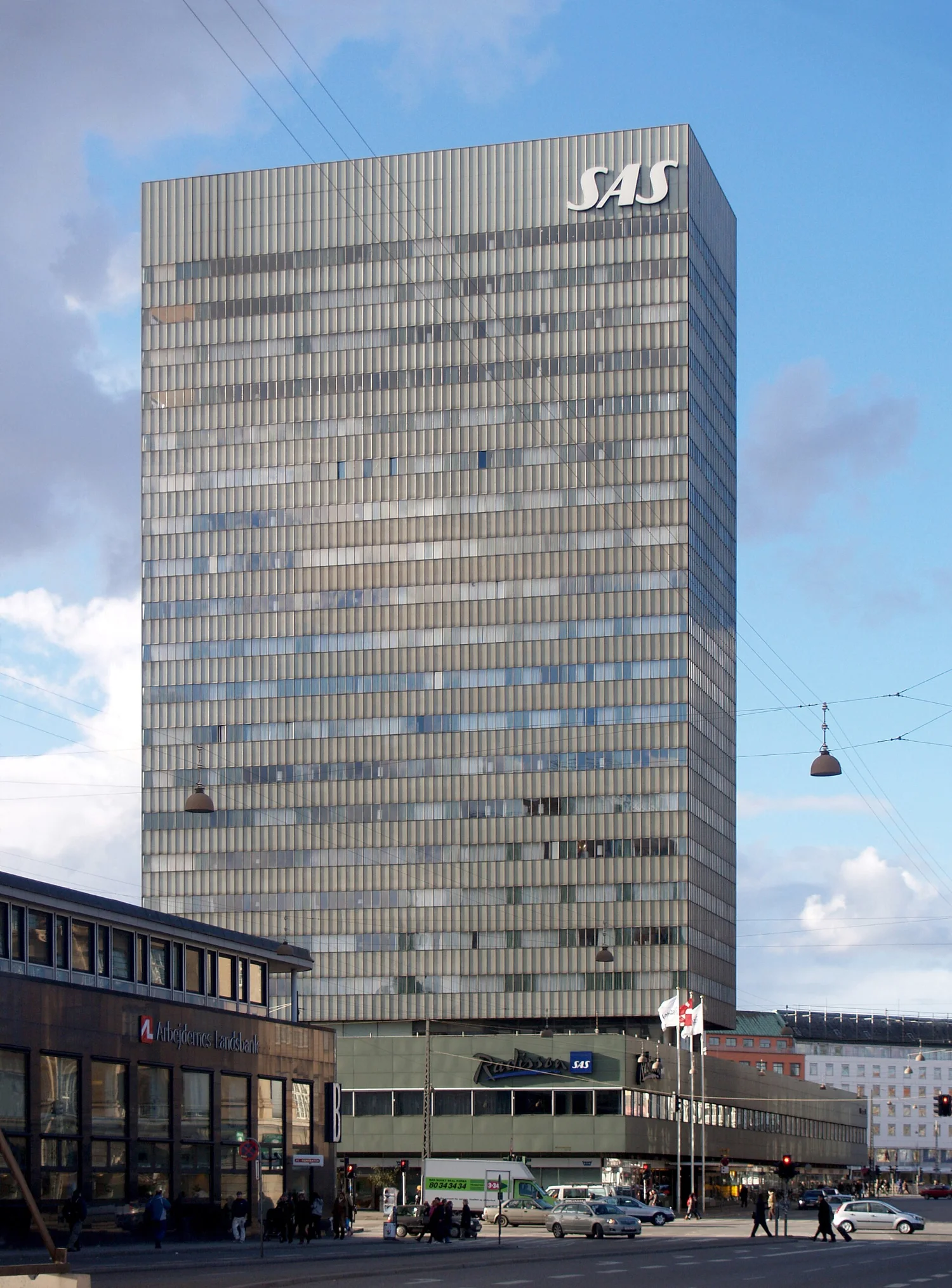
The Radisson Collection Royal Hotel, at Hammerichsgade 1, is a piece of design history: Arne Jacobsen designed it for SAS, from the tower to the furniture, and it opened in 1960. The lobby holds Egg and Swan chairs, and Room 606 keeps its original fit out, which can be visited on request. Alternatively, Nobis Hotel Copenhagen, at Niels Brocks Gade 1, occupies the building Martin Borch designed in 1903 for the Royal Danish Academy of Music and has been a hotel since 2017; both are a few minutes’ walk from Tivoli.
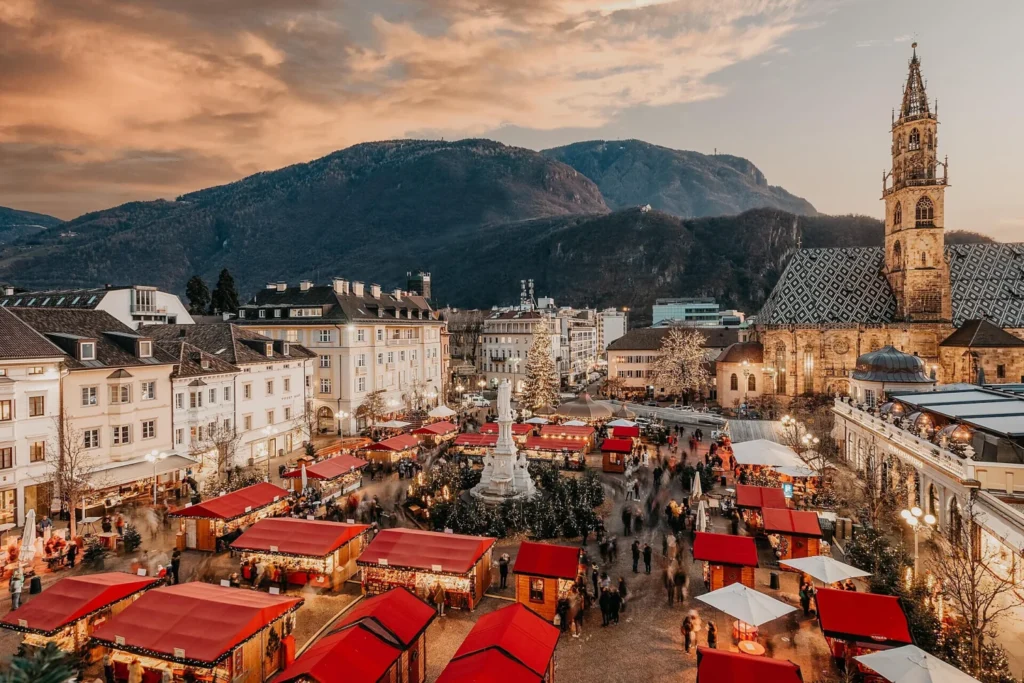
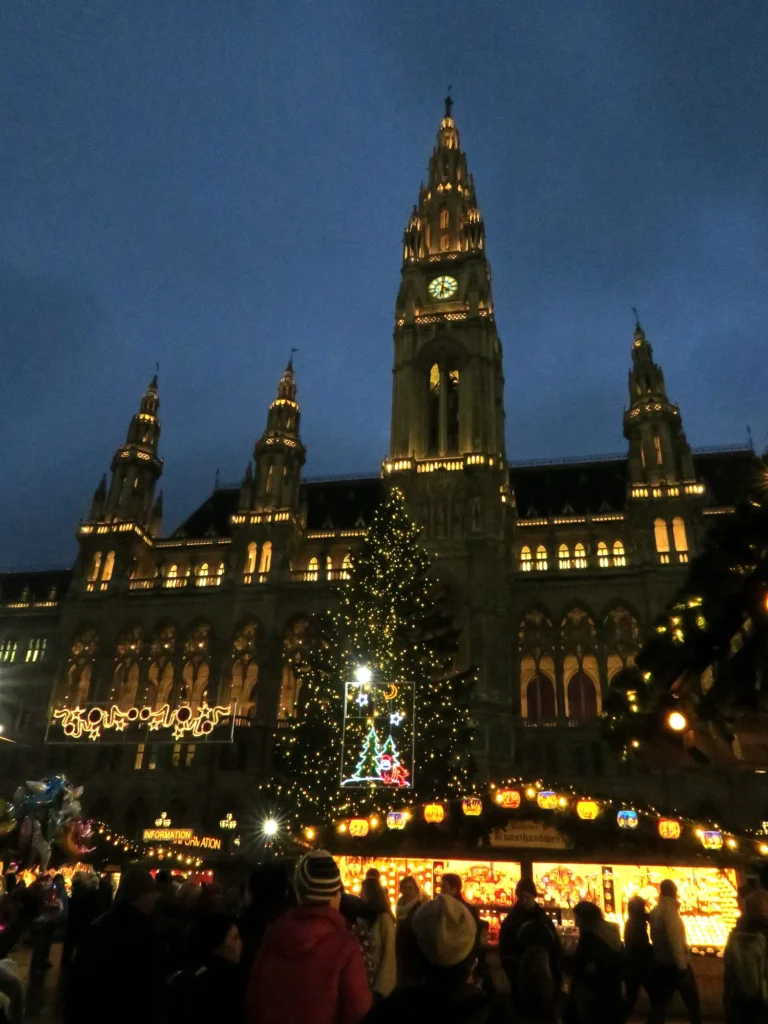
To compare a Nordic Christmas with a Central European one, read our guide to the Vienna Christmas markets, or head south to the Bolzano Christmas market. And to keep the hygge going once you are home, here are the most beautiful design spas in Italy.
Frequently asked questions about the Copenhagen Christmas markets
When does Christmas at Tivoli open in 2026?
Tivoli opens its Christmas season on Friday 13 November 2026 at 11am and closes it on 3 January 2027.
What are the dates of the other Copenhagen markets?
The H.C. Andersen market on Nytorv opens on 6 November 2026, Højbro Plads runs from 14 November to 20 December 2026, and Nyhavn takes place in December.
Are the Copenhagen Christmas markets free?
The markets in the squares are free to enter. Tivoli requires an admission ticket, available on its official website.
How do you get to Copenhagen?
Fly to Copenhagen Airport at Kastrup, linked to the centre by metro and train. By rail the journey is possible with changes in Germany.
How many days do you need for the Copenhagen Christmas markets?
We suggest three: one for Tivoli, one for Nyhavn, Strøget and the squares, one for the Black Diamond, BLOX and Designmuseum Danmark.