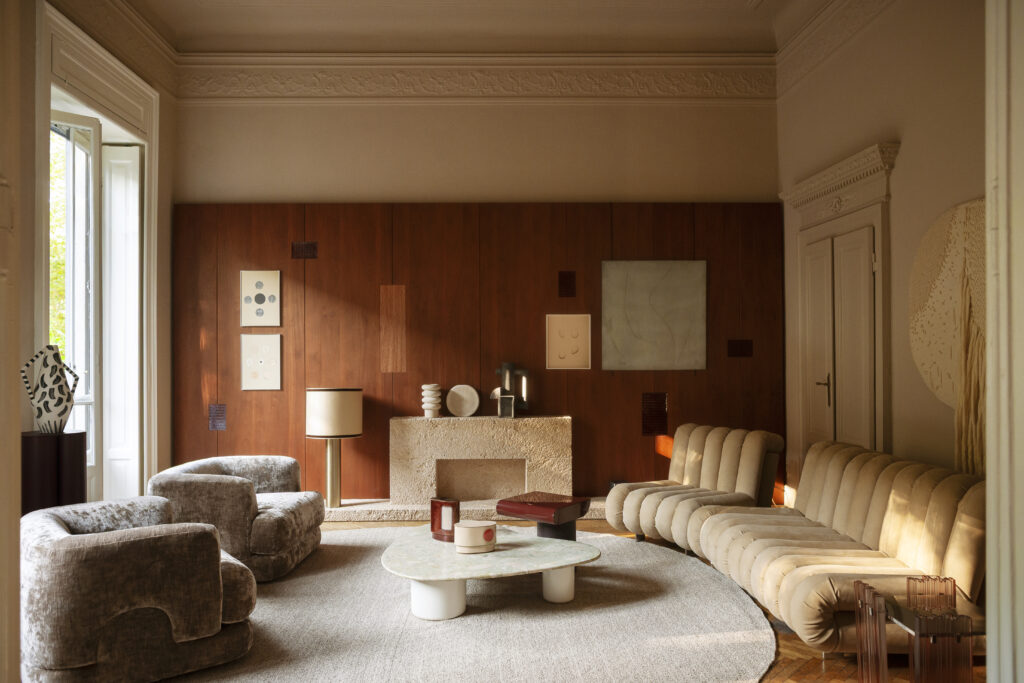
Light, colour, textiles, storage, an iconic piece and a room to rethink: six resolutions for renovating your home in 2027, planned in January with a designer’s criteria.
The best way to refresh your home in 2027 is not to buy more but to plan better: January is the month when a designer looks at a house emptied of its festive clutter and decides, calmly, what is really worth changing.
Renovating your home in 2027 starts with a blank sheet of paper, not a shopping basket. Once the holidays are over, with the tree packed away and the rooms bare again, a house reveals its flaws with unusual clarity: the corner that goes dark at five in the afternoon, the wall you have grown tired of, the sofa nobody chooses any more, the wardrobes that never quite hold everything. This is the moment to do what any designer does before a project: observe, measure, set priorities.
The argument is simple and runs against the culture of the quick makeover. A home improves when changes follow a sequence: light first, because it alters how everything else is perceived, then colour, then textiles and storage, and finally the statement piece and the room that needs rethinking from scratch. Reversing the order, buying the object before sorting out the light that will show it off, is the most common mistake and also the most expensive.
These are the six resolutions a designer would write on the first page of a new diary: small jobs to tackle straight away and bigger ones to prepare now, so they can happen in the right months.
Where do you start when renovating your home in 2027?
You start with a survey, even a domestic one: a scaled floor plan with real measurements and the position of windows, sockets and light points. It is the document that separates a project from a string of purchases.
The second step is an honest list of what does not work, room by room, written in terms of use rather than taste. Not “the living room is ugly” but “it is hard to read in the evening” or “there is nowhere to drop the keys”. Put that way, every problem already suggests its own solution and its scale: a lamp, a shelf, a joiner, a building contractor.
The third step is to split the work into two columns. The first holds the small jobs, done in a weekend and needing no permits; the second the larger ones, which call for quotes, lead times and often a professional. January is mostly for the second column: ask a joiner or contractor for a site visit now and you stand a good chance of starting in spring, before diaries fill up. If you are starting from zero, our guide on how to furnish a home helps put the basic choices in order.
| When | What to do | Why then |
|---|---|---|
| January | Survey, list of problems, requests for quotes | The house is clear after the holidays and professionals still have availability |
| February | Lighting plan, colour samples on the wall | Low, raking winter light is the toughest test for any colour |
| March and April | Painting, small jobs, sorting out wardrobes | Longer days and windows that can be opened to let paint dry |
| April | Searching for the statement piece | Salone del Mobile shows new launches and re-editions in a single week |
| Summer | Building work on the room to rethink | Holiday absences make dust and noise easier to live with |
Why is lighting the first thing to plan?
Because light decides how we see everything else, including the colours and materials we will choose later. A room lit by a single central fitting looks flat and smaller than it is; the same room with three or four sources at different heights gains depth without moving a single piece of furniture.
The designer’s approach is to think in layers. Diffused ambient light, often indirect; accent lighting that brings out a wall, a painting or a bookcase; task lighting where you read, cook or work. Colour temperature matters too: for living rooms and bedrooms we recommend warm sources, around 2700 kelvin, and the ability to dim them, because the same room at eight in the morning and ten at night needs very different light.
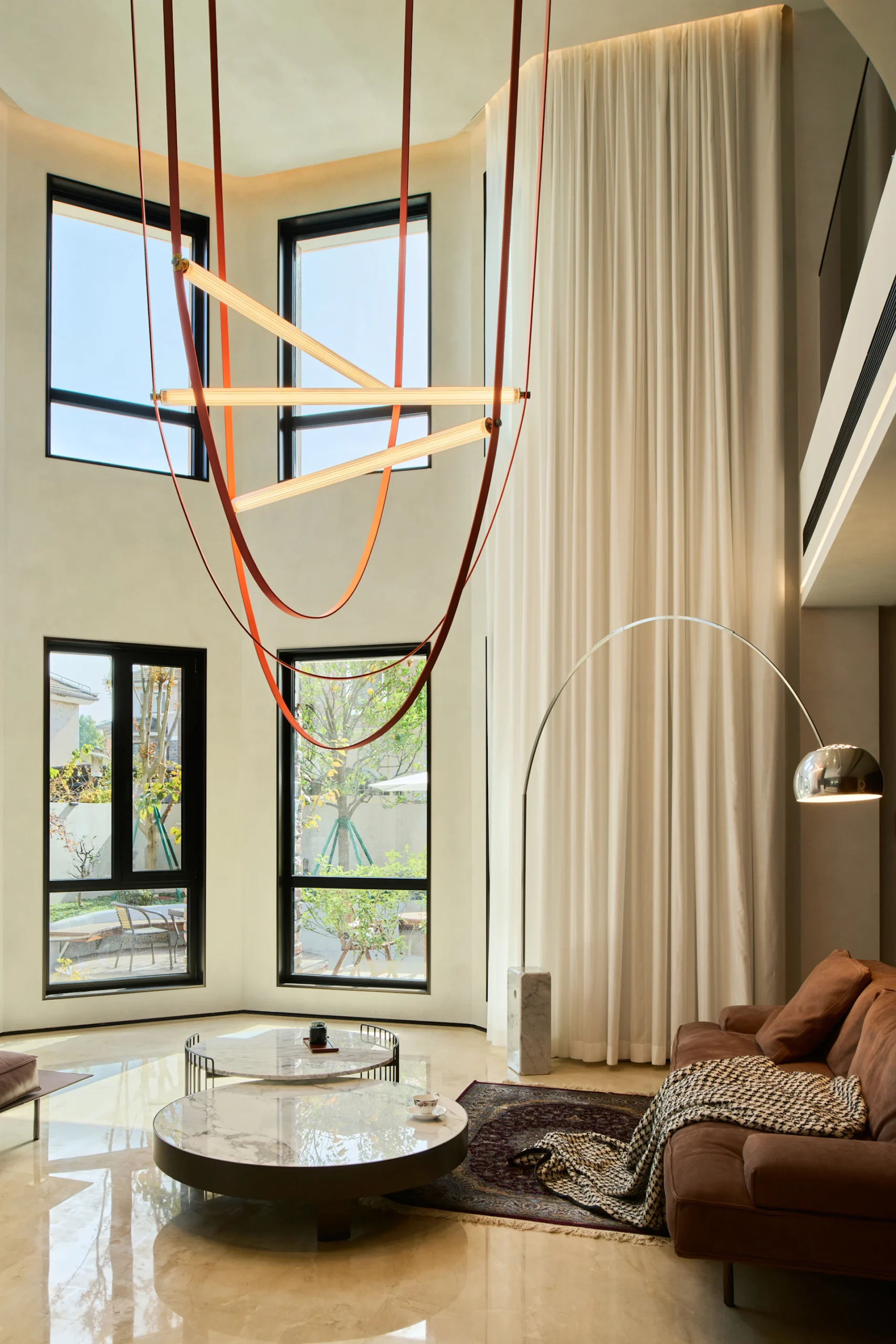
The change can be a floor lamp beside the armchair or new ceiling points installed by an electrician. Either way it should be planned before painting, so you never have to open up a freshly decorated wall. Our guide to living room lighting sets out the most useful layouts.
How do you choose wall colours in 2027?
You choose them at home, with large samples painted on the actual wall and checked at different times of day, never from a fan deck in the shop. It is the one rule a designer will not compromise on: the same shade changes dramatically with orientation, flooring and the artificial light you have just planned.
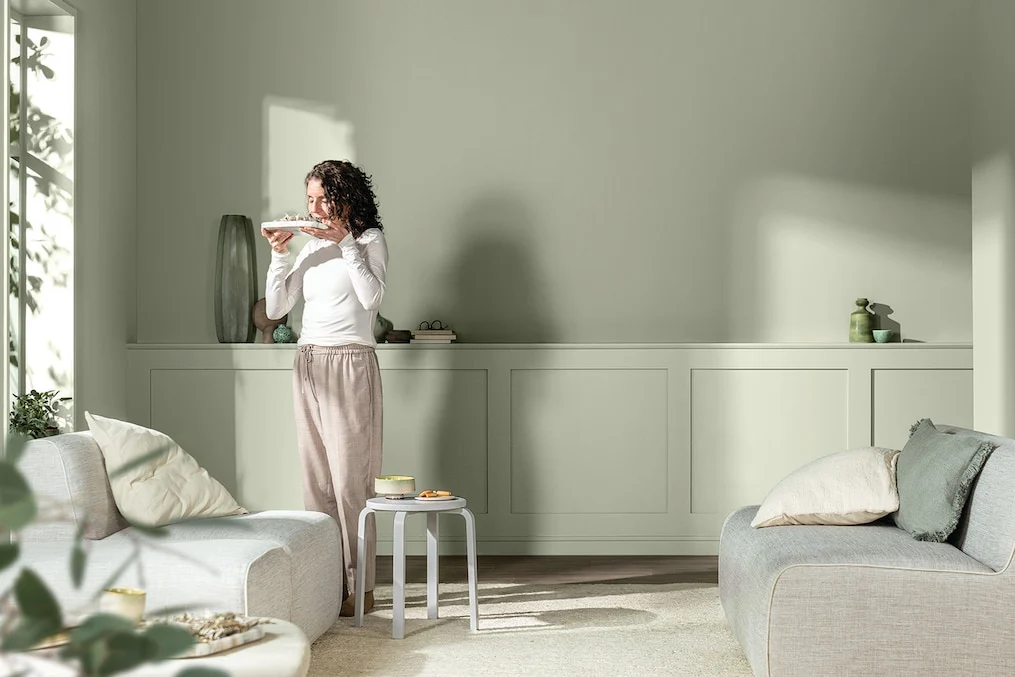
Trends are useful as vocabulary, not as a prescription. Recent years have shifted taste towards warm, earthy tones, muted greens and off-whites that sit comfortably with wood and stone, and our feature on wall colours for 2027 gathers the most reliable directions. The colour of the year, when it arrives, is a cue for a textile or a detail rather than for an entire room.
Colour, moreover, is not only paint. Mineral finishes, limewash, textured effects and wallpapers, of the kind Italian producers such as Novacolor develop across paints and decorative finishes, let you work on texture as well as tint. A single wall treated with a tactile finish often transforms a room more than four walls repainted in a fashionable shade.
Textiles and storage: which small changes really transform a room?
A rug of the right size, curtains that reach the floor and a storage plan drawn up before you buy anything. They cost little compared with a piece of furniture and work immediately, but only if they respect proportion.
The rug is the clearest example. Too small, it floats in the middle of the living room and shrinks the space; the right size takes in at least the front legs of the sofa and armchairs and draws an island that holds the conversation together. Curtains follow the same logic: hung higher and wider than the window, almost grazing the floor, they make it look taller.
Storage is the invisible textile of a house. Before adding anything, a designer takes things away: one wardrobe at a time is emptied, what remains is measured, and only then are fittings drawn or containers chosen. Hallways, pantries and box rooms are where this pays off most, because they free up surfaces throughout the house. Readers who followed our advice on furnishing your home for winter will find this the natural next step: fewer things, better chosen.
Which iconic piece is worth the investment?
The one that solves a precise need and that you would take with you in any move. It is the most practical definition of a classic: an object that outlives houses, not just seasons.
Start from function. Need a reading light for the desk? Richard Sapper’s Tizio for Artemide, from 1972, is still one of the cleverest solutions ever drawn. Need a chair for a corner of the living room? Gerrit Thomas Rietveld’s Utrecht armchair, re-edited by Cassina, brings a piece of twentieth-century history into a modest footprint. Need a chair for conversation? The Vanity Fair by Poltrona Frau, born in 1930, became an icon precisely because it does one thing and does it beautifully.
Before choosing, we suggest seeing pieces in person: sit down, switch on, touch the materials. Salone del Mobile week in April is the best moment to compare launches and re-editions, and our report on interior trends for 2027 maps the directions already emerging. A single authentic piece, well lit and in the right place, raises the level of the whole room.

Which room should you rethink from scratch in 2027?
The one you use most and that works worst, which is almost always the kitchen, the bathroom or a room that never found its purpose.
Rethinking a room does not mean rebuilding it. Often it is enough to move a function: bring the dining table closer to the window, turn a guest room used twice a year into a study with a sofa bed, open the kitchen towards the living area with an island instead of a wall. These are layout decisions to be taken on January’s floor plan, before a single material is chosen.
When the work is genuine building work, with services, surfaces and windows, our advice is to involve a qualified professional from the outset, not least to check the permits required and any tax incentives in force in the year the work is carried out, which change with each budget. A room is designed in winter and built in summer.
Frequently asked questions about renovating your home in 2027
Which job should you start with when renovating a home?
Lighting. Better light changes how colours, materials and proportions are perceived, and it should be planned before painting so freshly decorated walls are not damaged.
When is the best time of year for home improvements?
Plan in winter, paint in spring and schedule the most disruptive work for summer, when the house is used less. Asking for quotes in January makes it easier to find professionals with availability.
Which wall colours work best in 2027?
Warm, earthy and natural tones remain the safest direction, but the final choice should be made with large samples on the real wall, checked in both daylight and artificial light.
Is an iconic design piece worth buying?
Yes, if it answers a specific need in your home. A classic reading lamp or an architect’s armchair lasts for decades and adapts to different houses, which makes it an investment rather than a purchase.