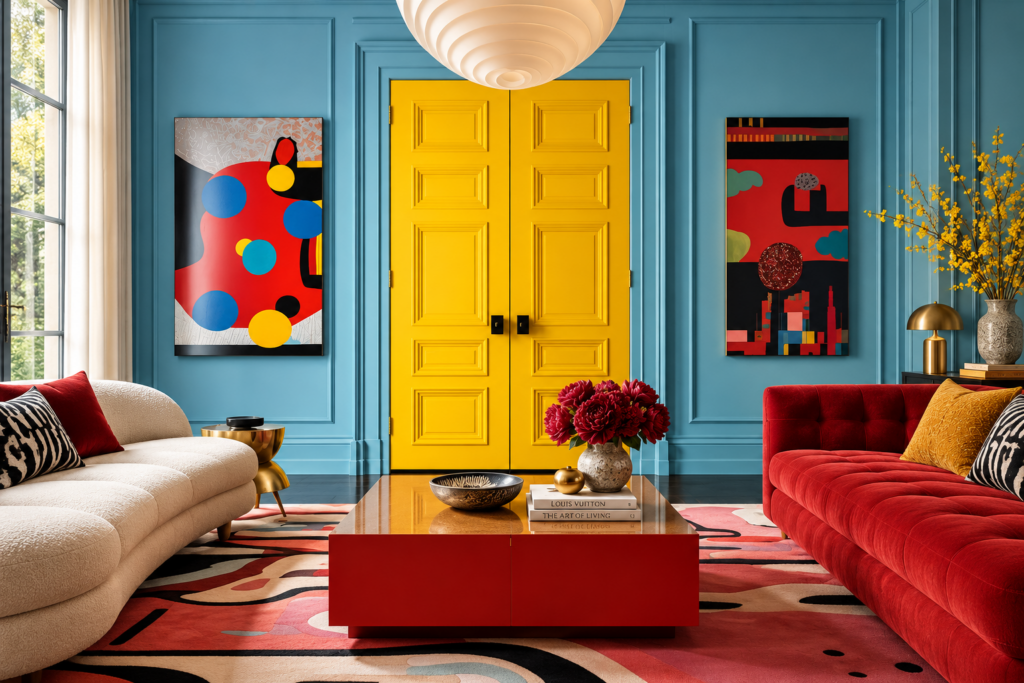
Across the stands of Salone del Mobile.Milano 2026, furniture trends 2027 begin to take shape through subtle yet highly recognisable signals. They can be read in materials combined with greater freedom, in surfaces seeking depth, in colours moving away from the coldness of absolute neutrals to become more creamy, warm, almost tactile. They appear in …
Across the stands of Salone del Mobile.Milano 2026, furniture trends 2027 begin to take shape through subtle yet highly recognisable signals. They can be read in materials combined with greater freedom, in surfaces seeking depth, in colours moving away from the coldness of absolute neutrals to become more creamy, warm, almost tactile.
They appear in the more orderly lines of furniture, in sofas with generous proportions, in tables conceived as new places of conviviality, and in modular and transformable solutions that interpret an increasingly dynamic home.
The impression, while walking through the Salone, is that of a way of living that is changing pace. The home of 2027 seems to be moving towards a more layered and sensorial dimension, where comfort is not only about functionality, but about the overall quality of the domestic experience. Materials, colours, scents, technology and proportions enter the same design narrative, creating interiors that are softer, more intimate and more sophisticated.
From the dialogue between leather and marble, ceramic and glass, matte surfaces and luminous details, to the increasingly natural presence of home automation, Salone del Mobile.Milano 2026 offers a clear image: furniture in 2027 will be less and less about isolated elements and increasingly about relationships. Relationships between materials, between people, between space and the senses, between aesthetics and everyday life.
Materials in Dialogue: Leather, Marble, Ceramic and Glass Redefine the Perception of Interiors
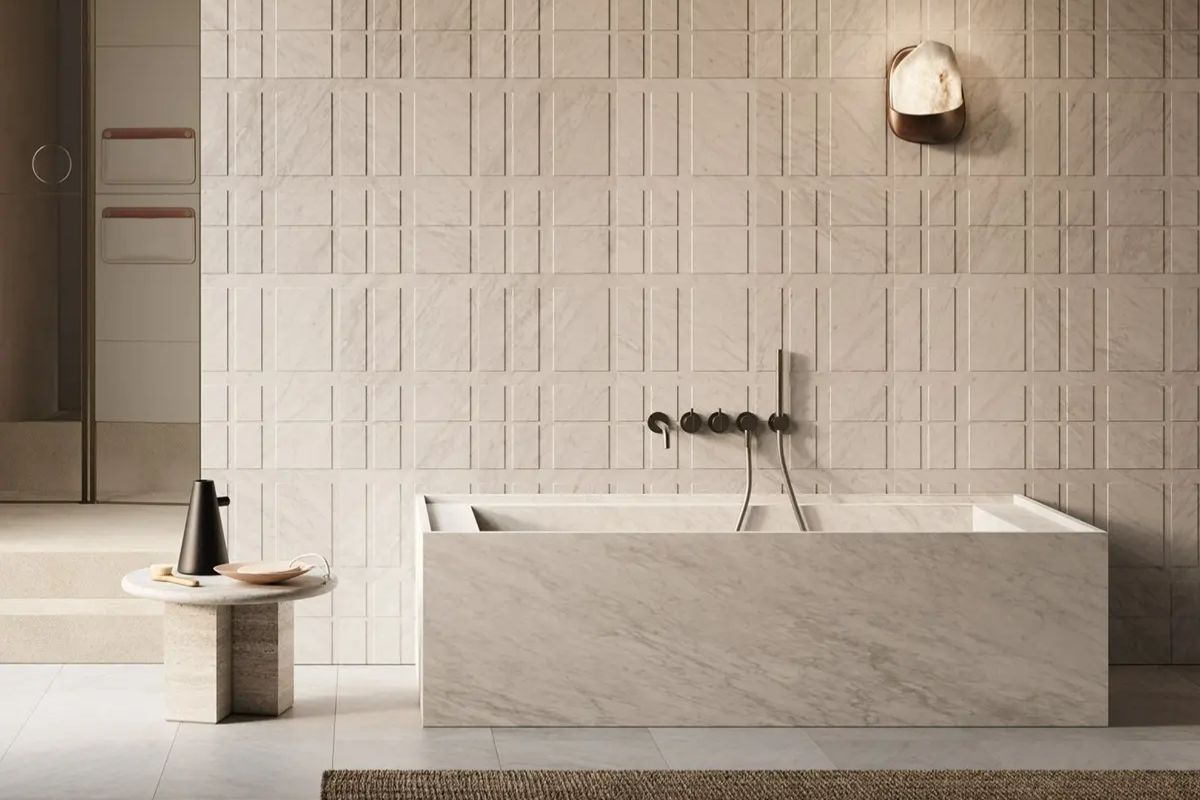
One of the clearest directions to emerge from Salone del Mobile.Milano 2026 concerns the renewed centrality of matter. Furniture trends 2027 seem to be moving away from the idea of material as a mere finish, surface or decorative detail, towards a more complex vision: material becomes a design language, a narrative element, a tool through which interiors gain depth, rhythm and identity.
The home emerging from the Salone is made of bolder combinations, calibrated overlaps and material contrasts. Leather and marble, ceramic and glass, wood and metal, soft textiles and compact surfaces enter into relation with one another without seeking predictable harmony. On the contrary, it is precisely in the tension between different materials that interiors acquire character: warm meets cold, matte meets glossy, natural meets technical, soft meets mineral.
This attention to combinations marks an important shift. After years in which interior design often worked with continuous palettes, uniform surfaces and very fluid atmospheres, design is once again seeking visual and tactile density. Not added decoration, but a more subtle layering, capable of making space perceptible through its textures, reflections and variations of light.
Marble, stone, ceramic and glass no longer appear only as noble or functional materials, but as presences capable of changing the tone of an environment. Leather and textiles, in the same way, introduce a warmer, more sensual and domestic component. The result is a more sophisticated form of furnishing, where quality is not measured only through the shape of an object, but through the relationship between surfaces, matter and perception.
From this perspective, furniture trends 2027 seem to reward interiors that are less flat, less uniform and more layered. Environments in which each material does not exist alone, but participates in a broader composition. Matter thus becomes the first true code of the contemporary home: not only to be looked at, but to be felt, crossed, inhabited.
From All-Curved to a New Sense of Order: Lines Return, but Without Coldness
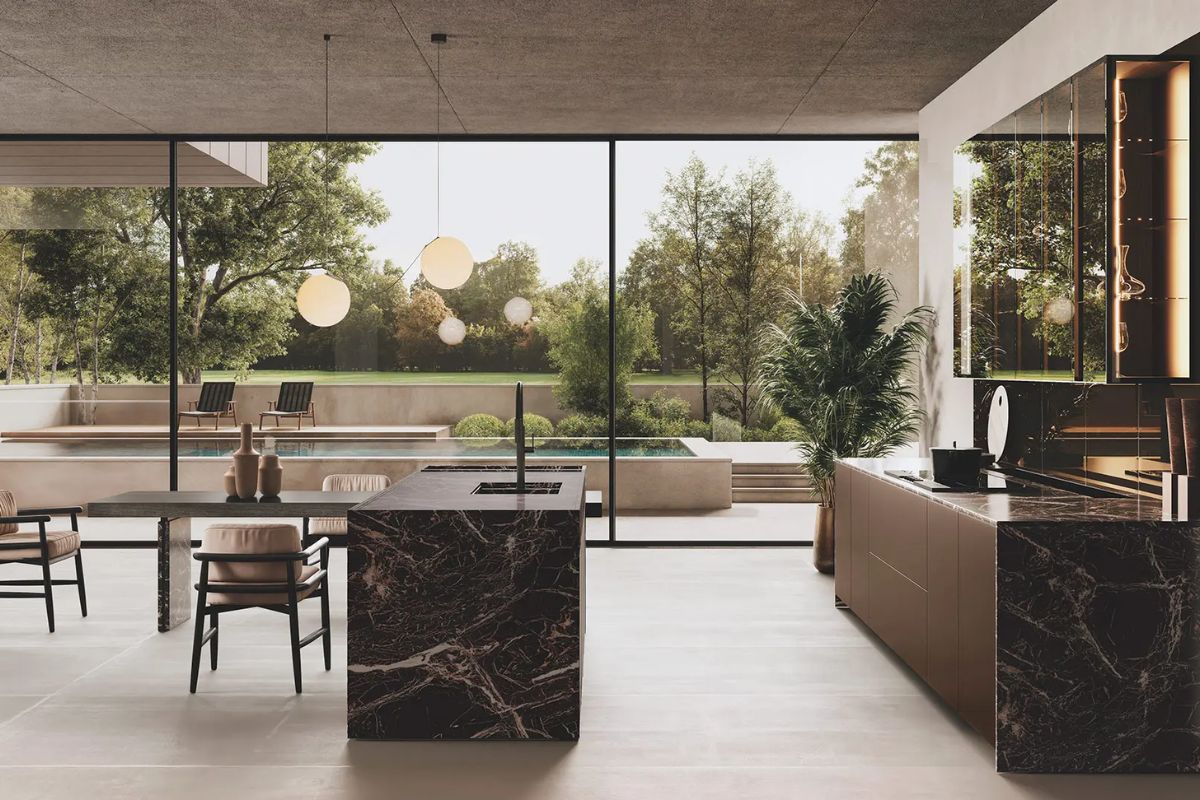
After several seasons dominated by organic forms, rounded profiles and soft volumes, Salone del Mobile.Milano 2026 seems to introduce a new balance. Curves do not disappear, but they cease to be the only formal code of contemporary furniture. Alongside enveloping sofas, deep seats and tables with fluid geometries, we see the return of sharper lines, more legible proportions and more orderly compositions.
It is an interesting return, because it does not coincide with the cold and rarefied minimalism of a few years ago. Furniture design 2027 seems to be moving towards a warmer, more inhabitable, more mature form of order. Structures become more defined, profiles more architectural, compositions more measured, without losing the welcoming dimension that has redefined the very idea of domestic comfort in recent years.
The result is a less exaggerated language, where softness and rigour coexist. Straight lines once again give rhythm to interiors, build visual hierarchies and make space clearer. At the same time, fabrics, upholstery, warm colours and natural materials prevent this new rationality from becoming rigid or impersonal.
In this direction, furniture trends 2027 seem to describe a home that is more composed, but not austere. A home in which design returns to measure, proportion and precision, without giving up the feeling of wellbeing. More than a contrast between curved lines and straight lines, a new grammar of balance emerges: soft forms where comfort is needed, sharper geometries where order is required, visual continuity where harmony is essential.
This is perhaps one of the most interesting signals from the Salone: furniture no longer seeks to surprise only through form, but to build more legible, elegant and lasting interiors. A less spectacular direction, but a more solid one. And precisely for this reason, it is likely to influence the way we imagine interiors in 2027.
Pastel Colours and Creamy Neutrals: the 2027 Palette Is Warm, Soft and Enveloping
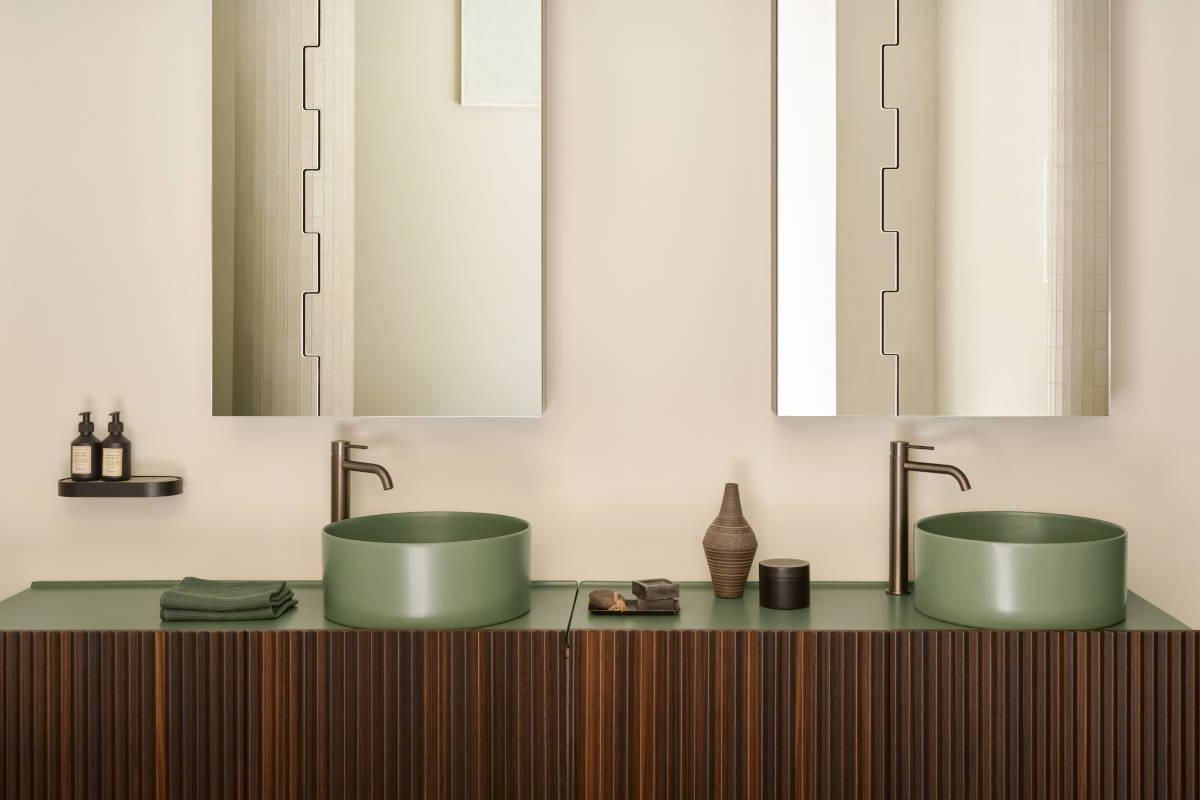
Among the furniture trends 2027 emerging from Salone del Mobile.Milano 2026, colour plays a decisive role. Not as an accessory decorative element, but as atmospheric matter: a presence capable of changing the perception of space, the relationship with light and even the way an interior is experienced.
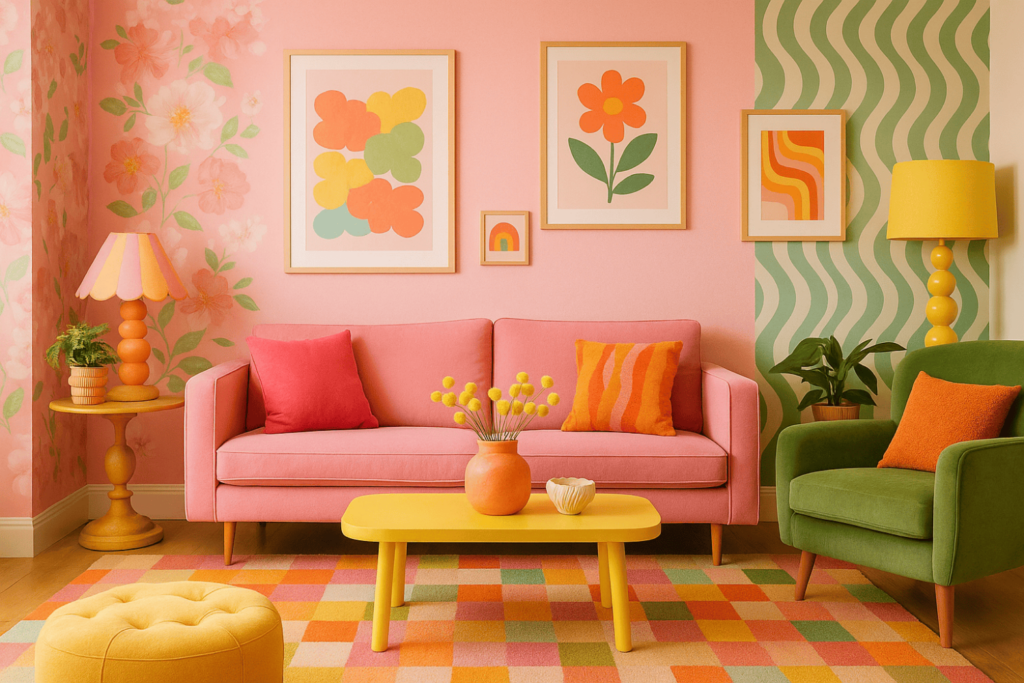
The most visible palette moves towards pastel, warm and enveloping tones. These are not childish colours, nor simply “delicate” shades, but more complex, powdery, soft nuances designed to create reassuring and sophisticated interiors. Powder pink, sage green, dusty blue, butter, sand, warm beige, light terracotta and creamy tones seem to express a new idea of visual comfort: less rigid, more sensorial.
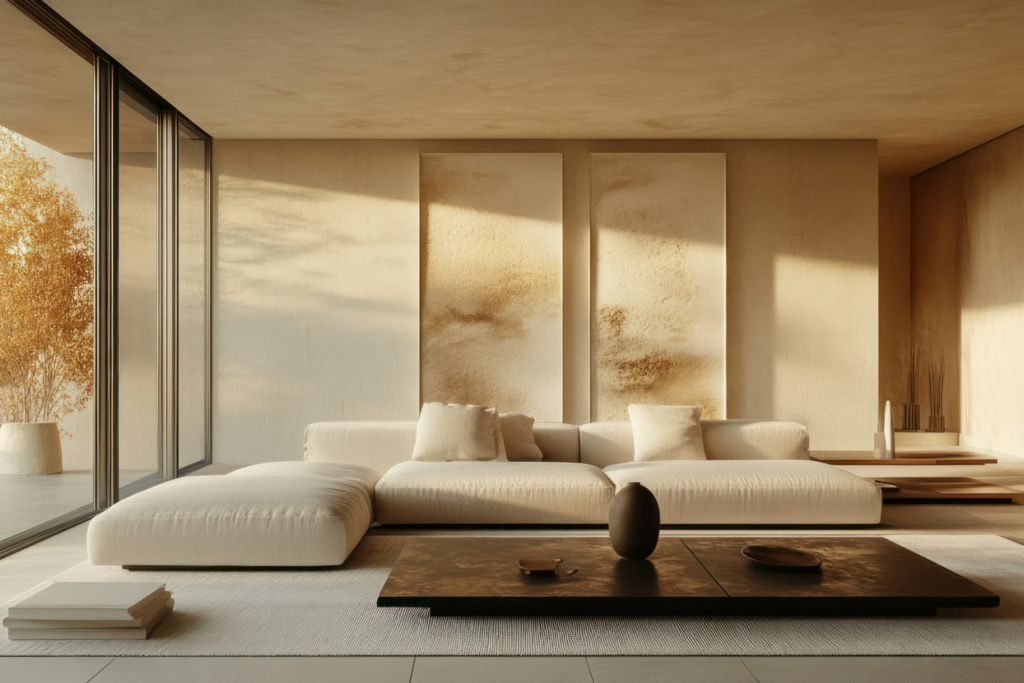
The most interesting change, however, concerns neutrals. After years of cool greys, absolute whites and almost architectural essential tones, neutrals are becoming creamy, material and deeply domestic. They are no longer silent backgrounds, but chromatic surfaces capable of bringing warmth, continuity and softness into interiors.
This chromatic evolution dialogues well with the return of matter. Light and warm colours enhance the texture of fabrics, the depth of wood, the luminosity of glass, the compactness of ceramic and the scenic presence of stone. The 2027 palette does not work through loud contrast, but through layering: it creates interiors where differences are perceived in a subtle, almost tactile way.
It is a direction that also reflects a broader cultural need. The home is no longer conceived only as an orderly or high-performing space, but as a place capable of welcoming, calming and protecting. Colour therefore becomes part of a new grammar of domestic wellbeing: less visual coldness, more perceptive warmth; less distant neutrality, more chromatic intimacy.
In this scenario, colour trends for furniture 2027 seem to favour palettes that are elegant yet accessible, soft but not banal, natural but not predictable. Tones capable of accompanying everyday life without imposing themselves, transforming interiors into warmer, more continuous and more liveable spaces.
Oversized Sofas and Tables: the Return of Generous Furniture
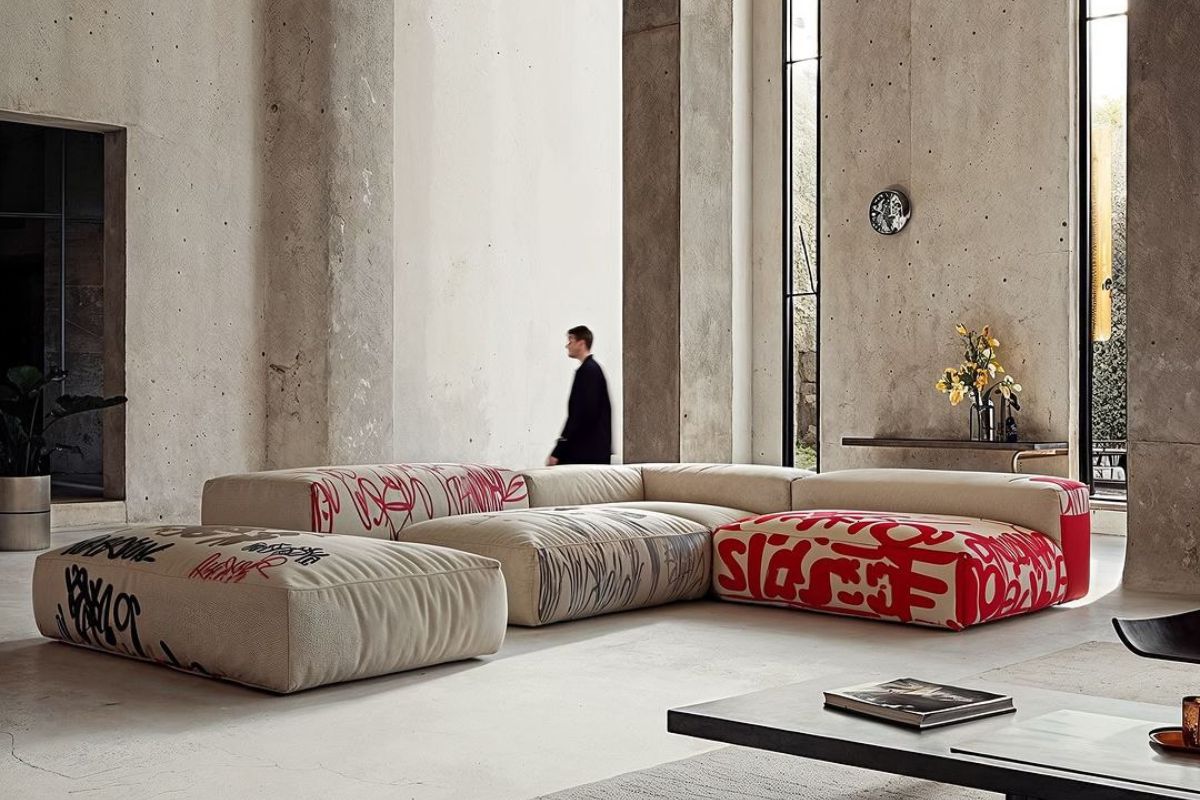
Among the most evident signals observed at Salone del Mobile.Milano 2026 is the return of furniture with important proportions. In furniture trends 2027, sofas, tables, seating and living systems seem to regain a broader, more scenographic, almost architectural presence. They do not simply occupy space: they define it.
After years in which the narrative around the home focused heavily on micro-living, space-saving solutions, compact furniture and multifunctional environments, the Salone seems to suggest a different desire. Not only to optimise, compress and adapt, but to imagine interiors capable of breathing, welcoming and expressing a more generous quality of living.
The sofa, in particular, once again becomes a true domestic architecture. Large, deep, modular, designed for being together but also for inhabiting the slow time of the home. It is no longer just a seat, but an internal landscape: a place for conversation, rest, relationship and pause. In the same way, the table regains a strong centrality, not only functional but symbolic. It becomes the point around which conviviality, hospitality and everyday rituals are built.
This new scale of furniture also speaks of a change in the idea of luxury. The domestic luxury of 2027 does not seem to be linked only to precious materials or iconic pieces, but to the possibility of living in spaces that are broader, more comfortable and fuller of time. It is a less ostentatious and more experiential luxury: having a sofa that truly welcomes, a table that invites presence, a living area conceived not as a passage but as the centre of the home.
In this direction, furniture trends 2027 seem to restore value to large scale, but without cold monumentality. Generous furnishings do not create distant or celebratory interiors. On the contrary, they become tools to make the home more liveable, more hospitable, more relational.
This is where the theme of proportions meets that of conviviality. Large scale is not only there to impress: it creates room for people. And perhaps this is one of the most interesting messages to emerge from the Salone: furniture becomes important again because the way we live together inside interiors becomes important again.
Domestic Conviviality: the Home Returns as a Place of Relationship
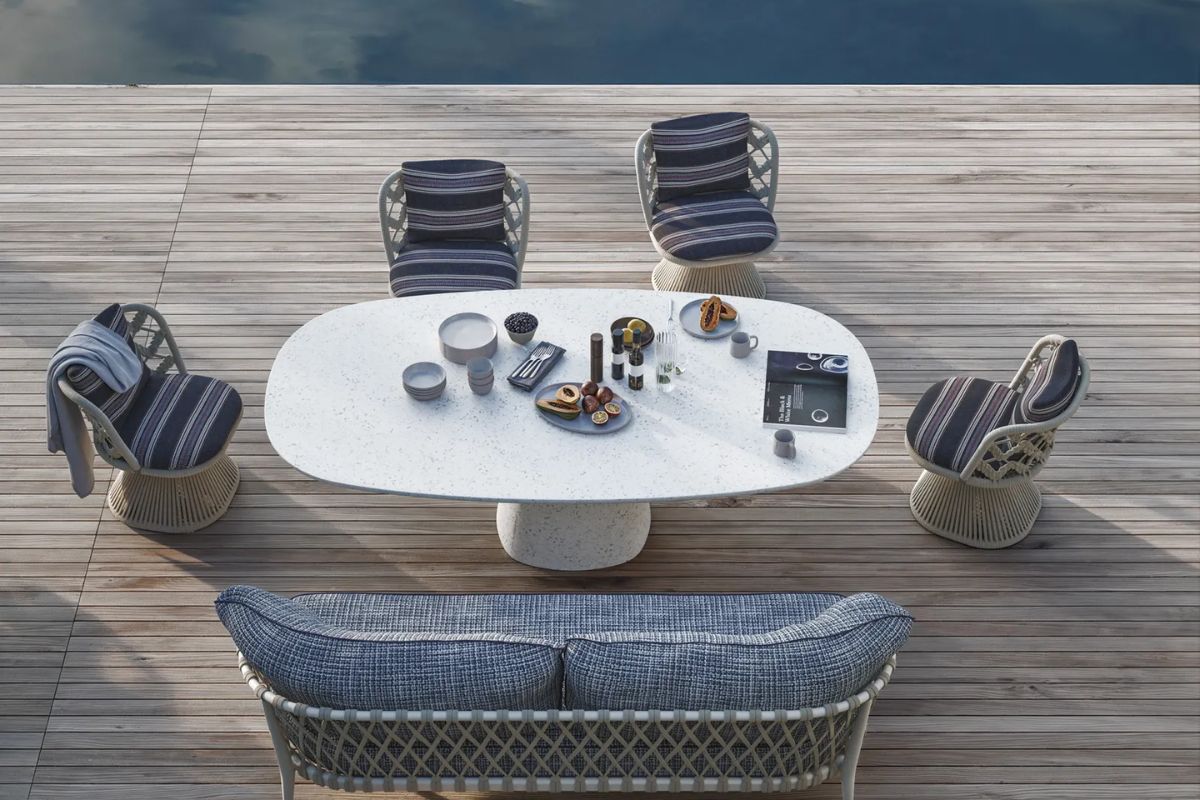
The presence of deep sofas, large tables and generous seating introduces one of the most significant themes of furniture trends 2027: the return of conviviality as a design value. The home is no longer imagined only as a private space, an individual refuge or an aesthetic scenario to be inhabited alone. It returns as a place of encounter, conversation and shared time.
At Salone del Mobile.Milano 2026, this direction is particularly evident in living compositions, dining areas and modular systems designed to create true domestic islands. The sofa becomes an aggregating centre. The table returns as an important presence. Seating is no longer made of isolated elements, but of parts within a broader geography of relationship.
It is an interesting shift, because it comes after years in which the home was often described through the lens of efficiency: working from home, optimising spaces, separating functions, adapting every room to different needs. Now, without losing this flexibility, living seems to recover a more human and relational dimension. It is not enough for a home to function. It must also encourage presence, exchange and proximity.
The conviviality of 2027, however, does not have the formal tone of traditional entertaining. It is softer, more everyday, more informal. It is built around a table where one can work, dine, talk and host. Around a sofa capable of accommodating different postures and different moments of the day. Around a kitchen increasingly open to relationship, not only to food preparation.
From this perspective, furniture trends 2027 seem to describe a less fragmented and more choral home. Interiors are no longer conceived as closed and self-sufficient rooms, but as parts of a continuous domestic experience, where living together becomes an essential component of the project.
The new luxury of the home could therefore be precisely this: not only owning important furniture, but having spaces capable of generating relationship. Intimate, welcoming, well-proportioned environments, where beauty does not remain distant, but becomes an occasion for everyday life.
Scent Design: Interior Design Becomes a Sensorial Experience
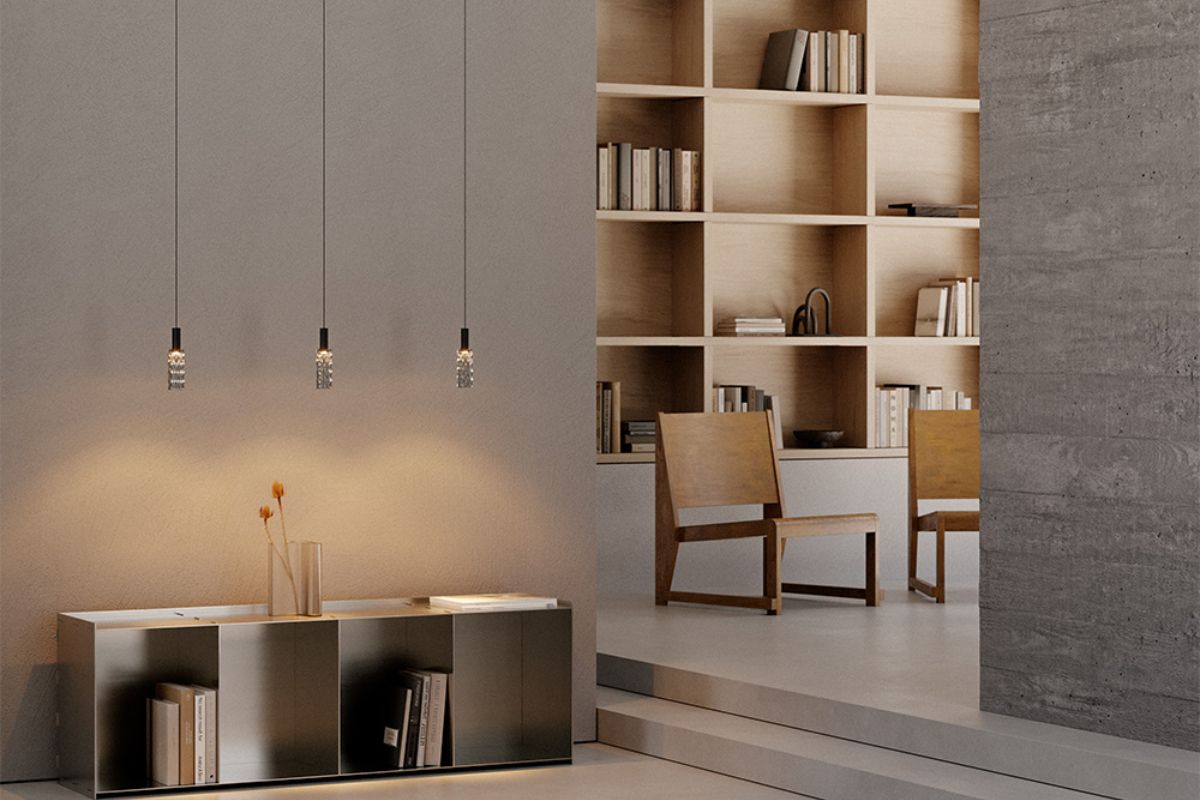
Among the most interesting directions to emerge from Salone del Mobile.Milano 2026, scent design deserves a separate reading. It speaks of a broader transformation in interior design: the home is no longer designed only through forms, materials, colours and functions, but through a more complete sensory experience.
Home fragrance, long considered an accessory element, is increasingly entering the language of contemporary living. It is no longer simply a candle, a diffuser or a decorative detail to be added once the project is complete. It becomes part of the domestic atmosphere, of the memory of a space, of the way a home is perceived by those who live in it and by those who pass through it.
From this perspective, furniture trends 2027 seem to move closer to a more immersive idea of the home. An interior communicates not only through what is seen, but also through what is felt, touched and breathed. Matter builds depth, colour defines the emotional tone, light shapes surfaces, scent adds an invisible yet powerful dimension.
It is a particularly refined theme because it shifts attention from the object to the experience. Interior design is no longer only about choosing a sofa, a table or a finish, but about building a perceptive identity. Every home can have its own sensory signature, made of materials, colours, light, softened sounds and recognisable fragrances.
Scent design for the home also intercepts a growing need for domestic wellbeing. After years in which living has often been associated with performance, functionality and flexibility, a desire is emerging for spaces capable of accompanying body and mind in a more subtle way. A fragrance can make a space more welcoming, more intimate, more relaxing, but also more recognisable.
In interior design trends 2027, scent does not replace the other elements of the project. It completes them. It works quietly, as a discreet presence, yet contributes to defining the quality of the domestic experience. And precisely for this reason, scent design seems destined to become one of the most interesting themes in the contemporary home: less visible, but increasingly central.
Integrated Home Automation: Technology Disappears into the Project
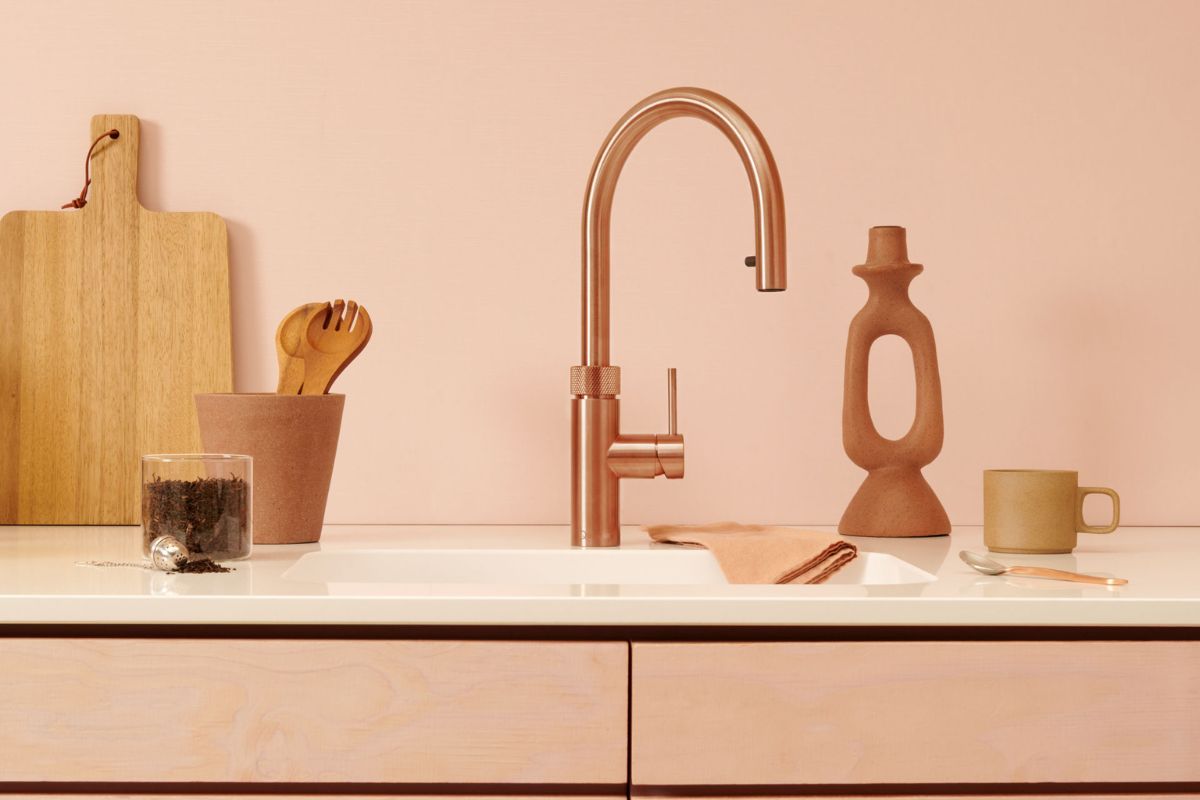
Among the furniture trends 2027 observed at Salone del Mobile.Milano 2026, home automation confirms an already evident shift: technology is no longer presented as a surprising, futuristic or spectacular element, but as a natural part of the domestic experience. It is no longer the special effect of the smart home. It is an expected, discreet, almost silent presence.
Smart lighting, integrated control systems, automations, comfort management, lighting scenarios, intelligent climate control and connected solutions increasingly enter interior projects without interrupting their aesthetic balance. Technology does not need to impose itself visually, but to improve the way space is inhabited.
This is an important change, because it moves the value of home automation from the wow effect to everyday quality. An evolved home is not necessarily one that displays technology, but one that integrates it fluidly. Functions become more intuitive, controls simpler, interiors more adaptable to the rhythms of the day.
In this direction, furniture design 2027 seems to approach the idea of intelligent comfort. Light changes according to different moments, rooms are adjusted with greater precision, integrated solutions accompany increasingly natural everyday gestures. The project is no longer limited to choosing forms, materials and colours, but builds a system capable of responding to the needs of those who live in the home.
Technology, then, becomes more interesting precisely when it is less visible. When it does not occupy the scene, but supports the experience. When it does not turn the home into a cold or hyper-connected space, but helps make it simpler, more personalised and more welcoming.
Furniture trends 2027 therefore describe a more mature smart home: less demonstrative, more integrated; less tied to technological novelty, more oriented towards real wellbeing. A home in which home automation is no longer an addition, but a design component.
Modular and Transformable Furniture: Flexibility Becomes a Design Language
Alongside matter, colour and technology, furniture trends 2027 confirm another now central direction: the home must be able to transform. At Salone del Mobile.Milano 2026, extendable tables, modular systems, reconfigurable wall units, integrable modules and hybrid solutions describe a way of living that is less static and increasingly adaptable.
Modularity no longer concerns only the need to respond to small spaces. Of course, it remains fundamental for optimising compact interiors, studio apartments, second homes, urban apartments and multifunctional areas. But today it takes on a broader meaning: it becomes a true design quality, capable of accompanying the changes of everyday life.
A transformable table is not only a practical piece of furniture. It is a domestic device that allows the home to change rhythm: work, lunch, hospitality, study, sharing. A modular wall system is not only storage, but a light architecture capable of redefining functions, hierarchies and the perception of space. A composable system is not only about adding or removing elements, but about creating more personal, evolving interiors that remain open over time.
From this perspective, flexibility ceases to be an emergency response and becomes a way of designing. No longer only “space-saving solutions”, but furniture capable of interpreting real homes, inhabited by people with changing needs, hybrid days, different domestic rituals and increasingly fluid ways of living interiors.
It is one of the most interesting shifts in interior design trends 2027: the home is not conceived as a definitive image, but as an evolving organism. It changes with those who inhabit it, adapts to the rhythms of the day and welcomes new functions without losing aesthetic coherence.
Transformability, therefore, does not weaken the project. On the contrary, it makes it more intelligent. Because the true value of contemporary furniture lies not only in its beauty, but in its ability to last, adapt and remain meaningful over time.
What Furniture Trends 2027 Tell Us About the Home to Come
The furniture trends 2027 emerging from Salone del Mobile.Milano 2026 describe a more complex, warmer and more conscious home. A home that no longer seems to seek a single stylistic direction, but a subtler balance between matter and technology, comfort and representation, intimacy and conviviality.
The most interesting aspect is precisely this: furniture is no longer read only as a sum of products, colours or finishes, but as the construction of a domestic experience. Materials dialogue with one another, lines return to bring order, palettes become creamier and more enveloping, furniture regains generous proportions, home automation becomes natural, scent enters the project and modularity makes spaces more evolutionary.
The home of 2027 therefore seems to be moving away from the idea of a perfect, immobile interior designed only to be photographed. Instead, it comes closer to a more living environment: capable of changing, welcoming, protecting, representing and creating relationships. A place where beauty is not only aesthetic, but a quality of everyday life.
Perhaps this is the most significant direction left by the Salone: a less rigid and more sensorial way of living, less demonstrative and more profound. A home in which design does not simply organise space, but seeks to interpret needs, gestures, desires and new forms of domestic wellbeing.
Insights on Furniture Trends 2027
What will the main furniture trends 2027 be?
The main furniture trends 2027 seen at Salone del Mobile.Milano 2026 concern contrasting material combinations, pastel palettes and creamy neutrals, furniture with generous proportions, the return of more orderly lines, greater attention to conviviality, scent design, integrated home automation and modular transformable solutions.
What colours will be trending in furniture and interior design in 2027?
The most interesting colours for furniture and interior design 2027 seem to move towards pastel, warm and enveloping tones. Powder pink, sage green, butter, sand, warm beige, light terracotta and creamy neutrals create softer, brighter and more welcoming interiors.
Which materials will be protagonists in the home of 2027?
Among the leading materials for the home of 2027 are marble, stone, ceramic, glass, leather, wood, metal and textured fabrics. The real trend, however, is not about a single material, but about the way different materials are combined to create contrasts, depth and identity.
Will home automation still be a trend in 2027?
Yes, but with a different role. Home automation in the 2027 home no longer appears as a spectacular or futuristic element, but as an integrated component of the project. Lighting, comfort, automations and smart systems enter interiors in a more discreet and functional way.
Why will scent design be important in interior design 2027?
Scent design becomes important because it expands the experience of interiors beyond the visual dimension. Home fragrance helps define atmosphere, identity and domestic wellbeing, transforming the home into a more sensorial and personal space.