From 3 November, Zaha Hadid’s former London studio at 10 Bowling Green Lane opens to the public as a cultural space of the Zaha Hadid Foundation, with exhibitions, an archive and a programme of talks.
After more than thirty years behind closed doors, the Victorian schoolhouse on Bowling Green Lane, in Clerkenwell, becomes a place open to everyone: exhibitions, archive, talks and a new identity for the Zaha Hadid Foundation.
In London, Zaha Hadid’s studio takes on a new life. The building at 10 Bowling Green Lane, where the Iraqi-born British architect worked for more than thirty years, has been refurbished and becomes the public home of the Zaha Hadid Foundation. The new venue was presented on 29 October 2026, the symposium 89° of Zaha Hadid runs on 30 and 31 October, and the building opens to the public on 3 November, in the tenth anniversary year of Hadid’s death on 31 March 2016.
A Victorian school turned into a laboratory of ideas
The building’s story begins in 1874, when Bowling Green Lane School opened as a London public school designed under the London School Board by E. R. Robson, probably with the collaboration of J. J. Stevenson. It is an example of the Queen Anne style, with a modified H plan, buff and red brick, slate roofs and tall, bright classrooms, and it has been Grade II listed since 1991, as recorded in the official listing entry.
It was in these classrooms that the work of the practice founded by Hadid, the first woman to win the Pritzker Prize, in 2004, took shape for decades. The practice’s move to another address in 2021 freed the building and opened the way to the foundation’s new chapter. The foundation was established in 2013 to preserve, study and exhibit the architect’s work.
The refurbishment by Studio KA
The restoration was entrusted to London practice Studio KA, led by Katherine Nolan and Alex Butterworth. The work focuses mainly on the ground floor: circulation has been made clearer, original fireplaces and doorways have been reopened, and new floors and finishes take their colours from Hadid’s paintings. The details the architect introduced herself remain in place, such as the Z-shaped door handles and the shard-like inserts in the floor.
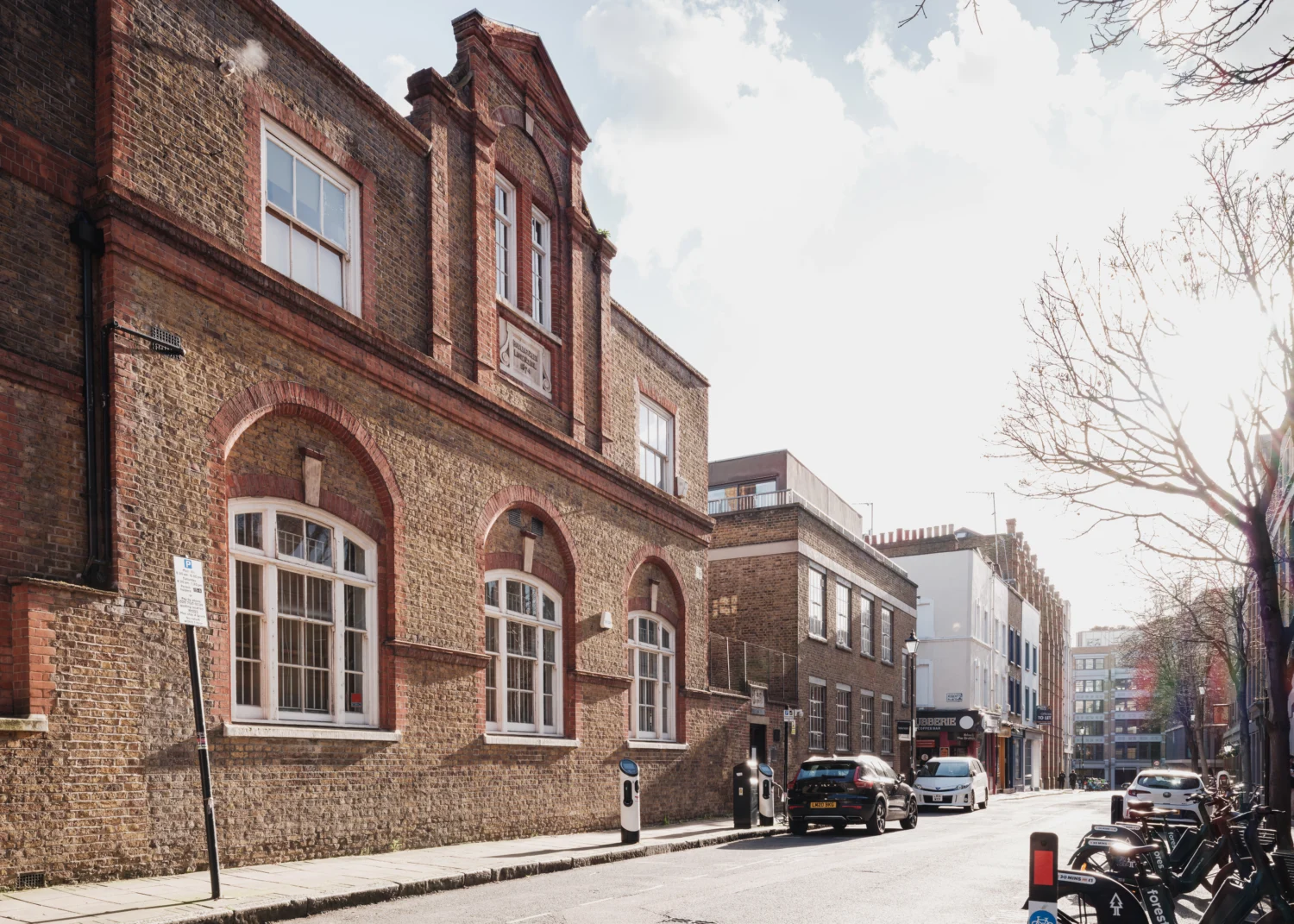
The approach is a light touch that keeps the layers of the place legible rather than erasing them: the nineteenth-century school, Hadid’s studio, the new public space.
The spaces and functions of the Zaha Hadid Foundation
The ground floor houses two galleries, a learning space, a lecture hall and an area for displaying works from the collection. The building also remains home to Zaha Hadid Design, with furniture and objects designed by Hadid, and hosts a pop-up outpost of the AA Bookshop, the Architectural Association’s bookshop, with a curated selection of publications.
The foundation, directed by Aric Chen and with Rana Hadid chairing its trustees, plans exhibitions, public talks, workshops and creative residencies. The renewal extends to its image: Amsterdam studio Experimental Jetset has designed a new visual identity based on a flexible typographic system rather than a fixed logo, while the website is the work of London studio Made by ON. For Chen, who described the shift “from what was Zaha’s home base to a new home for architecture and design in London”, this is the point of the operation: turning a workplace into a space for culture.
The inaugural exhibition: Architecture of Performance
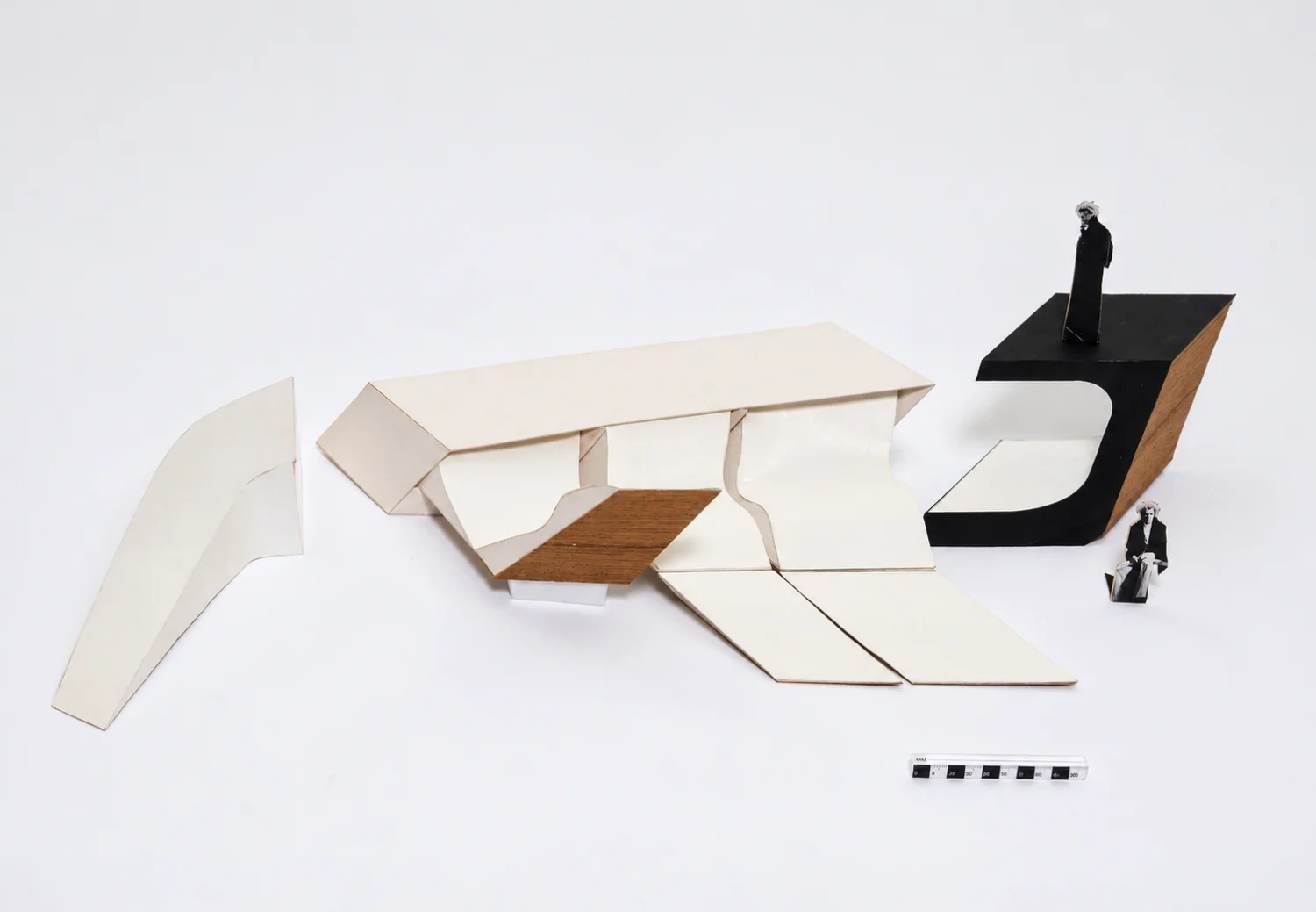
The first show, in Gallery 1, is Zaha Hadid: Architecture of Performance, curated by Catherine Howe with guest curator Libby Sellers. It is the foundation’s first exhibition built from its own collection and tells the story of Hadid’s work for the stage: sets, installations and designs for dance, opera and pop music.
From dance to the Pet Shop Boys
The works on show include d1, created in 1989 with choreographer Rosemary Butcher, the Music Video Pavilion in Groningen from 1990, the settings for the ballet Metapolis in Charleroi in 1999, the sets for the Pet Shop Boys’ Nightlife tour between 1999 and 2000, and the staging of Così fan tutte at the Walt Disney Concert Hall in Los Angeles in 2014.
The two contemporary commissions
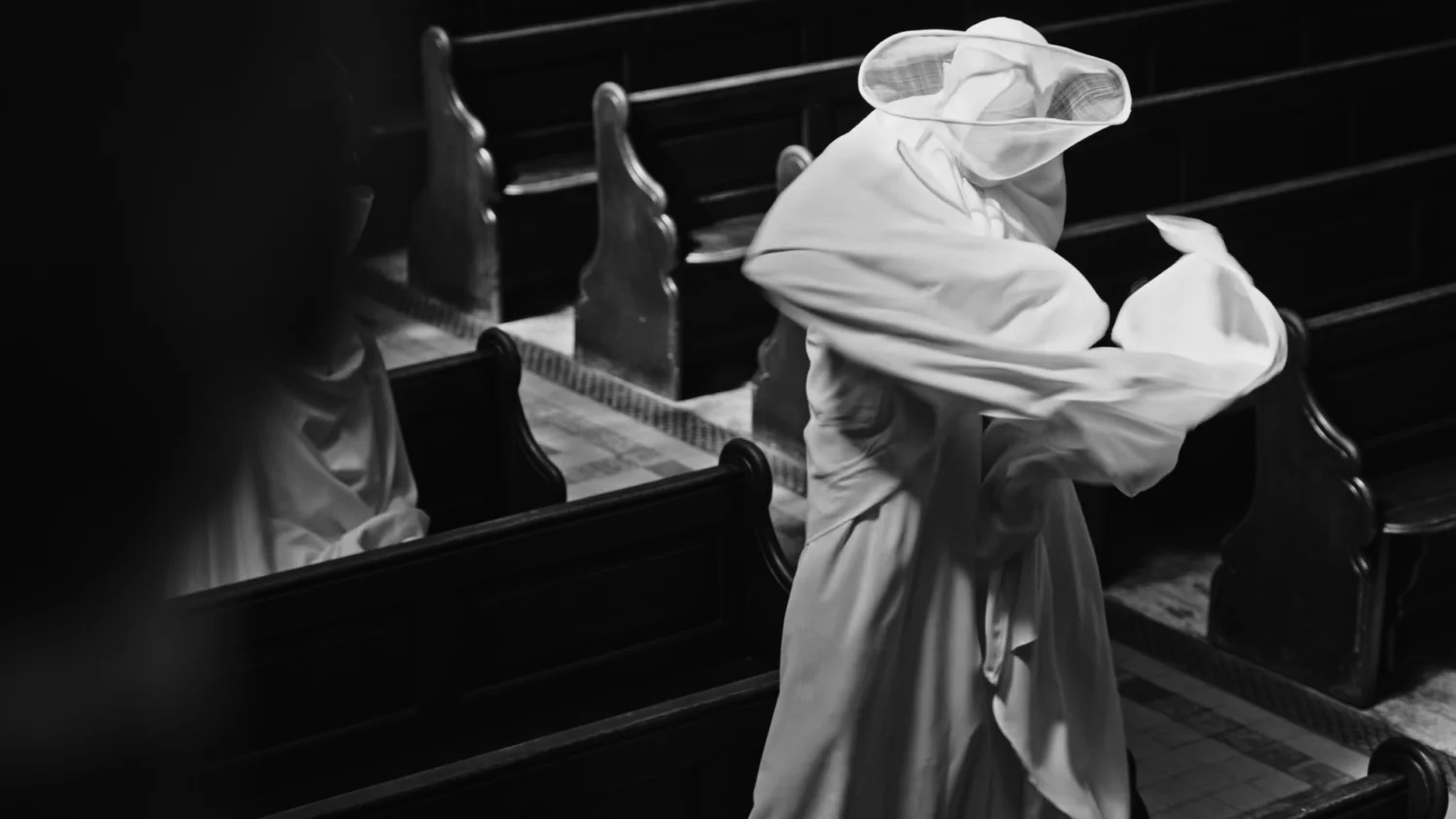
Gallery 2 presents The Rebar Beneath, a commission by artist LionHeart: an eleven-minute two-channel video that weaves together film, poetry, performance and installation, inspired by the archive. In the foyer is the work of Mona Chalabi, the Pulitzer Prize-winning illustrator, who has created a data-visualisation timeline of Hadid’s life and influence.
The archive at the heart of the project
Behind the new space lies, above all, a question of memory. According to information published by the institution itself, the foundation looks after a collection and archive of around 15,000 works: painting, drawing, models, furniture, interiors, product design, fashion, exhibition design and architecture. Opening the building means bringing this heritage before the public, and not only scholars, and making it the basis of an ongoing programme.
Rana Hadid has explained that the aim is to safeguard the archive and make it accessible to a wider audience, in support of education and new generations. For those working in design, this is concrete news: part of Hadid’s imagination, until now known mainly through her buildings, becomes available in the place where it was conceived.
The 89° of Zaha Hadid symposium
The opening is accompanied by 89° of Zaha Hadid, a two-day symposium on 30 and 31 October, organised by the foundation with the Architectural Association and the Serpentine and spread across its London venues. Among the roughly forty announced speakers are Hélène Binet, Nigel Coates, Peter Cook, Rem Koolhaas and Rolf Fehlbaum. 31 October is the day Hadid would have turned 76.
Visitor information
The Zaha Hadid Foundation is at 10 Bowling Green Lane, EC1R 0BQ, in Clerkenwell. The nearest station, served by Underground and rail, is Farringdon. The building opens to the public on 3 November 2026; opening hours, entry arrangements and the latest programme are on the foundation’s website.
Why this reopening matters to designers
London thus adds an address to the geography of contemporary architecture, starting from the place where some of the most recognisable work of the twentieth and early twenty-first centuries was born. To learn more about Hadid, our guide to Zaha Hadid and her liquid architecture retraces the projects that made her famous, while our story on the pioneers of female architecture places her alongside the other leading figures in the field. Those who want to understand how the profession’s highest honour is won can read the guide to the Pritzker Prize, and for a picture of today’s big names there is our piece on archistars.