Four flowing and self-levelling screed brands, with practical guidance on installation depths, underfloor heating, quantities, supply costs and checks before flooring.
A successful floor starts below the timber, tiles or resin finish. The screed needs to distribute loads, meet the required levels and, where specified, work with underfloor heating. It will largely disappear from view, yet it affects both the construction programme and the quality of the finished room.

Our shortlist of flowing and self-levelling screed brands covers Fassa Bortolo, Knauf, Laterlite and Weber, using their documented Italian offerings for interiors and heated floors. These four manufacturers provide useful options to compare, rather than an exhaustive worldwide catalogue or an editorial laboratory ranking. Check local product names and specifications before ordering.
Flowing screed or a thin levelling compound?
A screed forms the supporting layer for the floor finish. A levelling compound corrects or prepares an existing substrate, often at a thinner application depth. Fluid consistency does not make the products equivalent: their role, permitted thickness, substrate and installation configuration all matter.
First establish whether the screed will be bonded to the substrate, unbonded over a separating layer, or floating over insulation. With underfloor heating, the cover above pipes or studs matters too. A minimum thickness allowed for bonded installation is not automatically suitable for a floating screed.
Four screed brands to compare
| Brand | Product | Useful distinction |
|---|---|---|
| Fassa Bortolo | SA 500 | Cement-based screed |
| Knauf | FE 80 Termico Advanced | Calcium sulphate binder |
| Laterlite | PaRis Fluid | Underfloor heating applications |
| Weber | weberfloor level 250 | Anhydrite and low-profile systems |
Fassa Bortolo: SA 500 for cement-based interior screeds
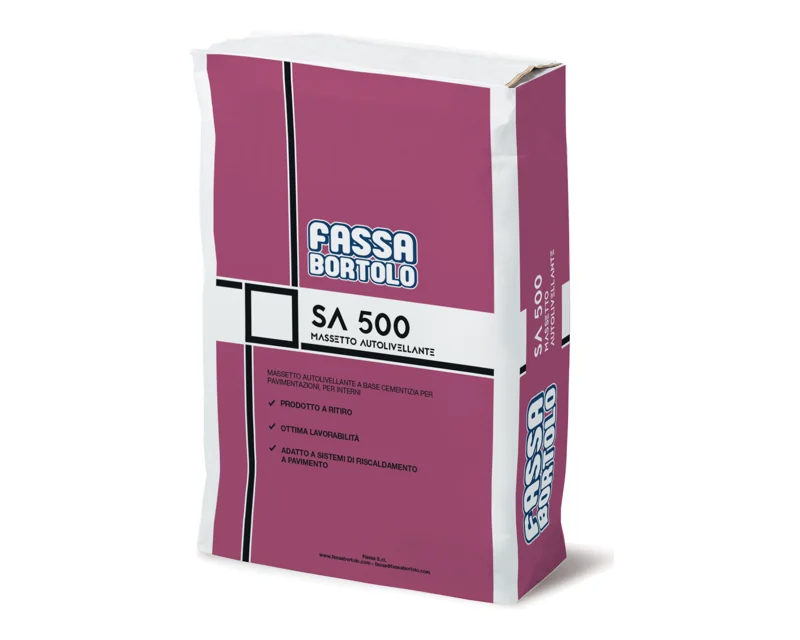
SA 500 is a self-levelling cement screed for internal floors. Fassa Bortolo specifies it beneath ceramic, wood and resilient coverings, including heating and cooling floor systems. Supply options include approximately 25 kg bags and bulk silo delivery.
The Italian data sheet distinguishes a 30 mm minimum for unbonded installation from a 40 mm minimum for floating installation, with the latter requiring sizing for the actual build-up. This illustrates why a quotation needs to describe the layers rather than simply saying “self-levelling screed”.
Knauf: FE 80 Termico Advanced for heated floors
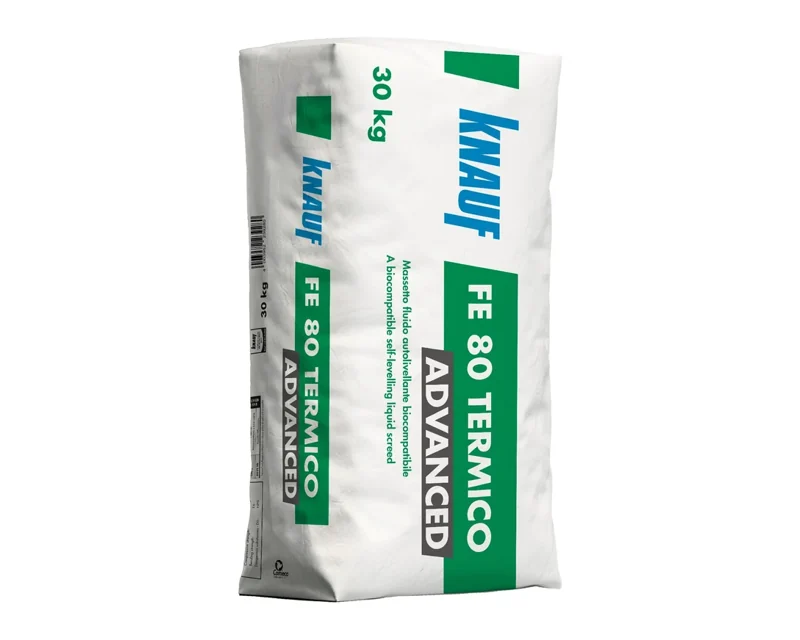
FE 80 Termico Advanced is a premixed flowing interior screed based on calcium sulphates and alpha calcium sulphates, plasticisers and selected aggregates. Knauf presents it for underfloor heating, large-format coverings and continuous finishes such as resin.
The Italian page states foot traffic after 24 hours. That does not mean every covering can be bonded after one day. Drying, residual moisture and the heating commissioning cycle, where required, are separate checks that should appear in the project programme.
Laterlite: PaRis Fluid and heat transfer
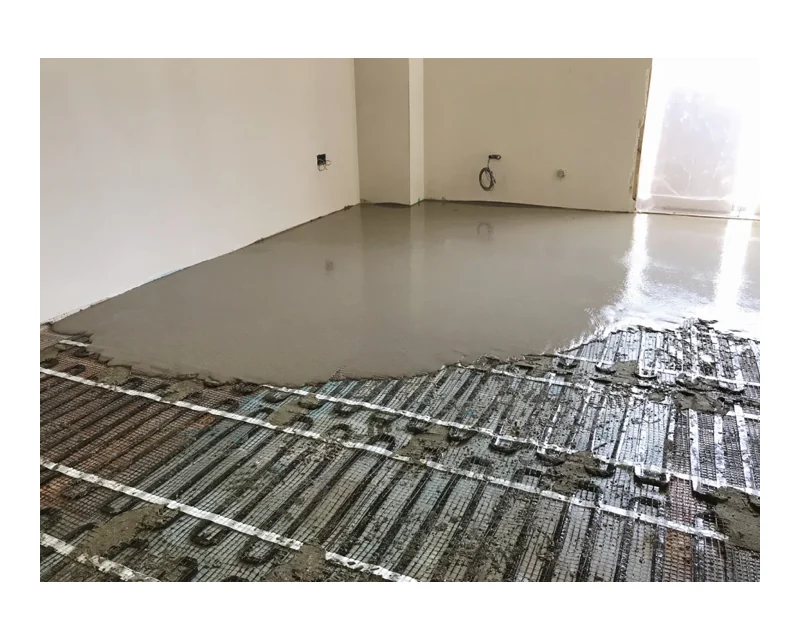
PaRis Fluid is Laterlite’s self-levelling screed for heated and cooled floors. Its stated thermal conductivity is λ = 1.60 W/mK, a material property to assess alongside the other layers and the heating system’s geometry.
The documentation distinguishes conventional panels from low-profile arrangements and their required cover depths. Do not choose a thickness from the smallest number found online. Have the complete floor build-up confirmed, including levels, loads and substrate conditions.
Weber: put level 250’s thickness range in context
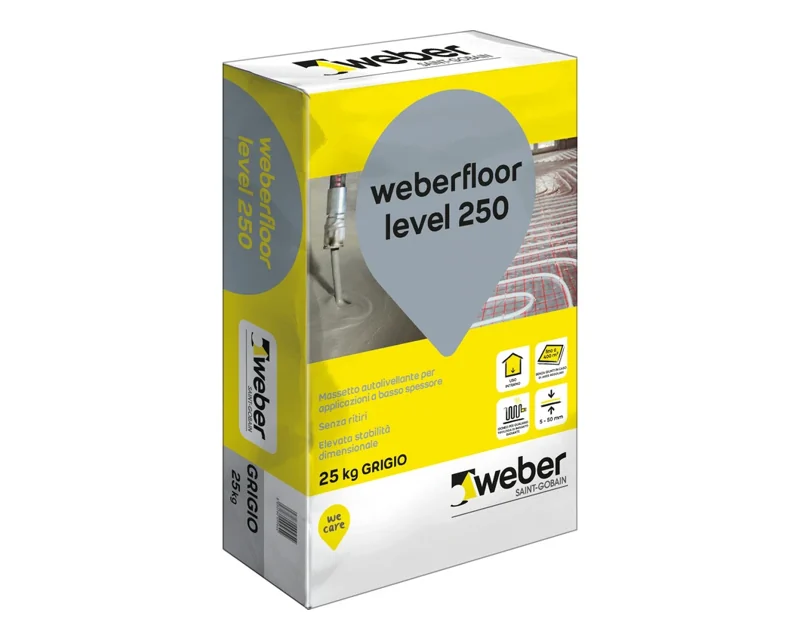
weberfloor level 250 is an anhydrite-based flowing self-levelling screed, including low-profile heated-floor applications. The stated application range is 5–50 mm, but the minimum depends on the installation configuration.
For example, the technical sheet distinguishes 5 mm bonded installation from 20 mm unbonded installation. It also excludes substrates with rising damp, repeated water contact and outdoor use. These conditions should be considered before the price per bag.
How much material is needed, and what does it cost?
Material demand increases with both area and depth. For SA 500, Fassa states approximately 18 kg/m² for each centimetre of thickness. A quantity example is 20 m² × 4 cm × 18 kg = 1,440 kg, requiring at least 58 bags of 25 kg when rounded to whole packs, before allowances for unevenness and waste. The example depth is not a specification for your project.
San Marino retailer Materiali per l’Edilizia advertised €7.29 per approximately 25 kg bag of SA 500, with a minimum of 28 bags/700 kg, in a catalogue excluding VAT. At that indicative rate, 58 bags cost €422.82 for material alone, before applicable taxes, delivery and installation. The offer needs reconfirming and is distinct from a complete project price.
A complete quotation should identify preparation, barriers or separating layers, perimeter strips, any reinforcement, pumping, placing, joints and checks before the finish is laid. Site access, floor level, pumping distance and minimum job quantity can all affect the final price.
Where to buy and how to compare quotations
Builders’ merchants and specialist distributors supply bagged materials. Larger areas may call for an organised delivery with silo supply, pumping and a screeding contractor. Establish who coordinates delivery and who assesses the substrate before materials arrive.
- Build-up: product name, total thickness, cover above pipes and installation type.
- Substrate and loads: base condition, insulation compressibility and the weight of the complete floor.
- Moisture: rising-damp management and suitability for the room’s exposure.
- Joints: structural, perimeter and movement-joint arrangements.
- Timing: distinguish foot traffic, heating commissioning and readiness for the floor covering.
- Handover: moisture measurements, records of checks and responsibilities of the different trades.
The final covering needs coordination too. Our guide to flooring adhesive brands explains useful distinctions between adhesives. For a continuous decorative finish, see the shortlist of resin flooring and wall coating brands.
Questions to resolve before pouring
Does self-levelling mean specialist installation is unnecessary?
No. Levels, containment, consistency, junctions and substrate conditions still need to be managed. Flowing material assists installation; it does not replace site preparation or an appropriate specification.
Can calcium sulphate screed be used anywhere?
No. Intended use, water exposure and permitted conditions come from the data sheet. A living-room specification does not automatically suit an exterior or continuously wet environment.
When can wood or tiles be laid?
Follow the system’s requirements and site checks rather than counting days alone. Thickness, climate, residual moisture, covering type and underfloor heating affect readiness. Agree these checks before fixing the floor-covering delivery date.