From childhood in Belgrade and life with Ulay to the Golden Lion and MoMA: Marina Abramović’s biography through the decisions, relationships and works that shaped her life.
Before the queues at MoMA, before the Golden Lion, before her face became one of contemporary art’s most recognisable images, Marina Abramović was a young woman in Belgrade who painted. Growing up in a strict household in post-war Yugoslavia, she was searching for a form that could hold what the canvas was beginning to leave out. She would find it in her own body, exposing it to time, exhaustion and the gaze of others.
Her biography moves through cities, relationships and profound changes: Belgrade and Amsterdam, life on the road with Ulay, their separation on the Great Wall, Venice and New York. At each turning point, personal experience enters the work and changes its language. Following that journey means looking beyond the icon to an artist who has spent decades creating the conditions for an encounter.
Who is Marina Abramović?
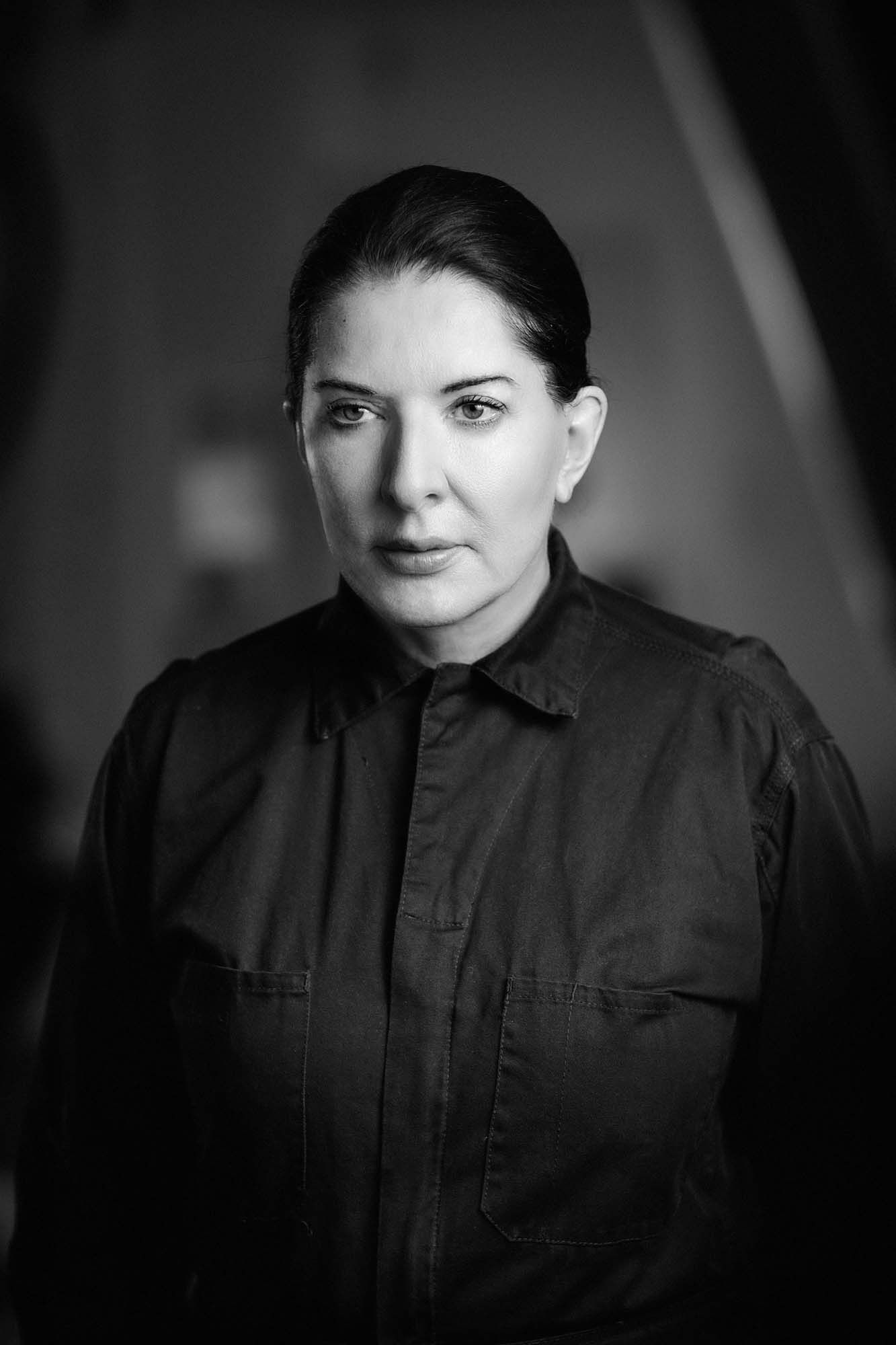
Marina Abramović is a Serbian artist, born in Belgrade on 30 November 1946, and a pioneer of performance art. Originally trained as a painter, she began working with the body and live action in the early 1970s. Major moments in her career include Rhythm 0, her collaboration with Ulay, the Golden Lion at the 1997 Venice Biennale and the 2010 MoMA retrospective The Artist Is Present.
Childhood in Belgrade: family, discipline and the desire for freedom
Abramović was born in the Yugoslav capital to Vojin and Danica, both Partisans during the Second World War who subsequently held positions in the country’s institutions. She spent much of her early childhood with her deeply religious maternal grandmother. Two different worlds shaped those years: her grandmother’s Orthodox faith and her parents’ political commitments.
The biography compiled by Moderna Museet describes a home governed by order and discipline. Her relationship with her mother was strict, yet artistic expression was encouraged from childhood. Drawing and painting soon became tangible ways of finding a voice.
That upbringing introduced a tension that would return throughout her life: the desire for freedom coexisted with an exceptional ability to sustain rules and concentration. Explaining every work through her family would be reductive, but the distance between control and independence remains one of the clearest threads in her account of her life.
Art school and the move away from painting
From 1965 to 1970 she studied at the Academy of Fine Arts in Belgrade, continuing her education in Zagreb. Her painting moved from figurative work towards abstraction. In the early 1970s she became involved with SKC, Belgrade’s Student Cultural Centre, meeting artists engaged in conceptual research and experimenting with sound and performance.
In 1971 she married the artist Neša Paripović. Marriage did not yet bring departure from her parents’ home: according to Moderna Museet’s chronology, she continued living under her mother’s rules. Artistic independence developed while everyday autonomy remained difficult to secure.
Her decision to work with the body took shape during this period. An action could unfold in front of others, change over time and leave real consequences. That possibility gradually drew her away from painting and towards the medium with which her name would become inseparable.
The 1970s and Rhythm 0: finding a language
Her early performances explored the limits of endurance and consciousness. At Studio Morra in Naples in 1974, Abramović performed Rhythm 0. For six hours she remained passive, allowing the audience to use 72 objects on her. Some were harmless; others could cause injury.
The Irish Museum of Modern Art’s documentation records the structure of an action that became central to the history of performance. The artist’s body was exposed to other people’s decisions, while spectators had to confront responsibility for their choices.
Naples therefore entered her biography early. Her relationship with Italy would continue through exhibitions, collaborations and awards. Already, she was establishing an approach that would endure: setting up a simple situation and sustaining it long enough for unforeseen implications to emerge.
Meeting Ulay and life on the road
In Amsterdam in 1975 she met Ulay, the German artist born Frank Uwe Laysiepen. The following year she divorced Paripović and moved to Amsterdam. With Ulay she began a personal and artistic relationship that would shape more than a decade of her life.
For several years they lived and travelled across Europe in a van. The couple became the centre of a shared investigation into contact, attraction, conflict and mutual dependence. Their work often developed through the relationship between two bodies supporting or obstructing one another.
In Imponderabilia, presented in Bologna in 1977, they stood naked on either side of a narrow entrance, making visitors acutely aware of physical proximity. In Rest Energy (1980), they held a bow under tension, its arrow directed towards Abramović’s chest. Their balance gave trust a palpable physical form.
These works belong to both artists. Treating them solely as images of a love story would diminish their scope: the relationship was subjected to precise conditions in which vulnerability and power could shift.
1988: a separation on the Great Wall
In 1988 Abramović and Ulay realised The Lovers: The Great Wall Walk. They set out from opposite directions along the Great Wall of China to meet. Developed over several years, the project ultimately accompanied the end of their relationship.
Separation took the form of a journey. The time spent reaching each other became part of the farewell, while the landscape gave it a scale no conversation could offer. It is one of the moments when life and work come closest without becoming identical.
After the partnership ended, Abramović returned to solo practice. It was a new beginning that led her to develop other forms of presence and relationships with audiences through performance, video, photography and objects.
Balkan Baroque and the Golden Lion in Venice
At the 1997 Venice Biennale she presented Balkan Baroque, a work connected to the violence of the Balkan wars. Seated among animal bones, she repeatedly scrubbed them clean. Material and gesture brought forward a memory that resisted erasure.
The Golden Lion, recorded in the Biennale’s official history, marked a decisive moment in the international recognition of her work. Her origins in the former Yugoslavia acquired a historical and collective weight extending beyond private experience.
Her career also developed through teaching and training other performers. Discipline, already present in her earliest actions, became something to pass on: preparation, concentration and the ability to sustain duration.
New York: presence and the memory of performance
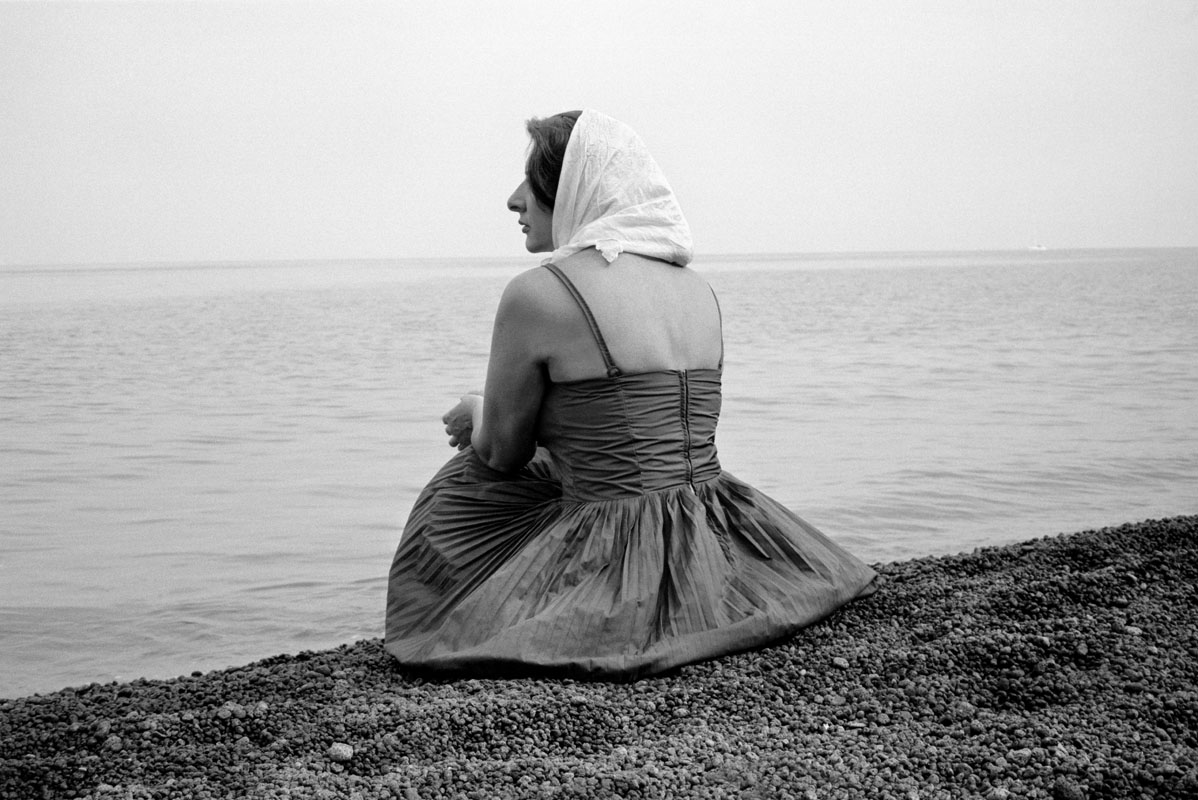
She moved to New York in 2002. That year she presented The House with the Ocean View, living for twelve days in front of an audience in a setting arranged around essential daily activities. Her work focused on what happens when ordinary actions are made visible and given time.
In 2005 she presented Seven Easy Pieces at New York’s Guggenheim Museum. Revisiting historical works by herself and other performance artists, she addressed a question that would become increasingly important: how can an art form that exists through bodies and actions be preserved and transmitted?
The Performa archive documents the project’s seven evenings. An established artist was now turning her attention to the history of her medium, challenging the idea that a performance could survive only through a photograph or a witness’s recollection.
2010: The Artist Is Present reaches a new audience
In 2010 MoMA dedicated the retrospective The Artist Is Present to Abramović, running from 14 March to 31 May. During the exhibition she sat silently opposite visitors, who took their places one at a time. The performance lasted more than 700 hours in total.
The MoMA exhibition introduced decades of research to a much wider public. Ulay was among those who participated, and their encounter became one of its best-known sequences. Yet the work encompassed everyone who accepted the invitation to sit and sustain that shared time.
Abramović was 63. The image of the woman sitting motionless on a chair came after a long career of experiments, journeys, ruptures and new beginnings. That history gives depth to a scene which, viewed alone, might seem disarmingly simple.
The Abramović Method, books and major retrospectives
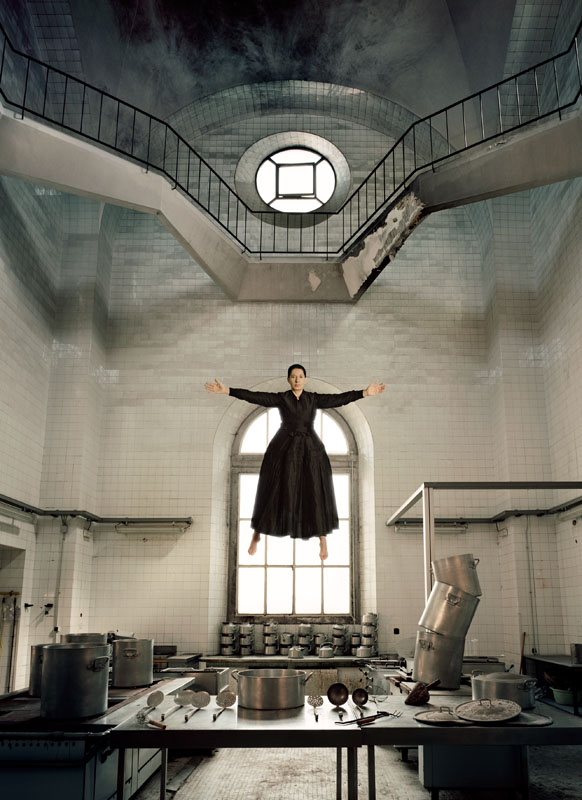
In the following years, passing on experience became increasingly important. In 2012 a project at Milan’s PAC introduced the Abramović Method to the public through exercises involving attention and duration. The practice extended beyond the artist’s presence to the participation of those entering the space.
Her 2016 memoir, Walk Through Walls, offers an autobiographical reading of her journey. Like any memoir, it reflects its author’s perspective: a valuable source to read alongside museum chronologies and documentation of the works.
The retrospective The Cleaner, which opened in Stockholm in 2017, also travelled to Palazzo Strozzi in Florence before concluding in Belgrade in 2019. Returning to her birthplace brought an international career back to its beginnings. In 2023 a major exhibition at London’s Royal Academy surveyed more than fifty years of work, bringing together documentation and new performances of historical pieces.
A life that changed the spectator’s place
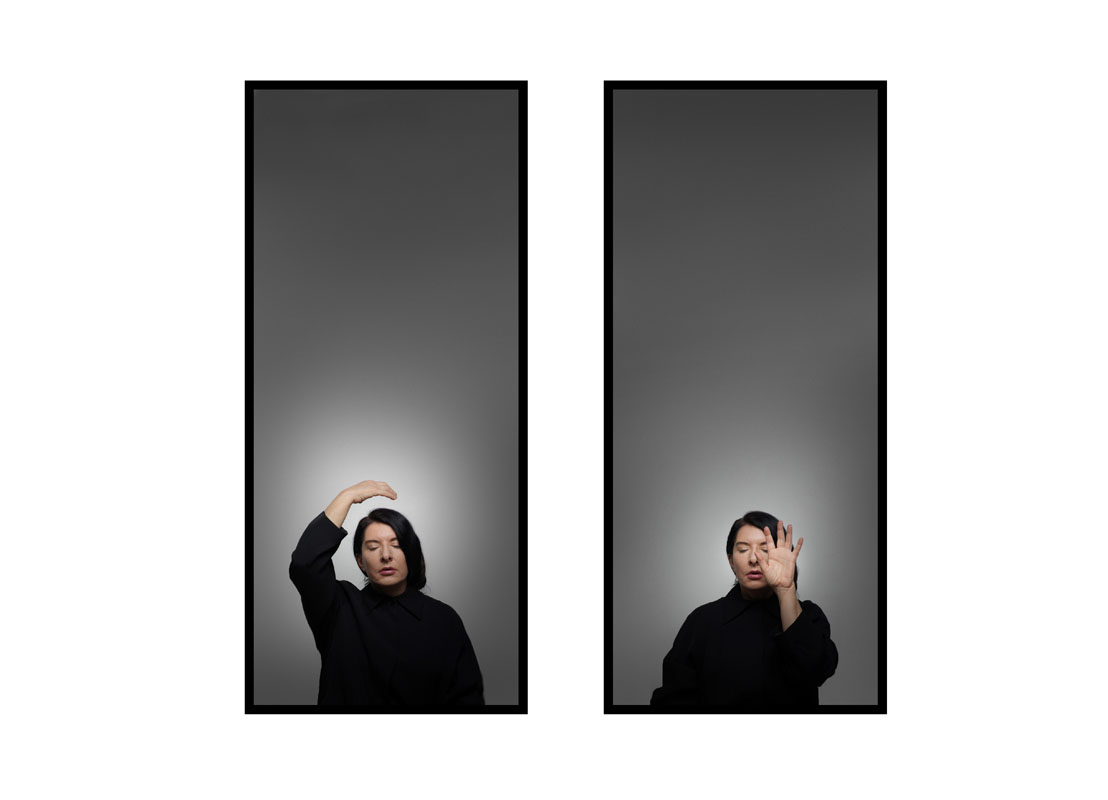
Marina Abramović’s biography traces the emergence of an artist who brought a long-experimental medium to a vast audience. The pain of her early works, her relationship with Ulay and the concentration of her mature performances belong to distinct periods, connected by sustained attention to what can happen between people.
For readers approaching art through space and design, her work raises a concrete question: how does a place change when someone truly remains within it? Through a different artistic practice, James Turrell’s Skyspaces also ask spectators to give time to perception.
For Abramović, that time encompasses a lifetime devoted to encounters. The distance between the young painter in Belgrade and the woman seated at MoMA is measured in decisions, relationships and the ability to begin again. There, the portrait of an artist becomes, above all, the story of a person.