Quiet luxury is a discreet form of elegance that expresses luxury through the quality of materials, careful proportions, precise details and a complete lack of ostentation. In quiet luxury interior design, the goal is not simply a minimalist, neutral or expensive home, but a way of designing space in which value is never openly declared: …
Quiet luxury is a discreet form of elegance that expresses luxury through the quality of materials, careful proportions, precise details and a complete lack of ostentation. In quiet luxury interior design, the goal is not simply a minimalist, neutral or expensive home, but a way of designing space in which value is never openly declared: you recognize it in the consistency between surfaces, furniture, light, fabrics and the overall atmosphere.
In recent years, quiet luxury has become one of the most closely watched trends in fashion, lifestyle and interior design. Its rise reflects a clear cultural shift. After a long season dominated by highly recognizable images, interiors built to be photographed, iconic objects flaunted as status symbols and trends burned through quickly on social media, there is a growing desire for spaces that are more measured, more durable and less dependent on instant impact. Understated luxury also grows out of this: a search for a more private, less spectacular kind of quality, closer to the everyday experience of a space.
Talking about quiet luxury in interiors, however, does not mean reducing everything to beige palettes, clean surfaces and sofas with soft curves. That is probably its most common oversimplification. Quiet luxury works when it becomes design, not when it is treated as an aesthetic to copy. A room can have neutral colors and still feel anonymous; it can hold expensive furniture and not be elegant at all; it can be minimal and come across as cold. The difference lies in the quality of the relationships: between solids and voids, natural and artificial light, matte materials and more reflective surfaces, comfort and formal control.
In a quiet luxury home, elegance does not rest on a single recognizable piece, but on how the whole is put together. Floors, walls, furniture, textiles and lighting all serve the same design intent. A limewashed wall, carefully laid hardwood, a handleless kitchen, generous drapes, natural stone, essential faucets or contemporary wood paneling are not valuable only as decorative elements: they become part of a broader language in which every choice should feel necessary, never random.
That is why quiet luxury speaks so well to contemporary interiors. The home is no longer just a space to show off, but a complex place: dwelling, refuge, workplace, social space and a place to decompress. It has to be beautiful but also functional; welcoming but not chaotic; personal but not overloaded. In this scenario, luxury changes shape. It is no longer only about owning something precious, but about living in a better-designed space that delivers wellbeing, visual order and lasting quality.
What is quiet luxury interior design?

Lissoni & Partners
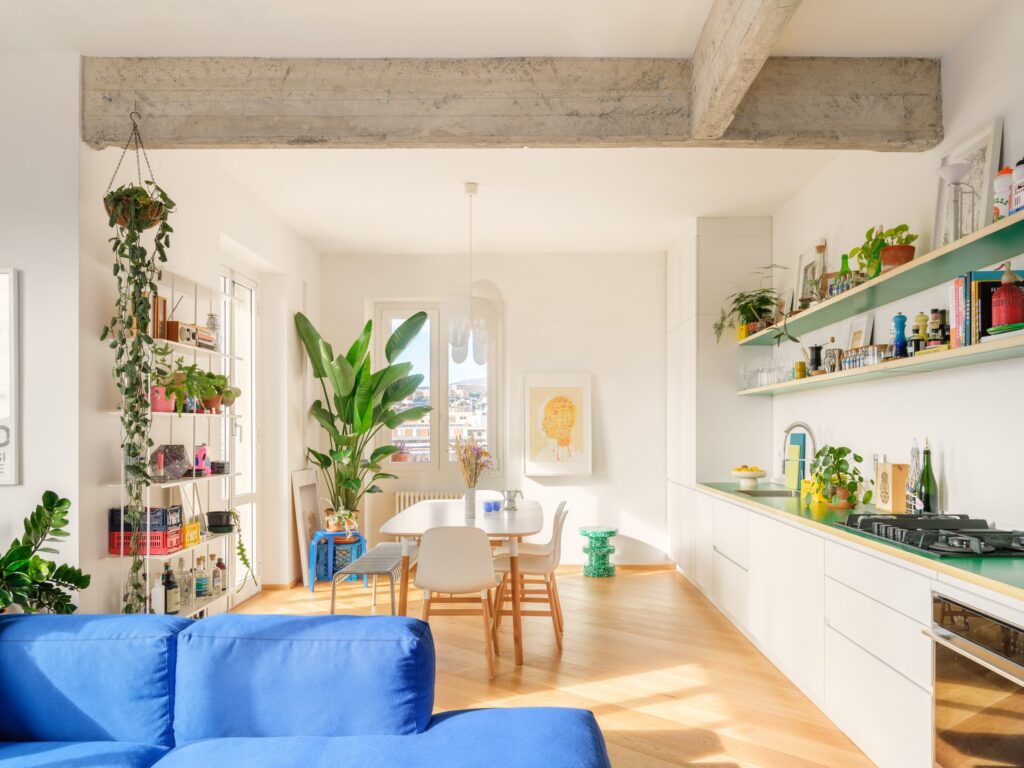
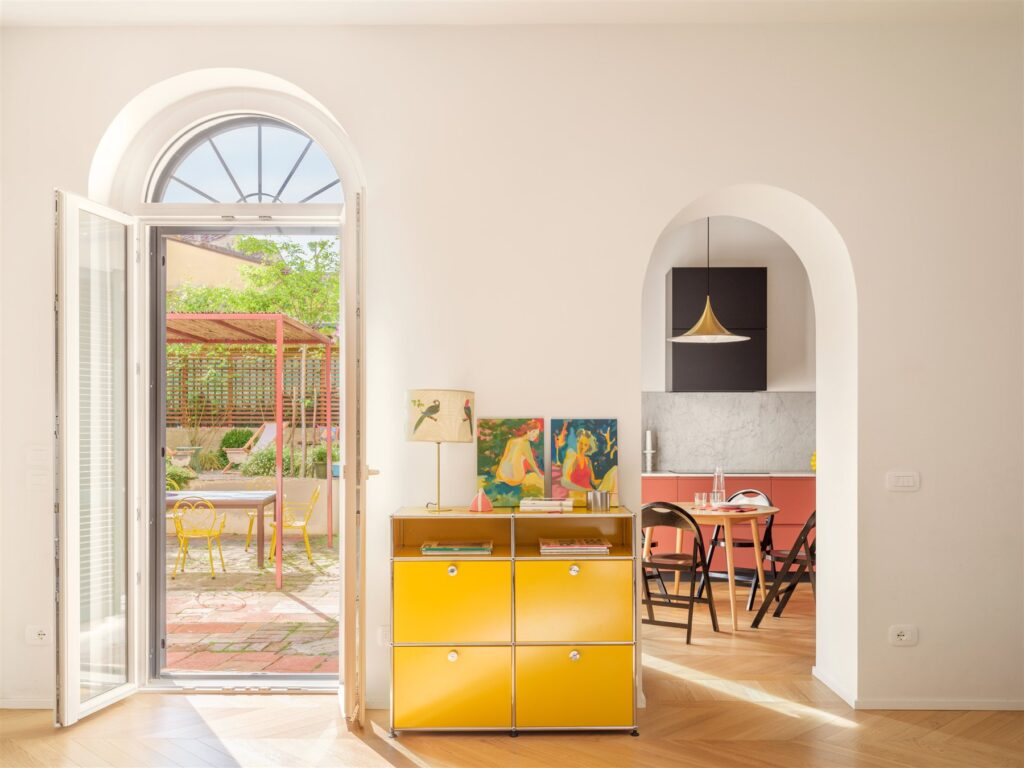
Photographer: Federico Cedrone, Styling: vandersandestudio
Quiet luxury interior design can be defined as a design language based on restraint, quality and discretion. It does not chase the theatrical effect of traditional luxury, nor the extreme subtraction of the strictest minimalism. It occupies a subtler middle ground, where elegance comes from the selection of materials, clean lines, depth of texture and an idea of comfort that is never flaunted.
A quiet luxury interior does not have to look perfect or untouchable. On the contrary, when it is well designed it remains livable and sensory. It can include books, artworks, objects collected over time, rugs, rich fabrics, custom furniture and design pieces. What it avoids is visual noise: accumulation without hierarchy, excessive decoration, finishes chosen only to look precious, the iconic object inserted as proof of good taste.
Restraint is its most important principle. Restraint does not mean expressive poverty or giving up personality. It means knowing how to control the relationship between elements. A sofa can be large, but it must respect the room. A table can be sculptural, but it should not become the only star. A kitchen can be high-tech, but it should not look like a showroom. A bathroom can use rich materials without becoming an artificial spa. Quiet luxury does not erase a room’s character: it makes it more controlled.
That is why it can be applied to very different settings, from private homes to boutique hotels, from the living room to the bedroom, from the bathroom to the kitchen, all the way to showrooms and hospitality spaces. It does not depend only on budget or square footage. A small home can interpret it with great precision if it works with the right materials, well-designed lighting and well-proportioned furniture. Conversely, a very expensive home can be far from this idea if it relies only on flashy finishes, recognizable objects and solutions designed to impress.
Why quiet luxury became a trend

Patricia Urquiola
The success of quiet luxury comes at a time when the very idea of luxury is changing. For years, the language of interior design was shaped by intense visual exposure: homes photographed like film sets, rooms built around instantly recognizable elements, colors and finishes that went viral, furniture chosen partly for how well it worked in a picture. This produced interiors that were often very effective visually, but not always built to last.
Quiet luxury is a response to that saturation. It brings attention back to less obvious quality: the feel of a material, the color temperature of light, the weight of a fabric, the proportions of a chair, the continuity between a wall and a built-in unit, the ease with which a room can be elegant without looking designed to announce it. It is certainly a trend, but it taps into a deeper need: to live in spaces that are less aggressive, less noisy and more stable.
This sensibility also ties in with a new idea of status. Luxury is no longer necessarily communicated through a logo, a showy surface or a piece recognizable at first glance. It becomes more cultural, more reserved, more tied to the expertise of those who can read quality. Recognizing well-finished wood, natural stone, tailored craftsmanship, a hairline joint, raking light or correct proportions means valuing what does not always grab the eye immediately.
In Italian interiors, this approach finds especially fertile ground. When Made in Italy avoids rhetoric and returns to its most concrete side (manufacturing, materials, evolved craftsmanship, a culture of detail, the relationship between industry and design), quiet luxury becomes almost a natural grammar. It does not need to copy international models: it can express itself through surfaces, furniture, craftsmanship and spatial solutions that have always belonged to the best Italian culture of living.
Quiet luxury vs. minimalism: an important difference

One of the most common misconceptions is to confuse quiet luxury with minimalism. The two languages can certainly overlap, especially in their use of clean lines, controlled palettes and orderly spaces, but they are not the same. Minimalism often works by subtraction, eliminating the superfluous and pursuing a very sharp formal order. Quiet luxury, on the other hand, does not necessarily aim for emptiness. It aims for quality of selection.
A quiet luxury home can be soft, layered and textural. It can have generous drapes, rugs, books, objects, artworks, ceramics and personal memories. It can be lived in without losing its elegance. The difference is that every element must find a precise role in the space. There is no random accumulation, no decoration added just to fill a gap, no pursuit of a surface-level luxury effect.
When minimalism becomes too rigid, it risks producing spaces that are impeccable but distant. Quiet luxury looks instead for a more livable kind of refinement. It does not remove life from the home, but organizes it within a more composed frame. This is where understated luxury becomes interesting: not in sterile perfection, but in its ability to create sophisticated, warm and lasting interiors, where value is not displayed but becomes an everyday experience.
Quiet luxury colors: neutral is not enough

When it comes to quiet luxury interiors, color is one of the most misunderstood aspects. The trend is often associated with pale homes, beige palettes, seamless surfaces and very tidy rooms, but understated luxury is not the same as simple color neutrality. An interior can be entirely beige and feel anonymous, just as it can use deep tones and look extremely restrained. The difference is not in choosing a color considered “elegant,” but in building a harmonious relationship between shades, materials and light.
Quiet luxury palettes often work with natural, sophisticated tones: ivory, butter, sand, linen, greige, taupe, stone, warm gray, cocoa, cognac leather, caramel, sage green, olive green, deep blue, burnt brown and soft black. These are colors that do not try to dominate the space, but to accompany it. They do not create aggressive contrasts, do not interrupt the continuity of the room and do not rely on instant surprise. Instead, they build a visual temperature, a sense of depth, a balance you perceive over time.
The biggest risk when trying to interpret the quiet luxury style is flattening everything into a pale, “safe” palette. An all-beige home, without texture, proportion and material variation, can become as cold as a poorly resolved minimalist space. Quiet luxury needs nuance, small differences, surfaces that react to light in different ways. A limewashed wall does not have the same effect as flat paint; a bouclé fabric does not feel the same as smooth cotton; natural wood changes the tone of a room far more than an imitation finish.
That is why color, in this language, should not be treated as decoration but as part of the design. A bedroom in shades of butter, linen and pale wood can feel essential without feeling bare. A living room with warm gray walls, a rope-colored sofa and burnished metal details can look sober yet very deep. A bathroom in tones of stone, clay and matte black can be more elegant than one clad in openly theatrical materials. Quiet luxury does not ask for dull colors; it asks for controlled colors that can hold their own alongside the materials.
Materials: you can feel quiet luxury

If color defines the atmosphere, materials determine how credible a space feels. Quiet luxury has no love for things that look precious only in photographs. It prefers materials that build a slower, more physical kind of quality, closer to the everyday experience of living. Wood, stone, marble, linen, wool, leather, lime plaster, ceramics, glass, burnished metals and natural surfaces are chosen not only for their looks, but for how they change with light, use and time.
In quiet luxury, material does not have to be perfect. In fact, its strength often lies in slight variations: a natural vein, a visible grain, a surface that is not completely uniform, a texture that adds depth without becoming decorative. It is a different kind of luxury from the showier sort, because it does not rely on shine or theatrical impact, but on perceived quality. A natural stone countertop, carefully laid hardwood, a lime-plastered wall, a rich fabric or soft leather say much more than an interior built only on glossy finishes and flashy details.
This does not mean rejecting innovation. A quiet luxury home can be highly technological, high-performing and contemporary. It can have advanced kitchens, smart home systems, integrated appliances, the latest technical surfaces and dramatic but controlled lighting. The difference is that technology must not become the visual star. It must be absorbed into the design, made discreet, almost natural. Comfort can be extremely high, but it must not turn into a display.
The same goes for alternative or industrial materials. You do not have to use only rare stones, fine woods or expensive fabrics. Quiet luxury can also grow out of more affordable choices, as long as they are consistent, well paired and carefully designed. A well-chosen matte surface can be more elegant than badly used marble. A wall treated with a warm finish can give more character than an expensive cladding applied without restraint. Understated luxury does not always mean the highest price, but the highest quality of result.
Quiet luxury furniture: when design stops showing off

In quiet luxury interiors, furniture does not have to disappear, but it must lose the constant urge to steal the show that marks so many rooms built to impress. A sofa can be large and substantial, a table can have a strong sculptural presence, an armchair can be a designer piece, a bookcase can take up an entire wall. The point is not to reduce everything to a minimum, but to give each element the right weight within the space.
A quiet luxury home is not an empty home. It is a curated one. Furniture is chosen for proportion, comfort, quality of materials, durability and its relationship with the room. Shapes are often soft, clean and essential, but not necessarily rigid. Volumes can be generous, as long as they do not overwhelm the room. Finishes tend to be matte, satin or natural, less loud than glossy or heavily decorative ones. The goal is not to erase the personality of objects, but to make them converse without competing.
In this context, the iconic piece can play an important role, but it has to be used intelligently. A designer lamp, a classic chair, a statement table or a collectible piece should not become trophies. In quiet luxury, the icon is not there to declare culture or status, but to contribute to the overall balance of the room. If everything is designed to say “look how much this object is worth,” the language immediately drifts away from the discretion that should define it.
This is where Italian design can offer a very interesting reading. The best tradition of Italian furniture has often worked exactly on this boundary: sophisticated but not ostentatious products, manufacturing quality, attention to proportion, research into materials, the relationship between industry and craft know-how. Quiet luxury, when well interpreted, does not ask you to give up design. It asks you to free it from the vanity of display.
Lighting as design, not decoration

In a quiet luxury interior, light cannot be treated as a finishing touch. It is one of the elements that determine the overall quality of the space. It can warm up a neutral palette, bring out a textured surface, soften a volume and add depth to a pared-back room. A room designed with good materials but poorly lit loses much of its strength; conversely, well-thought-out lighting can turn even a very simple interior into a refined space.
Understated luxury prefers layered lighting, never relying on a single central fixture. Light must support everyday functions, but also create atmosphere. In the living room it can highlight a wall, a bookcase, an artwork or a conversation area. In the kitchen it must be precise over the countertops, but not harsh. In the bathroom it should avoid a cold, clinical effect, especially around the mirror. In the bedroom it should be dimmable, becoming softer in the evening.
The point is not to choose eye-catching lamps, but to design coherent lighting scenes. Indirect light, wall sconces, integrated light slots, table lamps, restrained pendants, concealed sources and warm accents can coexist in the same room if they follow a logic. Quiet luxury does not seek theatrical lighting, but light that makes the space more livable. Here too, luxury is not in the object itself, but in the experience it creates.
One of the most common mistakes in contemporary interiors is designing rooms that look beautiful in photos but are tiring to live in: too white, too bright, too cold, too uniform. Quiet luxury goes the opposite way. It looks for light that is closer to the body, to time spent in a room, to everyday gestures. Light that is not meant to impress, but to make you feel good.
Quiet luxury in the kitchen: function becomes architecture

The kitchen is one of the rooms where quiet luxury is finding some of its most current interpretations. It is no longer just a technical space separated from the rest of the house, but an integral part of the home’s design. It often opens onto the living room, connects with the dining area and becomes a social space, which is exactly why it calls for a more refined and less overtly functional language.
A quiet luxury kitchen works on continuity, order and precision. Handleless doors, built-in tall units, monolithic islands, substantial countertops, concealed appliances, matte materials, wood paneling, lit niches and well-organized storage all help turn the kitchen into an architectural element. Function remains central, but it is absorbed into a calmer image that is more consistent with the rest of the home.
Luxury in the kitchen is not just about having an expensive material or a high-end appliance. It is about being able to use the space naturally. It is opening a cabinet door and finding a well-designed internal system. It is cooking without giving up visual order. It is having surfaces that are beautiful but also durable. It is integrating technology without turning it into a statement. When it works, a quiet luxury kitchen does not look like a showroom: it looks like a natural part of everyday life.
Quiet luxury in the bathroom: wellbeing without the theatrics

The bathroom also interprets this trend very well, especially because in recent years it has become one of the most important rooms in the home. No longer just a utility room, it is a place for self-care, pause and everyday wellbeing. The risk, however, is turning it into an artificial home spa, full of theatrical effects and materials used more to wow than to support real daily routines.
The quiet luxury bathroom goes in a different direction. It works with seamless surfaces, textural materials, essential faucets, well-lit mirrors, concealed storage, generous showers, practical niches and correct proportions. The palette can be light, in shades of stone, ivory, sand or warm gray, or more intense, with deep browns, mineral greens, matte blacks and burnished metals. Either way, the goal is not to create a theatrical effect, but a space that is orderly, warm and sensory.
The difference shows above all in the details of use. Light that does not cast harsh shadows on the face, a well-proportioned vanity, faucets that are pleasant to use, a comfortable shower, easy-care materials, storage that can hide everyday clutter. In the bathroom, quiet luxury becomes credible when it improves the actual experience of the space, not when it merely copies the look.
Quiet luxury in the living room and bedroom

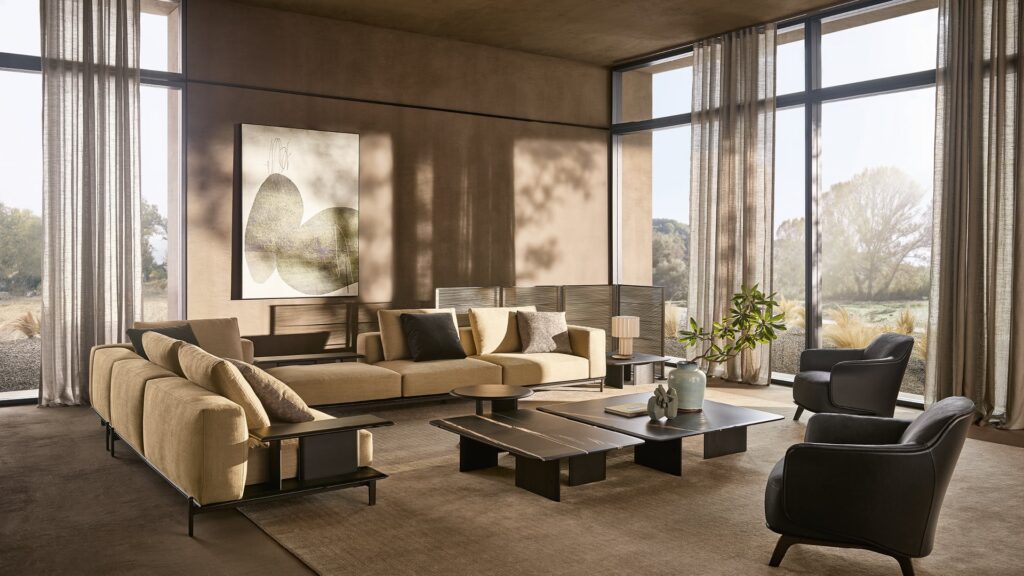
In the living room, quiet luxury is measured by the ability to create an elegant room without making it stiff. It is the space where the most elements coexist: sofa, rug, coffee tables, bookcase, lighting, artworks, objects and fabrics. For that very reason, it is also where excess becomes most visible. A quiet luxury living room can be built around a few strong but well-proportioned elements: a deep sofa, a textured wall, a natural-fiber rug, a built-in bookcase, a statement lamp that does not intrude, a coffee table in stone or wood.
The bedroom, on the other hand, takes quiet luxury into a more intimate dimension. Here the goal is not to impress but to encourage rest. Soft materials, natural textiles, upholstered headboards, warm palettes, low lighting, generous drapes, built-in wardrobes, rugs and simple nightstands all work well. A quiet luxury bedroom does not need to look untouched or perfect; it should convey protection, order and continuity between body and space.
In both rooms, understated luxury does not mean an absence of life. A home that is too perfect risks feeling off-putting. When properly interpreted, quiet luxury does not erase the traces of everyday life, but organizes them within a more coherent system. That is its most interesting quality: making interiors sophisticated without stripping them of warmth.
How to bring quiet luxury style into your home
Bringing quiet luxury into your home does not mean buying expensive furniture or turning every room into a neutral, perfectly tidy space. The starting point should be different: figuring out which elements detract from the quality of the space and which can make it more coherent, warmer and longer-lasting. Understated luxury often comes from thoughtful subtraction, but it never means stripping a home bare.
The first step is to work on visual continuity. Floors, walls, drapes, main furniture pieces and lighting should belong to the same design idea, even when they are not perfectly matched. A quiet luxury home does not need identical rooms, but harmonious transitions from one room to the next. Wall colors, the warmth of the wood, metal finishes, the weight of fabrics and the quality of light should all build an overall sense of balance.
Another decisive aspect is the choice of materials. You do not always need to change everything, especially if you are starting from a home that is already furnished. Sometimes it is enough to replace a few very cold or artificial surfaces, bring in better fabrics, choose more substantial drapes, lighten an overloaded wall, change the lighting or add a single higher-quality piece of furniture. Quiet luxury works when every choice improves the experience of the space, not when it adds one more thing to show off.
Furniture selection should follow the same logic. Better a few well-chosen pieces than many acceptable objects with no relationship between them. A well-proportioned sofa, a solid table, a simple sideboard, a comfortable armchair, a well-placed lamp and an orderly but not sterile bookcase can transform a room far more than a series of decorative accessories. Understated luxury does not live in individual objects, but in the way they come together to create a space.
Managing visual clutter is also essential. This does not mean hiding every trace of daily life, but preventing the space from being overrun by temporary items, mismatched finishes, small objects with no purpose and uncontrolled contrasts. A quiet luxury home can be lived in, but it should keep a certain visual discipline. The distinction is subtle: not perfection, but care.
Quiet luxury mistakes to avoid
The most common mistake is confusing quiet luxury with a beige house. Color neutrality can be elegant, but on its own it is not enough. Without texture, materials, depth and light, the result can feel flat. Beige is no guarantee of refinement; it can be sophisticated when it works alongside textured surfaces, warm woods, natural stone, rich fabrics and correct proportions.
Another frequent mistake is using expensive materials without a real design. Marble, fine wood, leather or burnished metal do not automatically make an interior more elegant. If they are added at random, or just to signal value, they can have the opposite effect: a forced luxury, closer to ostentation than to discretion. In quiet luxury, a precious material should look necessary, not added to impress.
Too much minimalism can also become a problem. Spaces that are too empty, too rigid or too perfect risk losing their warmth. Understated luxury should not turn the home into an untouchable space. Quality must remain livable, otherwise it becomes a stage set. A room without traces of life, without fabrics, without meaningful objects and without layers may look elegant in a photograph, but feel poor in everyday experience.
Then there is the opposite risk: wanting to make everything a statement. A standout lamp, a sculptural table, a textured wall, a bold rug, an iconic armchair and a precious wall cladding can each work on their own, but together they risk creating confusion. Quiet luxury requires hierarchy. Not everything should carry the same visual weight. Some elements should stand out, while others discreetly support the whole.
Finally, one of the most underestimated mistakes concerns lighting. An interior can have excellent materials and well-chosen furniture, but if the lighting is cold, flat or poorly distributed, the overall feeling loses quality. Light is what allows materials to express themselves. Ignoring it means giving up an essential part of the design.
Quiet luxury and Made in Italy
Quiet luxury finds particularly fertile ground in Italian design, especially when it is interpreted far from the stereotypes of flashy luxury. Italian living culture has often built its strength on elements that naturally align with this trend: proportion, materials, craftsmanship, attention to detail, the relationship between architecture and furniture, and a focus on comfort that never sacrifices form.
Many Italian design brands have worked for decades on an idea of elegance that does not shout: sofas with measured shapes, tables in noble but not ostentatious materials, kitchens integrated into the architecture, living and bedroom storage systems that disappear into the wall, technical and decorative lighting designed to support the space. In this sense, quiet luxury is not just a trend imported from the international language of lifestyle, but can become a lens that is fully consistent with the best Italian design tradition.
The world of hospitality and private residences is also increasingly embracing this sensibility. Boutique hotels, restored historic homes, contemporary apartments and high-end contract interiors are working with local materials, natural palettes, custom furniture, soft lighting, textured surfaces and more intimate atmospheres. It is not the luxury of instant impact, but of experience: walking into a space and sensing that everything has been thought through, without anything seeming to want to announce it.
This may be the most interesting part for contemporary design. Quiet luxury does not ask all interiors to look alike. On the contrary, it works when it can absorb identity, place, memory and material culture. A Milan apartment, a lakeside villa, a renovated masseria (a traditional southern Italian farmhouse), an Alpine hotel or a Mediterranean home can interpret it in very different ways. Discretion is not uniformity; it is control of the language.
Is quiet luxury here to stay?
Like every trend, quiet luxury risks being simplified, copied and quickly used up. The moment it becomes a recognizable aesthetic formula (beige walls, rounded furniture, bouclé fabrics, matte surfaces, warm light), it loses some of its original strength. The risk is turning understated luxury into a new standardized style, seemingly refined but lacking real design depth.
Its staying power will depend precisely on this: on its ability to go beyond the image. If quiet luxury remains a mood board, it will pass like many other trends. If instead it is understood as a more thoughtful way of designing interiors, it will remain relevant. Because the themes it brings with it (quality, restraint, comfort, durability, materials, light and less visual noise) are not passing fads, but increasingly central needs in contemporary living.
In this sense, quiet luxury should not be read as a closed style with rigid rules and preset solutions. It is rather a direction. It invites you to choose less but better, to look beyond instant impact and to give more weight to the quality of the domestic experience. It does not demand a perfect home, but a more thoughtfully designed one.
And this is exactly what makes understated luxury so relevant today: not because it removes the desire for beauty, but because it makes beauty less dependent on appearances.
Quiet luxury interior design: frequently asked questions

What is the quiet luxury style?
The quiet luxury style is a way of interpreting luxury through discretion, quality materials, balanced proportions, restrained palettes and carefully finished details. In interiors, it does not rely on ostentation, but on a quieter elegance that reveals itself over time.
What colors work best in a quiet luxury home?
The best colors for a quiet luxury home are natural, warm and deep tones: ivory, sand, butter, linen, greige, taupe, stone, cocoa, cognac, sage green, warm gray, deep blue and soft black. What matters is not choosing only neutrals, but building a palette that works with materials and light.
Which materials define quiet luxury interiors?
The most common materials in quiet luxury interiors are wood, stone, marble, linen, wool, leather, lime plaster, ceramics, glass and burnished metals. Quiet luxury favors tactile, natural or well-crafted surfaces that last over time and gain depth with use.
What is the difference between quiet luxury and minimalism?
Minimalism works mainly through subtraction and eliminating the superfluous. Quiet luxury, on the other hand, works through selection. It can be pared back, but not necessarily empty; it can include texture, objects, statement furniture and layering, as long as everything is controlled and coherent.
Does quiet luxury work in small homes?
Yes, because quiet luxury does not depend on the size of the home. A small home can interpret the quiet luxury style very well if it focuses on the right materials, well-proportioned furniture, well-designed lighting, consistent colors and less visual clutter.
How can you make a home feel more quiet luxury without renovating?
You can work on a few key elements: improve the lighting, choose quality drapes and textiles, cut down on unnecessary objects, replace finishes that feel too cold or inconsistent, bring in more natural materials, work toward a more harmonious palette and choose a few well-proportioned pieces of furniture.
A new idea of domestic luxury
Quiet luxury interior design is changing contemporary homes because it shifts luxury from what is shown to what is lived. It does not eliminate beauty, but makes it less dependent on effect. It does not reject design, but frees it from the need to be constantly on display. It does not erase the home’s personality, but brings it into a more measured, durable and thoughtful dimension.
Its success reflects a very current need: to live in spaces that are not only beautiful to look at, but that bring calm, quality and presence over time. In a visually saturated age, true luxury may be just that: a home that does not try to impress, but simply makes us feel better.