In the history of domestic interiors, Elsie de Wolfe holds a unique and decisive place. Her name is very often linked to the idea of the first modern interior designer, not so much for purely chronological reasons, but because with her interior decoration took on, for the first time, a more recognizable, cultured and professional …
In the history of domestic interiors, Elsie de Wolfe holds a unique and decisive place. Her name is very often linked to the idea of the first modern interior designer, not so much for purely chronological reasons, but because with her interior decoration took on, for the first time, a more recognizable, cultured and professional form. An actress, author, socialite and designer, de Wolfe helped transform home decorating from an expression of private taste into a conscious design language, one that treated domestic space as an aesthetic, social and cultural experience. Authoritative sources remember her as a pioneer of the field and, in the American context, as one of the first figures fully identifiable as a professional interior designer.
Her importance, however, goes beyond a single label. Elsie de Wolfe matters because she introduced a new idea of domestic elegance: more light, more breathing room, more lightness, more restraint. In an era still dominated by the visual density of Victorian interiors, she brought a different vocabulary into the home, made of paler colors, mirrors, references to 18th-century French taste and a sensibility that made rooms airier, more intimate and more livable. The success of the Colony Club in New York and, shortly after, the publication of The House in Good Taste in 1913 consolidated this vision and made her a key figure in the lineage of modern interior design.
Who was Elsie de Wolfe?
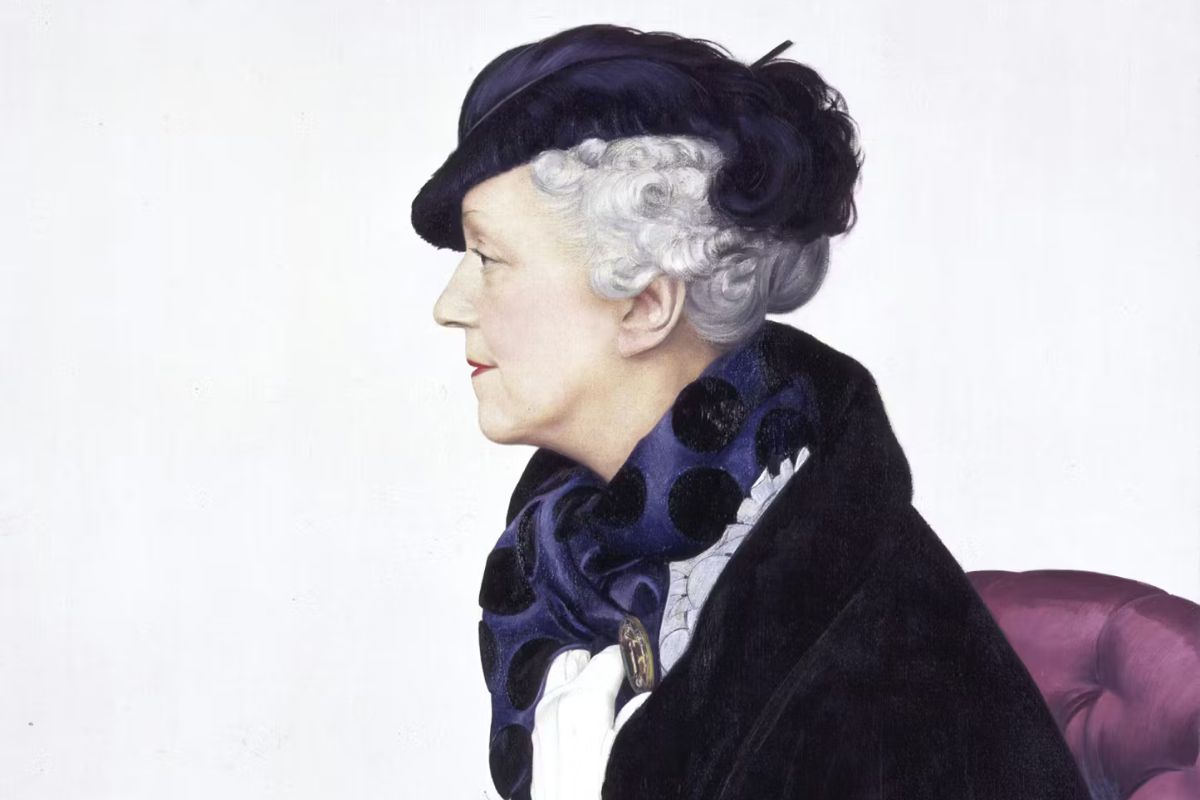
Born in New York in 1865, Elsie de Wolfe first made her way through the world of theater before establishing herself as a decorator. This chapter is less incidental than it might seem: a sense of staging, atmosphere and visual composition would deeply shape the way she approached interiors. When she began working in decoration, she brought with her not only a strong aesthetic sensibility, but also a clear vision of what a home could become: not just a container for furniture, but a place of self-presentation, comfort and identity.
Why Elsie de Wolfe is considered the first modern interior designer
Elsie de Wolfe is considered the first modern interior designer not only because she belongs to the early days of the discipline, but because she helped give it a recognizable, public and professional form. Before her, of course, there were already decorators, upholsterers, architects and patrons capable of transforming interiors with great refinement. With de Wolfe, however, interior design began to establish itself as a field with its own identity: no longer a mere extension of architecture, nor a purely ornamental exercise, but a conscious interpretation of domestic space as an expression of lifestyle, taste and self-presentation. It is in this sense that authoritative sources describe her as a pioneer of the field and, in the United States, as the first fully recognizable professional in interior decoration.
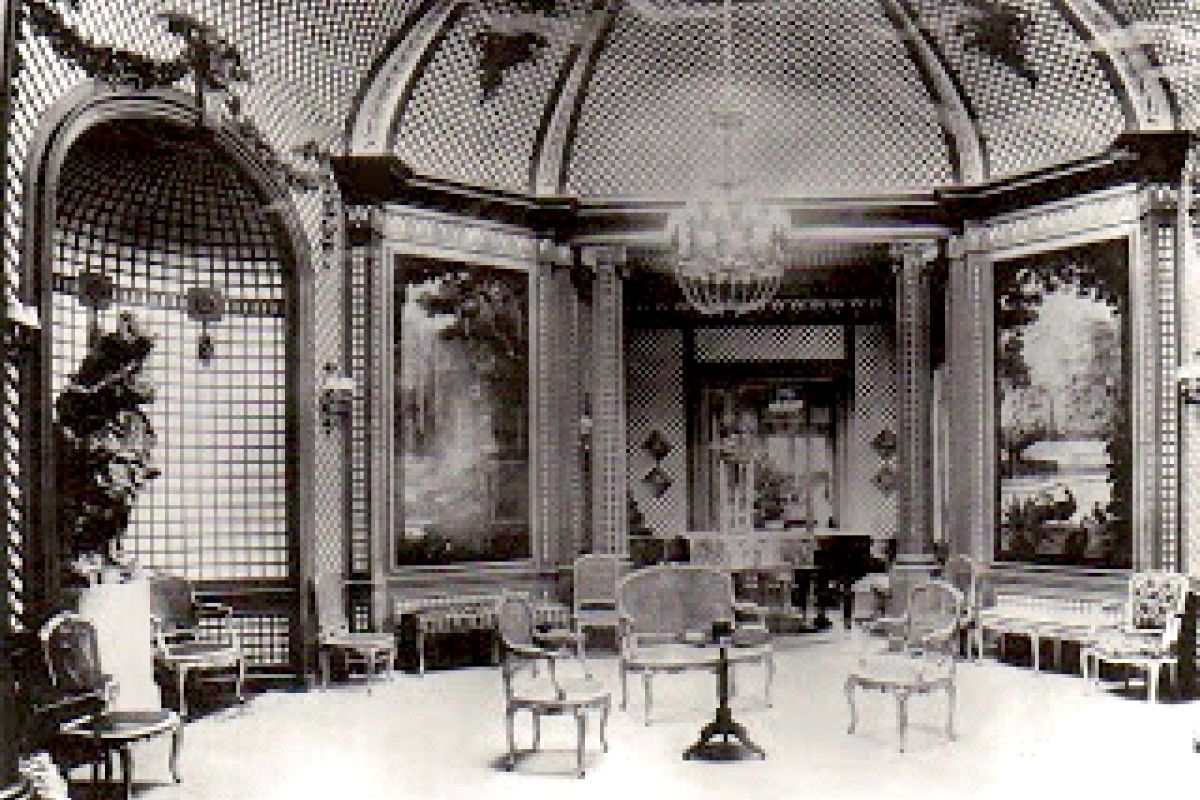
What made her truly modern was also the way she built her authority. Elsie de Wolfe did not simply “decorate well”: she developed a consistent vocabulary, a precise aesthetic and a legible stylistic signature. The success of New York’s Colony Club marked a turning point, because it showed a wide audience a new idea of the interior: lighter, airier, more elegant and less weighed down by Victorian visual density. That project already featured several principles that would become central to her work: simplicity, lightness, the use of light, mirrors, paler colors and a pursuit of visual unity that went beyond mere decorative accumulation.
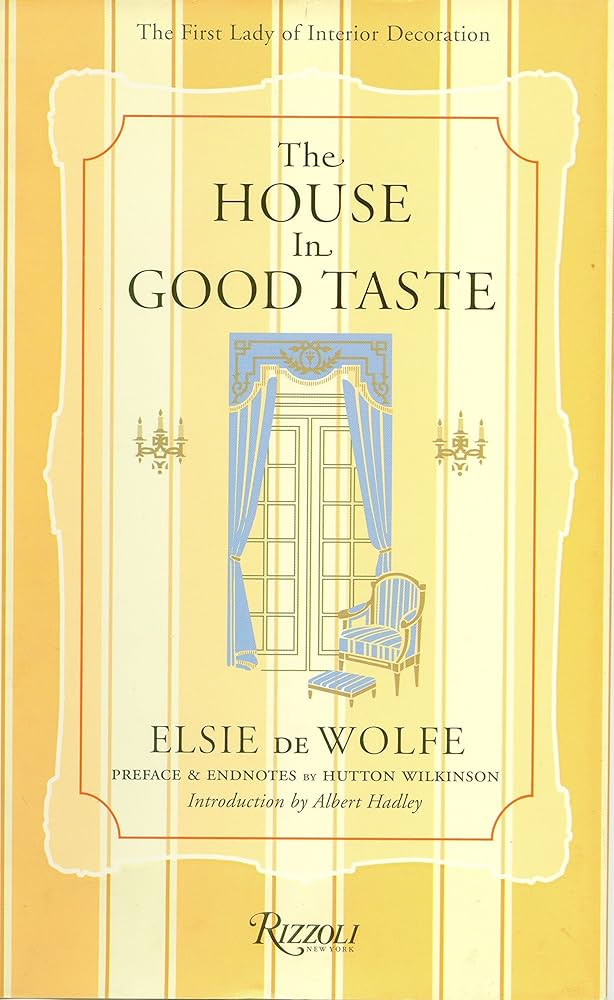
Another aspect explains why her name has taken on almost foundational value: de Wolfe turned taste into cultural discourse. With The House in Good Taste, published in 1913, she did not merely hand the public a set of aesthetic preferences; she formalized a vision of the home and of living. Her writing helped make a method teachable, legitimize a sensibility and establish the idea that a domestic interior could be designed with intention, restraint and personality. It is this shift, from individual talent to the codification of a model, that makes her such an important figure in the lineage of modern interior design.
More than the myth of an absolute first, then, what matters is the quality of the change she brought about. Elsie de Wolfe pioneered a new kind of professional because she combined design, public image, client relationships, style and theory. Above all, she introduced an idea of domestic elegance that still feels surprisingly contemporary today: a home that is less gloomy, less heavy, less ostentatious, and all the more sophisticated for it.
Elsie de Wolfe’s style: the traits that changed domestic taste
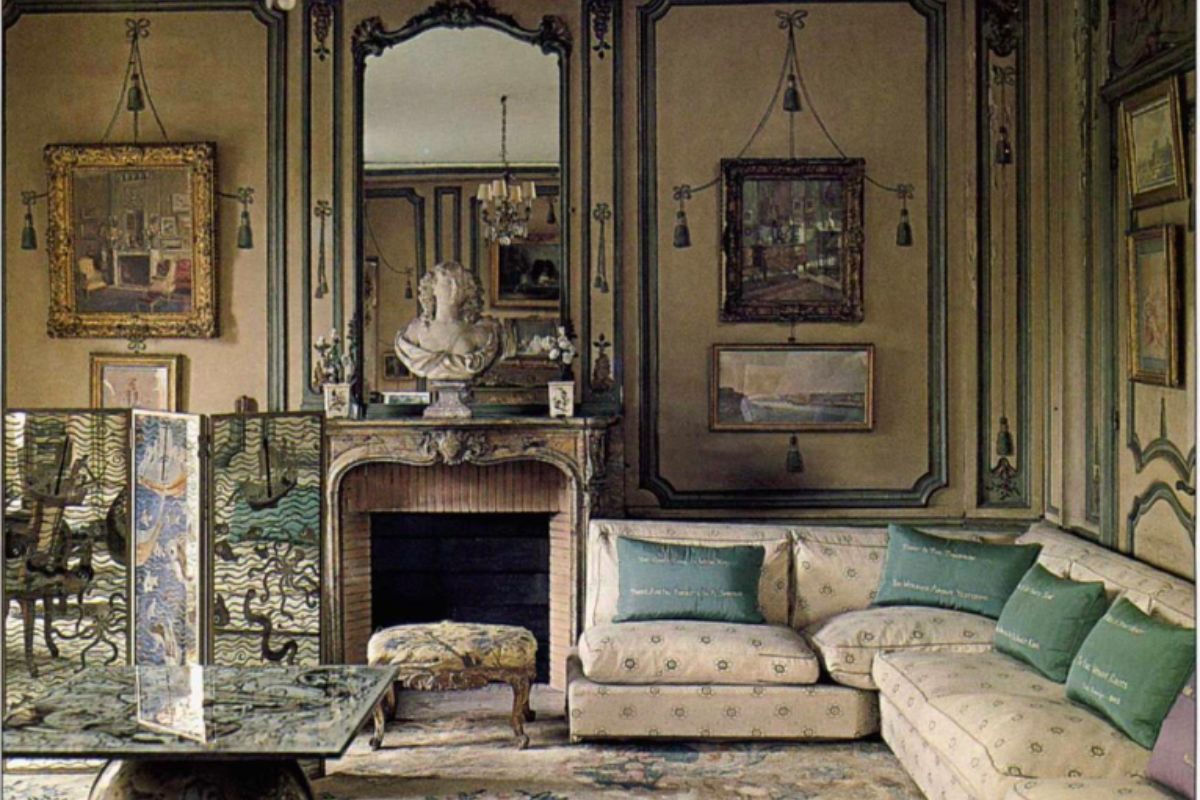
Talking about Elsie de Wolfe’s style means stepping into a specific moment in the culture of the home, when the domestic interior stopped being merely a display of status and also began to be about atmosphere, lightness and well-being. Her signature did not come from a violent break, but from intelligent subtraction. In contrast to Victorian heaviness, de Wolfe brought a new idea of elegance into the home: lighter, airier, more restrained. That is why her design language still feels so recognizable today. Britannica sums up her principles in three very effective words: simplicity, airiness and visual unity.
Light as a design material
One of the most important features of her style is the way she used light. For Elsie de Wolfe, light was not a mere by-product of architecture, but a true material of domestic design. Mirrors, paler surfaces, light fabrics and bright colors became tools for lightening rooms and giving them a sense of openness. In this respect, her work anticipated a sensibility that seems almost obvious today but was far from a given in the early 20th century: the idea that a home should breathe, reflect light, offer visual comfort and not stifle the people who live in it. At the Colony Club, the project that cemented her reputation, this pursuit of airiness emerged with particular clarity through the use of mirrors, pale tones and a sense of visual unity far removed from 19th-century clutter.
Anti-Victorian as an aesthetic and cultural choice
Elsie de Wolfe’s modernity also stems from her firmly anti-Victorian stance. It was not just about preferring a lighter palette to a darker one, but about changing the very way an interior was conceived. Against the density of heavy drapery, somber furniture and overloaded decoration, de Wolfe set lighter, more legible rooms, less burdened by sheer mass. It was an aesthetic transformation, but also a cultural one: with her, the home stopped trying to impress through weight and began to persuade through grace, proportion and a sense of restraint. Britannica explicitly describes her as famous for her innovative and anti-Victorian interiors, and this is precisely what helps explain why her legacy goes far beyond decorative taste.
18th-century French taste and lightness as luxury
Another central element of her style is her dialogue with 18th-century France, which de Wolfe reinterpreted without strict historical accuracy. Rather than reconstructing an era, she absorbed its sense of grace, its luminosity and its subtle balance between elegance and ease. Her work features lighter furniture, paler colors, a carefully measured use of ornament and an idea of luxury that is less monumental and more intimate. This is an important point, because her great insight was not just about “decorating well,” but about understanding that the prestige of a room does not necessarily depend on the number or grandeur of the objects in it. It depends on how the space is made to speak. This, too, is why her aesthetic still feels surprisingly current: it is based not on excess, but on editing.
Chintz, wicker, treillage: the most recognizable side of her signature
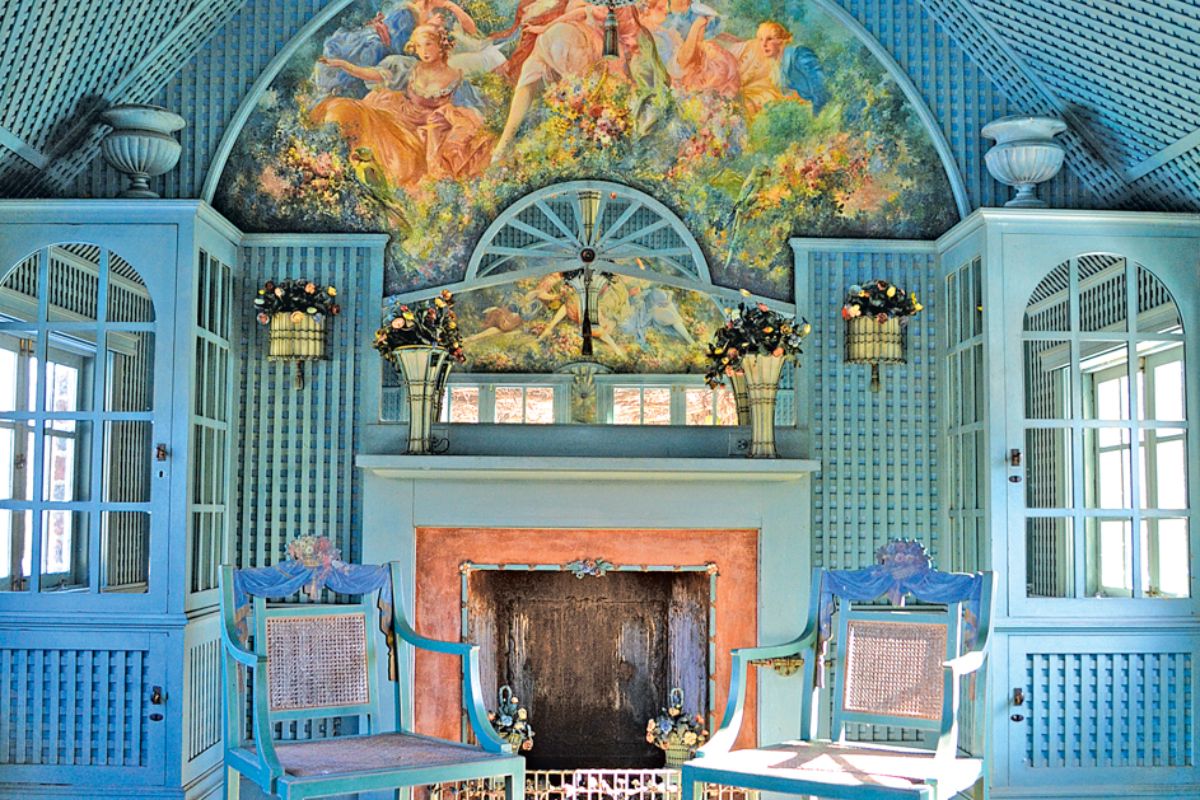
Looking more closely at the interiors associated with Elsie de Wolfe, a number of recurring motifs emerge that built her visual signature: chintz, wicker seating, treillage (decorative trelliswork), surfaces painted in pale colors, garden references and a decorative taste that managed to feel both cultured and light. These are not minor details, but components of a precise idea of domesticity: fresher, more feminine in the historical sense of the word, less intimidating and closer to a notion of refined comfort. These elements, which also recur frequently in critical accounts of her work, help explain how her style combines apparent naturalness with careful construction.
Comfort, restraint, visual unity
Perhaps, though, the most modern trait of her style lies elsewhere: the conviction that an interior should be coherent before it is spectacular. Not a mere sum of beautiful objects, but an orderly set of relationships between light, materials, furniture, colors and function. This is why the notion of visual unity cited by Britannica remains such a useful lens for reading her work today. De Wolfe understood before many others that a room’s elegance comes from balance, not accumulation; from perceptual continuity, not ostentation. And it is precisely this ability to combine comfort and composition, lightness and intention, that makes her style not a closed chapter of decorative history, but a lesson still relevant to contemporary interior design.
Elsie de Wolfe’s most important projects
To truly grasp the stature of Elsie de Wolfe, it is not enough to stop at her public image or at the popular label of first modern interior designer. You have to look at the places where her vision took shape and became a design language. Some projects, more than others, clearly reveal her legacy: not only for their decorative value, but because they mark key moments in the professionalization of interior decoration, in the creation of a new taste and in its transformation into a cultural model. Among them, the Colony Club holds a central position, but it is not the only one: the commission for Henry Clay Frick, the story of the Villa Trianon and the publication of The House in Good Taste, which serves almost as the theoretical counterpart to her interiors, matter too.
The Colony Club: the project that changed everything
New York’s Colony Club is the project that, more than any other, marked the turning point in Elsie de Wolfe’s career. Britannica identifies it as the moment that cemented her reputation, while other sources describe it as her first truly high-profile professional debut. It was not just an important commission: it was the project through which her vision presented itself publicly as a clear alternative to the density of Victorian interiors. In those rooms, de Wolfe introduced paler walls, lighter fabrics, cleaner floors, wicker seating, mirrors and an overall airiness that shifted the very idea of elegance. The result was not simply a lighter decorative scheme, but a new grammar of living, brighter and more modern.
The Colony Club’s strength also lies in its symbolic value. This was not a private home hidden from view, but a social venue, frequented and observed, capable of giving visibility to a new language of the interior. It was there that de Wolfe’s lightness, clarity and compositional coherence became recognizable to a wider audience and ceased to be merely an expression of personal taste. The project worked as a manifesto: it showed that a space could be sophisticated without being gloomy, authoritative without being heavy, feminine without being fragile. In this sense, the Colony Club was not just a successful commission; it was the moment when Elsie de Wolfe became, in the eyes of her contemporaries, a name.
The Henry Clay Frick house: measuring up to power and prestige
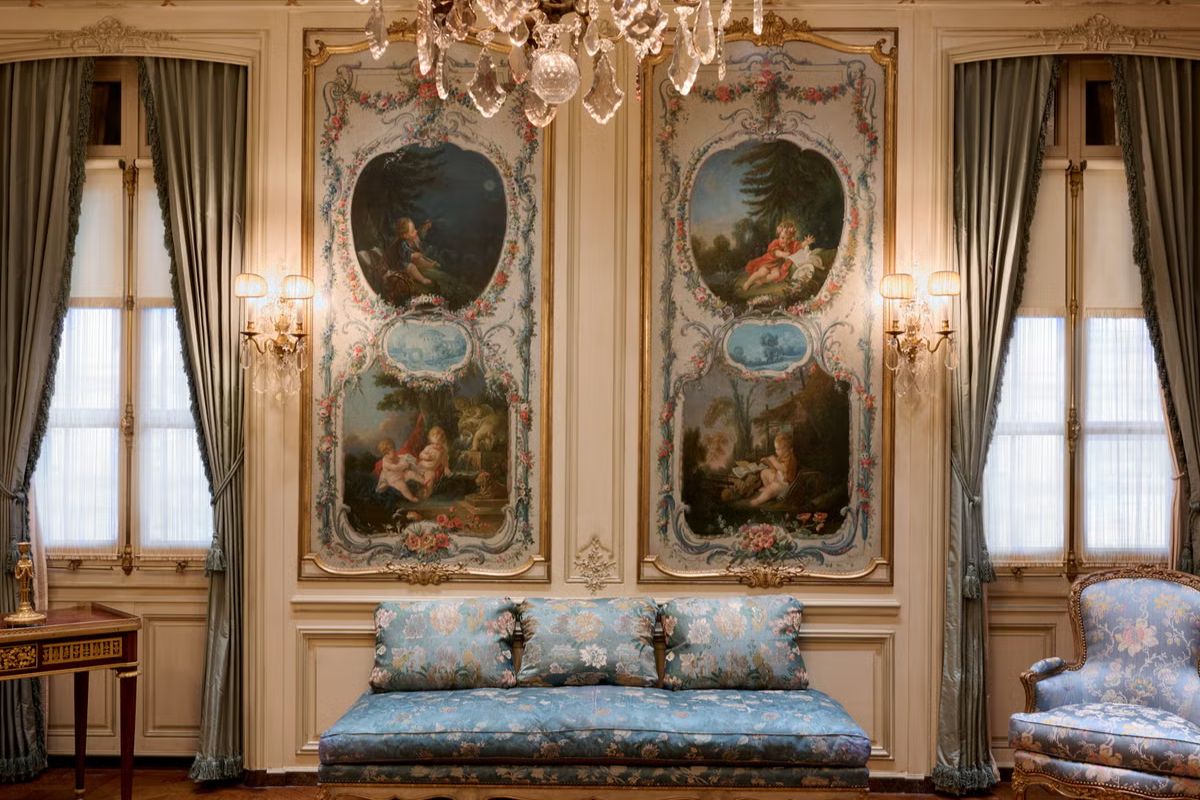
If the Colony Club made her name, the commission for Henry Clay Frick’s residence on Fifth Avenue confirmed that Elsie de Wolfe was no longer just a rising figure, but a professional capable of entering the grand interiors of American wealth. The Frick Collection explicitly presents her as the woman who decorated Frick’s house, and available sources note that her work focused on the private rooms of the mansion. This is where things become particularly interesting, because de Wolfe was dealing with a top-tier client, a prestigious architectural setting and expectations that left no room for error. Her presence in this context shows how quickly her signature had become credible and sought after.
The Frick commission matters for another reason as well: it shows that Elsie de Wolfe’s design language was not confined to society anecdotes or drawing-room elegance. It could hold its own in one of the great homes of American economic power. Here her modernity is plain to see: de Wolfe brought into formally important spaces an idea of comfort, proportion and refinement that did not depend on pomp, but on the quality of the whole. Her lesson here is very clear: intimacy and grace are not the opposite of prestige; they can become a higher and subtler form of it.
Villa Trianon: a lifelong project and aesthetics as a way of life
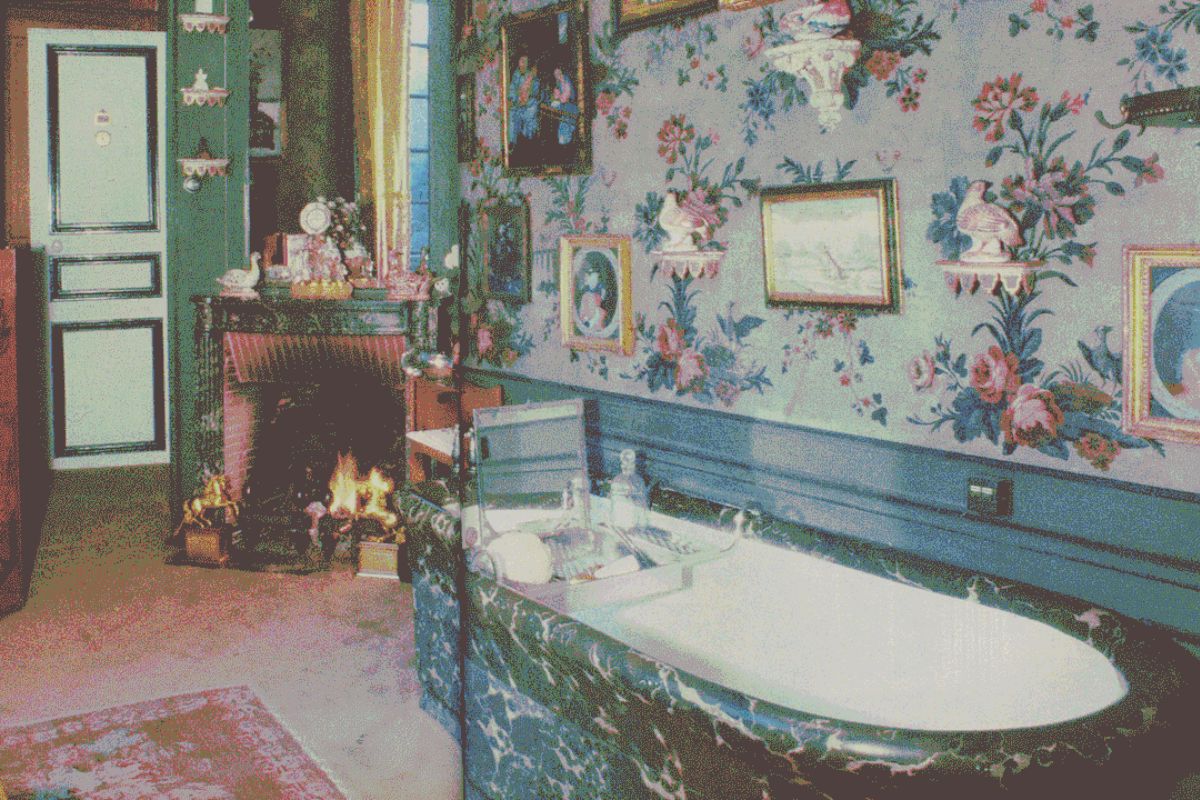
Alongside her most famous commissions, there is Villa Trianon in Versailles, bought by Elsie de Wolfe and Elisabeth Marbury in the early 1900s and transformed into one of the most emblematic places of her aesthetic identity. Britannica records that in 1903 the two women bought the villa and began restoring it, and it later became a second center of their social life. This matters because it moves the discussion to another level: Villa Trianon was not just a decorating project, but the fullest staging of her idea of life, taste and self-presentation.
If the Colony Club was her public manifesto and the Frick house her professional confirmation, Villa Trianon was the place where Elsie de Wolfe’s aesthetic became fully a living environment, an everyday reality and a form of self-portrait. It was here that her love of lightness, of 18th-century France, of restraint and of a never-heavy sophistication took on an almost autobiographical form. The villa shows that her style was not simply a formula to apply to clients, but a genuine vision of how to live. In this sense, Villa Trianon helps us see de Wolfe not only as a decorator, but as a cultural figure: someone who turned taste into a way of being in the world.
The House in Good Taste: the book that turned taste into method
Among her most important “projects,” a book must also be included. The House in Good Taste, published in 1913, carries decisive weight because it carried Elsie de Wolfe’s thinking beyond the interiors she designed herself and made it transmissible. Britannica calls it a widely influential text that grew out of earlier articles, while Project Gutenberg preserves it as a key document of her vision. The point here is not merely bibliographic. With this book, de Wolfe took an essential step: from the realized project to the explained project. She formalized principles, made a method legible and gave the public the words and criteria to read a home in terms of simplicity, proportion, suitability and taste.
It is precisely this step that makes her so modern. Many people have had taste; few have managed to turn it into a recognizable cultural position. The House in Good Taste is not just a book of advice; it is where interior decoration gained greater intellectual standing and where the home was presented as a space to be composed with intention, coherence and restraint. That is why the book should be read alongside her interiors: not as an appendix, but as an integral part of her work. If the Colony Club shows what it means to see a room with new eyes, The House in Good Taste explains why that way of seeing changed the history of domestic taste.
Why Elsie de Wolfe’s role in interior design still matters today
Elsie de Wolfe remains a pivotal figure not only because her name is associated with the birth of modern interior design, but because she introduced an idea of the home that was brighter, more restrained and more thoughtful. Her legacy still speaks to the present: in the pursuit of lightness, in the centrality of comfort, and in the ability to turn elegance into atmosphere rather than mere display. This is also why her career fits so powerfully into a broader lineage of women designers who have left a deep mark on design culture. To explore this further, read our article on famous women designers and their talent, vision and innovation in design and architecture.
Elsie de Wolfe: frequently asked questions
Who was Elsie de Wolfe?
Elsie de Wolfe (1865–1950) was an American decorator, author and cultural figure. She is remembered as one of the most important personalities in the birth of modern interior design, thanks to her pioneering role and her ability to transform the domestic taste of her time.
What is Elsie de Wolfe famous for?
Elsie de Wolfe is famous for redefining the idea of the elegant interior in the early 20th century, moving away from Victorian heaviness and promoting brighter, airier and more coherent rooms. Her name is also linked to the success of the Colony Club in New York and to her book The House in Good Taste, published in 1913.
Is Elsie de Wolfe really considered the first modern interior designer?
Yes. Elsie de Wolfe is often considered the first modern interior designer, especially in the United States, because with her interior decoration took on a clearer, more professional and more recognizable form. Rather than an absolute chronological first, her name marks a decisive turning point in the modern definition of the discipline.
What was Elsie de Wolfe’s style?
Elsie de Wolfe’s style is defined by lightness, light, restraint and elegance. Her interiors rejected Victorian clutter in favor of paler colors, mirrors, lighter furniture, 18th-century French influences and a strong sense of visual harmony.
What is Elsie de Wolfe’s most important project?
Among Elsie de Wolfe’s most important projects, the Colony Club in New York is generally considered the most decisive, because it cemented her reputation and clearly showcased her new decorative language. It is the project that established her as a central figure in the history of modern interior decoration.
What is The House in Good Taste?
The House in Good Taste is the book Elsie de Wolfe published in 1913. It is one of the most important texts for understanding her vision of the home, elegance and interior design, because it puts into writing the principles that had made her interiors famous.
Why does Elsie de Wolfe still matter today?
Elsie de Wolfe still matters because she introduced an idea of the home based on light, comfort, proportion and identity, anticipating many themes that remain central to contemporary design. Her lesson is still relevant because it shows that elegance does not depend on excess, but on the quality of one’s choices.