The life of Claude Monet, from Le Havre to Giverny: his series, the Water Lilies and the spaces he designed, in the centenary year of his death (5 December 2026).
On 5 December 2026 it will be one hundred years since the death of Claude Monet. Paris is marking the anniversary with a major exhibition at the Musée de l’Orangerie, “Monet. Peindre le temps”, and with “Histoires de paysages” at the Musée Marmottan Monet. It is also a good reason to look at Monet from a different angle than the usual water lily postcard: as a designer of environments.
He painted light all his life, but at Giverny he did something more. He chose the colours of the rooms, composed a garden the way you compose a palette and, in the end, defined the shape and light of the two oval rooms where the Water Lilies now hang. In this article we trace his life, his series and his best-known works, and then the house, the garden and the Orangerie: the spaces that explain why Monet matters to anyone who works with interiors.
Who was Claude Monet?
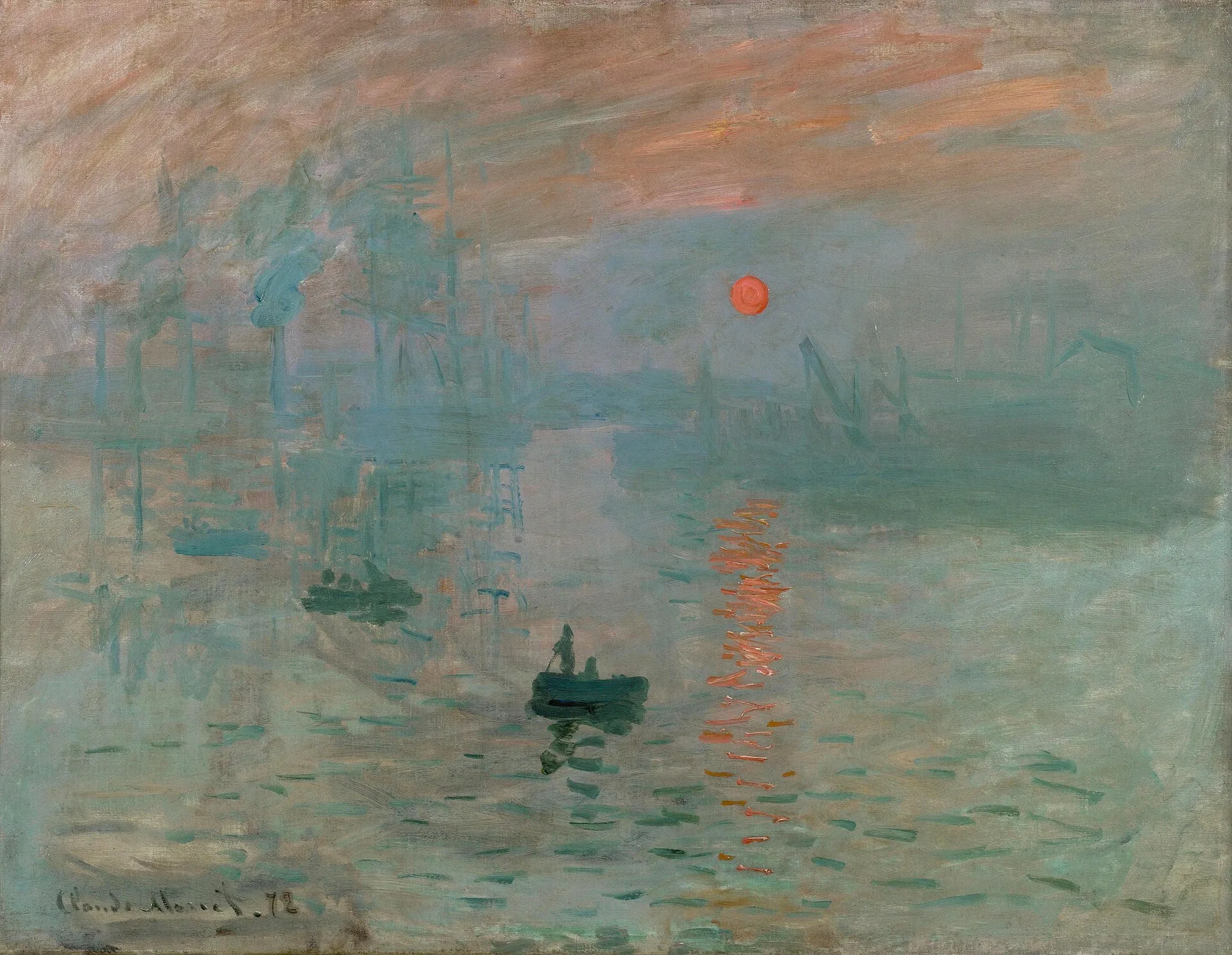
Claude Monet was a French painter, born in Paris on 14 November 1840 and died at Giverny on 5 December 1926, and one of the founders of Impressionism. The movement takes its name from one of his paintings, Impression, soleil levant, and his work is recognisable by two choices: painting outdoors, in front of the subject, and returning to the same place again and again, at different hours and in different seasons, to show how light changes.
From 1883 he lived at Giverny, in Normandy. From about 1897 he painted mostly the pond in his garden, which produced some 250 canvases: the Water Lilies.
Claude Monet at a glance: key dates
- 1840: born in Paris on 14 November.
- 1845: the family moves to Le Havre.
- 1862: joins Gleyre’s studio and meets Renoir and Bazille.
- 1870: marries Camille Doncieux on 28 June.
- 1872-1874: paints Impression, soleil levant, shown on 15 April 1874.
- 1883: settles at Giverny on 29 April.
- 1890: begins the Haystacks; buys the Giverny house in November.
- 1892-1894: paints the Rouen Cathedral series.
- c. 1897: begins the Water Lilies cycle.
- 1912-1923: cataracts diagnosed in 1912; operation on the right eye in January 1923.
- 1926: dies at Giverny on 5 December.
- 1927: the Orangerie museum opens with the Water Lilies on 17 May.
From childhood in Le Havre to painting outdoors
In 1845 the family moved from Paris to Le Havre, in Normandy. By about fifteen Claude was already earning money from caricatures and portraits of acquaintances, and around 1858 he met Eugène Boudin, who taught him to paint outdoors. It was the decisive step: from then on, landscape was painted in front of the subject, in the light of the moment.
In April 1859 he arrived in Paris and in early 1860 enrolled at the Académie Suisse. In December 1862 he joined the studio of Charles Gleyre, where he met Pierre-Auguste Renoir and Frédéric Bazille: his future companions.
Camille, the war and the Argenteuil years
Around 1865 he met Camille Doncieux, who modelled for his paintings. Their son Jean was born in 1867 and they married on 28 June 1870, shortly before the Franco-Prussian War. During the conflict the family lived in London and in the Netherlands; in London Monet met Paul Durand-Ruel, who would become his main dealer.
From 1871 to 1878 the family lived at Argenteuil, on the Seine: Monet painted the river and, from 1874, his own garden. In autumn 1878 he moved to Vétheuil, sharing the house with the Hoschedé family. Camille died in 1879. From December 1881 Monet lived with Alice Hoschedé and her children at Poissy, for a short stay.
Impression, soleil levant and the birth of Impressionism
In 1872 Monet painted the port of Le Havre in the morning mist: a canvas measuring 48 by 63 centimetres, with barely sketched outlines and the sun as an orange patch. Impression, soleil levant was shown on 15 April 1874 in a group exhibition in the former studio of the photographer Nadar, at 35 boulevard des Capucines.
The critic Louis Leroy, sent by the satirical paper Le Charivari, took aim at the title itself and on 25 April 1874 called his sarcastic article “L’exposition des impressionnistes”. An insult became the name of a movement. The painting reached the Musée Marmottan Monet in Paris in 1938; in 1985 it was stolen and recovered after five years of investigation.
Giverny: a house painted like a picture
Monet settled at Giverny on 29 April 1883 and on 3 May signed the lease on a house called Le Pressoir, which he found after looking for a home close enough to Paris to stay in touch with the city. He bought it in November 1890. In 1891 Ernest Hoschedé died, and in 1892 Monet married Alice.
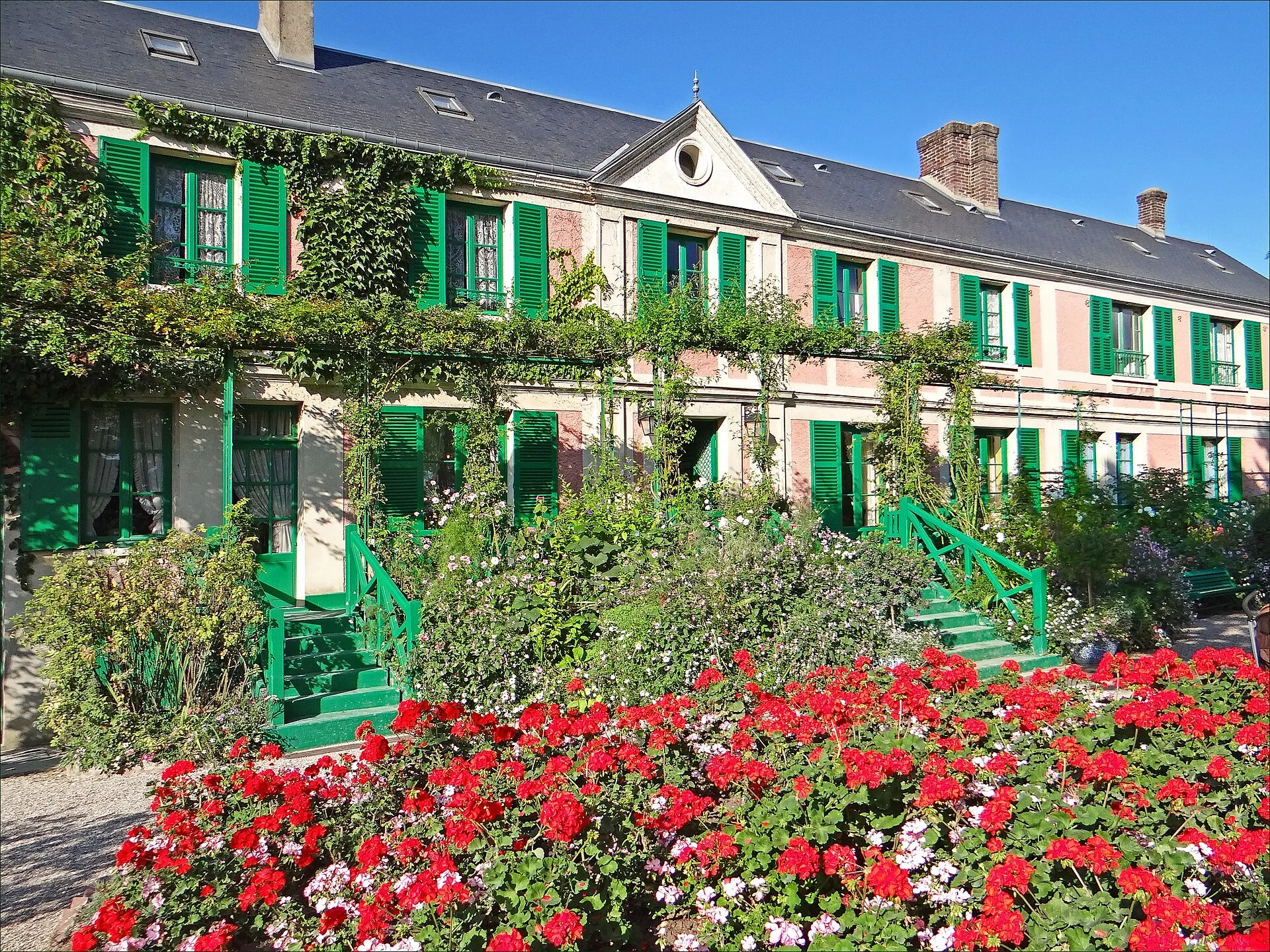
For anyone working with interiors, the point is what he did inside. The façade was already pink and he left it that way; in the first year Monet and Alice painted the shutters green and the dining room in two shades of yellow, walls, ceiling and furniture included. The kitchen was lined with blue Rouen tiles. For the period it was an unusual choice: yellow and blue set side by side as on a palette. On the walls he hung Japanese prints: the house holds 243 of them, 211 on display, with Utamaro, Hokusai and Hiroshige among the best represented.
The Clos Normand and the water garden
The garden was a second studio for Monet. The Clos Normand, in front of the house, is a garden conceived like a painting: the beds are treated as boxes of colour. In Monet’s day seven gardeners worked there full time, all year round.
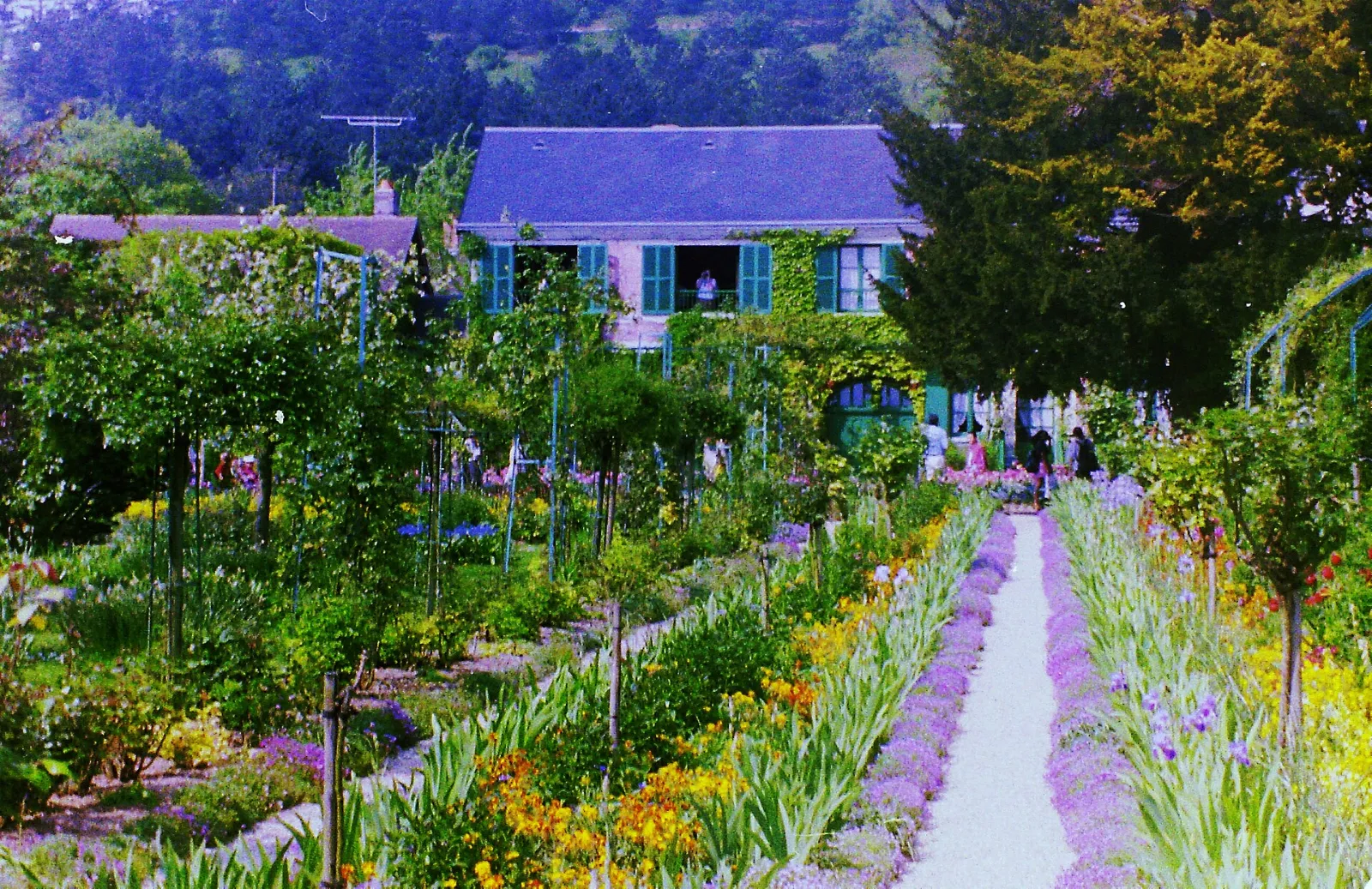
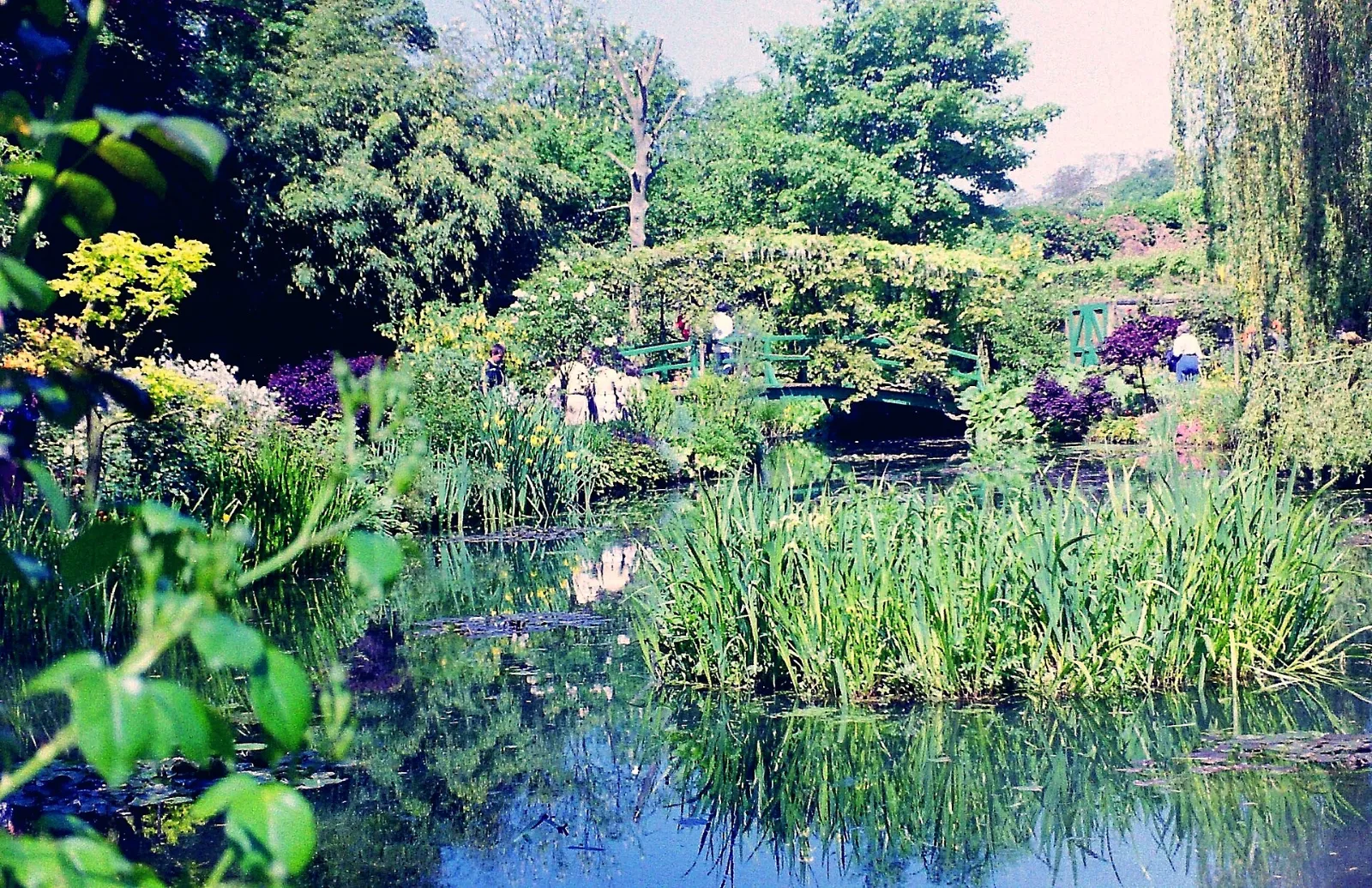
In 1893 Monet bought the land beyond the railway line and in July obtained permission from the prefect of the Eure to divert the waters of the Ru: this is how the water garden began, with the Japanese bridge, today covered in wisteria. After he bought more land in 1901 the pond was enlarged and, after the floods of 1910, its banks were reshaped: it ended up about four times larger than at the start.
The series: the same light at different hours
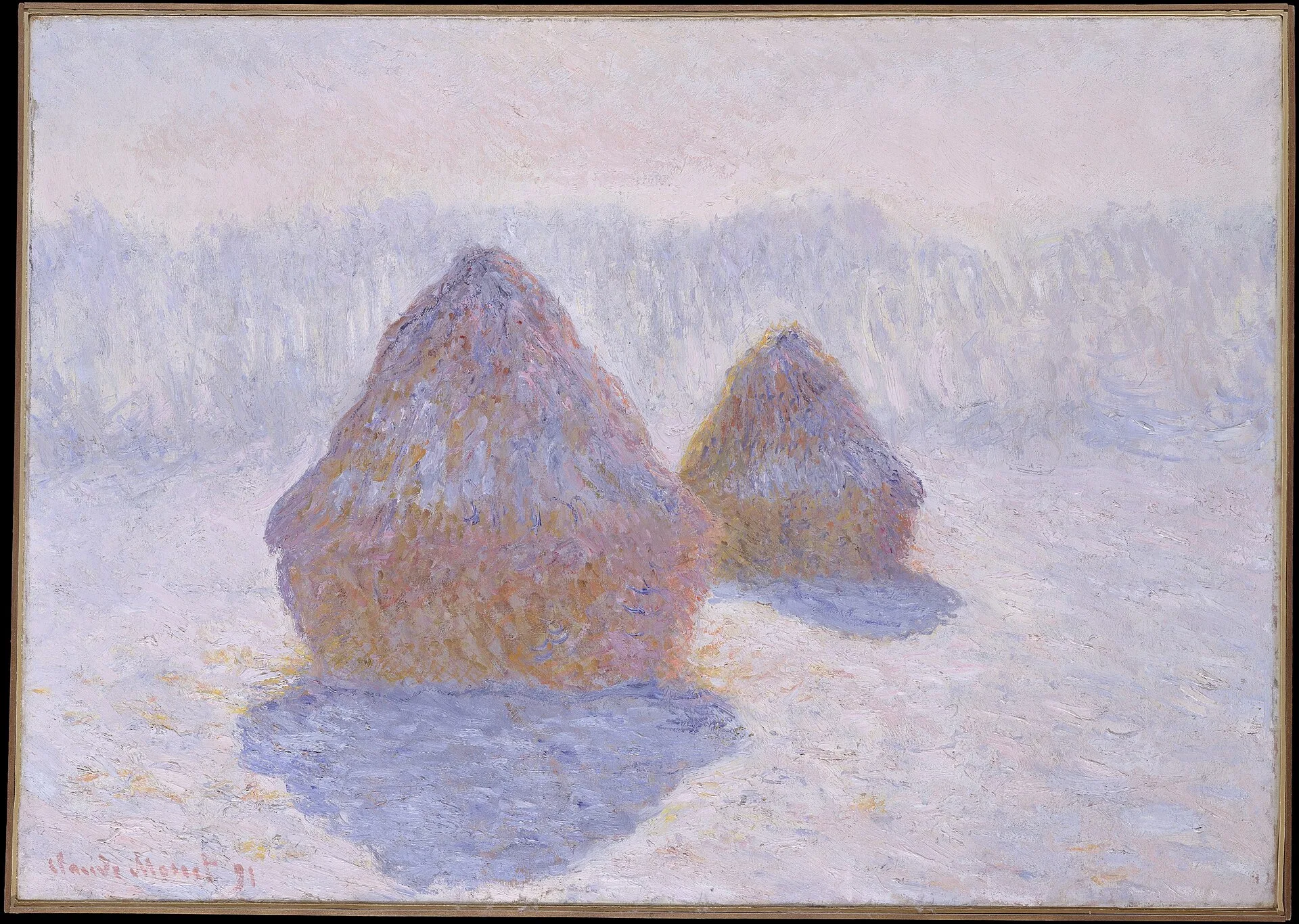
From 1890 Monet changed method: instead of one painting per subject, many paintings of the same subject. The first famous series is the Haystacks (1890-91), shown in 1891 by Durand-Ruel to excellent reviews and sales.
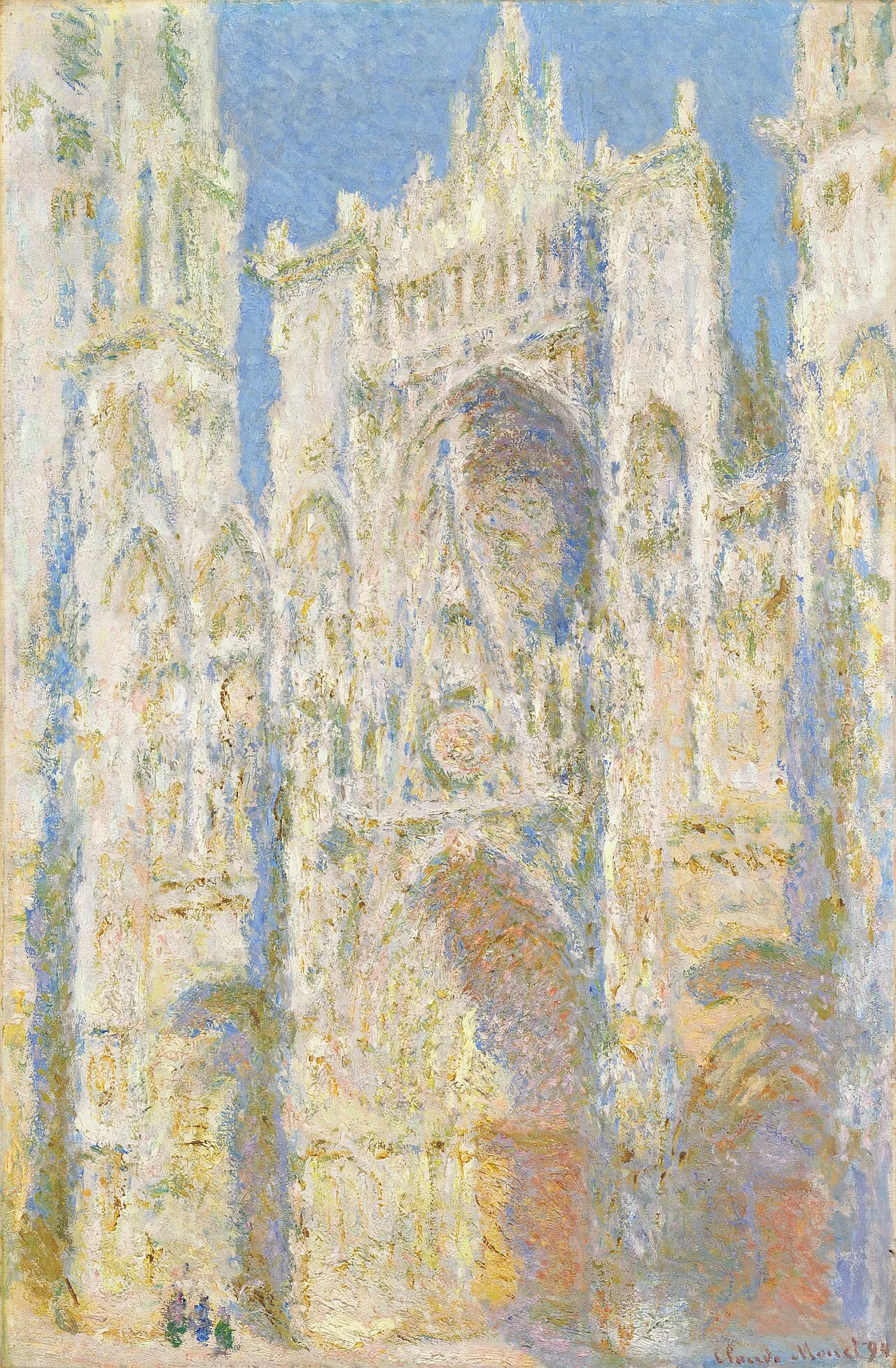
From 1892 to 1894 came the façade of Rouen Cathedral, in some thirty canvases of the same view at different hours of the day: Gothic stone becomes a pretext for painting air and light. In 1908 Monet spent about three months in Venice and painted 37 works.
The Water Lilies: from the Japanese bridge to the Orangerie
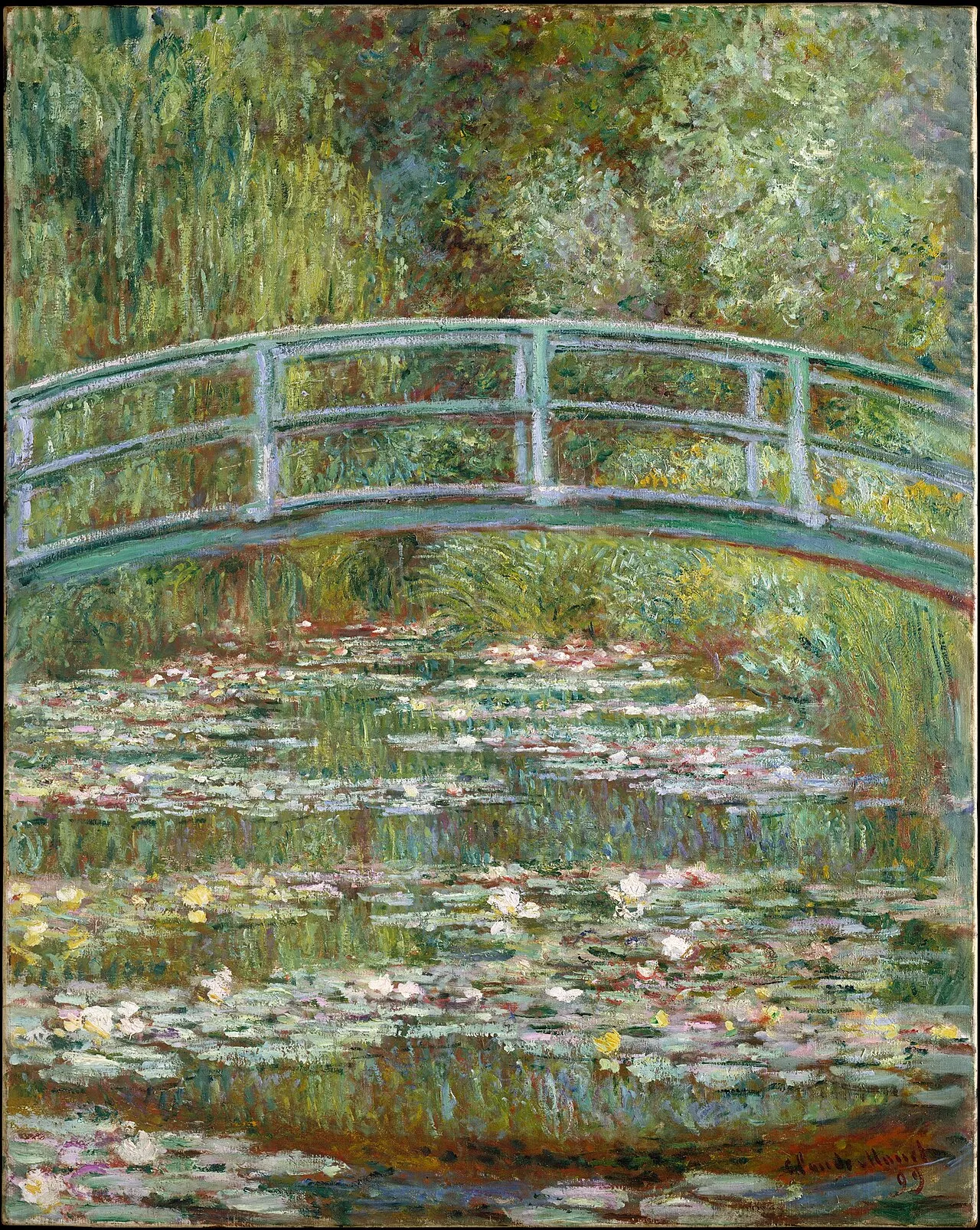
From about 1897 Monet painted the pond at Giverny: some 250 canvases in all. The first series, between 1897 and 1899, includes the Japanese bridge seen up close, with water lilies and foliage filling the picture. In time the horizon disappears and only water, reflections and flowers remain. In 1915 Monet obtained permission to build a third, large studio with a skylight, designed for the “Grandes Décorations”.
In 1912 he was diagnosed with cataracts. He had an operation on his right eye in January 1923 but refused to have the left one done. The colours of the canvases from those years shift towards darker yellows and reds, which is one reason his late painting is often read in the light of his eyesight.
The Orangerie: two oval rooms shaped by Monet
On 12 November 1918, the day after the Armistice, Monet wrote to Georges Clemenceau offering the State two decorative panels; with Clemenceau’s encouragement the offer grew to include the whole cycle. The donation contract, signed on 12 April 1922, covered 19 panels, but Monet kept them until his death, continuing to rework them and, in some cases, destroying them.
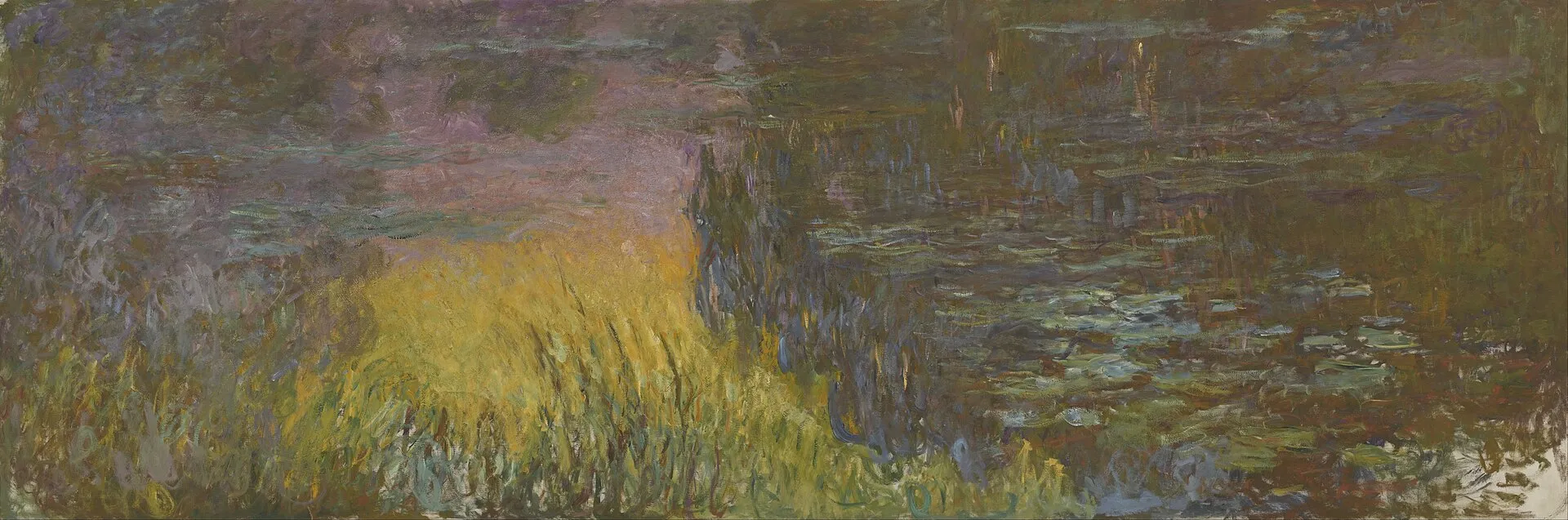
With the architect Camille Lefèvre he defined the shapes, volumes, positions and spacing of the panels in the two oval rooms of the Orangerie, in the Tuileries gardens. Eight large compositions, all at the same height, run along the curved walls for more than ninety metres; light enters from above and changes with the sun and the clouds, and the paintings change with it. The museum was inaugurated on 17 May 1927, a few months after Monet’s death. The 2006 renovation restored the rooms’ original natural light, which interventions in the 1960s had blocked.
Claude Monet’s most famous works
- Women in the Garden (1866), Musée d’Orsay, Paris.
- Regatta at Sainte-Adresse (1867), Metropolitan Museum of Art, New York.
- The Magpie (1868-69), Musée d’Orsay, Paris.
- Impression, Sunrise (1872), Musée Marmottan Monet, Paris.
- The Haystacks (1890-91), a series scattered across many museums and collections.
- Rouen Cathedral (1892-94), a series scattered across many museums and collections.
- Bridge over a Pond of Water Lilies (1899), Metropolitan Museum of Art, New York.
- The Water Lilies (c. 1914-26), Musée de l’Orangerie, Paris.
Giverny after Monet
After Monet’s death the property was gradually neglected. When Blanche Hoschedé-Monet died in 1947, maintenance was cut to a minimum and nature took over. In 1977 the Académie des Beaux-Arts entrusted the restoration to Gérald Van der Kemp, and the house and gardens opened to the public on 1 June 1980.
Where to see Monet in the centenary year
The fullest route runs through Paris and Giverny.
- Musée de l’Orangerie, Paris. Permanent home of the Water Lilies. From 30 September 2026 to 25 January 2027 it hosts “Monet. Peindre le temps”, with about forty works; the exhibition then moves to Tate Modern in London, from 25 February to 27 June 2027. The programme is on the Orangerie website.
- Musée Marmottan Monet, Paris. Holds Impression, soleil levant and one of the largest collections of Monet’s work. Until 31 January 2027 it hosts “Histoires de paysages. De Monet à Hockney”.
- Giverny. The house and gardens open seasonally, usually from April to early November, so they are closed at this time of year: check the website for 2027 dates.
Frequently asked questions about Claude Monet
What is Claude Monet famous for?
For giving Impressionism its name with Impression, soleil levant, for the Haystacks and Rouen Cathedral series, and for the Water Lilies of the Giverny garden, now at the Orangerie in Paris.
How much is a Claude Monet painting worth?
Prices depend on the work. A canvas from the Haystacks series sold at auction in 2019 for over 110 million dollars; many works, however, are in public collections and are not for sale.
What is a famous Monet quote?
The most quoted is “my finest masterpiece is my garden”. It is attributed to Monet and reported in many versions, but without a single primary source, so it is best cited as attributed.
How did Claude Monet die?
He died at Giverny on 5 December 1926, aged 86, of lung cancer. He is buried in the village church cemetery.
Who was Claude Monet’s wife?
He had two: Camille Doncieux, married in 1870 and died in 1879, and Alice Hoschedé, married in 1892 and died in 1911. With Camille he had two sons, Jean (1867) and Michel (1878).
Where is Monet’s house?
At Giverny, in Normandy, about 75 kilometres from Paris. It was his home from 1883 to 1926.
From Monet to today’s interiors
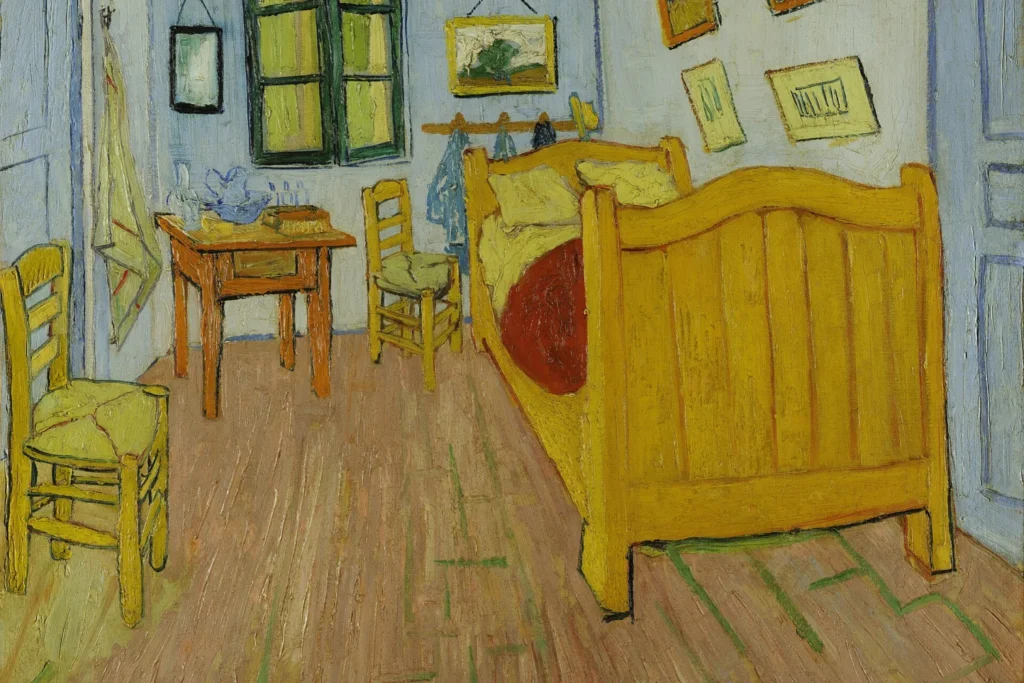
Monet cannot be copied, but he can be studied as a method: colour chosen room by room, the garden as an extension of the house, natural light as a material. For yellow and blue at home, our home colour dictionary has ideas; for another painter who made a room the subject of a picture, read about Vincent van Gogh’s bedroom in Arles, and for a style that builds interiors by accumulation, the profile of Iris Apfel. If you love gardens as design, our guide to historical Italian gardens leads to places where the same thing happens.