From the mirror above her bed to Casa Azul in Coyoacán, the life of an artist who used her own image to paint the body, love and Mexico.
From the mirror above her bed to Casa Azul in Coyoacán, the life of an artist who used her own image to paint the body, love and Mexico.
Above Frida Kahlo’s bed hung a mirror. It let her see herself when, after the accident, getting up was impossible. With an easel adapted so she could paint lying down and her own face always in view, Kahlo began working on the subject she would return to throughout her life. Sometimes she painted herself in a velvet dress. Sometimes she showed herself with freshly cropped hair. In one painting, she appears twice, sitting beside herself and holding her own hand.
Frida Kahlo (1907–1954) was a Mexican painter born in Coyoacán, now part of Mexico City. She is best known for her self-portraits and works such as The Two Fridas, The Broken Column and Viva la vida. In her paintings, bodies, clothes, plants and objects carry fragments of her own story and of Mexican visual culture. The same interplay is visible at Casa Azul, the family home where she was born, painted and spent much of her life.
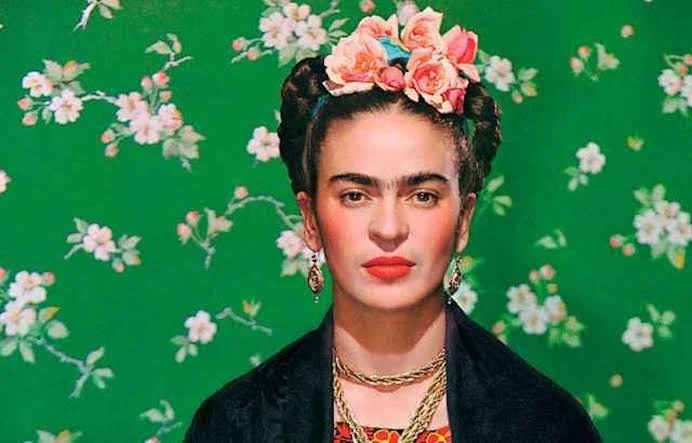
Frida Kahlo’s childhood in Coyoacán
Frida was born on 6 July 1907 to Matilde Calderón and Guillermo Kahlo, a German-born photographer. She contracted polio aged six, which affected her right leg. In 1922 she entered Mexico’s National Preparatory School, where she joined a group of students known as Los Cachuchas. She considered studying medicine. Her father’s portraits show how early she became comfortable in front of a camera and how directly she could return its gaze.
Kahlo liked to associate her birth with 1910, the year the Mexican Revolution began. It was an early example of how she told her own story through the history of her country. Mexico would remain a tangible presence in the clothes she wore, the objects she collected and the subjects she painted.
The 1925 bus accident and her first self-portrait
On 17 September 1925, when Kahlo was eighteen, a tram collided with the bus she was travelling on. Multiple fractures and spinal injuries left her facing a long recovery. She began painting regularly during those months. In 1926 she completed Self-Portrait in a Velvet Dress for Alejandro Gómez Arias, who had been travelling with her that day.
Her face emerges from a dark background. The elongated neck, hand in the foreground and neckline give the young woman the composure of an old master portrait. She looks directly at the viewer. Already, she was choosing how to appear and leaving the viewer to work out what lay behind the pose.
Frida Kahlo and Diego Rivera, from Mexico to the United States
Kahlo married Diego Rivera in 1929. He was already an established muralist. They shared political commitments and a deep interest in Mexican culture. Rivera painted on the scale of public buildings. Kahlo often worked on an intimate scale, giving space to experiences rarely depicted in the art of her time.
In the early 1930s they spent time in San Francisco, Detroit and New York. In Detroit in 1932, Kahlo lost a pregnancy. In Henry Ford Hospital, she painted herself on a bed against an industrial skyline. Six forms float around her, tethered to her by red strands. The distance between the bed and the city gives the painting a striking sense of isolation.
The couple divorced in 1939 and remarried in San Francisco in 1940. Paintings from these years, including The Two Fridas and Self-Portrait with Cropped Hair, show how much Kahlo could convey through a change of clothes, a haircut or the decision to sit beside another version of herself.
Was Frida Kahlo a Surrealist?
André Breton saw affinities between Kahlo’s paintings and Surrealism. In 1938 she held a solo exhibition at the Julien Levy Gallery in New York. In 1939 she exhibited in Paris, where the French state acquired The Frame, a self-portrait now in the Centre Pompidou collection. Kahlo described her paintings as depictions of her own reality. An exposed heart, a stone column in place of a spine and two figures with the same face all give visible form to experiences that are difficult to put into words.
Frida Kahlo’s most famous paintings
| Painting | Year | What to look for |
|---|---|---|
| Self-Portrait in a Velvet Dress | 1926 | The carefully arranged pose, dark background and direct gaze. |
| Henry Ford Hospital | 1932 | The isolated bed and the red strands linking Kahlo to objects and anatomical forms. |
| The Two Fridas | 1939 | Two versions of the artist hold hands, their exposed hearts joined by a blood vessel. |
| Self-Portrait with Cropped Hair | 1940 | The loose suit, the scissors and the locks of hair on the floor. The work is in MoMA’s collection. |
| The Broken Column | 1944 | A fractured architectural column takes the place of the spine in the open torso. |
| Viva la vida | 1954 | The red flesh of the watermelons and the inscription that gives the still life its title. |
The Two Fridas, a double self-portrait
In this 1939 painting, one Frida wears a white European-style dress and the other wears Tehuana clothing. They share a face and a bench, and they clasp hands. The painting dates from the year Kahlo divorced Rivera, a context for one possible reading. The hearts and the blood draw the eye, but the clasped hands hold the composition together. The work belongs to the Museo de Arte Moderno in Mexico City.
Casa Azul, Frida Kahlo’s home and studio
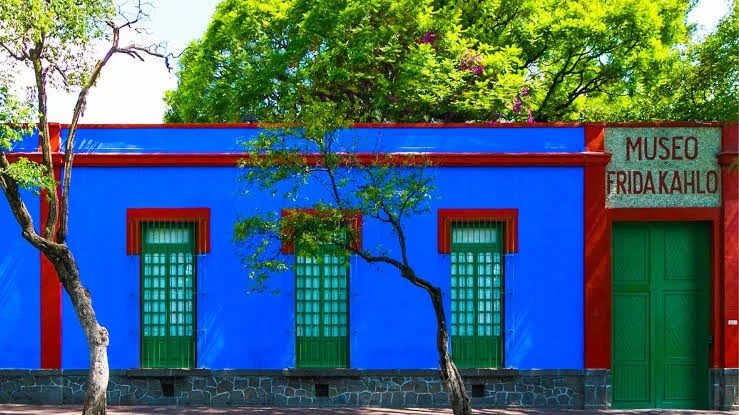
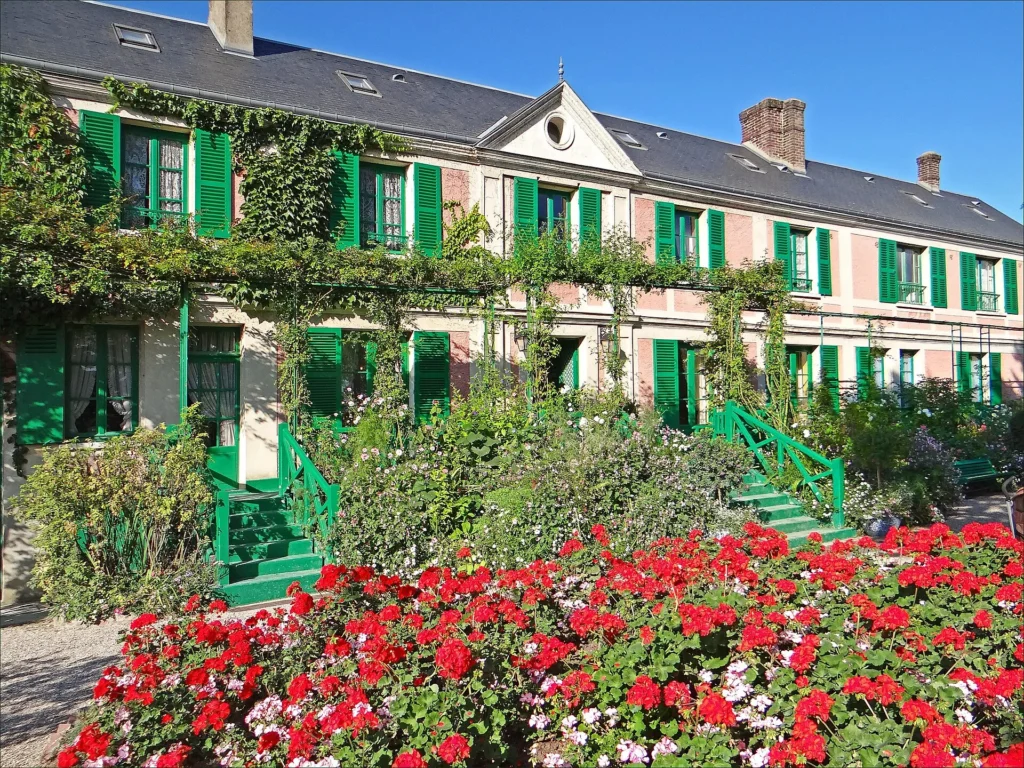
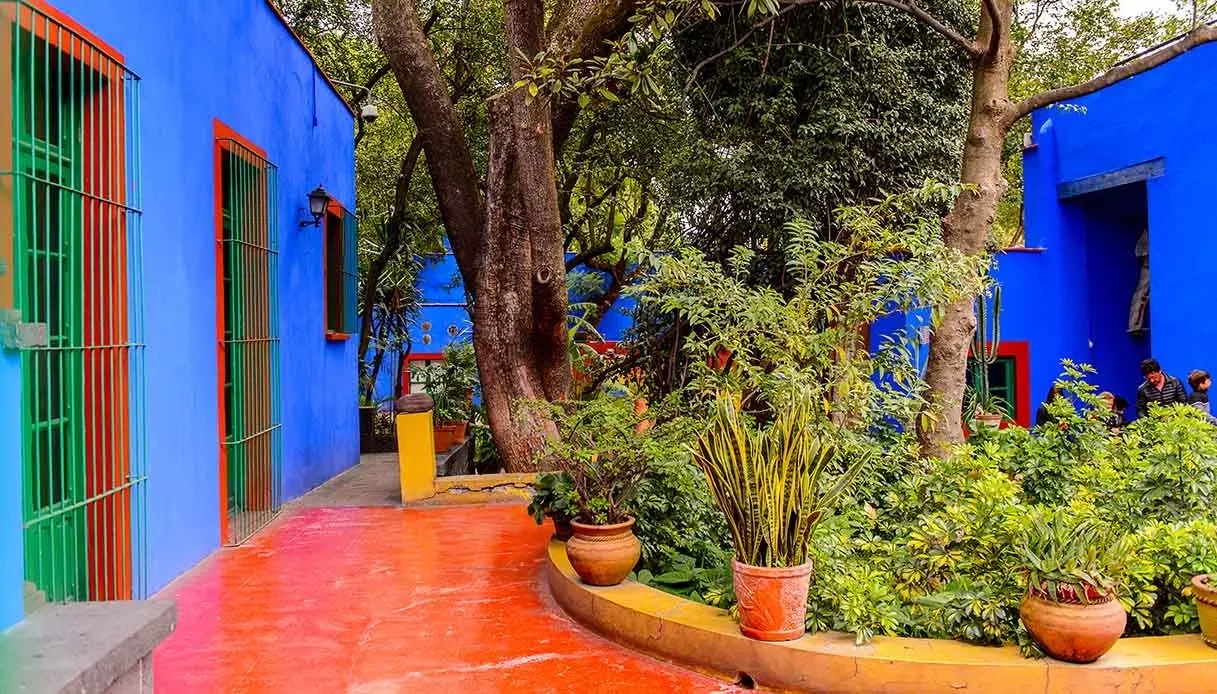
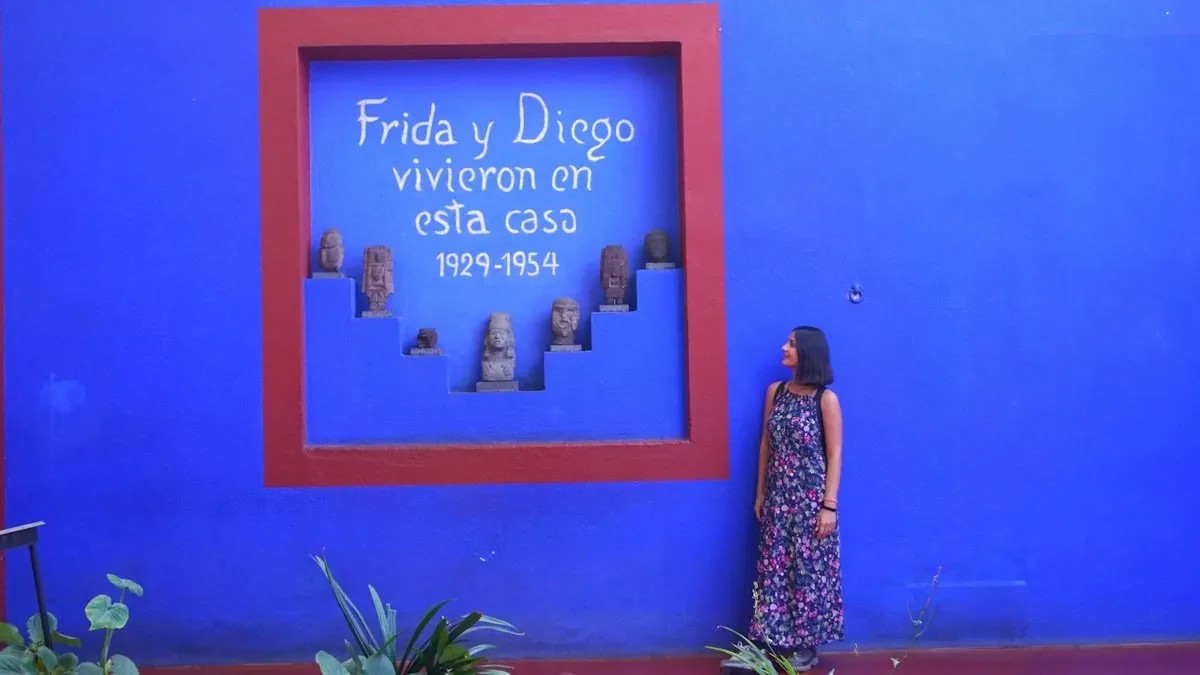
Behind the blue walls of Londres 247 in Coyoacán, the courtyard garden is part of the house’s daily life. Photographs of the rooms show the worktable, paints and papers, along with pre-Columbian objects Kahlo and Rivera collected over the years. It is easy to imagine the sequence of ordinary gestures: stepping into the garden, returning to the studio and sitting down in front of an unfinished painting. The house is now the Frida Kahlo Museum.
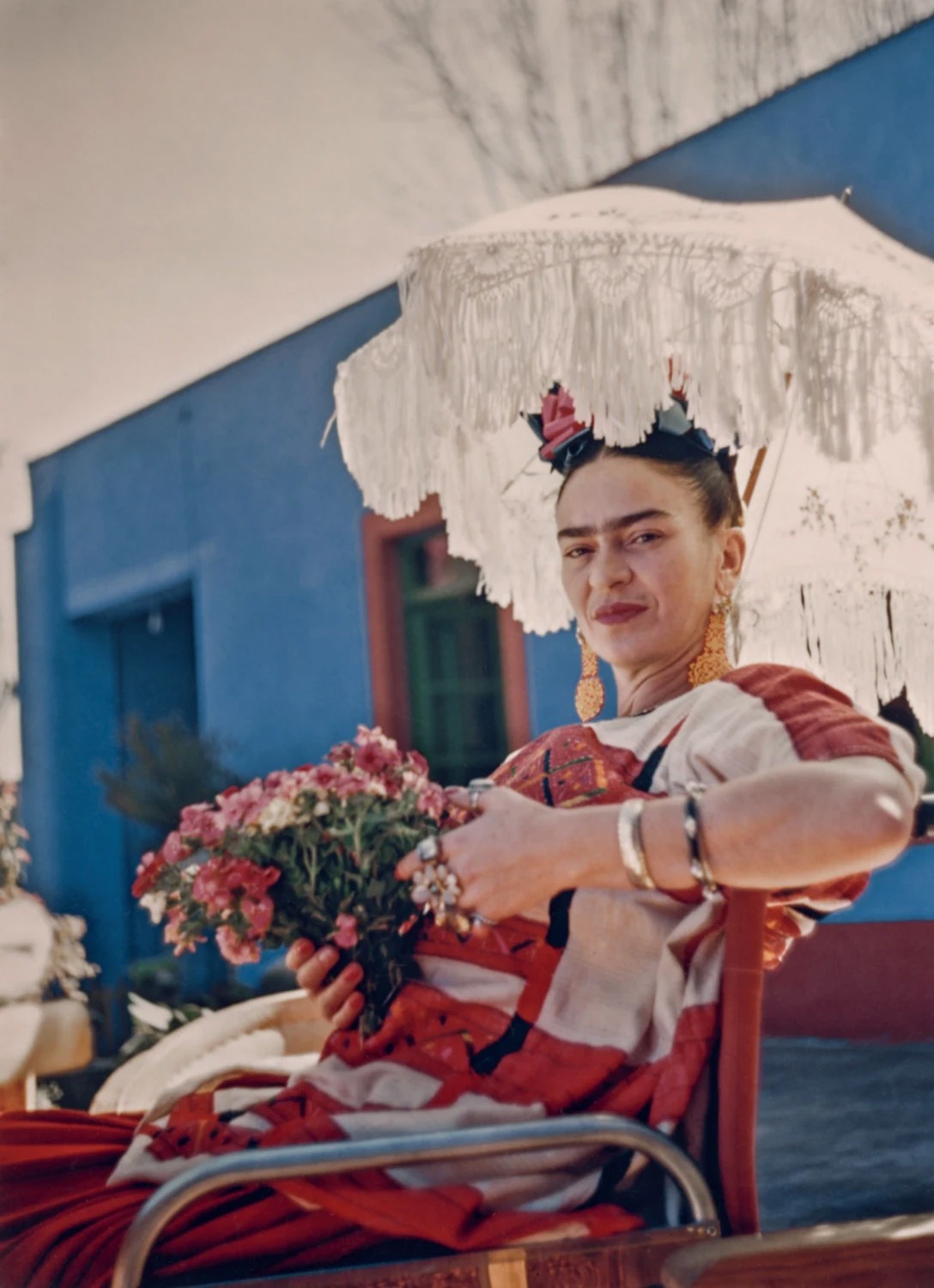
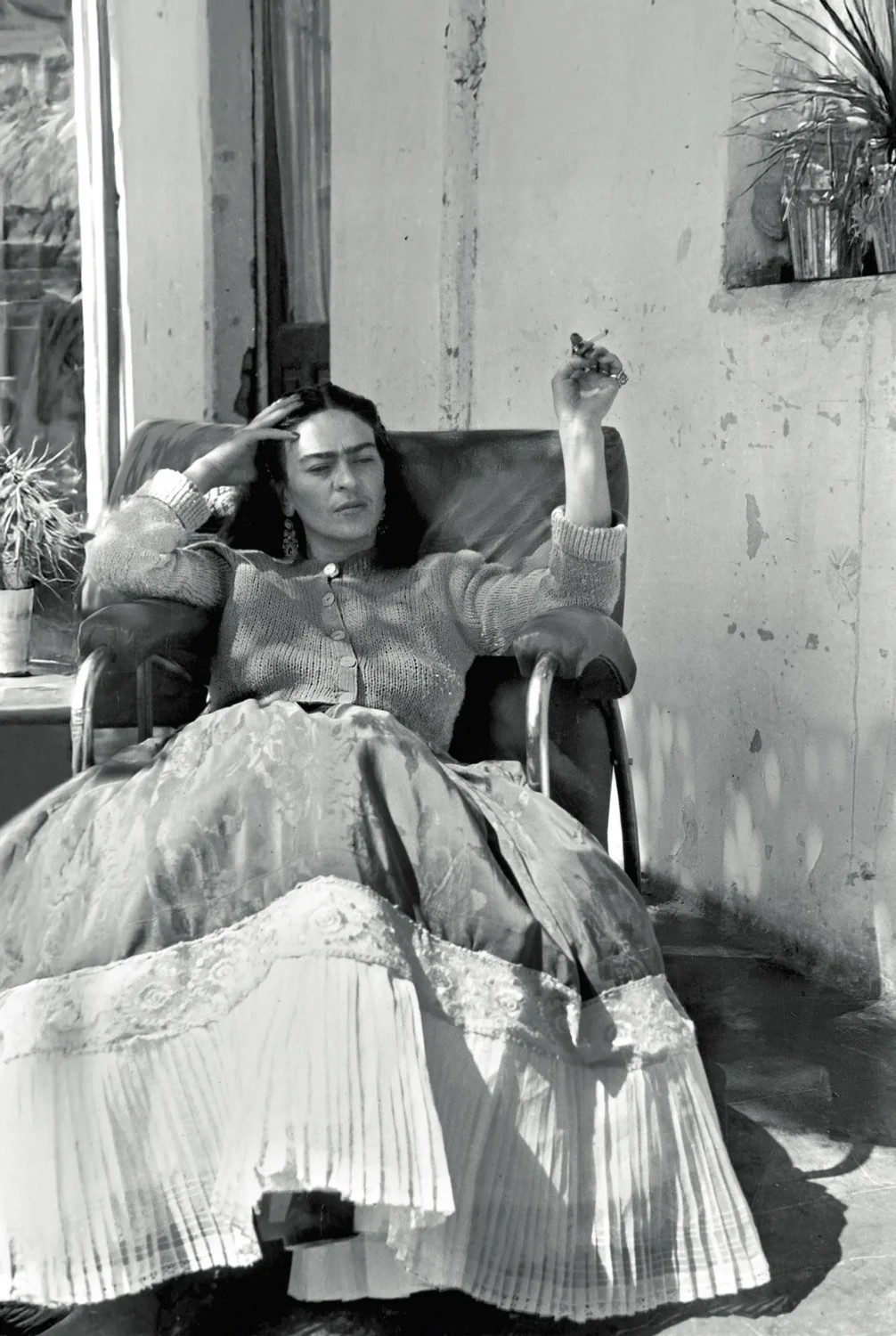
Clothing offers another way into the house and the paintings made there. The Victoria and Albert Museum studied the dresses, jewellery, corsets and personal belongings kept at Casa Azul. The long skirts and huipiles, the tunics she wears in many portraits, come from Mexican textile traditions. They were also part of how Kahlo chose to dress a body shaped by disability and medical treatment. Her attention to fabrics, embroidery and accessories carries from the photographs into her paintings.
The San Ángel house-studios and Juan O’Gorman’s bridge
San Ángel offers a second address for understanding how the two artists lived and worked. In the early 1930s, Juan O’Gorman designed two functionalist house-studios connected by a bridge. Each artist had a place to work, and getting from one to the other meant crossing that short stretch above the ground. The layout shows a practical response to two painters with different working rhythms and very different scales of work. The complex is now the Museo Casa Estudio Diego Rivera y Frida Kahlo.
Frida Kahlo’s final years, the 1953 exhibition and her death
In 1943, Kahlo began teaching at the art school known as La Esmeralda. Her health deteriorated in the years that followed. In April 1953, the photographer Lola Álvarez Bravo organised Kahlo’s first solo exhibition in Mexico. Kahlo attended the opening lying in a bed brought to the gallery. She died at Casa Azul on 13 July 1954, aged 47. Her ashes are kept there.
Among the works dated to that final year is Viva la vida. After so many paintings in which Kahlo meets our gaze, here the table holds only watermelons. On the red flesh of one slice, she wrote three words. As with the most intimate details of her self-portraits, you have to get closer to read them. Her face has left the picture. Her handwriting remains.
Frequently asked questions about Frida Kahlo
When and where was Frida Kahlo born?
Frida Kahlo was born on 6 July 1907 at Casa Azul in Coyoacán, now part of Mexico City.
What happened in Frida Kahlo’s accident?
On 17 September 1925, a tram collided with the bus she was travelling on. Kahlo was 18 and suffered serious injuries, including damage to her spine. She began painting regularly while recovering.
What is Frida Kahlo’s most famous painting?
The Two Fridas (1939), a double self-portrait in the collection of Mexico City’s Museo de Arte Moderno, is among her best-known works.
How did Frida Kahlo die?
The officially reported cause of death was a pulmonary embolism. Kahlo died on 13 July 1954, seven days after her 47th birthday.
Where is Frida Kahlo’s house?
Casa Azul is at Londres 247, Coyoacán, Mexico City, and houses the Frida Kahlo Museum. Juan O’Gorman’s house-studios are in San Ángel.
Sources and further reading
- Frida Kahlo Museum – Timeline
- Treccani – Frida Kahlo
- MoMA – Frida Kahlo
- Smithsonian National Portrait Gallery – The Two Fridas
- Victoria and Albert Museum – Frida Kahlo: Making Her Self Up
- INBAL – Diego Rivera and Frida Kahlo House-Studio Museum