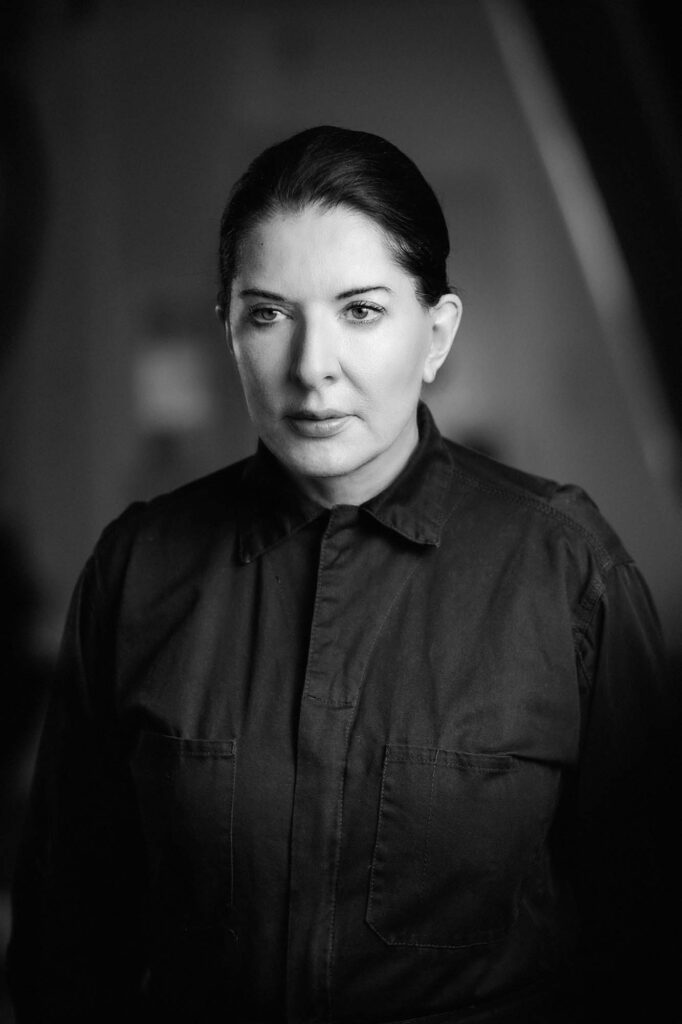
Artist and designer Marcello Morandini has devoted his life to the possibilities of geometry. His international career finds an intimate, shared dimension in Varese, within the spaces of Villa Zanotti. Some artists are recognisable from a single image; others teach us how to look. Marcello Morandini belongs to both categories. Black and white makes his …
Artist and designer Marcello Morandini has devoted his life to the possibilities of geometry. His international career finds an intimate, shared dimension in Varese, within the spaces of Villa Zanotti.
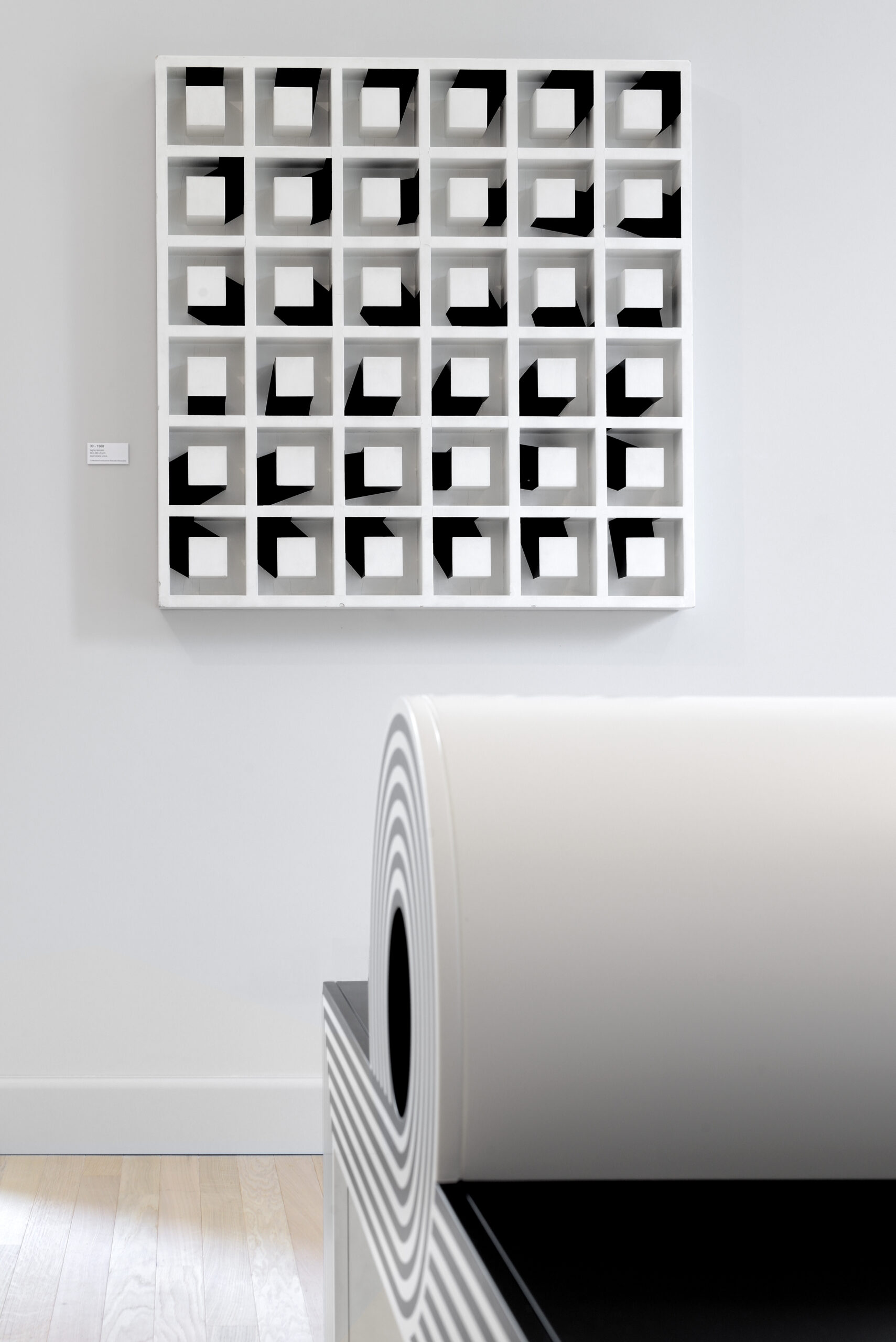
Some artists are recognisable from a single image; others teach us how to look. Marcello Morandini belongs to both categories. Black and white makes his work instantly recognisable; geometry invites us to pause, to follow the unfolding of a volume, to discover how a sequence can transform before our eyes.
In his compositions, precision coexists with a subtle perceptual instability. Forms bend, rotate and expand according to an order we can intuit without fully grasping it at first glance. The eye searches for a rule and, as it pieces that rule together, encounters something unexpected.
This relationship between discipline and discovery runs through Morandini’s entire career: a sustained exploration spanning art, design and architecture, keeping alive the curiosity from which it began.
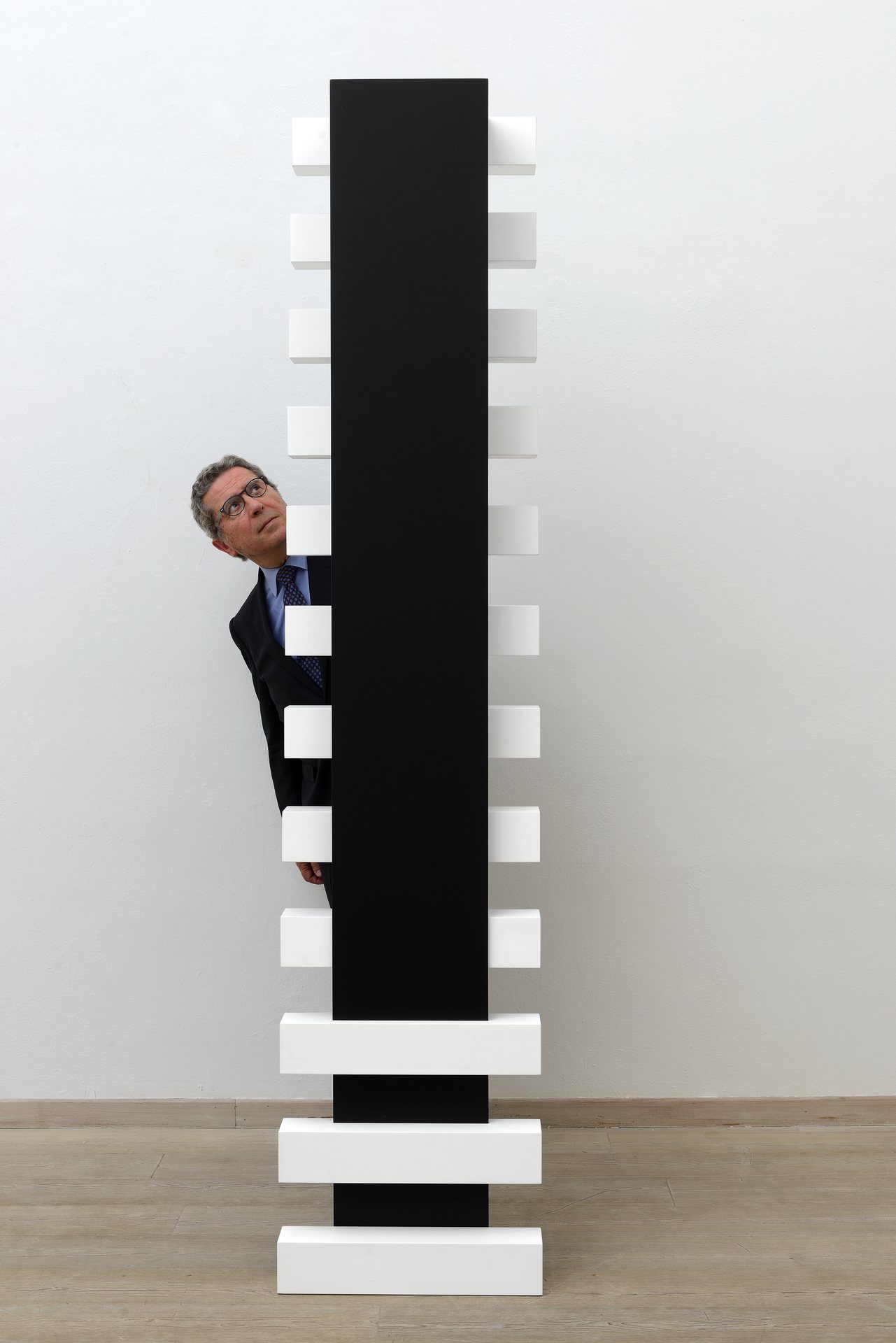
Marcello Morandini’s biography: a formative journey between art and design
Born in Mantua in 1940, Morandini moved with his family to Varese in 1947. This is the city where he grew up and to which he would remain attached, even as his work took him to museums, companies and institutions around the world.
His training took shape in Milan, between the Brera School of Art and his first professional experiences in design and graphics. Study and work developed side by side. Drawing was a daily practice, a means of understanding forms and testing ideas.
These beginnings left a lasting mark. Throughout his career, intuition has always gone hand in hand with construction: an image must find a structure, a proportion, a precise way of occupying space.
The first drawings in his artistic exploration date from 1962; in 1964, his three-dimensional works began to take shape. The following year, Germano Celant curated his first solo exhibition in Genoa. This was followed by the 1967 São Paulo Biennial, a room dedicated to his work at the 1968 Venice Biennale, and participation in documenta 6 in Kassel in 1977.
Recognition came early. Seen across the span of his career, the works reveal an evolving inquiry in which one configuration opens up further possibilities: a form returns, changes orientation, gains volume or establishes new relationships with space.
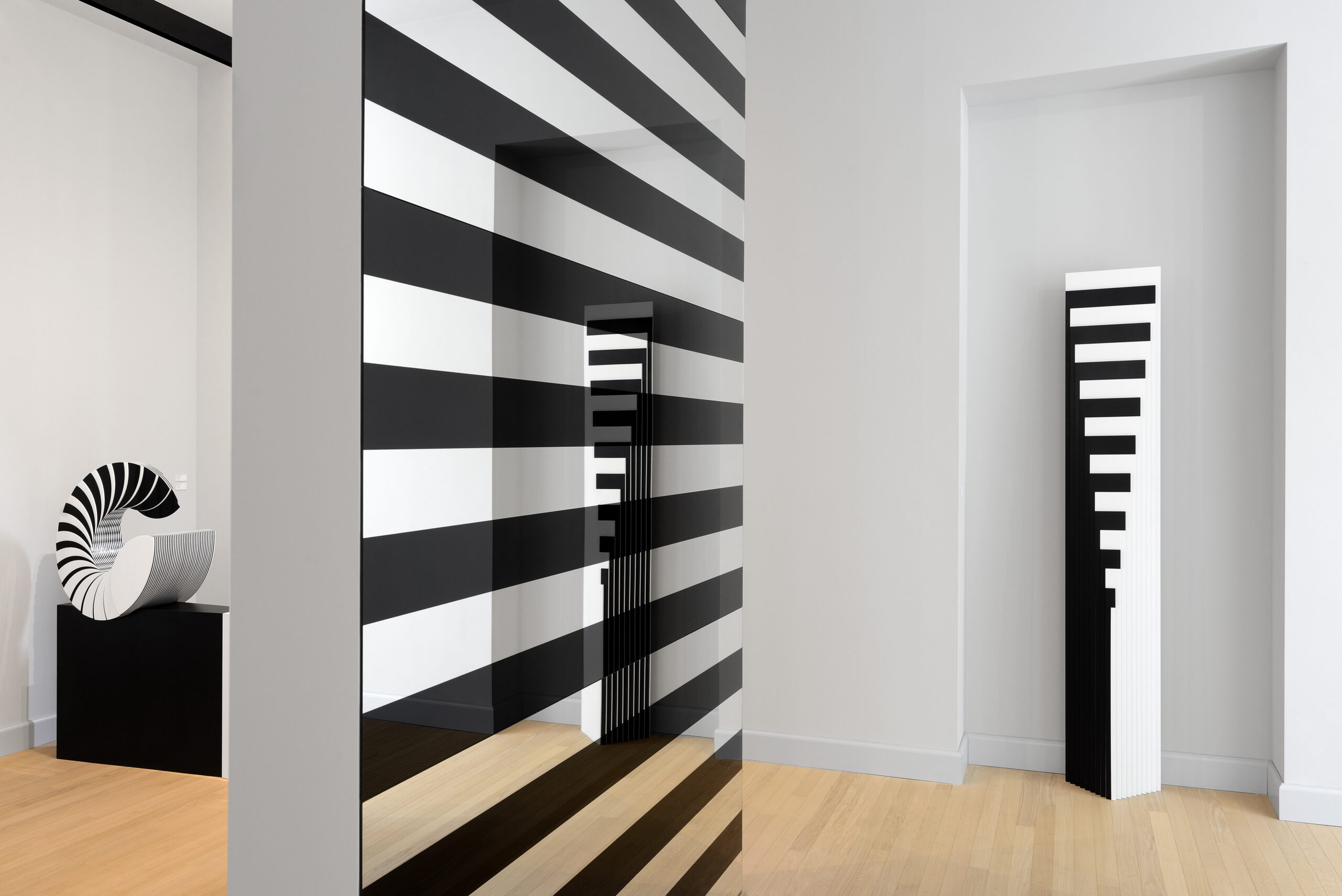
Morandini’s works: geometry in black and white
With an affinity for the tradition of Concrete and Constructive Art, Morandini turns to geometry for its ability to generate an autonomous reality. Lines, planes and volumes establish relationships that become the very content of the work.
An elementary form can give rise to a complex structure through small, progressive shifts. A rotation alters the balance of the whole; an overlap introduces depth; a twist makes the transition between different directions visible.
Movement runs through even his static works. It emerges in the succession of their parts and in the time needed to understand them. Viewers take part by following an edge, tracing a continuity or changing their point of view.
Black and white brings this experience into focus. It makes the relationship between solid and void, surface and depth legible, allowing form to speak for itself. For the viewer, this reduction of means invites closer attention: even the smallest variation carries weight.
The continuity of this visual language allows Morandini’s work to be understood as an extended exploration. The return to recurring elements makes differences more apparent, revealing how many configurations can emerge from an essential vocabulary of forms and contrasts.
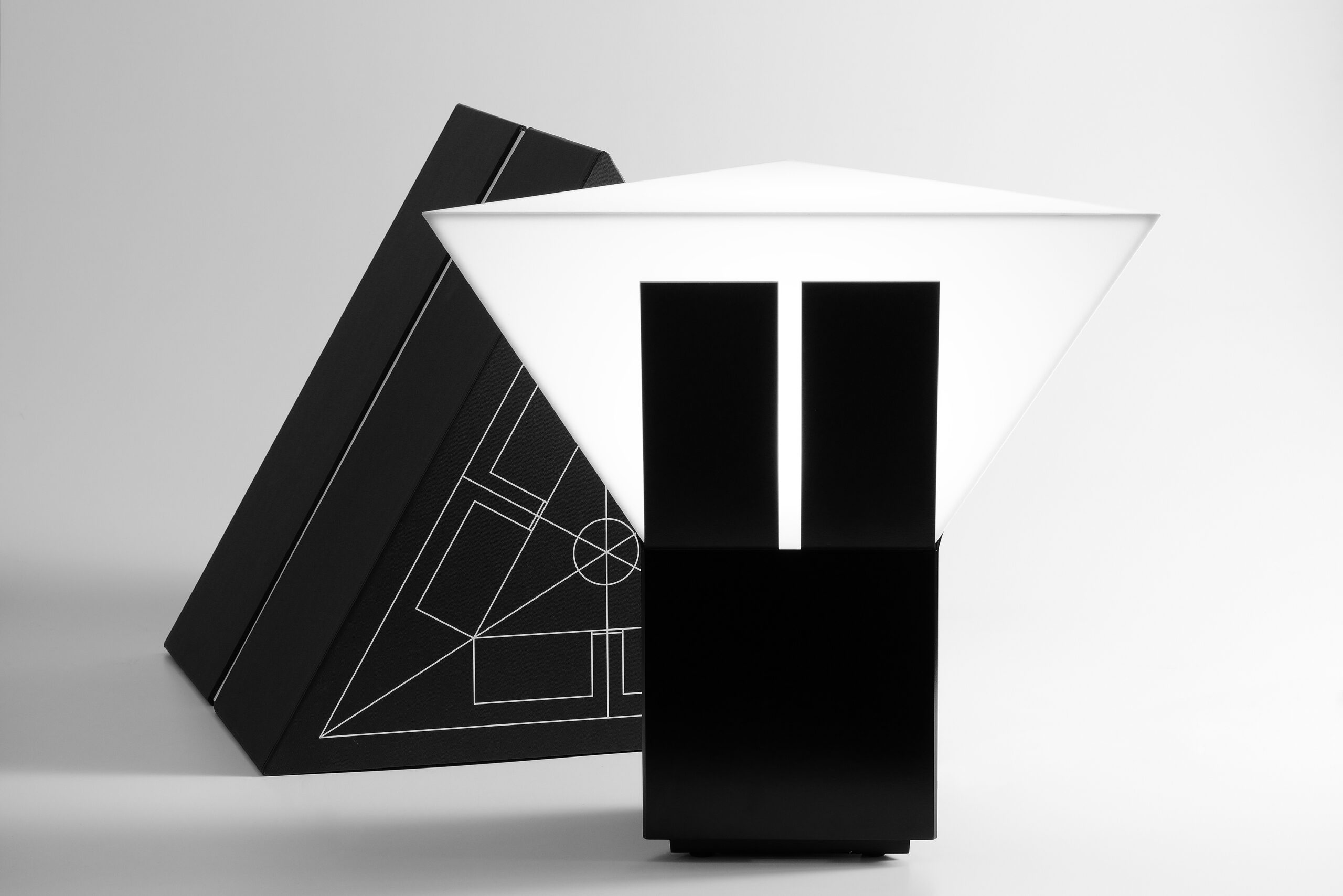
Morandini and design: the pleasure of use
In design, exploration meets the gestures of everyday life. An object must be picked up, used and placed alongside other objects. A seat accommodates the body; a table organises part of the domestic space.
In Morandini’s creations, sculptural presence engages with these requirements. Function introduces specific dimensions and relationships, while the geometric construction remains clearly apparent.
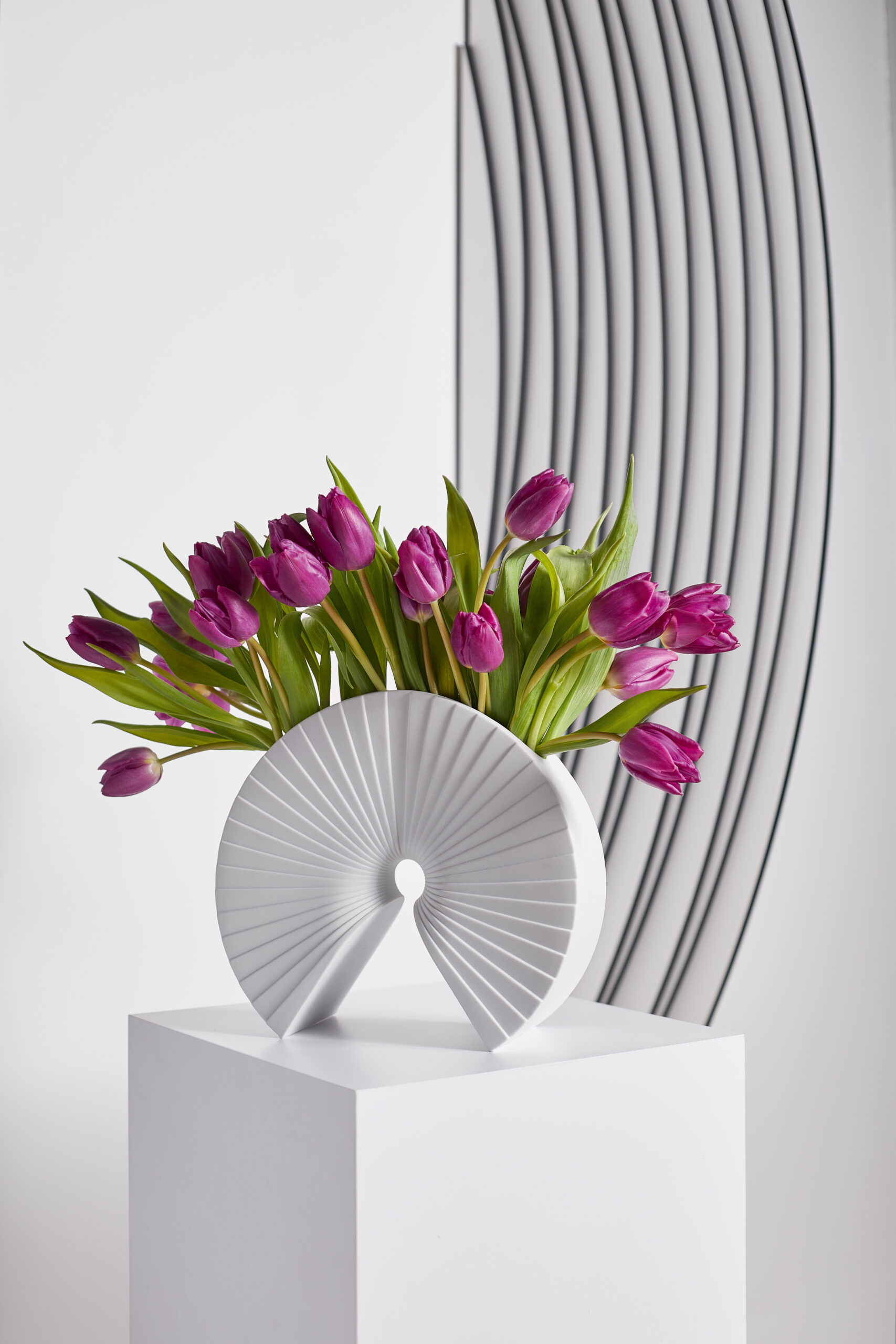
His long collaboration with Rosenthal, which began in 1979, represents one of the most significant chapters in this journey. Porcelain provides a medium for experimenting with profiles, rhythms and arrangements of volumes. His relationship with the company extends into architecture through interventions on the façades of the Thomas factory in Speichersdorf and the administrative headquarters in Selb.
Between a vase and a building, the scale of the experience changes. Yet these works reveal a continuity in the relationship between form, perception and space: the rhythm that shapes an object can become an architectural presence, engage with the landscape and guide the eye from a distance.
Colour, too, enjoys a different freedom in design than in his artistic practice. In some objects, colour combinations and the arrangement of forms can suggest a playful dimension. This aspect broadens our understanding of his work beyond the definition of “master of black and white”, revealing the variety of outcomes that the same rigour in design can produce.
Villa Zanotti in Varese: the Fondazione Marcello Morandini
In Varese, the relationship between art, design and architecture finds a particularly personal expression in the Fondazione Marcello Morandini. Established in 2016 with the support of two collectors, the Foundation is based at Villa Zanotti, a residence designed in 1907 and chosen by the artist together with his wife, Teresa.
The encounter with the villa introduces a different kind of material from those explored in his works: the history of a place. The rooms have proportions, decorations and memories with which the new project must engage.
Morandini takes part in transforming the residence into a space that can house his work and make it accessible. Preservation and interpretation go hand in hand. The building retains its identity and gains a new life through its relationship with the works, the routes through the spaces and the contemporary interventions.
His presence can already be felt in the exterior details: the black and white numerals of the street address, the white rings around the bases of the trees. In the garden, the regularity of his geometric language enters into a relationship with the changing forms of the vegetation.
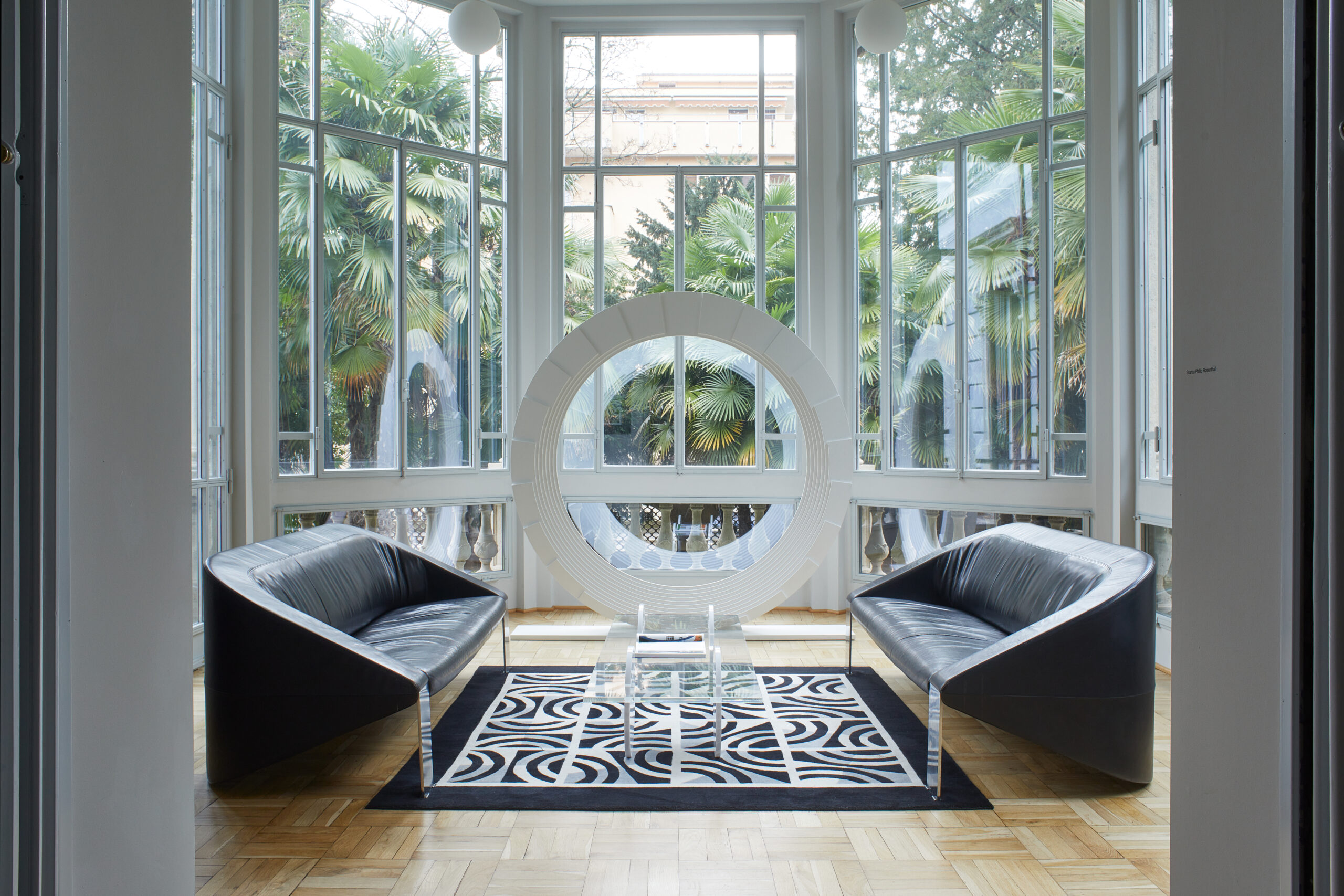
Inside, a black frame borders a frescoed ceiling; a vertical element passes through the stairwell; mirrored surfaces with horizontal bands alter the perception of the rooms. During a visit, these interventions guide the eye and bring different periods of architecture into dialogue.
The villa thus becomes part of the narrative. The route through it invites us to notice what happens between things as well: the distance between two elements, the passage from one room to another, the relationship between a work and the person approaching it.
An ongoing exploration: drawing, the Foundation and the public
With its opening to the public in 2021, Villa Zanotti took on a further dimension. The collection, exhibitions and cultural activities bring a personal exploration into a space of encounter. Varese welcomes and shares an experience developed through decades of international exchange.
The Foundation makes this heritage accessible for observation, study and discussion. Its exhibition layout can also be considered from a design perspective: the arrangement of the works, their relationships with the rooms and the sequence of spaces all contribute to the visitor’s experience.
Drawing by hand, an integral part of Morandini’s practice, offers insight into the process through which an idea takes shape. Marks, proportions and stages of construction provide another perspective on the precision of his works.
For the viewer, wonder can arise from this sustained attention. A precisely drawn line leads towards an unexpected configuration; a rigorous structure can change the perception of a room. In Marcello Morandini’s work, geometry continues to offer opportunities to look at the world with greater freedom.