The most beautiful Christmas lights and light installations in Italy in 2026: Luci d’Artista in Turin and Salerno, the Gubbio tree on Monte Ingino, the Apulian luminarie of Scorrano and Milan’s Natale degli Alberi, told through their authors and their lighting design.
In Italy, Christmas light is an old craft and, for a few decades now, a form of public art too: between the timber galleries of Apulia’s light makers and the artists’ works in Turin lies the whole distance between decoration and design.
Christmas lights in Italy are not all alike, and Christmas 2026 is a good moment to learn to tell them apart. Turin’s Luci d’Artista are switched on from 23 October 2026 to 10 January 2027; the Gubbio tree, the largest in the world, is traditionally lit on 7 December on Monte Ingino; Salerno will announce the dates of its twenty first edition in the coming weeks. Around these three poles moves a whole geography of light, from the art cities of the north to the villages of Salento.
Our editors’ view is that the finest Christmas light installations are not the biggest but those where someone has genuinely designed the light: chosen where to put it, how much, what colour and above all in relation to which architecture. It is the same rule that applies to Christmas lights at home, and Christmas in the piazza makes it plain to anyone.
What is the difference between luminarie and light installations?
A luminaria is festive apparatus; a light installation is a work of art. The first comes from the patron saint festivals of the south: modular timber structures painted white to reflect the light, assembled into arches, galleries and façades and studded with thousands of coloured bulbs. The pattern repeats, and that very repetition creates the effect of temporary architecture.
A light installation, by contrast, is a one off designed for a specific place. It does not decorate just any street: it reads a square, a façade or a bridge and changes how it is seen at night. In Italy the two traditions coexist, and the most interesting part of Christmas lies in the dialogue between the craft virtuosity of the light makers and the language of contemporary art.
When are Turin’s Luci d’Artista switched on in 2026?
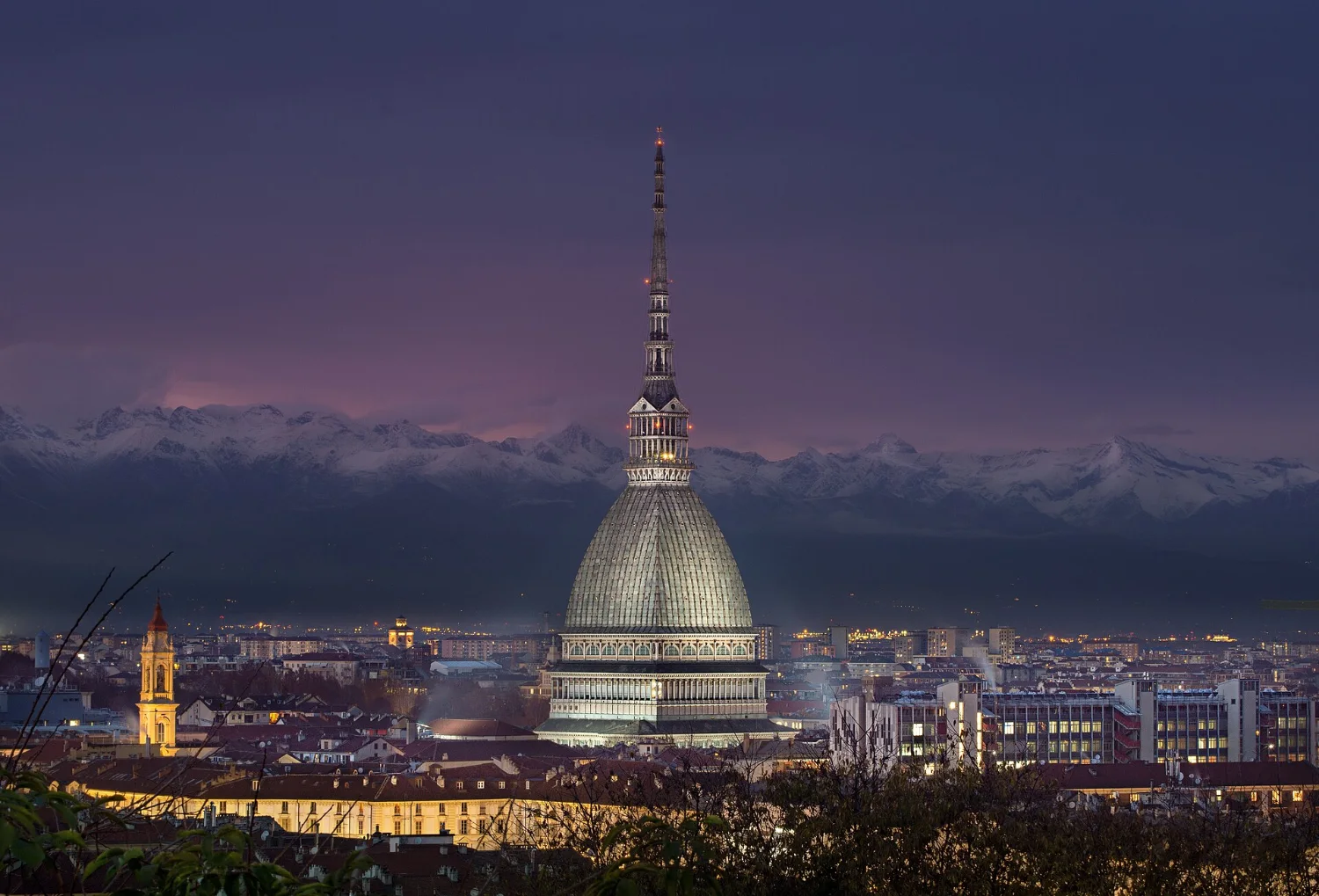
Turin’s Luci d’Artista stay lit from 23 October 2026 to 10 January 2027, according to the calendar published by Turismo Torino. Launched in 1998, they changed the way Christmas light is thought about in Italy: it was the first Italian city to hand its streets to artists rather than decorators, building a permanent collection that returns every winter.
The twenty ninth edition adds Decoding Light by Vittoria Caldera, a balcony that spells out the phrase “light finds us” in an alphabet of flashes inspired by Morse code. Alongside the newcomer, the historic works remain: Mario Merz‘s Il volo dei numeri on the Mole Antonelliana, Rebecca Horn’s Piccoli spiriti blu at Monte dei Cappuccini, Michelangelo Pistoletto’s Amare le differenze in Piazza della Repubblica and Tracey Emin’s Sex and Solitude in the Giardini Reali Bassi. The full route is in our guide to Turin’s Luci d’Artista.
What are Salerno’s Luci d’Artista like, and when can you see them?
Salerno’s Luci d’Artista can be seen every year from November to the end of January, and the city council has not yet announced the dates of the twenty first edition for 2026. Salerno was the first city to adopt the Turin model, in 2006, but bent it to a different idea: less conceptual art and more stagecraft, with a theme that changes each year and a route that runs from the old town along Corso Vittorio Emanuele to the Villa Comunale and Piazza Flavio Gioia.
Recent editions have focused on low energy LED installations, with works by contemporary artists. The result is a city turned into a vast open air theatre: less refined than Turin, but more generous, and able to draw visitors from across the south.
Why is the Gubbio tree considered the largest in the world?
Because it is a drawing in light roughly 750 metres tall and 450 metres wide at the base, traced directly onto the slope of Monte Ingino, and it has held a Guinness World Record since 1991. First created in 1981, it starts at the medieval city walls and climbs towards the Basilica of Sant’Ubaldo; it is built every year by the Alberaioli, the local volunteers who from September string kilometres of cable between the trees on the hillside.
Seen up close, the design is a model of simplicity. According to the tree’s official website, around 300 lights draw the outline, 400 coloured points fill it and 250 form the star at the top. It is a work of popular land art, born without artistic pretensions, that succeeds because it uses the mountain as its support and distance as its tool: it only really makes sense from the town or the plain below. For lovers of monumental trees, our round up of the world’s most beautiful Christmas trees starts here.
What are Apulian luminarie, and why is Scorrano their capital?
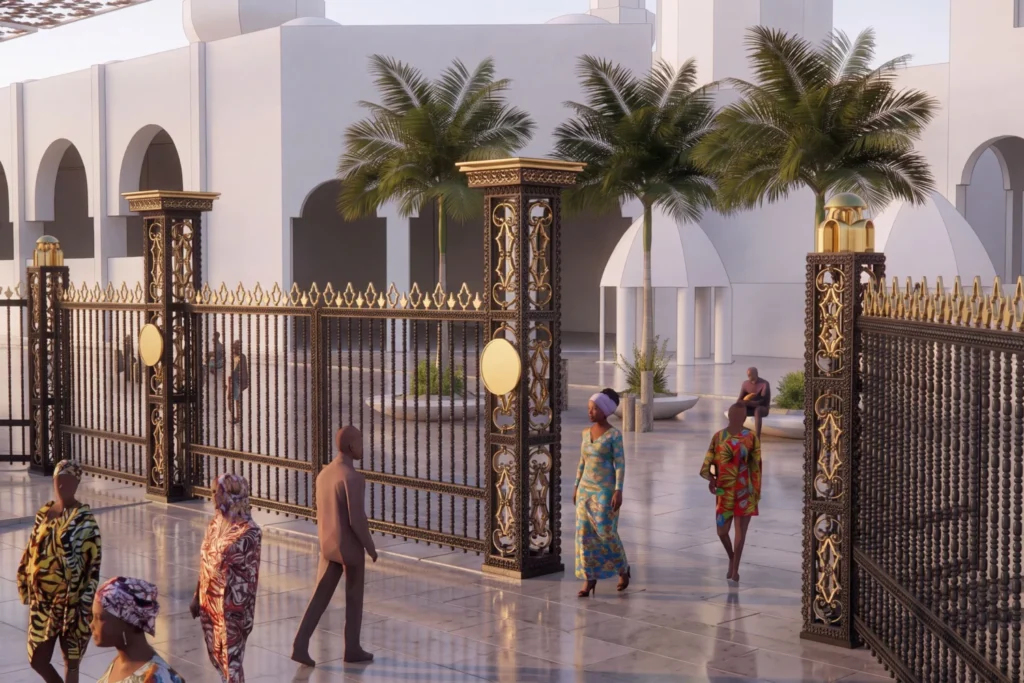
Apulian luminarie are ephemeral architectures of light, and Scorrano, in the province of Lecce, is their capital because every July, for the feast of Santa Domenica, it hosts the most spectacular structures in Italy. It is a summer festival, from 4 to 7 July, but this is where you understand the craft that lights up Christmas in many towns, in Italy and abroad, in winter: towers and galleries up to thirty metres tall carrying around two million LED lights, which replaced incandescent bulbs in 2007.

The firms that build them are family businesses in Salento, between Maglie, Alessano and Corigliano d’Otranto, such as Mariano Light, De Cagna, Paulicelli, Santoro and Perrotta, and they export to countries such as China and Canada and also work for fashion houses. In 2023 the luminarie tradition was put forward for UNESCO intangible heritage status. At Christmas their language returns in many Apulian squares: in Monopoli, in recent editions, the historic Faniuolo firm from Putignano has turned the centre into a park of glowing trees and swings.
Where to see Christmas light installations in Milan and other cities?
In Milan, Christmas lights follow a different model, that of sponsorship: the city council coordinates the Natale degli Alberi programme and entrusts the trees in the squares and the lights along the streets to brands and companies, until Epiphany. In the latest edition the fir in Piazza Duomo was dedicated to the Milano Cortina 2026 Olympic and Paralympic Games, while in Piazza Gae Aulenti an infinity mirror tree invited people to step into the light. The result is varied and at times spectacular, but it still lacks curatorial direction comparable to Turin’s; our guide to Milan’s Christmas markets will help you find your way.
Further south, Gaeta has built a tradition of its own with Favole di Luce, which in recent editions has stayed lit from November to January with installations inspired by fairy tales. It is the most successful example of how a seaside town can use light to stretch its season, and it confirms the rule: where there is an idea, even a luminaria becomes a story.
| Where | 2026/27 period | What |
|---|---|---|
| Turin | From 23 October 2026 to 10 January 2027 | Luci d’Artista, contemporary artworks across the city |
| Salerno | November to late January; 2026 dates awaiting announcement by the council | Luci d’Artista, 21st edition, scenographic route through the centre |
| Gubbio | Traditionally lit on 7 December, until Epiphany | The world’s largest Christmas tree on Monte Ingino |
| Milan | December, until Epiphany | Natale degli Alberi, trees and street lights in squares and streets |
| Gaeta | November to January | Favole di Luce, fairy tale installations |
| Scorrano | From 4 to 7 July (summer festival) | Luminarie for the feast of Santa Domenica |
Frequently asked questions about Christmas lights in Italy
What are the most beautiful Christmas lights in Italy?
For the quality of the project our editors pick Turin’s Luci d’Artista, for stagecraft Salerno’s Luci d’Artista and for sheer impact the Gubbio tree on Monte Ingino. Apulian luminarie remain the benchmark for the craft of light.
When are Turin’s Luci d’Artista 2026 switched on?
The works are lit from 23 October 2026 to 10 January 2027, every evening after dark, free to view.
When is the Gubbio Christmas tree lit?
By tradition the tree on Monte Ingino is switched on on the evening of 7 December and stays lit throughout the festive season, until Epiphany.
When do Salerno’s Luci d’Artista 2026 begin?
Salerno city council has not yet announced the dates of the twenty first edition; the lights usually go on in November and stay on until the end of January.
Can you see the Scorrano luminarie at Christmas?
No: Scorrano’s great festival is in July, for Santa Domenica. At Christmas the work of Salento’s and Apulia’s light makers can be seen in the squares of other towns, in Italy and abroad.