What colours go with blue? Discover nine sophisticated pairings for interiors, from cobalt and burgundy to petrol blue and olive green, with expert decorating inspiration.
From cobalt and burgundy to powder blue and chocolate brown, nine unexpected colour pairings reveal the many ways blue can transform an interior.
Some colours furnish a room. Blue changes the way it feels.
It can have the depth of a sky just before nightfall, the lightness of a summer morning or the intensity of pigment on a canvas. It can be discreet or all-consuming, effortlessly elegant or gloriously eccentric. Above all, blue is never quite the same twice.
Pair it with burgundy and it becomes theatrical. Set it beside chocolate brown and it feels intimate. Add blush pink and an entirely different kind of romance emerges. That is perhaps blue’s most compelling quality: it changes character according to the company it keeps, without ever losing its identity.
In a thoughtfully designed home, a colour combination is about far more than two shades placed side by side. There is the quality of the light, the grain of the timber, the sheen of lacquer, the way velvet absorbs colour. These are the details that make a scheme feel effortless even when every element has been carefully considered.
So, what colours go with blue in interior design? These nine pairings offer a starting point, from dramatic contrasts to understated harmonies.
1. Cobalt Blue and Burgundy: The Art of Bold Contrast
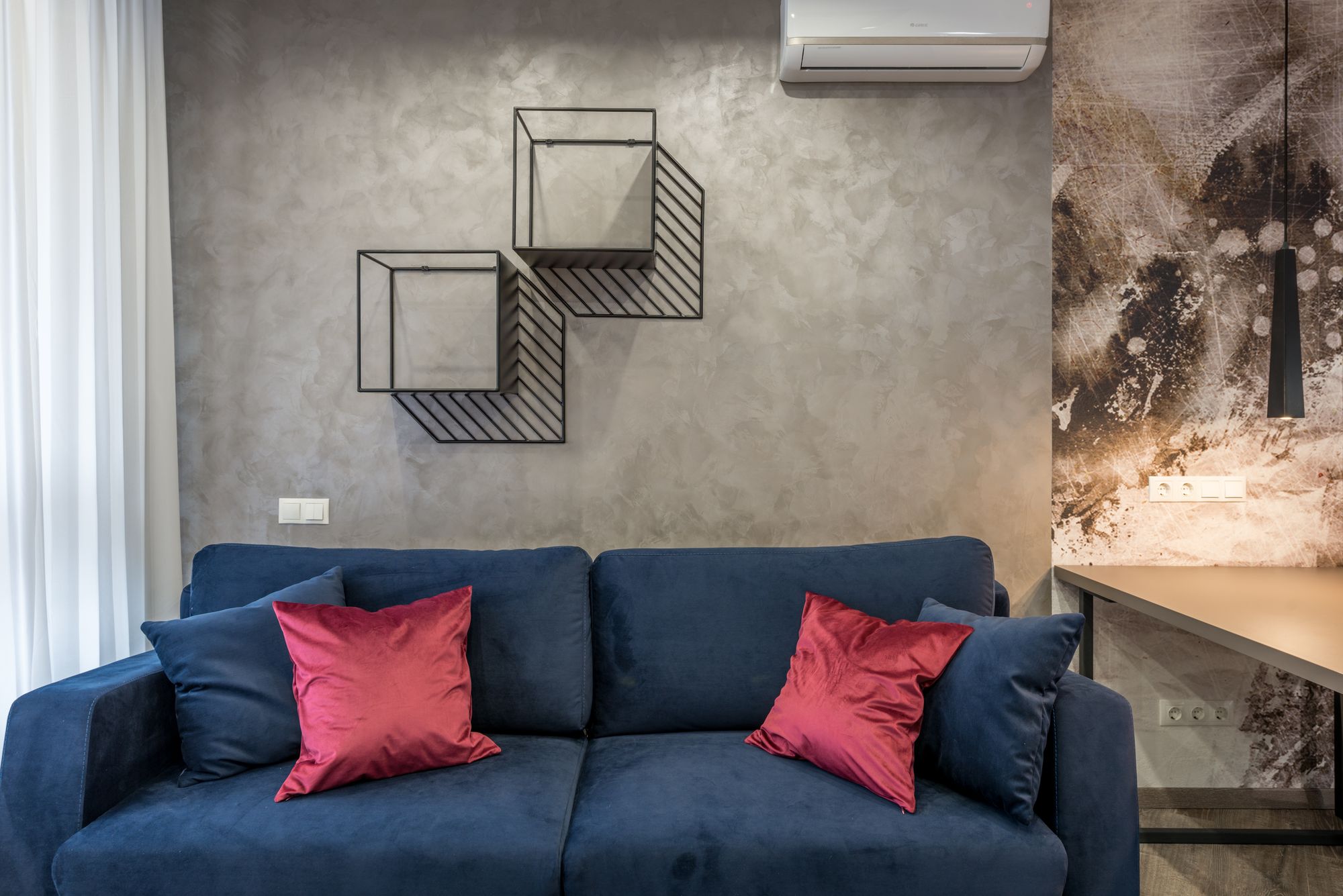
Cobalt is luminous, assertive and almost electric. Burgundy carries the depth of red wine, antique velvet and grand interiors reimagined for contemporary life. Together, they create a dramatic but remarkably sophisticated colour tension.
Consider cobalt walls behind a generous burgundy sofa, or a wine-coloured room punctuated by a striking blue armchair or artwork. The secret is to give each colour a different role. One defines the room; the other provides the unexpected note. Dark timber, lacquered surfaces and velvet lend the scheme additional depth.
Best suited to: Statement living rooms, entrance halls and intimate sitting rooms.
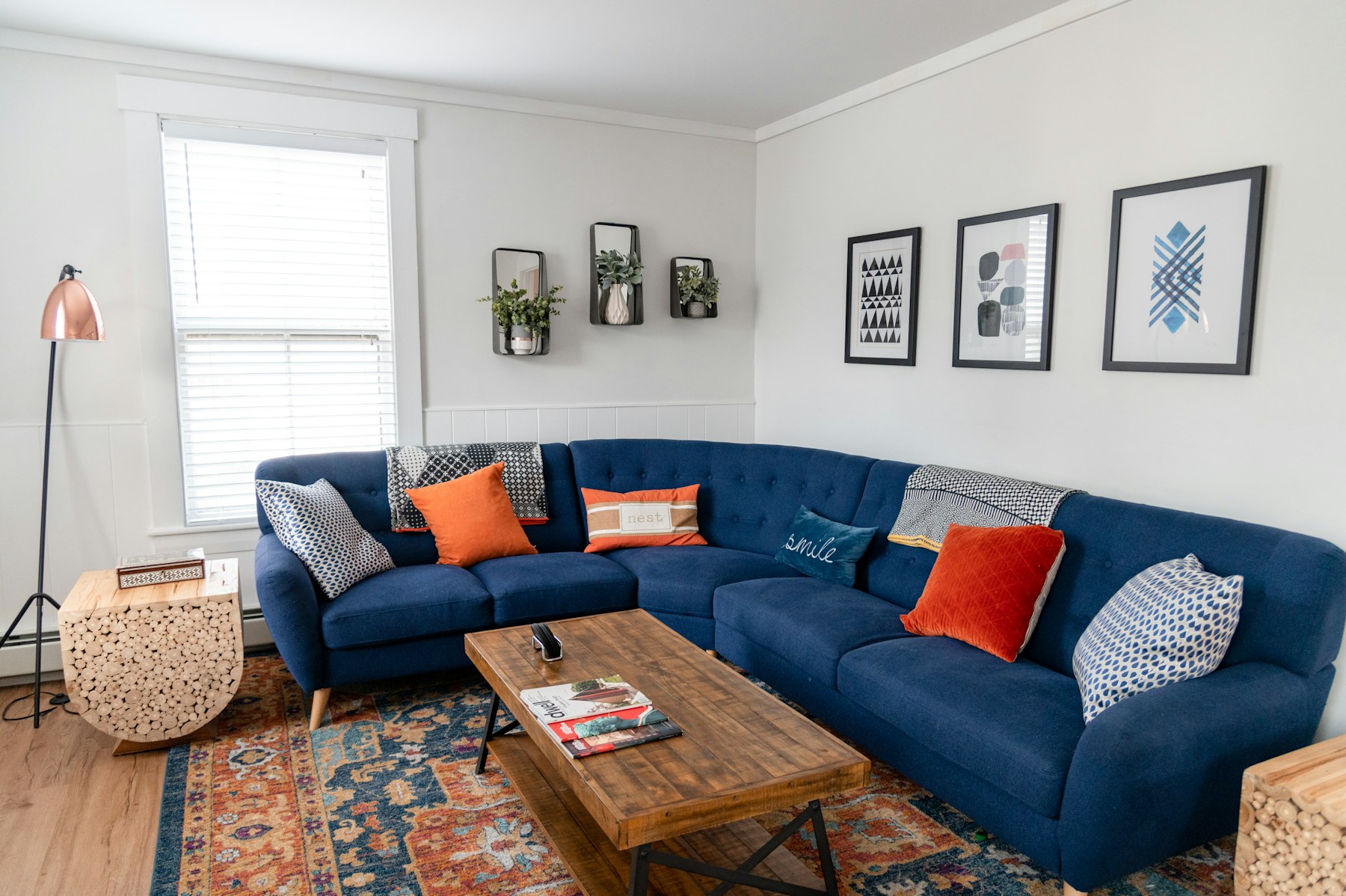
2. Powder Blue and Chocolate Brown: Quiet Sophistication
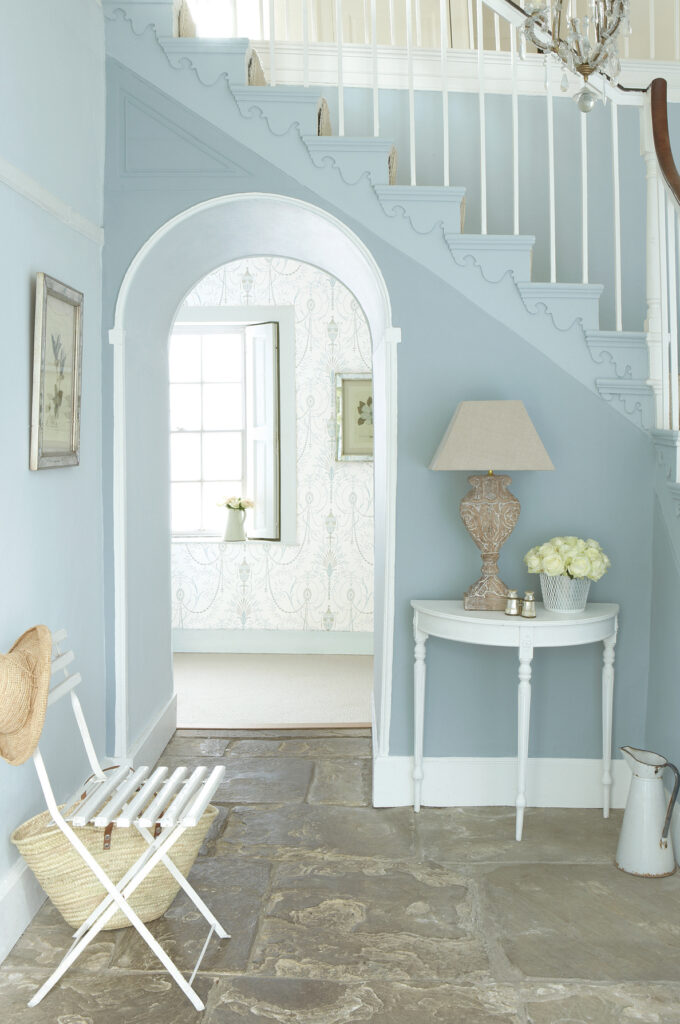
Soft, grey-toned powder blue meets the reassuring warmth of chocolate brown. The effect is understated rather than showy: a room that feels lived in rather than styled for a trend.
Picture a chocolate sofa against pale blue walls, desaturated blue textiles beside walnut furniture, or kitchen cabinets in a misty blue set against richly grained wood. Matte finishes, aged leather, bouclé and dark parquet contribute as much as the palette itself. Texture is the detail that makes it feel personal.
Best suited to: Bedrooms, studies and cosy living spaces.
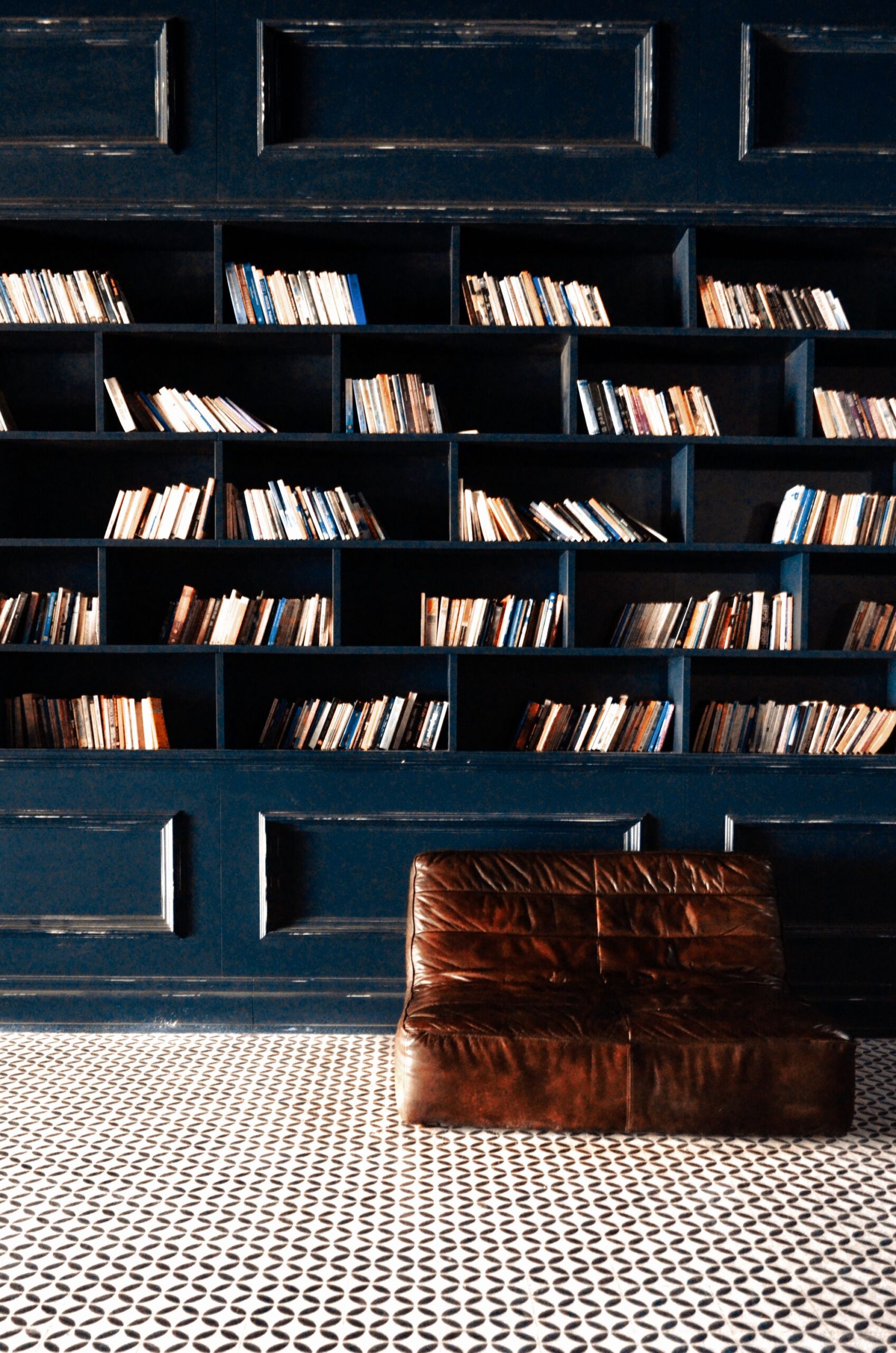
3. Navy Blue and Caramel: A Timeless Pairing Reconsidered
Navy has the depth of a dark neutral, yet retains a subtle luminosity. Caramel brings warmth, softness and an almost tailored elegance. Neither colour needs to demand attention.
Use navy on bespoke shelving, wall panelling or the walls of a study. Introduce caramel through a leather armchair, a carefully proportioned sofa or warm upholstery. A burnished brass lamp, an oatmeal rug and a natural stone surface are often enough to complete the composition. Navy gives the space definition; caramel makes it inviting.
Best suited to: Libraries, sophisticated living rooms and kitchens.
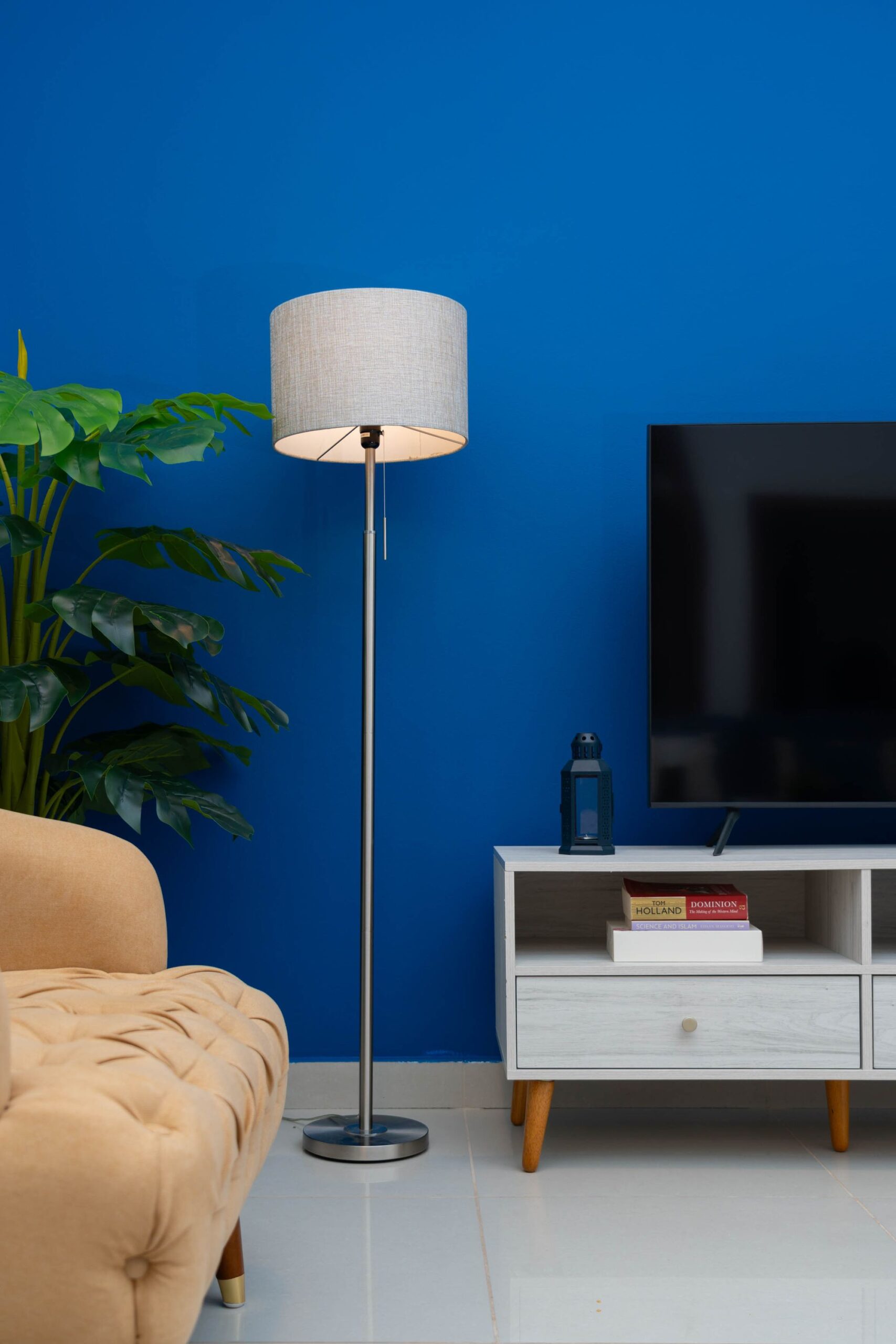
4. Petrol Blue and Olive Green: A Conversation with Nature
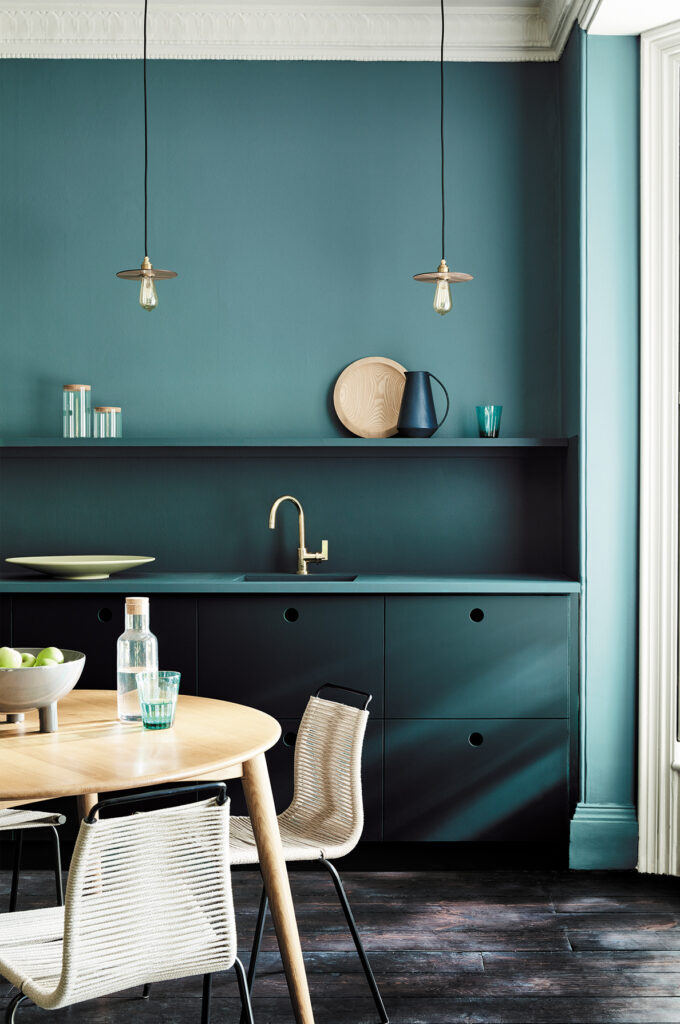
Some of the most compelling shades sit on the boundary between blue and green. Petrol blue shifts with the light, at times aquatic and at others almost mineral. Olive green is earthier and warmer. Together they create an enveloping, subtly layered interior.
Imagine petrol-coloured walls and olive velvet dining chairs, or a green sofa set against blue cabinetry and natural timber. Stone, linen and handmade ceramics ground the palette; satin brass can introduce a restrained glimmer. Like a landscape in which it is difficult to tell where green ends and blue begins.
Best suited to: Living rooms, dining rooms and bedrooms.
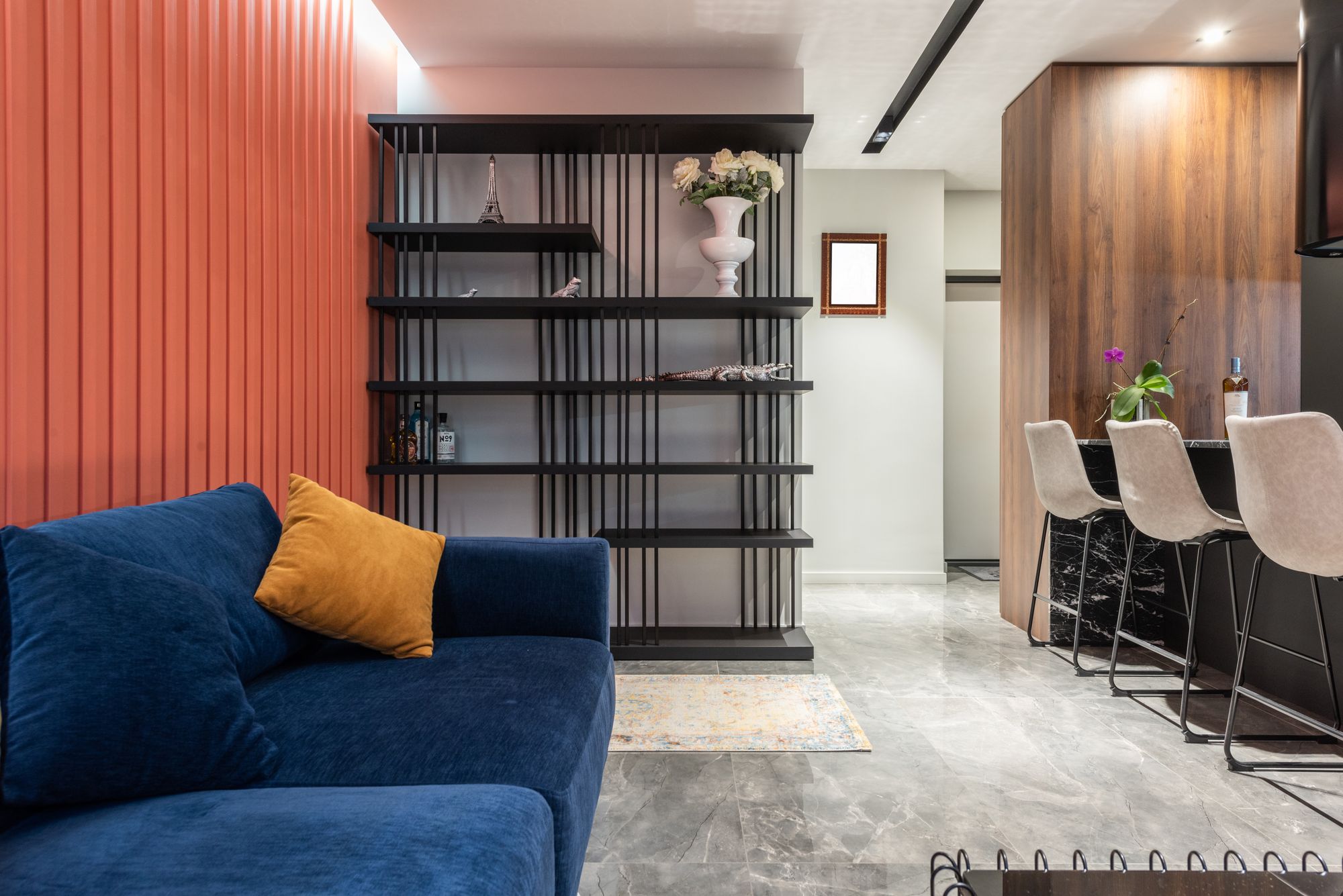
5. Midnight Blue and Terracotta: Mediterranean Warmth
Midnight blue evokes the moment when daylight fades and a room becomes more intimate. Terracotta belongs to the earth: plaster, pottery, sun-warmed surfaces and Mediterranean architecture. These apparently opposing sensibilities work beautifully together.
A midnight-blue wall can frame a rust-coloured sofa or a painting in earthy tones. In a dining room, deep blue might meet terracotta flooring, timber and contemporary seating. Choose dusty brick, cinnamon or burnt-clay shades rather than an overly bright orange. Rough linen and textured plaster add authenticity.
Best suited to: Mediterranean homes, tactile living rooms and restful bedrooms.
6. Dusty Blue and Butter Yellow: An Exercise in Lightness
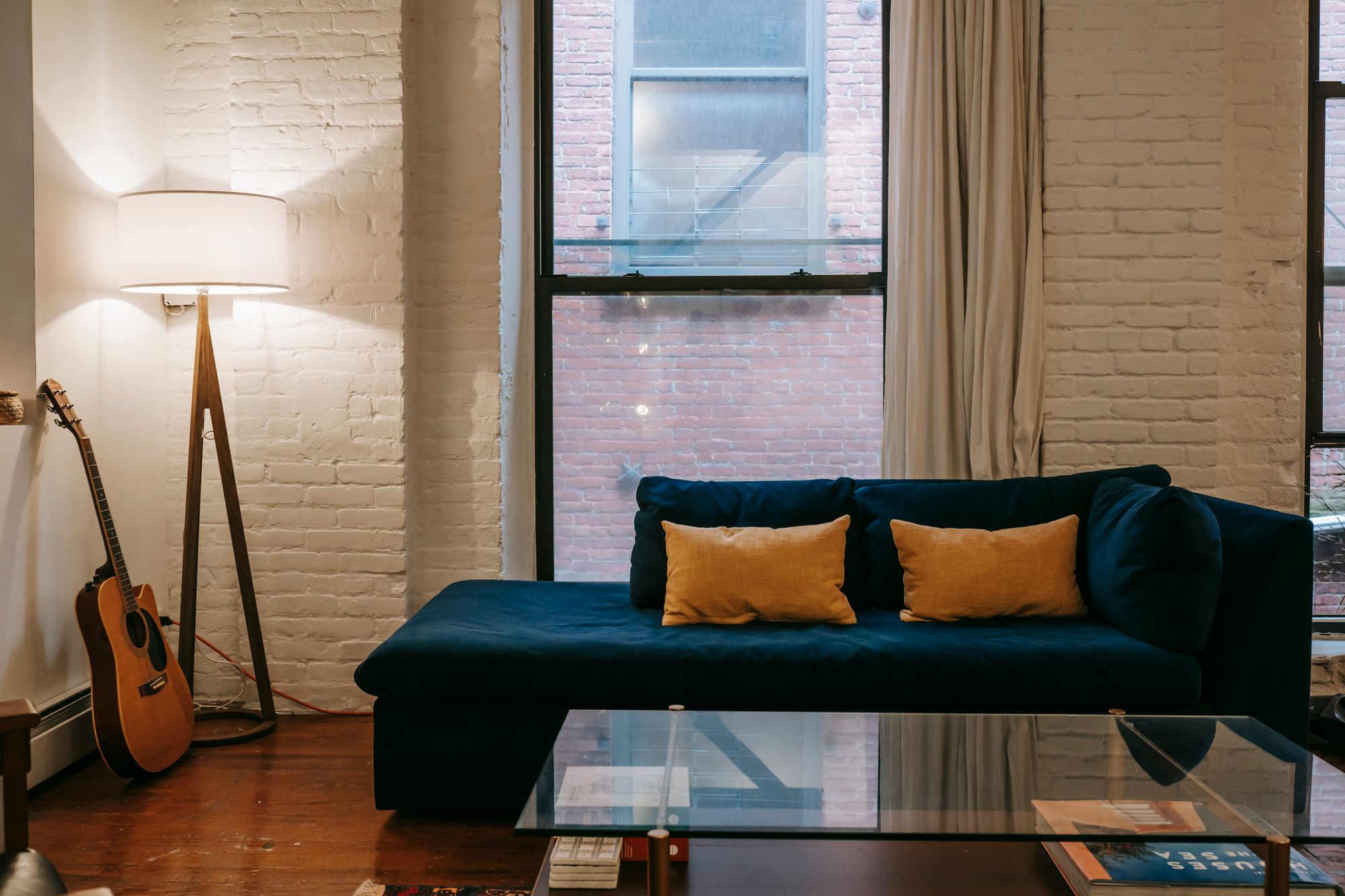
Dusty blue, often known in Italian interiors as carta da zucchero, has a soft grey undertone that adds depth without heaviness. Paired with butter yellow, it becomes unexpectedly fresh: gentle, but never childish.
Think of dusty-blue kitchen cabinets, cream walls and a butter-yellow chair, or a pale blue sofa beside a sculptural yellow lamp. This palette also works in small gestures: a rug, a ceramic piece or a single upholstered seat. Satin steel, pale oak and stone bring a welcome sense of precision. For more inspiration, explore our English-language interiors features.
Best suited to: Light-filled kitchens, bedrooms and relaxed living rooms.
7. Electric Blue and Blush Pink: A New Kind of Romance
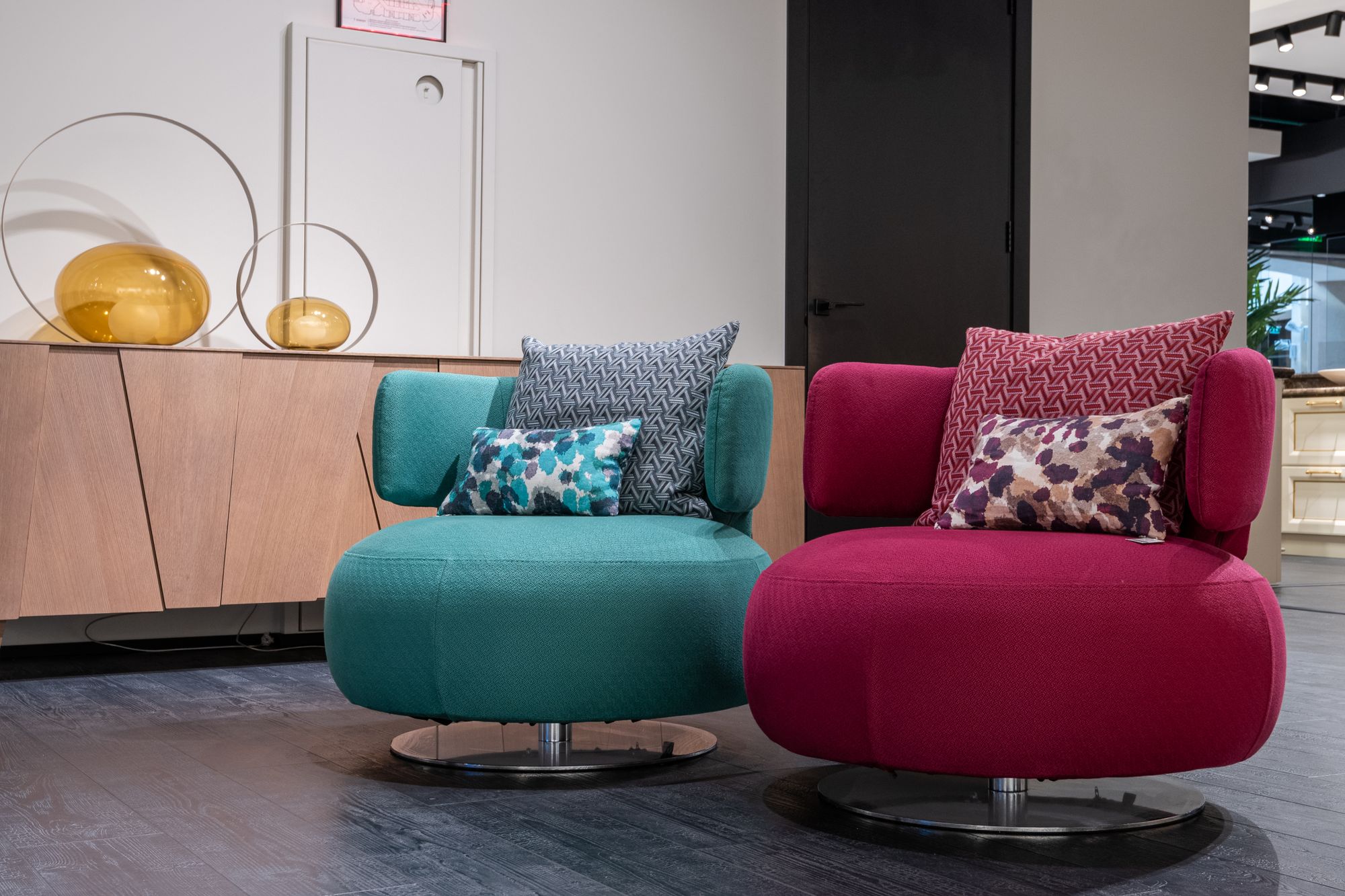
Blush pink is often assumed to be delicate; electric blue refuses to be quiet. Brought together, they prove that romance in interiors can have an edge.
A vivid blue chair against powder-pink walls; a blush rug in a blue room; an electric-blue lamp resting on a pink console. The key is to resist excessive decoration. Clean architectural lines, chrome and expressive contemporary furniture help keep the pairing sharp. Pink softens the blue, while blue prevents the pink from becoming predictable.
Best suited to: Creative living spaces, contemporary bedrooms and reading corners.
8. Denim Blue and Sand: Effortlessly Natural
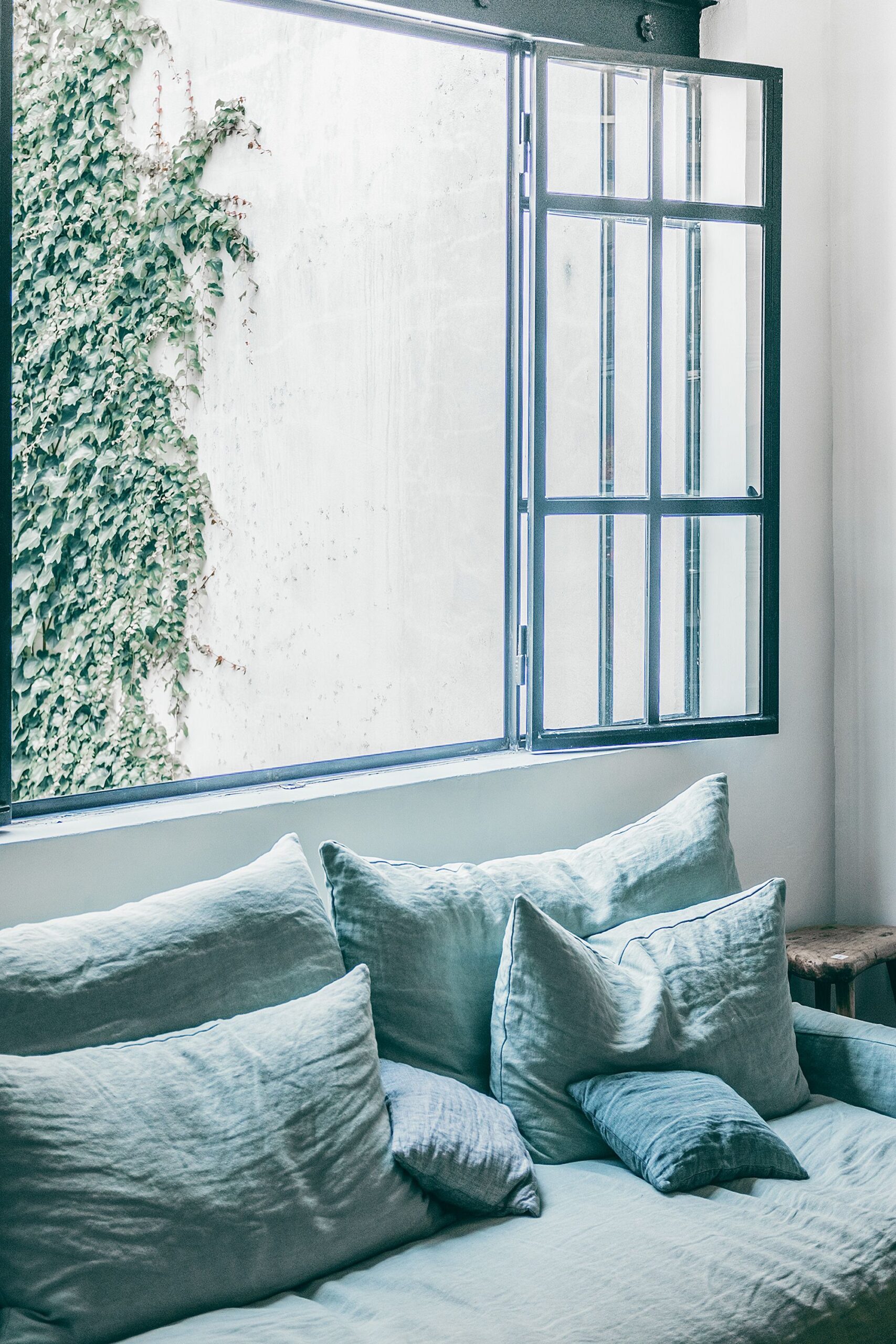
Some homes appear to breathe. Light filters through linen curtains and settles on matte finishes, gently worn fabrics and unpretentious furniture. Denim blue, more relaxed than navy and quieter than cobalt, is a natural companion to sand.
A denim sofa against sand-coloured walls, pale wooden tables and a woven rug; or washed-blue bedding, a linen headboard and oatmeal textiles. Cotton, oak and unglazed ceramics reinforce an atmosphere that feels easy yet considered. It is a kind of effortless elegance that does not belong to any single season.
Best suited to: Bright living rooms, bedrooms and coastal homes.
9. Indigo Blue and Cream: The Beauty of Depth
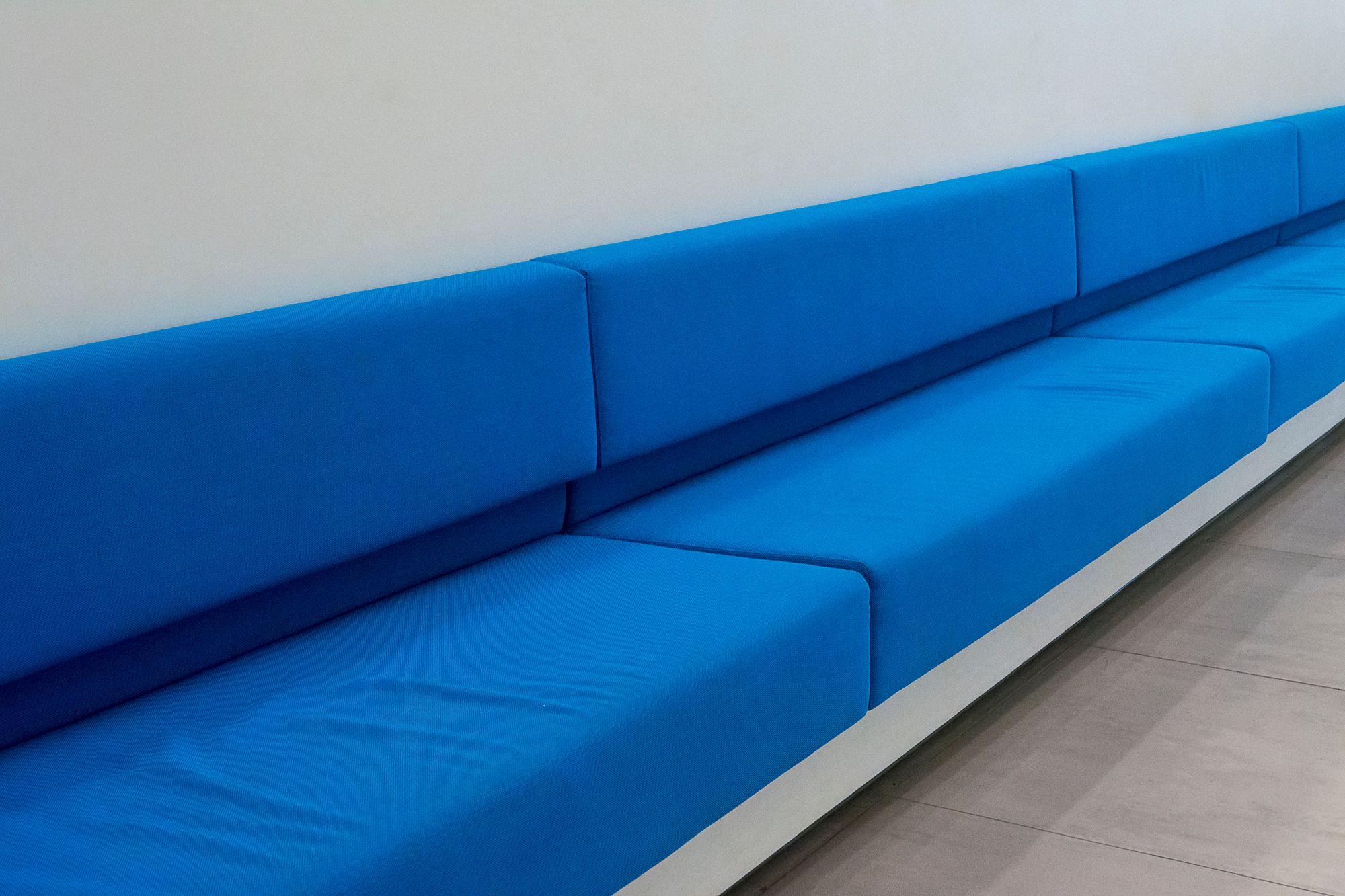
Indigo has an elusive quality: a deep blue with a violet undertone that shifts according to the light. Cream gives it room to breathe and provides a welcome sense of warmth.
Indigo dining-room walls can be balanced with a pale table and cream upholstery. An ivory sofa comes into focus against blue wall panelling; in a bedroom, cream linen and opaline glass soften an indigo backdrop. The difference from conventional blue and white is subtle but essential: cream complements the depth of indigo rather than creating a stark contrast.
Best suited to: Elegant bedrooms, dining rooms and panelled sitting rooms.
How to Pair Blue with Other Colours at Home
There is no single correct way to decorate with blue. Cobalt and burgundy or petrol blue and olive are expressive choices; powder blue and chocolate, navy and caramel, or indigo and cream feel more restrained. The palette, however, is only the beginning.
See the Colour in Your Own Light
A blue that looks beautiful in a photograph may feel completely different on a north-facing wall. Before committing to paint or upholstery, test generous samples at different times of day and place them beside the flooring, furniture and fabrics already in the room.
Give Each Shade a Distinct Role
One colour might form the background while the other becomes the accent. A burgundy armchair can anchor a blue sitting room; a denim sofa can transform a sand-coloured scheme. Proportion matters just as much as the colours themselves.
Let Materials Do Some of the Work
Midnight blue on a matte wall is not the same as midnight blue on glossy lacquer. Burgundy velvet behaves differently from burgundy ceramic. Before adding a third colour, consider changing the texture instead.
Choose Character over Perfect Coordination
The most memorable homes have space for an inherited table, an oversized lamp or an unexpected chair. Harmony does not require everything to match. Sometimes it emerges from allowing very different objects to coexist.
What Colours Go with Blue? Frequently Asked Questions
What is the most elegant colour to pair with blue?
Navy blue and caramel offer a warm, tailored look, while indigo and cream create something quieter and more luminous. Both are versatile combinations for sophisticated interiors.
How can I make a blue room feel warmer?
Try chocolate brown, caramel or terracotta. Timber, leather, linen and layered warm lighting can also balance the cooler qualities of blue.
Can blue and green work together?
Absolutely. Petrol blue with olive green can be particularly beautiful. Vary the textures and tonal depth to keep the room from feeling flat.
Which colours work with blue in a small room?
Dusty blue and butter yellow, denim and sand, or powder blue with light neutrals are attractive options. Dark blue can also work in a small room when the lighting and proportions are carefully considered.
How do you make a blue interior feel contemporary?
Consider a less predictable pairing, such as cobalt and burgundy or electric blue and blush pink, then introduce clean architectural forms, satin metals and sculptural furniture.
Blue, and the Freedom to Choose Differently
Perhaps the most interesting way to live with blue is to forget, for a moment, the combinations we have always been told are correct. Allow burgundy to meet cobalt. Let chocolate brown give a misty blue more warmth. Find a place for pale pink beside a nearly electric shade.
Because colours, like the objects we bring into our homes, are ultimately about affinities. Some are immediately apparent. Others take time to discover. And it is often the unexpected ones that make an interior impossible to forget.