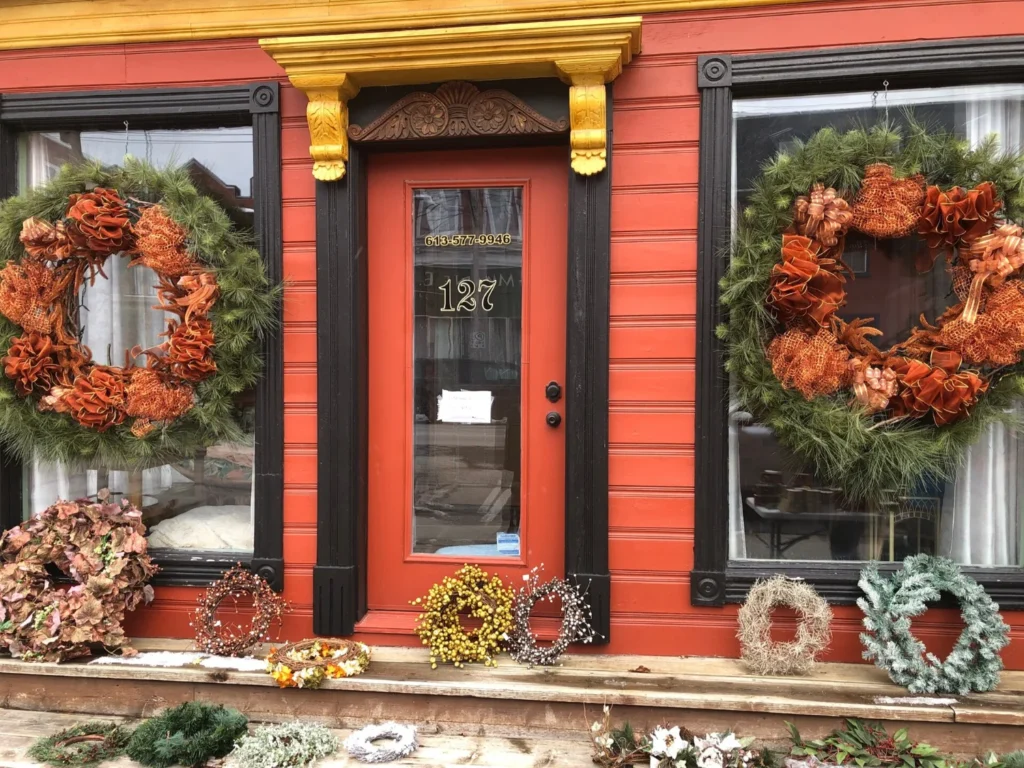
Amaryllis, hellebores, cyclamen and real potted conifers: the Christmas plants beyond the poinsettia, with proper care for light, water and temperature and ideas for using them as part of the interior.
The poinsettia is no longer the only answer. Amaryllis, hellebores, cyclamen and real potted conifers turn festive decoration into something that grows, changes and stays in the house long after Epiphany.
Christmas plants are going through the same shift as the rest of festive decoration: from throwaway object to piece of furniture chosen with care. For decades the season had a single botanical star, the supermarket poinsettia, bought in December and abandoned in January. Today interior designers look elsewhere: to the sculptural bulb of the amaryllis, the white of the hellebore, the geometry of a real fir in a terracotta pot.
Our view is that a living plant says more about a home than any ornament. It demands attention, forces a relationship with the light and temperature of each room, and for that very reason gives back a way of living that is less theatrical and more genuine. But it has to be chosen and cared for properly: each species in this guide has precise needs, and the difference between an amaryllis that blooms for weeks and one that collapses in three days is almost always a matter of position.
Which Christmas plants should you choose besides the poinsettia?
The most interesting are amaryllis, hellebore, cyclamen, a real fir in a pot, Goldcrest cypress, mistletoe and holly. Their characters differ widely: some are houseplants to keep cool, others are outdoor plants to bring in for just a few days, and others still are cut stems to use as decorative material. The table sums up the essential conditions for each.
| Plant | Light | Water | Temperature |
|---|---|---|---|
| Amaryllis (Hippeastrum) | Bright, filtered | Sparingly until leaves appear, then regularly, never left standing in the saucer | Around 21°C to start, 15 to 18°C in flower |
| Cyclamen (Cyclamen persicum) | Bright, no direct sun | From below, by soaking | Cool, 13 to 18°C, away from radiators |
| Hellebore (Helleborus niger) | Light shade | Regularly in pots, very free-draining compost | Sheltered outdoors, cool |
| Real potted fir | Bright | Keep the root ball moist | Cool room, indoors for twelve days at most |
| Goldcrest cypress | Very bright, a few hours of sun | When the surface is dry, never letting it dry out completely | Cool, 13 to 18°C |
How do you get an amaryllis to flower at Christmas?
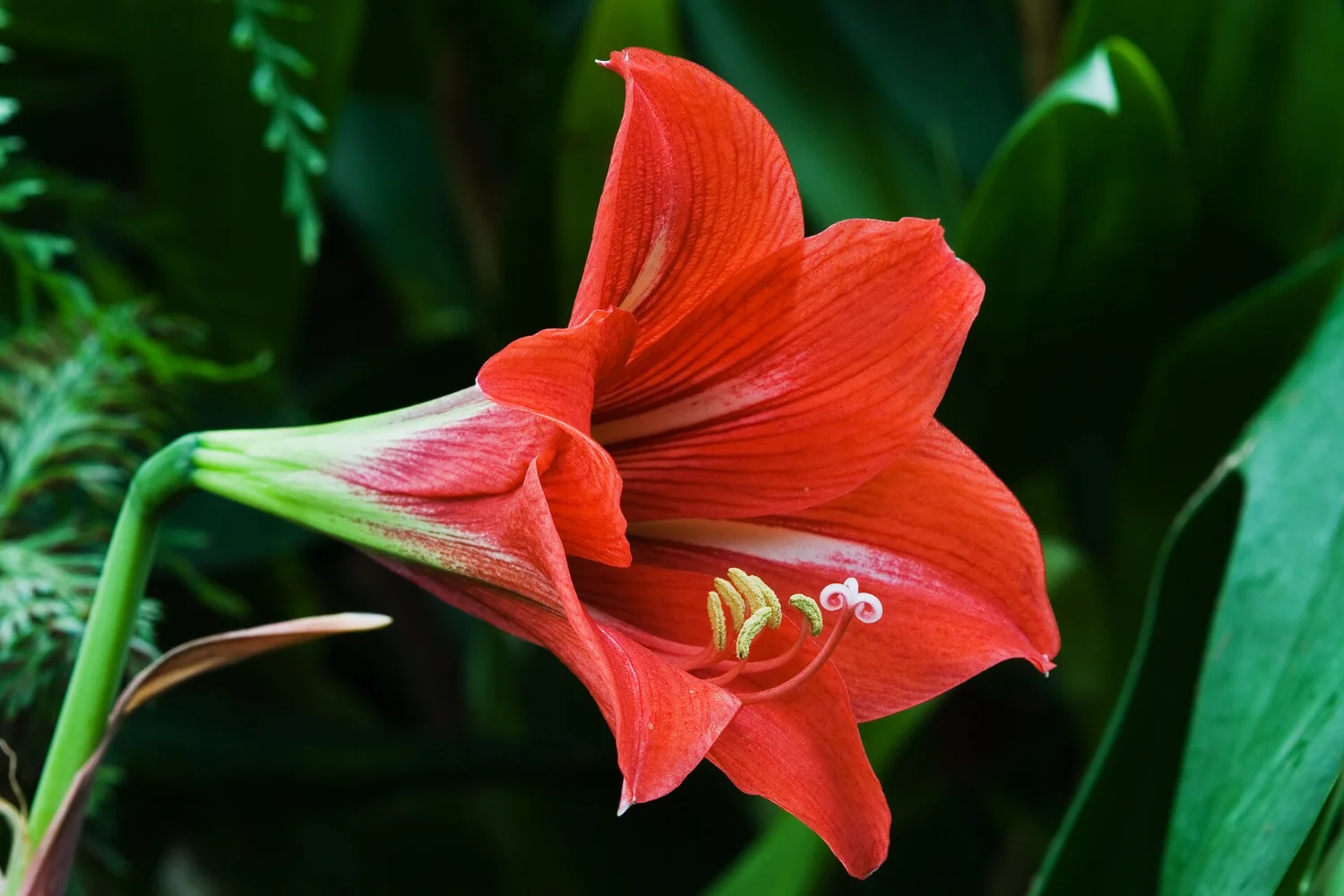
Plant the bulb six to eight weeks before you want it in bloom, so between late October and early November for it to be ready for the holidays. The pot should be only slightly larger than the bulb, which is left about two thirds above the compost: it is this exposed part that gives the plant its sculptural presence. To start, it needs a temperature of around 21°C and a very bright position with filtered light.
Water sparingly until the leaves appear, then regularly, never leaving water in the saucer. Turn the pot often, because the stem tends to lean towards the window, and support large-flowered varieties with a discreet stake. Once the flowers open, move the plant somewhere cooler, between 15 and 18°C, and the display will last much longer. Afterwards, cut the stem back to the base but keep the leaves, which feed the bulb for the following year.
As a decorative element, the amaryllis is at its best alone or in a series. Three identical bulbs in three matching pots on a console, or a single white stem in a glass cylinder on the living room table, have the strength of a floral arrangement without its fragility. The exposed bulb, dressed in moss or left bare, is part of the design.
How do you care for cyclamen and hellebores in winter?
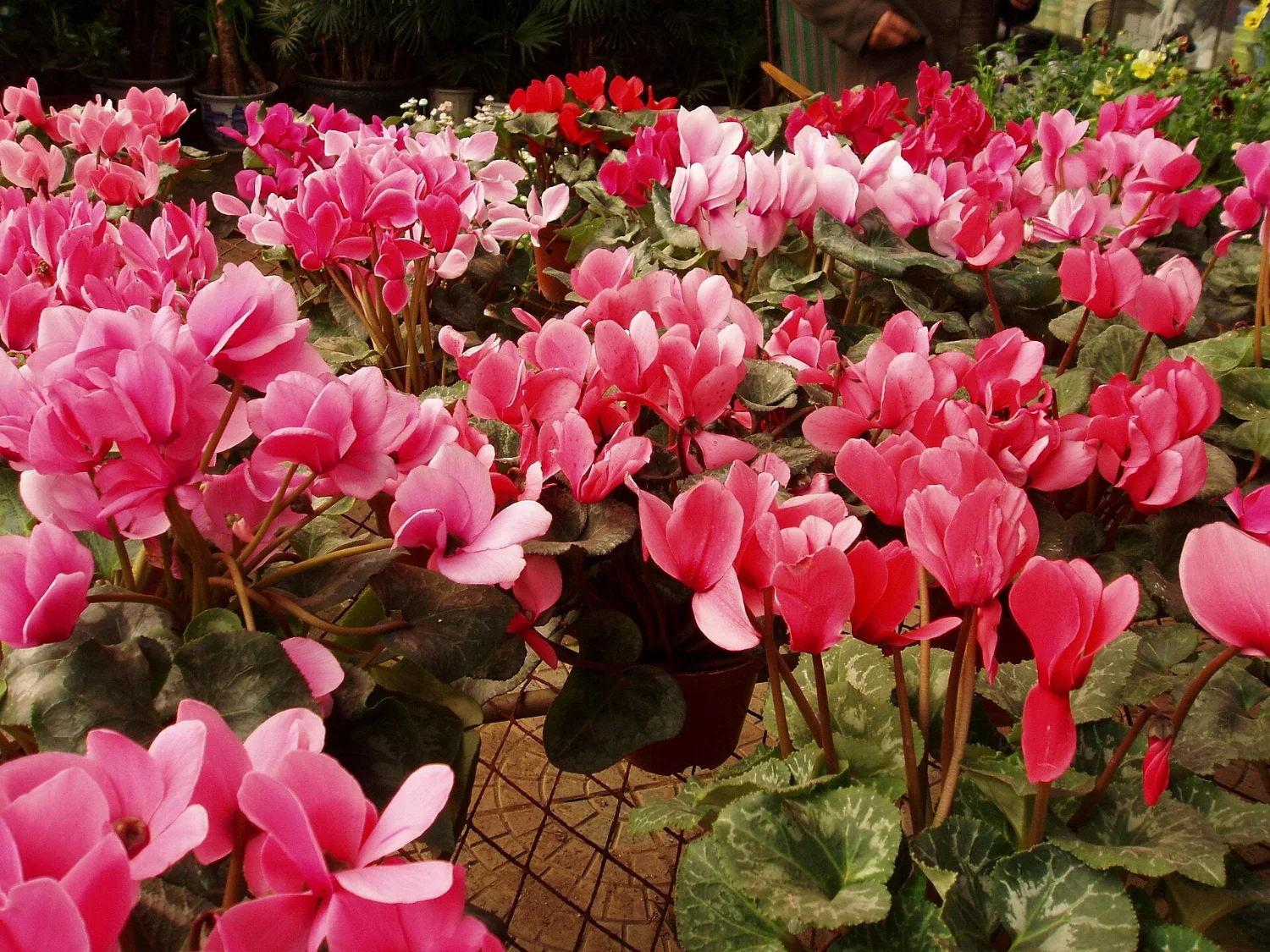
Cyclamen want cool and light, hellebores want cool and light shade: both suffer in the dry heat of centrally heated homes. The florist’s cyclamen, Cyclamen persicum, does best between 13 and 18°C, in a bright room without direct sun except early in the morning, and away from radiators and heat sources that shorten its life. Water it from below, standing the pot in a bowl of water for about ten minutes and then letting it drain, because the tuber sits partly above the compost and rots if watered directly.
Remove spent flowers and yellowing leaves by twisting the stem and pulling it sharply from the base. A healthy cyclamen flowers for weeks and, grouped, works as a measured patch of colour: best in a single shade, white or deep red, in low pots of matt ceramic.
The hellebore, known as the Christmas rose, is an outdoor plant that flowers in the festive season, with white blooms. It grows in a cool, sheltered spot in light shade, in very free-draining compost, because it dislikes waterlogging and cold, damp soil. In a pot, choose a container only slightly larger than the one it came in and, in winter, keep it under the eaves or at the foot of a wall. Bring it indoors for just a few days, in the coolest room, as a temporary guest on the festive table.
Potted fir and cypress: how do you keep them indoors without stress?
A real fir in a pot should come indoors as late as possible and stay inside for twelve days at most, in a cool room. That is the advice of the Royal Horticultural Society, which also recommends keeping it away from fires and radiators, the main cause of moisture loss and needle drop; if the tree looks unhappy, move it back outside sooner. After the holidays it can be planted in the garden or stay in its pot, moved up a size every year, kept in the sun and well watered.
If space is tight, or you want a tree that stays indoors, consider the Goldcrest cypress, Cupressus macrocarpa ‘Goldcrest’, with its lemon-scented, yellow-green foliage. It needs plenty of light, ideally a few hours of direct sun a day, and cool temperatures between 13 and 18°C. Water thoroughly when the surface of the compost is dry, never letting it dry out completely, and protect it from the dry air of central heating. On a desk, or in a pair either side of a door, it has the elegance of Nordic topiary.
Fir and cypress both call for a pot that matches them: raw terracotta, wood, natural fibre baskets or a burnished metal container. It is the same material register as Scandinavian style, where the living plant replaces the ornament and decoration comes down to a few warm lights. To choose your decorations with the same rigour, see our guide to the best Christmas decoration brands.
How do you use mistletoe, holly and other Christmas plants in an interior?
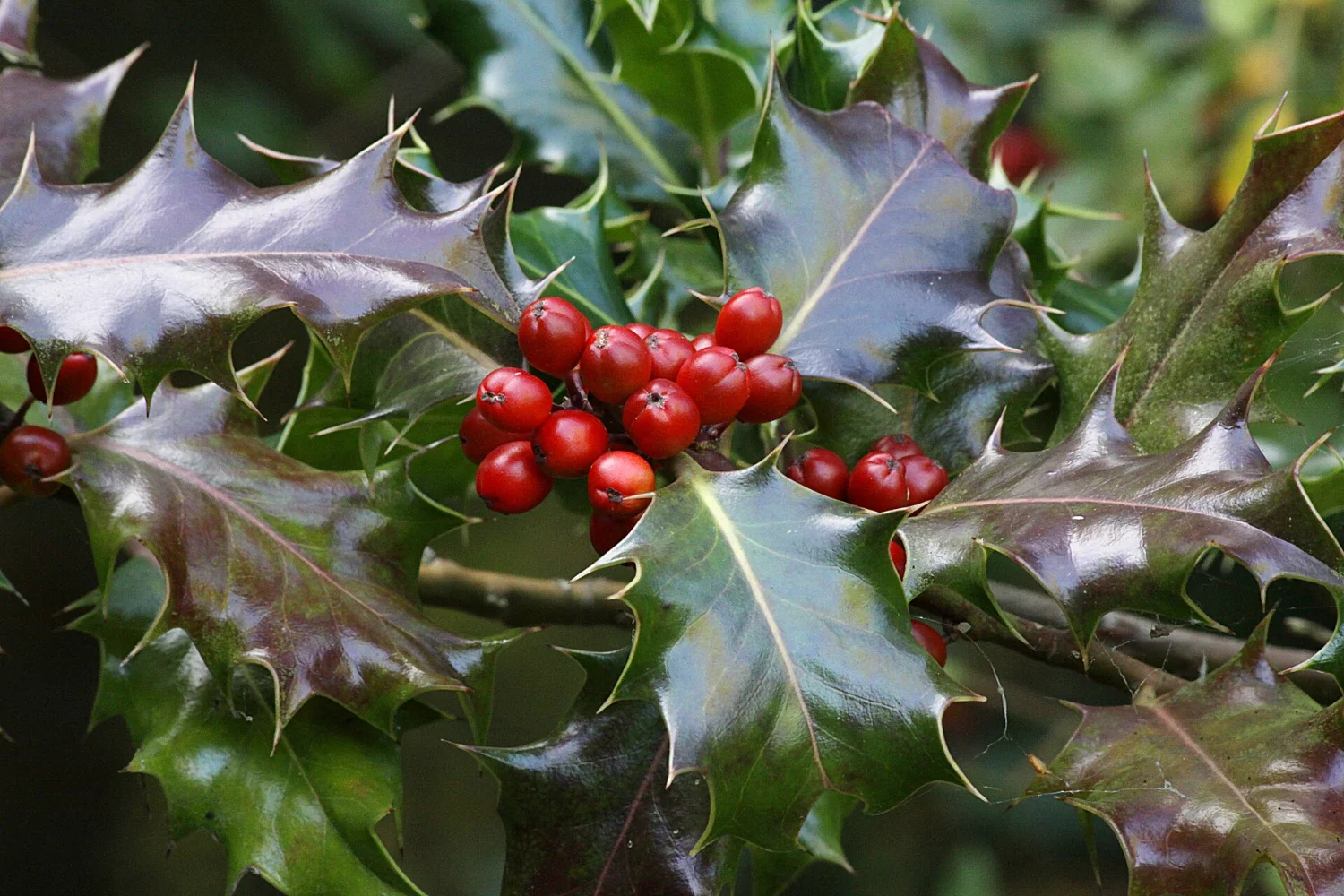
Mistletoe and holly are used as cut stems, as material to compose rather than plants to grow indoors. Mistletoe, Viscum album, is a semi-parasitic plant that grows on the branches of trees: hung above a door in a single bunch, tied with linen ribbon, it has more impact than ten scattered decorations. Holly, whose red berries only appear on female plants, works in tall glass vases or low bowls alongside fir branches. Always buy cultivated stems and plants: in some Italian regions, such as Emilia-Romagna, picking wild holly is banned under laws protecting native flora.
What holds it all together is the logic of a well-designed centrepiece: few species, one material for the containers, varied heights that never block the view across the table. Our ideas for a Christmas centrepiece start precisely from branches, berries and low candles. In a contemporary Japanese home, or an interior inspired by Japandi style, a single branch in a dark ceramic vase is enough to tell the season.
Which Christmas plants are toxic to cats and dogs?
Amaryllis, mistletoe, holly, cyclamen and hellebore are all toxic to cats and dogs, with different levels of risk. Amaryllis contains alkaloids concentrated mainly in the bulb and can cause vomiting, diarrhoea, lethargy and tremors. Mistletoe is considered highly dangerous, particularly its berries, while holly leaves and berries are less toxic but still cause vomiting and diarrhoea. Cyclamen causes gastrointestinal upset; hellebore contains cardiac glycosides and is flagged as a problem for cats, dogs and horses.
The firs used as Christmas trees are not considered toxic, although the needles can irritate the stomach and the water in the stand may contain additives or bacteria. The poinsettia, too, has a worse reputation than it deserves: its sap irritates the mouth and stomach, without the serious effects often attributed to it. Our advice is simple: with pets in the house, keep mistletoe and amaryllis bulbs out of reach, and if anything is swallowed, call the vet straight away.
Frequently asked questions about Christmas plants
What plants make good Christmas gifts instead of a poinsettia?
An amaryllis already in bud, a white hellebore in a pot, a cyclamen or a small Goldcrest cypress. They all last beyond the holidays and sit well in a carefully designed interior.
When should you plant an amaryllis to flower at Christmas?
Between late October and early November, because the bulb flowers six to eight weeks after planting. It needs a bright position and a temperature of around 21°C.
How long can a real potted Christmas tree stay indoors?
Twelve days at most, in a cool room away from radiators and the fireplace. After that it should go back outside.
Why does cyclamen wilt indoors?
Almost always because of heat or watering from above. Cyclamen likes 13 to 18°C, light without direct sun and watering from below.
Is mistletoe poisonous to pets?
Yes, it is toxic to cats and dogs, especially the berries. Hang it high, out of reach, and call the vet if any is swallowed.