Gothic architecture is one of the highest and most recognizable languages in the history of European architecture. Born in 12th-century France, it emerged as an evolution beyond Romanesque architecture and introduced a new way of building space: more vertical, brighter, more articulated, less dependent on compact masonry mass, and more capable of turning light into …
Gothic architecture is one of the highest and most recognizable languages in the history of European architecture. Born in 12th-century France, it emerged as an evolution beyond Romanesque architecture and introduced a new way of building space: more vertical, brighter, more articulated, less dependent on compact masonry mass, and more capable of turning light into an active part of design. It is not only a medieval style known for spectacular cathedrals and large stained-glass windows. It is a true structural, symbolic, and urban revolution, which left decisive works in cities such as Paris, Chartres, Amiens, Reims, Cologne, Milan, Siena, and Orvieto.
When talking about Gothic architecture, the risk is to stop at its most familiar image: spires, rose windows, and scenic effects. In reality, Gothic is much more than that. It is a system that redefines the relationship between structure, weight, height, and light. This is why it continues to be studied not only by art historians, but also by architects and designers: it shows how technical innovation can become spatial experience and collective identity.
What is Gothic architecture?
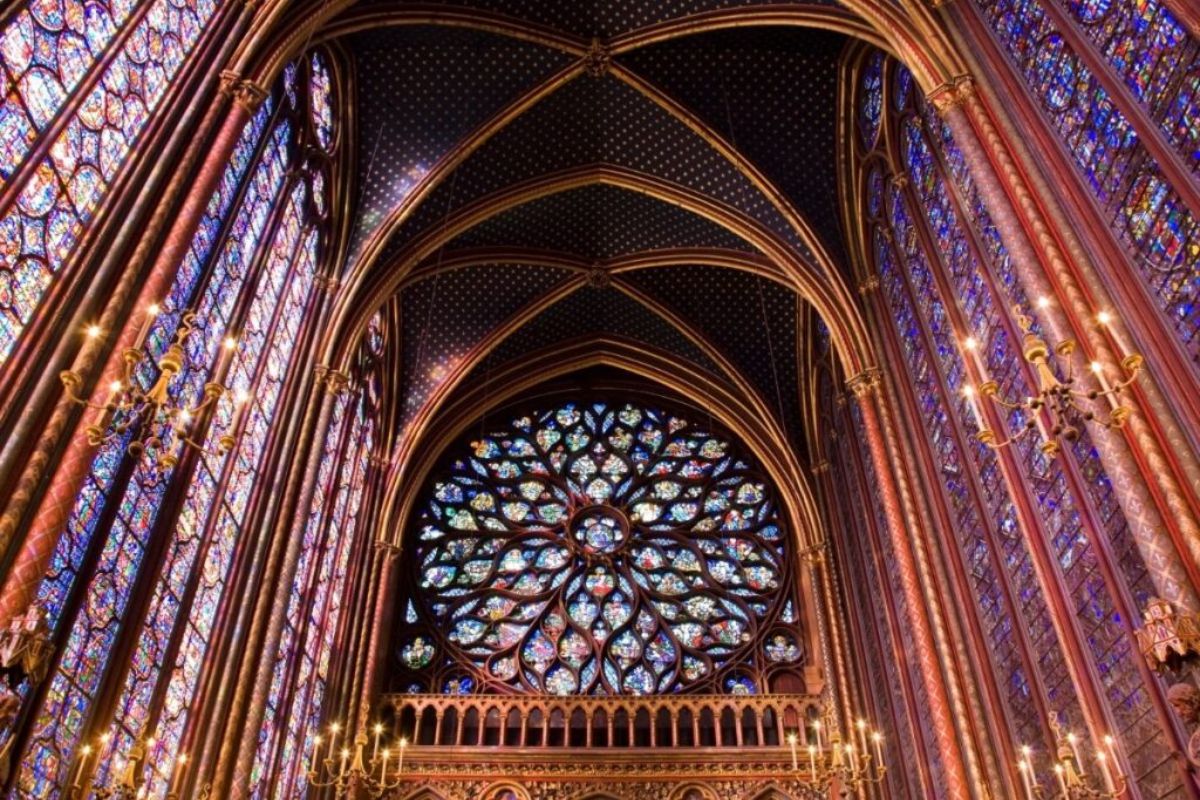
By definition, Gothic architecture is the architectural language that developed in Europe from the mid-12th century and, with different timelines depending on the geographical area, continued until the 15th century and in some cases into the 16th. The term itself deserves attention: “Gothic” was not born as a neutral word, but spread during the Renaissance with a negative nuance, in contrast to the admiration for the classical world. Today, of course, this meaning has been overcome, and Gothic is recognized as one of the most inventive periods in European architecture.
Its specificity does not lie only in its external appearance, but in the way it organizes construction. With Gothic architecture, the wall is no longer a continuous mass dominating space. It becomes part of a more dynamic organism, where structural forces are distributed differently and surfaces can open up to light. This is where Gothic stops being a set of formal signs and becomes a new idea of architecture.
Where Gothic architecture was born
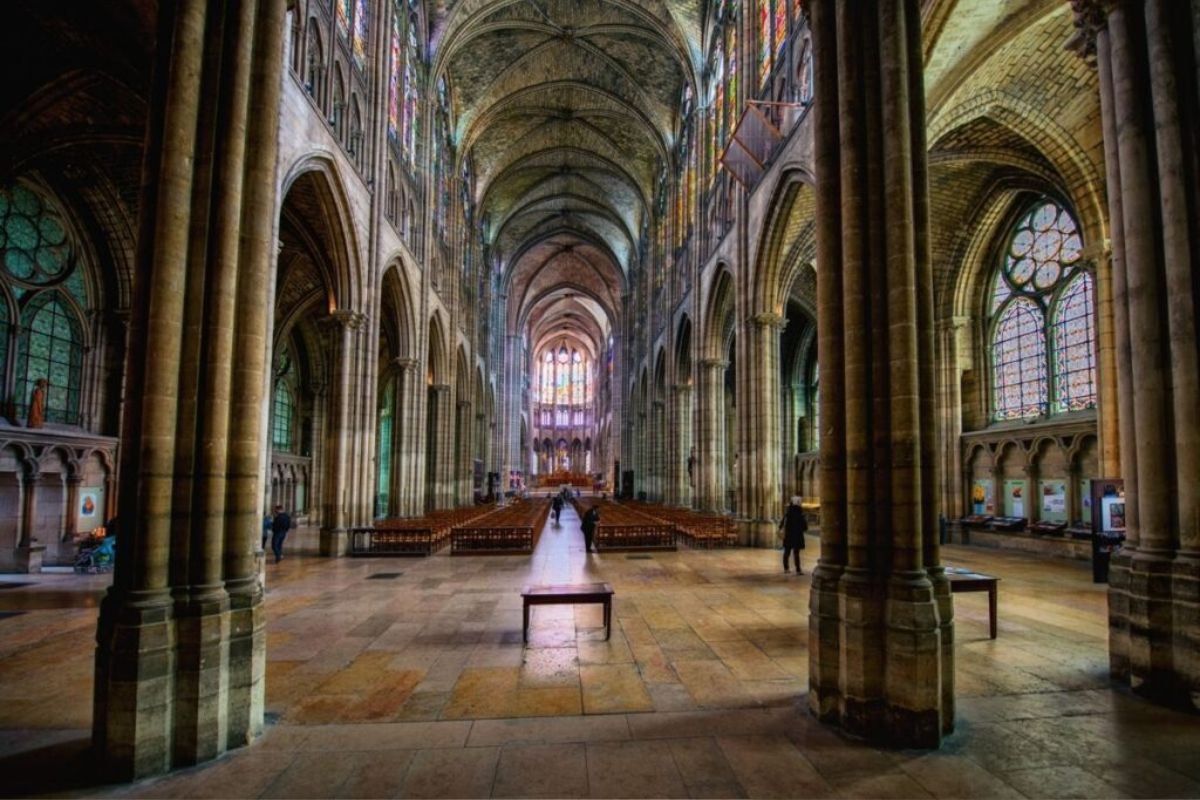
The decisive place for understanding the birth of Gothic architecture is the Île-de-France region. In particular, the Abbey of Saint-Denis, near Paris, is considered one of the first buildings where the new language appeared in a coherent way. Its historical importance lies precisely in marking the transition between the Romanesque world and a new idea of sacred space: lighter, brighter, and more structurally evolved.
From there, Gothic architecture spread throughout France and then across the rest of Europe. In France, it found its most paradigmatic expressions in the great cathedrals. In Germany, it took on impressive monumental and urban power. In England and Spain, it was reinterpreted according to local traditions. In Italy, it was received in a more mediated form, without fully replicating the French model. This is an important point: there is not just one Gothic, but a family of variants that share common technical and spatial principles.
Characteristics of Gothic architecture
Pointed arch
One of the best-known elements of Gothic architecture is the pointed arch, also known as the ogival arch. It is not merely an aesthetic choice. Its use allows a different distribution of structural thrusts compared to the round arch and adapts more easily to bays of different widths and heights. It is one of the devices that made the new vertical thrust of Gothic architecture possible.
Ribbed vault
The ribbed vault is another decisive innovation. Stone ribs identify and guide the load lines, allowing greater lightness and precision in the construction of the roof. This element clearly shows why Gothic should be read first as a technical achievement, even before being understood as a visual style.
Flying buttress
The flying buttress transfers part of the thrust of the vaults outward. This makes it possible to lighten the wall and open wider surfaces. It is one of the elements that explains why the great Gothic cathedrals were able to reach a verticality and luminosity that would have been unthinkable for much Romanesque architecture.
Stained-glass windows, rose windows, and light
The most visible consequence of this structural system is the increase in glazed surfaces. In Gothic architecture, light is not a secondary effect, but a true design material. Large stained-glass windows, tracery, and rose windows transform the interior into a space where structure, iconography, and perception work together. This is also why Gothic has had such a strong impact on the Western imagination.
Verticality and the perception of space
Verticality is probably the most immediate perceptual feature of Gothic architecture, but reading it only as spectacle would be reductive. In Gothic architecture, height is the result of precise structural reasoning and of a symbolic vision that directs the gaze and builds a different experience of sacred space. In other words, Gothic does not simply display power: it organizes an idea of elevation.
Famous examples of Gothic architecture
Notre-Dame de Paris
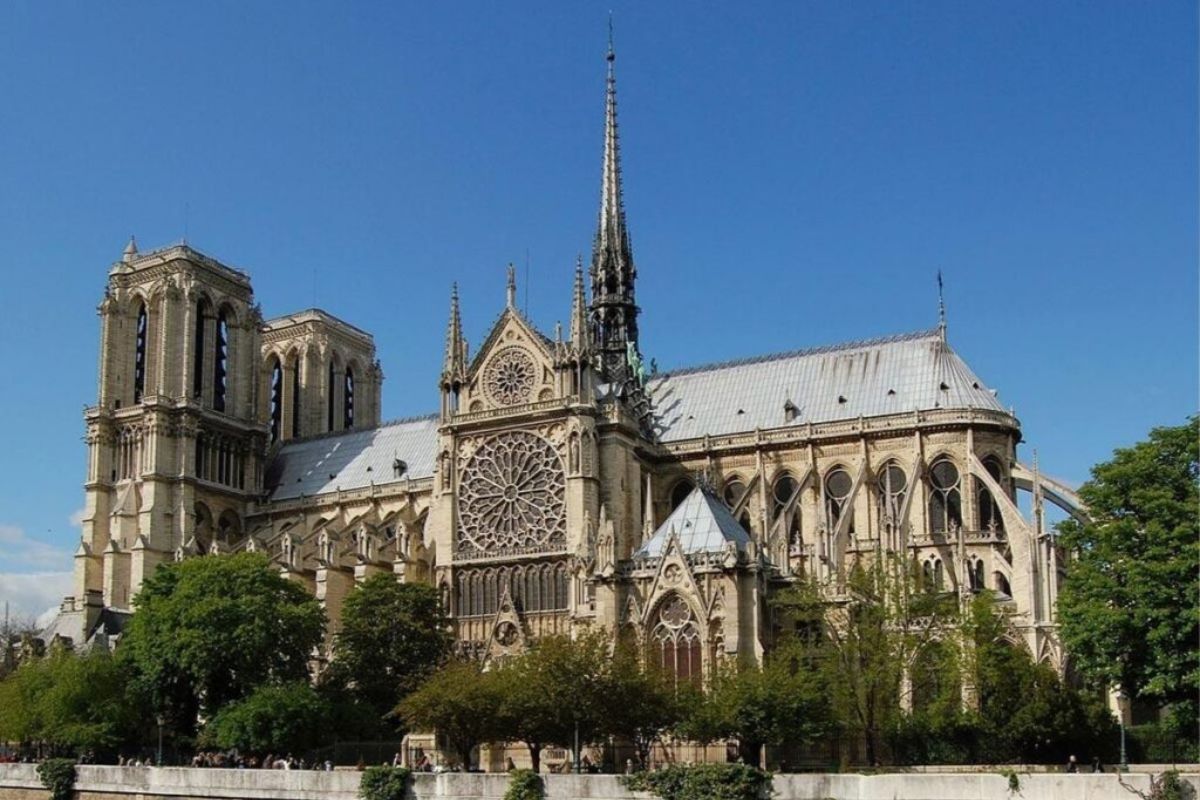
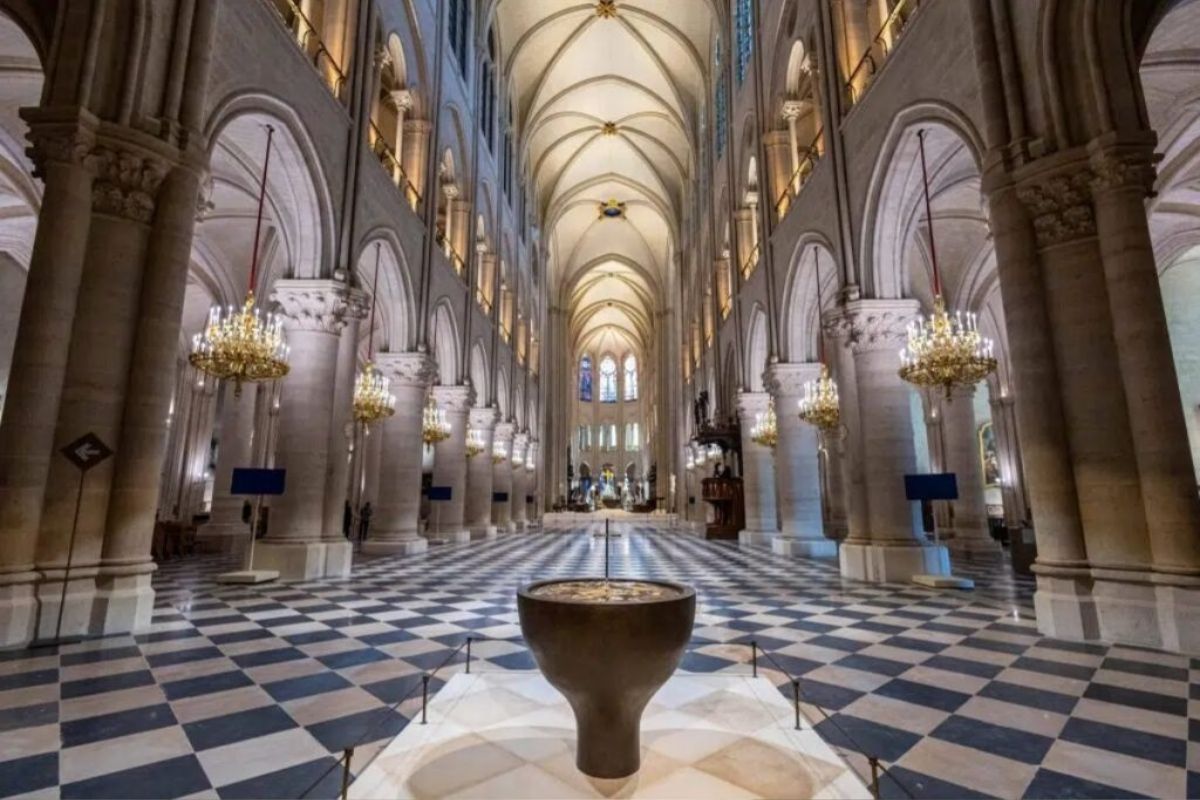
Among the most famous examples of Gothic architecture is, of course, Notre-Dame de Paris. Britannica describes it as one of the most famous Gothic cathedrals of the Middle Ages and recalls that its construction used solutions such as the pointed arch, ribbed vault, and external buttresses to solve the challenge of a very tall structure. It is one of those cases where Gothic becomes architecture, urban symbol, and cultural image at the same time.
Chartres Cathedral
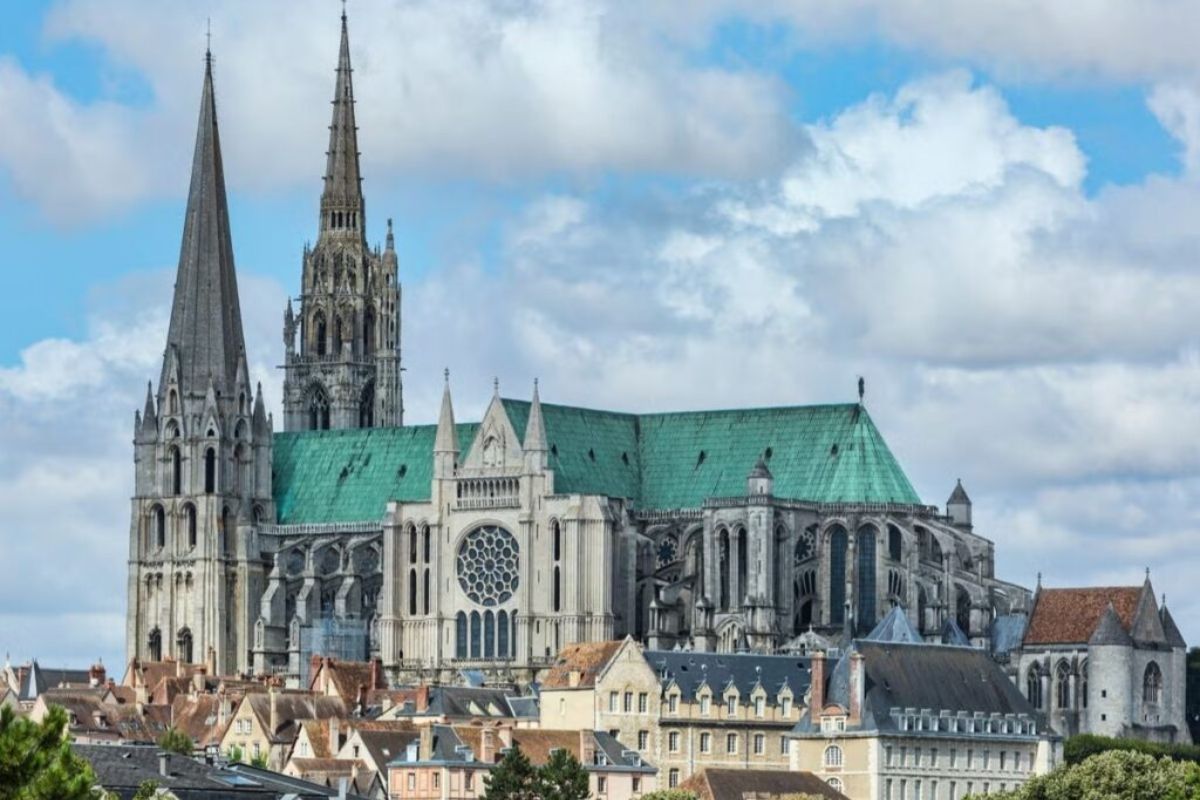
Chartres Cathedral is one of the absolute peaks of French Gothic. UNESCO describes it as the highest point of French Gothic art, highlighting the vastness of the nave, the sculpted portals, and the exceptional preservation of its 12th- and 13th-century stained-glass windows. Chartres is important because it shows, almost perfectly, the balance between structural height, compositional clarity, and light.
Amiens Cathedral and Reims Cathedral
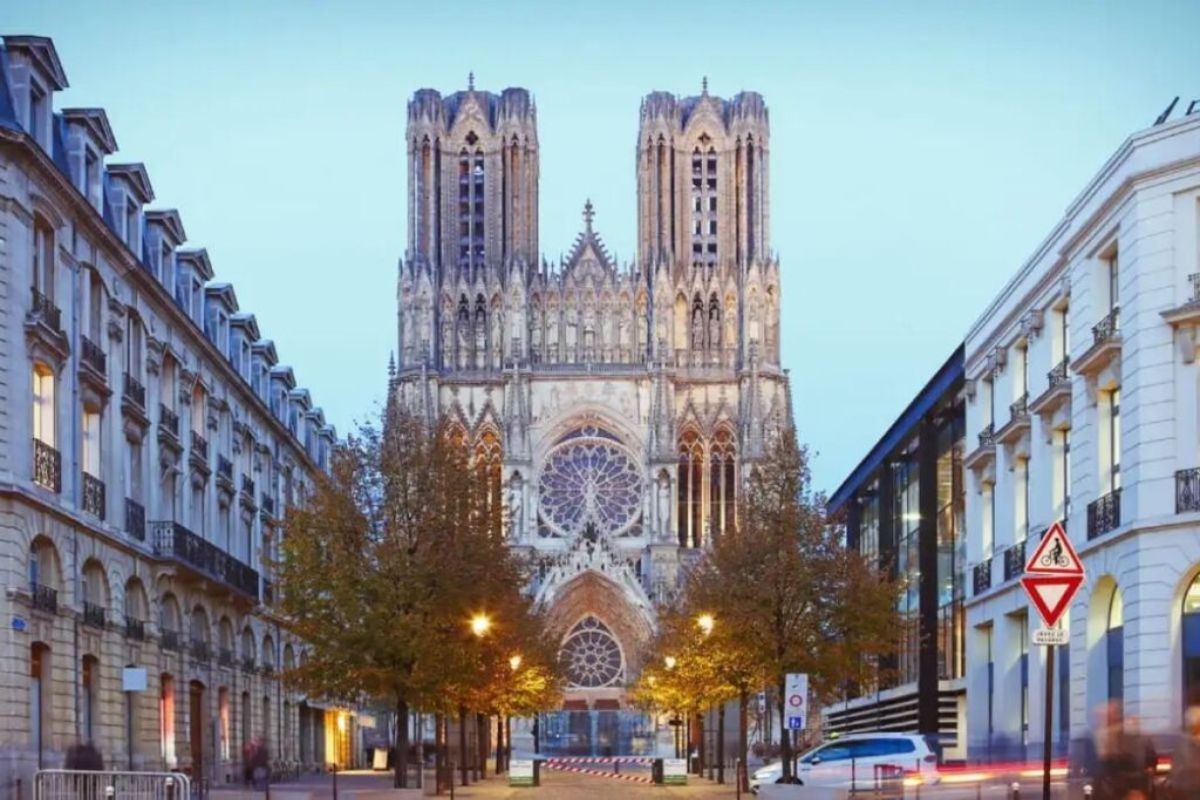
If Chartres is often perceived as a model, Amiens and Reims help explain the maturity of French Gothic. These are places where the great medieval cathedral reached a remarkable synthesis between monumental scale, sculpture, and spatial articulation. Reims, in particular, is often remembered for the extraordinary integration between construction and figurative apparatus.
Cologne Cathedral
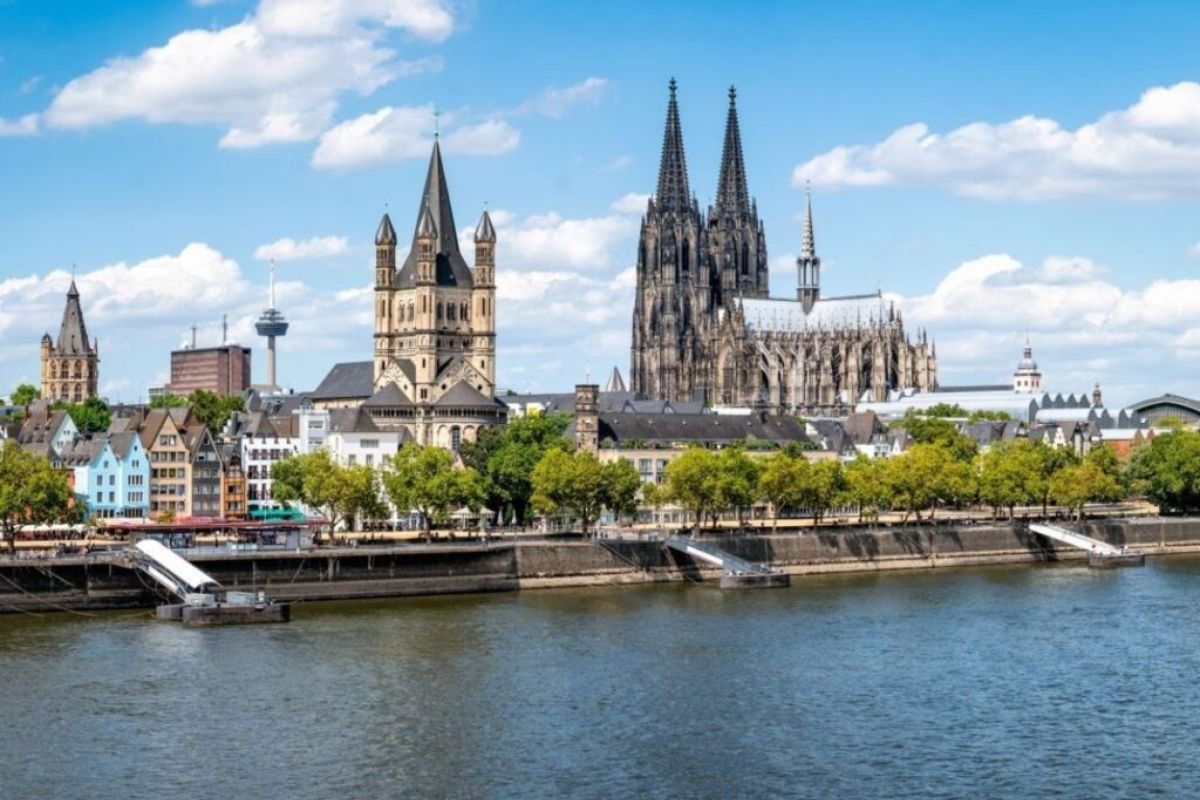
Cologne Cathedral is one of the most important symbols of European Gothic outside France. UNESCO describes it as a five-aisled Gothic basilica with a twin-tower facade over 157 meters high and an interior nave over 43 meters in height. Here, Gothic clearly becomes an urban form as well: not only a religious building, but an absolute sign in the city skyline.
Gothic architecture in Italy
Italian Gothic architecture does not coincide with a simple imitation of the French model. Treccani recalls that the adoption of the Gothic language in Italy was a phenomenon of importation, especially from France, but immediately mediated by local tradition. This explains why, in the Italian context, Gothic often appears more measured, less extreme in its verticality, and more connected to the strength of masonry surfaces, facades, and materials.
In Italy, therefore, Gothic is often a reinterpretation. Rather than pursuing the extreme dematerialization of the wall typical of many French cathedrals, it tends to maintain a different balance between mass, decoration, and structure. This difference should not be read as a limitation, but as a cultural and constructive specificity.
Siena Cathedral
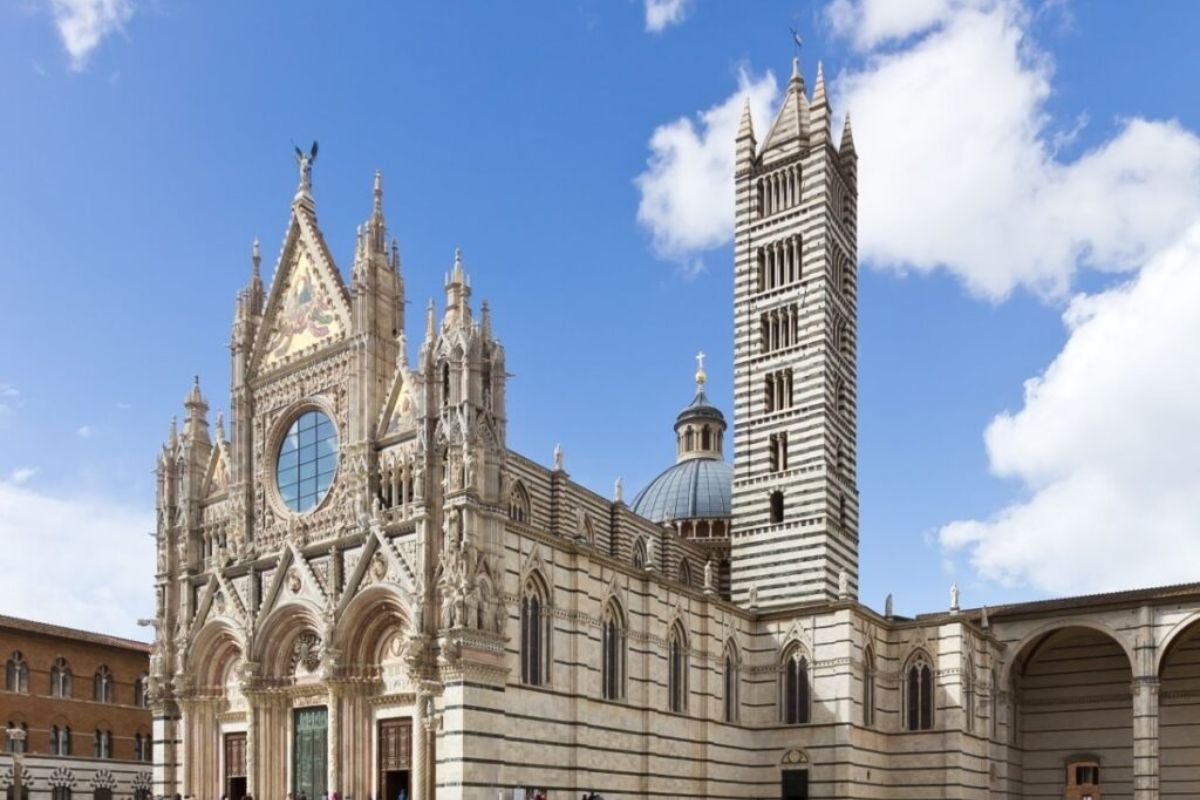
Siena Cathedral is one of the best examples of this Italian interpretation. Britannica recalls that the cathedral, begun in the Romanesque period, was transformed in the 13th century into one of the most refined examples of Italian Gothic architecture. Its identity lies not only in its structure, but also in the relationship between composition, marble polychromy, and Tuscan tradition.
Orvieto Cathedral
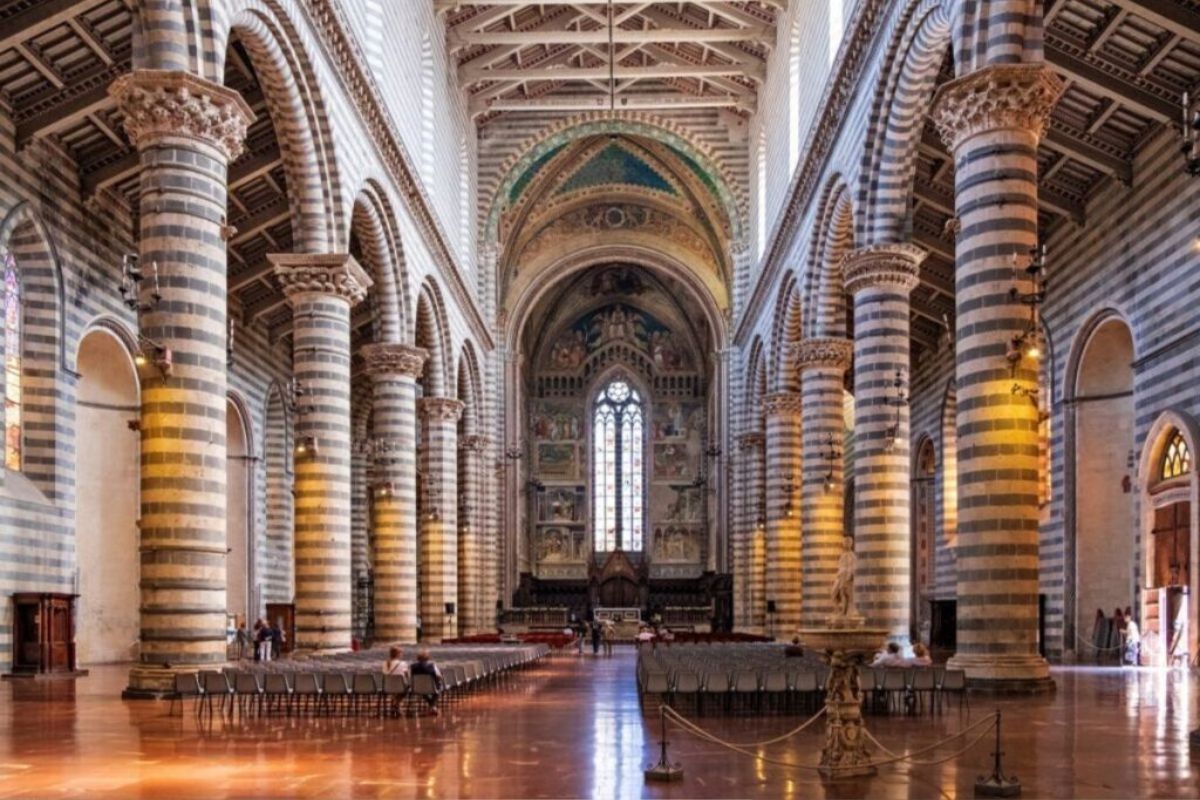
Orvieto Cathedral is also central to understanding Gothic architecture in Italy. Treccani entries dedicated to Orvieto and to 13th- and 14th-century architecture emphasize the role of the facade, its compositional clarity, and the way vertical and horizontal elements are held in balance. This is a Gothic language that does not give up figurative richness, but subjects it to a highly controlled order.
Milan Cathedral
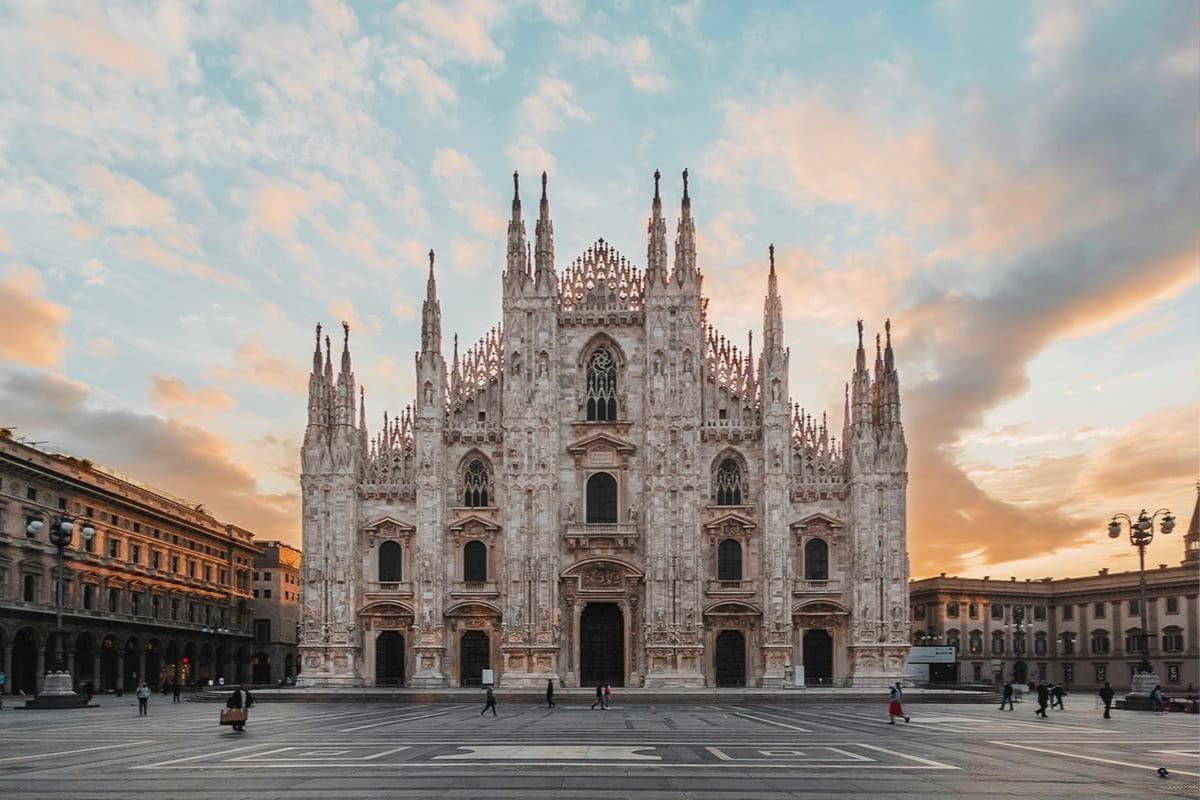
Milan Cathedral, begun in 1386, is one of the great monumental cases of Italian Gothic architecture. Britannica points out that the project for a Gothic cathedral in that central part of the city paved the way for the introduction of High Gothic into continental Italy. It is, however, a long, layered, and complex building, useful precisely because it shows how Gothic in Italy could become a hybrid and large-scale organism.
Difference between Romanesque and Gothic architecture
To truly understand Gothic architecture, it is also useful to clarify its difference from Romanesque architecture. In general terms, Romanesque architecture favors thicker walls, smaller openings, round arches, and a more compact, heavier perception of space. Gothic architecture, instead, thanks to the pointed arch, ribbed vault, and flying buttress, makes it possible to build higher, more open, and brighter structures. The difference, therefore, is not only decorative: it is structural and perceptual.
Cities to know to understand Gothic architecture
To read Gothic as both an architectural and urban phenomenon, some cities are essential. Paris is fundamental for Saint-Denis and Notre-Dame. Chartres is essential for its exemplary cathedral. Amiens and Reims show the maturity of French Gothic. Cologne reveals the power of the German interpretation. Siena, Orvieto, and Milan help explain the specific character of Italian Gothic architecture. It is the comparison between these cities, more than an isolated list of buildings, that reveals the true European breadth of the phenomenon.
Why Gothic architecture still matters today
Gothic architecture still matters because it brings together elements that many projects still struggle to hold together today: technique, light, narrative, identity, and symbolic power. Its best works show that a structural solution does not only support a building. It can direct the gaze, create emotion, define the relationship with the city, and remain in the collective imagination for centuries. This is why Gothic remains a living lesson, not just a chapter in a textbook.
Gothic architecture in questions and answers
When was Gothic architecture born?
Gothic architecture was born in 12th-century France, especially in the Île-de-France region, with Saint-Denis as a decisive reference point for the beginning of the new language.
What are the main characteristics of Gothic architecture?
The main characteristics are the pointed arch, ribbed vault, flying buttress, large stained-glass windows, rose window, and strong verticality of space.
What are the most famous examples of Gothic architecture?
The most famous examples include Notre-Dame de Paris, Chartres Cathedral, Cologne Cathedral, Milan Cathedral, Siena Cathedral, and Orvieto Cathedral.
Does Italian Gothic architecture exist?
Yes. Italian Gothic architecture exists, but it is more tempered than French Gothic and developed through mediation with local Romanesque tradition and a different relationship between mass, surface, and decoration.
What is the difference between Romanesque and Gothic architecture?
Romanesque architecture tends to be more massive and compact. Gothic architecture is taller, more open, and brighter, thanks to a different structural system.
Also read: Architecture firms in Italy: the most famous names