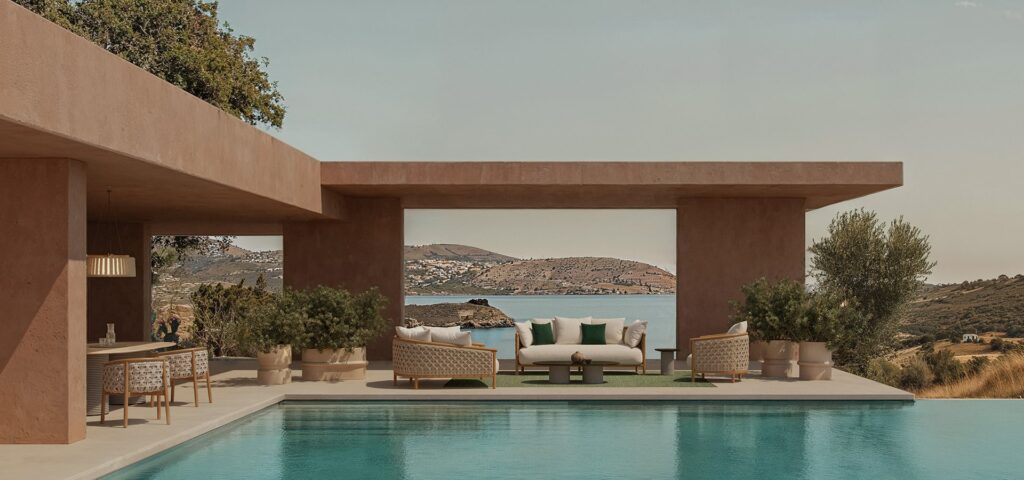
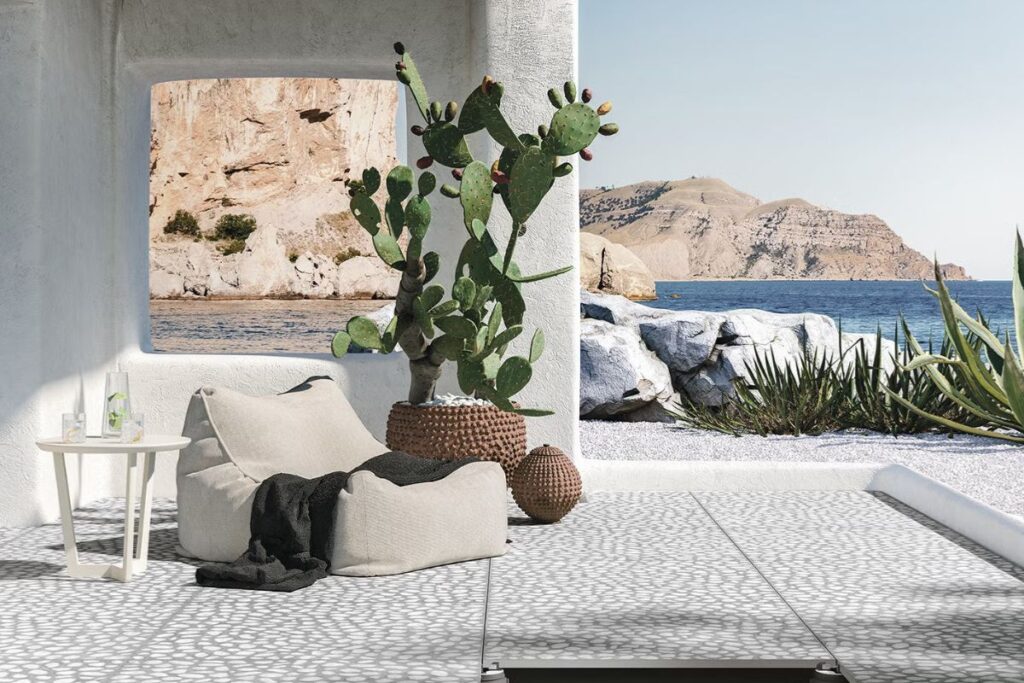
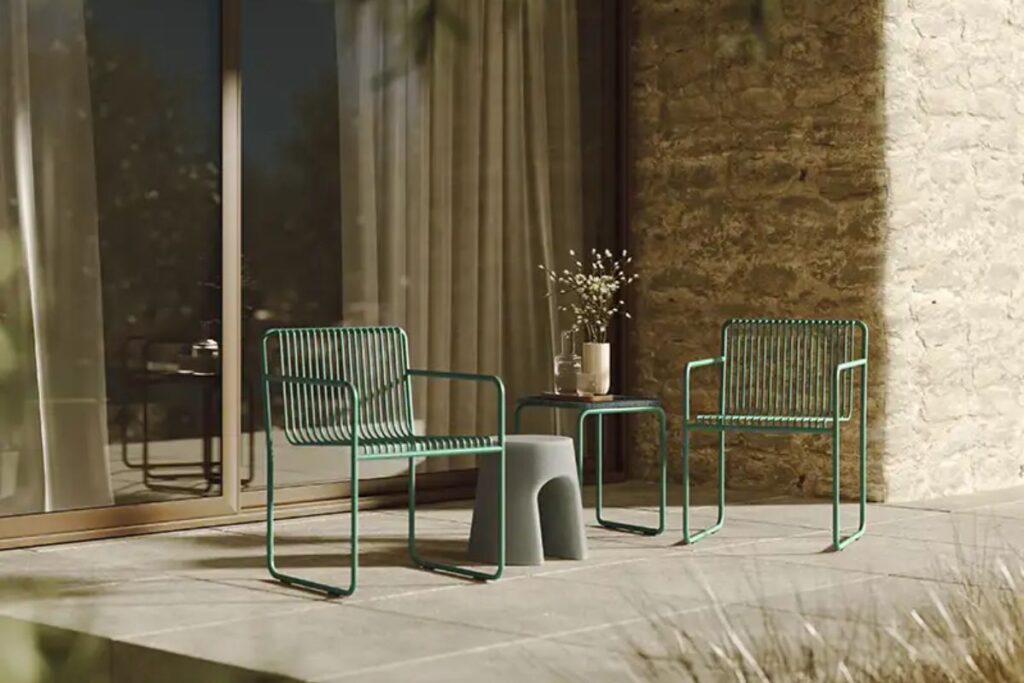
In contemporary hospitality, outdoor spaces have become increasingly strategic in shaping the guest experience. Terraces, inner courtyards, rooftops, outdoor dining areas, and gardens are no longer seen as simple secondary areas, but as real design environments that can influence brand identity, perceived comfort, and the time guests spend in a place. In recent years, the …
In contemporary hospitality, outdoor spaces have become increasingly strategic in shaping the guest experience. Terraces, inner courtyards, rooftops, outdoor dining areas, and gardens are no longer seen as simple secondary areas, but as real design environments that can influence brand identity, perceived comfort, and the time guests spend in a place.
In recent years, the relationship between architecture, landscape, and hospitality has changed deeply. Hotels and restaurants have started investing more in the quality of their outdoor areas, driven by new social habits and by a growing focus on well-being, nature, and the quality of the overall experience.
In this context, outdoor design is not only about aesthetics. It also involves functional, psychological, climatic, and commercial aspects.
The role of outdoor space in contemporary hospitality
In the hospitality sector, the first visual impact plays a key role in how a brand is perceived. A well-designed outdoor space immediately communicates the positioning of the hotel or restaurant, the level of attention to detail, and the type of experience guests can expect.
Whether it is a boutique hotel, a fine dining restaurant, or a hospitality property surrounded by nature, outdoor design becomes a narrative tool. It translates the identity of a place into atmosphere.
According to the research of Professor Roger Ulrich, one of the leading scholars in the relationship between environment and psychophysical well-being, the presence of natural elements and views of greenery can help reduce stress levels and improve perceived comfort and time spent in a space. His studies, published in international scientific journals since the 1980s, have deeply influenced the evolution of biophilic design and contemporary hospitality design. They brought attention to the idea that greenery can increase both the time guests spend in a place and their perceived comfort.
This is one of the reasons why the best hospitality design projects today increasingly work on continuity between indoors and outdoors.
For this reason, outdoor planning should be treated as an integral part of the architectural concept, not as a later addition or a purely decorative intervention.
Hotel garden: designing atmosphere and identity
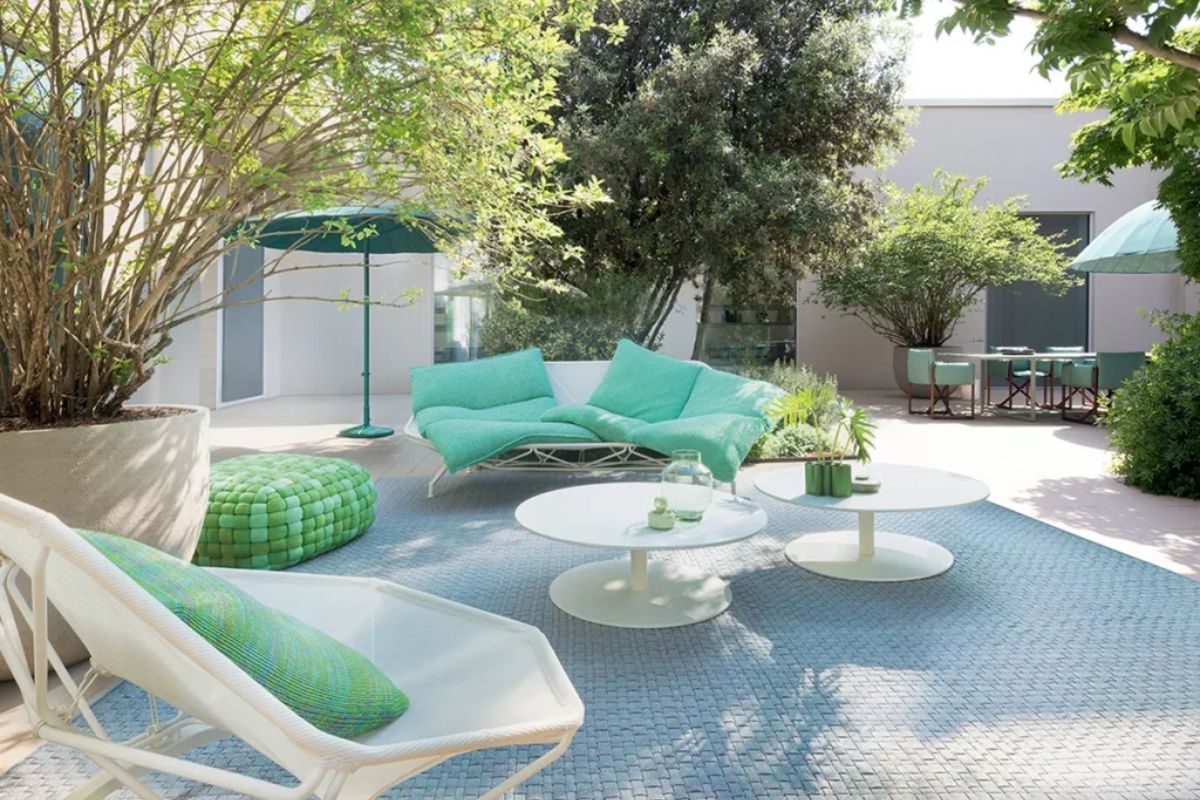
The garden of a contemporary hotel is no longer just an ornamental green space. It is a multifunctional environment that can host relaxation, social moments, events, and wellness experiences.
The design process always begins with the analysis of the climate and landscape context, but above all with the identity of the property. A resort surrounded by nature will have completely different needs from an urban hotel with a rooftop or an inner courtyard.
In contemporary design, the tendency is increasingly to create fluid spaces where vegetation, lighting, and furniture interact coherently with the architecture. The goal is not to “fill” the outdoor area, but to build a sensory experience.
Many international studios are working precisely on this experiential approach. The work of Studio Piet Oudolf, for example, has deeply influenced the contemporary way of designing greenery in hospitality, favoring dynamic, naturalistic, and seasonal planting over gardens that feel too rigid or artificial.
Materials also play a central role. Natural stone, technical woods, draining surfaces, and high-performance outdoor fabrics help create spaces that are sophisticated yet durable over time. Specialized brands such as Roda, Unopiù, and Paola Lenti have redefined the language of outdoor hospitality furniture in recent years, introducing collections that combine domestic comfort with technical resistance.
Restaurant outdoor spaces: the dehors as an immersive experience
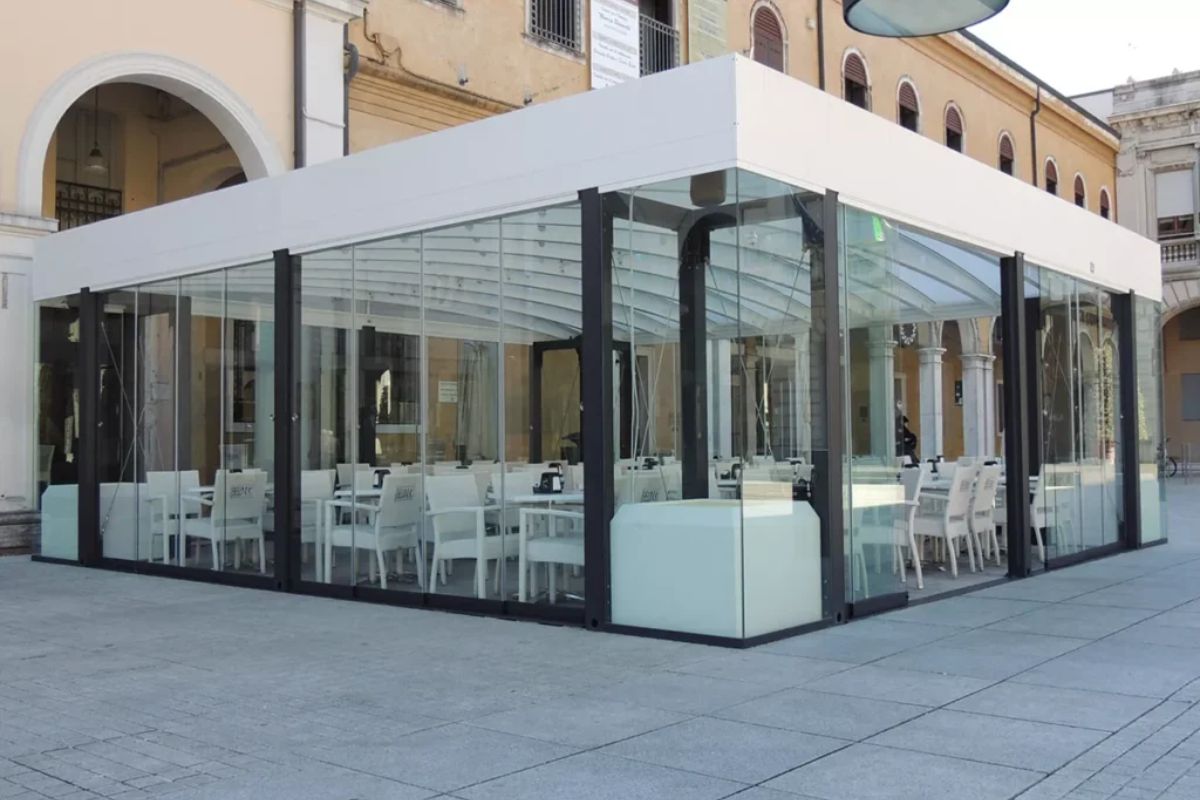
In the restaurant world, outdoor design has become one of the main tools for differentiation. Today’s customers are no longer looking only for a strong gastronomic offer. They want a complete experience, able to involve atmosphere, spatial perception, and the relationship with the surrounding context.
The concept of restaurant outdoor spaces has therefore evolved toward a more immersive design approach, where lighting, vegetation, acoustics, and climate comfort work together.
One of the most complex aspects is the balance between aesthetics and functionality. Outdoor spaces must guarantee:
comfort in different temperatures
privacy
seasonal flexibility
resistance to weather conditions
easy maintenance
For this reason, hospitality companies are investing more and more in bioclimatic pergolas, mobile shading systems, and modular solutions. Among the most innovative companies in the field of pergolas and outdoor covers are Pratic and KE Outdoor Design, which have developed systems able to integrate lighting, sun protection, and climate management.
Acoustics are also becoming increasingly important. Vegetation, sound-absorbing surfaces, and the arrangement of furniture help improve the perceptual quality of the space and the comfort of guests.
Outdoor lighting: building atmosphere in hospitality
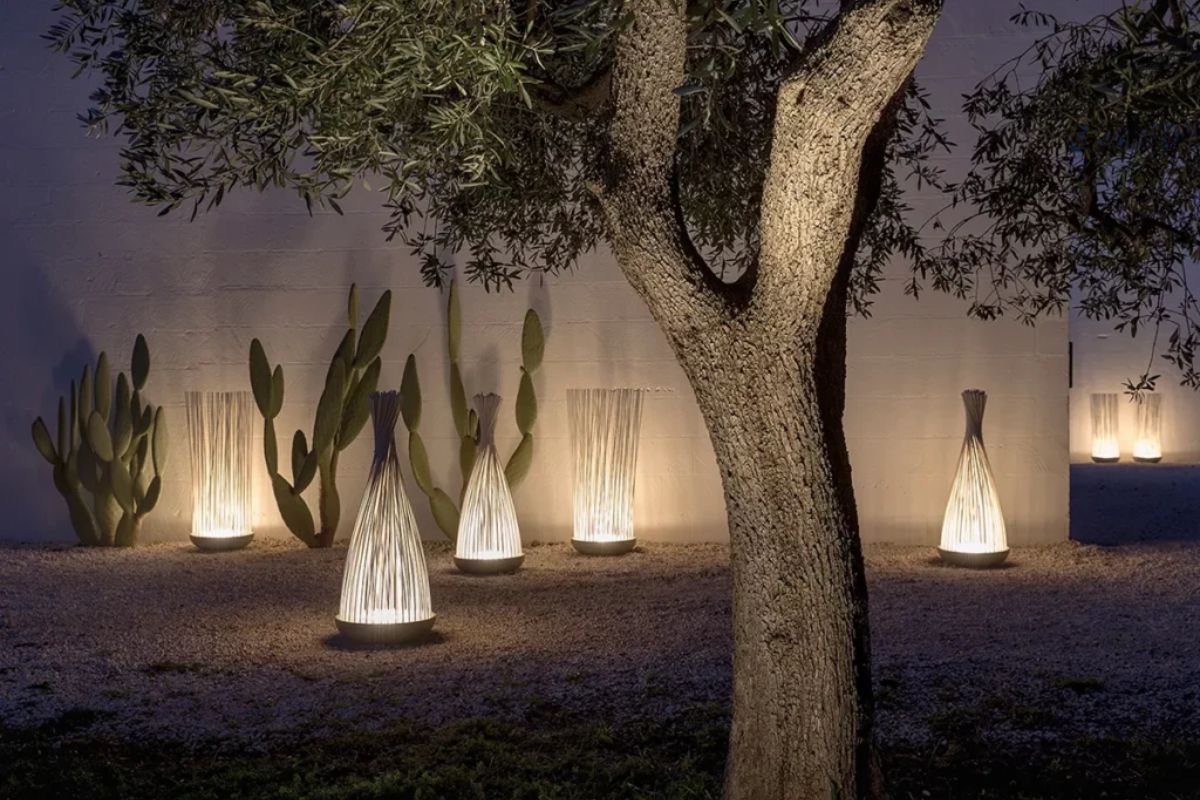
In hospitality design, lighting is one of the most powerful tools for building atmospheric identity. Light defines spatial hierarchies, enhances materials and vegetation, and helps create the emotional dimension that now distinguishes the best outdoor projects.
Contemporary lighting designers increasingly work with dynamic and layered lighting scenarios, avoiding solutions that are too uniform or overly technical. The goal is to create welcoming and recognizable environments, able to change perception throughout the different hours of the day.
The principles developed by lighting designer Richard Kelly continue to influence lighting design in hospitality today. Ambient lighting, focal light, and emotional effects are combined to generate depth and visual comfort.
Companies such as Flos Outdoor, Artemide, and Karman have developed specific collections for the contract and hospitality sectors, with high-efficiency systems and intelligent light control.
Restaurant garden and perceived well-being
The presence of greenery in hospitality spaces does not respond only to aesthetic needs. Several studies in environmental psychology show that connection with natural elements can help reduce stress, improve the time spent in a place, and increase perceived well-being.
For this reason, the contemporary restaurant garden is increasingly designed as a multisensory experiential environment. Fragrances, shadows, plant textures, and the movement of vegetation become an integral part of the dining experience.
Even small urban spaces can be transformed through vertical greenery, micro-landscapes, and modular systems. The research of botanist Patrick Blanc on vertical gardens has deeply influenced contemporary hospitality design, especially in high-density metropolitan contexts.
Outdoor hotels and restaurants: landscape as design value
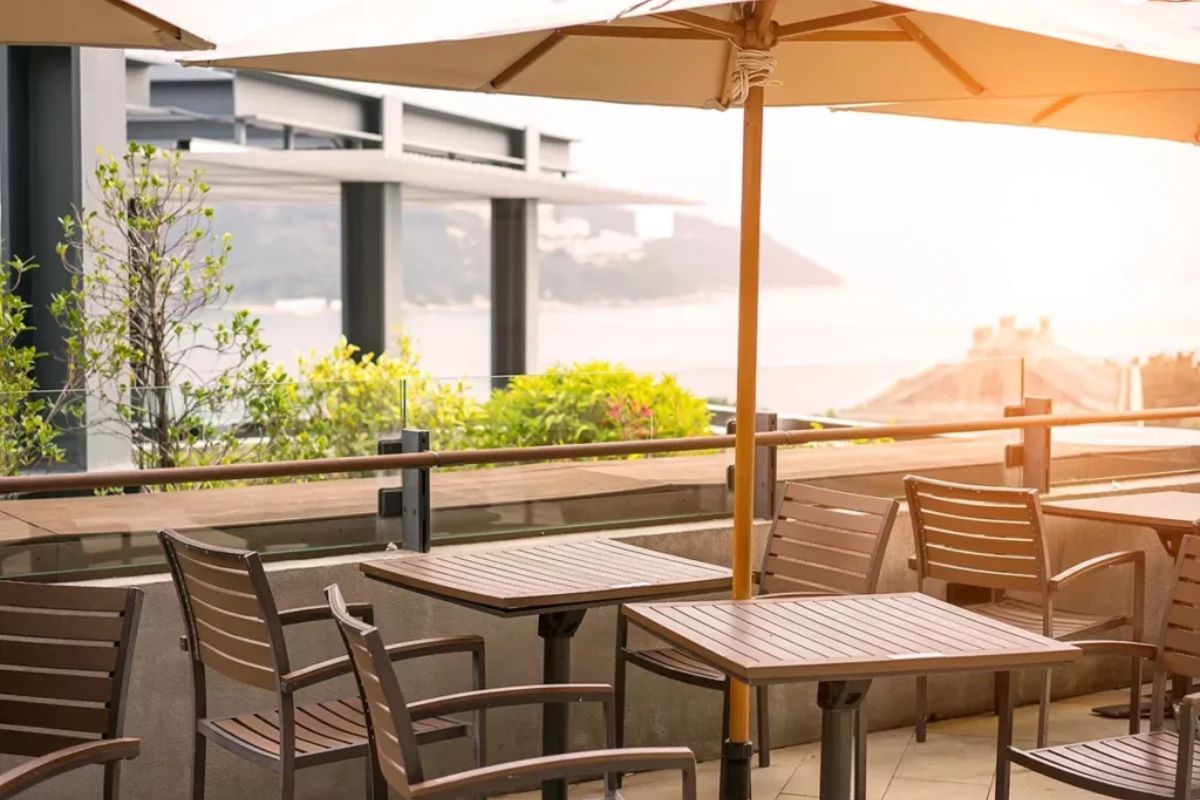
In today’s hospitality landscape, outdoor design is one of the most strategic investments for hotels and restaurants. It is no longer only about increasing seating capacity or enhancing a garden, but about building a deeper relationship between architecture, landscape, and hospitality.
Outdoor spaces become tools of identity, well-being, and communication, able to influence the way guests perceive and remember a place. In contemporary hospitality, welcoming guests is no longer limited to interiors. It begins outdoors, through atmosphere, nature, light, and the quality of designed space.