Outlets in Italy are not only places for discounted shopping. Over time, they have become a recognizable form of the contemporary retail landscape: small villages of consumption, often located outside urban centers and designed to turn shopping into a day trip. Their history says a great deal about how the relationship between retail, territory, tourism, …
Outlets in Italy are not only places for discounted shopping. Over time, they have become a recognizable form of the contemporary retail landscape: small villages of consumption, often located outside urban centers and designed to turn shopping into a day trip.
Their history says a great deal about how the relationship between retail, territory, tourism, and desire has changed. First came factory stores, connected to production and industrial districts. Then came the outlet village model: no longer just a place to buy for less, but a destination built around an experience.
The first major symbol of this transformation in Italy is Serravalle Designer Outlet, opened in 2000 in Serravalle Scrivia, Piedmont. Today, Serravalle is still the main reference point in the sector: it was the first Italian designer outlet, the largest outlet in Italy, and one of the leading outlet centers in Europe in terms of size, recognition, and appeal. McArthurGlen identifies it as the first center of its kind in Italy and as the largest designer outlet in Europe.
But how many outlets are there in Italy today? And which are the largest? According to the most recent data available on the Italian outlet market, the country currently has 33 structured outlet centers, with a total surface area of around 750,000 square meters of GLA, meaning gross leasable area. Rather than being in a phase of new expansion, the market seems to have entered a phase of maturity: it no longer grows only through new openings, but through identity, experience quality, management, positioning, and the ability to attract flows of visitors.
What was the first outlet opened in Italy?
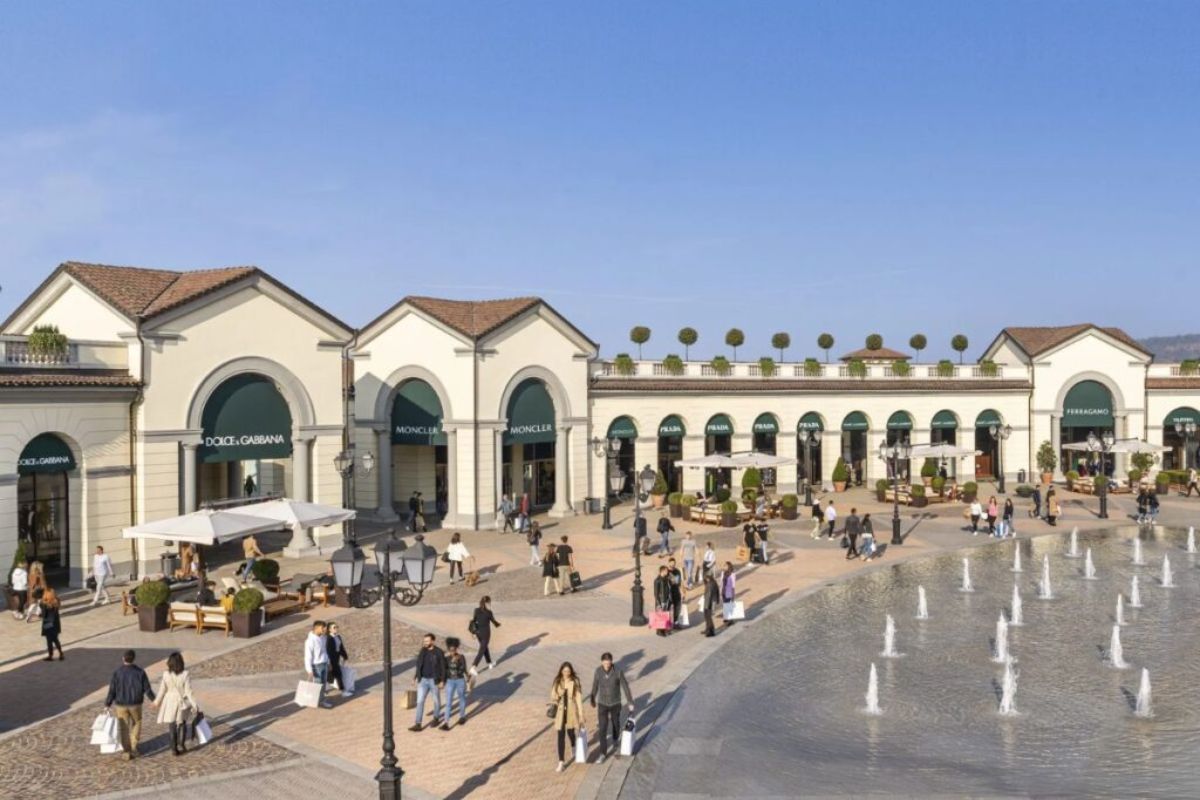
The first outlet in Italy, in the modern sense of a designer outlet village, was Serravalle Designer Outlet, opened in Serravalle Scrivia, in the province of Alessandria, in 2000.
Its opening marked the arrival in Italy of a retail model that was different from both the traditional store and the classic shopping center. Serravalle was not created as a simple collection of stores, but as a destination: a place designed to bring together brands, services, restaurants, pedestrian routes, squares, and a shopping experience organized like a small retail town.
According to DEA Real Estate Advisor, Serravalle Designer Outlet opened in September 2000 and represents McArthurGlen’s largest development in Europe, with a GLA of 51,500 square meters.
Its location was decisive. Serravalle Scrivia sits in a strategic area between Milan, Genoa, and Turin. This is not a minor geographical detail, but part of the model itself. An outlet village works when it intercepts large catchment areas, tourist flows, and extra-urban mobility.
Before outlet villages: from factory stores to retail destinations
To understand the birth of outlets in Italy, it is important to distinguish between a factory store, a factory outlet center, and an outlet village.
A factory store is historically linked to a single brand or company. It is often located near the place of production and has a direct function: selling samples, leftover stock, end-of-line products, or discounted items.
The factory outlet center introduces a different scale: not a single brand, but several brands gathered within an organized structure, with unified retail management.
The outlet village takes this model even further. It becomes a designed commercial landscape: streets, facades, squares, food areas, parking, services, visual identity, and pedestrian paths. People no longer go there only “to buy”; they go there to spend time.
This shift is what makes the phenomenon interesting also from an architectural and cultural point of view. The outlet village is not only a response to the desire for convenience, but a spatial construction of desire: it promises accessibility, recognizable brands, an orderly atmosphere, leisure time, and a simplified form of urban experience.
What is the largest outlet in Italy?
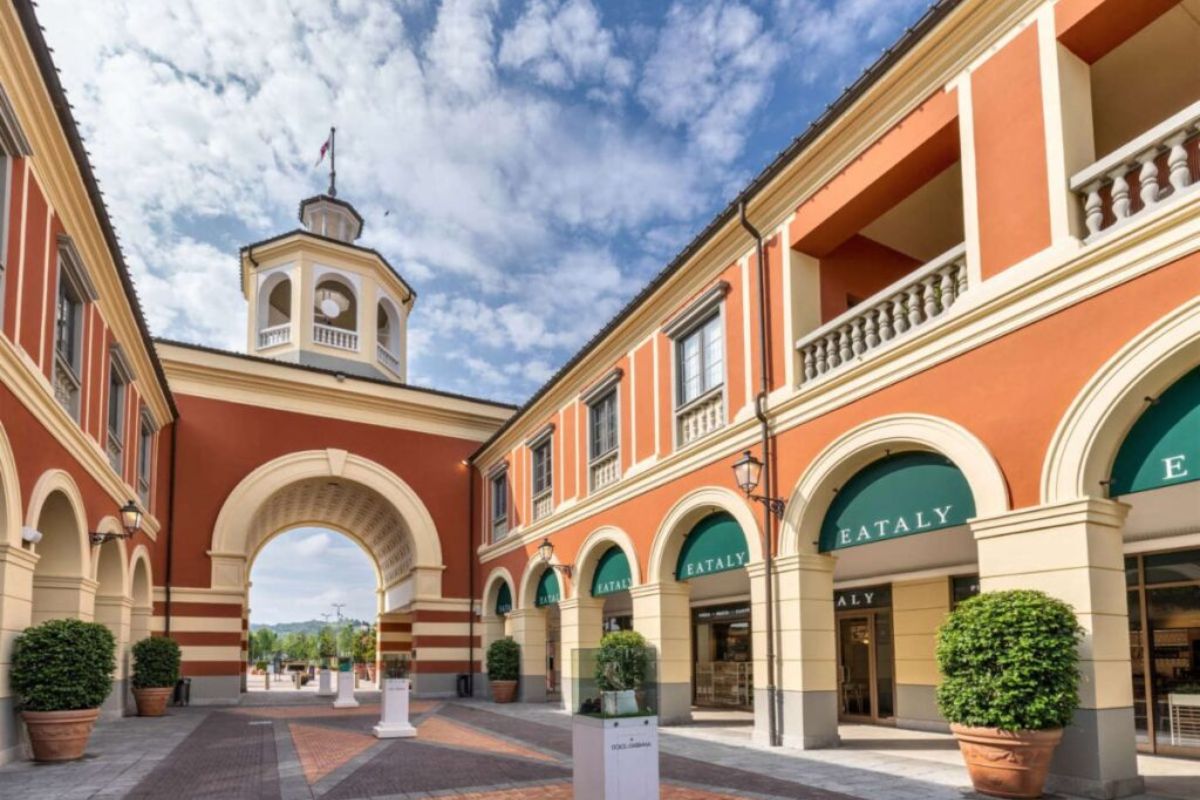
The largest outlet in Italy is Serravalle Designer Outlet, with around 51,500 square meters of GLA. It is also the first designer outlet opened in the country and is identified by McArthurGlen as the largest designer outlet in Europe.
Its scale is not only about surface area. Serravalle has become a reference point because, over time, it has built a strong and recognizable image, capable of attracting Italian consumers, international tourists, and visitors from major cities in Northern Italy.
It is an outlet, but it also works as a destination. This is the central point: large contemporary outlets no longer compete only on price, but on their ability to generate time spent on site, experience, services, and storytelling.
Other large Italian outlets include Valmontone Outlet, Scalo Milano Outlet & More, Puglia Outlet Village, Franciacorta Outlet Village, Sicilia Outlet Village, Vicolungo The Style Outlets, La Reggia Designer Outlet, Noventa di Piave Designer Outlet, and Castel Romano Designer Outlet.
What is the highest outlet in Italy?
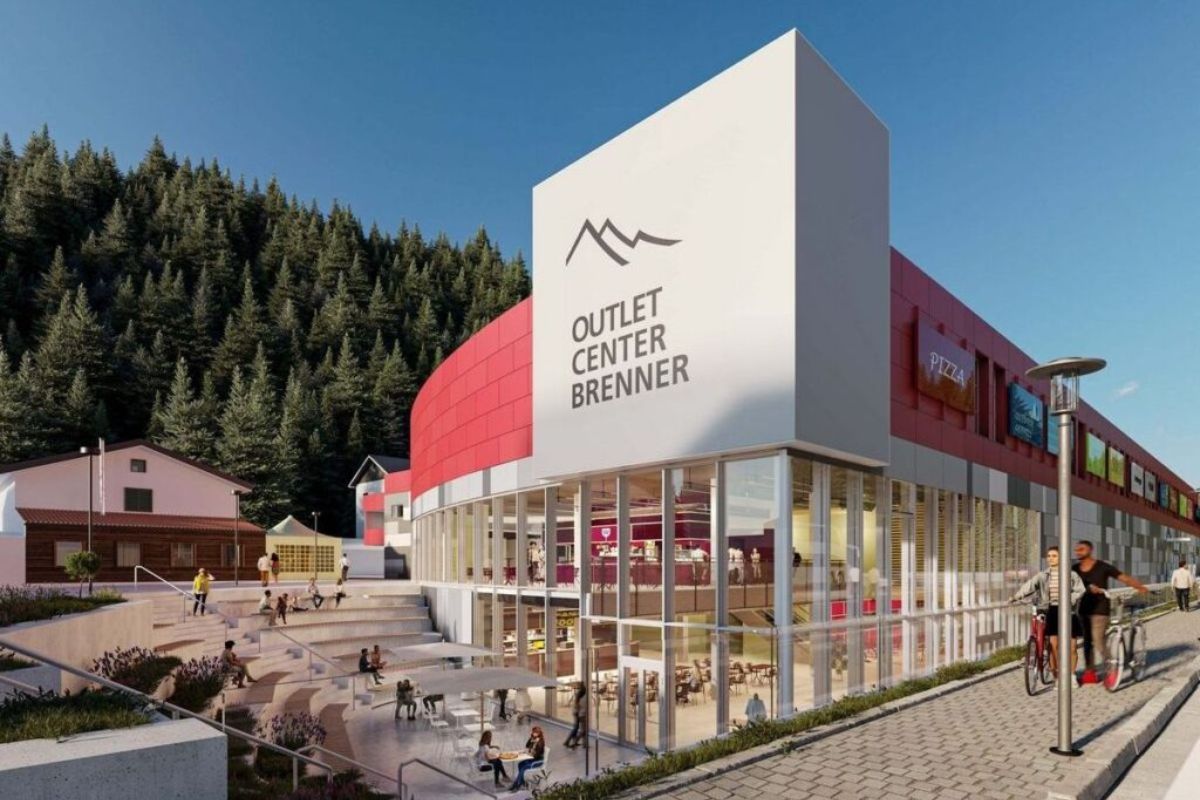
If by “highest” we mean geographical altitude, the highest outlet in Italy is most likely Brenner Outlet, at the Brenner Pass, in the province of Bolzano.
The center is located right on the border between Italy and Austria, at around 1,370 meters above sea level, in the heart of the Alps, as stated by the official website.
It is a very different case from Serravalle. Here, the outlet is not only a retail destination, but also a place of passage. The Brenner Pass is one of the major Alpine corridors in Europe: a crossing point between Italy and the German-speaking world, between tourism, mobility, transport, and commerce.
Brenner Outlet intercepts exactly this threshold condition. It is a border retail space, designed for those traveling from north to south or from south to north, and it represents an interesting typology: the outlet as an infrastructure of transit.
How many outlets are there in Italy today?
Today, there are around 33 structured outlet centers in Italy. This figure refers to organized outlet villages and factory outlet centers, not to individual factory stores, independent outlet shops, or outlet sections inside other retail formats.
This distinction is important. If all outlet stores, factory shops, and discounted sales points were counted, the number would be much higher and much less useful. Speaking of 33 outlet centers means considering structures with unified management, relevant commercial surface area, multiple brands, services, parking, and an autonomous identity.
According to ACROSS Magazine, the Italian outlet market is now one of the most mature in Europe: it is no longer only a phase of quantitative growth, but a system in which execution, identity, brand mix, and experience matter more and more.
The complete list of 33 outlets in Italy
Below is the list of the main 33 outlet centers in the Italian market, ordered by gross leasable area, or GLA. The figure also includes San Marino Outlet Experience, often considered in sector reports together with the Italian outlet market because of its geographical proximity and commercial dynamics.
| No. | Outlet | Municipality | Region / Area | Approx. GLA |
|---|---|---|---|---|
| 1 | Serravalle Designer Outlet | Serravalle Scrivia | Piedmont | 51,500 sqm |
| 2 | Valmontone Outlet | Valmontone | Lazio | 46,000 sqm |
| 3 | Scalo Milano Outlet & More | Locate di Triulzi | Lombardy | 44,000 sqm |
| 4 | Puglia Outlet Village | Molfetta | Apulia | 37,900 sqm |
| 5 | Franciacorta Outlet Village | Rodengo Saiano | Lombardy | 36,000 sqm |
| 6 | Sicilia Outlet Village | Agira | Sicily | 36,000 sqm |
| 7 | Vicolungo The Style Outlets | Vicolungo | Piedmont | 34,100 sqm |
| 8 | La Reggia Designer Outlet | Marcianise | Campania | 32,000 sqm |
| 9 | Noventa di Piave Designer Outlet | Noventa di Piave | Veneto | 32,000 sqm |
| 10 | Castel Romano Designer Outlet | Rome | Lazio | 31,200 sqm |
| 11 | Valdichiana Outlet Village | Foiano della Chiana | Tuscany | 31,000 sqm |
| 12 | Barberino Designer Outlet | Barberino di Mugello | Tuscany | 26,700 sqm |
| 13 | Mantova Outlet Village | Bagnolo San Vito | Lombardy | 25,600 sqm |
| 14 | Città Sant’Angelo Village | Città Sant’Angelo | Abruzzo | 25,500 sqm |
| 15 | Castel Guelfo The Style Outlets | Castel Guelfo di Bologna | Emilia-Romagna | 24,600 sqm |
| 16 | Mondovicino Outlet Village | Mondovì | Piedmont | 24,500 sqm |
| 17 | Fidenza Village | Fidenza | Emilia-Romagna | 24,400 sqm |
| 18 | Cilento Outlet Village | Eboli | Campania | 23,000 sqm |
| 19 | Shopinn Brugnato 5Terre | Brugnato | Liguria | 22,200 sqm |
| 20 | Palmanova Outlet Village | Aiello del Friuli | Friuli-Venezia Giulia | 22,000 sqm |
| 21 | Torino Outlet Village | Settimo Torinese | Piedmont | 20,000 sqm |
| 22 | Sardinia Outlet Village | Sestu | Sardinia | 17,000 sqm |
| 23 | San Marino Outlet Experience | San Marino | Republic of San Marino | 17,000 sqm |
| 24 | Outlet Center Brenner / Brenner Outlet | Brenner | Trentino-Alto Adige | 15,000 sqm |
| 25 | Il Castagno | Sant’Elpidio a Mare | Marche | 7,500 sqm |
| 26 | Fashion City Outlet | San Giuliano Milanese | Lombardy | 7,000 sqm |
| 27 | The Mall Sanremo | Sanremo | Liguria | 6,220 sqm |
| 28 | Rubicone Fashion | Savignano sul Rubicone | Emilia-Romagna | 6,000 sqm |
| 29 | The Mall Firenze | Reggello | Tuscany | 6,000 sqm |
| 30 | Segrate Outlet Village | Segrate | Lombardy | 5,700 sqm |
| 31 | Fashion Groove | Figline e Incisa Valdarno | Tuscany | 5,000 sqm |
| 32 | Leccio Outlet | Reggello | Tuscany | 4,500 sqm |
| 33 | The Place Outlet | Sandigliano | Piedmont | 3,000 sqm |
The 10 largest outlets in Italy
Looking at the ranking by surface area, the ten largest outlets in Italy are:
| Position | Outlet | Approx. GLA |
|---|---|---|
| 1 | Serravalle Designer Outlet | 51,500 sqm |
| 2 | Valmontone Outlet | 46,000 sqm |
| 3 | Scalo Milano Outlet & More | 44,000 sqm |
| 4 | Puglia Outlet Village | 37,900 sqm |
| 5 | Franciacorta Outlet Village | 36,000 sqm |
| 6 | Sicilia Outlet Village | 36,000 sqm |
| 7 | Vicolungo The Style Outlets | 34,100 sqm |
| 8 | La Reggia Designer Outlet | 32,000 sqm |
| 9 | Noventa di Piave Designer Outlet | 32,000 sqm |
| 10 | Castel Romano Designer Outlet | 31,200 sqm |
The ranking shows an interesting fact: the phenomenon is not concentrated in just one geographical area. Northern Italy is certainly well represented, but large outlets are also found in Lazio, Apulia, Sicily, and Campania. This confirms the national nature of the model, which can adapt to different territories, tourist catchment areas, and infrastructure systems.
The outlet as architecture of leisure time
The success of outlets in Italy cannot be explained only through convenience. Discounts remain a central element, but they are not enough to describe the strength of these places.
The contemporary outlet works on a broader promise: leaving the city, moving through an orderly space, recognizing brands, walking without the pressure of the urban center, stopping for lunch, and buying something with the feeling of having made an intelligent choice.
It is a form of consumption that comes close to short tourism. People leave, arrive, stay, walk, and look. Shopping becomes part of a wider experience.
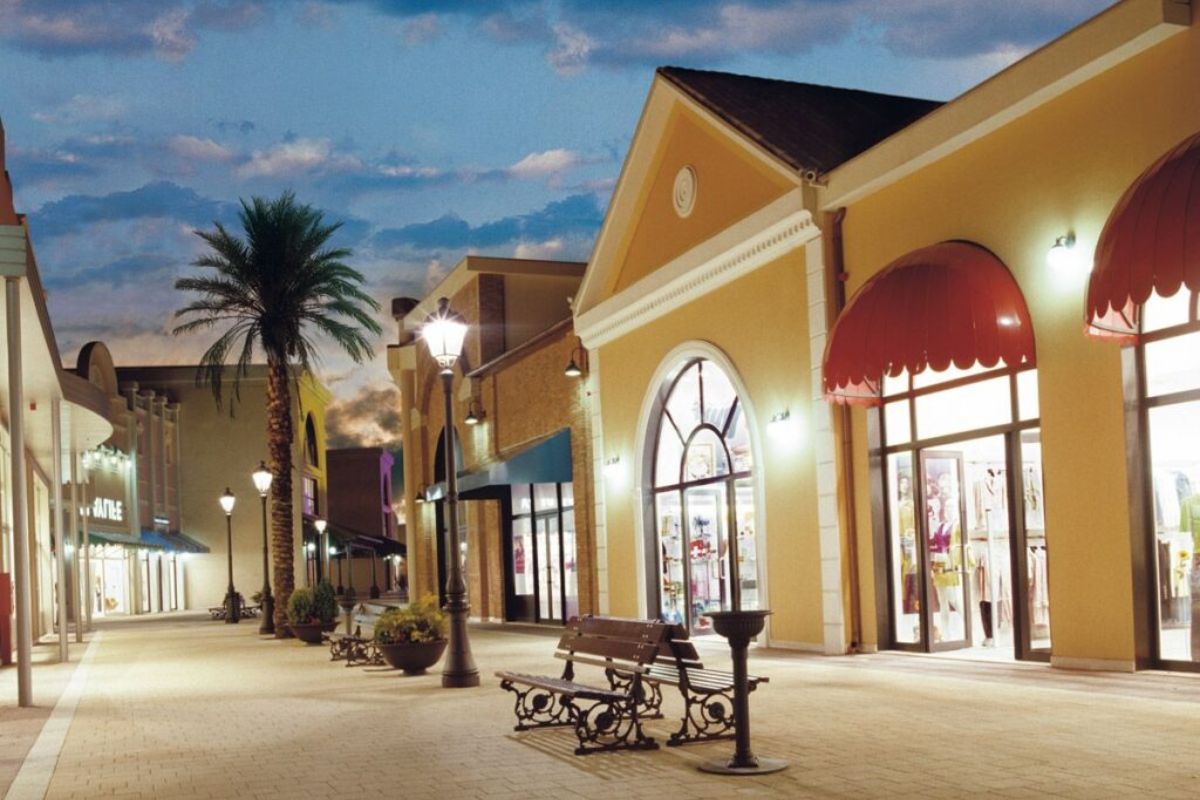
From an architectural point of view, many outlet villages use codes borrowed from the traditional city: pedestrian streets, squares, building fronts, scenic facades, outdoor dining areas, fountains, urban furniture, and places to pause. They are not real cities, but they reproduce some urban signs in a controlled, simplified, and commercial form.
This aspect is central. The outlet does not only sell products: it builds an environment. And the environment becomes part of the perceived value.
Outlets and Made in Italy: why the model works in this country
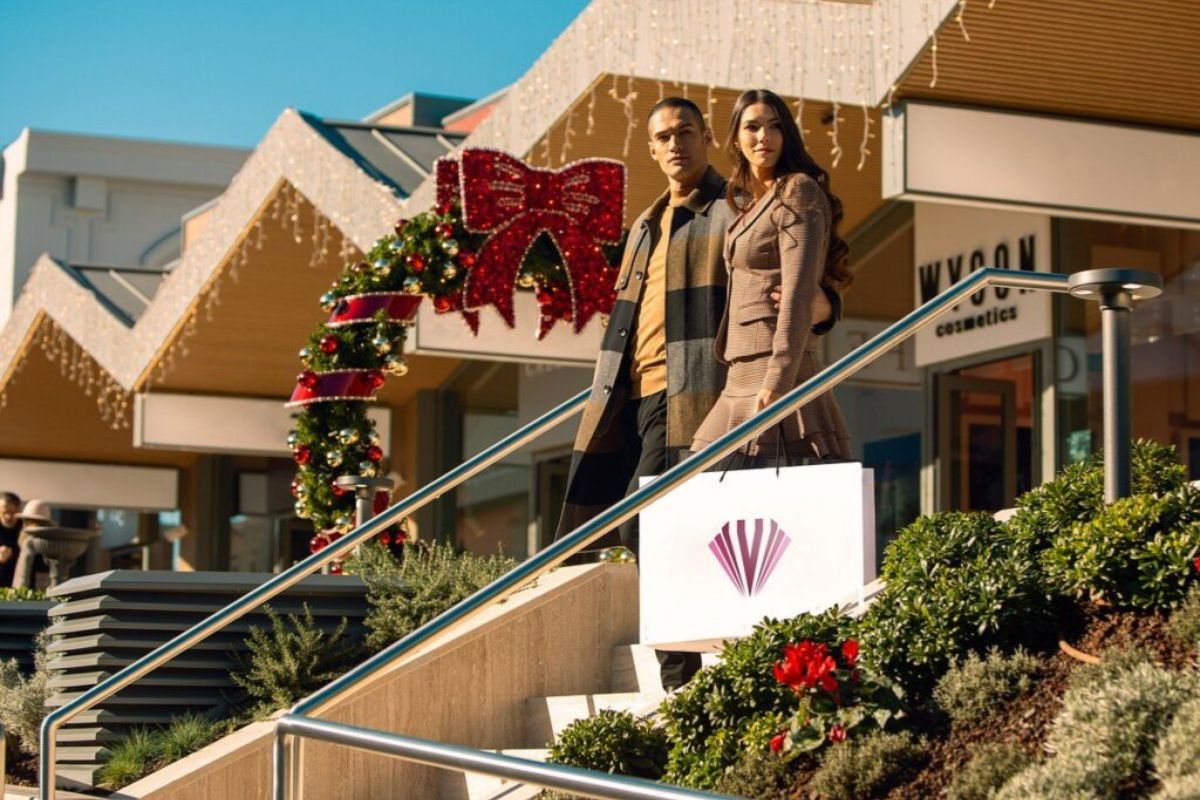
Italy is a particularly favorable ground for the outlet model. The country has a strong fashion culture, great international recognition of Made in Italy, widespread production districts, domestic and international tourism, and a powerful relationship between shopping, lifestyle, and territory.
In this context, the outlet responds to several desires at the same time: accessing well-known brands, buying at a reduced price, experiencing something outside the everyday routine, and combining shopping with leisure time.
For brands, outlets are also strategic tools. They allow companies to manage previous collections, stock, and dedicated assortments without completely giving up control over image. For consumers, instead, they represent an entry point into brands perceived as higher or aspirational.
The success of the model is therefore not only economic. It is also symbolic: the outlet intercepts the desire for accessible quality, especially in a country where fashion, design, and lifestyle have a very strong cultural weight.
The role of interior design in contemporary outlets
In recent years, outlets have no longer been only places of fashion. Some centers have expanded their identity toward furniture, design, food, and lifestyle.
The case of Scalo Milano Outlet & More is emblematic. The center, opened in 2016 and acquired by VIA Outlets in 2026, is described as an urban destination that integrates fashion, dining, and a dedicated Design District, with more than 15 single-brand showrooms. The same source indicates a GLA of around 44,000 square meters and over 180 brands.
This shift is relevant for the world of architecture and interior design. The outlet is no longer just a commercial container, but a place where spatial design, retail design, display, and the relationship between brand and environment become decisive elements.
The physical experience remains a competitive advantage over e-commerce. Touching materials, trying products, entering showrooms, and perceiving atmospheres and finishes are actions that digital cannot fully replace.
The future of outlets in Italy
The future of Italian outlets will depend less and less on discounts alone and more and more on the ability to build value around experience.
The strongest centers will be those able to renew the brand mix, improve services, curate food and dining, invest in the quality of spaces, integrate digital and physical experiences, attract tourism, and interpret new consumer behaviors.
In a mature market, the difference is no longer made only by opening a new outlet. The difference is made by management, identity, architecture, accessibility, reputation, and the ability to become a recognizable destination.
Serravalle remains the starting point and the strongest reference. Brenner Outlet tells the story of the Alpine and cross-border dimension. Scalo Milano shows the urban evolution of the model and its closer relationship with design. The other Italian outlets compose an articulated geography made of districts, tourism, motorway routes, metropolitan cities, and new consumer habits.
Outlets in Italy are now much more than a retail formula. They are part of the contemporary landscape: places where retail, architecture, leisure time, and desire meet.
Frequently asked questions about outlets in Italy
What was the first outlet in Italy?
The first outlet in Italy, in the modern format of a designer outlet village, is Serravalle Designer Outlet, opened in 2000 in Serravalle Scrivia, Piedmont.
What is the largest outlet in Italy?
The largest outlet in Italy is Serravalle Designer Outlet, with around 51,500 square meters of GLA.
How many outlets are there in Italy today?
Today, there are around 33 structured outlet centers in Italy, considering organized outlet villages and factory outlet centers.
What is the highest outlet in Italy?
The highest outlet in Italy is Brenner Outlet, at the Brenner Pass, at around 1,370 meters above sea level.
What is the difference between an outlet and a factory store?
A factory store is usually linked to a single brand or manufacturer. An outlet center, instead, is an organized retail structure with multiple brands, services, parking, restaurants, and unified management.
What are the largest outlets in Italy?
The largest outlets in Italy are Serravalle Designer Outlet, Valmontone Outlet, Scalo Milano Outlet & More, Puglia Outlet Village, Franciacorta Outlet Village, and Sicilia Outlet Village.