Authentic Provencal style without the fake shabby look: colours, materials, light, furniture and outdoor ideas for a warm contemporary home.
Lavender, limewash and sun-bleached woods: Provencal style is a lesson in light before it is a way of furnishing. Our editors gathered the history, the palette and the right pieces to bring it home without slipping into folklore.
There is a reason why Provencal style keeps seducing anyone who is planning a home: it promises more than furniture. It promises a quality of the day itself, breakfast behind half-closed shutters, the clean scent of linen pillowcases, a palette that seems borrowed from a lavender field after the rain. Born in the farmhouses of the South of France, this language has crossed two centuries without losing its core idea: the home as a luminous refuge, where nothing is too precious to be used.
For the same reason, however, it is also one of the most frequently betrayed styles. Read badly, it becomes a stage set of baskets, carved hearts and cursive signs. Read well, as in the pages that follow, it is one of the most elegant routes to a warm, timeless home, a close relative of the apparently rustic but elegant look our editorial team has already explored.
Where does Provencal style come from, and why does it still work?
Provencal style was born in the mas, the stone farmhouses of Provence, among lavender fields, olive groves and village markets. Originally it was furnishing by necessity: thick limewashed walls against the summer heat, terracotta floors, walnut and cherry furniture built by local cabinetmakers and handed down through generations. The patina we now hunt for in flea markets was simply time passing over things.
Its contemporary appeal lies precisely there. In an age of interchangeable interiors, Provence offers controlled imperfection, honest materials and light treated as a building material. Unsurprisingly, it remains one of the most searched and loved decorating languages, as our guide to the 10 most loved furnishing styles confirms. Moreover, it does not require a villa in the Luberon: it requires a coherent palette, matt surfaces and a few pieces with a story to tell.
Provencal does not mean shabby chic
The distinction is fundamental. Provencal style grows from a place, locally available materials and a climate that calls for thick walls, shutters and breathable surfaces. Shabby chic is a decorative aesthetic that often relies on artificial distressing, dominant white and deliberately romantic accessories. A Provencal cupboard may be worn because it served a family for a century; a shabby cupboard is distressed in order to appear old.
Look at the hierarchy to avoid confusion: in a Provencal home, architecture, light and material come first, while floral motifs arrive later. If removing cushions and objects makes a room lose all identity, the project is probably decorative. If a good limewashed wall, a terracotta floor, a solid table and linen curtains remain, Provence is already present.
What are the colours of Provencal style?
The Provencal palette is a range of dusty half-tones that look sun-faded by design: lavender and wisteria, ivory and limewash white, olive and sage green, ochre, terracotta and antique pink. The principle is strict: no colour ever arrives at full saturation, everything stays veiled, chalky, matt. Gloss is the only real trespasser in this style.
For a deeper look at the founding shades, our magazine has dedicated guides to decorating with ivory, to the colour lilac and to antique pink, three pillars of the Provencal home. The table below sums up the pairings our editors consider safest.
| Shade | Where it works best | What to pair it with |
|---|---|---|
| Lavender and wisteria | Bedroom, reading corner | Washed wood, raw linen, ivory |
| Ivory and limewash white | Walls and panelling throughout | Wrought iron, terracotta, matt ceramics |
| Olive and sage green | Kitchen and dining area | Burnished brass, pale marble, Vienna straw |
| Ochre and terracotta | Entrance, floors, outdoors | White lime, écru fabrics, natural stone |
| Antique pink | Textiles, headboards, details | Pearl grey, honey wood, linen |
Which materials and finishes make a Provencal home credible?
Five materials decide the game: patinated wood, lime, terracotta, wrought iron and natural fibres. Provencal wood is never lacquered; instead, it is washed or waxed, with the grain surfacing under the colour. Walls call for mineral, textured finishes that vibrate with the light: the lime-based and mineral surfaces by Novacolor, the Italian brand specialised in decorative finishes and present in over one hundred countries, deliver that deep, chalky effect a flat paint will never give.
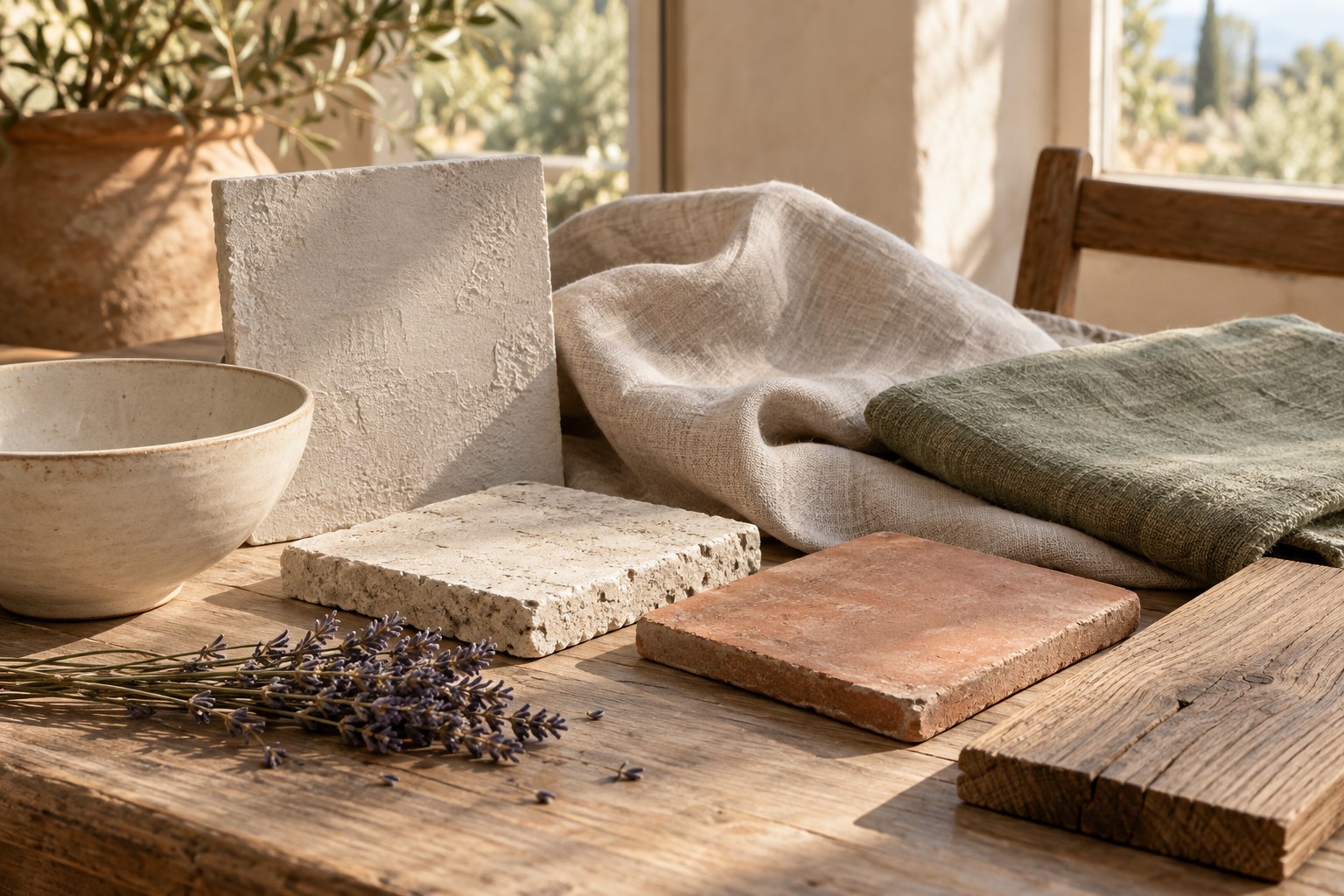
Then come the fabrics, the true grammar of the style: washed linen, cotton, hemp, and the absolute classic of French printing, toile de Jouy, with its monochrome pastoral scenes on a pale ground. Together with the boutis, the traditional Provencal quilt, they build the soft layering that makes rooms feel lived in rather than staged.
How should colours change with the room’s orientation?
The same sage green behaves differently in every room. Facing north it becomes cooler and needs ivory, honey-toned timber and warm artificial light; facing south it can be greyer and more mineral. Lavender and lilac work well where afternoon sun gives them energy, while ochre and terracotta are valuable in east-facing rooms that lose intensity after midday.
Before painting, prepare samples at least one square metre in size and observe them throughout the day. Lime finishes change with the angle of light far more than flat paint: that is their virtue, but it demands a real test. White must also be chosen in relation to the floor. Optical white beside terracotta feels hard; ivory with a trace of grey makes both surfaces more natural.
How do you furnish a Provencal living room?
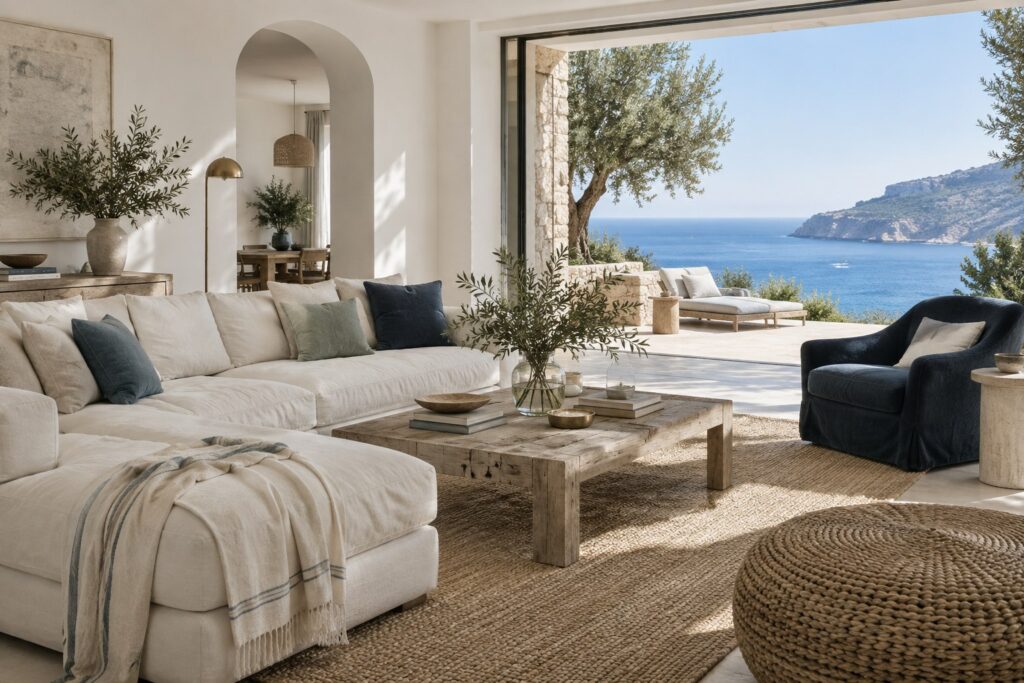
A Provencal living room is built around a comfortable sofa with removable covers, in linen or cotton, in ivory or sage tones. Better still if it is made to measure: the upholstered pieces by BertO, the company founded in Meda in 1974 with a direct artisanal supply chain, suit this interpretation perfectly, because they combine contemporary proportions with natural textile covers that age gracefully.
Around the sofa, the rule is to mix: a washed-wood coffee table, a Vienna straw armchair, a period sideboard with its original patina, matt ceramic lamps. One wall can take a delicate botanical wallpaper, chosen among the best wallpaper brands selected by our editors. Those drawn to a more aristocratic register can move towards the castle romanticism of château style, which is Provence’s noble cousin.
What makes a kitchen truly Provencal?
A Provencal kitchen is recognisable by three elements: framed doors in a matt finish, pale stone or marble worktops and a cooking block treated as the heart of the house. This is the room where the style gives its best, because it was born around the table. The ultimate reference remains La Cornue, the French maison that has been building tailor-made ranges since its vaulted oven was patented in 1908: a single La Cornue piece in coloured enamel and brass turns the room into a manifesto of the French art de vivre.
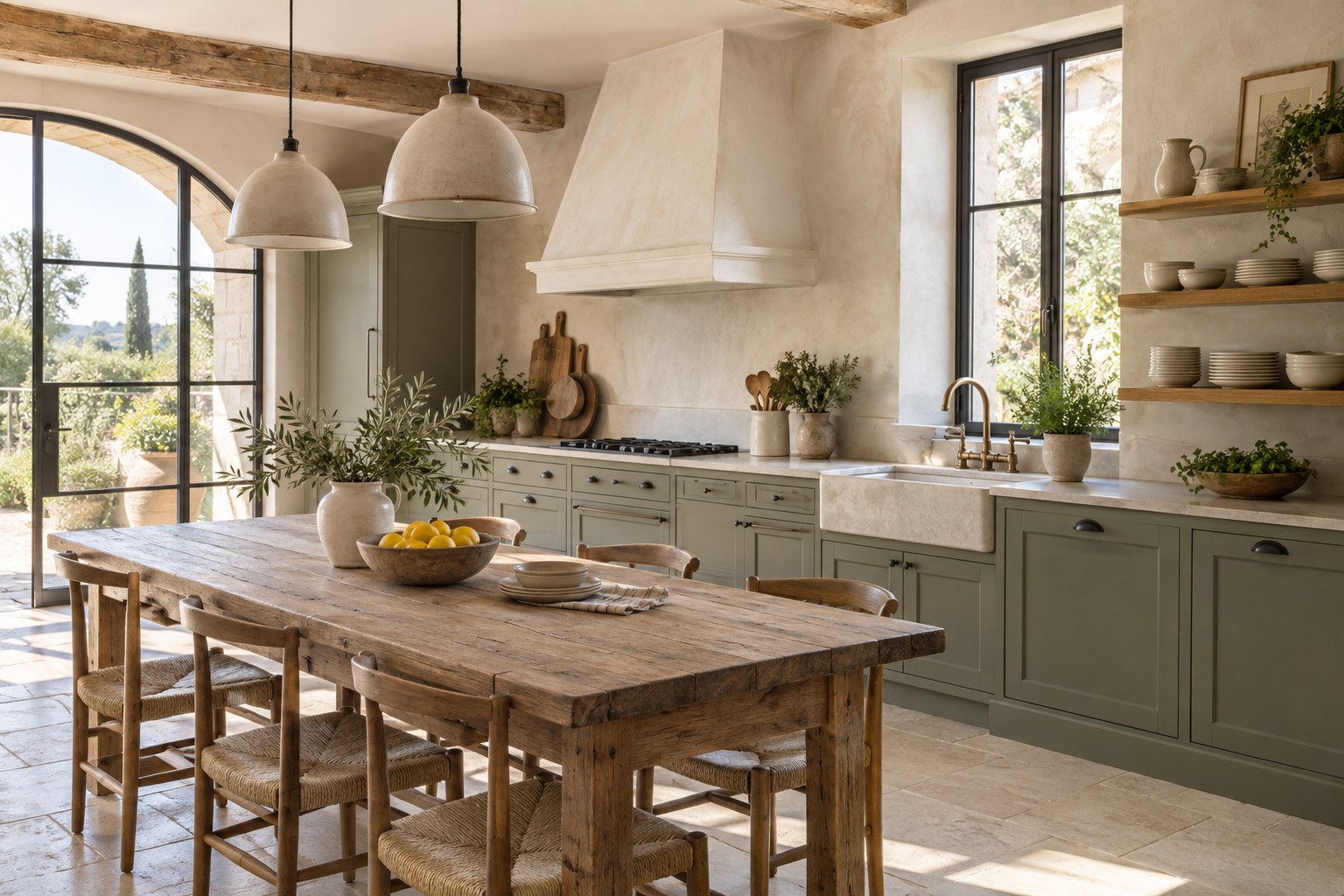
Around it, open shelves with mismatched ceramics, iron lamps above the dining table, aromatic herbs in terracotta pots. If you prefer a more neutral base, start from total white and warm it up with wood and straw: our guide to the white kitchen explains why that choice never goes out of fashion.

How do you bring Provence into the bedroom and bathroom?
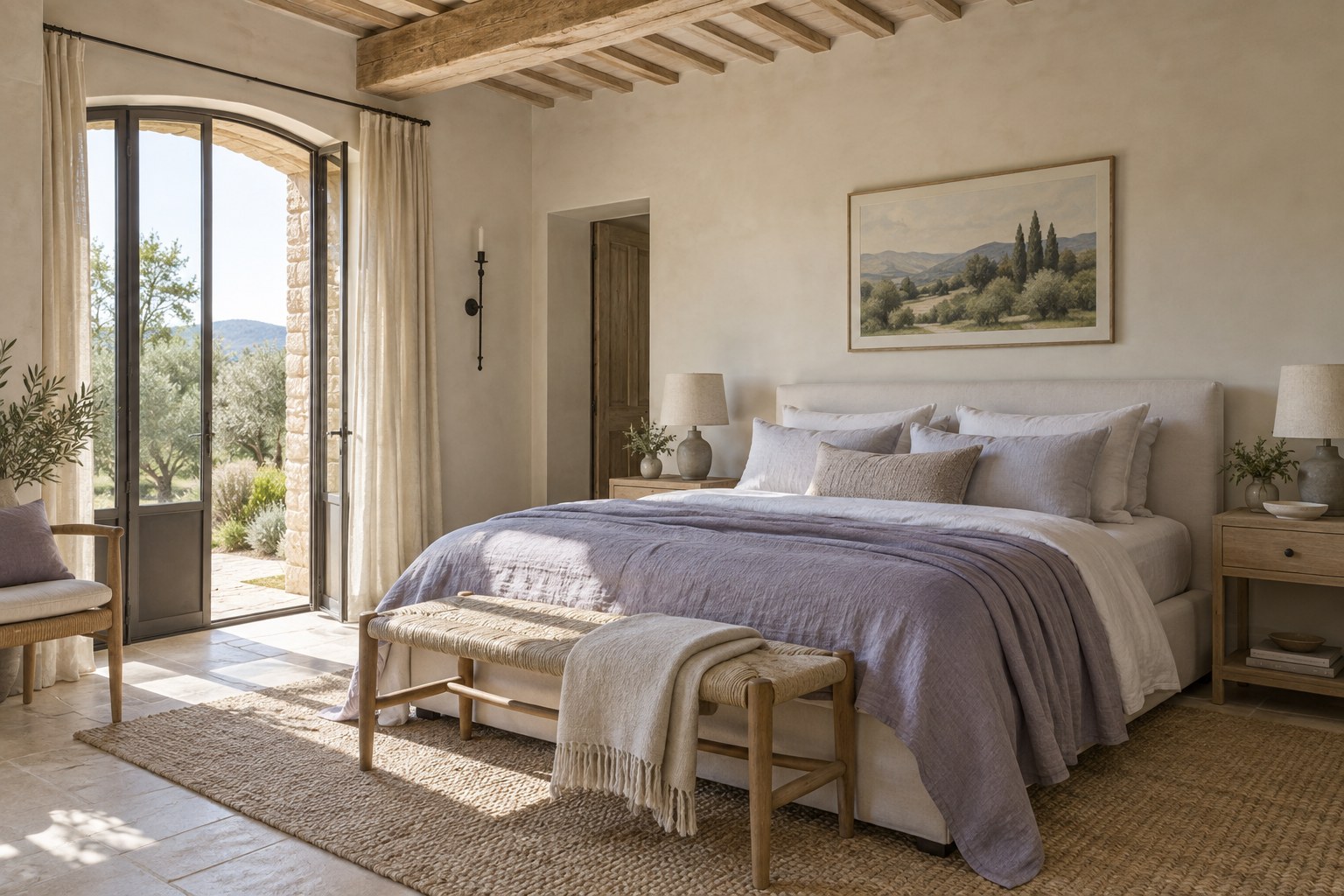
In the bedroom, Provencal style calls for an upholstered bed, washed linen sheets and a soft or carved headboard. An Italian icon slots in naturally here: Nathalie by Flou, the bed designed by Vico Magistretti in 1978 and the first upholstered model with fully removable covers in design history, anticipated by decades the softness this style demands. Beside it, washed-wood nightstands, a blown-glass lamp and a boutis folded at the foot of the bed.
The Provencal bathroom lives on white ceramics, patinated wood furniture and taps with a rétro flavour. The collections by Cerasa, the Treviso-based brand that has been designing Made in Italy bathroom furniture since 1983, offer soft-lined consoles and cabinets that pair beautifully with gold-framed mirrors and limewashed walls. The finishing touch is a honeycomb towel and a lavender soap, which here is not a cliché but a cultured quotation.
How do you choose antiques and finishes without a fake-aged effect?
At markets, look for construction and proportion rather than perfect paint. Dovetailed drawers, board backs, coherent hardware and solid timber indicate furniture made to last. Active woodworm, persistent damp smells and distorted frames require specialist intervention. Credible wear is irregular around handles and contact points; identical abrasion on every edge is almost always artificial.
New finishes need the same honesty. Limewash and mineral plaster should be chosen for breathability and depth, not only for a clouded effect; terracotta requires correct laying and sealing; wrought iron is convincing when sections and welds are carefully resolved. It is better to invest in one important surface and keep accessories simple than to distribute the budget across many objects made “in style”.
How do you give Provencal style a modern reading?
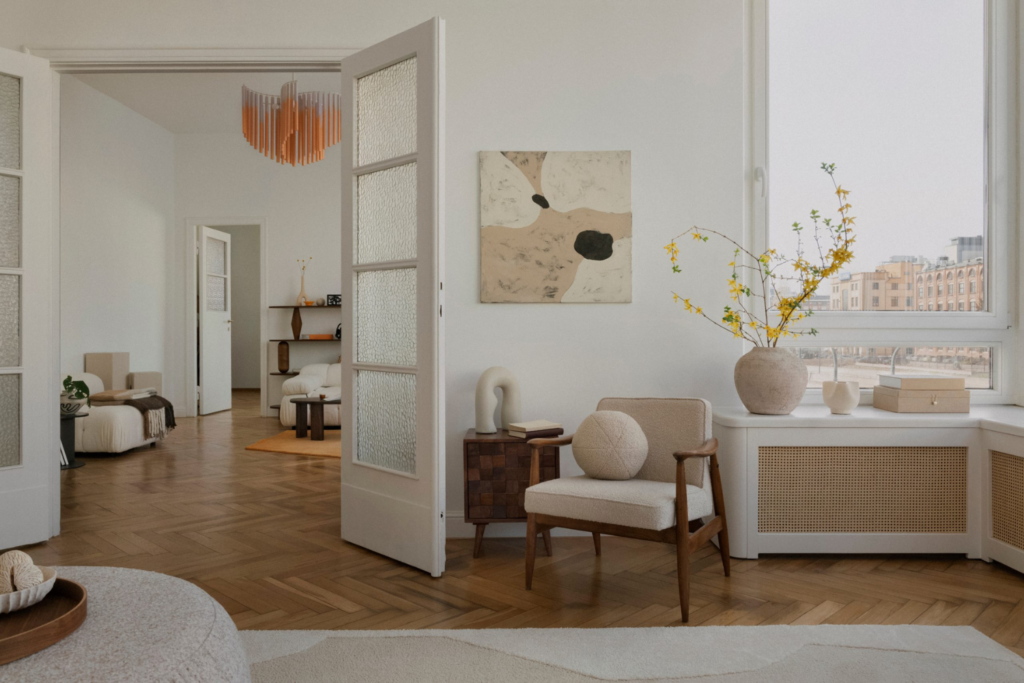
The contemporary version of Provence removes the decoration and keeps the substance: light, lime, wood and natural fabrics. Our editors recommend a precise proportion, no more than one period piece per room, set within clean, current lines. Textured walls now do the scenographic work that once belonged to doilies, dusty colours are applied to crisp volumes, framed doors coexist with professional appliances.
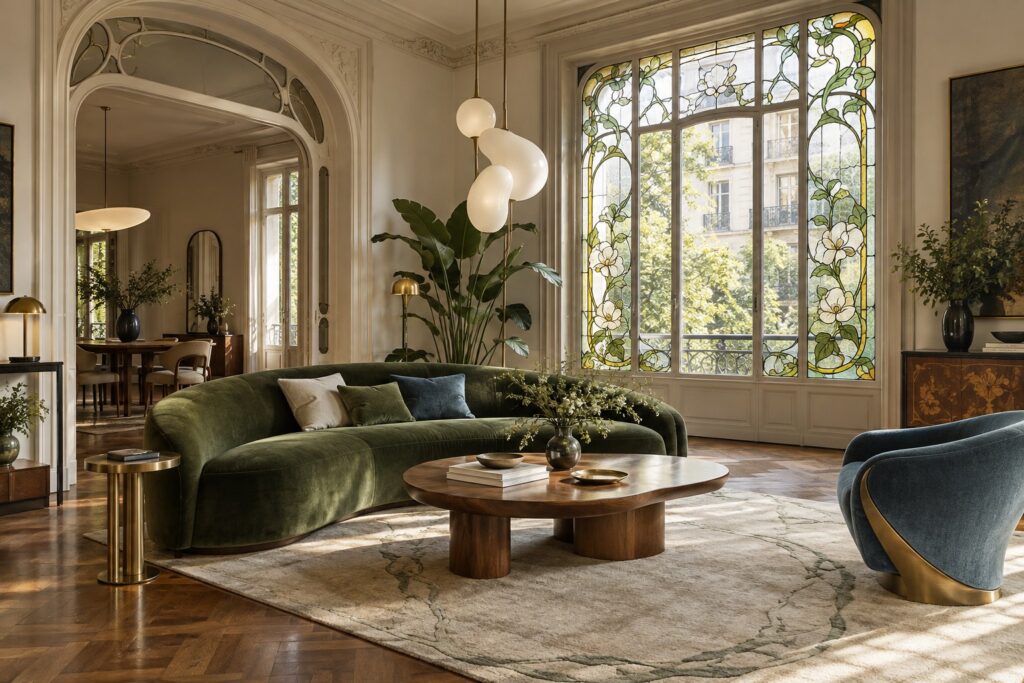
Read this way, Provencal style converses surprisingly well with other languages of the Mediterranean and beyond. If you love holiday atmospheres, blend it with nautical style; if you live in a period home with mouldings and stained glass, the sinuous elegance of Liberty style will feel closer. What matters is a single directing hand: honest materials, one coherent palette, no papier-mâché nostalgia.
How do you design a Provencal terrace or garden?
Outdoors, Provencal style returns to its origins: shade, stone, aromatic planting and furniture that can remain outside. A pergola or pale awning comes before the lounge set; powder-coated iron tables, woven seats and terracotta pots then support daily life. Rosemary, olive, thyme and lavender are more convincing than an over-designed garden and, in compatible climates, need little water.
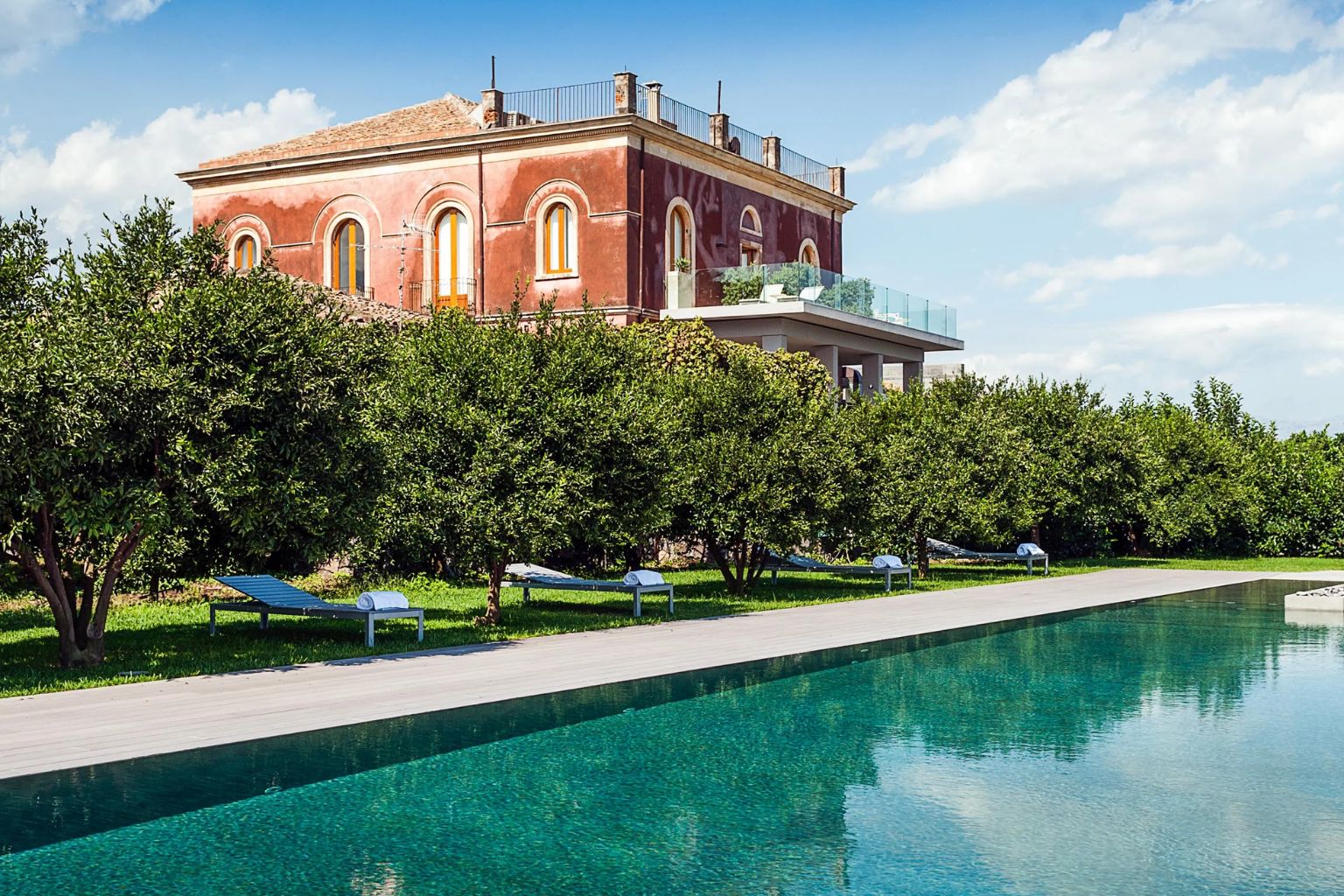
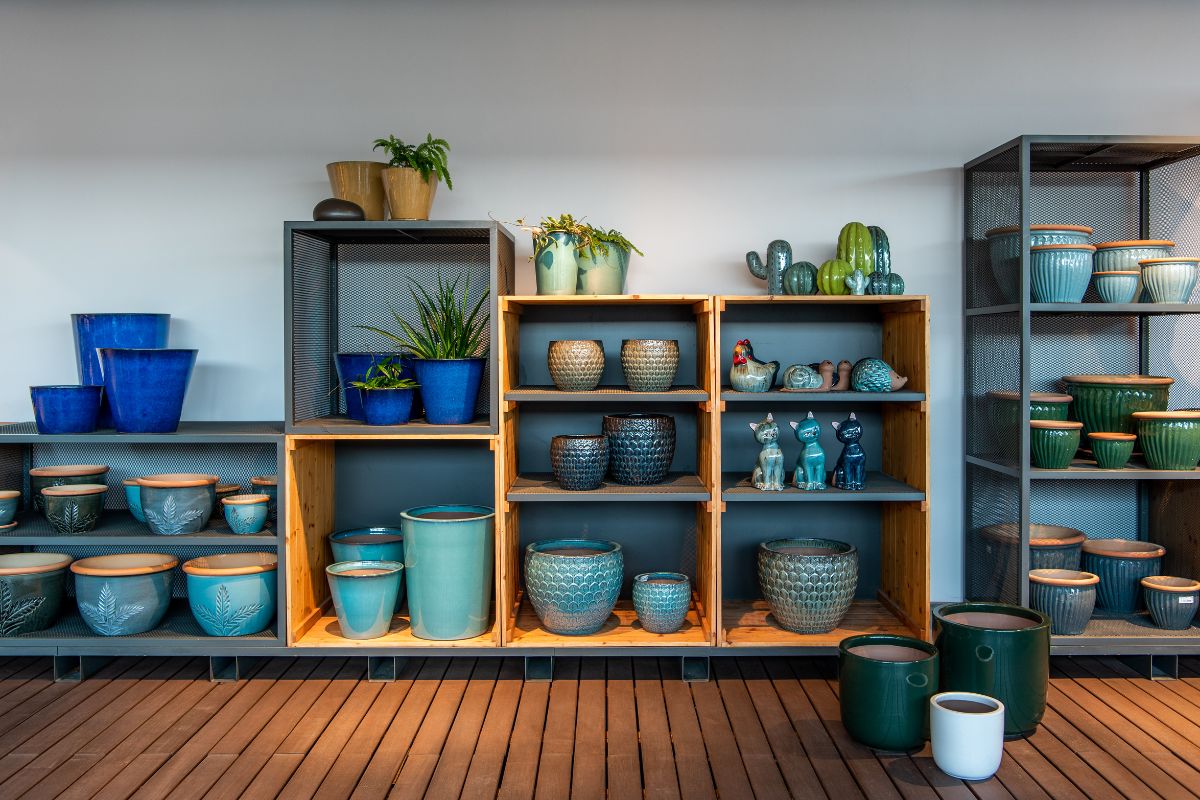
Mediterranean outdoor setting and Deroma planters. Photos courtesy of the respective brands and projects.
That, in the end, is the secret of Provencal style: not imitating a region, but learning from it a way of living. The lavender is optional; the light is not.
Frequently asked questions about Provencal style
What is the difference between Provencal style and shabby chic?
Provencal is a territorial style with precise roots, a warm palette and authentic period furniture, whereas shabby chic is a trend born in the 1980s that simulates wear through heavy whitewashing and a dominant white. The first ages well; the second risks dating quickly.
Does Provencal style work in a city flat?
Yes, provided you work by subtraction. In an urban flat, limewashed walls, linen curtains, two or three patinated pieces and a coherent dusty palette are enough. Fake beams and decorative clutter, on the other hand, immediately feel artificial away from the countryside.
Which walls suit a Provencal home?
The most faithful choice is a lime-based mineral finish in ivory, rope or pearl grey, applied irregularly so the light can vibrate. Botanical wallpapers are welcome on a single wall, especially in the bedroom or dining area.
Can Provencal pieces enter a home already furnished in a modern style?
It is one of the most successful pairings. A modern context with a few Provencal insertions, a patinated sideboard, linen fabrics, one limewashed wall, gains warmth without losing rigour. Our editors suggest limiting the additions to two or three carefully chosen elements per room.
Which fabrics are essential in a Provencal home?
Washed linen for curtains and sofas, cotton and hemp for bed linen, toile de Jouy for a narrative accent and a traditional boutis on the bed. Shiny synthetic fabrics are the only true prohibition: they instantly undermine everything else.