Born in Castellana Grotte in 2008 from an intuition by Vito Elefante, Rimura built its path from graphic design and large-format digital printing before making a more defined choice: focusing exclusively on wallpaper. That direction says a great deal about the brand’s identity, poised between technical culture, visual sensitivity, and a close attention to everything …
Born in Castellana Grotte in 2008 from an intuition by Vito Elefante, Rimura built its path from graphic design and large-format digital printing before making a more defined choice: focusing exclusively on wallpaper. That direction says a great deal about the brand’s identity, poised between technical culture, visual sensitivity, and a close attention to everything that can turn a surface into a presence.
Today, Rimura works on collections and tailor-made solutions designed to engage with homes, hospitality spaces, and contract projects, always keeping quality, research, and Italian production at the center. In this interview, Vito Elefante explains how this perspective took shape and what it means today to think of the wall not as a simple backdrop, but as a living part of the space.
Rimura was founded in 2008 in Castellana Grotte, rooted in experience in graphic design and large-format digital printing, and in 2019 it chose to focus exclusively on wallpaper. What did you carry with you from that technical background, and what, instead, did you have to rethink in order to transform printing expertise into a true culture of the surface?
We brought with us something very concrete: knowledge of processes, attention to the final result, and a production mindset based on quality control at every stage. With wallpaper, however, our perspective expanded: the surface became part of the architecture. It was through that shift that a real wall culture emerged, made not only of technique, but also of proportion, rhythm, light, and the relationship with lived-in space.
In your language, the idea often returns that the wall is not a limit, but a new horizon, and that it can take on soul, function, and identity all at once. Today, in dialogue with contemporary interior design, what does it mean for you to design a wall rather than simply decorate it?
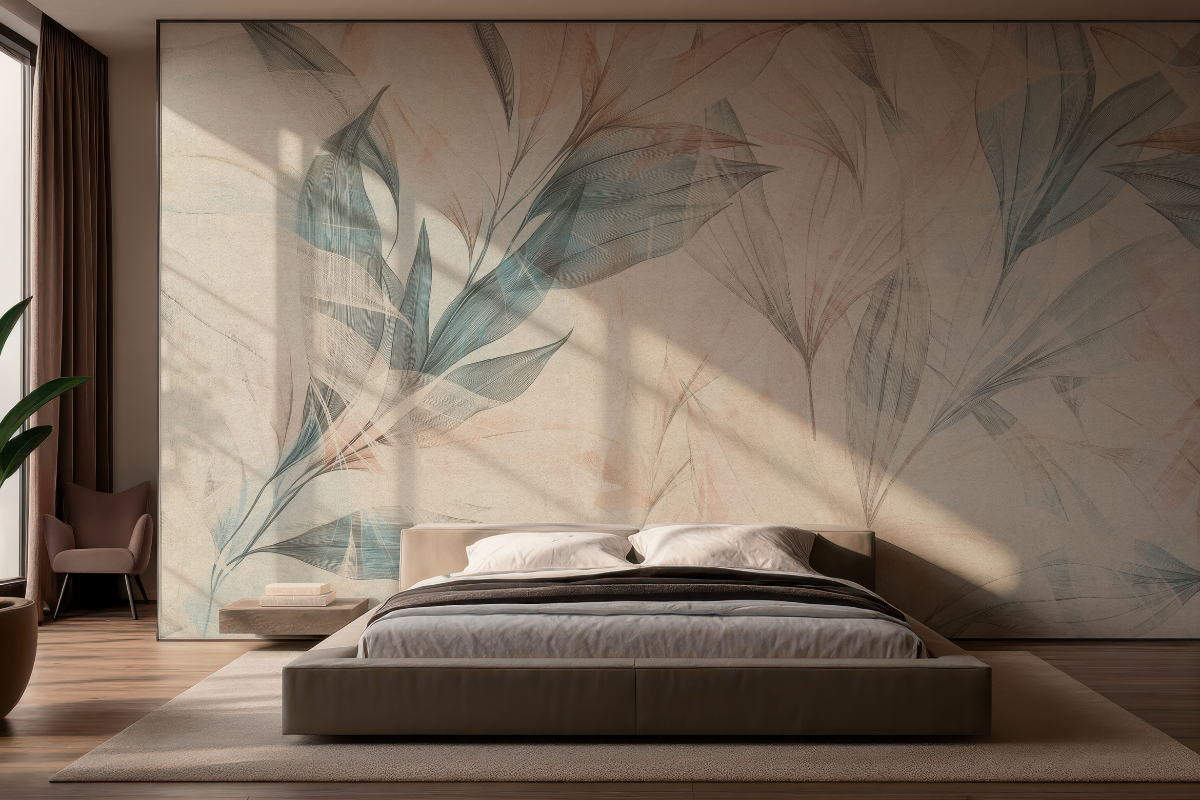
For us, designing a wall means giving it an active role within the space. We do not see it as a passive background to be covered, but as a surface that can shape the perception of an environment, define its character, and, in many cases, become the point of balance for the entire interior project.
Decorating often means adding something; designing means integrating. A designed wall engages with light, with the proportions of the room, with the function of the setting, and with the experience of those who live in it. It can visually enlarge a space, make it feel more intimate, more scenic, or more secluded. In this sense, our work is not about simply placing an image on a wall, but about building a coherent relationship between surface, architecture, and everyday life.
Your brand seems to grow from the meeting point of two very strong forces: on one side, a technical structure working on research, materials, and final performance; on the other, a creative component involving artists, illustrators, graphic designers, and designers. How do you keep this dual nature in balance without losing brand consistency?
For us, consistency does not come from uniformity, but from method. The technical side and the creative side are not two separate worlds: they correct, test, and strengthen one another. Every graphic, even the freest and most authorial, must always engage with the reality of the surface, the quality of the print, legibility within the space, and product durability. At the same time, every technical choice must remain in service of a recognizable visual language.
That is precisely where the balance lies: having a clear brand vision. Rimura does not seek effect for its own sake, but an aesthetic that is distinctive, measured, contemporary, and consistent with the idea of interior design we pursue. Collaborating with different sensibilities is a strength, but everything must pass through a shared filter: quality, balance, and identity.
The way your collections are built is already a narrative in itself: Main as the broadest repertoire of your language, Kids as a space of imagination carefully calibrated for childhood, Mida’s Gold as an exploration of light and gold. How does the overall architecture of these lines take shape, and how do you decide what should remain a stable collection and what should open up a new direction?
Our lines are conceived as open yet readable systems. Main is Rimura’s core collection, the one that most fully gathers our stylistic and design language. Kids, by contrast, responds to a precise need: imagining a space for childhood with sensitivity, balance, and narrative ability, while avoiding both excessive illustration and the trivialization of the theme. Mida’s Gold, finally, is a more specific line, tied to a distinctive decorative imagery and to a clearly defined material proposal.
Understanding what remains stable and what opens a new direction depends on several factors. On the one hand, there is recognizability: some lines represent our universe in a solid way and therefore remain structural. On the other, there is the need to evolve: when we feel that a line of research deserves its own independent space, introduces a new sensitivity, or intercepts a different way of experiencing the wall, then a new direction can emerge. For us, evolution is never a break, but a coherent expansion of our language.
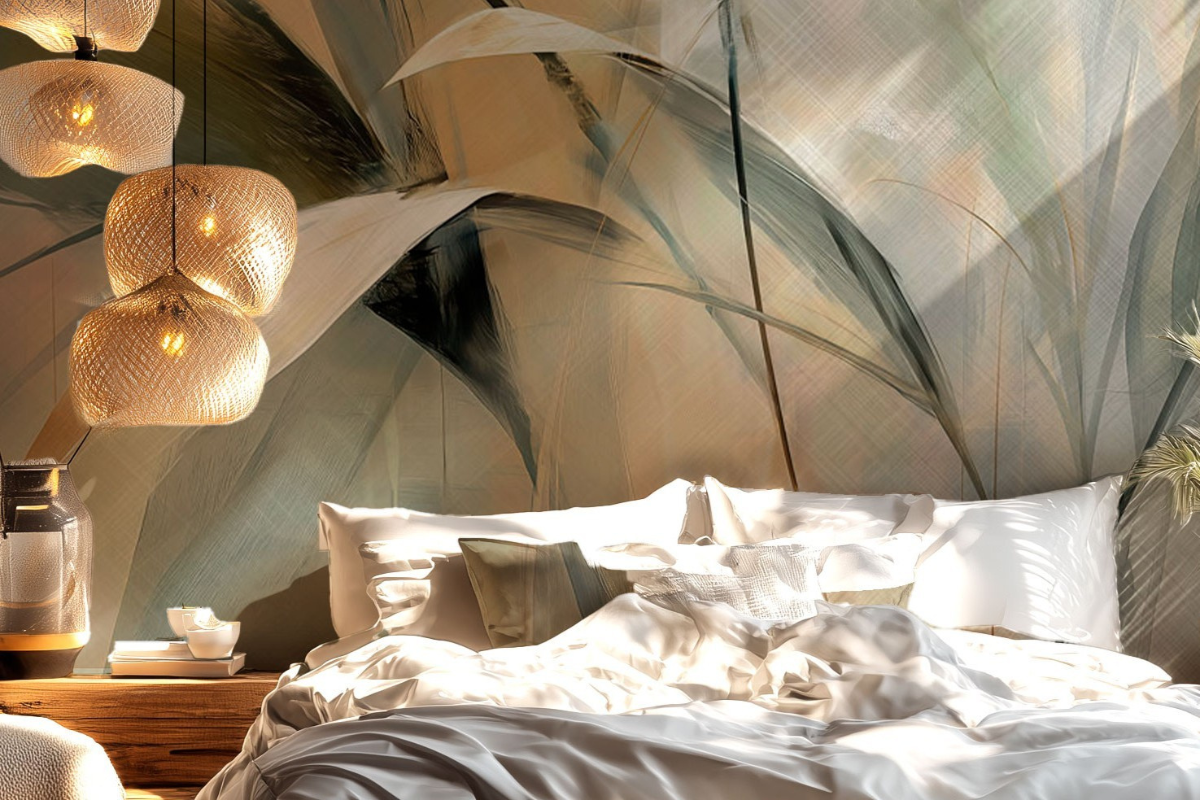
Your most recent capsules — Jazz Society, Almost Still, Deep, Life, Urban Muses — reveal an increasingly precise research into rhythm, stillness, depth, everyday storytelling, and urban space. Do you see them as a laboratory of language, an observatory on ways of living, or as a tool to push Rimura toward more authorial territories?
We see them as all three at once. They are certainly a laboratory of language, because they allow us to refine themes, atmospheres, and expressive registers with greater precision. But they are also an observatory on the way spaces are changing and on how the desire for living is shifting toward interiors that are more identity-driven, more emotional, and more narrative.
At the same time, these capsules allow us to explore a more authorial dimension without losing our connection to design and to the market. We are not interested in an enclosed or self-referential authorship; we are interested in research that can remain alive in real spaces. In this sense, the capsules are the place where we can experiment more freely while still maintaining a strong design responsibility.
In your work, personalization does not seem to stop at simple dimensional customization: there is also the possibility of adapting graphics, colors, and composition to the architecture that receives them. How important is it to intervene on the image so that the wall stops being an application and becomes a real part of the project?
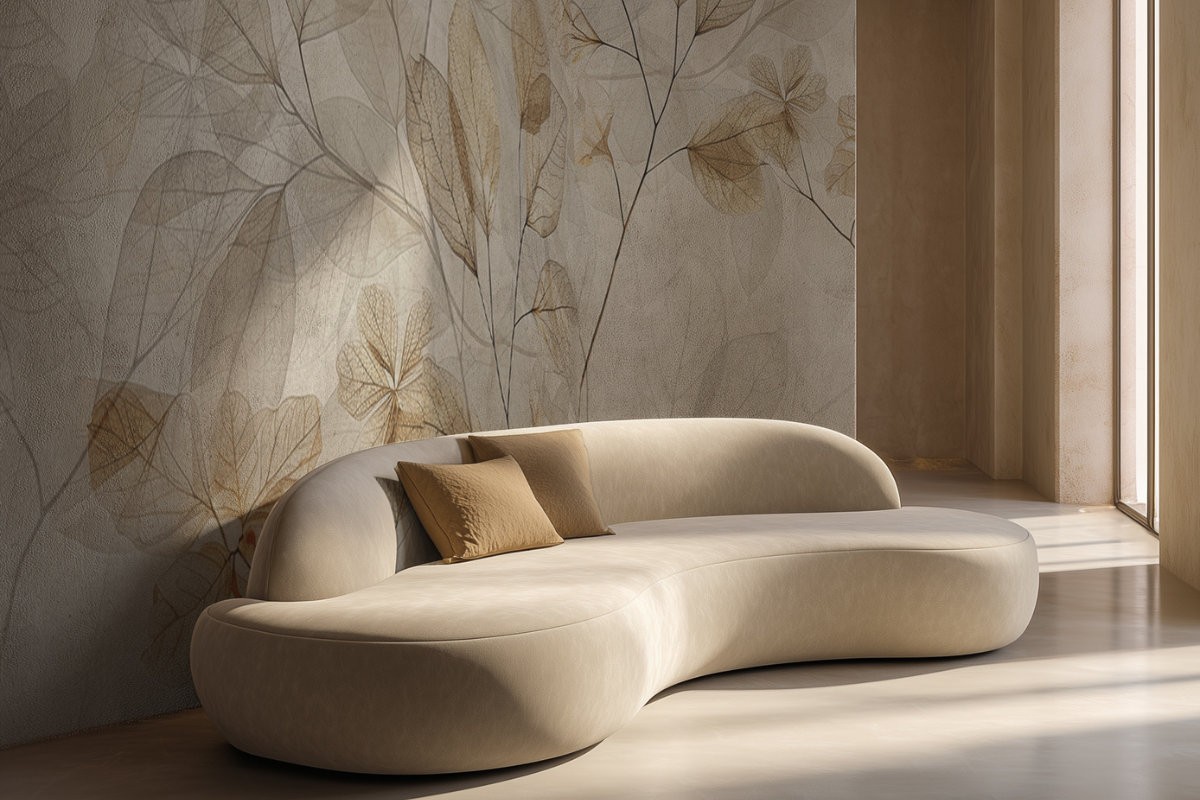
For us, true tailor-made design does not stop at dimensions; it concerns the relationship between surface and architecture. Every wall has different proportions, openings, light conditions, and functions, and the point is to make sure that the graphic finds a natural balance within the space. When that happens, the wall no longer appears as an applied element, but as a coherent part of the project.
Rough, Canvas, Linen, BATH, Gold: in your case, the substrate is never neutral, because it changes visual density, tactility, light, intended use, and even the way a graphic is read. How do you choose the right material, and how much does it affect the final meaning of the wall?
The choice of substrate always comes from the meeting of aesthetics and function. On the one hand, the desired visual and material result matters, because each material returns the graphic in a different way and influences how it is perceived in the space. On the other hand, there is also a very important functional factor: some settings require precise technical features, as in bathrooms or humid environments, where a suitable material becomes essential.
For us, therefore, the substrate is never a neutral or secondary element, but part of the project itself. It affects the way the wall is seen, experienced, and used, and it contributes in a concrete way to the final meaning of the intervention.
Then there is the issue of performance: wall coverings designed for bathrooms, saunas, wellness centers, and humid environments, but also the possibility of working on ceilings, doors, and cabinet fronts. In which cases does technology truly expand design freedom, and when does it instead require you to rethink the balance between visual impact and durability?
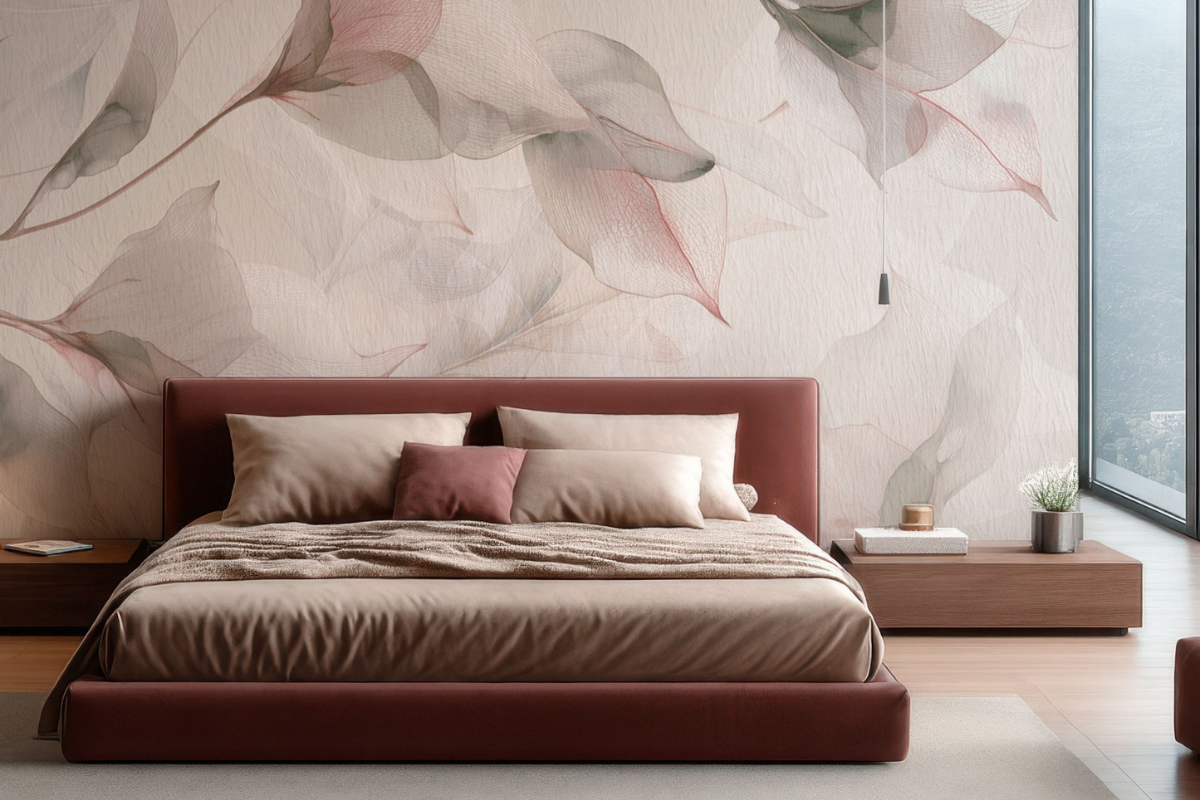
Technology truly expands design freedom when it allows the language of the surface to reach places that, until recently, seemed out of bounds. Being able to work in humid settings, on ceilings, and on doors means giving a project a broader and more ambitious continuity. The wall is no longer an isolated element, but can engage with the entire envelope of the space.
Naturally, every expansion of possibility requires greater responsibility. There are contexts in which durability, maintenance, and material performance become just as central as visual impact. In those cases, we never pursue an aesthetic effect at the expense of performance. Instead, we prefer to find a precise balance in which expressive freedom is supported by appropriate technical choices. For us, innovation means making something more possible, not accepting invisible compromises.
Rimura places emphasis on Greenguard-certified inks, A+ certification for indoor air quality, CE marking, PVC-free options, and concrete attention to packaging and production waste as well. How do you work to ensure that sustainability, health, and technical quality remain part of the project, without becoming topics detached from the aesthetic language?
For us, these aspects are not separate from the product, but contribute to its overall quality. We try to carry them forward coherently, as part of our design and production approach. That is also why we believe the value of a surface does not depend only on its aesthetic impact, but also on the care with which it is conceived and produced.
Virtual Wall Decor introduces a very interesting step: the wall can be simulated, tested, resized, moved, and checked before installation. What changes, in terms of design culture, when the client or designer can see the surface almost “in place” before the work actually exists?
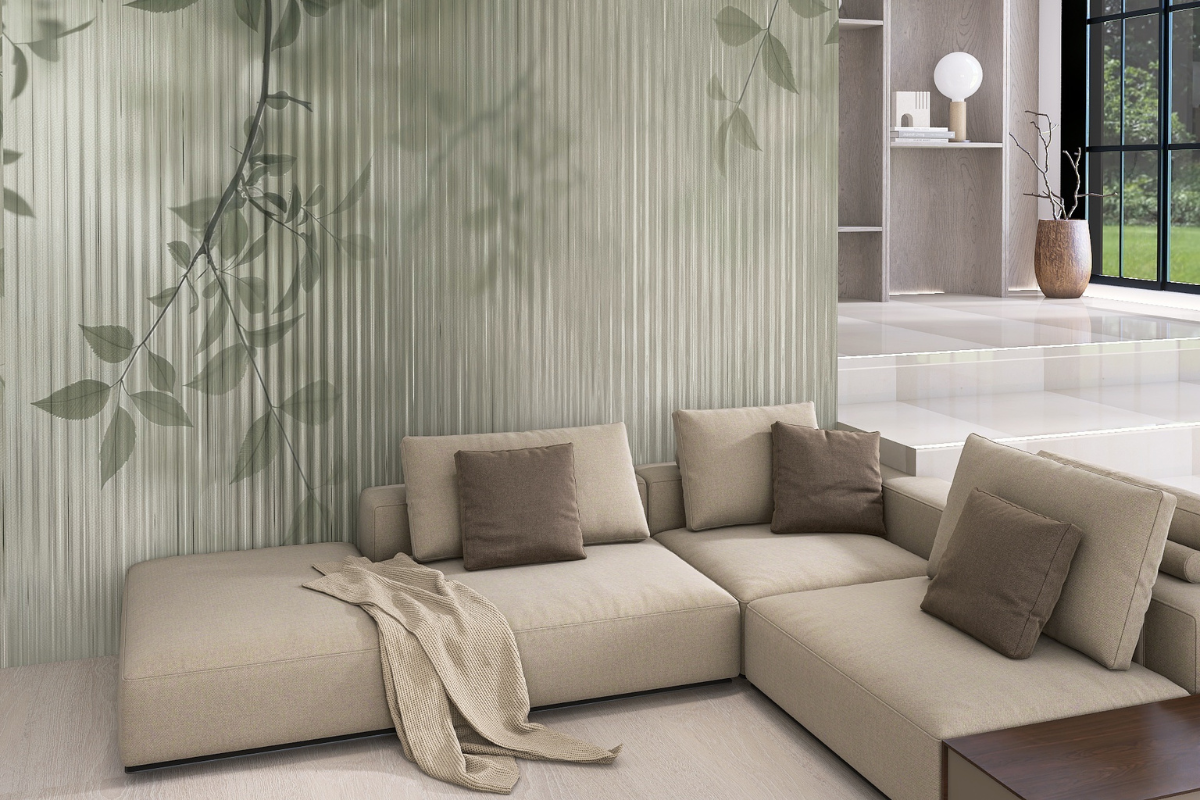
It changes things because it offers the possibility of seeing more immediately how a graphic could fit into a real space. Virtual Wall Decor was created for exactly that reason: to provide a more concrete idea of the wall’s effect in the room and to support the decision-making process in a simpler and more intuitive way.
In your latest projects, it is clear that the same design logic can produce very different effects: Four Seasons accompanies a bedroom with measured presence, while Black Swan is described as an element that defines the identity of the space. How do you decide the degree of intensity a wall should have within an interior, and how much does that choice change between residential and contract spaces?
The intensity of a wall depends on the context and on the role it takes within the space. There are settings in which the surface accompanies with discretion, and others in which it contributes more visibly to defining character. Between residential and contract, that is what changes most: in the first case, a more personal and intimate dimension often prevails; in the second, there may be a stronger demand for identity and recognizability. For us, however, the point always remains the same: making sure the wall is coherent with the project as a whole.
Among your graphics or collections, which model do you consider truly iconic in telling the Rimura story — the one in which imagery, material, market, and recognizability came together in a particularly clear way — and how did it emerge, from the first sign to its affirmation?
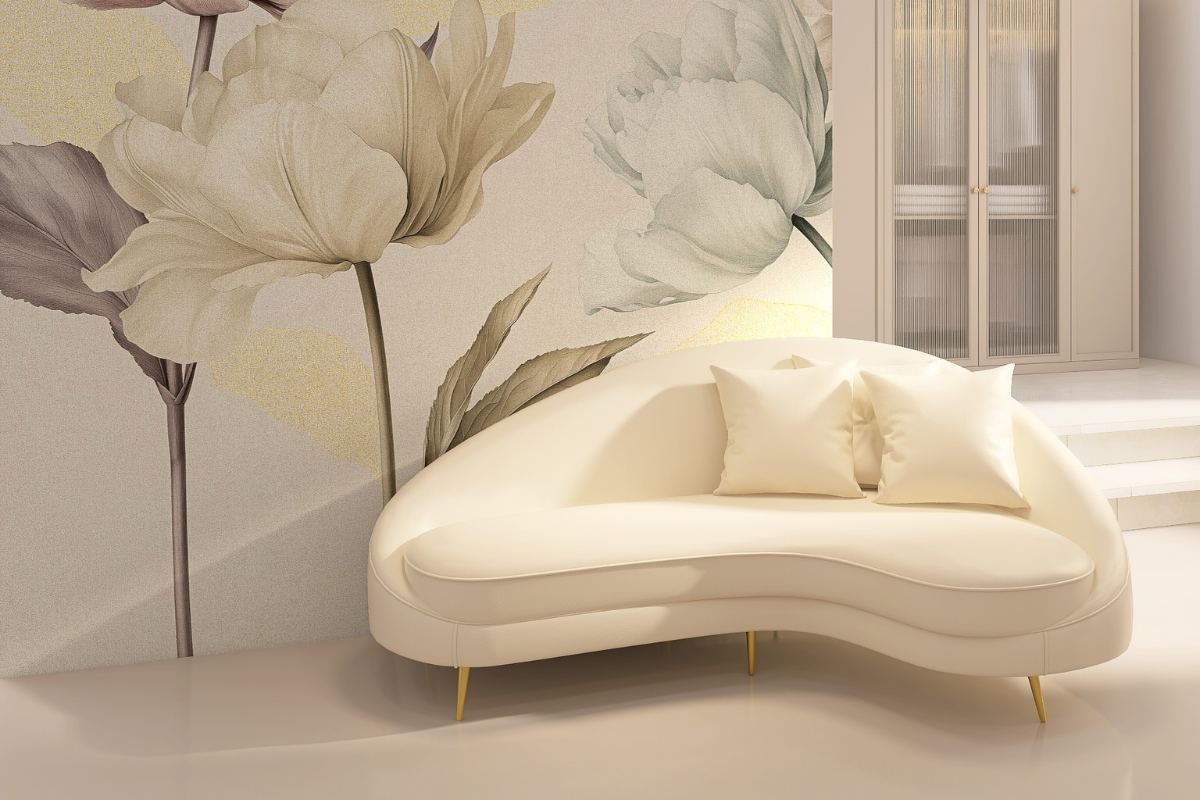
There is not one single model we consider iconic in an absolute sense, because Rimura has been built over time through a set of graphics, collections, and different sensibilities. Rather than identifying ourselves with one single image, we recognize ourselves in a way of understanding the wall: as a design surface capable of bringing together visual quality, materiality, and a relationship with space.
There are certainly graphics and collections that have represented important moments in our path and that have helped make our language recognizable. However, Rimura’s value, for us, lies precisely in the ability to express a coherent identity through different proposals. More than a single iconic model, we are interested in building, over time, a recognizable and constantly evolving imagery.
Today Rimura is present in different markets, from Europe to the United States, from Qatar to India and Japan, and at the same time it is also opening up to collaborations with external artists for exclusive collections. What have you understood, by growing beyond Italy, about what remains truly recognizable in your mark?
By growing beyond Italy, we understood that what remains truly recognizable in our mark is not a single style, but a design attitude. Rimura is perceived as a brand capable of bringing together technical quality, aesthetic sensitivity, and authentic personalization. More than any rigid visual formula, that combination is what makes our work recognizable even across very different cultural contexts.
We have also understood that the Italian character of our brand does not coincide with a formal stereotype, but with a certain way of understanding proportion, attention to detail, the relationship between craftsmanship and design, and between beauty and production quality. Collaborating with external artists helps us expand our language, but what remains constant is this ability to transform the surface into a cultivated, contemporary element built with precision and rooted in Made in Italy values.
It is now 2036: Rimura has gone through another decade of evolution in interior design, materials, and digital tools. At that point, what would you like your most recognizable contribution to be: a new way of thinking about the wall, a technology, a culture of tailor-made design, a visual lexicon, or something even broader?
We would like our most recognizable contribution to be having given the wall a more central role in interior design. Not as a simple surface, but as an active part of the identity of the space.
We would like Rimura to represent a new way of perceiving the wall: no longer as a margin, but as a full design space, capable of bringing together imagery, function, technology, and identity.