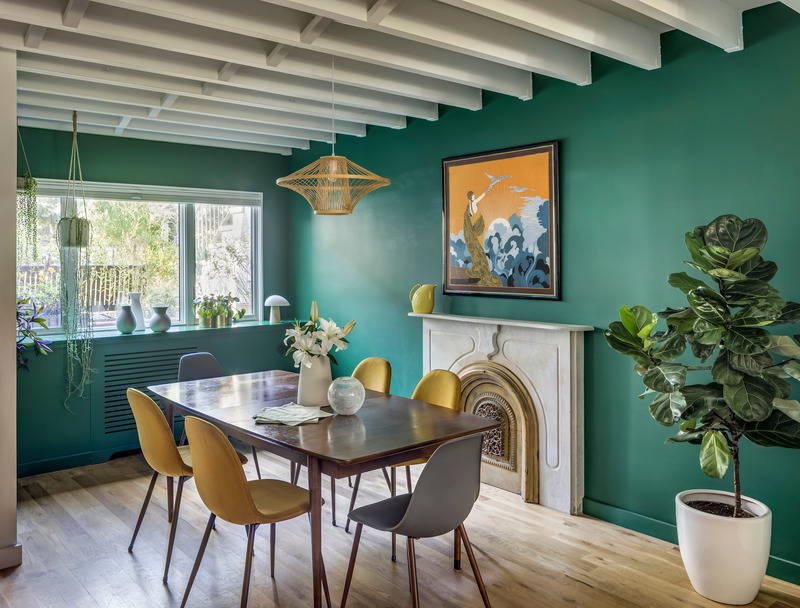
Warm minimalism retains the order, simplicity and visual control typical of minimalist interiors, while replacing a cold, impersonal feeling with tactile materials, warm colours, soft lighting and furniture chosen with greater attention to comfort. In 2026, the concept continues to be widely used by the international interior design press to describe restrained yet materially rich …
Warm minimalism retains the order, simplicity and visual control typical of minimalist interiors, while replacing a cold, impersonal feeling with tactile materials, warm colours, soft lighting and furniture chosen with greater attention to comfort. In 2026, the concept continues to be widely used by the international interior design press to describe restrained yet materially rich spaces shaped by wood, stone, linen, plaster, earthy tones and a small number of meaningful objects. It is not a codified historical movement, but a contemporary definition for a more domestic and sensory interpretation of the “less is more” principle.
What is warm minimalism and why is it relevant in 2026?
The term warm minimalism describes a design approach that combines reduction of elements with perceptual richness. The room remains ordered, functions are easy to read and furniture does not occupy every available surface; what changes most are the palette, materials and relationship with light.
Homes & Gardens described it on the eve of 2026 as an evolution of more austere minimalist interiors: softer colours, natural materials, layered textures and spaces that remain controlled without feeling sterile. During 2026, the term continues to be used by House & Garden and Livingetc for real projects in which minimalism, comfort and materiality coexist.
This distinction helps avoid a common misunderstanding: warm minimalism does not simply mean decorating a beige home. Colour is only one of the tools. The grain of timber, the depth of plaster, the softness of a curtain, the contrast between stone and fabric, the quality of light and, above all, the amount of space left free are equally important.
Warm minimalism vs traditional minimalism: what really changes?
In contemporary interior design language, stricter minimalism is often associated with white walls, uniform surfaces, sharp geometries, cool palettes and a strong reduction of objects. Warm minimalism retains this compositional discipline, while preventing reduction from becoming material poverty.
In 2026, Livingetc identifies precisely this shift towards minimalist interiors enriched by craftsmanship, texture, earthy tones and materials with a visible history. The aim is not to add decoration until the essential character disappears, but to give greater weight to what remains.
In practical terms:
- a perfectly white wall can become a warm white, greige or mineral plaster finish;
- a neutral floor can give way to the natural character of timber or stone;
- a strictly geometric sofa can be replaced by a softer form;
- a room with very few accessories can still include a small number of meaningful handmade objects, books or artworks.
The result remains minimal, but gains depth.
The warm minimalist colour palette: beyond beige and greige
The colour palette is generally restrained, but it does not need to be monochromatic.
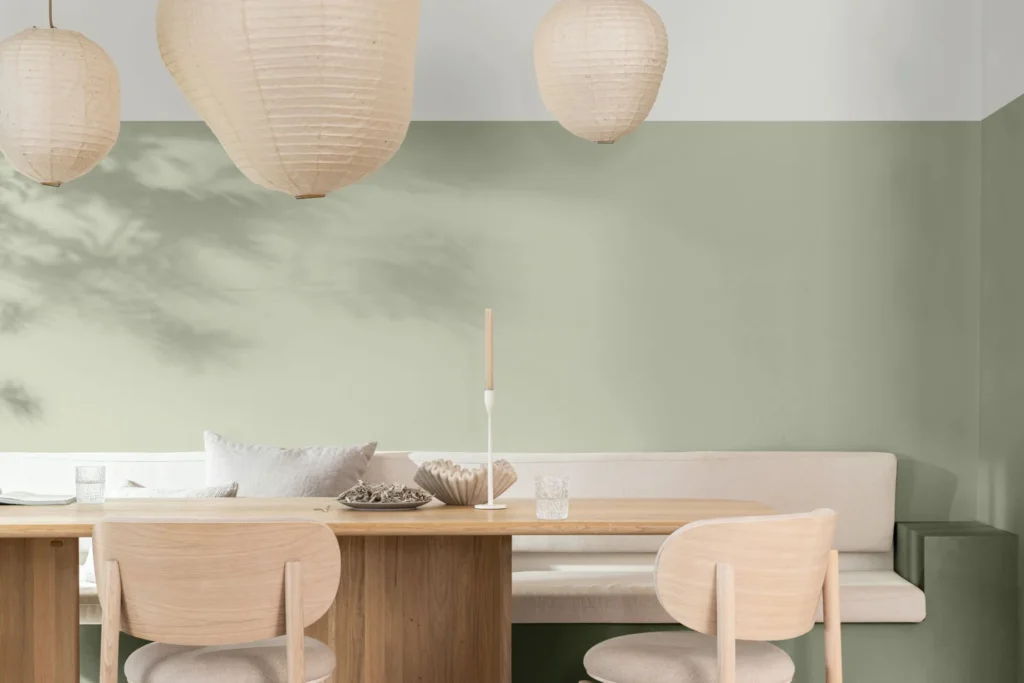
Creamy white, ivory, sand, taupe, greige, mushroom and pale browns provide effective backgrounds because they reflect light without creating the hard contrast of optical white. More intense colours can be introduced alongside these neutrals, provided they are desaturated or carefully balanced.
International design publications examining the evolution of minimalism in 2026 point to olive, terracotta, cognac, chocolate, burgundy and clay tones alongside richer timbers. Homes & Gardens similarly highlights creamy whites, taupe, ochre and warm earth tones.
A tonal approach is often the most effective strategy: rather than building the room around very strong contrasts, it works with related colours that differ in temperature, brightness and saturation.
A living room might therefore combine lime-toned walls, an oatmeal sofa, walnut timber and an olive-green armchair without losing its sense of calm.
Wood, stone, linen and plaster: why materials matter more than colour
In warm minimalism, materiality often performs the role that pattern plays in other interiors.
Natural timber, stone, linen, wool, heavyweight cotton, leather, ceramics and patinated metals create variation through grain, porosity, reflection and tactility. In 2026, House & Garden described a Rancho Mirage home explicitly shaped by warm minimalism through a palette of limestone floors, pale woods and textured plaster.
Plaster can be particularly effective. Architectural Digest has documented the growing presence of plaster walls in warm modernist interiors precisely because of their ability to respond continuously to light and shadow, creating a visually active surface while remaining almost monochromatic.
The design principle is important: texture needs to be visible because there are fewer elements in the room.
A timber table with clearly visible grain can carry more visual weight than three small decorative accessories. A mineral wall finish can remove the need for pattern altogether. A heavyweight linen curtain both alters the light and introduces movement.
Texture: how to create depth without filling the room
One of the most common mistakes is adding large numbers of cushions, throws and decorative objects in an attempt to “warm up” a minimalist interior.
Warm minimalism works better when layering takes place across different levels.
A useful combination is:
smooth surface + textured surface + soft textile + natural element.
For example, a lime-plastered wall can meet an oak floor, a linen sofa and a honed stone coffee table. Four materials are enough to create differences in visual temperature, reflection and texture.
This logic is reflected in contemporary interiors covered by the design press: Homes & Gardens identifies texture and materiality as key tools for keeping an almost monochromatic palette interesting without resorting to accumulation.
Simple forms, but not all of them rigid
Warm minimalism does not eliminate geometry. It softens its impact.
Straight lines and clearly defined architectural volumes can coexist with a gently curved sofa, an enveloping armchair, an oval table or a sculptural light fitting.
Softer forms are particularly useful when the architecture is highly rectilinear. They create a visual counterpoint without turning the home into a succession of organic furniture pieces.
This is also the clearest point of contact with Organic Modern, which makes greater use of curves, nature-inspired forms and organic surfaces. In warm minimalism, however, the priority remains reduction and discipline within the overall composition; in Organic Modern, the relationship with natural forms and materiality can become more explicit.
Light is one of the materials of the design
A room can have the right palette and still feel cold if the lighting is too uniform or harsh.
Natural light should be allowed to interact with materials that change throughout the day: plaster, timber, matt stone and textiles react differently to grazing light, making the depth of their surfaces more perceptible.
In the evening, it is usually more effective to create several layers of light rather than relying entirely on a single central source. Floor lamps, wall lights, table lamps and architectural lighting can define zones and functions while maintaining an intimate atmosphere. Designers interviewed by Homes & Gardens similarly emphasise how the quality of artificial lighting can determine whether an essential interior feels welcoming or austere.
Warm minimalism, Japandi and Organic Modern: the differences
The three aesthetics share natural materials and a degree of visual restraint, but they are not interchangeable.
| Approach | Defining characteristic | Materials and forms |
|---|---|---|
| Warm minimalism | Reduction, comfort and materiality | Essential forms, timber, stone, linen, plaster and warm palettes |
| Japandi | A synthesis of Japanese sensibility and Scandinavian design | Craftsmanship, timber, simple lines, nature and strong formal restraint |
| Organic Modern | Modernity combined with organic forms and references | Curves, stone, timber, natural textures and sculptural elements |
Livingetc defines Japandi as a meeting point between Japanese and Scandinavian references, with particular emphasis on minimalism, craftsmanship and natural materials. Organic Modern, by contrast, makes explicit use of organic shapes and contrasts between rectilinear architecture and softer furniture.
Warm minimalism is less culturally specific: it works primarily as a method for designing atmosphere.
Warm minimalism room by room
Living room
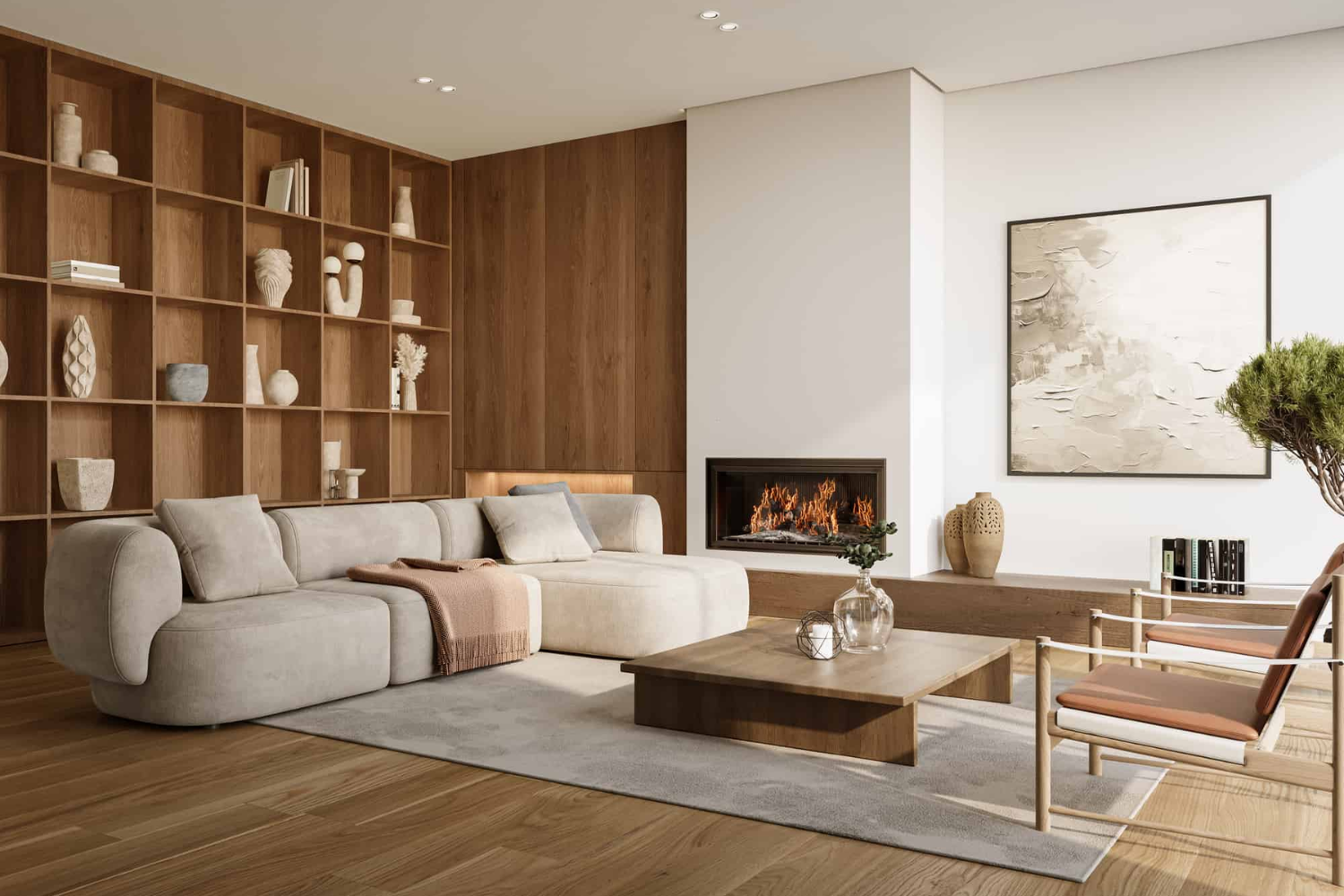
In the living room, it is useful to begin with a small number of important volumes: a well-proportioned sofa, an armchair, a coffee table and good lighting.
A rug can define the conversation area and introduce texture without adding many elements. A coffee table in timber, stone or burnished metal provides material contrast. Art is most effective when it has space around it: one large work can have more presence than a wall composed of many smaller pictures.
Kitchen
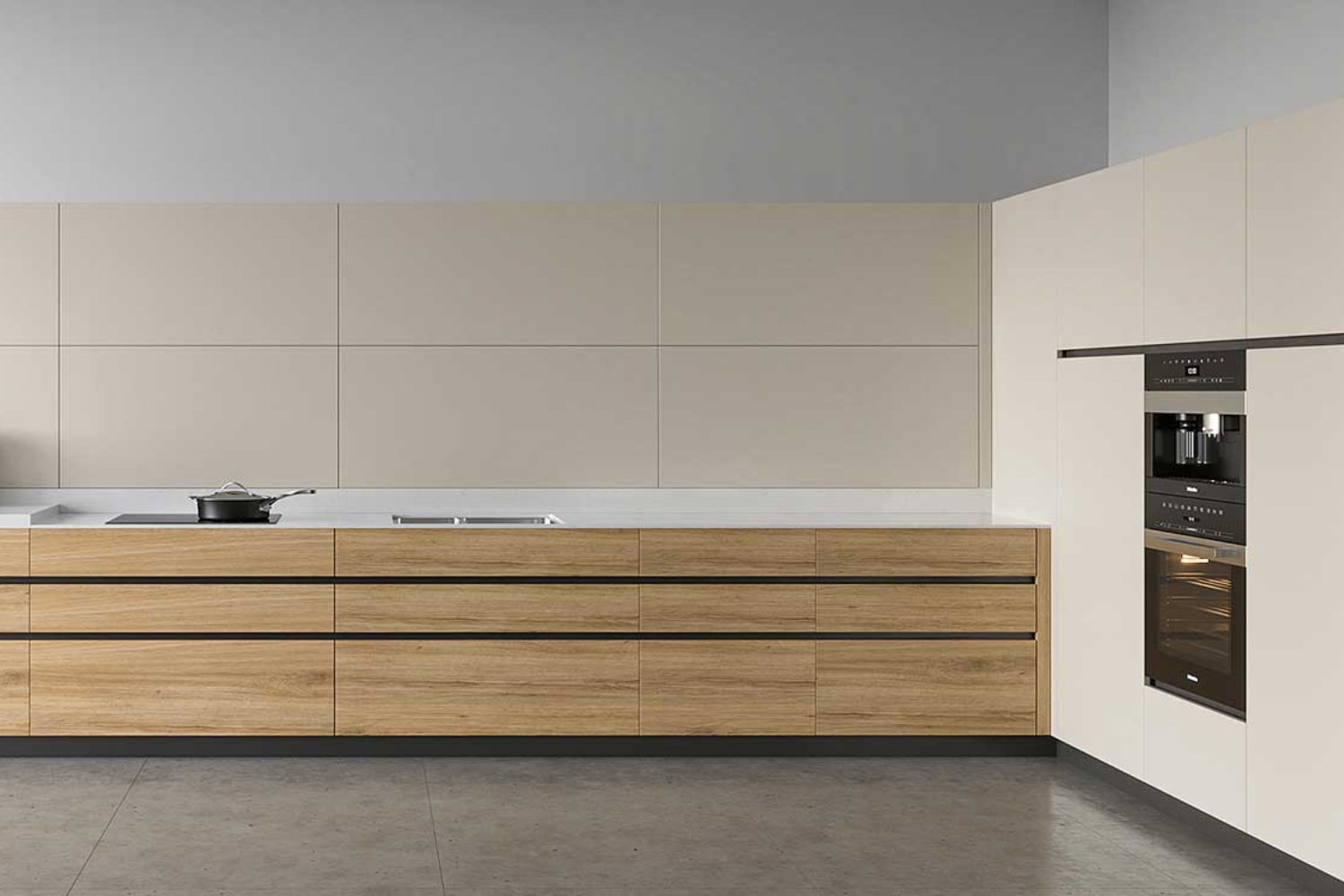
In the kitchen, warm minimalism works well with simple cabinet fronts and richer materials.
Oak, walnut, natural stone, mineral surfaces and satin-finished metals can balance the sharp geometry of the cabinetry. The aim is to avoid both decorative excess and a completely uniform kitchen.
Shelves and worktops should not become surfaces that need to be filled: a few utensils, ceramics or genuinely useful objects are enough to bring life to the space.
Bedroom
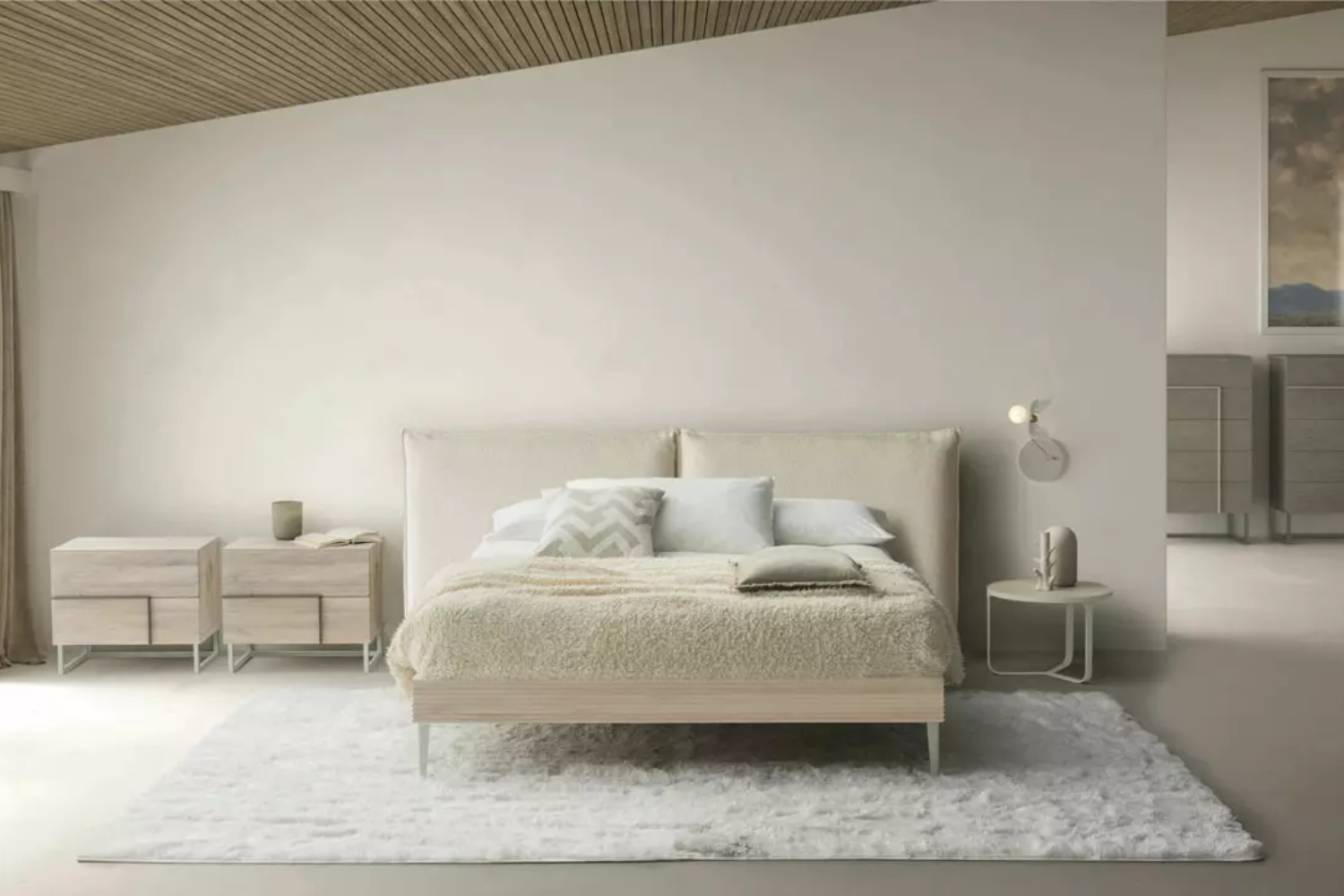
The bedroom is probably one of the easiest spaces in which to apply this approach.
Walls in a warm, desaturated shade, linen or cotton bedding, an upholstered or timber headboard and side lighting can create an essential room without making it impersonal. In its 2026 bedroom guidance, Architectural Digest similarly highlights how wall texture and soft lighting can preserve a minimalist aesthetic while adding depth and comfort.
Bathroom
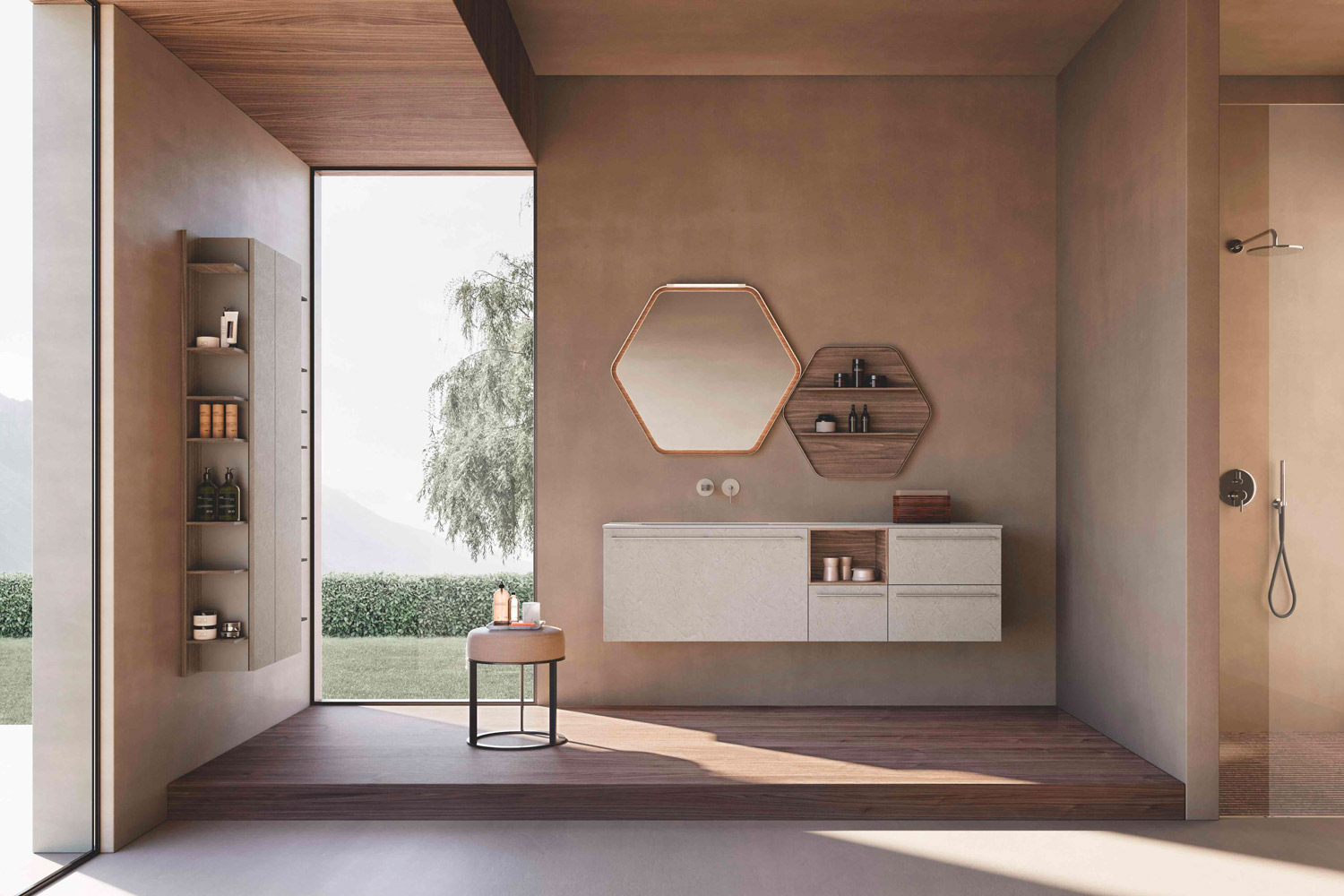
Stone, travertine, timber treated for the specific application, ceramics and mineral surfaces all work well in a warm minimalist bathroom.
Reducing visible joints and small objects helps create a sense of calm, but function should never be sacrificed. Integrated storage, a well-lit mirror and materials suitable for humid conditions matter more than any minimalist aesthetic.
Art and objects: fewer pieces, greater presence
Warm minimalism does not mean removing every trace of personality.
On the contrary, one of the developments noted by the design press in 2026 is the introduction of craftsmanship, objects with a history, artworks and vintage pieces into otherwise restrained interiors. The difference from a more maximalist space is quantitative and compositional: objects are isolated and given room to breathe.
A ceramic piece, vintage lamp or photograph gains importance because it does not have to compete with dozens of other objects.
The right question is therefore not “how many accessories can I add?”, but which elements deserve to remain visible?
Mistakes that make warm minimalism feel monotonous
The first is turning it into an all-beige interior. Without tonal differences, darker materials or contrasting elements, the room loses depth.
The second is buying a series of objects that appear to belong to the same moodboard. Bouclé, travertine, pale timber and irregular ceramics can all work, but when used as a checklist the result becomes predictable.
The third is confusing minimalism with emptiness. An unfinished interior does not automatically become elegant simply because it contains very little furniture.
The fourth is forgetting storage. For surfaces to remain genuinely clear in everyday life, wardrobes, drawers and technical storage spaces need to be designed properly.
The fifth is removing personality. An interior can be essential without appearing impersonal: art, books, inherited objects and handmade pieces can coexist perfectly with a minimalist composition.
Warm minimalism works when reduction improves the perception of what remains. A textured wall can become more important than decoration, a well-proportioned table can replace several small accessories, and a single lamp can define the character of an entire area. It is this discipline — supported by colour, tactility, light and comfort — that separates a genuinely welcoming home from a simple reproduction of the neutral aesthetic that dominates so many online images.