OB-Jack first caught our attention through NORA, the project with which the brand enters the world of interiors: a modular system of panels and shelves that treats the wall not simply as a surface to furnish, but as an active part of the interior itself. Essential in form and almost immediate in its visual language, …
OB-Jack first caught our attention through NORA, the project with which the brand enters the world of interiors: a modular system of panels and shelves that treats the wall not simply as a surface to furnish, but as an active part of the interior itself. Essential in form and almost immediate in its visual language, the project is underpinned by technical research, material experimentation and a very clear idea of compositional freedom.
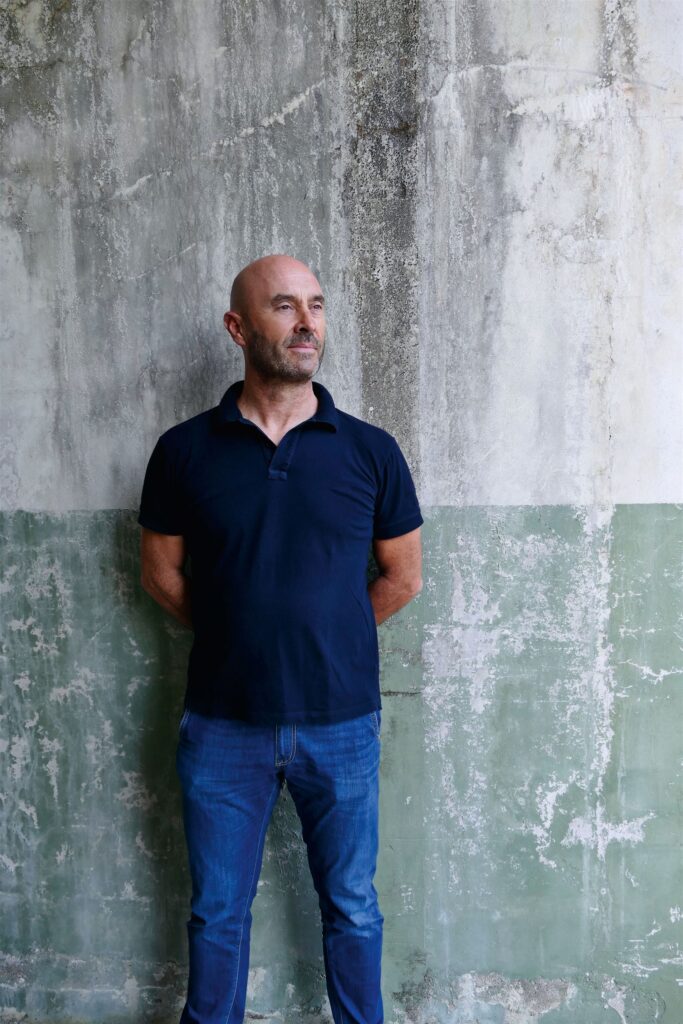
We decided to take a closer look at this emerging reality and speak with Stefano Dalle Carbonare, founder and creator of OB-Jack, because NORA raises an interesting question about the way we design objects for contemporary living. Interiors change more rapidly than they once did, functions overlap, and the spaces we inhabit are increasingly expected to accommodate constant transformation. In this context, a system that can be moved, rearranged and reinterpreted without losing its coherence becomes something more than a simple furnishing accessory.
NORA began with the observation of an old storage board and one very practical question: why did its elements necessarily have to remain fixed? From that first intuition, the project evolved through tests, prototypes, perforated panels, interchangeable shelves and magnetic connections, gradually defining a language built around few elements and many possibilities. Here, visual simplicity does not mean simplifying the design process. On the contrary, it is the result of manufacturing precision, careful workmanship and a technical culture that deliberately remains discreet.
With Dalle Carbonare, we spoke about the origins of OB-Jack, the relationship between engineering and interior design, what it means to create an object intended to evolve together with the space around it, and the desire to build a brand without defining its identity too rigidly, too soon. While NORA represents the starting point, the project is already looking ahead: towards new materials, new collections and, in the longer term, the possibility of opening OB-Jack to the work of young designers.
What follows is our conversation with Stefano Dalle Carbonare.
OB-Jack is a young project, but one already built around a very precise idea: transforming a functional element of the wall into a recognisable language of interior design. What was the original intuition behind the brand, and when did you realise that it could become something more than a single product?
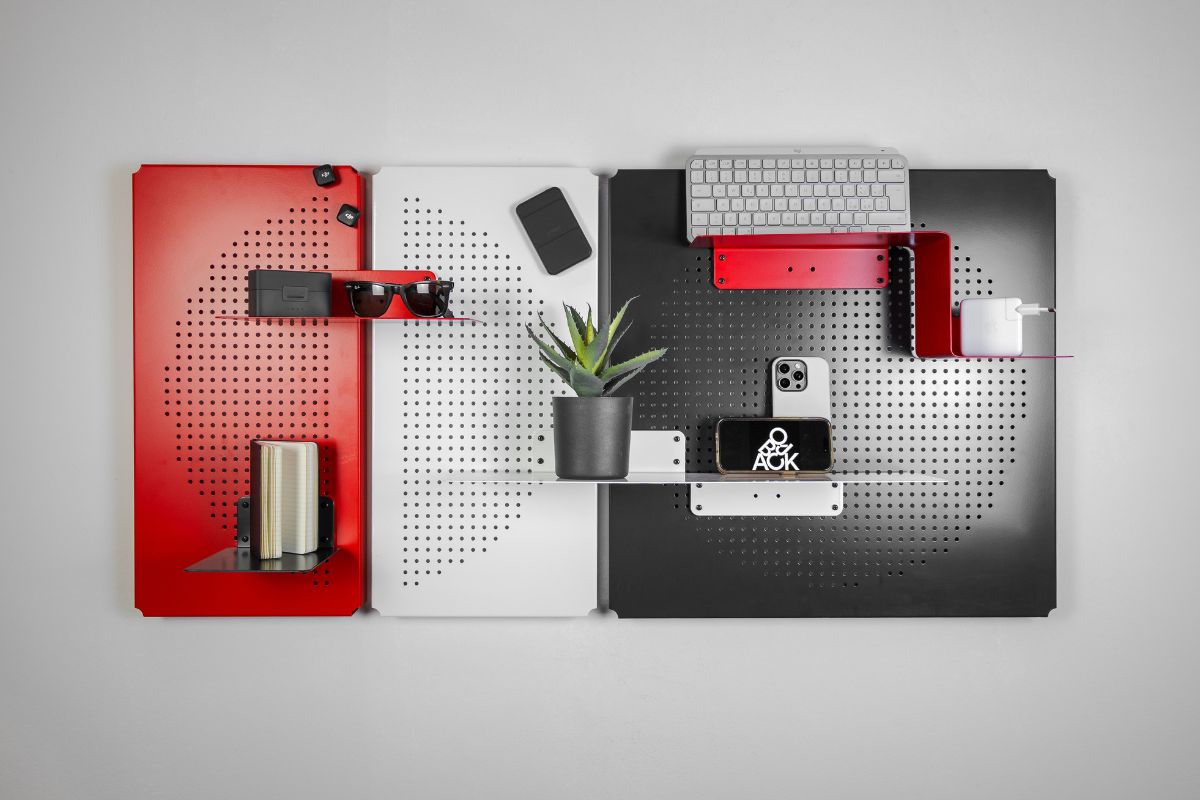
This first product line, NORA, really did come about by chance. It all began when I was looking at an old Vitra storage board that a dear aunt of mine still has in her home today. I started imagining how much more interesting and original it would be if the different modules, rather than being fixed, could be arranged freely depending on one’s mood or on how they wanted to use them.
That led to the idea of creating fixed wall-mounted panels together with a series of completely modular and interchangeable storage elements. From there, the evolution was very quick. We incorporated the perforated patterns typically found on workshop panels, the storage elements became shelves, and before we knew it we had developed a kit that, with only a few components, could generate an almost infinite number of combinations in both form and colour.
The early stages of a brand are often the most delicate, because everything is still taking shape: identity, image, audience, tone and direction. Which elements did you want to define from the outset in order to give OB-Jack a clear personality?
I would say that the first stage is not simply delicate, but extremely, terribly delicate! To be completely honest, I am not even sure that OB-JACK has a perfectly defined personality yet, so the answer is: none. We did not establish any specific element with the intention of giving the project a rigid or predetermined character.
This first collection certainly has very precise and recognisable characteristics that make it distinctive within the market, and we already have a couple of similar ideas relating to modular wall furnishings that are nevertheless completely different. But as a brand, I cannot guarantee that in a year’s time we will not launch something entirely unexpected.
For now, we believe strongly in this first idea. We had a great deal of fun creating it, and every step has been a genuine experiment. Everything is still evolving and the exact direction has not yet been fully mapped out. OB-JACK brings together many years of experience in both engineering and interior design. It began almost as a game, and who knows where it will take us.
NORA is currently the first chapter of the brand. It is not simply one collection within a large catalogue, but the starting point from which OB-Jack begins to express its approach to interiors. What did you want this line to convey from the very beginning?
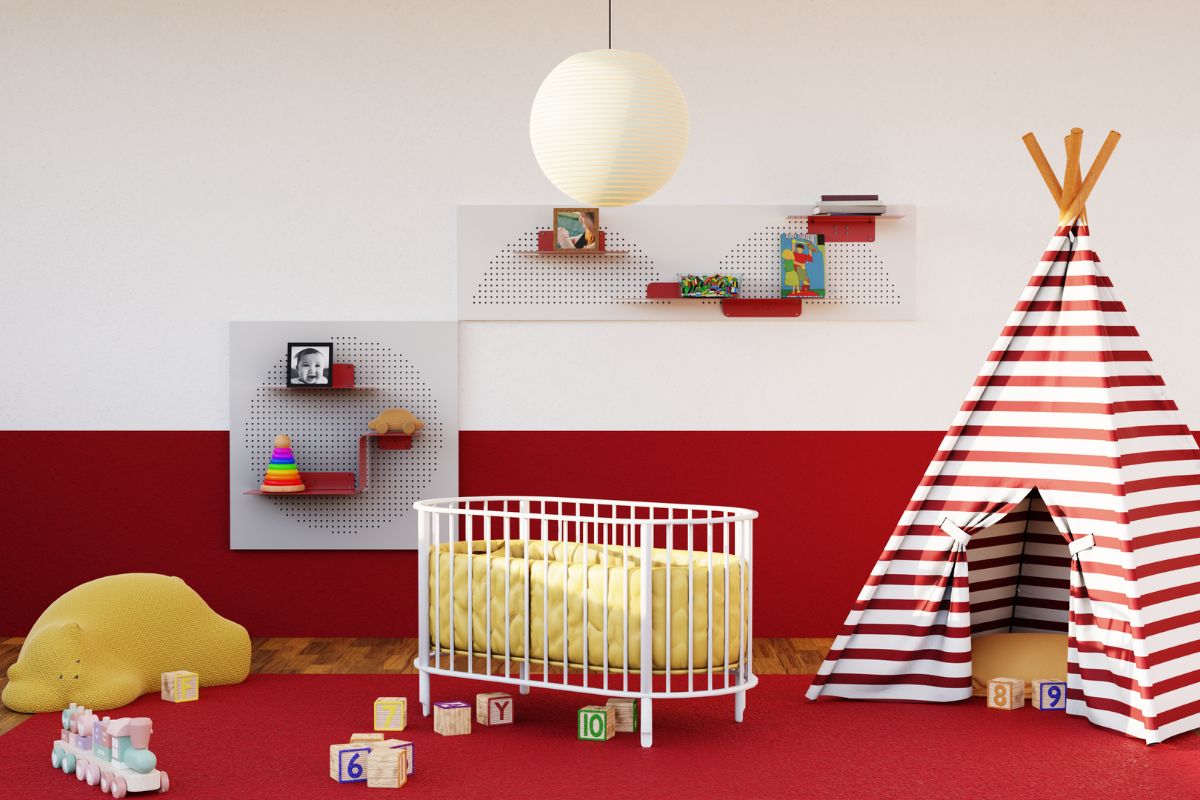
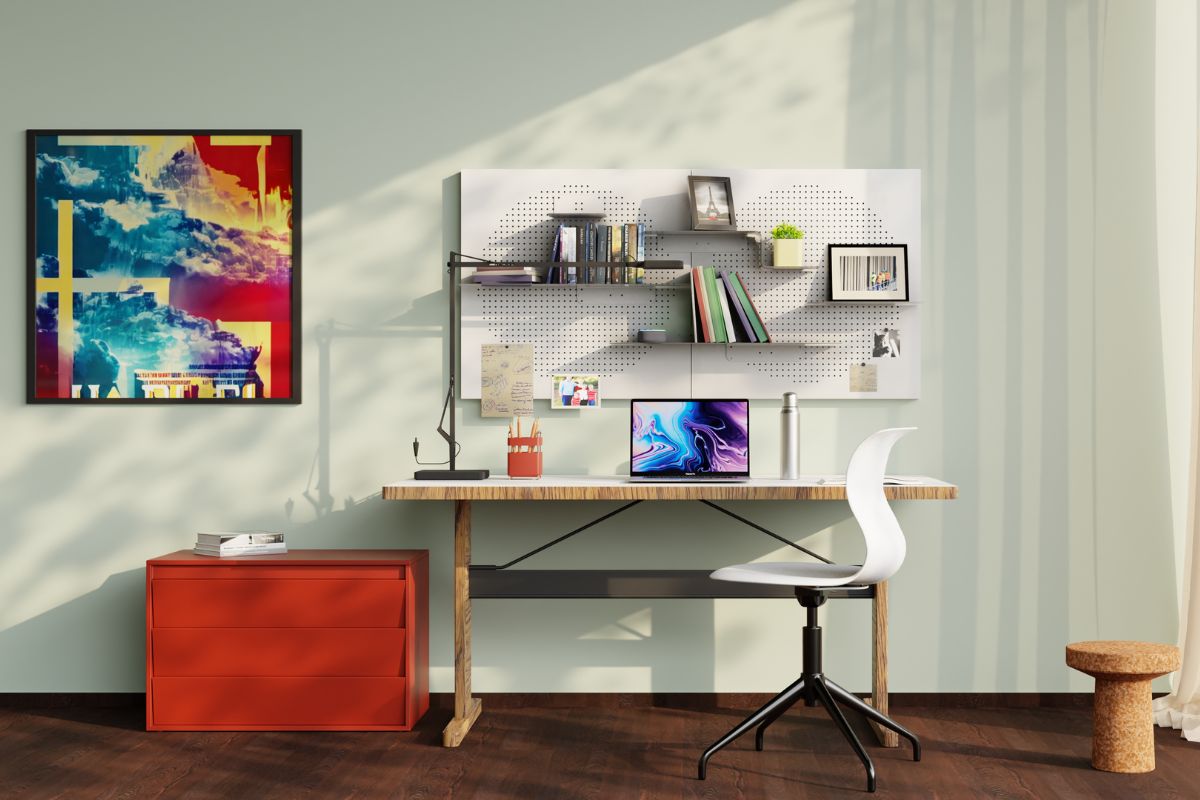
Simple: imagination and freedom. I genuinely want NORA to be appreciated by anyone, and to feel equally at home in the simplest room of an ordinary house as it does in the most elegant studio or sophisticated interior.
I would love this product to become something more than a static furnishing object in its own right. I want it to be a tool that allows people to furnish a space according to their own imagination.
In the NORA project, the wall is not treated as a neutral surface to be filled, but as a space to organise, compose and transform. What interested you about this dimension of living, which is often considered secondary compared with more “important” pieces of furniture?
To be honest, NORA was born more from a spontaneous idea than from a rational study intended to give new importance to overlooked areas of the interior. But when we began thinking about it more carefully, we realised that walls are usually covered rather than truly enhanced, and that is a real shame.
We tend to find the same things on walls: perhaps a cabinet, usually paintings or clocks and, if we are lucky, a few storage shelves. It seems that very little attention is given to the vertical dimension of our interiors. Yet depending on how we interpret it, a wall can create depth and openness, or make a room feel smaller and darker.
That observation gave us the confidence to continue developing the project, because the idea seemed genuinely unusual. And that is how we arrived here.
Compositional freedom is central to the project: the elements can be moved, rearranged and reconsidered over time. In contemporary interiors, where needs change rapidly, how important is it to design objects capable of accompanying this kind of flexibility?
It makes me very happy to hear that this comes across, because this is precisely the reason we believe so strongly in NORA: its extraordinary compositional freedom.
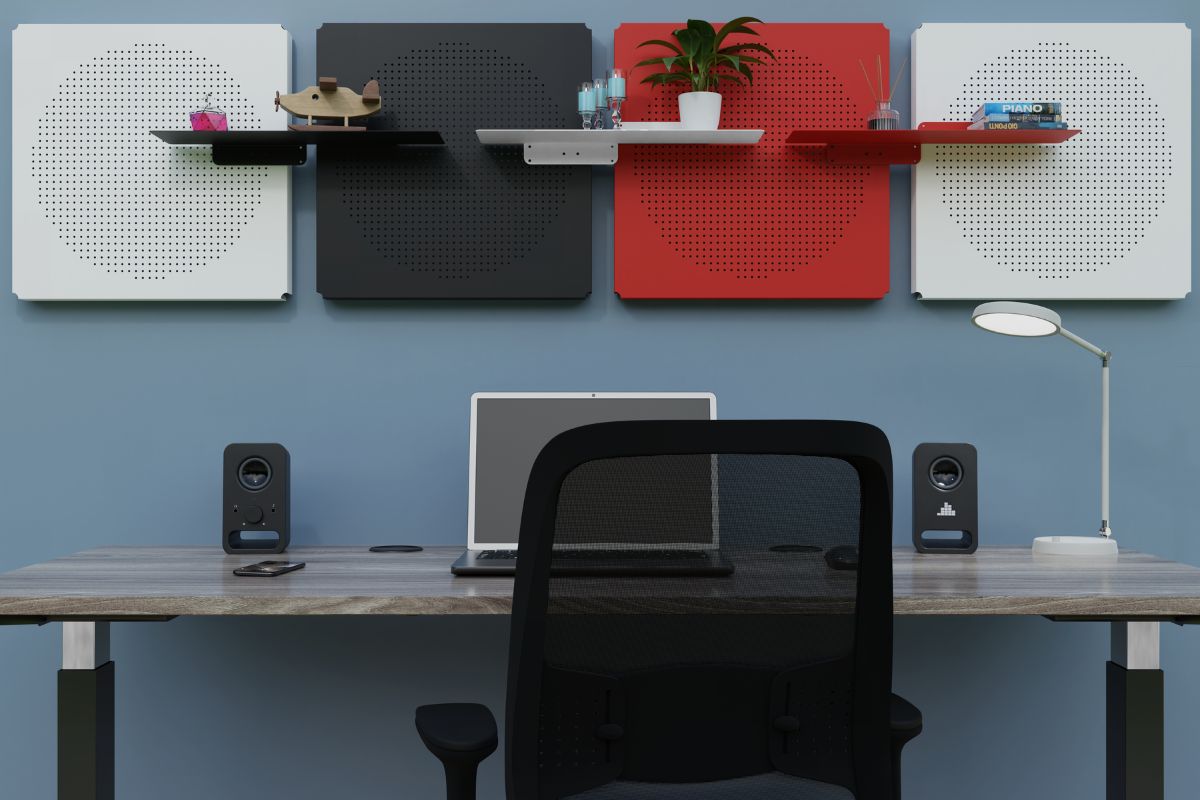
The elements can adapt almost anywhere. They can be arranged in a linear, monochromatic composition for an extremely elegant result, or positioned more freely, almost randomly, with colour to introduce a sense of playfulness.
I also find it impossible to imagine that a wall should remain exactly the same for years, regardless of the context. I simply cannot believe that an interior does not evolve over time, or that sooner or later we do not feel the desire to change something, even slightly, in response to changing tastes and the passage of time.
I think NORA makes it possible to adapt or completely transform an interior simply by adding a few elements or rearranging those already there, without necessarily throwing everything away and starting again from scratch.
Magnetism, in your case, is not simply a technical solution. It introduces a different relationship between object and wall: more immediate, reversible and almost instinctive. How did you arrive at this solution, and what did it allow you to achieve both functionally and in terms of design?
Magnetism is actually not used very often in furniture, apart from perhaps a few nice accessories for our refrigerators! After testing many alternatives, we decided to use powerful neodymium magnets for the connections. It was the best solution we found to allow people to experiment endlessly with the arrangement of the elements without having to think too much about it.
There is simply no other way to test all the possible compositions of NORA so quickly. As you rightly said, every movement is immediate and completely reversible: there is no fear of making a mistake.
From a more functional point of view, the perforations in the NORA panels ensure that the elements are always perfectly aligned. They can also be secured from behind using small threaded nuts, which means the system is not limited solely by the load capacity of the magnets.
NORA seems to emerge from a balance between order and movement: on the one hand it organises space, while on the other it leaves room for personal composition. How do you design an object that provides structure without becoming rigid?
With quite a lot of luck! Perhaps the right intuition was to create elements that were easy to combine, with extremely simple and slender lines. In this way, their primary function of organising space remains clear without compositions becoming visually heavy.
There is a certain essential quality to the visual language of OB-Jack: few elements, few colours and a clear visual grammar. How important is it for a young brand not to spread itself across too many directions too quickly, and instead build a recognisable identity?
It was actually an almost inevitable and natural choice. This first OB-JACK line does not need a thousand variations, objects or colours. Adding more elements would simply make everything more chaotic.
The characteristics of NORA are clear and well defined: a few things, kept simple and made as well as possible. Especially at the beginning, I think this choice helps make us more recognisable. After all, people tend to remember great design objects more than they remember large collections.
NORA can live in very different environments: a home, studio, office, retail space, bedroom or entrance. When designing such a versatile system, do you have a specific destination in mind or rather a series of everyday gestures that can belong to different spaces?
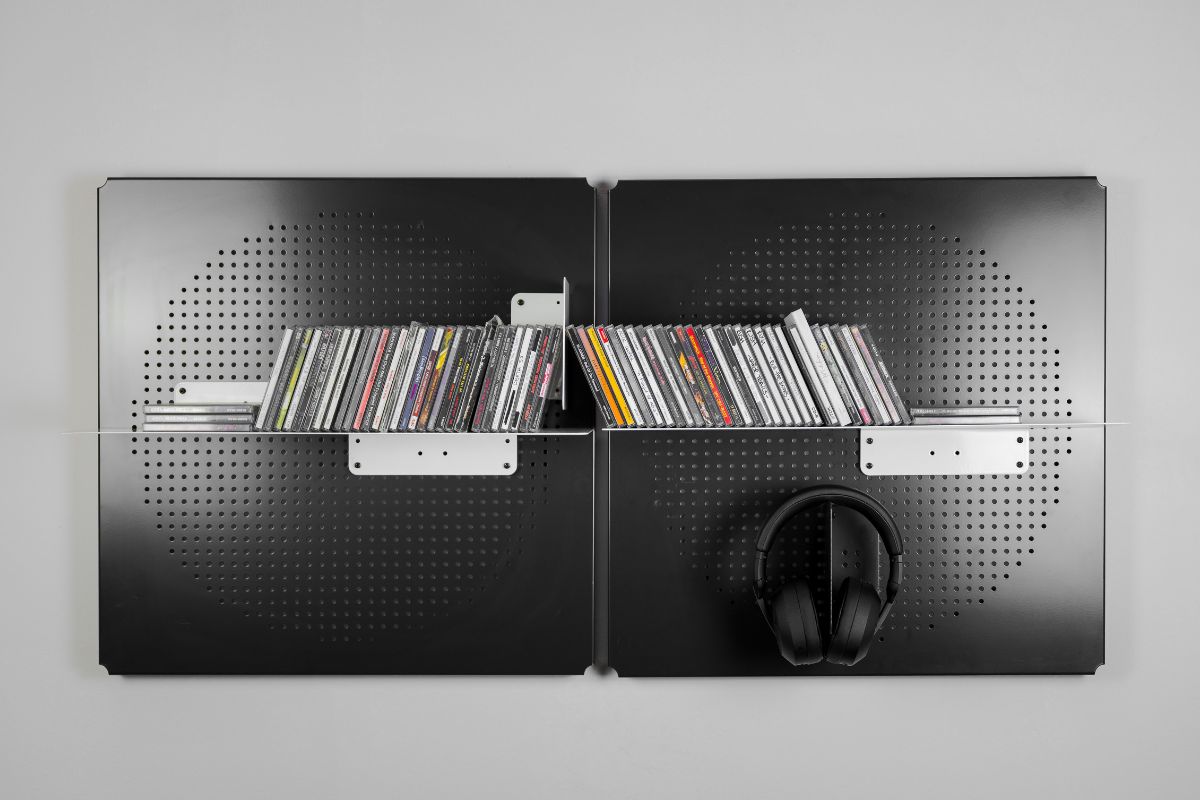
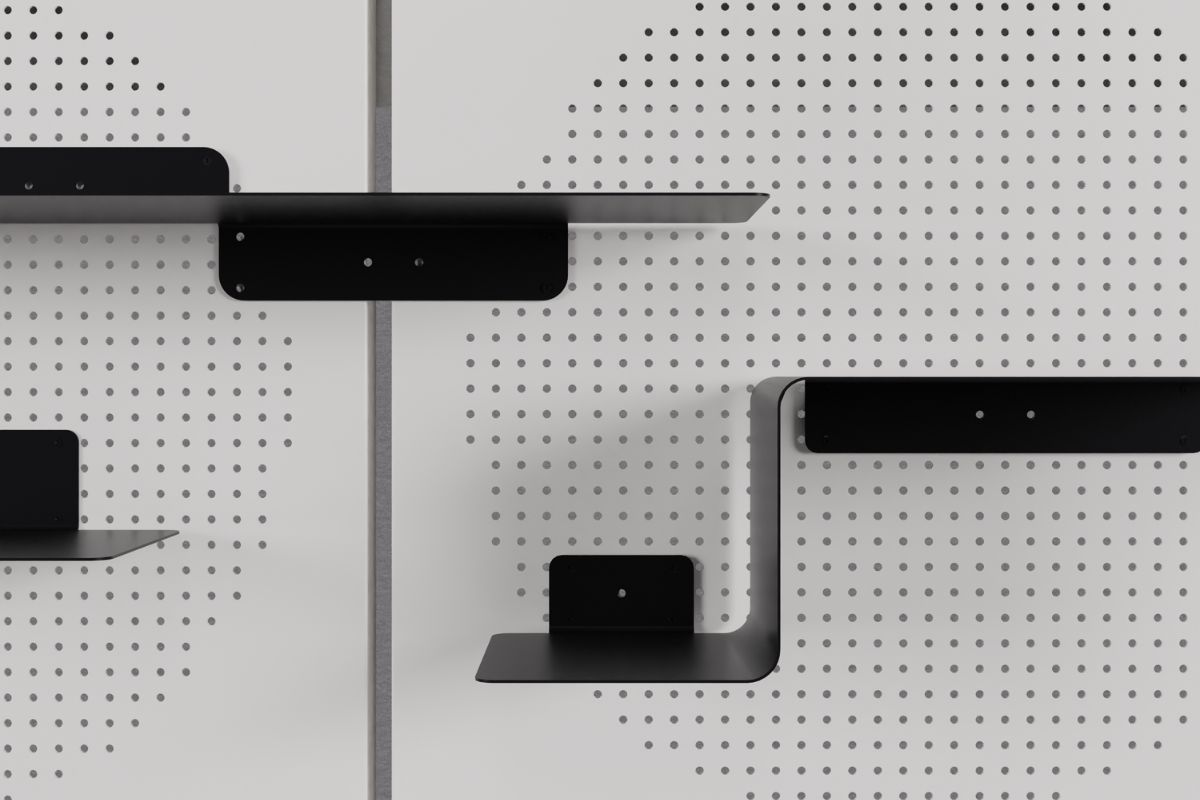
That is a good question, because in reality we did not think about any of that! What we ended up with were elements that, when considered individually, are extremely simple: thin profiles that almost disappear when seen from the front, with very natural forms. Yet once they are combined, they can create highly imaginative structures.
This actually puts us in the position of not having to target one particular type of user. Instead, we have elements that can genuinely adapt to almost anyone and almost anywhere.
One of the most interesting aspects of the project is that the user is not buying a closed solution, but rather a possibility for configuration. How important is it today to leave room for personal interpretation without sacrificing the coherence of the design?
What could be freer or more enjoyable than being able to play with and reinterpret something you already own again and again?
Perhaps I spent too much time surrounded by mountains of LEGO sets over the years, all belonging to different collections but ultimately made from the same small pieces. Why was I able to create almost anything with those individual elements?
Furniture should work in the same way. And I will say it again: imagination and freedom.
OB-Jack emerges from a very concrete culture of making, closely connected to manufacturing, precision and product quality. How does this technical dimension enter the project without weighing it down, instead becoming part of its formal clarity?
The purely technical aspect of OB-JACK is present in every detail, although it is not immediately visible to the end user. As you rightly suggest, the techniques we use — the specific materials selected and the manufacturing processes involved — allow us to create slender elements and simple lines that ultimately result in a sense of visual order and cleanliness.
Given my academic and professional background, I can make a confession: this is probably the part I enjoy the most.
The ultra-high-strength structural steel we selected allows the panels to remain perfectly flat despite the extensive perforation process. The holes themselves are manufactured to very precise dimensions to avoid difficulties when connecting the shelves to the panels. The panels also feature a rear wall profile that allows them to be repositioned without the risk of falling.
The shelves themselves, which if you look carefully are deliberately not completely straight, have considerable rigidity and can therefore support substantial loads despite their reduced thickness. The small threaded nuts at the back are designed to be fitted quickly by hand without the need for tools, while every element is finished with particularly thick powder coatings to ensure durability over time.
I could go on for quite a while. Let us simply say that for us, the idea of something being “well made” is part of the way we work every day, not simply a nice advertising phrase.
In its relationship with architects and interior designers, a product such as NORA can become a small design tool: it does not dominate the space, yet it can resolve functions, rhythms and details across the wall. What kind of dialogue do you imagine with the design community?
Although NORA is genuinely designed for anyone because of how simple it is to use, I would like architects and interior designers to see it as a real creative tool — a large pencil with which to compose our walls.
We recently worked on a rather large wall at the entrance of a hotel. After spending days imagining dozens of combinations of panels and shelves and testing more arrangements than I can remember, the client tried — perhaps almost as a joke — placing just one panel exactly in the centre of the entire wall. Nothing else. Just that.
Believe me, we were speechless. It was simple, ingenious, minimal yet complete. The panel suddenly gained importance, as though the rest of the wall had become nothing more than its frame.
You know those large jewellery-store windows displaying just one small, precious ring? Or that tiny, exquisite bite served on the enormous white plate of a Michelin-starred restaurant?
It is remarkable what can be achieved with seemingly simple elements when they are interpreted with the right vision. I was the first to be fascinated by it.
Accessories are often regarded as secondary or finishing elements, yet they can have a significant impact on the identity of an interior. In your view, when does a small object move beyond the status of accessory and become part of the interior architecture itself?
Whenever it is placed in the right context, exactly as we were just saying. Anything can be completely irrelevant or become the focal point of an entire project. Sometimes very little is required — simply a change of perspective. After all, apparently even a banana managed it…
If you had to choose one element, configuration or detail from the NORA line that best expresses the identity of OB-Jack, what would it be and why?
I see the identity of OB-JACK in every small hole in the NORA panels.
They are seemingly just ordinary holes, but their dimensions have to be extremely precise. They are difficult to manufacture, terrible to paint, time-consuming to render, and absolutely essential for aligning the different shelves.
It is often like that: the things that appear simplest to the eye are the ones that conceal the greatest amount of effort. Perhaps that is a slightly romantic way of looking at it, but behind the essential lines of NORA there really have been many, many, many tests — and a few sleepless nights.
We would also like to explore the behind-the-scenes story of the product. Is there a first sketch, prototype, technical test or development image that captures the transition from the initial idea to the final NORA line?
Absolutely. I personally made the very first piece in the workshop and I keep it very carefully. That said, it was a disaster!
We also have later versions that were welded badly, crooked, made with the wrong holes or fitted with shelves that were completely out of proportion. We have a little bit of everything.
I am almost thinking about creating my own miniature museum to show people — especially younger designers — that nothing is born immediately or effortlessly. Everything requires time and patience.
OB-Jack is still in a phase of growth, which makes its story particularly interesting: it is not only about presenting what already exists, but also about beginning to understand where the brand might go next. Which aspects already feel clearly defined, and which remain open to experimentation?
The identity and direction for the short term are relatively clear. We already have another couple of collections in development that remain consistent with the OB-JACK project: small, innovative wall-mounted furnishing elements that are accessible and can be composed to adapt to very different interiors.
Beyond that, however, almost everything remains open to innovation. We would like to develop ideas that bring several different materials together within the same object. In the next collection, for example, we will almost certainly begin working with glass — one of the most classic materials of all, but interpreted in our own way.
Looking ahead, which developments feel most natural for OB-Jack: new configurations, materials, colours and functions, or a broader interpretation of the very idea of wall furniture?
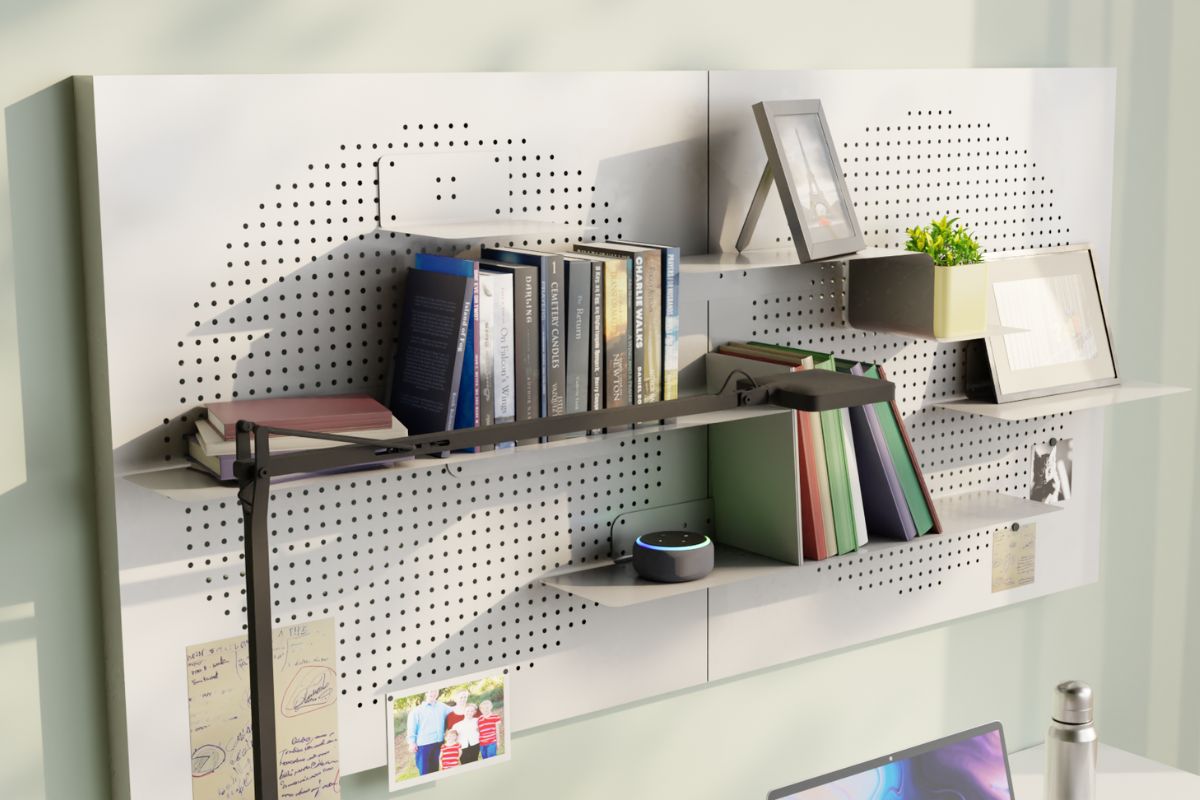
As far as NORA is concerned, we are considering a few additional accessories, but the line itself is essentially complete. As we were saying earlier, our intention is to introduce entirely new collections rather than continue adding endlessly to what we have already created.
Looking much further ahead, I would love OB-JACK to become an incubator for creative ideas. I would really like to build enough credibility and substance around the brand that, in the years to come, it could become a hub capable of attracting and supporting young designers with strong ideas but who have not yet found a voice, helping them develop new products.
We are still at a very early stage, but we are beginning to consider possible collaborations with universities and design schools, including calls for projects and other initiatives. We will see where it leads.
It is 2036. If you were to encounter OB-Jack again ten years from now, what would you hope to still recognise from the original intuition behind NORA? And what evolution would you like to have become the brand’s more mature expression?
Honestly, I would love to find our products both in the simplest garage and in the most elegant professional studio. That would confirm my belief that, when interpreted in the right way, the elements of OB-JACK can genuinely be enjoyed by everyone.
I think NORA is timeless. It will always be the first. I would love to come across it somewhere unexpected and find it just as beautiful as it is today. It should always be updated, but never replaced.
Discover OB-Jack
Explore the project in greater depth, follow the latest news from the brand, download the catalogue and discover all the possibilities offered by NORA.
If you are an architect, interior designer, designer or industry professional, you can contact the company directly to discuss collaborations, supply opportunities and bespoke projects.
If you would like to purchase NORA or discover more about the brand, you will find all the information on the dedicated page.
Discover OB-Jack on Archi&Interiors
https://www.archieinteriors.com/brand/ob-jack/