In the contemporary kitchen, vision and technique can no longer run on separate tracks. On one side there is the designer’s intuition, research into materials and the desire to break the mould; on the other, industrial precision, reliability and the ability to turn an idea into a space that truly works. It is within this …
In the contemporary kitchen, vision and technique can no longer run on separate tracks. On one side there is the designer’s intuition, research into materials and the desire to break the mould; on the other, industrial precision, reliability and the ability to turn an idea into a space that truly works. It is within this balance that Composit builds its identity.
In this interview, Andrea Sorgente takes us into the workshop where a kitchen takes shape: between tailoring culture and production, details that become everyday gestures, and bespoke systems that extend into the living area and the rest of the home. A story of Made in Italy, design and ambition, entrusted to one clear principle: the designer must be visionary.
For a long time, the kitchen was described as a functional room. Today, however, it has become one of the most complex and defining parts of the home: a technical space, a social place, inhabited architecture, a surface for self-expression. Where does Composit stand in this transition today?
For us, the kitchen is the place where functionality and aesthetics must meet. The search for this balance guides every project we undertake: creating spaces that are efficient but also able to express identity and engage with the architecture of the home. In this vision, the kitchen becomes a true living space, not only technical but also representative.
Composit was born in the kitchen world, yet its journey now seems to speak a broader language: no longer just kitchen compositions, but systems that can engage with the living area, wardrobes and other rooms of the home. When did you realise that the kitchen could no longer be conceived as an island separate from the rest of the home?
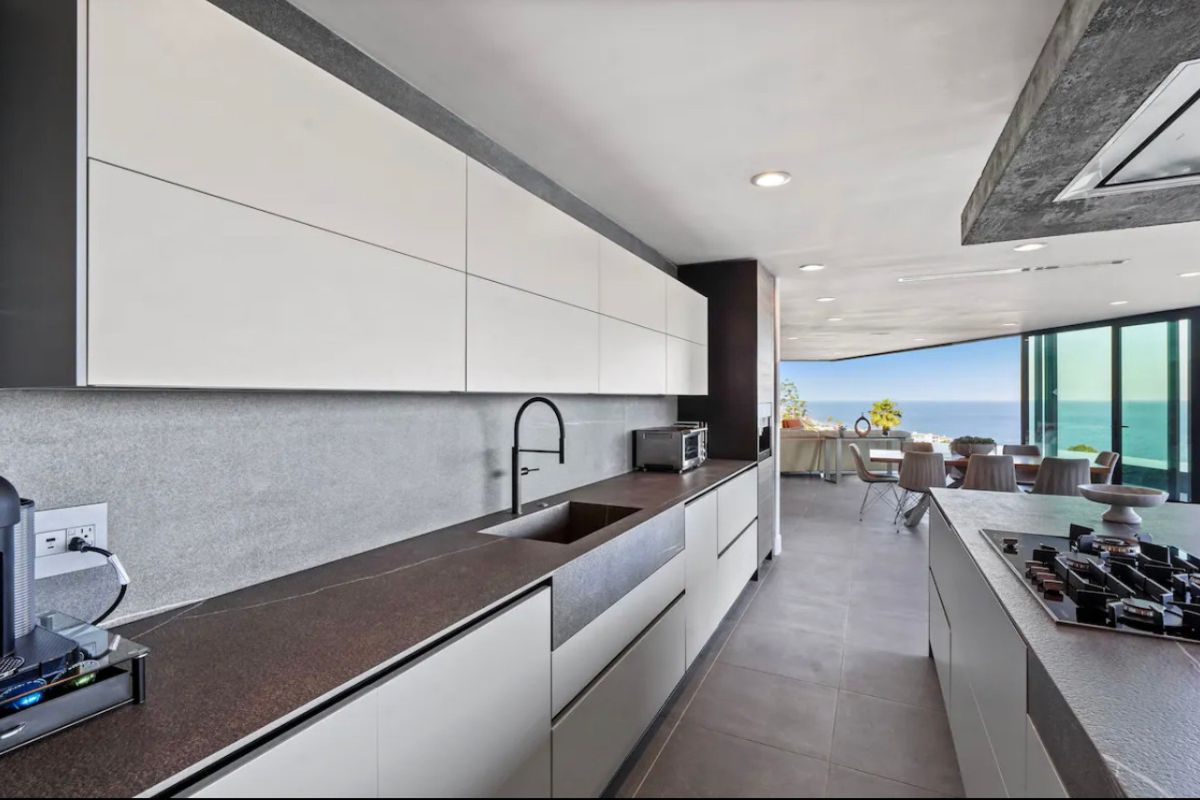
We began to sense it about ten years ago, as we entered and grew in the North American market. There, unlike in Italy, there are no companies specialising in furniture micro-sectors (kitchen, bathroom, living or wardrobe furniture, for example). It is natural for clients to rely on a single partner for the entire home project. After all, it is the same logic as traditional Italian joinery, and it is precisely this integrated vision that we chose to adopt and develop along our journey.
Continuity between rooms has become central to contemporary interior design. It is not just about coordinating finishes, but about creating the same spatial quality across kitchen, living room, storage and transitional areas. How does Composit approach this idea of a more fluid, coherent home?
We believe that today’s premium client is looking for professional advice that makes the most of the time spent choosing furniture. For this reason, they often turn to architecture and interior design studios or directly to retailers specialising in interior design. To these professionals, Composit wants to offer a product that is not only of the highest quality but also versatile, so it can be used throughout the home without limitations and with complete freedom in the choice of materials and finishes.
Bespoke is a widely used word, at times almost worn out. In your case, however, it seems to refer to a deeper skill: listening to a project, reading its constraints, interpreting its proportions and translating it into a real solution. What does working bespoke really mean for Composit?
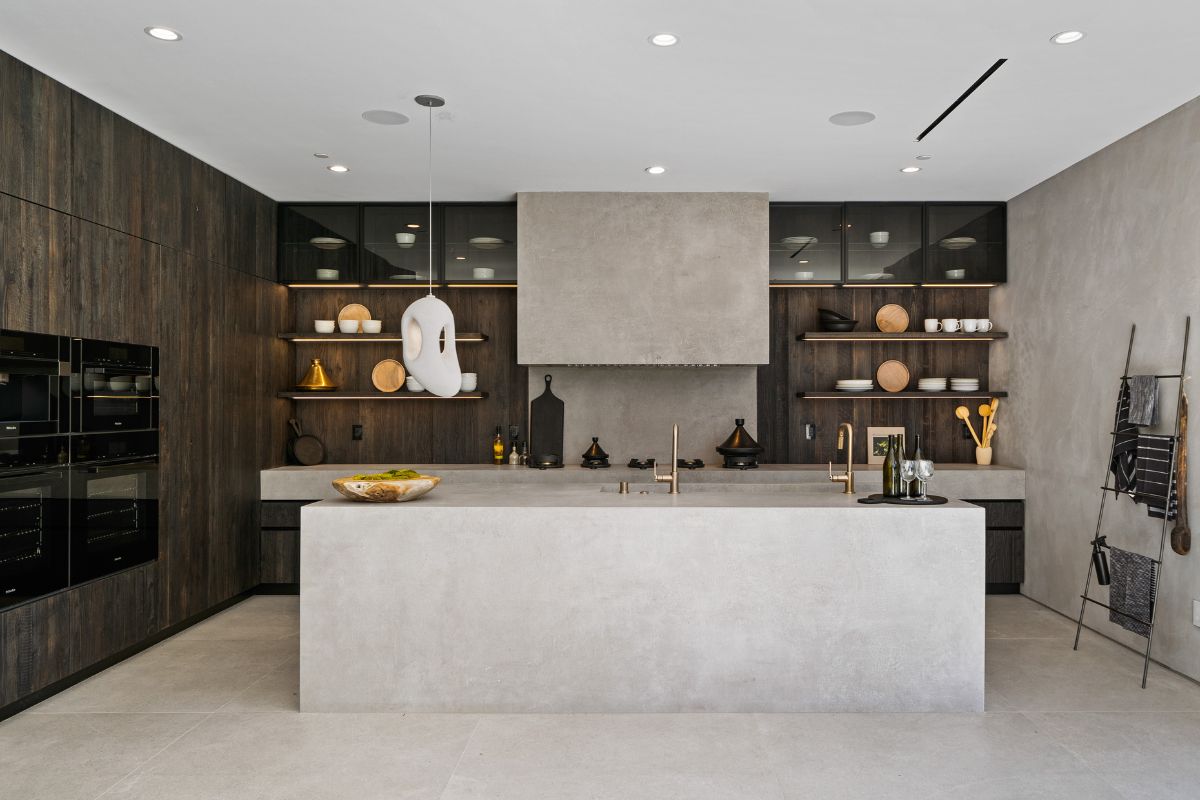
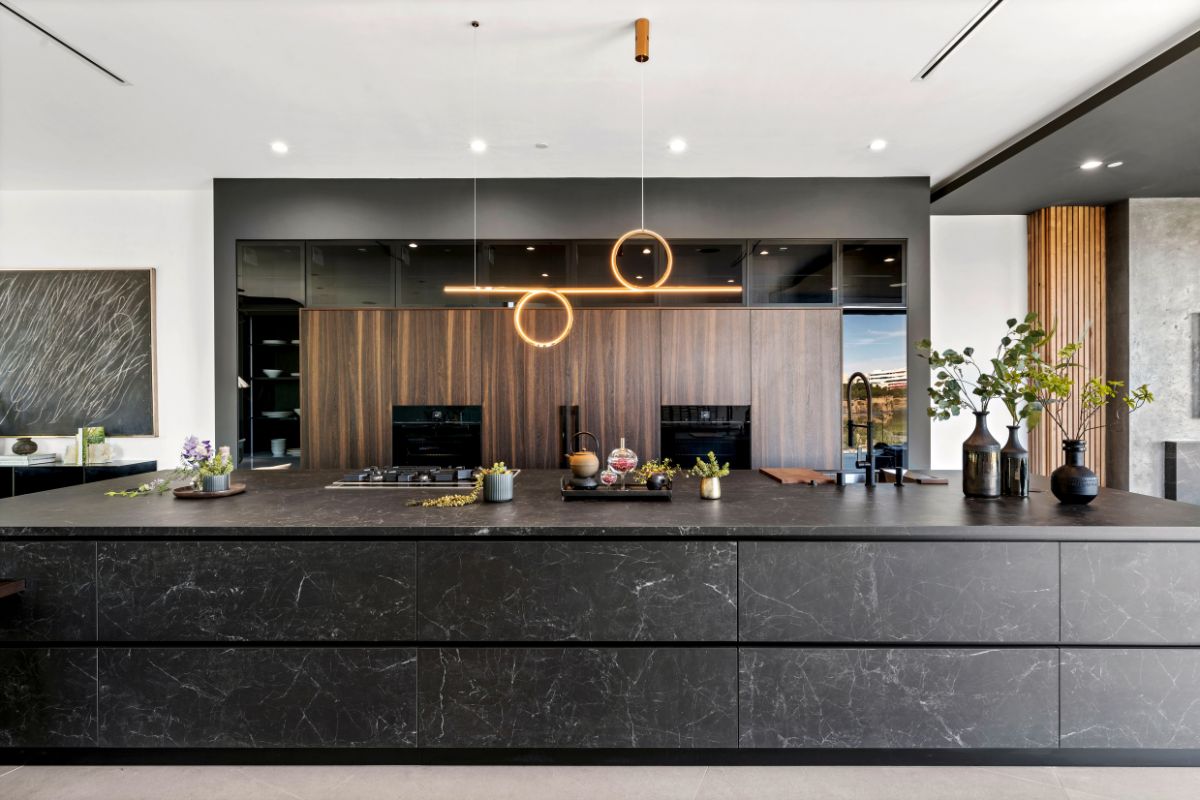
In addition to its ten kitchen and living collections and its wardrobe collections, Composit offers its clients fully customised solutions. We are happy to help our clients find the best solution for their project, which is why we are always willing to go beyond our standard range of materials and finishes, opening systems and technical solutions, helping professionals meet the needs of their increasingly demanding clients. We are driven by real passion and curiosity, aware that it is our clients who push us every day to raise the bar. Suffice it to say that one of our most demanding clients, the American designer Jamie Rezaie, was entrusted with designing a new kitchen model, Materya, presented in Milan during MDW26.
A well-designed kitchen is often noticed not immediately for what it shows, but for what it solves: circulation, storage, gestures, proportions, details, relationships with light and architecture. How much does this invisible dimension of design matter?
A great deal. In my presentations and conversations with colleagues and clients, I often say that designing the kitchen, combining the various materials and positioning the kitchen within the architecture of the home are, in my view, similar to choosing a good wine: it is not just a matter of “absolute” taste. What is essential, and often underestimated, is the pairing with the food. Only by taking this combination into account will you achieve the best result.
Your work combines industry and tailoring, two worlds that seem opposite but which, in the contemporary kitchen, must interact very precisely. Where does the balance lie between production system, quality control and design freedom?
This is where technology comes to our aid. We are fortunate to be based in an area that is home to some of the leading manufacturers of woodworking machinery, with whom we have excellent relationships and who, over the years, have refined quality and developed integrated production systems as well as design and order management software. All this allows us extreme customisation and, at the same time, absolute precision. We are proud to point out that our production plant uses exclusively Italian machinery. We also have a top-level in-house technical team that manages the production cycle flawlessly, taking every single order to heart.
In the kitchen sector, Made in Italy can no longer be just an aesthetic label. It must become method, reliability, a culture of detail and the ability to adapt to different markets. What does it mean for Composit to represent an evolved Made in Italy today?
For us, Made in Italy means pride and responsibility. I try to pass both concepts on to my team. We must be proud to carry, almost unknowingly, values such as aesthetics, beauty and craftsmanship. At the same time, however, we must be extremely rigorous and precise, because aesthetics and production quality are no longer enough today: service, precision and communication with clients are just as essential. Representing Italy abroad is a great responsibility. We must always keep in mind that each of us is an ambassador for our country in our dealings with international clients.
Your collections seem to move between compositional rigour, material, personalisation and recognisable detail. Which elements must be present for a kitchen to be truly Composit?
I won’t even mention quality, because for us it is a must across our entire range: there are no “entry-level” collections with lower quality standards. Certainly harmony of details and care for the finer points: each collection has its own distinct, well-defined “soul”. That is why we choose to work with different designers, always coordinated by our in-house art direction. All the collections, however, are linked by a “common thread” – an imperceptible one, which is the Composit value: harmony in proportions, refined details and features that bring everything back to the same design philosophy.
Your products include patented solutions, such as the Pepper door. It is interesting because, in this case, the patent does not remain a technical detail, but becomes gesture, compositional rhythm and visual identity. How important is it for you that innovation becomes part of the product’s language?
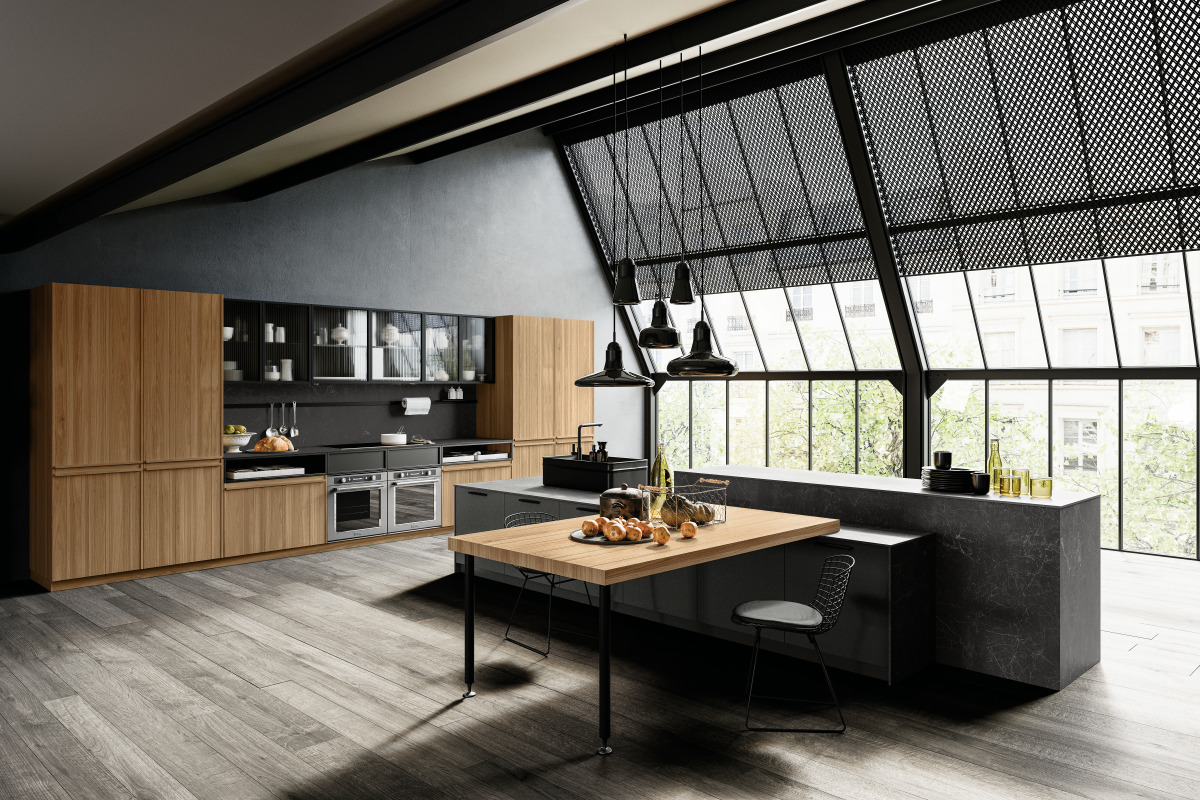
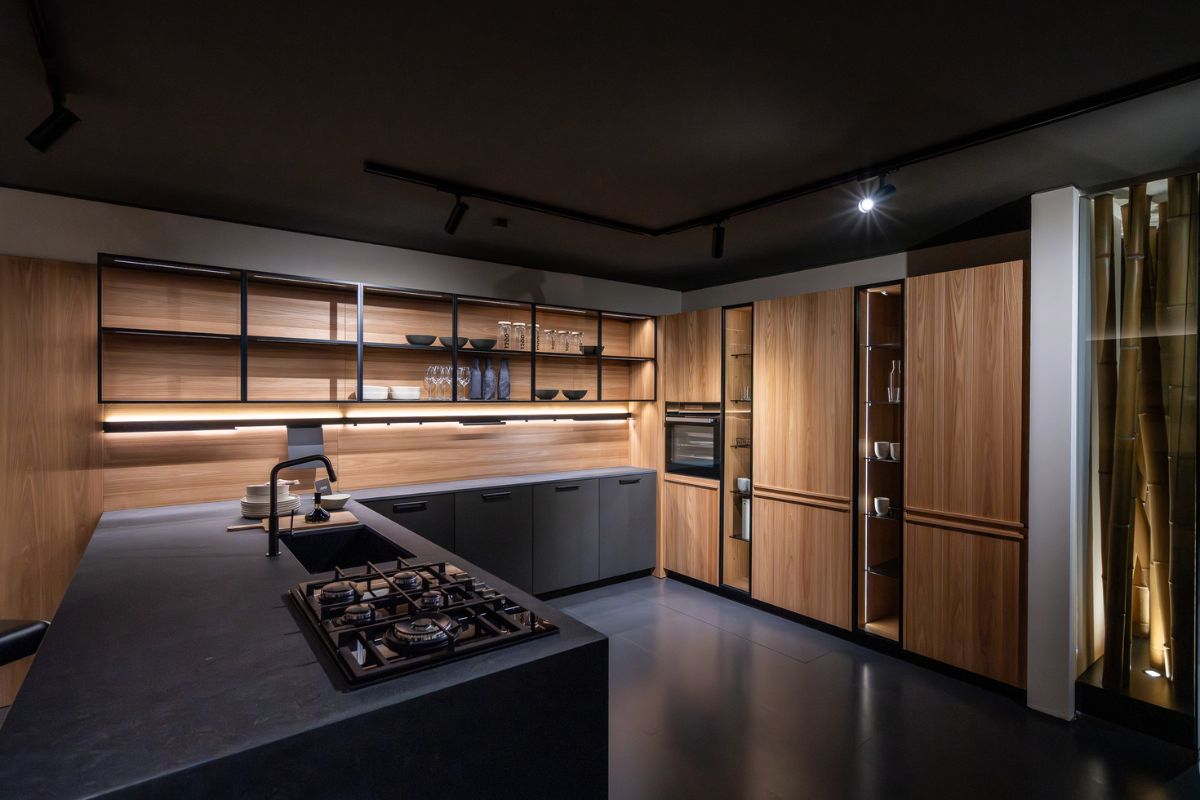
It is very important. Today we operate in a “saturated” market, and product differentiation is essential. For us this is a great advantage, because it means constantly experimenting, engaging with designers and always having “our hands in the dough”. This is our great passion: we do it effortlessly, driven by curiosity and a love of design, and have done so for more than fifty years.
The handle is one of the smallest and, at the same time, most revealing elements of a kitchen. It is the point where the body meets the furniture, where design becomes an everyday gesture. What does Touch say about the way you understand the relationship between function, ergonomics and beauty?
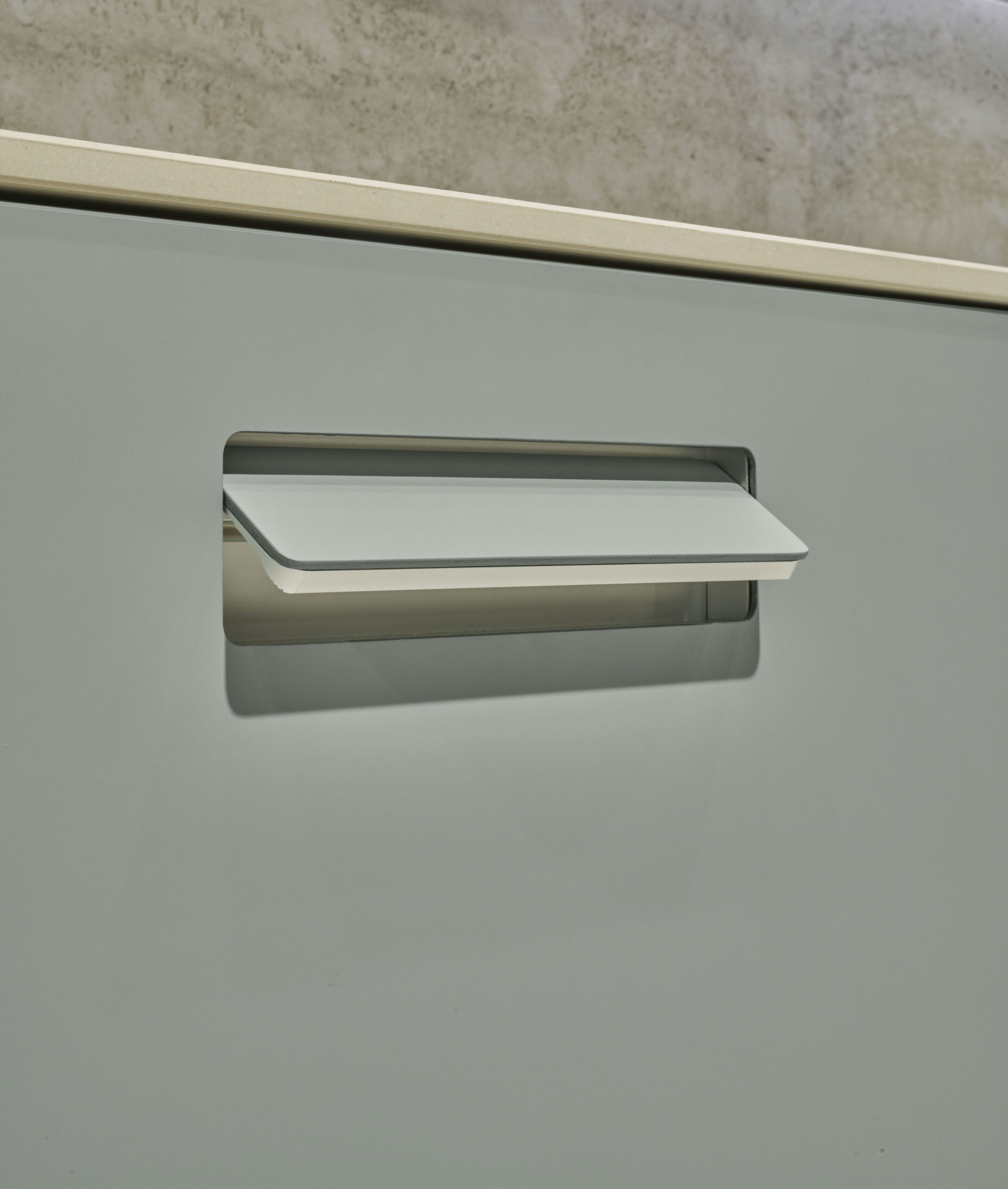
The Touch handle is one of our flagship features, a central element of one of our most iconic collections, created by the great designer Piergiorgio Cazzaniga. The philosophy behind this handle, and behind the Touch collection, is to have a concealed handle that is clearly visible and usable while cooking, but that “disappears” when it is not in use. The same philosophy is applied to other distinctive elements of the Touch collection, such as the up-and-down sliding back panel and the coplanar wardrobe.
Many contemporary kitchens seek to disappear: seamless surfaces, concealed openings, pure volumes. Composit, instead, seems to work on a subtler balance, where detail can declare itself without disturbing the whole. Is this a conscious design choice?
We always try to avoid the obvious and to stand out from the crowd. Even when following a trend is unavoidable, we do it “our way”.
The Touch, Pepper, Noisette, Melograno, Marilyn and Linea collections express different sensibilities. Rather than describing them one by one, we would like to understand what they represent in your journey: which directions in kitchen design did you want to explore through these models?
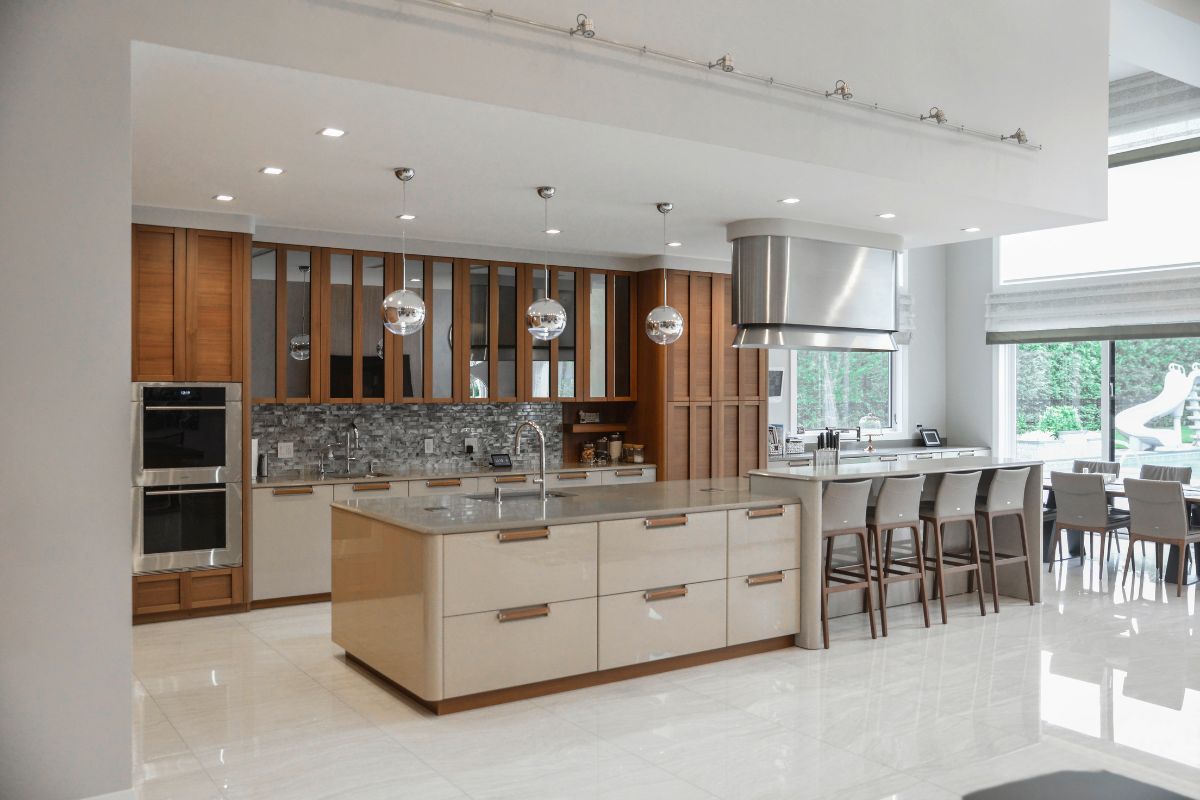
Composit has always been a hotbed of ideas, and our Vallefoglia plant is a crossroads for many internationally renowned designers: Piergiorgio Cazzaniga, Roberto Lazzeroni, Ennio Arosio and many others. In some cases, as with Noisette and Marilyn, the collection stems from identifying specific requests from the markets in which we operate. In others, it comes from a project presented to us by a talented designer, which we fell in love with and wanted to bring to life.
In a collection like Linea, described as a bestseller, there is probably something that goes beyond the taste of the moment. What enables a kitchen to cross different markets and contexts without losing strength?
Linea is a kitchen with a handle groove, and today handle-groove kitchens are the undisputed queens of the market thanks to their practicality, aesthetics and versatility. Our strength certainly lies in having understood that Linea is a permanent work in progress: we never stop updating it, refreshing it with new finishes and materials and enriching it with accessories and elements from other collections.
You have described your relationship with designers as central. How do you choose the people you work with? Are you looking for a language, a vision, technical expertise or the ability to challenge established habits?
Looking at Composit’s history, we have identified a common thread that links the past to the present and will be our guiding light for the future: we like the concept behind the English word “disruptive”. We look for designs that contain elements of novelty, even a break with the contemporary, so that we set trends rather than follow them. This is the goal of our R&D team, and it is what we ask of the designers we work with.
When a designer meets a company like Composit, the project has to pass through very concrete constraints: production, modularity, installation, markets, durability and service. How can this complexity become a creative resource rather than a limitation?
The dialogue between the designer and our R&D team is one of the driving forces of our company. The designer must be visionary; our technical R&D team must be rational. It is one of the areas in which I most enjoy being personally involved, bringing my “commercial” point of view and finding a synthesis. I remember, for example, when designer Jamie Rezaie, presenting the first prototype of the Materya collection, asked to hang a hood clad in natural quartzite weighing around 250 kg from the six-metre-high ceiling of our Milan flagship store. The technical team firmly opposed it, but I also found the idea very interesting and sided with the designer. In the end, we pulled it off, and the result was spectacular.
The kitchen is perhaps the room in the home where aesthetics are most severely tested by everyday life. A material, an opening, a proportion, a worktop must remain beautiful through use. How do you design this quiet resilience?
We provide “tools”; it is up to the professional and the client to decide whether to prioritise material performance or aesthetics. The markets in which we operate are many and varied: we have clients who ask for surfaces in exotic woods or very delicate natural stones because they favour aesthetics, and clients who look for the durability and performance of materials because they want a professional kitchen. Our job is to give our clients the best options for both visions.
Composit is growing strongly abroad, with a significant share of its turnover coming from international markets. When an Italian brand enters homes, showrooms and projects in different countries, what does it discover about itself?
The feeling is extremely positive, because it confirms that our vision can be understood and shared beyond national borders. Entering homes, showrooms and projects in different cultural contexts shows us that the values on which we have built Composit – design, quality, attention to detail and design capability – speak a universal language. It is an important confirmation, but also a constant spur to evolve and to engage with new needs and new perspectives.
Are foreign markets still looking for the idea of “the Italian kitchen”, or are they asking for something more specific: flexibility, service, customisation, production quality and the ability to work with international design studios?
Foreign markets choose us because they know that, by buying Italian furniture, they will get the very best quality. When we go abroad to present our product, clients have no doubts about quality. Rather, they ask us to tell the story of our brand and our history, as well as for reassurance about precision, punctuality and service.
Internationalisation forces you to become clearer: in the product, in storytelling, in sales tools and in relationships with showrooms and designers. How is Composit changing to support this growth?
Telling the story of your brand and communicating clearly, at every level, are essential. In addition to having a multilingual sales and customer service team (we currently speak six languages fluently), we have recently added a marketing and communication manager to our team to help the company on its path of development as an international brand.
In recent years you have also invested in new sales and marketing resources. How important is it today for a product company to be able to explain not only what it does, but why it does it, for whom and with what design culture?
It is extremely important. Today, for Made in Italy brands, quality is “taken for granted”. We therefore have to work to stand out and to tell the story of our brand and our strengths, which are many and risk going unexpressed if they are not communicated properly.
In the relationship with architects and interior designers, the product is only one part of the conversation. Reliability, problem-solving skills, lead times, variants, support and an understanding of the project often matter just as much. What do professionals ask of a company like Composit today?
They ask to be listened to. They choose our brand because they are intrigued by our design and our distinctive features, but then they want to customise their projects and be reassured about the purchasing process and after-sales service. Our job is to help them and make their lives easy: buying Composit furniture must be a positive experience. We know our clients have many options, and we must be grateful to them for choosing Composit, giving them our utmost attention and guaranteeing the best service. This is the mantra of our sales and customer service team.
There is a topic that is still rarely discussed in the kitchen world: the company’s responsibility for simplifying the designer’s work. How much does it matter to you to be not just product suppliers, but partners able to support the project?
It is very important. Designers want to rely on a company that listens to them, solves problems and supports them through the ordering process. Our investments in the sales and customer service team go precisely in this direction. Our clients always have at least two direct company contacts they can count on: the area sales manager and the office-based account manager. They can be in constant contact with both, in person, by phone, by email and via WhatsApp.
Today the home calls for furniture that is less rigid and more intelligent: kitchens that engage with the living area, wardrobes that become interior architecture, storage that organises space without weighing it down. In your view, is the kitchen becoming more like furniture, or is furniture becoming more like the kitchen?
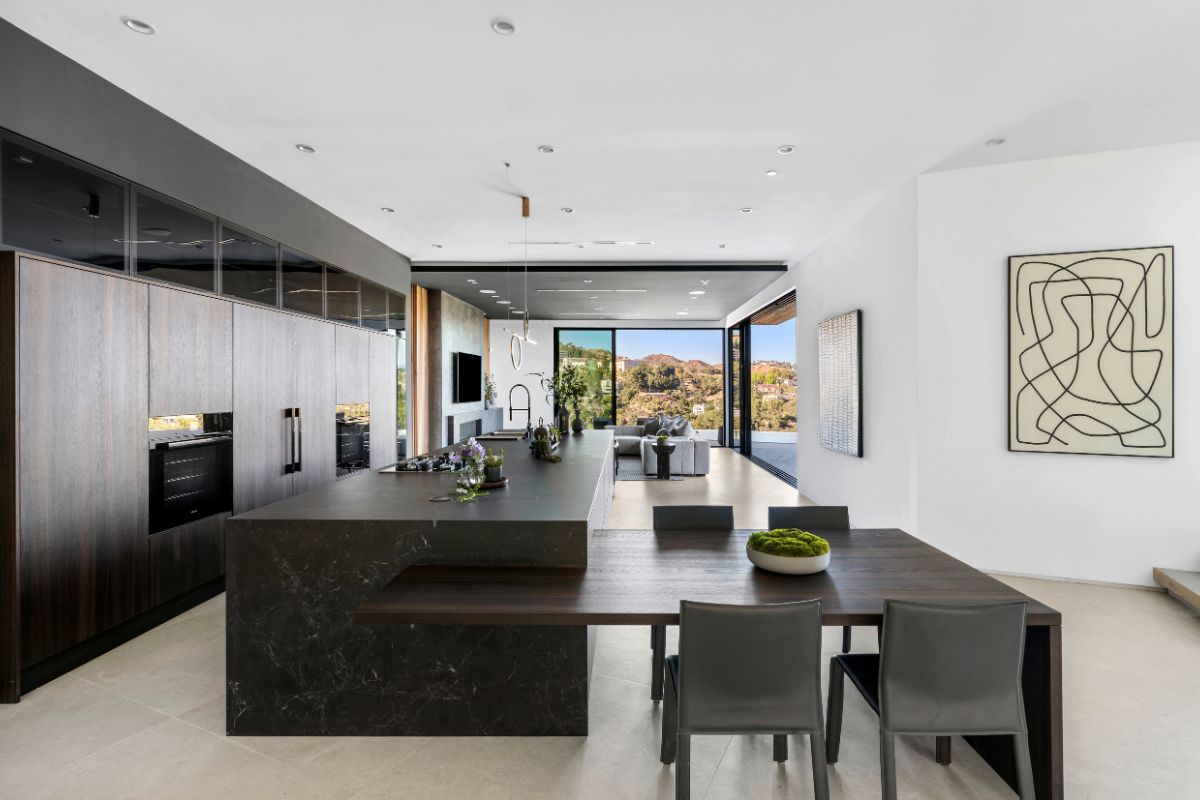
Certainly, for a few decades now, the kitchen and living area have been coordinated, as they often share the same “open-plan space”. It is a trend that began in Europe and has now become international. We, however, go further: with the same materials as the kitchen and living area, we create bespoke wardrobes, bathrooms, laundry rooms and many other spaces.
If you had to choose one collection, detail or solution that expresses Composit’s identity with particular clarity, which would you pick and why?
Among the current collections, I would perhaps choose Touch, especially in the original version presented in 2010. It was, and still is, a revolution in the kitchen world, one of the first interpreters of “minimalism”, taken to the extreme by designer Piergiorgio Cazzaniga. It was presented at the Salone del Mobile in Milan entirely in white: dazzling, monolithic and with incredible details. To this day, in Italy and abroad, Touch is one of our most popular collections, an icon of the Composit style.
On this point, we would also like to tell the story of the work that usually stays behind the scenes: tests, drawings, technical choices, prototypes, corrected mistakes, production details. Is there a hidden step that helps to better understand the quality of a Composit kitchen?
Rather than hidden steps, the key lies in choosing visionary designers and passionate collaborators, and in creating a company ecosystem that fosters creativity. With these ingredients, the results will then come naturally.
Looking ahead to the coming years, what will be the most interesting challenge: making bespoke more accessible, integrating spaces more effectively, working with higher-performance materials, strengthening dialogue with designers or building an even more recognisable international presence?
Our mission is clear: to raise people’s quality of life by improving the aesthetics and quality of their home. Our challenge is to pursue this mission, in Italy and around the world, with commitment and passion.
It is 2036. If you had to imagine Composit ten years from now, what would you like to have remained intact in the company’s character, and what would you like to see transformed more boldly?
The company’s DNA will remain intact, carrying values such as a passion for design, attention to detail, entrepreneurial spirit, love for our territory, appreciation of our people, dedication to our clients and respect for our suppliers.
In my end-of-year speech for 2025, a year of excellent results for us, I focused on two words: Pride and Ambition. I wanted to remind our team how important it is for them to feel proud to be part of the Composit family. But I also spoke about Ambition, and this is what I would like to pass on to everyone: we must be ambitious.
We have all the ingredients to become true leaders in the sector. There are no limits to how far we can go, other than those we set ourselves. Right now, our people know they work for a company with a great history and bright plans for the future. I hope that, long before 2036, every member of our team will share the same ambition that drives me and the rest of the ownership.