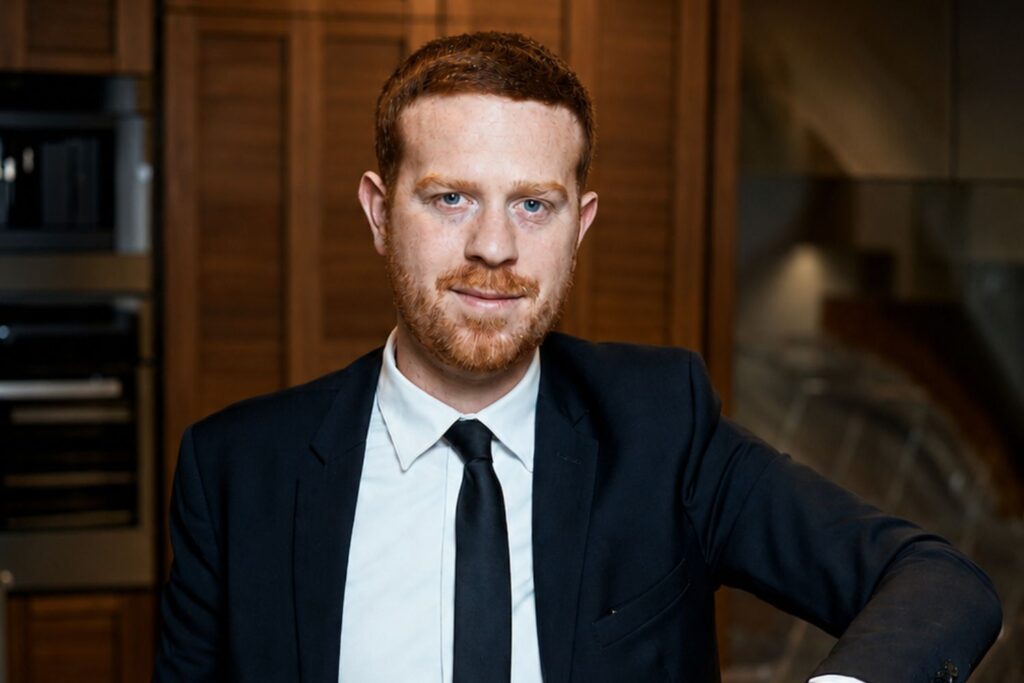
Marco Brunato on Sadun: international material scouting, technical consultancy for the project, the new Iconic Compact collection and sustainability measured through third-party certifications.
A material does not become part of a project when it enters a catalogue. It does so when someone understands its performance, how it can be worked, its limits, and the way it reacts to light and everyday use. It is in that space, between the surface that is chosen and the surface that is installed, that much of the quality of an interior is decided.
This is where Archi&Interiors’ conversation with Marco Brunato, Sales Director of Sadun, begins. The company was founded in Seregno in 1967 by Umberto Sadun and is now led by Gabriella Sadun. The dialogue stems from the collaboration between Sadun and Archi&Interiors and sheds light on a profession that often stays out of frame: international material scouting, selection, and the technical advice that supports designers even before installation.
For a long time, the distributor was mainly a link between manufacturer and client. In Sadun’s vision, supply changes its nature: it becomes a service to the project, shared expertise, the ability to prevent mistakes that cost time and quality. It is the same attitude that brought solid surface to Italy in the mid-1980s, and that today is applied to Sibu Design decorative panels, to materials such as PaperStone®, carbon-neutral laminates and panels made from agricultural residues, and to a new generation of compact HPL worktops.
With Marco Brunato, we followed three threads: the evolution of Sadun’s business model from the 1960s and 1970s to the present day, research into sustainable materials, and the new Iconic Compact kitchen worktop collection, together with the 3D configurator that will accompany it. We also discussed the value of experiencing materials physically in an increasingly digital design process, and a vision of sustainability told without shortcuts: credible only when certified by third-party bodies, even if that means explaining limits and trade-offs.
Interview with Marco Brunato, Sadun: materials, consultancy and design culture
What need did Sadun respond to in 1967, and what remains of that vision?
Sadun was founded to meet a very specific need: offering the Italian market innovative materials, carefully selected and interpreted through an international sensibility. It is a vision that, then as now, combines intuition, technical expertise and the ability to anticipate how interior design will evolve. Its relevance lies precisely in this: not simply introducing a product, but helping to build a more informed design culture.
How has Sadun’s business model evolved?
Over time, the Sadun model has evolved from specialist distribution into a platform that supports the project. At the beginning, what mattered most was the ability to select interesting, little-known materials; today, what also matters is how these materials are supported, interpreted and matched to the designer’s real needs. In a faster, more competitive market, value no longer lies only in the product, but in the quality of the service.
When does supply become a genuine service to the project?
Supply becomes a genuine service to the project when it stops being a logistical response and becomes consultancy. This happens when knowledge of performance, processing, compatibility and maintenance comes into play, even before installation. At that point, the distributor is no longer a simple intermediary, but a technical partner who helps the project take shape more precisely.
How do you preserve the founder’s culture while continuing to innovate?
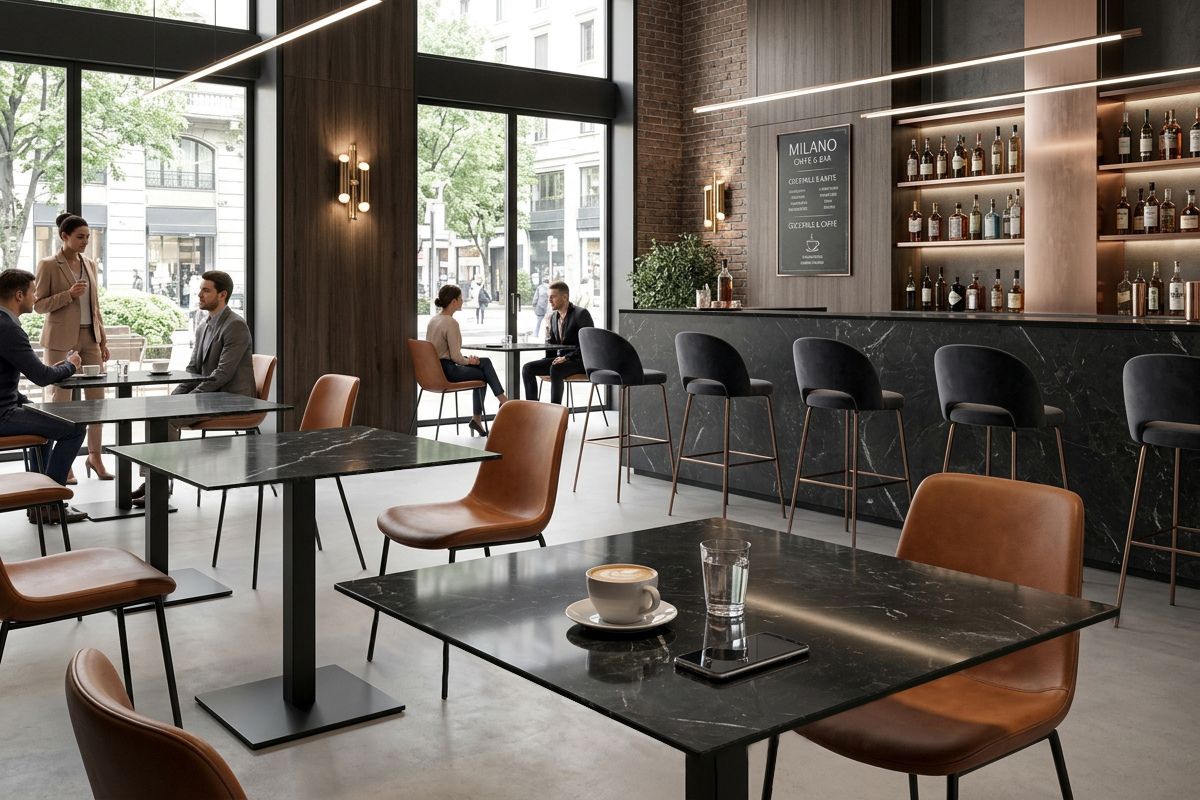
Preserving a company culture means not losing the criteria that made it recognisable: quality of selection, an international outlook, reliability and attention to the project. Innovating, on the other hand, means updating materials, tools and services without distorting that foundation. Continuity, in this case, does not mean standing still: it is the ability to evolve the method while staying true to its origins.
Material scouting and innovation
How do you recognise a material that will truly change the project?
A truly innovative material can be recognised when it does not simply open up an aesthetic possibility, but concretely changes the way space is designed, worked and used. It must have technical strength, not just communicative appeal. Trends come and go; the materials that make a real difference remain, because they change the project at its roots.
How do you tell genuine innovation from a product designed to grab attention?
Genuine innovation passes three tests: performance, production continuity and real-world applicability. If a material only works as an image but does not stand up to everyday use and the construction process, it remains a marketing exercise. The difference lies in the ability to turn a promise into concrete design value.
What principle keeps such a wide selection coherent?
The principle is not formal uniformity, but consistency of vision. Different materials can coexist if they offer the same usefulness to the project: technical quality, reliability, clarity and the ability to respond to different contexts of use. In this sense, the selection is not a sum of products, but a system of solutions.
The dialogue with designers
How much does the physical experience of materials matter in an increasingly digital design process?
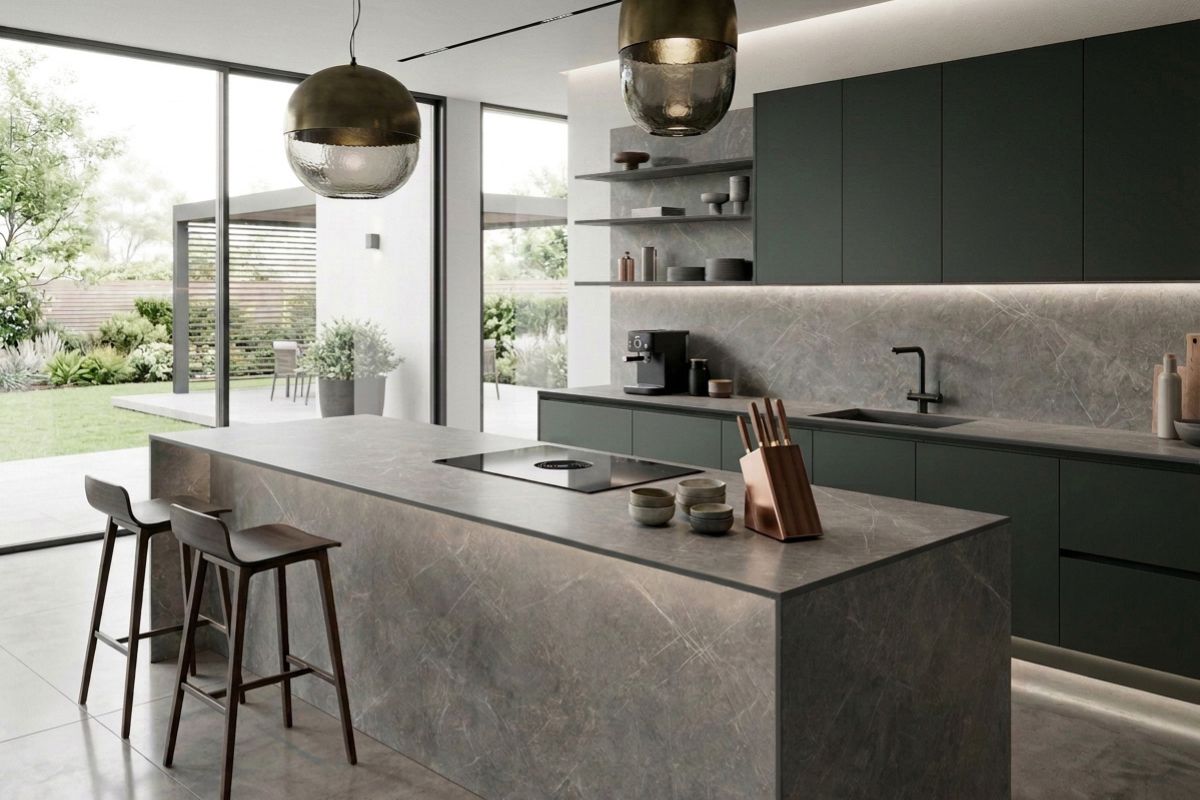
It matters enormously, because a material does not truly come alive in a photograph or a rendering. It has to be seen in the light, touched, tested in its reactions and compared with the other elements of the project. Physical experience remains decisive precisely because it conveys a complexity that digital tools alone cannot transmit.
How does the dialogue with professionals shape your selection?
Dialogue with designers is essential, because it allows us to read the market’s real needs before they become obvious. Professionals’ requests guide the selection of materials and also influence the way services and support tools are developed. In this sense, our dialogue with design studios is not only commercial: it is an active part of the innovation process.
What are the most interesting requests from design studios today?
The most interesting requests do not concern a single aspect, but a combination of needs. Studios are looking for materials that offer performance, verifiable sustainability, freedom of processing and, increasingly, tools that simplify project management. The point is not to choose between technique and aesthetics, but to find solutions that bring them together convincingly.
At what stage should Sadun become involved in a project?
Ideally, Sadun should be involved long before the final stage, while choices are still open and the surface can interact with the structure, function and language of the project. The earlier the dialogue, the more the material becomes part of the project, rather than a simple finish applied at the end. That is where added value is created.
What mistakes can be avoided by involving a materials consultant earlier?
Many mistakes arise from too great a gap between design imagination and technical feasibility. Involving a specialist consultant earlier helps prevent durability problems in different settings, incompatibilities in construction details, non-compliance with required certifications, installation difficulties and maintenance issues. In practice, costly misunderstandings are avoided and the overall quality of the result improves.
How do you offer a concrete solution without limiting the designer’s freedom?
It takes balance: offering expertise without imposing predefined solutions. The service should help designers find their way, not narrow the range of possibilities. The best consultancy is the kind that makes decisions easier, without ever replacing the creative vision.
Iconic Compact and the new services
What reading of contemporary living lies behind Iconic Compact?
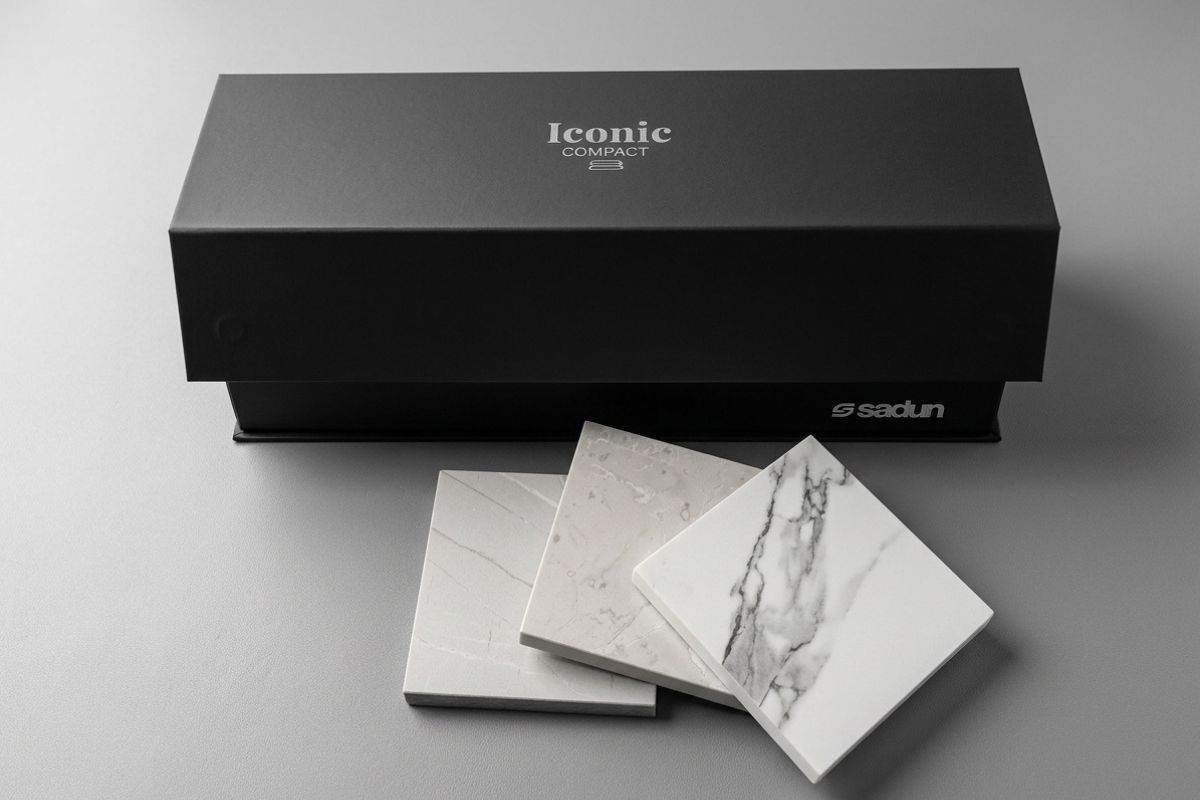
Iconic Compact stems from a very clear reading of contemporary living: kitchens and bathrooms are no longer purely functional spaces, but rooms that call for aesthetic continuity, practicality and technical quality. The collection meets this need with kitchen and bathroom worktops that combine a natural look, durability and easy maintenance, without giving up a strong material identity.
How do you prevent a stone-effect worktop from becoming a mere imitation?
Iconic Compact does not try to imitate stone, but to reinterpret its language with a technology that is easier to control and better suited to contemporary design. Its value lies precisely in bringing together performance and appearance, offering an alternative that speaks of naturalness without losing technical clarity. It does not pretend to be something else: it builds an identity of its own.
What services will accompany the new collection?
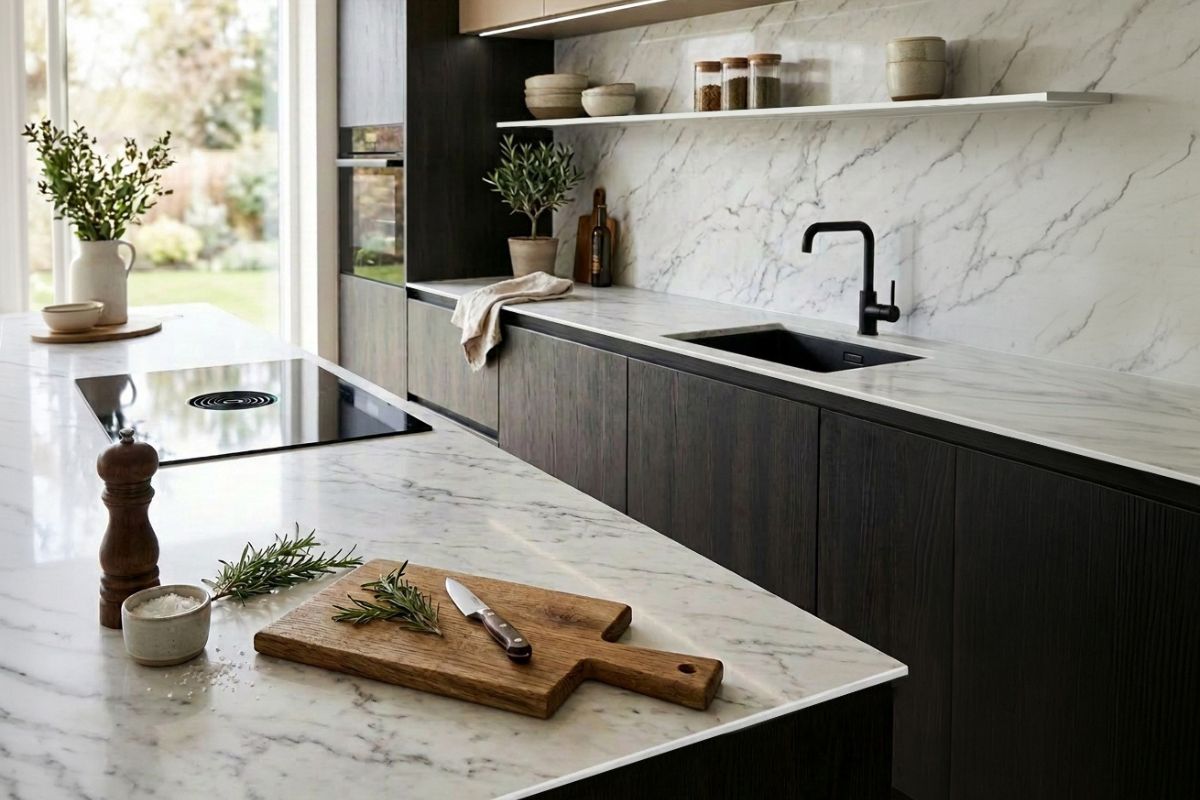
We want to fill a gap in the supply chain and improve the service we offer designers working on kitchen worktops: many professionals still work on paper, facing errors and long lead times to obtain reliable quotes. That is why we will launch a highly detailed 3D configurator that takes the digital project all the way to the production file, with realistic renderings, real-time quotes and automatic technical checks (with human verification where needed). We do not want to replace our sales network: our sales force will remain the local point of contact, while the tool speeds up design, reduces errors and makes customising kitchen worktops and technical surfaces accessible to everyone. In the future, the tool will also make it possible to work with different types of materials.
Sustainability and outlook
What criteria do you use to assess a product’s environmental responsibility?
A product’s environmental responsibility must be assessed as a whole, not just on the basis of a single declared advantage. Composition, durability, production process, transport, maintenance and end of life all count. A choice is truly sustainable when it holds up to all these questions, not just at first glance. We have learned to find our way through all the regulations and to guard against claims that are good for marketing but border on greenwashing. We only consider sustainability credentials when they are backed by third-party certifications, such as EPD, ISO 14001 and ISO 20121.
How important is it to explain limits and trade-offs to designers?
It is essential, because credible sustainability is never absolute and must be communicated honestly. Giving a complete picture means providing designers with the tools to make mature, informed decisions that are consistent with how the material will actually be used. Sometimes this also means explaining limits and trade-offs, but that is exactly where the quality of the service is measured.
Which material best expresses Sadun’s identity?
We do not believe any single product deserves more attention than the others: all our solutions are equally valuable. The full list can be found on our website; at the moment, the new Iconic collection is particularly promising and could open up many new opportunities.
Which part of your work remains invisible to the public?
The public sees the final result, but not always the invisible work that comes before it. The quality of the selection often depends on less visible steps: technical testing, discussions with manufacturers, performance checks and the ability to turn down anything that is not truly up to standard. It is a work of filtering, and that is exactly why it is decisive.
It is 2036. How do you imagine Sadun?
I would like to imagine a Sadun that is even closer to the project, able to combine selection, consultancy and digital tools with an increasingly precise understanding of the market’s real needs. I would also like the way materials are chosen to be less superficial and more informed: not just aesthetics or trends, but a full understanding of performance, use and overall impact on the community. It would be a cultural change, even before a commercial one.
The value of what cannot be seen
At the end of this conversation, one clear image remains: that of the filter. What reaches the designer’s desk is the result of tests, checks and rejections that the public never sees, but which determine the quality of a surface far more than its first impression.
It is a lesson that goes well beyond distribution. Choosing a material is not an aesthetic gesture that concludes the project, but a technical and cultural decision that accompanies it from the very beginning. If you want to explore how surfaces are changing kitchens and bathrooms, read our analysis of kitchen trends 2026 and the surfaces seen at Cersaie 2026, or discover another voice from the culture of surfaces in our interview with Roberta Vecci of Novacolor.