Compare five flooring adhesive brands for porcelain tiles, wood and resilient coverings. Understand substrates, quantities, costs and buying channels.
The porcelain tiles in a living room, timber boards in a bedroom and a thin vinyl floor can look remarkably similar, but they need different adhesives. Choosing the best flooring adhesive brands starts with the covering, substrate and installation conditions. Beneath the finished surface, the bond needs to remain reliable long after the renovation is complete.
This guide compares Mapei, Kerakoll, Weber, Fassa Bortolo and Sika through documented examples for ceramic tiles, porcelain, wood and other flooring requirements. They offer different reasons for consideration; this is not a ranking based on tests carried out by our editorial team. The examples are mainly from European ranges, and local product names, formulations and availability must be checked.
Tile adhesive, wood flooring adhesive or vinyl adhesive?
For porcelain and ceramic tiles, the appropriate product is a tile adhesive, often a cementitious powder mixed with water. In North America, you will also encounter the term thin-set mortar. Selection depends on the tile, format, substrate and intended exposure. A large slab over underfloor heating is a different specification from a small tile over a straightforward backing.
Glue-down wood flooring requires an adhesive compatible with the species, construction and board dimensions. PVC, luxury vinyl tile (LVT) and other resilient coverings need products suited to their backing and installation method. Click flooring may be designed to float: adding adhesive when the flooring system does not call for it is not an automatic upgrade.
For marble and natural stone, also assess moisture sensitivity, dimensional stability and the risk of staining. A white adhesive is not necessarily suitable for every stone. Identify the exact covering and obtain an appropriate installation specification.
Five flooring adhesive brands compared
| Brand | Consider for | Example |
|---|---|---|
| Mapei | Tile adhesives and separate resilient-flooring systems | Keraflex Maxi S1 Zero; Ultrabond Eco V4 SP |
| Kerakoll | Porcelain, ceramic and large-format tiles | H40 Gel |
| Weber | Tile installation with trowellable or fluid consistency | webercol UltraGres 400 |
| Fassa Bortolo | Tiles within the specified preparation system | AZ 59 FLEX |
| Sika | Full-surface bonding of wood flooring | SikaBond-54 Parquet |
Mapei: separate tile and resilient-flooring products
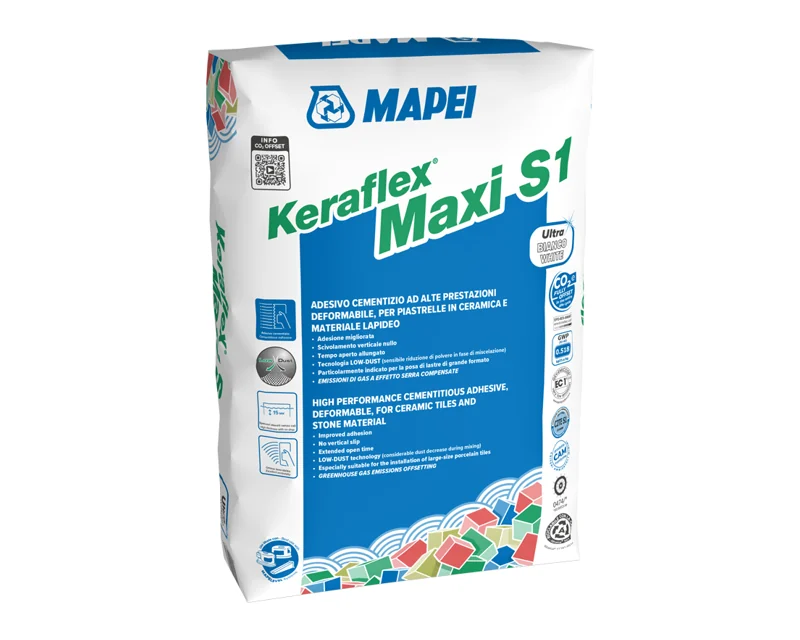
Keraflex Maxi S1 Zero is a deformable cementitious adhesive for ceramic tiles and compatible stone, including large formats. Its European technical sheet gives a C2TE S1 classification. The useful buying point is that these are declared properties of a particular product: asking for “a Mapei adhesive” does not identify the specification.
For resilient coverings, Ultrabond Eco V4 SP is a different type of product: a water-dispersion adhesive with specified applications that include LVT and PVC. Installation procedures also depend on substrate absorbency. This illustrates why a product used beneath porcelain tiles should not automatically be transferred to a vinyl-flooring job.
Kerakoll: H40 Gel and contact with the tile backing
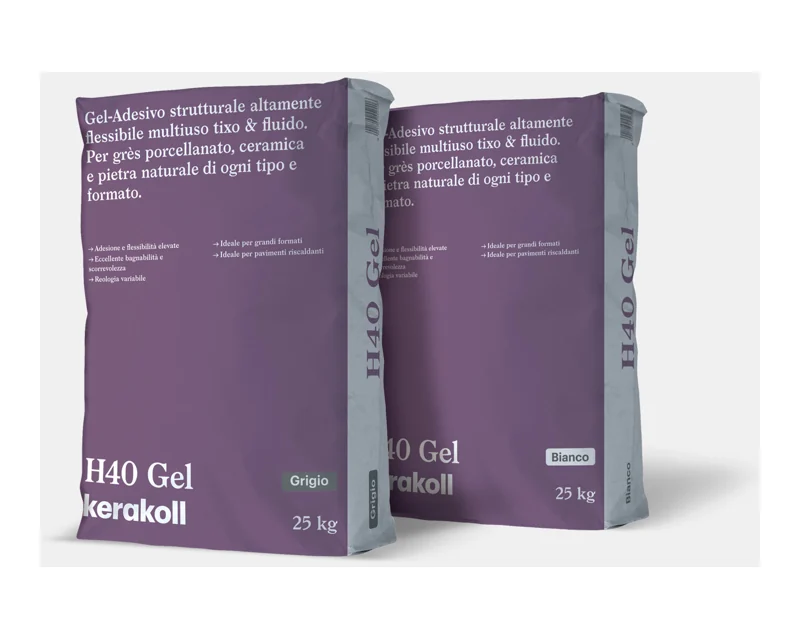
H40 Gel is a Kerakoll gel adhesive for porcelain, ceramic and natural stone, with documented applications including large formats and heated floors. Its consistency is adjusted within the manufacturer’s specified mixing instructions.
Coverage of the tile backing deserves attention alongside the adhesive itself. The required contact depends on substrate flatness, trowel, spreading technique and site conditions. “Gel” describes Kerakoll’s technology; the substrate, tile dimensions and installation sequence still have to suit it.
Weber: choose the consistency for the installation
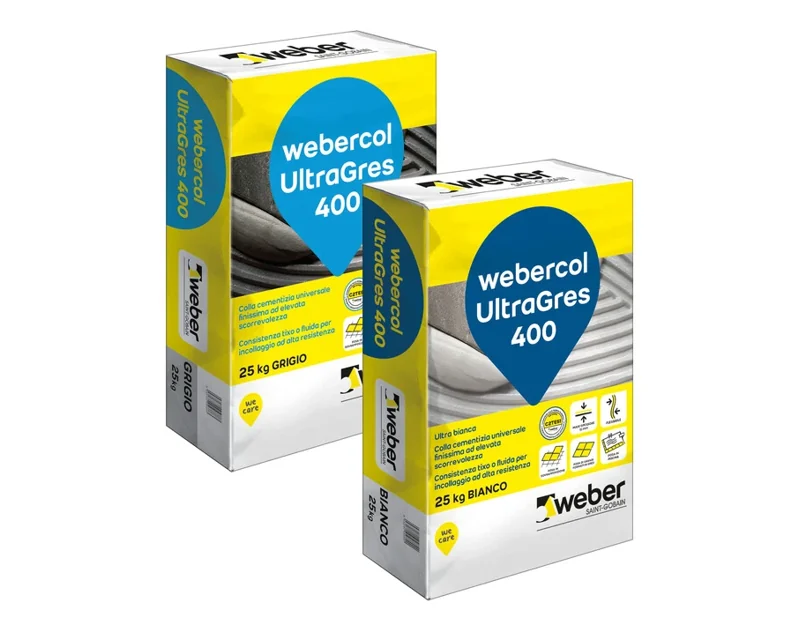
webercol UltraGres 400, from the Italian range, is a deformable cementitious adhesive that can be mixed to the specified trowellable or fluid consistency. Its documentation lists substrates including cement screeds, concrete and existing tiles, subject to preparation requirements.
It also excludes weak or detached backings and concrete that has not adequately cured. An adhesive with suitable declared performance cannot automatically strengthen an unsuitable layer beneath it. Separate substrate preparation from bonding in the quotation. Light foot traffic and final service are different stages too: being able to walk on a floor does not mean every load can immediately be imposed.
Fassa Bortolo: match preparation to the actual substrate
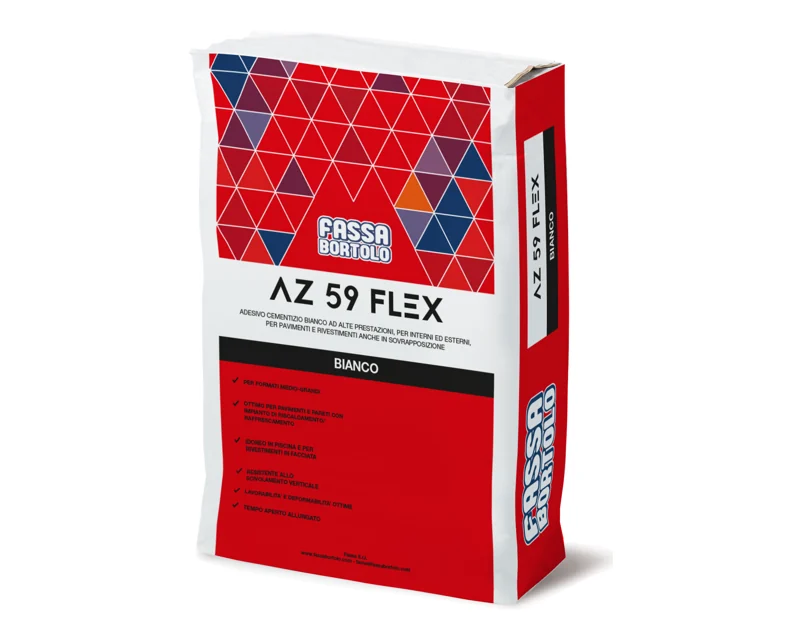
AZ 59 FLEX is a white or grey one-component adhesive for internal and external floor and wall coverings. Documented applications include ceramic, porcelain and natural stone that is moisture-stable and not sensitive to staining, plus heated-floor installations under the specified conditions.
The April 2026 Italian sheet distinguishes cement-based surfaces, gypsum or anhydrite substrates and existing floors. Preparation follows the actual backing, including the choice of primer. Water dosage and layer thickness are equally specific: a wetter mix may be convenient, but can alter performance.
Sika: an adhesive intended for bonded wood flooring
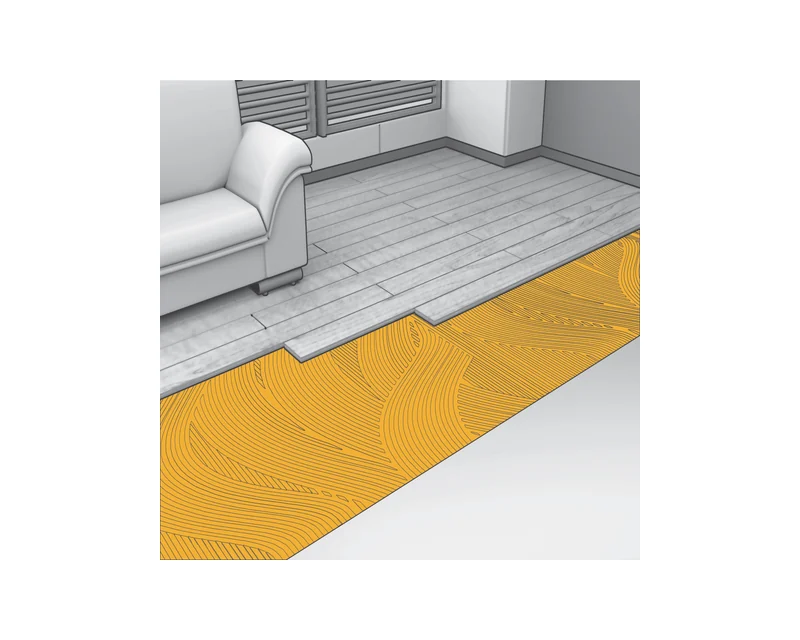
SikaBond-54 Parquet is a one-component polyurethane adhesive for full-surface bonding of wood flooring, including specified solid and engineered parquet applications. Heated substrates and existing ceramic tiles are covered subject to the stated conditions and preparation.
For wood flooring, substrate moisture is a central part of the specification. A measurement using the required method must satisfy both the adhesive and flooring requirements; the age of a screed cannot replace it. Trowel choice and board dimensions also affect consumption and the material cost per square metre.
What do C2, T, E and S1 mean on tile adhesives?
European classification markings help describe performance; they are not a universal league table. C denotes a cementitious adhesive; 2 indicates improved performance; T relates to reduced slip; E means extended open time. S1 describes a deformability class. These markings concern tile adhesives, rather than a direct comparison with wood or vinyl adhesives.
A C2TE adhesive is not automatically S1 unless that deformability is declared. A higher class does not approve every tile and substrate combination either. Format, thickness, exposure and application instructions still apply. In markets using ANSI or other specifications, check the locally required classification instead of assuming a direct equivalence.
Tiling over an existing floor and underfloor heating
Installing over an existing finish may avoid demolition, but the original floor must be sound, securely bonded and properly prepared. Check finished levels, doors, thresholds and transitions before buying the adhesive. Our guide to installing new flooring over existing floors explores those decisions.
Over underfloor heating, adhesive, screed and covering need to work as a system. Commissioning and installation conditions should be agreed between the heating specialist and floor installer. The heating symbol on a bag is only part of that discussion.
For terraces, bathrooms and other wet applications, tile adhesive does not replace waterproofing. Movement joints, drainage falls where needed and junction details belong to the system too. If the covering itself is still undecided, our comparison of wood-effect porcelain tiles and hardwood helps clarify the choice before installation.
Flooring adhesive prices and quantity calculations
The useful figure is material cost per square metre, calculated from pack weight and consumption for the installation. Area × kg/m² gives the theoretical quantity; trowel, backing, flatness and application to both surfaces can all affect the result.
An Italian offer for white Keraflex Maxi S1 Zero in a 23 kg bag showed €25.50 including Italian VAT, excluding delivery. This is an indicative retail example to reconfirm when ordering. Pack weight matters: the total alone does not allow a fair comparison with a 25 kg bag. Other markets have different ranges, taxes and delivered prices.
Here is a budgeting example, not a recommended application rate. If an installer estimates 4 kg/m² for a 30 m² project, the theoretical requirement is 120 kg. In 23 kg packs, that means buying at least six bags, providing 138 kg at a cost of €153 using the cited price, before any further allowance. The theoretical cost of the material consumed is about €4.43/m², while the amount paid for whole bags is different.
Primer, levelling, waterproofing, grout, movement joints, installation and transport are separate costs. For wood and resilient flooring, repeat the calculation using the relevant adhesive’s coverage. Applying a porcelain-tile adhesive consumption figure to those products would give a misleading comparison.
Where to buy and what to ask the supplier
Builders’ merchants, tile distributors, wood-flooring specialists and renovation-material retailers are useful channels. Online ordering may suit a repeat purchase of an already specified reference; for an initial technical choice, look for someone who can assess the covering and substrate together.
The supplier will need the flooring reference and data sheet, dimensions, area, screed type, heating details and photographs. The quotation should identify the adhesive, any primer, trowel, estimated consumption and waiting times for grouting, walking and normal use. Batch details, storage and packaging condition also matter for moisture-sensitive materials.
Mistakes to avoid before installation
- Looking for the strongest adhesive in the abstract. Suitability for the actual assembly matters.
- Correcting every uneven area with adhesive. An allowed layer thickness does not make the product a universal levelling compound.
- Bonding over dust, weak layers or loose old tiles. Performance also depends on the backing.
- Confusing open time with pot life. Mixed material in a bucket and adhesive spread on the floor have different working conditions.
- Ignoring movement joints and backing coverage. These belong in the installation design.
Frequently asked questions about flooring adhesives
Which adhesive brand is best for porcelain tiles?
Mapei, Kerakoll, Weber and Fassa Bortolo offer documented products for porcelain. Compare the specific reference against tile size, backing, exposure and installation requirements rather than choosing on brand alone.
Can the same adhesive bond porcelain and wood flooring?
Not as a general rule. They require products specified for their different materials and installation methods. Wood-floor adhesives must suit the timber and substrate; tile adhesives must meet the tile installation requirements.
Is every S1 adhesive suitable for every large-format tile?
Deformability is one requirement. Check permitted dimensions, substrate, intended exposure, slab backing and application method in both adhesive and covering documentation.
How much floor area does one bag cover?
Divide bag weight by expected consumption in kg/m². At an assumed 4 kg/m², a 23 kg bag provides 5.75 m² theoretically. The installer needs to estimate the actual rate for the site.
When can you walk on a newly bonded floor?
That depends on adhesive, covering and environmental conditions. Light foot traffic, grouting and full service may have different waiting periods. Establish them before scheduling furniture delivery or moving in.