Six home automation brands available in European markets, covering wireless upgrades, bus systems and KNX, with compatibility questions and an Italian component price example.
Good home automation makes familiar routines easier: switching off lights as you leave, closing blinds together and setting a comfortable temperature without juggling several apps. The result begins with a coherent design rather than a collection of connected devices.
This selection of home automation brands covers BTicino, Vimar, GEWISS, ABB, Schneider Electric and Loxone, focusing on professionally installed systems available in European markets. The approaches include wireless upgrades, wired bus systems and KNX supervision. It is based on manufacturers’ documentation, not editorial testing, and the order is not a performance ranking.
Which home automation system suits your project?
For a finished apartment, starting with lighting and blinds can reduce disruption. A substantial renovation is the time to discuss cabling, distribution boards, controls and integration. Wireless does not mean no electrical work: devices switching mains-powered loads still need appropriate supplies, connections and installation.
| Brand | System to consider | Check with the designer |
|---|---|---|
| BTicino | MyHOME with F460 server | Bus, actuators and intended functions |
| Vimar | View Wireless and By-me Plus | Which system fits the project |
| GEWISS | ChoruSmart with Home Gateway | Devices, Internet and cloud services |
| ABB | ABB-free@home | Access Point and included equipment |
| Schneider Electric | Wiser for KNX | KNX design and specified integrations |
| Loxone | Miniserver, Compact and Go | Interfaces and additional devices |
BTicino: MyHOME for a coordinated installation
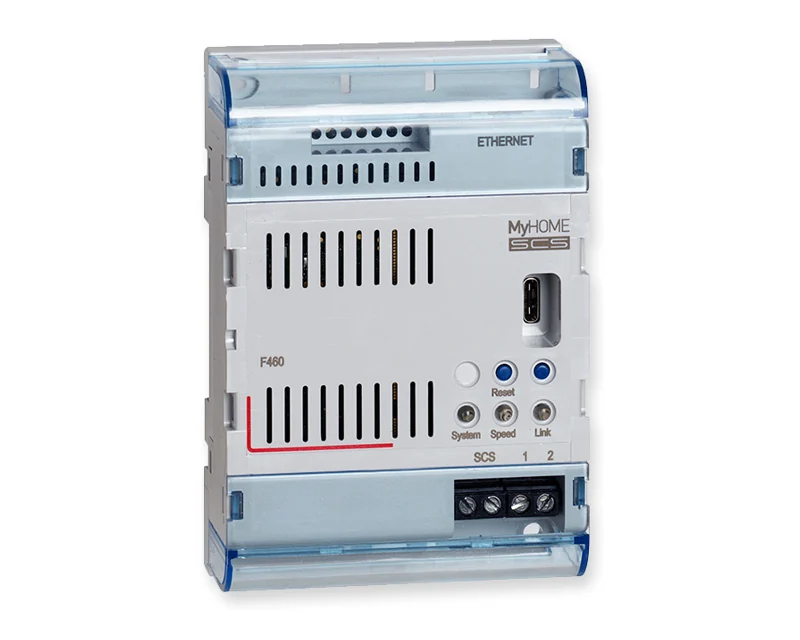
MyHOME is BTicino’s wired bus home automation system. The F460 server supports configuration and management of the functions designed into the installation. Installers use Home + Project, while occupants use Home + Control. The server is one component, not a complete home automation package.
Lighting, motorised functions, temperature and energy can belong in a coordinated design. A demonstration of daily controls complements the choice of wall plates and displays; a component schedule identifies the actual proposal.
Vimar: View Wireless and By-me Plus are different choices
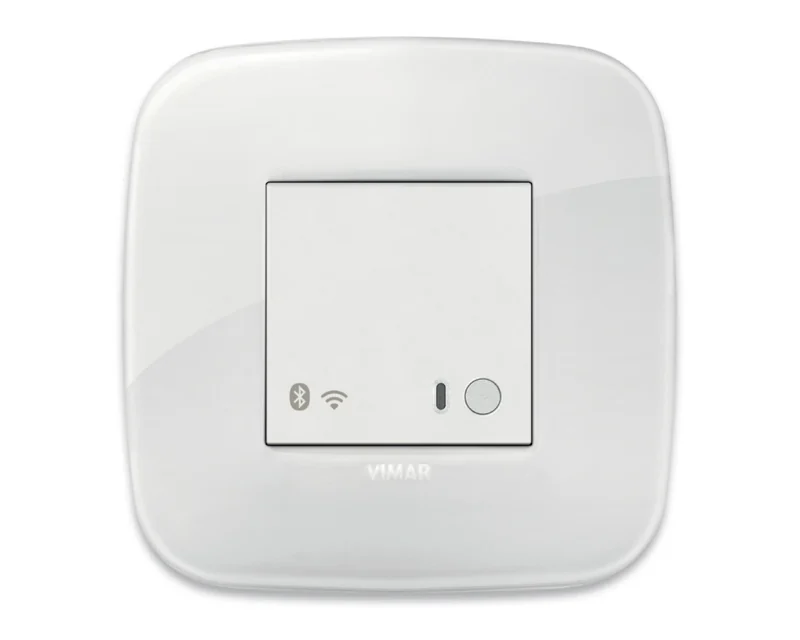
View Wireless adds connected functions to a traditional electrical installation, covering lighting, shading, temperature and energy according to the devices fitted. View Wireless is the configuration app; View is the occupant’s control app.
By-me Plus is a separate integrated home automation offering for more extensive, personalised installations. Specify the actual system, gateways and functions rather than asking only for “Vimar automation”. Shared branding does not make equipment from different families interchangeable.
GEWISS: ChoruSmart and Home Gateway
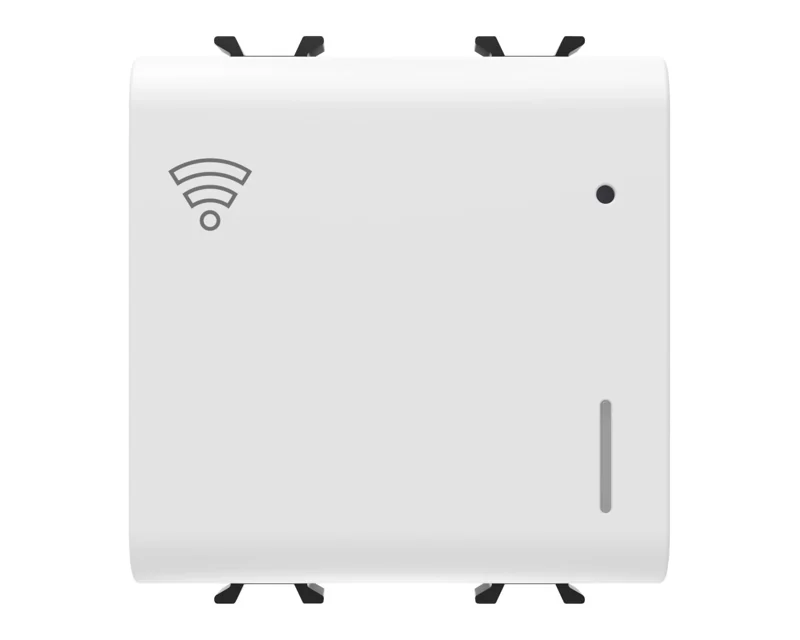
The connected GEWISS ChoruSmart offering uses Zigbee devices and Home Gateway for configuration and app management. The GW15840 gateway has Wi-Fi, Zigbee and Bluetooth interfaces, with Bluetooth used during configuration. The manufacturer specifies an Internet connection.
It is a reference for controlling lighting, blinds, scenes and other functions supported by the selected equipment. Before purchasing, establish which local controls remain available during an Internet outage and which functions rely on cloud connectivity.
ABB: free@home and the System Access Point
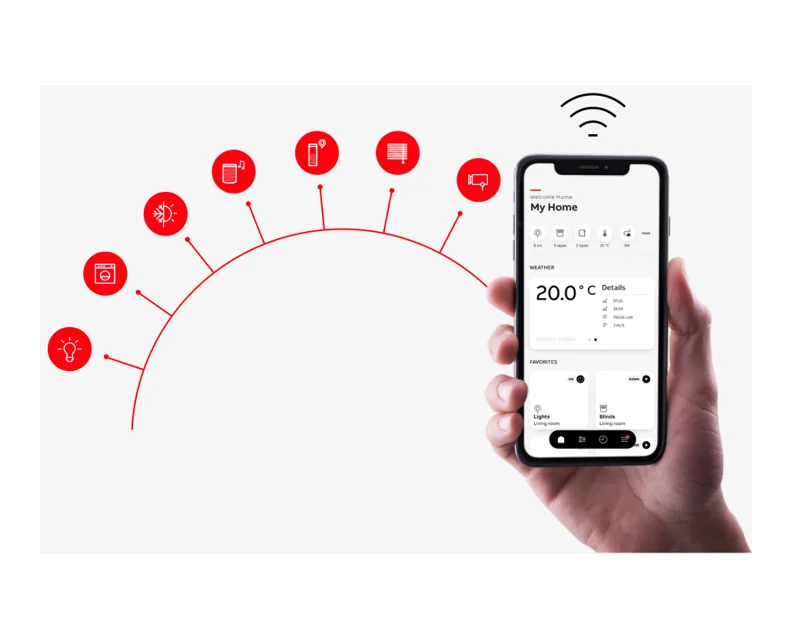
ABB-free@home coordinates domestic functions including lighting, shading and temperature. Its Italian offering presents combinations for lighting, blinds and temperature control, using a System Access Point and different components for each task.
Power supplies, actuators, sensors and interfaces perform different roles. The equipment schedule and demonstrated local and remote operation explain the proposal better than the kit name alone. Third-party integration needs to refer to the actual products and configuration.
Schneider Electric: Wiser for KNX supervision
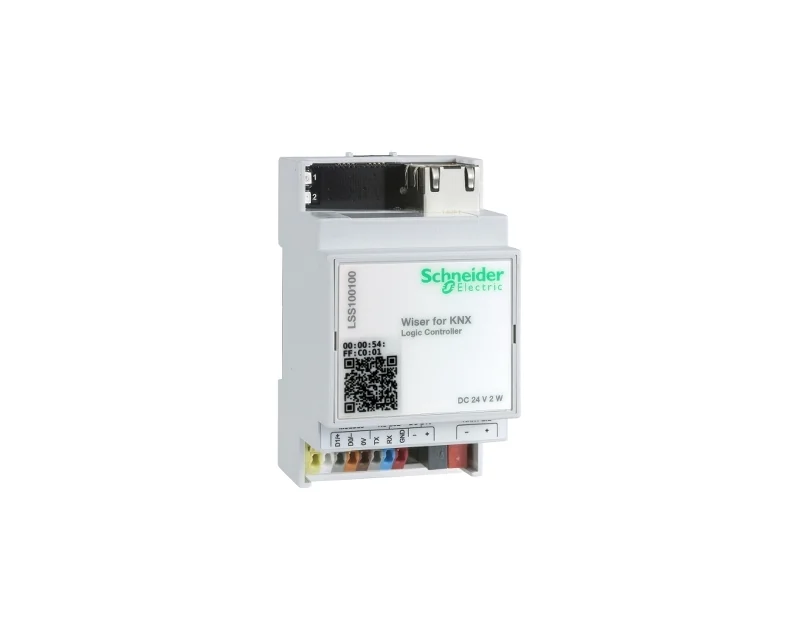
Wiser for KNX is Schneider Electric’s controller for supervision and integration involving protocols such as KNX, Modbus, BACnet and IP. It supports controls, logic and energy monitoring within the designed installation.
Evaluate it as part of a KNX system rather than a standalone smart plug. Protocol support does not establish that every appliance will work without an interface or configuration. The specification should name the equipment being integrated and the actual functions delivered.
Loxone: selecting the right Miniserver
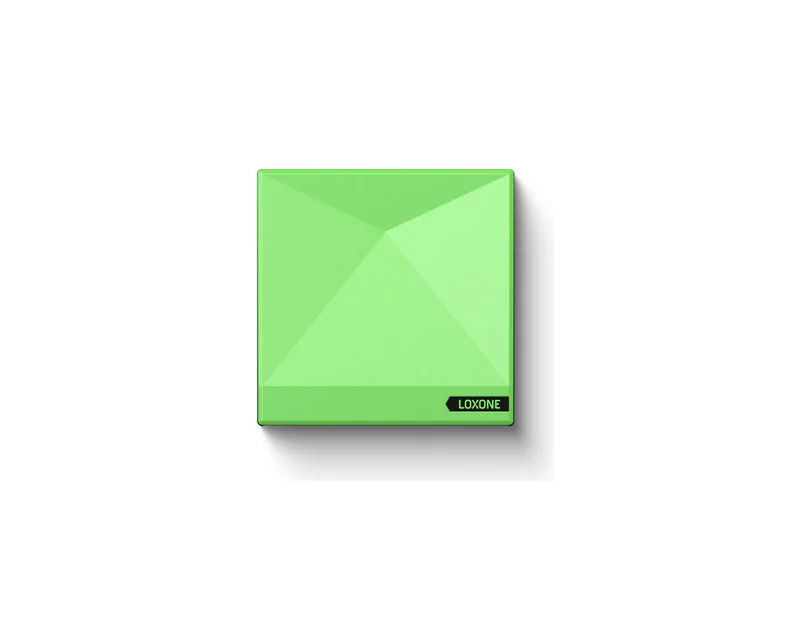
The Loxone Miniserver is the central control unit of the automation platform. The range includes Miniserver, Miniserver Compact and Miniserver Go. Go has an integrated Air wireless interface and is presented for projects seeking to reduce additional cabling.
Select the unit according to the inputs, outputs, devices and expansion needed. Its price is only one part of the installation: controls, sensors, actuators, power supplies, programming and commissioning must also be accounted for.
How much does home automation cost?
A component price helps when its scope is clear. Loxone’s Italian shop listed Miniserver Go, item 100336, at €393.62 excluding VAT, or €480.22 with 22% Italian VAT. This indicative controller reference needs reconfirming, with delivery, other equipment and labour separate.
Comparable quotations describe the same lighting circuits, blinds, temperature zones and integrations. Equipment, wiring, fitting, programming, commissioning and support need separate lines, along with any charges for later scene changes. The Italian controller offer is not a worldwide installed estimate.
Compatibility needs more than a protocol name
KNX, Zigbee, Bluetooth and Wi-Fi describe different aspects of a system. Compatibility needs to cover the product model, function, gateway and software version. KNX Association’s documentation explains certified products and design with ETS; professional selection and configuration are still part of the installation.
Voice control and existing equipment enter the design with their exact codes. The quotation should describe the action achieved: switching and dimming a light are different functions. Compatibility becomes useful when it explains what the occupants will actually do.
Design around routines and rooms
Leaving home, evening relaxation, waking and adjusting blinds give scenes a practical starting point. In the kitchen, they accompany good lighting design: intelligent controls cannot correct glare or a worktop in shadow.
Wall controls need to remain understandable for guests and relatives who do not use the app. Monitoring can reveal consumption patterns; savings depend on the system, settings and household habits.
Where to buy and what to receive at handover
Electrical wholesalers and installers are the main channels. Larger schemes may also need an integrator coordinating light, climate and other services. Components and responsibilities belong in the agreement before online orders are placed.
- A defined scope: functions, quantities, product codes and exclusions.
- A working demonstration: wall controls, app, scenes and behaviour without Internet.
- Ongoing costs: any cloud services, licences and maintenance.
- A complete handover: documentation, project configuration, user access and instructions.
- A named contact: responsibility for faults, updates and future alterations.
The right system remains understandable after its novelty has worn off. Among these six brands, the strongest proposal is the one that solves clear needs and leaves the home comfortable and straightforward to use.